
反垄断

Search documents
谷歌:降低应用商店抽成比例
新华网财经· 2026-03-06 06:24
Group 1 - Alphabet, the parent company of Google, announced a systematic reform of the Google Play Store to lower entry barriers for competitors and reduce developer fees, aiming to address U.S. antitrust lawsuits and comply with new regulatory requirements in Europe and other regions [2] - Under the new plan, other companies will only need to register with Google and pay a one-time fee to open app stores on the Android platform. Google will reduce the fees charged to developers from a standard 30% to as low as 15%, with subscription service fees potentially dropping to 10% [2] - The fee adjustments in the U.S., U.K., and EU are expected to take effect in June, while changes in Australia, South Korea, and Japan will be implemented by the end of 2026 [3]



黑色建材日报-20260306
Wu Kuang Qi Huo· 2026-03-06 02:36
Group 1: Report Industry Investment Rating - Not mentioned in the provided content Group 2: Core View of the Report - The current fundamentals of the black series are significantly weaker than pre - holiday expectations. The short - term core contradiction lies in inventory digestion and demand verification. Before the real demand in the peak season is confirmed, prices are unlikely to have a trend reversal and will likely remain in a weak, range - bound oscillation. The black sector is in a weak state in the overall commodity market and is likely to be a short - term short - allocation choice [2][16] Group 3: Summary by Related Catalogs Steel Products Market Information - The closing price of the rebar main contract was 3075 yuan/ton, up 4 yuan/ton (0.130%) from the previous trading day. The registered warehouse receipts were 9328 tons, with no change. The main contract's open interest was 1.8373 million lots, down 2236 lots. The Tianjin aggregated price of rebar was 3120 yuan/ton, and the Shanghai aggregated price was 3190 yuan/ton, both with no change. The closing price of the hot - rolled coil main contract was 3209 yuan/ton, down 3 yuan/ton (- 0.09%). The registered warehouse receipts were 472215 tons, up 28821 tons. The main contract's open interest was 1.4301 million lots, down 5552 lots. The Lecong aggregated price of hot - rolled coil was 3240 yuan/ton, with no change, and the Shanghai aggregated price was 3230 yuan/ton, up 10 yuan/ton [1] Strategy View - Macroscopically, policies support infrastructure and manufacturing investment but have limited incremental impact on steel demand. Fundamentally, hot - rolled coil demand has declined, with high inventory. Rebar supply and demand are rising, but inventory is accumulating rapidly. The short - term core contradiction is inventory digestion and demand verification, and prices are likely to oscillate weakly in a range [2] Iron Ore Market Information - The main iron ore contract (I2605) closed at 759.00 yuan/ton, up 0.93% (+7.00). The open interest changed by - 26804 lots to 498800 lots. The weighted open interest was 909700 lots. The spot price of PB fines at Qingdao Port was 757 yuan/wet ton, with a basis of 44.33 yuan/ton and a basis rate of 5.52% [4] Strategy View - Supply: Overseas ore shipments fluctuate slightly at a high level. Australian shipments decreased, Brazilian shipments increased, and non - mainstream shipments rose. Near - end arrivals are decreasing. Demand: The average daily hot - metal output decreased by 56900 tons to 2275900 tons. Some areas had blast furnace overhauls due to production restrictions. Steel mill profitability declined. Inventory: Port inventory was basically flat, and steel mill inventory continued to decline. Prices are expected to oscillate [5] Manganese Silicon and Ferrosilicon Market Information - On March 5, the manganese silicon main contract (SM605) closed down 0.46% at 6092 yuan/ton. The Tianjin 6517 manganese silicon spot price was 5900 yuan/ton, with a basis of 2 yuan/ton. The ferrosilicon main contract (SF605) closed up 0.17% at 5828 yuan/ton. The Tianjin 72 ferrosilicon spot price was 6150 yuan/ton, with a basis of 322 yuan/ton [8] Strategy View - Manganese silicon's supply is loose with high inventory and weak downstream demand, but these factors are mostly priced in. Ferrosilicon's supply - demand is basically balanced with some improvement. Future market drivers include the overall black market trend, cost - push from manganese ore for manganese silicon, and supply contraction for ferrosilicon [10] Coking Coal and Coke Market Information - On March 5, the coking coal main contract (JM2605) closed up 0.77% at 1105.5 yuan/ton. The Shanxi low - sulfur main coking coal spot price was 1487.1 yuan/ton, with a basis of 189.5 yuan/ton. The coke main contract (J2605) closed up 0.27% at 1676.5 yuan/ton. The Rizhao Port quasi - first - grade wet - quenched coke spot price was 1470 yuan/ton, with a basis of 49 yuan/ton [12] Strategy View - After the holiday, downstream de - stocking and coal mine production resumption led to weak prices. In the short - term, demand is restricted until mid - April. In the long - term, the commodity bull market may continue, but the black sector is weak. Coking coal may rise from June to October [15][16] Industrial Silicon and Polysilicon Market Information - The industrial silicon main contract (SI2605) closed at 8565 yuan/ton, up 0.59% (+50). The weighted open interest changed by - 21006 lots to 393493 lots. The polysilicon main contract (PS2605) closed at 42280 yuan/ton, up 0.19% (+80). The weighted open interest changed by - 1141 lots to 58509 lots [18][20] Strategy View - Industrial silicon supply is expected to increase slightly in March, and demand may improve marginally, resulting in a supply - demand increase pattern. Polysilicon has high inventory and weak feedback, and its prices are expected to be under pressure [19][21] Glass and Soda Ash Market Information - The glass main contract closed at 1055 yuan/ton, up 1.64% (+17). The weekly inventory of float glass sample enterprises was 79.637 million cases, up 4.77%. The soda ash main contract closed at 1225 yuan/ton, up 1.83% (+22). The weekly inventory of soda ash sample enterprises was 1.9472 million tons, up 4.77% [23][25] Strategy View - Glass: There are rumors of production line cold - repairs. Demand is slow to recover, and inventory is high. Prices are expected to oscillate weakly in the range of 1015 - 1100 yuan/ton. Soda ash: There are rumors of production line overhauls. Demand is slow to release, and prices are expected to oscillate narrowly in the range of 1160 - 1270 yuan/ton [24][26]
谷歌:降低应用商店抽成比例
财联社· 2026-03-06 01:39
Group 1 - Alphabet, the parent company of Google, announced systematic reforms to the Google Play Store, aiming to lower entry barriers for competitors and reduce developer fees to address U.S. antitrust lawsuits and comply with new regulatory requirements in Europe and other regions [1] - Under the new plan, other companies will only need to register with Google and pay a one-time fee to open app stores on the Android platform [1] - Google will reduce the fees charged to developers from the standard 30% to as low as 15%, with subscription service fees potentially dropping to 10% [1] Group 2 - The fee adjustments in the U.S., U.K., and EU are expected to take effect in June, while changes in Australia, South Korea, and Japan will be implemented by the end of 2026 [2]

瑞昱起诉联发科垄断
半导体行业观察· 2026-03-06 00:57
Core Viewpoint - The article discusses the ongoing antitrust lawsuit between Realtek and MediaTek, highlighting allegations of collusion and market manipulation in the smart TV and set-top box chip market [2][3]. Group 1: Lawsuit Background - Realtek filed an antitrust lawsuit against MediaTek in the U.S. Northern District of California, accusing MediaTek of colluding with IP Value Management Inc. to monopolize the chip market [2][3]. - MediaTek has denied the allegations, stating that the lawsuit is unfounded and that the court has previously dismissed Realtek's claims [2][3]. - The court allowed Realtek to amend its complaint after initially dismissing parts of the lawsuit, indicating that some issues will continue to be examined [6]. Group 2: Legal Proceedings - In May 2024, the court dismissed Realtek's antitrust claims, stating that the allegations did not sufficiently demonstrate how MediaTek used litigation as an anti-competitive weapon [3][4]. - The U.S. Department of Justice intervened in the case, emphasizing the anti-competitive potential of the litigation bounty agreement between MediaTek and IP Value [4]. - The Noerr-Pennington doctrine, which protects certain lobbying activities from antitrust scrutiny, is central to the legal arguments being made in this case [5]. Group 3: Market Context - MediaTek currently holds a 70% market share in the smart TV system-on-chip (SoC) sector, with over 2 billion TVs utilizing its technology [7]. - Realtek is positioned as a secondary supplier in the market, competing directly with MediaTek's offerings [7]. - The lawsuit centers around allegations that MediaTek incentivized IP Value to file baseless patent lawsuits against Realtek, thereby disrupting its business operations [8].

两大利好突袭!科技巨头,突然宣布:降价!
券商中国· 2026-03-05 11:52
Core Viewpoint - Google's announcement to reduce the commission rate on the Google Play Store from 30% to 20% or lower, along with the opening of third-party payment systems, is a significant benefit for global game developers, reducing channel costs and increasing operational autonomy, which is expected to enhance profits for gaming companies [1][3][7]. Summary by Sections Commission Rate Changes - Google will lower the commission rate for most app stores in the US, UK, and the European Economic Area from 30% to 20% or lower by June 30 [3]. - By the end of 2026, Google plans to launch a "Registered App Stores" initiative, allowing users to download and install third-party app stores directly from the web [3][4]. Third-Party Payment Systems - Developers will be allowed to use their own payment systems alongside Google Play's, with Google separating "payment fees" from "service fees" [3][4]. - If users make in-app purchases again, Google will charge a 25% fee, while purchases through external links will incur a fee of $2 to $4 or 20% [3]. Benefits for Game Developers - The reduction in commission means that for every 100 yuan in revenue, game developers can earn an additional 10 yuan, translating to significant profit increases for high-revenue games [7]. - The opening of third-party payments allows developers to bypass a 5% channel fee, potentially lowering overall costs to 15% [7]. Impact on Other Companies - Third-party app stores and distribution platforms will benefit from the new "Registered App Stores" plan, leading to increased user growth due to lower installation barriers [7]. - Payment service providers and fintech companies are expected to see a surge in business as game developers adopt third-party payment systems to save on fees [7]. - Internet giants with strong proprietary channels, such as Tencent, NetEase, and ByteDance, will also benefit from reduced fees and their ability to guide users to their payment systems [7].


携程跌倒,美团吃饱?
3 6 Ke· 2026-03-05 04:40
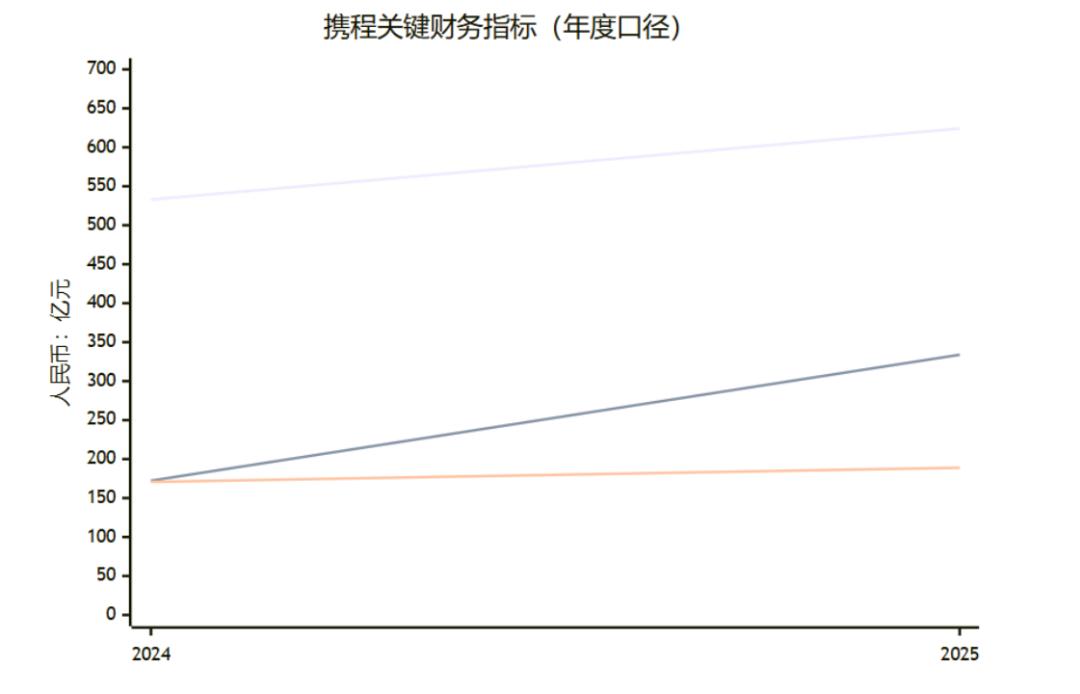
Group 1 - Ctrip's financial results for 2025 show strong performance with net revenue of 62.409 billion yuan and net profit of 33.386 billion yuan, indicating a high gross margin of approximately 80.6% and total cash and equivalents of 105.8 billion yuan [1][11] - The company is under investigation by the State Administration for Market Regulation for alleged monopolistic practices, which has led to significant stock price declines in both Hong Kong and the US markets [2][17] - The investigation raises concerns about potential changes to Ctrip's pricing and operational rules, which could impact its profitability and market position [15][19] Group 2 - The online travel agency (OTA) landscape is shifting from a "traffic dividend period" to a "governance and redistribution period," indicating a need for platforms to adapt to regulatory scrutiny [4][52] - Ctrip's revenue structure is driven by accommodation and transportation, with a total transaction volume of approximately 1.1 trillion yuan in its core OTA business for 2025 [13][21] - The competitive dynamics suggest that while Meituan may capture some overflow orders from Ctrip during regulatory adjustments, it may not achieve profitability due to its own financial challenges [3][39] Group 3 - The travel market in China is experiencing growth, with domestic travel reaching 6.522 billion trips in 2025, a 16.2% increase year-on-year, while international travel is also recovering [40][41] - Ctrip's international OTA platform bookings have increased by approximately 60% year-on-year, highlighting its strength in cross-border travel services [43] - The overall market is characterized by a structural divide, with leisure travel performing strongly while business travel remains weak, affecting the revenue potential for platforms [40][44] Group 4 - Ctrip's valuation is now influenced more by regulatory uncertainties than by tourism recovery, while Meituan's valuation is shifting towards its ability to manage subsidy wars and restore profitability [47][49] - The industry is entering a phase where profitability is determined by regulatory allowances rather than just operational performance, necessitating a shift in business strategies for both Ctrip and Meituan [52][55] - Ctrip is encouraged to view regulatory adjustments as opportunities for business model upgrades, while Meituan needs to transition from subsidy-driven growth to enhancing customer loyalty and supply chain depth [53][54]

政府工作报告:深入整治“内卷式”竞争
财联社· 2026-03-05 03:14
Group 1 - The government work report emphasizes the need to strengthen antitrust measures and combat unfair competition, aiming to enhance the rigidity of fair competition reviews [1] - It highlights the importance of using various methods such as capacity regulation, standard guidance, price enforcement, and quality supervision to address "involution-style" competition and create a favorable market environment [1] - The report also mentions the deepening of comprehensive reforms for market-oriented allocation of factors, with plans to include more eligible regions in the pilot program [1]

携程算是踢到钢板了
商业洞察· 2026-03-02 09:25
Core Viewpoint - Ctrip is facing a critical juncture as it reports impressive financial results while simultaneously experiencing significant leadership changes and regulatory scrutiny, raising questions about the sustainability of its growth and market position [5][7]. Financial Performance - In 2025, Ctrip achieved a revenue of 62.4 billion yuan, a year-on-year increase of 17%, nearly double the overall growth rate of domestic tourism consumption at 9.2% [10]. - The net profit attributable to shareholders reached 33.294 billion yuan, soaring by 94.74% year-on-year, marking the highest profit record since the company's inception, with a net profit margin exceeding 50% [10]. - A significant portion of the profit, 21.321 billion yuan, came from "other income," which surged by 860%, primarily due to the sale of a stake in the Indian OTA platform MakeMyTrip, contributing 17 billion yuan [12]. - Excluding a one-time investment gain of 19.9 billion yuan, over 60% of Ctrip's net profit was not derived from its core business, indicating a reliance on asset disposals for financial performance [14]. Business Structure and Challenges - Ctrip's core business segments, accommodation and transportation, contributed 78% of revenue, but only the accommodation segment showed steady growth, while transportation ticketing growth slowed [19]. - The revenue from the accommodation booking segment was 26.1 billion yuan, up 21%, while transportation ticketing revenue was 22.5 billion yuan, growing only 11% [20]. - Rising costs are squeezing profit margins, with operating costs increasing by 21% to 12.122 billion yuan and sales and marketing expenses rising by 25% to 14.904 billion yuan [21]. Strategic Responses - Ctrip's management is attempting to counter market concerns through narratives of globalization, AI innovation, and inbound tourism, but these strategies are heavily reliant on policy benefits and may not deliver immediate commercial value [23]. - The international platform business saw a 35% revenue increase, but this growth is largely attributed to the relaxation of visa policies, which may diminish as competitors enter the market [23]. - The company's significant increase in sales and marketing expenses is a response to competition from platforms like Douyin and Meituan, indicating a shift in customer acquisition costs [23]. Leadership Changes and Regulatory Environment - The resignation of co-founders Fan Min and Ji Qi has raised concerns about the company's future amid ongoing antitrust investigations, suggesting a potential restructuring to address regulatory pressures [35]. - Ctrip's board has undergone a significant overhaul, with independent directors now holding a majority, signaling a commitment to compliance and governance in light of regulatory scrutiny [36]. - The company's stock price has seen a substantial decline, dropping approximately 34.7% from its peak, reflecting market concerns over its regulatory challenges and competitive landscape [36].

携程集团-S:稳健经营,加大海外拓展-20260301
GUOTAI HAITONG SECURITIES· 2026-03-01 07:20
Investment Rating - The report maintains a rating of "Buy" for Ctrip Group (9961) [6][10] Core Insights - The financial performance aligns with expectations, with stable domestic operations and increased resource allocation towards overseas market expansion [2][10] - The revenue growth for Q4 2025 was 20.84%, with adjusted net profit increasing by 14.68% [10] - The company is focusing on enhancing its competitive advantage while expanding internationally, despite regulatory concerns [10] Financial Summary - Revenue projections (in million RMB): - 2024A: 53,377 - 2025A: 62,510 (+19.78%) - 2026E: 69,866 (+11.77%) - 2027E: 81,993 (+17.36%) - 2028E: 94,864 (+15.70%) [4] - Adjusted net profit projections (in million RMB): - 2024A: 18,041 - 2025A: 31,839 (+38.02%) - 2026E: 18,530 (-41.80%) - 2027E: 20,261 (+9.34%) - 2028E: 22,799 (+12.53%) [4] - Adjusted EBITDA projections (in million RMB): - 2024A: 17,070 - 2025A: 18,888 (+10.65%) - 2026E: 20,180 (+6.84%) - 2027E: 23,928 (+18.58%) - 2028E: 27,684 (+15.70%) [4] Market Performance - The current stock price is HKD 411.40, with a market capitalization of HKD 293,552 million [6][7] - The stock has a 52-week price range of HKD 400.40 to HKD 609.00 [7] Strategic Focus - The company is reallocating resources to enhance its international market presence, with a focus on travel and accommodation bookings [10] - The management is controlling costs while increasing marketing expenditures for overseas expansion, resulting in a sales expense ratio of 28.5%, the highest in two years [10]
携程集团-S(09961):程集团2025Q4业绩点评:稳健经营,加大海外拓展
GUOTAI HAITONG SECURITIES· 2026-03-01 06:55
Investment Rating - The investment rating for the company is "Buy" [6] Core Insights - The financial performance of the company meets expectations, with stable domestic operations and increased resource allocation towards overseas market expansion [2] - The company reported a revenue of 154.29 billion RMB in Q4 2025, representing a year-on-year growth of 20.84%, and an adjusted net profit of 34.84 billion RMB, up 14.68% [10] - For the full year 2025, the company achieved a revenue of 625.10 billion RMB, a 17.11% increase, and an adjusted net profit of 318.39 billion RMB, reflecting a significant growth of 76.48% [10] - The report indicates that the company is focusing on expanding its overseas market presence while maintaining a stable domestic competitive landscape [10] Financial Summary - Projected revenues for the upcoming years are as follows: - 2024: 53,377 million RMB - 2025: 62,510 million RMB - 2026: 69,866 million RMB - 2027: 81,993 million RMB - 2028: 94,864 million RMB - The adjusted net profit is expected to be: - 2024: 18,041 million RMB - 2025: 31,839 million RMB - 2026: 18,530 million RMB - 2027: 20,261 million RMB - 2028: 22,799 million RMB [4][12] - The adjusted EBITDA for the years is projected as follows: - 2024: 17,070 million RMB - 2025: 18,888 million RMB - 2026: 20,180 million RMB - 2027: 23,928 million RMB - 2028: 27,684 million RMB [4][12] Market Position and Strategy - The company is expected to maintain a competitive edge in the domestic market while enhancing its international market share, driven by a robust growth trend in revenue [10] - The report highlights a strategic shift towards increasing marketing expenditures for overseas expansion, with a sales expense ratio reaching a two-year high of 28.5% [10] - The company’s gross margin is projected to remain stable at around 78.8%, indicating effective cost management despite increased marketing efforts [10]
