
可回收火箭

Search documents
商业航天的星辰大海-2026产业节奏与核心赛道洞察
2026-01-28 03:01
Summary of Key Points from the Conference Call Industry Overview - The conference discusses the commercial aerospace industry, focusing on satellite deployment plans and technological advancements in satellite manufacturing and communication systems. Key Insights and Arguments 1. **National Satellite Constellation Plans** - The National Grid Constellation aims to deploy 12,992 satellites, with 145 launched as of January 2026, targeting 300 by 2025 and 1,200 by 2029. Delays in reusable rocket technology may impact these timelines [1][2][3] 2. **Shift in Satellite Configuration** - Transition from closed to flat-panel satellite designs signifies a shift from artisanal to assembly line production, enhancing electronic integration and necessitating advancements in flexible solar wings and laser terminal technologies [1][5] 3. **Phased Array Antenna Development** - Phased array antennas enable multi-target tracking without mechanical rotation, crucial for low Earth orbit communications. Focus is on developing ultra-low-cost TR components while addressing heat dissipation challenges [1][6] 4. **Challenges in Laser Communication Technology** - Despite high bandwidth, laser communication faces issues like long chain establishment times and instability due to high-energy particles and momentum wheel vibrations, necessitating reliable mass production [1][7] 5. **Electric Propulsion Technology** - Electric propulsion, particularly Hall thrusters, is vital for satellite maneuvering. Common propellants include xenon and krypton, with SpaceX using cost-effective argon. Cost differences are significant, with xenon at 40,000 CNY/kg and argon at 20 CNY/kg [1][8][9] 6. **Satellite Superfactory Efficiency** - Modern satellite superfactories, like SpaceX's, can produce over 3,000 satellites annually, significantly reducing production time from 10 months to a streamlined process. Domestic factories aim for similar efficiencies [1][10] 7. **Market Size Projections** - Anticipated satellite launches during the 15th Five-Year Plan exceed 10,000, with market sizes projected for various components: laser terminals (300 billion CNY), flexible solar wings (150-300 billion CNY), and phased array antennas (250-300 billion CNY) [1][12] 8. **Impact of Space Environment on Satellite Operations** - The operational environment affects satellite longevity and necessitates high-quality components to mitigate risks from radiation and atmospheric drag, particularly in the South Atlantic Anomaly [1][14] 9. **Advancements in Reusable Rocket Technology** - Reusable rocket technology is evolving, with materials like stainless steel being used for better strength at low temperatures. The use of methane fuel is increasing due to its advantages over kerosene [1][15][21] 10. **Future of Space Tourism** - Space tourism is emerging, with companies planning suborbital flights by 2028. Current ticket prices range from 2 to 3 million CNY, expected to decrease as launch costs drop [1][17] Additional Important Insights - **Cost Reduction in Testing** - Companies are exploring data-driven methods to optimize testing processes and reduce costs while ensuring reliability through component-level testing [1][11] - **Trends in Downstream Applications** - The competition between IoT and satellite internet is intensifying, with significant potential in remote sensing and space tourism. The development of composite satellites with both optical and communication capabilities is still in progress [1][20] - **Challenges in Satellite Lifespan Extension** - Extending the lifespan of low Earth orbit satellites is critical to reduce replacement costs, with fuel replenishment methods facing technical barriers [1][16] This summary encapsulates the critical points discussed in the conference call, highlighting the advancements, challenges, and market dynamics within the commercial aerospace sector.
商业航天赛道新年大热 四川如何布局发力
Xin Lang Cai Jing· 2026-01-26 21:05
Core Insights - The commercial space industry is experiencing rapid growth, with significant developments in both technology and investment, particularly highlighted by SpaceX's potential IPO valued at $1.5 trillion [2][3] - China is projected to launch a record 92 rockets in 2025, indicating a booming demand for satellite launches and commercial applications [3][4] - Sichuan province is positioning itself as a key player in the commercial space sector, leveraging its comprehensive industrial capabilities and strategic location [4][6] Group 1: Industry Growth Factors - The commercial space sector in China is driven by favorable government policies, including the establishment of a dedicated Commercial Space Administration and supportive local government initiatives [3][4] - There is a surge in demand for satellite launches, with over 250,000 satellites registered, necessitating the launch of more than 25,000 satellites in the next nine years [3][4] - The industry is focusing on reducing launch costs through the development of reusable rocket technology, which is seen as a critical path for cost efficiency [3][6] Group 2: Sichuan's Strategic Position - Sichuan is recognized for its strong latecomer advantages in the commercial space industry, with a robust industrial chain and significant investments in rocket production and satellite technology [4][6] - The province is home to key projects, such as the construction of a reusable liquid rocket production base, which is expected to be completed by December this year [6] - Sichuan's government is actively promoting the establishment of a Western Commercial Spaceport to enhance launch capabilities and attract industry players [7][8] Group 3: Future Directions - The demand for satellite infrastructure, including payloads and ground stations, is expected to grow significantly, providing opportunities for Sichuan to expand its market presence [7] - The development of a Western Commercial Spaceport is a priority for Sichuan, aimed at addressing regional launch capacity shortages and fostering industry collaboration [7][8] - Experts suggest increasing support for local enterprises and encouraging investment in the commercial space sector to drive innovation and growth [8]

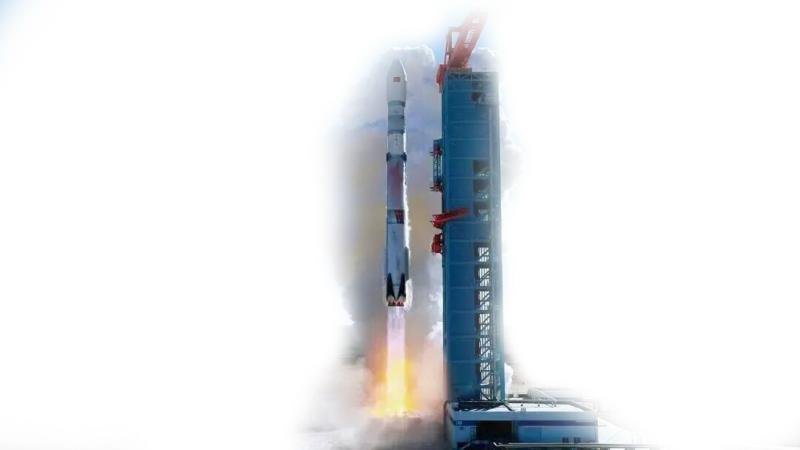
龙虎榜一周动向:投机情绪降温下游资依然活跃!知名游资周五回归商业航天板块
Mei Ri Jing Ji Xin Wen· 2026-01-24 23:47
市场每天都有几十只个股涨停,但未必都是机会。 龙虎榜是"明牌",席位背后的关联性是"暗牌"。跟踪席位能让你看清是谁在主导行情,是机构在调仓, 还是游资在对倒出货。 龙虎榜不是拿来"跟买"的,而是拿来"拆解"的。知名席位上榜,自带吸粉效应,次日开盘往往有更高的 溢价。游资席位的分布能帮你分辨谁是"虫",谁是"真龙"。 板块热度 周五,光伏板块掀起涨停潮,捷佳伟创、迈为股份、东方日升、晶科能源、奥特维、高测股份、华民股 份20cm涨停。 当地时间周四,马斯克现身瑞士达沃斯论坛,与贝莱德董事长拉里·芬克展开对话。马斯克表示, SpaceX希望今年通过星舰实现火箭的完全可重复使用,这一突破将使太空进入成本降低100倍。他指 出,在太空设立太阳能AI数据中心是理所当然的事。 有机构指出,商业航天全球产业共振方兴未艾,2026年中国商业火箭公司将迎来多款中大型火箭的首飞 及回收验证,2027年有望开始火箭密集发射及卫星大规模组网。成功完成大载荷或可回收飞行的商业火 箭公司,有望在可靠性和成本方面取得先发优势,2026-2027年是中国商业火箭公司关键的验证窗口 期。从发射历史来看,至今发射成功的商业火箭多为中型和小型固体 ...

专访星际荣耀解放:可回收火箭具有革命性意义 成都基地预计年底亮相
Zhong Guo Jing Ying Bao· 2026-01-23 04:47
Core Viewpoint - The construction of the headquarters for the reusable liquid rocket production base by Star Glory in Chengdu's Shuangliu District is expected to be completed by December 2026, with a design capacity of producing 20 Hyperbola-3 rockets annually [1] Group 1: Strategic Location and Industrial Support - Sichuan was chosen for the rocket engine production and assembly due to its strong industrial and aerospace foundation, rich supply chain resources, and significant government support for commercial aerospace [2] - The strategic decision aligns with national goals to develop the southwestern region, leveraging Sichuan's industrial base, policy support, and geographical advantages [2] Group 2: Future Launch Capabilities - Currently, Star Glory relies on the Wenchang base in Hainan for launch tasks, but there is potential for future commercial launches from the Xichang Satellite Launch Center, which would enhance efficiency and reduce costs [3] Group 3: Cost Reduction and Technological Advancements - Reusable rockets are seen as a key to revolutionizing commercial aerospace by significantly lowering the cost of access to space, with the potential for substantial cost reductions through the reuse of high-value components [4] - Successful tests in 2023 demonstrated the feasibility of reusing rockets, with plans for the first orbital launch and sea recovery of the Hyperbola-3 rocket scheduled for mid-2023 [4] Group 4: Challenges in Technology and Safety - The vertical recovery of rockets presents significant technical challenges, including reliable engine ignition, thrust control, and precise navigation, which have been problematic for both domestic and international peers [4][5] - The emergence of reusable rockets introduces new safety management challenges, necessitating a comprehensive approach to ensure safety during recovery operations [5] Group 5: Competitive Landscape and Market Potential - While acknowledging the gap with leading commercial aerospace nations, the rapid development of China's commercial aerospace sector is supported by a robust industrial system and supply chain [6] - The market potential for commercial aerospace is vast, with significant opportunities in communication, navigation, and remote sensing, as well as future ambitions in asteroid mining and lunar exploration [7]
商业航天:以第一性原理推演中国商业航天降本革命(附报告)
材料汇· 2026-01-21 15:30
Core Conclusion - By 2026, China's commercial aerospace industry is expected to reach a turning point in cost reduction for launch capacity, driven by the concentrated deployment of low Earth orbit (LEO) constellations and the normalization of high-frequency launches, with reusable rockets nearing breakthroughs in reducing unit launch costs. The industry's business model will shift from state-driven tasks to market-driven profitability, with a valuation logic transitioning towards "space infrastructure" as application scenarios and business models are restructured [3]. Market Outlook - 2026 is anticipated to be a prosperous year for China's commercial aerospace sector, with an accelerated pace of multi-constellation launches transitioning to large-scale deployment, leading to a rapid increase in rocket launch frequency. The commercial rocket launch service market in China is projected to grow from 10.26 billion yuan in 2025 to 47.39 billion yuan by 2030, corresponding to a CAGR of approximately 35.8%, primarily driven by high-frequency launch demand from dense deployment of LEO constellations [4][11]. - The industry is expected to maintain medium to long-term growth, with over 237,000 satellites needing to be deployed in accordance with ITU regulations by 2039. Starlink currently has over 9,000 satellites in orbit, and the demand for subsequent launches remains robust due to tightening frequency resources [4][11]. Cost Reduction Pathways - The essence of commercial rockets is a "space logistics" business, where core variables include efficiency improvements and cost reductions in launch capacity. Key pathways for cost reduction include breakthroughs in full-flow engine technology, high-frequency reuse capabilities, and industrialization in manufacturing [5]. - The unit cost of launching rockets is expected to decrease significantly through various stages: 1. Initial launch cost is approximately 55,000 yuan/kg 2. By around 2026, after achieving first-stage reuse, costs may drop to about 25,000 yuan/kg 3. Upgrading from aluminum to stainless steel structures could further reduce costs to approximately 19,000 yuan/kg 4. With the maturation of recovery methods, costs may decline to around 13,000 yuan/kg 5. Long-term, achieving second-stage reuse could bring costs close to 5,000 yuan/kg [5]. Industry Structure and Investment Opportunities - The commercial rocket industry is still in its early growth and valuation evolution phase. Key catalysts for valuation uplift in China's commercial aerospace sector include the realization of reusable rockets for large-scale LEO satellite networking and the transition from customized to standardized launches through long-term batch tasks [7][8]. - The valuation logic for commercial aerospace companies is shifting from manufacturing-oriented to platform and infrastructure-oriented technology enterprises, covering diverse long-term space mission needs such as manned flights and deep space exploration [8]. Key Players and Market Segments - The core technical barriers in rocket engines are concentrated in critical components such as thrust chambers and turbine pumps. The value in satellite manufacturing is primarily found in communication payloads [9]. - Key companies involved in the aerospace supply chain include: - Power Systems: Yingliu Co., Srey New Materials, Guoji Precision Engineering - Satellite Communication Systems: Shanghai Hantong, Aerospace Electronics, Guobo Electronics - Materials and Structural Components: Western Materials, Parker New Materials, Guoji Heavy Industry, Huazhuo High-Tech - Testing and Verification: Xicai Testing, Su Testing [9][10].




谷神星一号海射型遥七运载火箭发射成功!航空航天ETF天弘(159241)近5日净流入超1亿元,回调机遇备受关注
Sou Hu Cai Jing· 2026-01-19 01:21
Group 1 - The Aerospace ETF Tianhong (159241) has a turnover rate of 14.62% and a trading volume of 1.17 billion yuan, indicating active market participation [1] - The CN5082 index, which tracks the aerospace and aviation industry, has decreased by 1.71%, with component stocks showing mixed performance; Huayin Technology leading with a 5.60% increase [1] - Over the past five trading days, the Aerospace ETF Tianhong has attracted a total of 1.07 billion yuan, with a net inflow rate of nearly 15% [1] Group 2 - The successful launch of the Ceres-1 sea-launched Yaoqi rocket on January 16, 2026, marks the 23rd flight of this rocket, successfully placing the Tianqi constellation's sixth group of satellites into orbit [2] - This launch is part of the Tianqi constellation's scale-up phase, enhancing China's satellite communication capabilities and supporting the growth of the satellite IoT industry [2] - Huaxin Securities suggests that breakthroughs in reusable rockets in 2026 could be a key industry milestone, driven by policy support and the acceleration of domestic satellite constellation plans [2]
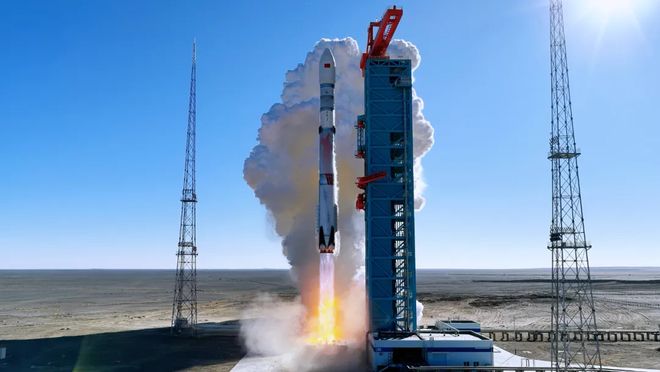
火箭“超级工厂”落子,浙江商业航天按下“加速键”
Guo Ji Jin Rong Bao· 2026-01-14 12:14
Core Insights - The establishment of China's first offshore reusable rocket recovery base and stainless steel rocket "super factory" in Hangzhou's Qiantang District marks a significant breakthrough in the commercial aerospace sector in Zhejiang [1][2] - The project, with a total investment of 5.2 billion yuan, aims to enhance the synergy between "Hangzhou Arrow" and "Hangzhou Star," indicating a key step in building a complete aerospace industry chain in Zhejiang [1][2] Investment and Infrastructure - The Qiantang District's "super factory" will cover an area of approximately 72,000 square meters and is designed to produce 25 rockets annually, facilitating a closed-loop system for rocket recovery, inspection, and re-launch [2][4] - The efficient logistics system, enabled by the district's unique geographical advantage of having a seaport, is expected to reduce launch cycle costs by 50% [3] Industry Ecosystem - Qiantang District has attracted nearly 40 aerospace-related enterprises, creating a comprehensive supply chain from basic materials to core components [4] - The presence of high-level innovation centers, such as the Zhejiang Composite Materials Technology Innovation Center and Zhejiang University Aerospace Manufacturing Research Center, provides ongoing technical support and talent for the industry [4] Policy Support and Strategic Planning - The provincial government has included commercial aerospace in its key industry development list, aiming to optimize industrial structure and cultivate new productive forces [5] - A comprehensive enterprise cultivation system is being established to support various types of enterprises, from small tech firms to world-class companies, fostering a collaborative industrial ecosystem [5] Market Potential and Competitive Advantage - The global commercial aerospace market is transitioning from experimental to engineering applications, with reusable rockets expected to reduce launch costs to one-fourth or one-fifth of traditional rockets [6] - Zhejiang's focus on market-oriented and commercialized approaches, particularly in reusable rockets and satellite applications, positions it favorably in the national aerospace landscape [6] Future Outlook - The completion of the Arrow Technology base is anticipated to make Qiantang District a significant growth hub for the aerospace industry in the Yangtze River Delta, with Zhejiang poised to secure a vital position in the national commercial aerospace sector [7]

蓝箭航天与中国星网、垣信卫星签署正式发射服务合同
Guan Cha Zhe Wang· 2026-01-14 00:49
Core Viewpoint - Blue Arrow Aerospace has received acceptance for its IPO on the Sci-Tech Innovation Board, indicating a significant step towards capitalizing on the growing commercial space industry in China [1] Company Overview - Blue Arrow Aerospace was established in June 2015 and is primarily focused on providing commercial rocket launch services using its self-developed liquid oxygen-methane rockets, particularly the "Zhuque" series [1][2] - The company is controlled by Zhang Changwu and aims to meet the strategic needs of major satellite internet projects in China [1] Product and Services - The core product is the "Zhuque" series of liquid oxygen-methane rockets, which includes the medium-sized Zhuque-2 and the larger reusable Zhuque-3 rockets [4] - The company has successfully executed four liquid-fueled rocket launch missions during the reporting period [4] - Blue Arrow's services primarily cater to the launch needs of near-Earth orbit satellites for communication and remote sensing, with a focus on exclusive launch services [4] Financial Performance - Blue Arrow Aerospace has not yet achieved profitability, with an undistributed profit of approximately -4.84 billion yuan as of June 30, 2025 [5] - The sales volume of the Zhuque-2 series rockets from 2022 to the first half of 2025 was relatively low, with a high customer concentration, as 98% of the revenue in the first half of 2025 came from a single client [5] Market Context - The commercial space industry in China is increasingly reliant on capital support for sustainable development, with companies needing to balance strategic communication and market understanding [6] - Industry experts emphasize the importance of achieving clear milestones in technology and commercialization before going public to gain pricing power [6][7] - The focus for many domestic commercial space companies is on developing practical launch vehicles that address real market demands, particularly in the low Earth orbit satellite sector [7]
商业航天:战略定位升级,核心环节突破
Changjiang Securities· 2026-01-13 06:13
- The report primarily focuses on the commercial aerospace industry, highlighting its strategic importance and the development of its ecosystem, including satellite manufacturing, rocket launches, and downstream applications[9][15][28] - The "Guozheng Commercial Satellite Communication Industry Index" (980018.CNI) is introduced as a quantitative model reflecting the performance of A-share companies in the satellite communication industry, covering the entire value chain from satellite manufacturing to communication services[10][61][80] - The index's construction methodology emphasizes its focus on the aerospace and electronics sectors, with a concentrated weight distribution in core industry segments such as aerospace equipment, communication devices, and semiconductors[10][61][66] - The "Satellite ETF (159206)" is a passive index fund designed to closely track the performance of the Guozheng Satellite Communication Index, employing a full replication strategy to minimize tracking error and deviation[11][83] - The ETF's performance metrics include an annualized tracking error target of less than 2% and a daily tracking deviation of less than 0.2%, with a fund size of 117.69 billion yuan as of January 9, 2026[11][83] - The Guozheng Satellite Communication Index has demonstrated superior returns compared to broader market indices, with a year-to-date return of 18.96% and a one-year return of 122.94% as of January 9, 2026[80][81] - The index's constituent stocks include leading companies in aerospace equipment, electronic manufacturing, and semiconductor design, reflecting a balanced mix of large-cap leaders and growth-oriented mid-cap firms[67][68][70]


卫星ETF广发(512630)盘中回调,2026年我国可回收火箭有望迎来密集试飞,卫星产业长期发展趋势明确
Xin Lang Cai Jing· 2026-01-13 05:33
Group 1: Commercial Spaceflight Developments - The successful suborbital flight test of the "Lihong No. 1" spacecraft marks the first domestic commercial space mission to achieve a parachute recovery from over 100 kilometers [1] - By 2026, multiple reusable rockets such as Zhuque-3, CZ-10B, and others are expected to conduct their maiden flights, potentially reducing launch costs and increasing frequency to meet the growing satellite launch demand [1] - China completed successful maiden flights of Zhuque-3 and Long March 12A in 2025, with further technological iterations needed for first-stage recovery [1] Group 2: Satellite Deployment and Strategic Importance - As of December 2025, China has submitted plans for over 200,000 satellites to the International Telecommunication Union (ITU), setting a new record for satellite constellation applications [2] - The rapid deployment of large satellite constellations reflects the strategic significance of developing commercial space capabilities and the urgency of securing orbital frequency [2] - The U.S. Federal Communications Commission (FCC) has approved SpaceX to redeploy 7,500 second-generation "Starlink" satellites, bringing the total to 15,000, with over 9,000 currently in orbit [2] Group 3: ETF Market Activity - As of January 13, 2026, the CSI Satellite Industry Index has decreased by 3.10%, while the satellite ETF (Guangfa) saw active trading with a turnover of 8.70 billion yuan [3] - The Guangfa satellite ETF reached a new high in scale at 1.816 billion yuan and a new high in shares at 935 million, with significant net inflows totaling 833 million yuan over the past 11 days [3][4] - The CSI Satellite Industry Index focuses more on the upstream manufacturing segment of the satellite industry, with over 25% weight in aerospace equipment, leading to higher potential benefits from industry acceleration [3][4]