
可回收火箭技术

Search documents
2026太空赛道杀疯了!可回收火箭突破临界点,商业航天千亿产业链全曝光
材料汇· 2026-01-23 15:18
Core Viewpoint - The article emphasizes that commercial aerospace is poised for explosive growth by 2026, driven by government support, technological breakthroughs, capital influx, and market demand [6][8]. Group 1: Policy Support - The establishment of a Commercial Aerospace Department by the National Space Administration and supportive policies from over ten provinces have created a favorable environment for the industry [7][22]. - The government has included commercial aerospace in its work reports for two consecutive years, indicating a strategic focus on this sector [22]. Group 2: Technological Breakthroughs - Key advancements include successful tests of reusable rockets and the transition of satellite production to a "mass production" model, significantly enhancing launch capabilities [23][25]. - The Hainan launch site is now operational, supporting up to 16 high-density launches annually [23]. Group 3: Capital Influx - In 2025, the commercial aerospace sector saw a total financing of 18.6 billion yuan, a year-on-year increase of 32%, with significant investments in satellite applications and rocket manufacturing [28]. - More than ten companies are accelerating their IPO processes, indicating a robust interest from investors [28][29]. Group 4: Market Demand - The demand for low-orbit satellite constellations is increasing, with applications in satellite communication, space computing, and space tourism becoming more viable [7][35]. - The article highlights that there are 286 million non-internet users in China, representing a significant market opportunity for satellite communication services [7]. Group 5: Reusable Rocket Technology - Reusable rocket technology is expected to reduce launch costs by up to 60%, marking a shift towards "flight-like launches" in commercial aerospace [41]. - The first successful tests of vertical landing and recovery for rockets have been completed, with multiple rocket types set to debut in 2026 [42]. Group 6: Industry Structure - The commercial aerospace industry is characterized by a collaborative model involving state-owned enterprises, private companies, and local governments, creating a diversified ecosystem [16][22]. - The article outlines the differences between traditional and commercial aerospace, emphasizing the market-driven approach of the latter [15][16].

商业火箭迎关键验证窗口:发动机决定太空探索深度,3D打印则是降本核心!
Hua Er Jie Jian Wen· 2026-01-23 12:29
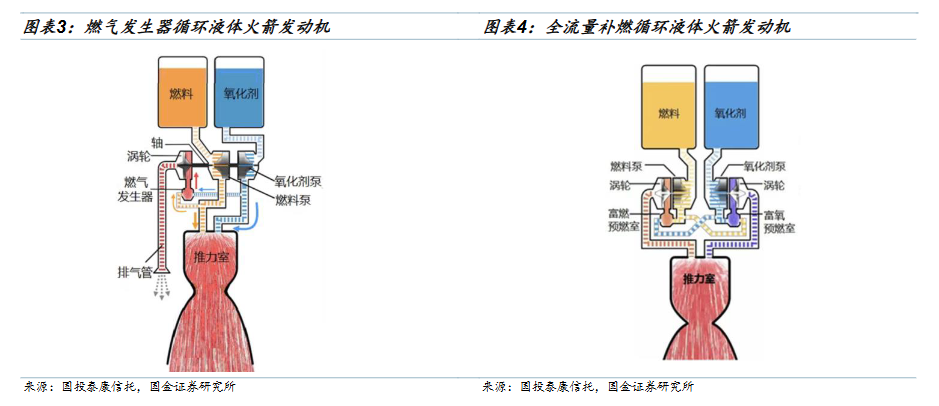
Core Insights - The Chinese commercial space industry is entering a critical development phase, with 2026-2027 identified as a key validation window for medium to large liquid rocket companies, marking the first flights of several rockets and the practical testing of reusable technology [1][3] - The demand for satellite internet and the need for cost-effective launch capabilities are becoming core competitive advantages, with companies needing to achieve a payload capacity of at least 2.8 tons for profitability in near-polar orbits [1][4] - Engine technology advancements, particularly full-flow staged combustion and 3D printing, are seen as the most certain investment logic within the industry [1][5] Group 1: Market Dynamics - The transition from small solid rockets to medium and large liquid reusable rockets is causing profound changes in the supply chain, with core components like 3D printing and large tanks gaining market attention due to their reliability and cost-effectiveness [2] - The success record and payload capacity of commercial rockets are fundamental standards for assessing their commercial value, with a shift towards liquid rockets and reusable technology driven by large-scale satellite networking demands [3][4] Group 2: Technical Developments - The engine evolution is trending towards higher thrust and full-flow staged combustion, with current engines primarily using gas generator cycles, while future designs are expected to adopt more efficient technologies [5][8] - The demand for increased payload capacity is pushing the need for engines with thrust levels reaching 120 tons, and companies are exploring innovative recovery methods to reduce costs [4][5] Group 3: 3D Printing Impact - 3D printing has become a core production capability in commercial aerospace, significantly reducing production cycles and weight, with over 60% of parts in new rocket engines being produced through this technology [9][10] - The Chinese 3D printing market is projected to reach approximately 41.5 billion yuan in 2024, with the aerospace sector accounting for about 16.7% of this market [9][10] Group 4: Structural and Control System Innovations - Rocket structural components are evolving towards larger sizes to meet increased payload demands, with materials like stainless steel and carbon fiber composites being adopted to reduce weight and costs [12] - The control systems are also being upgraded to meet the high-frequency launch requirements of commercial space, with a shift from traditional electric servos to electromechanical hydraulic systems [12]
商业航天,开始告别宏大叙事
财富FORTUNE· 2026-01-19 13:12
Core Viewpoint - The article highlights the volatility in the commercial aerospace sector, illustrated by the dramatic stock price fluctuations of companies like Goldwind Technology, which experienced a significant drop in market value due to regulatory warnings and market sentiment shifts [1][3][4]. Group 1: Market Dynamics - On January 16, Goldwind Technology's stock plummeted from 33.38 yuan to a limit down of 30.04 yuan, resulting in a market value loss of approximately 14 billion yuan within three trading days [1]. - The rapid rise and fall of Goldwind's stock was linked to its association with the commercial aerospace sector, particularly following a surge in market interest driven by IPO expectations [4][5]. - Regulatory interventions by the Shanghai Stock Exchange targeted companies like Hangxiao Steel Structure and Electronics Science Digital for inaccurate information related to commercial aerospace, contributing to a market sell-off [3][5]. Group 2: Regulatory Environment - The regulatory actions were aimed at curbing irrational speculation in the commercial aerospace sector while supporting the industry's long-term development [5][6]. - The China Securities Regulatory Commission has expedited the IPO process for companies in the commercial aerospace sector, indicating strong governmental support for this strategic emerging industry [6]. Group 3: Industry Outlook - The commercial aerospace sector is expected to transition from a "policy incubation period" to an "industrial explosion period" around 2026, with significant advancements anticipated in reusable rocket technology [6][7]. - Recent successful tests of the Long March 12B rocket, designed for commercial launch needs, underscore the industry's focus on reducing launch costs and increasing launch frequency [7]. - The investment logic in the commercial aerospace sector is shifting from speculative narratives to a focus on companies with real orders and technological advantages within the supply chain [8]. Group 4: Investment Implications - Following the end of speculative trading, market attention is likely to concentrate on companies that are directly involved in core model development and supply critical components [8]. - Goldwind Technology, despite its recent stock volatility, serves as a unique observation point for the commercial aerospace sector, reflecting the market's gradual recovery from panic [8].
杭州为何选择箭元
Xin Lang Cai Jing· 2026-01-19 08:56
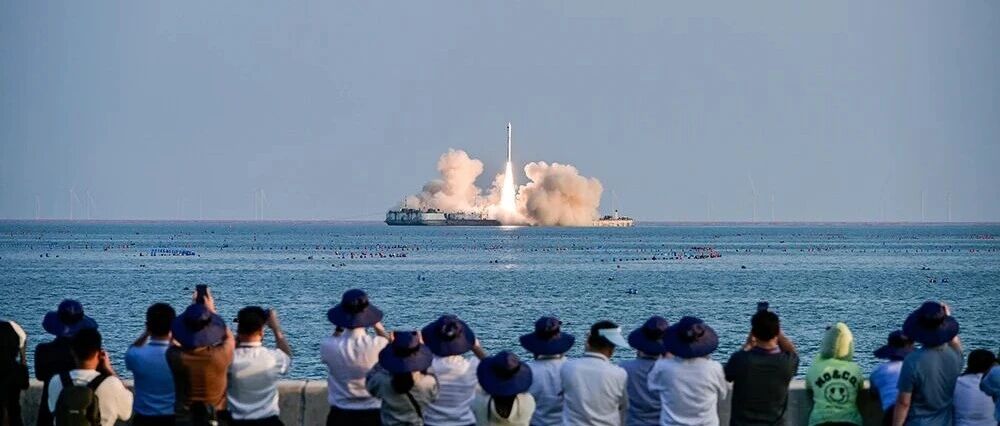
Core Insights - The commercial aerospace industry is on the brink of transformation, with significant developments in companies aiming to replicate SpaceX's success [2][3][11] - SpaceX's valuation has surged to $800 billion, doubling in four months, with an anticipated IPO valuation of $1.5 trillion in 2026, driven by its reusable rocket technology [3][18] - Chinese companies like Blue Arrow Aerospace and Arrow Yuan Technology are emerging as competitors, focusing on large liquid reusable rockets to meet the growing demand for satellite launches [4][19] Company Strategies - Arrow Yuan Technology focuses exclusively on liquid fuel and aims for a fully reusable rocket design, bypassing the solid fuel phase [5][20] - The company has chosen a cutting-edge approach with "liquid oxygen and methane + stainless steel body," which is expected to lower costs significantly compared to traditional methods [6][21] - Arrow Yuan Technology targets the medium to large rocket segment, leveraging economies of scale to enhance payload capacity and reduce costs [7][22] Technological Innovations - The company employs a sea splash recovery method, which is less complex and more cost-effective than traditional landing leg recovery systems [9][23] - Arrow Yuan Technology plans to attempt recovery during its first flight in 2026, having already completed significant preparatory milestones [10][25] Market Dynamics - The Chinese commercial aerospace sector is entering a capital realization phase, with multiple companies, including Blue Arrow Aerospace, filing for IPOs [11][26] - The 2015 policy encouraging private investment in aerospace has led to the emergence of several unicorns in the industry, creating a robust investment landscape [12][27] - Investors are divided between supporting established giants and nurturing future leaders, with significant funding rounds already completed by companies like Blue Arrow Aerospace [13][28] Strategic Vision - The strategic focus of Hangzhou's investment platforms is on nurturing Arrow Yuan Technology as a potential Chinese equivalent to SpaceX, emphasizing the importance of mastering reusable rocket technology [14][29] - The upcoming years are viewed as a golden opportunity for the commercial aerospace sector in China, with expectations for numerous successful reusable rocket launches [14][29]
杭州为何选择箭元
投资界· 2026-01-19 08:47
Core Viewpoint - The article emphasizes the transformative potential of China's commercial space industry, particularly focusing on companies like Arrow Yuan Technology and Blue Arrow Aerospace, which aim to replicate SpaceX's success through advanced reusable rocket technology [2][10][12]. Group 1: Industry Overview - The commercial space sector is on the brink of significant change, with a strategic opportunity for growth highlighted by government officials [2]. - SpaceX's valuation surged to $800 billion in December 2025, doubling from $400 billion in just four months, with an anticipated IPO in 2026 potentially valuing the company at $1.5 trillion [2]. - The demand for satellite launches is projected to reach 200,000 satellites, creating a competitive landscape for companies that can successfully implement reusable rocket technology [2]. Group 2: Company Strategies - Arrow Yuan Technology is directly benchmarking against SpaceX, focusing on liquid fuel and a reusable rocket design that utilizes a "liquid oxygen-methane + stainless steel" approach for cost efficiency [4][6]. - The company aims to launch medium to large liquid reusable rockets, leveraging economies of scale to reduce costs [7]. - Arrow Yuan Technology plans to attempt recovery during its first flight in 2026, having completed significant preparatory milestones, including a successful sea landing recovery test [9]. Group 3: Investment Landscape - Blue Arrow Aerospace has submitted an IPO application with a projected market value of 75 billion yuan, marking a significant step for China's commercial space sector [11]. - Other companies like Zhongke Aerospace and Tianbing Technology are also pursuing IPOs, indicating a growing interest in the sector [11]. - Investment strategies are diversifying, with some investors focusing on established giants while others are nurturing emerging leaders like Arrow Yuan Technology [12].

周末重点速递 | 券商:可回收火箭从0到1迈入黄金发展阶段;空天资源紧缺 商业航天业务有望爆发
Mei Ri Jing Ji Xin Wen· 2026-01-18 15:20
Group 1: Policy Changes and Economic Outlook - The People's Bank of China and the National Financial Regulatory Administration announced a minimum down payment ratio of 30% for commercial property loans, allowing local authorities to set lower limits based on city-specific conditions [1] - In 2026, China's fiscal and monetary policies are expected to remain similar to those of 2025, with a projected economic growth rate of around 4.5% and export growth stabilizing at approximately 4% [2][3] - The anticipated easing of monetary policy may include a 20 basis point interest rate cut and a reserve requirement ratio reduction of 25 to 50 basis points [2] Group 2: Commercial Aerospace Sector - The commercial aerospace sector is expected to experience significant growth driven by policy support, international regulations, and the urgent need for satellite launches, with a projected gap of about 2,500 satellites in the next five years [5] - SpaceX's model of reusability and cost reduction is seen as a benchmark for China's commercial aerospace industry, with domestic companies like Blue Arrow and Star River accelerating their development of reusable rocket technologies [6][7] - Key investment opportunities include satellite production and rocket manufacturing, with recommendations for companies involved in phased production and cost reduction technologies [6][7] Group 3: AI and Healthcare Industry - The "AI + Healthcare" sector is poised for transformation, supported by government policies aimed at promoting AI applications in high-end medical equipment and telemedicine [8] - The global market for AI healthcare solutions is projected to grow from $13.7 billion in 2022 to $155.3 billion by 2030, with a compound annual growth rate (CAGR) of 35.5% [9] - Companies in AI-driven pharmaceuticals, imaging, diagnostics, and healthcare services are expected to benefit significantly, with specific recommendations for firms like Crystal Tech Holdings and iFlytek Medical Technology [10]
一天两发失利,火箭发射扩容并非易事
第一财经· 2026-01-17 16:31
Core Viewpoint - The article discusses the recent failures of two rocket launches in China's aerospace sector, highlighting the challenges faced by both state-owned and private companies in achieving reliable and cost-effective space missions [3][4]. Group 1: Rocket Launch Failures - On January 17, 2026, two rocket launches failed: the Long March 3B rocket carrying the Shijian-32 satellite and the private Ceres-2 rocket from Beijing Xinghe Power Aerospace Technology Co., both experiencing flight anomalies [3][4]. - The Long March 3B rocket is a key player in China's high-orbit satellite launches, known for its high success rate and numerous missions [3]. - The Ceres-2 rocket is still in the preparatory phase for public listing and has issued an apology for the failure, committing to investigate the issues and ensure future success [4]. Group 2: Industry Challenges - The aerospace sector's development is uneven, with the rocket launch segment identified as a significant bottleneck due to low supply, insufficient payload capacity, and high costs [5]. - The industry is facing a "few and expensive" launch situation, with expectations that private rocket companies can effectively supplement the national team to meet high-frequency launch demands [5]. - Achieving high-frequency launches and reducing costs is crucial for the commercialization of the aerospace sector, but it remains a challenging goal [5]. Group 3: Factors Influencing Development - Key factors affecting the development of commercial aerospace include the maturity of technology and launch success rates, particularly for reusable rocket technology [6]. - The cadence of satellite internet constellation projects, such as GW and G60, is a direct driver of rocket demand [6]. - Continuous policy support and safety regulations are essential for the industry's growth, with a focus on high-quality and safe development [6].
2028年启动太空游:力鸿一号首飞回收有望解锁普通人的太空梦
2 1 Shi Ji Jing Ji Bao Dao· 2026-01-15 14:36
Core Viewpoint - The successful suborbital flight test of the Li Hong-1 spacecraft marks a significant step towards commercial space tourism in China, with plans to launch manned space tourism services by 2028 [1][3]. Group 1: Technical Achievements - The Li Hong-1 spacecraft completed a suborbital flight reaching an altitude of approximately 120 kilometers, successfully validating the high-reliability parachute recovery technology and precise landing control for the return capsule [2]. - The spacecraft's design allows for low launch costs and high flexibility, supporting the recovery of experimental payloads, which is crucial for future developments in reusable space vehicles [1][2]. Group 2: Future Plans and Market Potential - The company aims to establish low-cost suborbital scientific experiments and commercial space tourism capabilities by 2027, with a focus on providing short-term weightlessness experiences for the general public [3]. - The development of space tourism is seen as a key driver for the maturation of commercial space technology and the cultivation of new growth points in the space economy [2][3]. Group 3: Industry Context and Competitive Landscape - The successful flight of Li Hong-1 follows other significant milestones in China's commercial space sector, such as the Blue Arrow Aerospace's Zhuque-3 and Long March 12 missions, indicating a broader push towards reusable technology [4]. - The industry is expected to see a shift towards manned space tourism and the integration of various services, including tourism and scientific experiments, to reduce costs and accelerate commercialization [5][6]. Group 4: Long-term Vision - The company plans to upgrade the Li Hong-1 return capsule into an orbital-level space manufacturing spacecraft capable of remaining in orbit for up to one year and being reused at least ten times, facilitating high-value applications such as space pharmaceuticals and advanced semiconductor manufacturing [5][6].
“商业航天”爆发,中衡设计手握头部客户订单,路能走多远?
Quan Jing Wang· 2026-01-14 07:05
Group 1 - China's submission of over 200,000 satellite frequency resource applications to the ITU by December 2025, with more than 190,000 applications from the newly established Radio Innovation Institute, indicates a strategic national focus on satellite frequency resources and ambition in the commercial space sector [1] - Significant breakthroughs in reusable rocket technology are being achieved, leading to a cost revolution and technological upgrades within the aerospace industry, which will benefit related companies in aerospace manufacturing, new materials, and satellite applications [1] - The market has shown strong confidence in the commercial space sector, as evidenced by the stock performance of Zhongheng Design Group, which has seen three consecutive trading limit increases [1] Group 2 - Zhongheng Design, as Jiangsu Province's largest architectural design group and the first publicly listed architectural design company in China, has established a core competitive advantage in high-end industrial building design and a deep understanding of the aerospace industry [2] - The company invested in the rocket manufacturer Zhihang Technology (Suzhou) Co., Ltd. in 2023, marking a shift from a service provider to an "industry builder" by closely binding with key technology enterprises in the upstream of the industry chain [2] - This strategic binding allows Zhongheng Design to gain deeper insights into rocket manufacturing processes and future base requirements, enhancing its design and research capabilities in the commercial aerospace infrastructure sector [2] Group 3 - In 2025, Zhongheng Design plans to deepen its layout by establishing a Commercial Aerospace Architectural Planning Research Center, focusing on niche market demands and refining production processes [3] - The company aims to develop mature design solutions and benchmark projects in areas such as rocket assembly testing bases and satellite production cleanrooms, gaining trust and collaboration from leading aerospace companies [3] - The establishment of a specialized research center is intended to systematically address the unique challenges of aerospace manufacturing and testing processes, creating a reusable and evolving design knowledge system [3] Group 4 - The national push for commercial space development is expected to lead to explosive growth in the demand for rocket and satellite production, resulting in an increase in infrastructure projects such as manufacturing and testing bases [4] - Zhongheng Design's core design business is poised to benefit directly from this trend, with the potential for market expansion in the commercial aerospace infrastructure sector through industry investments and the establishment of specialized research centers [4]


蓝箭航天与中国星网、垣信卫星签署正式发射服务合同,将提供批量发射服务
Guan Cha Zhe Wang· 2026-01-14 00:54
Core Viewpoint - Blue Arrow Aerospace has received acceptance for its IPO on the Sci-Tech Innovation Board, indicating a significant step towards capitalizing on the growing commercial space industry in China [2] Group 1: Company Overview - Blue Arrow Aerospace was established in June 2015 and is primarily focused on providing commercial rocket launch services using its self-developed liquid oxygen-methane rockets [2][3] - The company’s main product is the "Zhuque" series of rockets, particularly the Zhuque-3, which is a medium to large reusable launch vehicle [5] - The actual controller of the company is Zhang Changwu, and it has not yet achieved profitability [6] Group 2: Contracts and Partnerships - Blue Arrow has signed formal launch service contracts with China Star Network and Yuanxin Satellite, positioning itself as a core supplier for major satellite internet projects in China [2] - The company has been selected for the 2025 launch service procurement project by Yuanxin Satellite, which involves launching 18 satellites in one mission [2] Group 3: Market and Product Demand - The company aims to meet the strategic needs of large satellite internet projects, specifically the "GW Constellation" and "Qianfan Constellation," which involve deploying thousands of satellites [2] - The GW Constellation plans to launch approximately 12,992 satellites, with 10% of the deployment expected within five years, while the Qianfan Constellation plans to launch around 15,000 satellites [2] Group 4: Financials and Future Plans - As of June 30, 2025, Blue Arrow's undistributed profits are approximately -4.84 billion yuan, indicating financial challenges [6] - The company plans to raise 7.5 billion yuan through its IPO to enhance the production capacity and technology of its reusable rockets [6] - In the first half of 2025, Blue Arrow's sales to a single customer accounted for about 98% of its revenue, highlighting a high customer concentration risk [6] Group 5: Industry Insights - Industry experts emphasize the importance of capital support for the sustainable development of commercial space ventures, suggesting that companies need to balance idealism with practical market needs [6][7] - The focus should be on developing proven technologies like reusable rockets to reduce costs and meet immediate market demands, while gradually working towards larger goals [7]
