国产品牌崛起

Search documents
运动巨头CEO竞相访华:耐克比阿迪达斯低调
2 1 Shi Ji Jing Ji Bao Dao· 2025-10-22 01:08
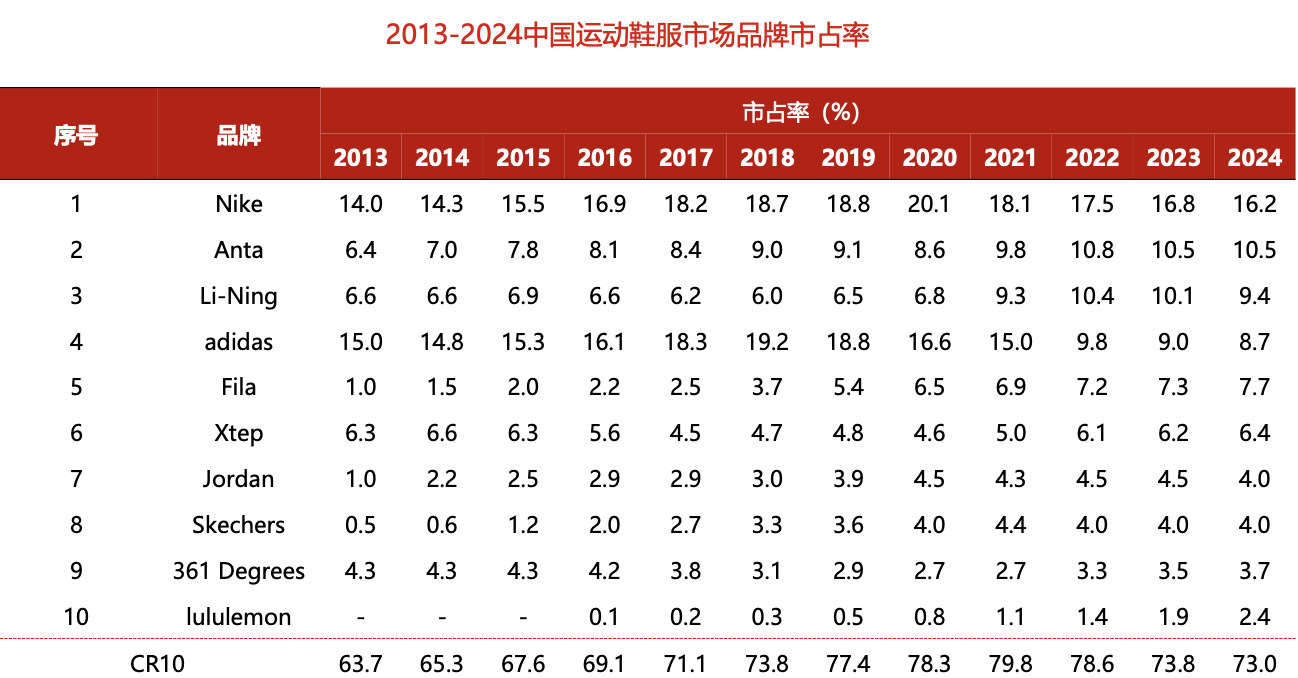
Group 1 - The importance of the Chinese market for global sports giants is increasing, as evidenced by the frequency of visits by top executives [1][2] - Adidas CEO Bjoern Gulden expressed confidence in the Chinese market, noting that 95% of products sold in China are "made in China" and that there is a growing trend towards original Chinese designs [1][2] - Nike's Greater China revenue declined by 10% to $1.512 billion (approximately 10.775 billion RMB) for the latest fiscal quarter ending August 31, 2025, while Adidas reported a revenue increase of 11% to €798 million (approximately 6.653 billion RMB) in the same period [2] Group 2 - Nike's Greater China market share is 13.3%, while Adidas holds 13.4%, indicating a competitive landscape where both brands are closely matched [2] - Despite the revenue decline, Nike remains the market leader with a share of 16.2%, followed by Anta at 10.5% and Li Ning at 9.4%, while Adidas has fallen to a 2024 market share of 8.7% [2] - The rise of domestic brands is posing a significant challenge to international players like Nike and Adidas [4][5]


耐克,在大中华区少卖了10个亿
21世纪经济报道· 2025-10-17 13:35
Core Viewpoint - The article discusses the competitive landscape of the global sports footwear and apparel industry, primarily focusing on the rivalry between Nike and Adidas, and highlights the rise of domestic brands in China, which has intensified competition and impacted the market shares of these global giants [1][9]. Group 1: Historical Context and Market Dynamics - The global sports footwear and apparel industry was historically dominated by German, American, and Japanese brands before Nike's rise in the 1980s, when it first surpassed Adidas in North America with a market share of 50% [1]. - Adidas faced challenges in the 1990s but revived its brand through the Originals retro series and strategic acquisitions, leading to a competitive duopoly with Nike [1]. - In China, the competition has shifted since 2017, with domestic brands like Anta, Li Ning, and FILA gaining market share, resulting in Adidas's market share dropping below that of Nike, Anta, and Li Ning by 2024 [1]. Group 2: Nike's Performance and Challenges - Nike's revenue in Greater China for the latest fiscal quarter fell by 10% year-on-year to $1.512 billion (approximately 10.775 billion RMB), with a decline in both direct and wholesale channels [3][4]. - The company is facing structural challenges, including decreased foot traffic and a highly promotional market environment, which have pressured sales and profitability [4][5]. - Despite a strong performance in the running category, Nike's overall business in China is under pressure, necessitating increased investment to maintain market order [3][4]. Group 3: Competitive Landscape and Domestic Brands - The intensifying competition in the Chinese market is attributed to both overall market pressures and the rapid rise of domestic brands, which are increasingly seen as offering comparable products to Nike [5][6]. - Domestic brands are leveraging local manufacturing and innovative marketing strategies to enhance their market positions, further eroding Nike's pricing power [6][7]. Group 4: Adidas's Strategic Moves - Adidas has reported a 2.2% year-on-year revenue increase to €5.952 billion (approximately 49.625 billion RMB) in Q2, with Greater China being a significant growth driver, showing an 11% increase to €798 million (approximately 6.653 billion RMB) [9][10]. - The company's operating profit margin in China reached 22.7%, surpassing that of its European and North American markets, indicating a strong recovery in this region [9][10]. - Adidas's CEO has made multiple visits to China, emphasizing the strategic importance of the market and the company's commitment to local production and design [10][11]. Group 5: Future Outlook and Strategic Responses - Both Nike and Adidas are increasing their investments in China to counteract competitive pressures, with Nike focusing on enhancing its retail experience and product offerings [14][15]. - Nike's recent leadership changes, including the appointment of a new CEO for Greater China, reflect its strategy to strengthen its market presence and adapt to local consumer preferences [15]. - The competitive landscape in the domestic sports market is becoming increasingly heated, with both global brands and local players vying for market share [15].


激战中国市场:耐克销售下滑,阿迪达斯“高调”进击
2 1 Shi Ji Jing Ji Bao Dao· 2025-10-17 12:42
Core Insights - The global sports footwear and apparel industry is largely characterized by the competition between Nike and Adidas, with a historical context of dominance by German, American, and Japanese brands before Nike's rise in the 1980s [1][2]. Market Dynamics - Nike surpassed Adidas in North America in 1980, achieving a market share of 50%, while Adidas struggled due to a lag in the sports fashion trend [2]. - Since 2017, domestic brands like Anta and Li-Ning have rapidly gained market share in China, leading to a significant decline in Adidas's position, which fell below Nike, Anta, and Li-Ning by 2024 [3][4]. Performance Metrics - In the Chinese market, Nike's market share decreased from 18.1% in 2021 to 16.2% in 2024, while Adidas's share dropped from 15% to 8.7% during the same period [12]. - As of the latest fiscal quarter, Nike's revenue in Greater China fell by 10% to $1.512 billion (approximately 10.775 billion RMB), with a notable decline in both direct and wholesale channels [7]. Competitive Strategies - Adidas reported a 2.2% increase in revenue to €5.952 billion (approximately 49.625 billion RMB) in Q2, with Greater China being a key growth driver, showing an 11% increase to €798 million (approximately 6.653 billion RMB) [11]. - Adidas's operating profit margin in China reached 22.7%, surpassing that of Europe and North America, indicating a strong performance in the region [11]. Brand Positioning - Domestic brands are increasingly competitive, with claims that they have closed the product gap with Nike, focusing on high-quality products at competitive prices [9]. - Nike is responding to market pressures by enhancing its investment in China, including the transformation of retail spaces into sports experience centers and optimizing product offerings [15][18]. Leadership Changes - Nike appointed Dong Wei as the new chairperson and CEO for Greater China, emphasizing the importance of the Chinese market in its recovery strategy [18][19].
新疆高端鹅绒,要“火”了!
Huan Qiu Wang· 2025-09-11 09:26
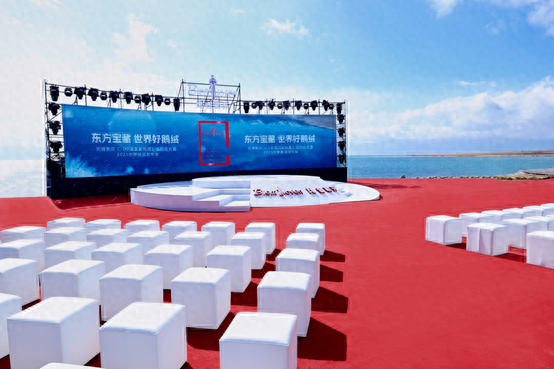
Core Viewpoint - The article highlights the rise of Chinese brands in the high-end down apparel market, challenging the long-standing perception that European down is superior to Chinese down. It emphasizes that China is the largest producer of down globally, with leading quality and processing techniques, and that domestic brands are gaining recognition on the international stage [1][9]. Industry Insights - China is the world's largest producer of down, accounting for over 80% of global production, yet historically, it has been underrepresented in the high-end market [8]. - The launch of the Biyinlefen 2025 down series, made entirely from Chinese materials, signifies a shift in the global high-end down apparel market, allowing Chinese brands to compete directly with international giants [1][6]. Product Development - The Biyinlefen 2025 down series utilizes high-quality down sourced from the Ili Kazakh Autonomous Prefecture in Xinjiang, which is located on the "world's golden down belt" [3][5]. - The down's superior quality is attributed to the region's unique climate and a long history of goose farming, resulting in larger, fluffier, and cleaner down clusters with enhanced thermal performance [3][5]. Quality Assurance - The down from Xinjiang has been certified by multiple professional testing organizations, achieving a comprehensive score of 94.03 in core quality indicators, surpassing samples from Hungary, Siberia, and Canada [5]. - The processing of the down involves meticulous techniques, including a 12-step washing process and high-temperature drying, resulting in a low residual fat rate and dust content, which exceeds international standards [6][11]. Market Positioning - The emergence of Biyinlefen and its focus on high-quality domestic down signifies a new era for Chinese brands, which are no longer content with merely following international standards but are now defining their own value systems [8][9]. - The brand aims to shift the perception that high-end down must be imported, showcasing that domestic products can meet and exceed international quality benchmarks [6][9]. Economic and Cultural Impact - The Biyinlefen 2025 down series represents not just a product innovation but also a broader economic and social significance, promoting the transformation of China's apparel industry towards higher value and sustainability [11][12]. - The strategic partnership with China National Geography aims to merge geographical culture with outdoor fashion, enhancing the cultural narrative of Chinese design and materials [2][11]. Future Outlook - The success of Biyinlefen is expected to pave the way for other Chinese brands to explore the potential of domestic down, potentially positioning Xinjiang down as a global fashion staple [9][12]. - The article suggests that as China's national strength grows, so will the global recognition of its high-end apparel brands, driven by cultural confidence and technological innovation [12][13].
北交所新消费产业研究系列(一):中国宠物市场方兴未艾,多维度梳理优质宠物食品公司-20250905
Hua Yuan Zheng Quan· 2025-09-05 05:55
Group 1: Industry Overview - The pet market in China is experiencing robust growth, with the urban dog and cat consumption market size increasing from 170.8 billion yuan in 2018 to 300.2 billion yuan in 2024, reflecting a compound annual growth rate (CAGR) of 9.86% [6][9] - The pet food segment remains the largest market share at 52.8% in 2024, while the medical market holds 28.0% [6][9] - The concentration of pet food brands in China is relatively low compared to the U.S., with the top ten brands accounting for only 26% of sales in 2024, indicating potential for new entrants [15][18] Group 2: Product Strategies - Companies are adopting multi-brand strategies to diversify their product offerings, with Guobao Pet's brands targeting different market segments, including high-end and low-end products [28][30] - Zhongchong's pet food revenue from snacks is projected to reach 70% in 2024, while its main food revenue is steadily increasing [32][38] - Petty's plant-based chewing gum and meat snacks are significant revenue contributors, with plant-based products accounting for 36.6% of total revenue in 2024 [42][43] Group 3: Research and Development - Guobao Pet leads in R&D spending, with its R&D expenses projected to grow from 44.05 million yuan in 2020 to 85.48 million yuan in 2024 [2][3] - Zhongchong's R&D expenses are expected to increase by 52% year-on-year to 72.68 million yuan in 2024 [2][3] - Lusi's R&D expense ratio is the highest in the industry, reaching 3.04% in 2024 [2][3] Group 4: Capacity Expansion - Companies are expanding their production capacities globally, with Zhongchong establishing factories in North America and Guobao Pet expanding in Thailand [2][3] - Petty's production facilities are distributed across New Zealand, China, and Southeast Asia, while Lusi is developing a factory in Cambodia [2][3] Group 5: Marketing Strategies - Companies are increasing their marketing expenditures to enhance brand influence, with Guobao Pet's sales expense ratio exceeding 20% in 2024 [2][3] - Zhongchong is actively participating in co-branding activities and leveraging authoritative media endorsements [2][3] - Petty focuses on scenario-based marketing, while Lusi emphasizes participation in industry exhibitions [2][3] Group 6: Financial Performance - Guobao Pet shows the highest revenue and net profit growth rates from 2021 to 2024, with a revenue CAGR of 26.8% and a net profit CAGR of 64.2% [2][3] - In 2024, Guobao Pet's domestic revenue is expected to account for 67.7% of its total revenue, while Petty's overseas revenue is projected to be 82.6% [2][3] - As of September 4, 2025, Guobao Pet has the largest market capitalization at 39.6 billion yuan, with a price-to-earnings (PE) ratio of 51x [2][3]
国泰海通|农业十讲研究电话会
国泰海通证券研究· 2025-08-30 09:02
Group 1 - The article discusses various agricultural sectors, including pig farming, pet industry, poultry, animal health, feed, planting, plant extraction, and high-end blueberries, highlighting their current trends and future opportunities [4][5]. - Specific events and discussions are scheduled from September 1 to September 11, focusing on different topics each day, indicating a structured approach to analyzing these sectors [4][5]. - The research emphasizes the emergence of new logic and phases in the pig industry, the rise of domestic brands in the pet sector, and the recovery of poultry prices, suggesting a dynamic market environment [4][5]. Group 2 - The article outlines the importance of understanding market conditions, such as grain price trends and product variety changes in the planting sector, which are crucial for investment decisions [5]. - It also points to the growing trend towards natural health products in plant extraction, indicating a shift in consumer preferences that could present investment opportunities [5]. - The discussions on high-end blueberries suggest innovative methodologies that could reshape market strategies, reflecting a focus on quality and differentiation in agricultural products [5].

预见2025:《2025年中国功能性护肤品行业全景图谱》(附市场现状、竞争格局和发展趋势等)
Qian Zhan Wang· 2025-08-08 02:08
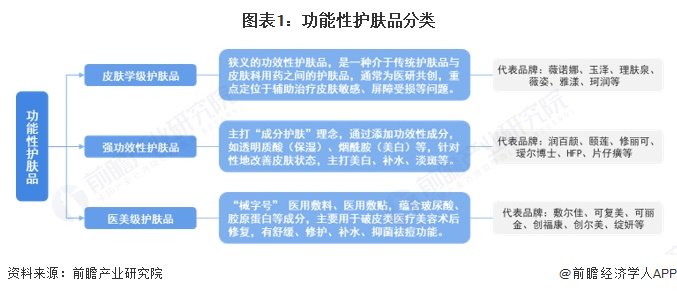
Core Insights - The functional skincare industry in China is experiencing a rise of domestic brands, with a focus on products that address specific skin issues and provide therapeutic benefits [1][8] - The market size for functional skincare products is projected to exceed 480 billion yuan by 2024, driven by increasing consumer demand for safety and efficacy [25][31] Industry Overview - Functional skincare products are defined as cosmetics or medical devices that target specific skin problems and possess pharmacological effects [1] - The industry is currently in a phase of domestic brand emergence, with significant growth in market share for local brands like Winona and Huaxi Biological [8] Industry Chain Analysis - The functional skincare industry chain consists of upstream raw material suppliers, midstream manufacturers, and downstream sales channels [4][6] - Key raw materials include collagen, hyaluronic acid, and peptides, while packaging materials range from paper to glass [4] Market Development History - The industry has gone through three stages: initiation (1998-2008), transformation (2009-2014), and the current rise of domestic brands (2015-present) [8] - The entry of brands like Vichy and Avene marked the beginning of the functional skincare market in China [8] Policy Background - The industry is governed by regulations applicable to both cosmetics and medical devices, focusing on efficacy claims and labeling management [11][13] Current Market Status - The market is characterized by three main segments: dermatological skincare, high-efficacy skincare, and medical-grade skincare [14] - Consumers are increasingly focused on product efficacy, safety, and ingredient transparency, particularly for sensitive skin [15][16] Sales Channels - Online sales channels dominate the market, with companies like Proya achieving significant revenue from e-commerce [20] - The sales strategy often includes a combination of online and offline channels to maximize reach [19] Profitability - The gross profit margins for most listed companies in the functional skincare sector exceed 70%, with some companies like Jinbo Biological reaching 92.02% due to their focus on medical devices [24] Market Size and Growth - The functional skincare market in China has grown from 10.25 billion yuan in 2017 to an estimated 48.743 billion yuan in 2024 [25][28] - The market is expected to reach 86 billion yuan by 2030, with a compound annual growth rate of approximately 9.0% [33] Competitive Landscape - The competitive landscape is led by companies like Betaini, which holds an 11.71% market share, followed by Huaxi Biological and others [31] - The industry is concentrated in coastal regions, particularly Shanghai and Guangdong [28] Future Trends - The penetration rate of functional skincare products is expected to increase, with a focus on product innovation and medical endorsements [35] - The industry is likely to see intensified competition as consumer preferences evolve towards more personalized and effective solutions [33]


新消费&创新药框架培训——宠物食品行业投资框架和发展趋势
2025-08-05 15:42
Summary of the Pet Food Industry Conference Call Industry Overview - The Chinese pet food industry is projected to reach approximately 53 billion yuan by 2024, with cat food accounting for 59% of the market, approximately 31.6 billion yuan, showing an 8% year-on-year growth, while dog food is around 21.6 billion yuan, remaining stable year-on-year. The penetration rate of pet food in China is significantly lower than that in the US and Japan, indicating substantial growth potential [1][7] Key Trends and Insights - The high-end cat food market has rapidly grown from 1.8 billion yuan in 2013 to 16.5 billion yuan, with a compound annual growth rate (CAGR) of 23%, driven by the rise of Generation Z pet owners and the formation of scientific feeding concepts. This segment is crucial for domestic brands to enhance profitability [1][8] - E-commerce has become a dominant channel, capturing 68% of the market share in 2023, significantly altering the competitive landscape and allowing domestic brands to rapidly gain market share against traditional overseas brands [1][9] - The market share of domestic brands like Guobao and Zhongchong has significantly increased, with the top ten pet food companies in China now predominantly consisting of domestic brands, reflecting a shift from foreign dominance [1][10] Competitive Landscape - The concentration ratio (CR10) of the Chinese pet food industry is approximately 32% in 2024, indicating a trend towards increased company-level concentration [1][9] - Domestic brands are expected to continue gaining market share, with Guobao's market share projected to exceed 20% in the future [4][12] Future Growth Potential - The pet food industry aligns with economic development trends and is closely related to demographic and family structure changes. Consumers show reduced price sensitivity post-pet ownership, indicating a stable market outlook [5] - The pet medical industry is anticipated to experience significant growth in the next 3-5 years, driven by an aging pet population and the rising demand for specialized products like senior and functional pet food [14] Investment Recommendations - Despite recent market corrections, leading domestic companies like Guobao and Zhongchong are expected to stabilize and maintain rapid growth post-half-year report. Therefore, the industry is recommended for investment [15]
中国猫狗吃中国粮!12个宠物品牌闯入“全球品牌中国线上500强榜单”,其中10个是国产
Zhong Guo Jing Ji Wang· 2025-05-28 06:04
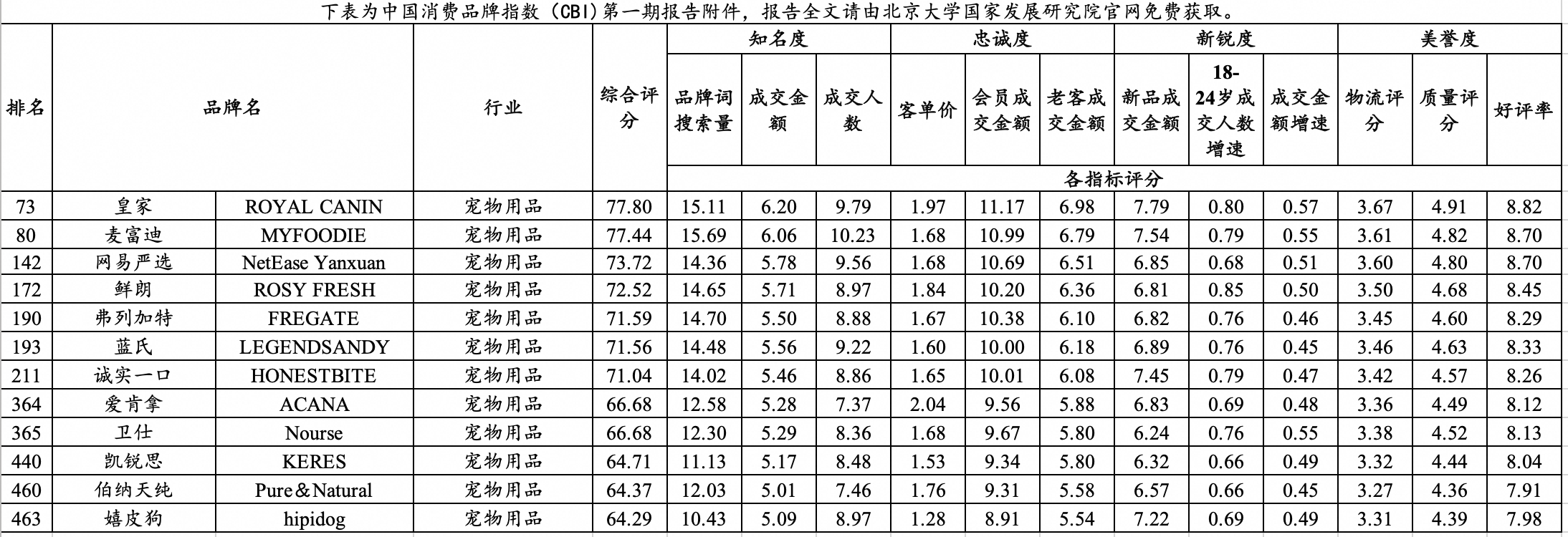
Core Insights - The article highlights the emergence of domestic pet food brands in China, showcasing their growth and market acceptance among young pet owners, indicating a shift from being mere manufacturers to becoming recognized brands [1][3]. Industry Overview - The "Global Brand China Online 500 Strong List" (CBI500) reveals that 10 out of 12 pet brands listed are domestic, with Myfoodie ranking 80th overall and second in the pet industry [1][2]. - The report indicates that the market share of China's pet food industry is only 24%, significantly lower than that of the US and Japan, suggesting substantial growth potential [3]. Brand Performance - Myfoodie and other domestic brands like Fresh and Fregate have shown remarkable performance, with Myfoodie surpassing traditional foreign giants in brand search volume and transaction numbers [3][5]. - During the Tmall 618 sales event, five domestic brands dominated the pet product sales leaderboard, all of which are included in the CBI500 list [3]. Consumer Demographics - The CBI500 list aligns closely with the profile of Tmall's 88VIP members, with 66.9% of pet owners identified as middle to high-income consumers, supporting the premiumization of domestic brands [5]. Innovation and Growth - Domestic brands are excelling in "newness" metrics, including sales growth, young user acquisition, and product innovation, with companies like Myfoodie and Fregate leading in R&D spending [5]. - The article notes that half of the listed domestic pet brands were established after 2015, indicating a rapid evolution in the industry from technology followers to standard setters [5]. Export Potential - China's pet food exports are projected to grow by 22.06% year-on-year in 2024, reflecting the increasing global recognition of "Chinese grain" [5].
高毅资产卓利伟:从需求变化到供给创新,消费行业的结构性分析
高毅资产管理· 2025-05-09 07:10
Core Viewpoint - The consumption industry in China has undergone significant changes and innovations over the past few years, leading to a unique economic structure that balances both consumption and production. The evolution of consumer demand, product innovation, and management innovation is driven by factors such as demand stratification, technological iteration, the rise of domestic brands, and emotional value needs [1][3]. Macro Observations - The "three-phase overlap" in China will ultimately create a unique economy that emphasizes both consumption and production. Changes in population dynamics, such as aging and smaller family units, influence different consumption categories [5][6]. - By the end of 2023, household consumption expenditure is expected to account for less than 40% of GDP, but this trend is on the rise due to a decrease in the weight of real estate in household asset allocation [6][8]. - China's high savings rate has seen household savings increase from over 90 trillion to nearly 160 trillion in the past five years, improving the overall asset-liability structure and cash flow of households [8]. - The structural changes in population demographics, particularly the rise of Generation Z as a consumer force, are significantly impacting demand structures and consumption patterns [8][9]. - The unique structure of the Chinese market, being both the largest producer and the second-largest consumer, allows for distinctive business model evolution, characterized by integrated commercial models that combine multiple brands and products [9][10]. Technological Progress and Management Innovation - Technological advancements are driving the integration of business models and management innovations, allowing for rapid response and product iteration in the consumer services sector [10][12]. - The digital capabilities of companies in China enable them to analyze consumer behavior data effectively, leading to optimized operations and improved profitability [12][13]. - Over time, technological progress will amplify differences in corporate capabilities and accelerate the differentiation among companies within the same industry [13]. Industry Observations and Case Studies - Consumption trends in China reflect a coexistence of upgrading, downgrading, and stratification, with different consumer segments experiencing varying trends [15][16]. - International brands are losing their allure in China, while domestic brands are gaining market share in sectors like cosmetics and durable goods due to improved product quality and consumer perception [18][19]. - The rise of domestic brands in high-end markets, such as automobiles, indicates a shift in consumer preferences and a growing confidence in local products [19]. - The industrialization of IP (intellectual property) in China is supported by a strong talent pool in software engineering and design, leading to significant advancements in various sectors [20][21]. - The penetration and concentration of the chain service industry in China are expected to increase, with the current penetration rate in the hotel industry being only around 30%, significantly lower than in developed countries [22][23]. Conclusion - Despite recent challenges in the consumption industry, there are abundant investment opportunities across various segments as the economy gradually recovers and new consumption patterns emerge. China is poised to become a unique market that balances manufacturing and consumption, with significant potential for domestic brands to expand both locally and internationally [24].