国产AI芯片

Search documents
专注推理,放弃训练!一家中国GPU公司要差异化突围
2 1 Shi Ji Jing Ji Bao Dao· 2026-02-02 09:56
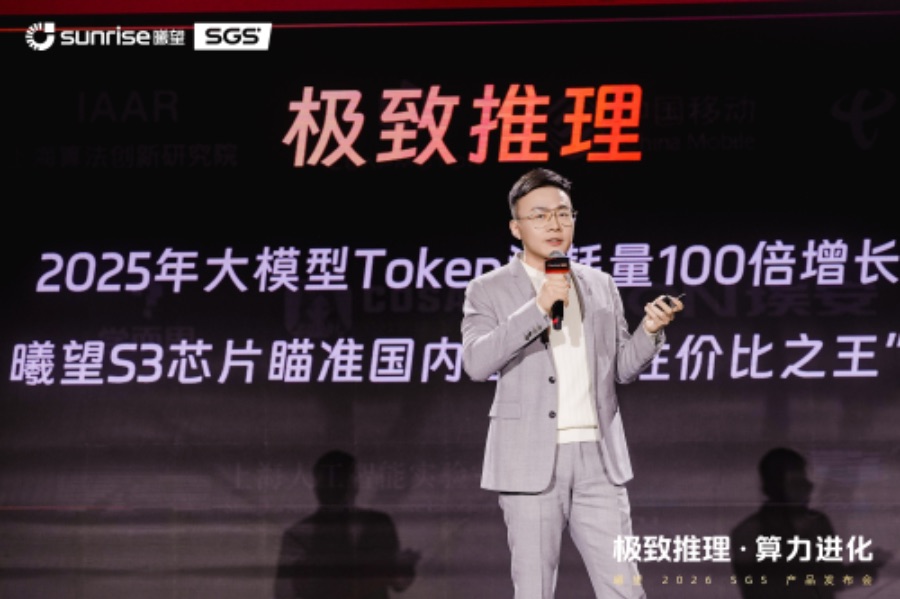
2025年,全球大模型token消耗量涨了100倍。每一笔消耗都意味着一次AI推理,而每一次推理的成本,正在成为AI公司能否盈 利的关键。 根据德勤报告,到2026年,推理算力在整体AI计算中的占比将超过训练,达到66%。大模型从"被训练出来"走向"被用起来",推 理从技术配角变成了商业主力。 "训练市场是头部玩家的游戏,门槛越来越高,收敛得很快。"曦望董事长徐冰在采访中向21世纪经济报道记者表示,"但推理是 百花齐放的,需求看不到天花板。" 日前,曦望发布了公司新一代推理GPU——启望 S3。这家公司脱胎于商汤科技大芯片部门的公司,于2025年初独立运营,一年 内完成近30亿元战略融资,股东阵容兼具产业龙头与国资背景机构。 曦望选择了一条看似窄众的道路:All in推理,放弃训练。这在GPU公司竞相标榜"训推一体"或"算力领先"的语境里,像是一次 主动的战略收缩,而管理层认为这是聚焦。 国产AI芯片赛道正在进入一个更务实、更分化的新阶段。这背后,既有对市场趋势的预判,也有在现有技术、生态和供应链约 束下的务实考量。 "大模型的训练需要万卡甚至十万卡的大规模集群,成本极高,是少数巨头的游戏。而用为训练优化的昂 ...

上海芯片独角兽,也要IPO了
凤凰网财经· 2026-02-01 12:08
Core Viewpoint - The article discusses the upcoming IPO of Shanghai Suiruan Technology Co., Ltd., the last of the "Four Little Dragons" in the domestic GPU industry, which aims to raise 6 billion yuan and has reached a valuation of 20 billion yuan prior to its listing [2][3]. Group 1: Company Overview - Suiruan Technology, founded in 2018 by Zhao Lidong, a former AMD employee, is the earliest established company among the "Four Little Dragons" [2][11]. - The company has developed four generations of AI chips, covering both training and inference scenarios, including the "SuiSi" series chips and "Suiruan" intelligent computing clusters [13][15]. Group 2: Investment and Financial Performance - Tencent is the largest shareholder, holding 20.258% after multiple rounds of investment totaling 3.4 billion yuan in the Pre-A round and subsequent rounds [5][6]. - Suiruan Technology's revenue grew from 90 million yuan in 2022 to 720 million yuan in 2024, reflecting a compound annual growth rate of 183.15%, despite cumulative losses exceeding 5 billion yuan over three years [15]. Group 3: Market Position and Competition - In the domestic AI accelerator card market, Suiruan Technology holds approximately 1.4% market share, with sales of about 38,800 units, while Nvidia dominates with a 70% market share [15]. - The article highlights the distinct strategies of the "Four Little Dragons," with Suiruan focusing on cloud AI computing and inference markets, positioning itself to capture significant commercial value [16]. Group 4: Future Outlook - The IPO of Suiruan Technology is anticipated to follow the successful market entries of its peers, with expectations of strong performance post-listing [16][18]. - The competitive landscape is evolving, with major players like Baidu and Alibaba also entering the domestic chip market, indicating a bifurcation into "Four Little Dragons" and "Big Factory" camps [17].
上海芯片独角兽,也要IPO了
投中网· 2026-02-01 06:41
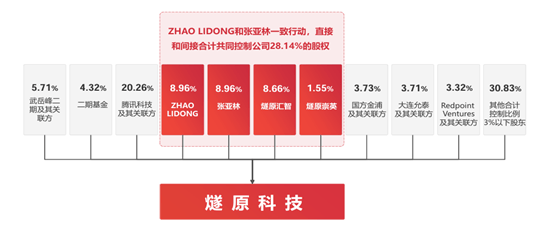
将投中网设为"星标⭐",第一时间收获最新推送 短短数月间,国产AI芯片产业打开了全新的资本局面。 国产GPU"四小龙"最后一家也即将登陆资本市场。 作者丨黎曼 编辑丨 王庆武 来源丨 投中网 时间来到2024年底的E轮融资,也是IPO前的最后一轮,腾讯作为参投方之一持续在场。本轮融资后,公司投后估值超200亿 元。 上交所信息,上海燧原科技股份有限公司科创板IPO获受理,拟募资60亿元。 燧原科技是"四小龙"中成立时间最早的,由清华无线电85系、曾任职AMD的赵立东创立于2018年。上市前,在上百位股东的 支持下,燧原科技估值来到200亿元。 从摩尔线程、沐曦股份先后登陆科创板,到壁仞科技登陆港股,再到燧原科技IPO受理,短短数月间,国产AI芯片产业打开了 全新的资本局面。 又有上百个股东"赢了" 燧原科技背后站上了上百位股东,皆迎来"收获"。 其中,腾讯无疑是最大赢家:连续投资六轮,持股20.258%,位居第一大股东。 腾讯首次投资是在2018年8月的Pre-A轮融资中,总额3.4亿元,腾讯领投,种子轮投资方亦合资本、真格基金、达泰资本、云 和资本继续跟投。该轮融资打破了当年行业纪录。 2019年6月,燧原 ...

【看新股】燧原科技拟IPO:国产GPU企业 腾讯为大股东贡献七成营收
Sou Hu Cai Jing· 2026-01-28 23:47
Core Viewpoint - Shanghai Suyuan Technology Co., Ltd. is planning to go public on the Science and Technology Innovation Board, aiming to raise funds for product R&D, business expansion, and supply chain security to enhance the independent innovation capability of domestic AI chips [1][3]. Group 1: Company Overview - Founded in March 2018 by Zhao Lidong and Zhang Yalin, Suyuan Technology has developed four generations of cloud AI chips and built a comprehensive product system covering AI chips, AI acceleration cards, intelligent computing systems, and AI software platforms [1][2]. - The company has a strong background in AMD, with both founders having significant experience in chip development and management [2]. Group 2: Financial Performance - Since 2022, the company has experienced rapid revenue growth, with revenue increasing from 90.1 million yuan in 2022 to 722.4 million yuan in 2024, representing a compound annual growth rate of 183.15% [3]. - Despite revenue growth, the company has incurred significant losses, with cumulative net losses exceeding 5 billion yuan since 2022, and the earliest expected time to reach breakeven is 2026 [5]. Group 3: Customer Concentration - Tencent is both a major shareholder and customer, holding 20.26% of the company's shares and contributing over 70% of total revenue in the first three quarters of 2025 [1][10]. - The company has a high customer concentration, with sales to the top five customers accounting for over 90% of total revenue during the reporting period [5][6].
CPU涨价叠加国产模型潜在更新,数字芯片含量高的科创芯片设计ETF易方达(589030)受资金关注
Xin Lang Cai Jing· 2026-01-21 06:12
市场催化:海外CPU开始涨价,国内受海外映射影响。继2025年第三季度消费级CPU涨价,近期AMD 与Intel再出上调服务器CPU价格的消息,幅度为10-15%。同时,两家企业2026年的产能已基本预订一 空。 跟踪上证科创板芯片设计主题指数,数字芯片设计权重占比达到76.3%,或充分受益于国产AI芯片产业 上行趋势。 相关产品:与国产AI芯片相关度最高的ETF为科创芯片设计ETF易方达(589030) 中期逻辑:国产模型潜在更新,叠加互联网提高国产芯片使用比例,共同推动国产芯片需求。可适配国 产芯片的国产模型近期迭代频出(如近期DeepSeek在GitHub更新代码,提出可能是新架构的 MODEL1),性能提升有望驱动更多应用场景,进而带动国产卡对应的推理需求。此外,互联网厂商 2026年有望进一步提高国产卡的配置比例,或成为国产卡的主要边际增量之一。 ...


国产GPU上市奇观:同是国产AI芯片,A股与港股天差地别
Sou Hu Cai Jing· 2026-01-09 09:59
Core Viewpoint - Nvidia has become a significant player in the tech industry, with its market value surpassing $5 trillion, leading to a surge in interest for domestic GPU companies in China, prompting them to pursue IPOs [1] Group 1: IPO Performance - The four domestic GPU companies, known as the "Four Little Dragons," have successfully gone public, with two listed on the A-share market and two on the Hong Kong stock market [3] - Moer Technology and Muxi Co., Ltd. listed on the A-share market, experiencing explosive growth, with Moer Technology's stock price rising by 500% on its debut, leading to a current market value of over 300 billion yuan [5] - Muxi Co., Ltd. had an initial price of 104.66 yuan, with a debut market value of over 418 billion yuan, and has since reached around 250 billion yuan, ranking second among the four companies [5] Group 2: Comparison of Market Performance - In contrast, Wall Street-listed companies, Birran Technology and Tensu Zhixin, had a much less favorable performance, with Birran's initial price at 19.6 HKD and a debut market value of approximately 462 billion HKD, only achieving a maximum increase of around 110% [7] - Birran's current market value is about 790 billion HKD (approximately 710 billion yuan), significantly lower than its A-share counterparts, at less than a quarter of Moer Technology's value [8] - Tensu Zhixin's initial price was 144.6 HKD, with a debut market value of 367.7 billion HKD, and it has only reached a current market value of 412 billion HKD (approximately 370 billion yuan), which is less than one-eighth of Moer Technology's value [8] Group 3: Implications of Listing Location - The stark difference in market performance highlights the impact of the chosen listing location, with Moer Technology and Muxi Co., Ltd. experiencing over fivefold increases, while Birran Technology and Tensu Zhixin have not even doubled in value [10] - If Birran and Tensu had listed on the A-share market, their market values could have exceeded 2 billion yuan each, indicating a significant loss due to their choice of listing location [10] - The situation serves as a lesson for tech companies regarding the importance of selecting the right market for their IPOs, as it can greatly influence their market valuation and future growth potential [12]
重磅策略会 | 2026梦幻开局!该投资何方?
格隆汇APP· 2026-01-08 01:41
Core Insights - The article emphasizes that 2026 is not a distant future but a reality that is unfolding, marked by technological leaps, global restructuring, and a rewriting of capital logic [1] - It highlights the need for investors to be positioned at the forefront of information as significant changes are occurring in liquidity structures, AI technology, and the interconnection of capital, technology, and productivity [1] Group 1: Event Overview - The event titled "2026潮起新程·开门红联名策略会" is a collaborative effort between various financial institutions to present in-depth insights into the current investment landscape [1][4] - The event aims to provide a macro perspective on global trends, focusing on the underlying logic of technology, capital, and asset allocation [1] Group 2: Key Speakers and Topics - Dr. Gu Long, a renowned economist and founder of Gelonghui, will analyze the development trends of the global AI and semiconductor industries in 2026 [6] - Mai Lei, a fund manager at Huatai-PineBridge, will share insights from the Phoenix Technology Summit regarding real changes in the global AI and semiconductor sectors [6] - Xia Haoyang, a fund manager at GF Fund, will discuss structural opportunities in the Hong Kong and US tech sectors, emphasizing a comprehensive decoding of the logic behind the tech explosion [6] - Yang Zhengwang, a senior researcher at E Fund, will provide a new understanding of dividend strategies, focusing on balancing defense and cash flow as risk preferences rise [6]

昆仑芯片上市,百度AI战略的“救命稻草”还是“纸面狂欢”?
Xin Lang Cai Jing· 2026-01-05 08:13
Core Viewpoint - The listing of Kunlun Chip is seen as a "mid-game adjustment" in Baidu's AI strategy rather than a "final answer" [2][20][37] Group 1: Listing Impact - Baidu's stock surged nearly 10% following the announcement of Kunlun Chip's listing application, restoring its market value to 395.5 billion HKD [2][20] - Kunlun Chip is projected to achieve over 2 billion CNY in revenue by 2025, with over 40% of its revenue coming from external clients, supported by a significant procurement order from China Mobile [2][20] Group 2: Underlying Issues - Despite the optimistic revenue figures, Kunlun Chip's post-investment valuation is only 21 billion CNY, significantly lower than competitors like Moore Threads and Muxi [3][21] - The company is heavily reliant on internal orders from Baidu, with over 60% of its revenue coming from Baidu's search and Wenxin model [24][25] - Kunlun Chip's technological advancements do not bridge the generational gap with Nvidia's CUDA ecosystem, which dominates the market [3][23] Group 3: Competitive Landscape - The global AI chip market is highly competitive, with Nvidia's data center revenue reaching 51.2 billion USD in Q3 2025, growing 66% year-over-year [30] - Domestic competitors like Huawei's Ascend and Cambricon are gaining ground, with Cambricon achieving profitability and increasing brand recognition [31] - The domestic AI chip market is facing potential oversupply, with local brands' penetration rate reaching 30% and shipment volumes exceeding 820,000 units by 2025 [31] Group 4: Investment Perspective - Investors are increasingly cautious, focusing on "technical barriers + commercialization capability," areas where Kunlun Chip shows weaknesses [32][34] - The predicted revenue growth for Kunlun Chip lacks solid support, as it heavily relies on large orders from state-owned enterprises, raising concerns about sustainability [32][34] - The core issue for Baidu's AI strategy is not a lack of funding but a lack of clear direction, as it struggles to find a coherent growth path [33][36]
不只是分拆,更是宣战:昆仑芯IPO单飞,百度豪赌AI硬科技
Sou Hu Cai Jing· 2026-01-04 02:25
Core Viewpoint - Baidu has officially announced the plan for the independent listing of Kunlun Chip Technology on the Hong Kong Stock Exchange, marking a significant event in the domestic AI computing power sector [2] Group 1: Motivations Behind the Spin-off - The first strategic motivation is value reassessment, as Baidu has been perceived primarily as an "internet advertising" platform, which suppresses its valuation in the AI sector. By spinning off Kunlun Chip, Baidu aims to enjoy a higher valuation premium as a tech company [3] - The second motivation is independent development, allowing Kunlun Chip to become a standalone AI chip supplier, which will help expand its customer base beyond Baidu's ecosystem [3] - The third motivation is independent financing, as chip development is capital-intensive. An independent listing will enable Kunlun Chip to secure more funding for its research and development [3] - The fourth motivation is leveraging the Hong Kong capital market to enhance Kunlun Chip's brand recognition and potentially open up international markets [4] Group 2: Kunlun Chip's Strengths - Kunlun Chip is positioned as a critical component of Baidu's AI strategy and is one of the few domestic AI chips that can compete with international giants in specific scenarios. Its overall valuation reached approximately 21 billion yuan by 2025 [5] - The performance of Kunlun Chip, particularly the P800 series, is noteworthy, achieving a FP16 computing power of 345 TFLOPS, which is more than double that of Nvidia's H20 chip tailored for the Chinese market [6] - Kunlun Chip has successfully secured large orders, including a 10 billion-level AI computing device procurement from China Mobile, indicating its transition from experimental phases to large-scale production [6] Group 3: Challenges and Concerns - One major concern is the ecological barrier, as Kunlun Chip faces challenges in migrating customers from Nvidia's established software ecosystem, which complicates the transition for enterprises [7] - Another issue is customer dependency, as significant orders currently come from government procurement and Baidu, raising questions about acquiring more clients in a fully market-driven environment [7] - Supply chain vulnerabilities exist, particularly with high-end chips relying on TSMC for manufacturing. Potential restrictions on TSMC's services to domestic companies could hinder Kunlun Chip's production capabilities [7] - The financial aspect is also concerning, as Kunlun Chip is projected to have a revenue of nearly 2 billion yuan in 2024 but will incur a net loss of about 200 million yuan, highlighting the high costs associated with AI chip development [8] Group 4: Implications for Baidu and the Industry - The spin-off of Kunlun Chip is seen as a pivotal move for Baidu, marking the beginning of its transition away from an advertising-centric model. A successful IPO would solidify Baidu's position in the "computing power infrastructure" sector [9] - If Kunlun Chip achieves a high valuation upon listing, it could significantly boost confidence in the domestic AI chip industry and potentially trigger a new wave of IPOs in the hard tech sector [9] - Overall, this move is a demonstration of Baidu's capabilities in both application-level internet services and foundational hard tech development, despite the competitive and ecological challenges ahead [10]

硬科技稀缺标的即将登陆港股 中国首家通用GPU企业启动招股
财联社· 2025-12-31 08:26
Core Viewpoint - The company TianShu ZhiXin, China's first general-purpose GPU enterprise, is set to go public on January 8 at the Hong Kong Stock Exchange, with an IPO valuation exceeding HKD 354 billion and expected fundraising of approximately HKD 3.7 billion, marking a significant milestone in the domestic semiconductor industry [1][2]. Group 1: IPO and Valuation - TianShu ZhiXin plans to issue 25.43 million shares, with 10% allocated for public offering in Hong Kong and the remainder for international placement, leading to an IPO market capitalization of HKD 354.42 billion based on a share price of HKD 144.60 [2]. - The company aims to allocate 80% of the raised funds for product and solution R&D, with 50% specifically for general-purpose GPU chip and accelerator card development, 25% for proprietary software stack development, and 5% for AI computing solutions [2]. - A cornerstone investment team of 18 top investors has been established, with a total subscription amounting to HKD 1.58 billion, including notable firms such as ZTE Communications (Hong Kong) and UBS AM Singapore [2][3]. Group 2: Market Position and Growth - TianShu ZhiXin is recognized as the first company in China to achieve mass production of both inference and training general-purpose GPU chips, filling a gap in the high-end training sector of domestic computing chips [4]. - According to a report by Frost & Sullivan, the company ranks among the top five core players in China's general-purpose GPU market, with its training GPUs holding the third-largest market share and inference GPUs the second-largest [5]. - Revenue growth has been robust, with figures of RMB 189.4 million, RMB 289 million, and RMB 539.5 million projected for 2022, 2023, and 2024 respectively, reflecting a compound annual growth rate (CAGR) of 68.8% [5]. - In the first half of 2025, revenue reached RMB 324.3 million, a 64.2% increase from RMB 197.4 million in the same period the previous year, driven by increased product shipments [5]. Group 3: Product and R&D Focus - The core revenue source for TianShu ZhiXin is its general-purpose GPU products, which accounted for 85.33% of total revenue in the first half of 2025, with training products contributing 58.5% and inference products 26.8% [6]. - The company has maintained high R&D investment levels, with expenditures of RMB 457 million, RMB 616 million, and RMB 773 million from 2022 to 2024, representing 241.1%, 213.1%, and 143.2% of total revenue respectively [6]. Group 4: Ecosystem Development - TianShu ZhiXin has established a comprehensive ecosystem that integrates hardware and software, developer communities, and industry-academia collaboration, which is crucial for building competitive barriers in the general-purpose GPU industry [7][8]. - The company’s products are compatible with major domestic and international AI ecosystems and deep learning frameworks, addressing industry pain points related to usability and migration costs [8]. - Collaborations with institutions like Shanghai AI Laboratory and various universities have been initiated to promote industry standardization and talent development, contributing to the maturation of the industry chain [8]. Group 5: Market Outlook - The domestic general-purpose GPU market is experiencing rapid growth, with a projected CAGR of 33.0% from 2025 to 2029, and the market share of domestic products expected to rise from 8.3% in 2022 to over 50% by 2029 [9]. - The upcoming IPO is seen as a pivotal step for TianShu ZhiXin, potentially activating the domestic general-purpose GPU industry ecosystem and enhancing China's position in the global AI computing competition [9].