
城乡居民增收计划

Search documents
国家统计局最新公布了这些数据
Xin Lang Cai Jing· 2026-02-28 03:44
Group 1 - The core viewpoint of the news is the increase in disposable income and consumption expenditure of residents in China for the year 2025, indicating a positive trend in economic growth and consumer spending [2][3][4] Group 2 - In 2025, the national per capita disposable income reached 43,377 yuan, a growth of 5.0% year-on-year, with an actual growth of 5.0% after adjusting for price factors [2] - The median per capita disposable income for residents was 36,231 yuan, reflecting a growth of 4.4% [2] - Urban residents had a per capita disposable income of 56,502 yuan, growing by 4.3%, while rural residents saw a higher growth rate of 5.8%, reaching 24,456 yuan [2] - The income ratio between urban and rural residents was 2.31, which narrowed by 0.03 compared to the previous year [2] Group 3 - The national per capita consumption expenditure for 2025 was 29,476 yuan, marking a 4.4% increase year-on-year, with an actual growth of 4.4% after price adjustments [4] - Service consumption expenditure per capita was 13,602 yuan, growing by 4.5%, accounting for 46.1% of total consumption expenditure [4] - Major components of consumption included food, tobacco, and alcohol at 8,631 yuan (29.3%), housing at 6,397 yuan (21.7%), and transportation and communication at 4,308 yuan (14.6%) [4] Group 4 - The government plans to implement a rural and urban income increase plan to enhance residents' income share in national income distribution and improve labor remuneration [3] - The focus is on increasing government funding for social welfare and enhancing the social security system to boost consumer willingness [3]

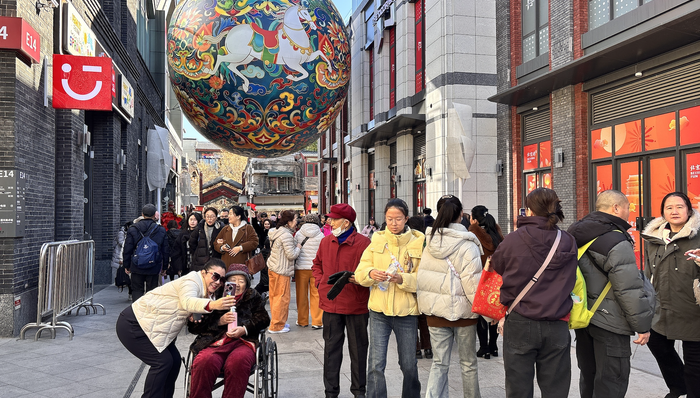
钱袋子、药盒子、就业路子,两会如何“绘”就好日子
Zhong Guo Xin Wen Wang· 2026-02-27 06:41
Group 1: Income and Employment - The focus on increasing income levels is a primary concern for the public, with the government planning to implement a rural and urban resident income increase plan in 2026 [1][7] - In 2025, the per capita disposable income of residents exceeded 43,000 RMB, and there is a strong expectation for a clear income growth roadmap from the upcoming National People's Congress [7] - In 2025, China achieved a target of 12.67 million new urban jobs, but the employment situation remains challenging due to increasing numbers of college graduates and the impact of artificial intelligence on traditional jobs [10] Group 2: Healthcare - The dynamic adjustment of the medical insurance drug list has improved medication security for the public, and there is a growing expectation for enhanced healthcare services, including easier access to specialist consultations and better reimbursement processes for cross-regional medical care [8][9] - The government aims to improve the healthcare experience while maintaining the density of the medical security network [8] Group 3: Elderly Care - The elderly population in China has reached 320 million, highlighting the need for improved elderly care services and the continuation of increasing basic pensions for urban and rural residents [11] - Recent government initiatives focus on cultivating quality elderly care service providers to ensure better support for the aging population [11] Group 4: Education - The government aims to promote balanced development in compulsory education and expand high school enrollment opportunities, addressing the public's desire for better educational access for children [12]
考公火爆,缩编却开始了
Xin Lang Cai Jing· 2026-02-24 09:59
Core Viewpoint - The increasing competition for stable government jobs in China is highlighted by the significant rise in the number of candidates for the national civil service examination, reflecting a growing demand for job security in the current economic climate [3][25]. Group 1: National Civil Service Examination Trends - The number of candidates for the national civil service examination is projected to increase from 1.576 million in 2021 to 3.718 million by 2026, representing a growth rate of 235.9% [4][26]. - The ratio of candidates passing the qualification review to the number of positions available is approximately 98:1, indicating a highly competitive environment for securing government jobs [3][25]. Group 2: Fiscal Challenges and Employment Policies - The planned recruitment for the national civil service in 2026 will see a decrease of 1,602 positions, marking the first reduction in seven years, attributed to a declining school-age population [4][26]. - Local governments are facing increasing fiscal pressures, leading to strict controls on hiring and even reductions in staff numbers, as highlighted by the central government's focus on addressing local fiscal difficulties [5][27]. Group 3: Research on Fiscal Support Personnel - A recent economic study has gained significant attention, providing a clearer understanding of the scale and structure of fiscal support personnel in China, which has been a topic of limited data since 2009 [9][31]. - The study estimates that the total number of fiscal support personnel reached 68.46 million by 2020, with the fiscal support rate rising from 4.01% in 2004 to 4.85% in 2020 [12][34]. Group 4: Structural Issues in Employment - The internal structure of fiscal support personnel shows a decline in active personnel, while the number of retirees continues to grow, leading to a structural mismatch in employment [13][35]. - The expansion of "non-staff" personnel, which increased from 2.15 million in 2004 to 4.42 million in 2018, adds to the fiscal burden without utilizing official staffing quotas [15][37]. Group 5: Future Considerations and Reforms - The research emphasizes the need for a long-term strategy in managing fiscal support personnel, particularly in aligning their distribution with future societal needs [39][41]. - There is a call for reducing government responsibilities to alleviate the pressure on fiscal support personnel, suggesting that market-based solutions could enhance service provision and economic growth [20][42].
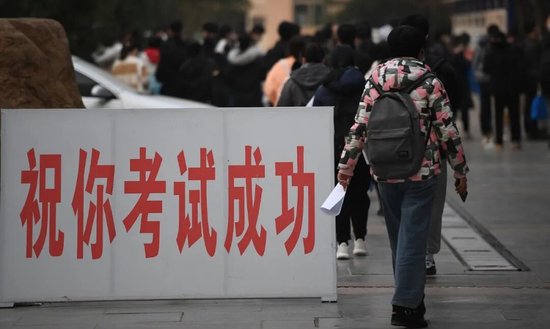
安徽省人大代表刘良:多措并举拓宽居民增收渠道
Sou Hu Cai Jing· 2026-02-06 08:12
Core Viewpoint - The article discusses the proposals made by Liu Liang, a representative at the Anhui Provincial People's Congress, regarding the implementation of a plan to increase income for urban and rural residents, aiming to reduce the income gap and stimulate domestic demand [1] Group 1: Income Growth Strategies - Liu suggests multiple measures to broaden income channels, including encouraging companies to raise wages and improving employment support policies for wage income [1] - For operational income, the development of new industries such as digital economy and cultural tourism is recommended to stimulate market vitality [1] - To enhance transfer income, expanding coverage for childcare subsidies and basic pensions is proposed [1] Group 2: Impact on Consumption and Investment - The increase in income is expected to boost consumption capacity, creating a sustainable momentum for domestic demand expansion and effectively releasing consumption potential [1] - The plan emphasizes a combination of "investment in people" and "investment in material," focusing on vocational education to improve labor quality and achieve skill-based income growth [1] Group 3: Implementation and Monitoring - To ensure the effective implementation of the income increase plan, establishing a monitoring and evaluation system is necessary to dynamically track policy effects and ensure precise execution of measures [1] - Strengthening the coordination between fiscal and monetary policies is also highlighted, such as guiding financial resources towards the livelihood sector through measures like lowering reserve requirements and interest rates to stimulate private investment [1]
国家发展改革委、市场监管总局:着力加强价格调控 促进物价合理运行
Zhong Guo Zheng Quan Bao· 2026-02-05 23:43
Core Viewpoint - The National Development and Reform Commission (NDRC) emphasizes the importance of price regulation and reform in the context of the 14th Five-Year Plan, aiming to stabilize prices and enhance the welfare of the population [1][2]. Group 1: Price Regulation and Reform - The NDRC and the State Administration for Market Regulation held a meeting to recognize advanced collectives and individuals in price work, highlighting the significance of effective price management for the upcoming 14th Five-Year Plan [1]. - The NDRC plans to strengthen price regulation, promote reasonable price movements, and ensure the supply and price stability of essential goods for the public [1][2]. Group 2: Policy Implementation - A more proactive fiscal policy and moderately loose monetary policy will be implemented, with a focus on promoting reasonable price recovery as a key consideration in monetary policy [2]. - Structural policies will include actions to boost consumption, increase urban and rural residents' income, and optimize the implementation of new policies to achieve better supply-demand balance [2]. Group 3: Market Regulation - The NDRC aims to address "involution" competition by establishing unified market regulations, standardizing behaviors of local governments and enterprises, and enhancing the market's survival of the fittest mechanism [2]. - Continuous efforts will be made to ensure the stable supply and pricing of essential goods, maintaining a comprehensive control over the production, supply, storage, and sales chain of these goods [2].
最新各地居民可支配收入数据出炉:沪京浙领跑
Zhong Guo Jing Ji Wang· 2026-01-27 07:36
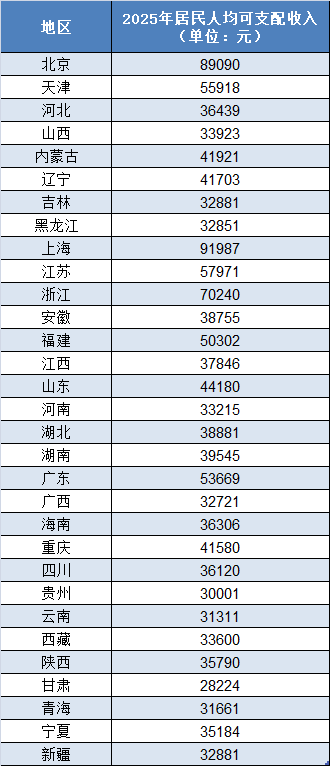
Core Insights - The report highlights the distribution of per capita disposable income across 31 provinces in China for 2025, indicating a stable leading position for the eastern coastal regions while the central and western regions are catching up due to industrial transformation and policy benefits [2][3] Group 1: Regional Income Levels - Shanghai, Beijing, and Zhejiang lead the nation in per capita disposable income, with Shanghai at 91,987 yuan, followed by Beijing at 89,090 yuan, and Zhejiang at 70,240 yuan [3][4] - The national average for per capita disposable income is projected to be 43,377 yuan, with eight provinces exceeding this average [5] Group 2: Economic Development Trends - Coastal provinces such as Jiangsu, Tianjin, Guangdong, and Fujian have incomes over 50,000 yuan, benefiting from strong industrial foundations and diverse income sources [5] - Central provinces like Hubei, Hunan, and Anhui are positioned as strong "catch-up" contenders, with income levels between 38,000 and 40,000 yuan, reflecting successful industrial transfer and internal growth [5] Group 3: Income Disparities and Future Plans - Despite progress, significant absolute income disparities remain, particularly in the central and western regions, which are still below the national average [6] - The government is focusing on income growth strategies for 2026, emphasizing tax, social security, and employment measures to enhance residents' income and consumption capacity [6]
去年全国城镇新增就业1267万人 发改委正研究制定城乡居民增收计划
Xin Lang Cai Jing· 2026-01-26 06:39
Employment and Labor Market - In 2025, the new urban employment reached 12.67 million, with an average urban survey unemployment rate of 5.2%, indicating overall stability in the employment situation [1] - The Ministry of Human Resources and Social Security plans to implement new employment policies for youth, including college graduates, and enhance recruitment activities [1] - Measures will be taken to support migrant workers and improve employment assistance for vulnerable groups, including veterans [1] Energy Sector - In 2025, 7,084 out of 7,480 key energy-consuming units passed energy measurement reviews, achieving a compliance rate of 94.71% [1] - The energy measurement reviews aim for full coverage of key energy-consuming units during the 14th Five-Year Plan period [1] Financial Sector - The Loan Prime Rate (LPR) for one year is set at 3.0% and for five years or more at 3.5%, remaining unchanged for eight consecutive months [2] - The People's Bank of China indicates there is still room for further reductions in reserve requirements and interest rates [2] Consumer Finance - The implementation period for the personal consumption loan interest subsidy policy has been extended to the end of 2026, with a 1% annual subsidy rate for eligible consumption [4] - The policy now includes credit card installment payments as part of the support scope [4] Tourism Sector - The 2026 version of the team tourism contract template will be implemented nationwide starting March 31, 2026, focusing on enhancing service quality and consumer protection [5] Investment and Economic Development - A special guarantee plan for private investment totaling 500 billion yuan will be implemented over two years to support small and micro enterprises [6] - The plan aims to provide loan guarantees for various business activities, including equipment purchases and digital transformation [6] Pharmaceutical Sector - In 2025, the National Medical Products Administration approved 76 innovative drugs, with 30 of them successfully entering the national medical insurance directory, achieving a coverage rate of 70% for new drugs approved in the first half of the year [6] Fiscal Policy - In 2025, the issuance of ultra-long special government bonds reached 1.3 trillion yuan to support consumption and economic transformation [7] - The funds are allocated for consumer subsidies and to stimulate sales in related sectors, enhancing the quality of life for citizens [7] Regulatory Framework - The National Supervisory Commission will implement the "Regulations on the Disclosure of Supervisory Work Information" starting March 1, 2026, to enhance transparency in supervisory activities [8] Economic Strategy - The National Development and Reform Commission is developing plans to stabilize employment and increase residents' income, which are crucial for boosting domestic demand [8]

以城乡居民增收计划 推动经济发展和民生改善良性循环
Jin Rong Shi Bao· 2026-01-26 02:16
Core Viewpoint - The Urban and Rural Residents' Income Increase Plan is a strategic initiative aimed at addressing income distribution issues and promoting high-quality development in China, marking a shift from partial to systemic reforms in income distribution policy [1][2]. Group 1: High-Quality Development - The Urban and Rural Residents' Income Increase Plan is essential for high-quality development, which requires both qualitative improvements and reasonable quantitative growth, ensuring that economic growth meets the people's increasing needs for a better life [3]. - High-quality development is identified as the primary task of Chinese modernization, addressing imbalances in development across urban-rural, regional, and economic-social dimensions [3]. Group 2: New Development Pattern - The plan serves as a core driver for establishing a new development pattern, emphasizing the need for a robust domestic economic cycle to counter international uncertainties [4]. - The current economic environment faces challenges such as weak domestic demand and a significant drop in retail sales growth, necessitating a focus on increasing residents' income to stimulate consumption [4]. Group 3: Path to Common Prosperity - The plan is a critical pathway to achieving common prosperity, which is a fundamental requirement of socialism, aiming to reduce income disparities across urban-rural and regional lines [5]. - The goal is to enhance the overall income of urban and rural residents while narrowing the income gap, thereby promoting a more equitable distribution of wealth [5]. Group 4: Income Sources and Challenges - Residents' income primarily comes from four sources: wage income (56.6%), operating income (16.7%), property income (8.0%), and transfer income (18.6%) [6]. - Wage income disparities are widening, particularly between industries, with significant differences in average wages across sectors [6][7]. - Property income growth has slowed, with a notable decline in its share of total income, influenced by fluctuations in the real estate market and stock market performance [7]. - Operating income faces pressures from economic downturns and increased competition, particularly affecting small businesses and individual entrepreneurs [8]. - Transfer income has seen rapid growth but remains uneven, with significant disparities in pension benefits across different demographics [9]. Group 5: Implementation Pathways - The plan's implementation involves promoting high-quality employment, enhancing the initial distribution of national income, and improving the social security system [10][11][12]. - Employment stability is prioritized, especially for vulnerable groups such as recent graduates and migrant workers, to ensure a steady source of wage income [11]. - Adjustments to the distribution of national income are necessary to increase the share of residents' income and labor remuneration, addressing the current imbalances in income distribution [12]. - The social security system plays a crucial role in increasing transfer income, with a focus on improving pension benefits and ensuring equitable access across different groups [13]. - Expanding channels for property income is essential, particularly in light of the current challenges in the real estate market and financial asset management [14]. - Coordinated development between urban and rural areas is emphasized, with a focus on increasing income for low-income groups and promoting rural modernization [15].
居民增收、优质供给、城市更新如何联动发力?
Xin Lang Cai Jing· 2026-01-23 20:58
Core Viewpoint - The article discusses China's economic strategies and policies for the 14th Five-Year Plan, emphasizing the importance of domestic demand and consumption as key drivers for economic growth in the face of global uncertainties [15][16]. Group 1: Economic Growth and Domestic Demand - The 2025 Central Economic Work Conference identified eight key economic tasks, with a focus on "domestic demand as the main driver" [16][17]. - In 2025, China's total retail sales of consumer goods exceeded 50 trillion yuan, growing by 3.7% year-on-year, with domestic demand contributing over 67% to economic growth [17]. - The shift from "stimulating domestic demand" to "domestic demand as the main driver" reflects a strategic upgrade in economic policy, emphasizing coordinated efforts on both supply and demand sides [17][18]. Group 2: Income Growth and Consumer Spending - In 2025, the actual growth of per capita disposable income in China was 5%, aligning with economic growth [18]. - The Central Economic Work Conference introduced a systematic "urban and rural residents' income increase plan," marking a fundamental shift in the logic of expanding domestic demand [18][26]. - Increasing residents' income requires a multi-faceted approach, including employment support, wage growth, and improved social security measures [18][19]. Group 3: Service Consumption and Quality Supply - The 2025 Central Economic Work Conference emphasized expanding the supply of quality goods and services, with service retail sales growing by 5.5% year-on-year [19][20]. - Service consumption has become a core driver of economic recovery, shifting from material capital-driven to human capital-driven growth [19][20]. - Policies are being optimized to enhance service quality and expand access to services, particularly in sectors like healthcare and education [20][21]. Group 4: Urban Renewal and Investment - Urban renewal is positioned as a dual driver of investment and consumption, with a projected market size exceeding 10 trillion yuan by 2030 [23][24]. - The focus on high-quality urban renewal involves a shift from simple renovation to comprehensive system reconstruction, prioritizing public needs and sustainable development [24][29]. - Urban renewal is expected to create significant investment demand across various sectors, including housing, infrastructure, and public services, thereby stimulating economic growth [25][29].

央媒重大发声:一句话让楼市已经沸腾!2026房地产要下猛药了?
Sou Hu Cai Jing· 2026-01-21 12:41
Core Viewpoint - The article discusses the implications of a recent statement from a central media outlet regarding the real estate market in 2026, suggesting that significant policy measures may be implemented to revive the market, but the actual impact may be limited and focused on restoring confidence rather than immediate recovery [2][5][6]. Policy Analysis - The phrase "should be fully released" indicates a commitment to provide comprehensive policy support, emphasizing the importance of the real estate sector as a foundational industry for the economy [5]. - Since September 2024, various policies have been enacted, including the cancellation of restrictions and reductions in down payment ratios, with mortgage rates dropping below 3.5%, marking historical lows [5]. - The remaining significant restrictions are primarily in first-tier cities, indicating that while many tools have been utilized, the most impactful measures are yet to be fully implemented [5][6]. Market Sentiment - The central media's statement aims to boost market confidence, which has been severely affected by previous market fluctuations, leading to a lack of willingness among buyers to purchase homes [6]. - Data shows a significant decline in long-term loans for housing, with a year-on-year decrease exceeding 200 billion, reflecting a drop in consumer confidence and willingness to leverage for home purchases [6]. Future Predictions - The expectation for 2026 is that drastic measures, such as fully lifting purchase restrictions in first-tier cities, are unlikely due to potential negative long-term consequences for lower-tier cities [7]. - The approach is expected to be gradual, focusing on easing restrictions in suburban areas and prioritizing certain demographics for home purchasing [7][8]. Economic Context - The core issue affecting the real estate market is not the lack of policy measures but rather the financial insecurity of consumers, leading to a high savings rate of 35% in 2025, the highest in five years [11]. - The government is focusing on increasing income for urban and rural residents as a critical strategy to stimulate consumer spending and confidence in the housing market [11]. Conclusion - The article concludes that while policy announcements can create short-term excitement, genuine recovery in the real estate market will depend on consumers feeling financially secure enough to spend [11].
