
对冲基金

Search documents
97年中美在香港的巅峰对决:国际炒家做空香港,中央绝招力挽狂澜
Sou Hu Cai Jing· 2025-12-17 09:25
Group 1 - The article discusses the financial crisis in Hong Kong during the late 1990s, highlighting the significant impact of hedge funds and speculators like George Soros on the market [1][3][5] - The crisis was triggered by the speculative actions of hedge funds, particularly Soros's Quantum Fund, which led to the devaluation of currencies in Southeast Asia and ultimately targeted Hong Kong [5][6][9] - Hong Kong's financial system, heavily reliant on foreign investment and a fixed exchange rate, faced severe challenges as the Hang Seng Index peaked at 16,497 points before the crisis unfolded [6][7] Group 2 - The Hong Kong Monetary Authority's response included emergency measures such as purchasing large amounts of Hong Kong dollars and tightening monetary policy, but these actions initially failed to stabilize the market [7][9] - With support from the central government, Hong Kong shifted from a non-interventionist policy to actively intervening in the market, successfully pushing the futures index above 7,500 points to counteract speculators [9][10] - The resolution of the crisis not only preserved Hong Kong's financial stability but also had broader implications for the Asian economic landscape, showcasing China's growing influence and ability to manage financial crises [10]


2026年最佳投资机遇在哪里?全球亿万富豪加码押注:中国和西欧
凤凰网财经· 2025-12-14 12:51
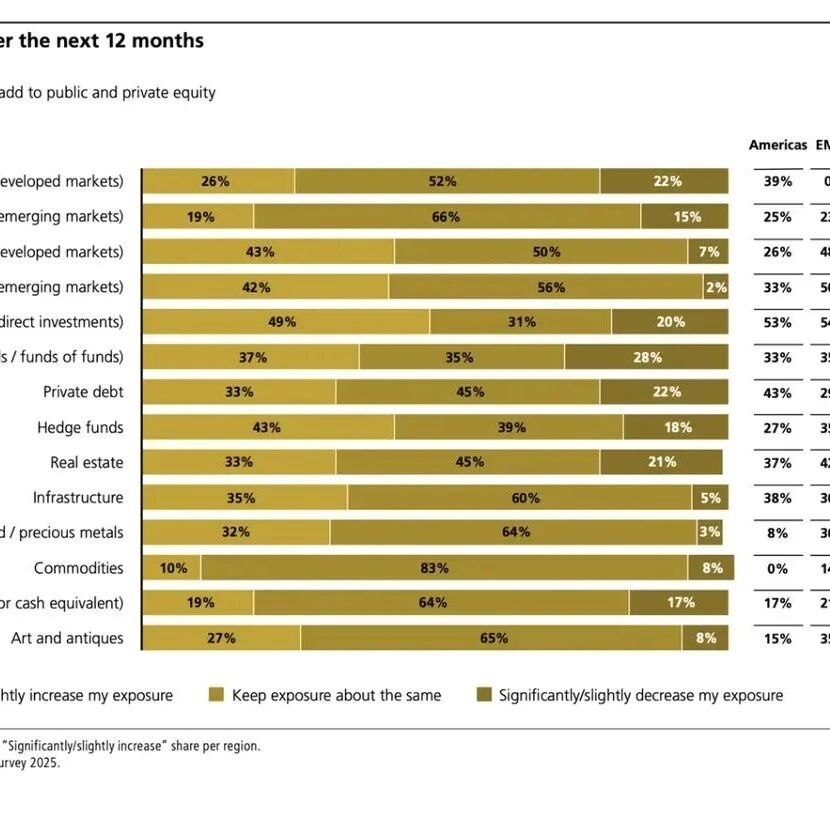
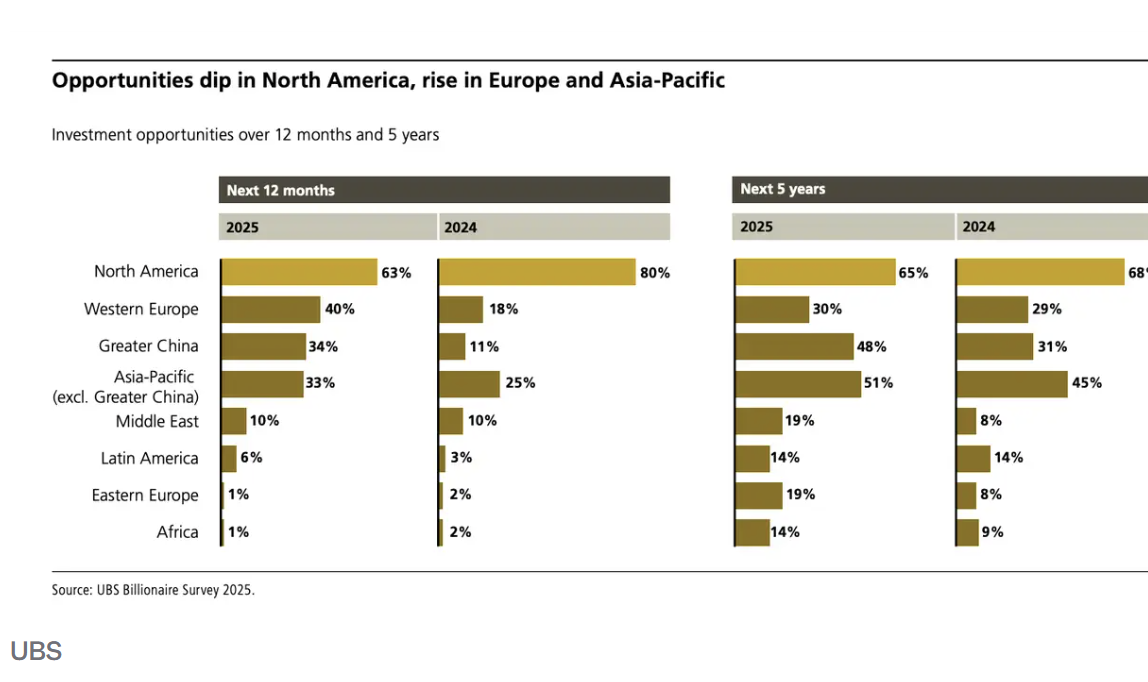
Group 1 - The global stock market has shown strong performance in 2025, driven by the AI investment boom and loose monetary policies, with many indices, including the US stock market, reaching historical highs [1] - Billionaires are optimistic about investment opportunities in China and Western Europe, with 40% of respondents favoring Western Europe for the next 12 months, up from 18% in 2024, and 34% favoring the Greater China market, significantly higher than 11% last year [5] - Over a five-year outlook, the percentage of respondents optimistic about the Greater China market rose from 31% in 2024 to 48% in 2025 [6] Group 2 - There has been a significant decline in optimism regarding the North American market, with only 63% of billionaires favoring it in 2025, down from 80% in 2024, primarily due to concerns over multiple risk factors, particularly tariffs [9] - 66% of respondents identified tariffs as the most likely negative factor affecting the market environment in the next 12 months, followed by geopolitical conflicts (63%), policy uncertainty (59%), and higher inflation (44%) [9] - Billionaires plan to increase investments in private equity, hedge funds, developed market equities, and emerging market equities, with 49% intending to increase exposure to private equity in the next 12 months, followed by hedge funds (43%), developed market equities (43%), and emerging market equities (42%) [11]

2026年最佳投资机遇在哪里?全球亿万富豪加码押注:中国和西欧
Feng Huang Wang· 2025-12-14 05:30
Core Insights - The global stock market has shown strong performance in 2025, driven by the AI investment boom and loose monetary policies, with many indices, including the US stock market, reaching historical highs [1] Group 1: Investment Sentiment - Billionaires are increasingly optimistic about investment opportunities in China and Western Europe, with 40% of respondents favoring Western Europe for the next 12 months, up from 18% in 2024 [1] - Similarly, 34% of billionaires see potential in the Greater China market for the next 12 months, a significant increase from 11% in the previous year [1] - Over a five-year horizon, the outlook for Greater China has also improved, with the percentage of respondents optimistic rising from 31% in 2024 to 48% in 2025 [1] Group 2: North America Market Sentiment - In contrast, optimism towards the North American market has sharply declined, with only 63% of billionaires favoring it in 2025, down from 80% in 2024 [4] - Concerns over multiple risk factors, particularly tariffs, are driving this shift, with 66% of respondents identifying tariffs as a major potential negative impact on the market environment [4] - Other significant concerns include geopolitical conflicts (63%), policy uncertainty (59%), and higher inflation (44%) [4] Group 3: Investment Areas - Billionaires plan to increase their exposure to private equity, with 49% indicating plans to invest more in this area over the next 12 months [5] - Other areas of interest include hedge funds (43%), developed market equities (43%), and emerging market equities (42%) [5] - The survey indicates a strong preference for public and private equity investments among billionaires, reflecting a strategic shift in their investment focus [6]
2025年末冲刺!对冲基金净杠杆飙至99%高位,连续7周疯狂加仓全球股市、美股占大头
美股IPO· 2025-12-09 07:15
Core Insights - Hedge funds have net bought global stocks for the seventh consecutive week, with a significant shift in market sentiment and strategies observed [3][5][11] - The S&P 500 index is nearing its historical closing record, driven by various market forces and expectations surrounding the Federal Reserve's interest rate decisions [3][11] - Corporate buyback activities have surged, with trading volumes significantly higher than previous years, indicating companies' strategies to counter market weakness [11][12] Hedge Fund Activity - Hedge funds' total gross leverage increased by 1.5% to 286.6%, while net leverage rose by 0.4 percentage points to 81.2%, reaching the 99th percentile for the past year [5] - All major regions, except for Asian emerging markets, experienced net buying, with North America leading the gains [5] - The net buying ratio of long positions to short positions among hedge funds is 1.3 to 1, indicating a strong bullish sentiment [3][5] Market Trends - There is a notable rotation of funds from defensive sectors to cyclical stocks, with utilities down 4.83% and cyclical stocks up 5.01% [4] - Quantum computing stocks have seen a five-day increase of 14.61%, while non-profitable tech stocks rose by 9.61% [4] CTA Strategy - CTA strategy funds have shifted to a buying stance across various market conditions, with expected purchases of $29.8 billion in flat conditions and $31.2 billion in rising conditions [7][10] - The model predicts that these strategies will reach target exposure levels in the coming days [10] Corporate Buybacks and IPOs - Corporate buyback activities are at a peak, with trading volumes 80% higher than the average for the same period in 2024 and 100% higher than in 2023 [11] - In North America, new issuances and expansions reached $9.95 billion this week, totaling $390.2 billion year-to-date, indicating a favorable supply-demand balance for stock prices [12] Investor Sentiment - Retail investor sentiment has improved significantly, with the AAII sentiment survey showing a bullish percentage increase of 12.3 points to 44.3% [13] - The CNN Fear & Greed Index rose from 18 to 40, marking the highest level since late October, while Goldman Sachs' sentiment indicator has returned to neutral territory [15]

一场演讲触发了本周全球市场巨震
Sou Hu Cai Jing· 2025-11-22 14:04
Core Insights - The current financial system remains resilient, supported by strong asset positions of households and businesses, as well as adequate capital levels in the banking sector [2][4] - The Federal Reserve's latest Financial Stability Report highlights ongoing risks and vulnerabilities, particularly in asset valuations, the structural shift of corporate lending from traditional banks to private credit, and the increasing role of hedge funds in the U.S. Treasury market [2][5][8] Group 1: Asset Valuation - Asset valuations for stocks, corporate bonds, leveraged loans, and real estate are currently above historical benchmarks, indicating a potential risk of price corrections [5][6] - The risk compensation expectations are at historically low levels, which could either revert to normal, remain subdued, or weaken further [5][6] - Despite the potential for asset price declines, the overall resilience of the financial system suggests that a repeat of systemic failures like those seen during the Great Recession is unlikely [5][6] Group 2: Private Credit Expansion - Private credit has doubled in size over the past five years, raising concerns about the rapid growth of non-bank lending to non-public companies [6][7] - The private credit model allows long-term investors to fund private companies, which may lack access to traditional bank financing, potentially enhancing financial stability and economic growth [6][7] - However, the complexity and interconnectedness of leveraged entities in this space could create pathways for unexpected losses to affect the broader financial system [6][7] Group 3: Hedge Funds in Treasury Market - Hedge funds have significantly increased their holdings in U.S. Treasury securities, with their share rising from 4.6% in Q1 2021 to 10.3% in Q1 2023, surpassing pre-pandemic levels [8][9] - The sensitivity of hedge fund positions to market changes poses a risk of liquidity crises if they are forced to sell off large amounts of Treasuries simultaneously [8][9] - The trading strategies employed by hedge funds, particularly relative value strategies, could amplify market instability during periods of stress [8][9] Group 4: Impact of Artificial Intelligence - The rapid development of AI in financial services presents both opportunities and challenges for financial stability, particularly in algorithmic trading [10][11] - Generative AI can analyze vast amounts of data and deploy complex trading strategies, which may introduce risks if not properly monitored [10][11] - While AI has the potential to enhance market efficiency, it also raises concerns about market manipulation and the opacity of decision-making processes [10][11][12]

诺奖得主炮轰美财长:对阿根廷200亿美元援助就是“谋私”!
Jin Shi Shu Ju· 2025-10-10 08:04
Group 1 - Paul Krugman criticizes US Treasury Secretary Basant's $20 billion aid plan to Argentina, claiming it benefits hedge fund friends rather than serving US strategic interests [1] - Krugman highlights the urgency of saving wealthy investors, referencing Argentine President Milei, while millions of children suffer [1] - The aid has raised market concerns about its true purpose, which appears to protect wealthy investors' interests in Argentina [1][2] Group 2 - Krugman argues that taxpayer money is propping up the peso, allowing hedge funds to sell Argentine assets at inflated prices before the peso declines again [2] - The aid lacks a viable economic plan, with Krugman stating that no reasonable strategy can save Milei's failing economic policies even with the $20 billion loan [2] - The aid has faced criticism from US soybean farmers and Senator Elizabeth Warren, who argues that taxpayer dollars should be used to support American healthcare instead [2]
无极资本Infini Capital,半个月投77亿入股第四范式(06682)、商汤(00020)、儒意(00136),曾以96%的回报率拿下亚洲对冲基金第一
智通财经网· 2025-08-04 11:30
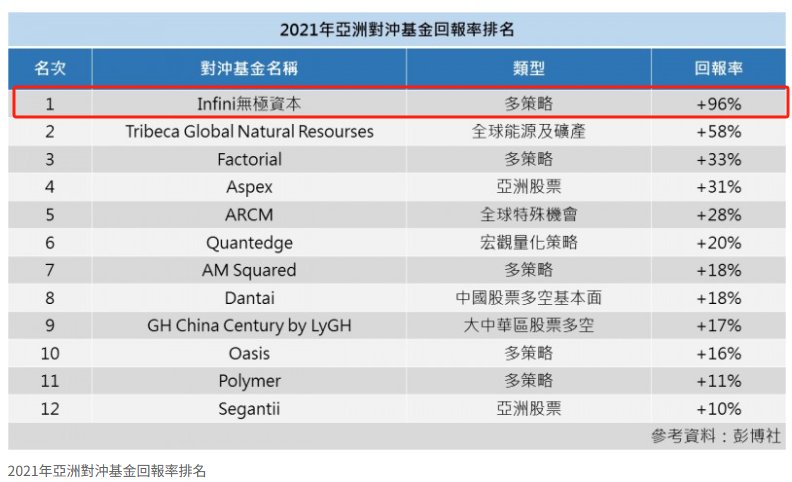
Core Insights - Infini Capital has actively invested approximately 7.708 billion HKD in three Hong Kong stocks within a short span of two weeks, indicating a strong interest in emerging industries [1] - The firm has a notable track record, having achieved a 96% return rate in 2021, ranking first among Asian hedge funds [2] Investment Activities - On July 17, Infini Capital planned to invest 1.308 billion HKD in Fourth Paradigm (06682), acquiring a 4.98% stake [1] - On July 31, the firm completed a 2.5 billion HKD investment in SenseTime (00020), securing a 4.31% ownership [1] - On the same day, Infini Capital proposed a 3.9 billion HKD investment in China Ruyi (00136), aiming for a 7.51% stake [1] Company Background - Infini Capital was established in 2015 and has dual headquarters in Hong Kong and Abu Dhabi, positioning itself as a leading international asset management company [1] - The founder, Tony Chin To, has a background in investment banking, having worked in the mergers and acquisitions departments of Morgan Stanley and HSBC before founding Infini Capital [1] - Tony Chin To has a strong educational background, having studied economics at the University of Michigan, Ann Arbor [1]
达里欧“清仓”桥水,家办是他的新主场
Hu Xiu· 2025-08-01 08:09
Core Points - Ray Dalio has officially sold his remaining shares in Bridgewater Associates and stepped down from the board, marking the end of his leadership era at the firm [2][3][12] - The transition of ownership at Bridgewater, which has been in process for over a decade, is now complete, simplifying the company's governance structure and allowing it to refocus on investment performance [3][13] Group 1: Ownership Transition - Dalio's complete exit signifies the conclusion of a 14-year succession plan initiated in 2011, which faced complexities and challenges along the way [8][9] - Bridgewater recently repurchased Dalio's remaining shares and issued new shares to the Brunei Investment Agency, making it a significant shareholder with nearly 20% ownership [14][15] - The firm currently manages assets totaling $92.1 billion, a decline from $168 billion at the end of 2019, partly due to a strategic decision to limit the size of its flagship fund, Pure Alpha [4][6] Group 2: Fund Performance - In 2024, Pure Alpha achieved a return of 11.3%, with further improvement in the first half of 2025, recording a 17% return [7] - The positive performance in the first half of 2025 has contributed to overall gains for the firm's main funds [7] Group 3: Dalio's Future Focus - Following the transfer of control, Dalio is now concentrating on managing his family office, which supports entrepreneurial ventures and philanthropic efforts [18][19] - The family office has expanded its global presence, with new offices in Singapore and Abu Dhabi, focusing on investments and charitable activities [21][20] - Dalio has expressed excitement about the future of Bridgewater without his involvement, indicating confidence in the new leadership [5][26]

小众“宝藏”策略揭秘!博润银泰入围套利榜!钧富投资亮相期权榜
Sou Hu Cai Jing· 2025-06-30 06:46
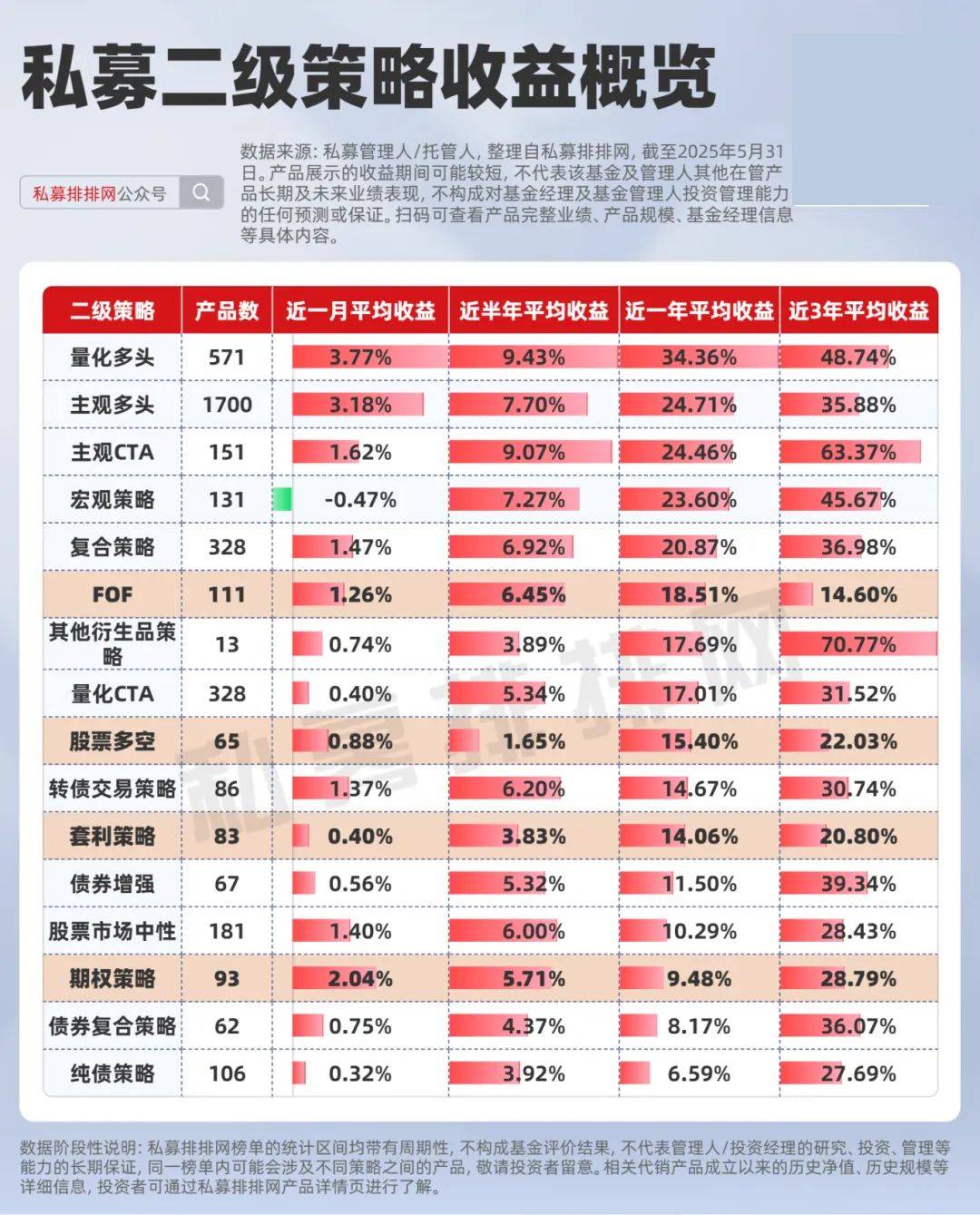
Group 1: Core Insights - The article highlights lesser-known investment strategies such as FOF, long-short equity, arbitrage, and options strategies, which have shown promising performance over the past year [1] - It aims to provide investors with a comprehensive overview of these strategies and their recent performance metrics [1] Group 2: FOF Strategy - FOF (Fund of Funds) is designed to invest in other investment funds, helping investors navigate the challenge of selecting from thousands of funds [3] - As of the end of May, there were 111 FOF products with an average one-year return of 18.51%, ranking them in the upper-middle tier among secondary strategies [3] - The recent performance metrics for FOF include average returns of 1.26% over the last month, 6.45% over the last six months, and 14.60% over the last three years [3] Group 3: Long-Short Equity Strategy - The long-short equity strategy has shown a one-year average return of 15.40%, with 65 products reported as of the end of May [6] - This strategy aims to hedge risks and achieve returns in various market conditions, outperforming major indices like the CSI 300 [6] - Notable products in this category include "奇点多元策略1号" from 共青城奇点, which achieved significant returns [6][7] Group 4: Arbitrage Strategy - The arbitrage strategy, which exploits price differences across markets, has 83 products with an average one-year return of 14.06% [9] - Recent performance metrics include average returns of 0.40% over the last month, 3.83% over the last six months, and 20.80% over the last three years [9] - Leading products in this category include "安合融信匠人匠心10号" from 安合融信, which ranks first in returns [10] Group 5: Options Strategy - The options strategy has gained traction in the domestic market, with 93 products reporting an average one-year return of 9.48% [12] - This strategy utilizes options and their combinations to navigate complex market environments [12] - The top-performing product in this category is "汇誉欣欣向荣一号A类份额" from 云南汇誉, which has significantly outperformed others [12][13]
高盛:注意了!近期对冲基金名义卖空规模接近5年高点
Zhi Tong Cai Jing· 2025-06-24 12:33
Group 1 - The global fundamental long/short hedge funds experienced a loss of 50 basis points last week, but gained 103 basis points in June and are up 425 basis points year-to-date [1] - The total leverage ratio for fundamental long/short strategies decreased by 0.3 percentage points to 206.2%, which is in the 94th percentile for the past year, while the net leverage ratio fell by 1.7 percentage points to 50.2%, placing it in the 14th percentile for the same period [1] - Asian emerging markets faced significant net selling, primarily driven by the Chinese market, with hedge funds net selling Chinese stocks for the fourth consecutive week at the fastest pace in two and a half months, entirely driven by short selling [1] Group 2 - Macro products and individual stocks were both net sold, with a roughly equal share in the nominal net selling total; the sectors with the highest net selling were non-essential consumer, essential consumer, healthcare, and financials [2] - H-shares experienced net selling throughout the week, while A-shares and American Depositary Receipts (ADRs) saw relatively smaller net selling [2] - The total holdings/net holdings of Chinese stocks, as a percentage of the total risk exposure of major brokerage accounts, are currently at 4.8% and 6.8%, respectively, which are in the 52nd and 26th percentiles compared to the past year, and in the 11th and 7th percentiles compared to the past five years [2]
