
国债市场

Search documents
丹斯克银行:15-20年期债券取代30年期成为长期债券新热点
Xin Lang Cai Jing· 2026-01-05 07:33
Core Viewpoint - Danske Bank's Jens Naevig Pedersen indicates that the 15-20 year bonds are becoming the new focus in the long-end bond market, replacing the traditional 30-year bonds that have been the standard for issuing ultra-long-term debt [1][1]. Group 1 - The shift in focus towards 15-20 year bonds is influenced by the Dutch pension reform, which is redirecting attention to this maturity range [1][1]. - Eurozone government bonds are adapting to this new framework as a result of the changing investment landscape [1].
【金融发展】2025年国债市场年鉴:筹资精准服务国家战略 收益率于预期交织中锚定“新平衡”
Xin Lang Cai Jing· 2026-01-04 11:30
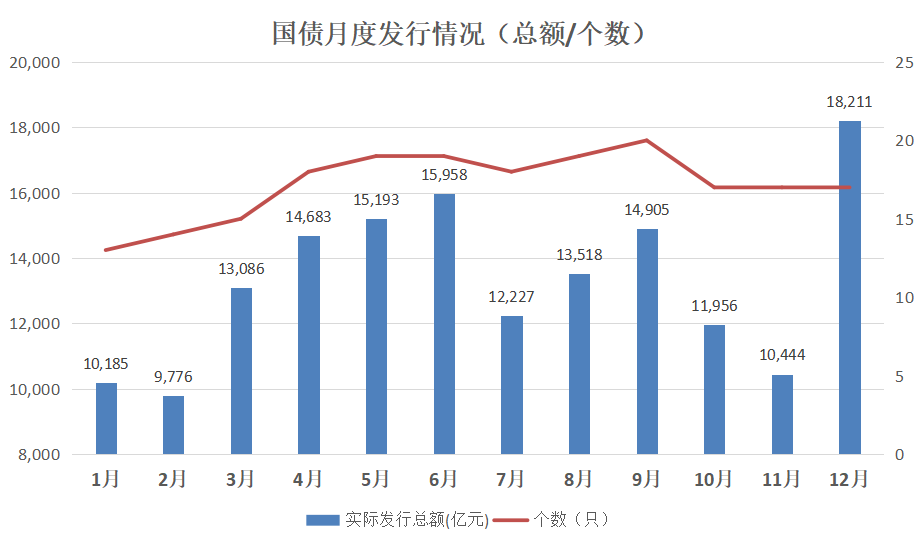
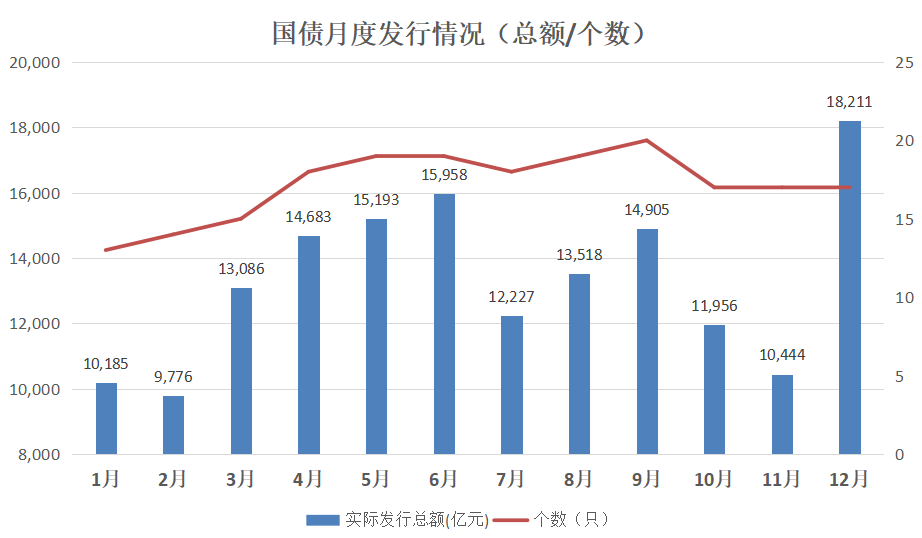
Core Viewpoint - The 2025 Chinese government bond market has undergone deep calibration amid frequent macro narratives and intense long-short logic battles, characterized by record supply and a proactive issuance pace in the primary market, effectively supporting active fiscal policies while the secondary market experienced a narrow range of fluctuations in the 10-year bond yield, which gradually shifted downward throughout the year [1][13]. Group 1: Primary Market Dynamics - In 2025, the primary market for government bonds achieved a historic leap under the theme of "active fiscal policy moderately strengthened, quality improved," with notable features including increased supply scale, scientifically advanced issuance pace, and continuous optimization of maturity structure [2][15]. - The total issuance of government bonds reached a historic high of 16,014.02 billion yuan, a significant increase of 28.37% compared to 12,474.83 billion yuan in 2024, with 206 bonds issued throughout the year [2][15]. - The issuance of special bonds focused on long-term funding for national strategic security areas and key projects, with the issuance of ultra-long special bonds reaching 1.3 trillion yuan, expected to significantly boost annual GDP growth [5][19]. Group 2: Interest Rate Trends - The overall issuance interest rates of government bonds declined, effectively guiding the financing costs across society. The short-term interest rates (1-3 years) ranged from 1.16% to 1.79%, while the 10-year bond issuance rate stabilized around 1.78% [6][19]. - The systematic decline in issuance costs of government bonds, as a risk-free rate anchor, directly contributed to the reduction of comprehensive financing costs in the bond market and the real economy, achieving efficient unity between fiscal sustainability and financial benefits to the real sector [6][19]. Group 3: Secondary Market Developments - The secondary market for government bonds in 2025 was characterized by complex dynamics, with the 10-year bond yield fluctuating between approximately 1.6% and 1.9%, undergoing a "four-round game" of expectations that ultimately established a new oscillating equilibrium [7][21]. - The first round saw a rapid correction of overly optimistic expectations regarding monetary easing, with yields rebounding nearly 40 basis points by mid-March [9][21]. - The fourth round featured a key institutional benefit with the central bank's announcement to restart government bond trading operations, which was interpreted as a significant step in enhancing liquidity management tools and stabilizing long-term expectations [10][22]. Group 4: Strategic Role of Government Bonds - The evolution of the government bond market in 2025 transcended mere financing and trading, extending its functions to monetary policy operations, financial openness, and the construction of the national credit system [11][23]. - The "stabilizer" and "attractiveness" roles of RMB assets have strengthened, with foreign investors steadily increasing their holdings, leading to broader inclusion of government bonds in major global bond indices [11][23]. - The modernization of government bond management, including the incorporation of bond trading into the central bank's regular monetary policy toolbox, marks a significant milestone in establishing a modern central banking system [11][23]. Group 5: Future Outlook - The government bond market is expected to continue evolving under the overarching theme of "high-quality development," balancing necessary government financing, reducing debt costs, and maintaining financial system stability [12][24]. - As market depth, product innovation, and institutional openness progress, the yield curve of government bonds will increasingly serve as a benchmark for asset pricing across society [12][24]. - Market participants will need to shift from merely chasing interest rate trends to developing a deeper understanding of macro logic, seizing structural opportunities, and effectively managing interest rate risks to succeed in the new balanced market [12][24].

2025年国债市场年鉴:筹资精准服务国家战略 收益率于预期交织中锚定“新平衡”
Xin Hua Cai Jing· 2026-01-01 06:42
Core Viewpoint - The Chinese government bond market in 2025 is characterized by a unique path amid macroeconomic narratives and intense market dynamics, effectively supporting fiscal policies and enhancing resilience while fulfilling its core mission of financing and liquidity provision [1] Group 1: Primary Market - The primary market for government bonds in 2025 achieved a historic leap with a total issuance of 16,014.02 billion yuan, a significant increase of 28.37% compared to 12,474.83 billion yuan in 2024 [2][3] - The issuance structure was optimized with a scientific front-loading of issuance schedules, ensuring timely funding for major national strategies [4] - The issuance of special bonds, particularly ultra-long-term special bonds amounting to 1.3 trillion yuan, targeted critical national strategic areas and is expected to significantly boost annual GDP growth [4] Group 2: Interest Rates and Market Dynamics - The overall interest rates for government bonds showed a downward trend, effectively guiding the financing costs across the economy, with short-term rates ranging from 1.16% to 1.79% and 10-year bond rates stabilizing around 1.78% [5] - The secondary market experienced fluctuations in the 10-year bond yield, which ranged from approximately 1.6% to 1.9%, reflecting a complex interplay of market expectations and policy responses [7] Group 3: Market Functionality and Future Outlook - The evolution of the government bond market in 2025 transcended mere financing, becoming a cornerstone of national financial strategy, enhancing its role as a stabilizer and attractor of foreign investment [11] - The modernization of bond management, including the integration of bond trading into regular monetary policy tools, marks a significant milestone in improving monetary policy transmission efficiency [11] - Looking ahead, the bond market is expected to continue evolving under the theme of "high-quality development," balancing government financing needs with financial stability while enhancing the role of the yield curve as a pricing benchmark [12]
我看“十五五”|吴晓求:消费扩张需要深度重构三个核心函数
Bei Ke Cai Jing· 2025-12-15 07:05
Core Viewpoint - The "15th Five-Year Plan" aims for China to achieve a per capita GDP level of a moderately developed country by 2035, emphasizing the need for new economic growth drivers and financial reforms to realize the "financial power" strategy [2] Economic Development Characteristics - The "15th Five-Year" period will be characterized by a shift from a "shortage economy" to an "over-supply economy," necessitating a fundamental change in governance logic and economic policy [5][6] - The global technological revolution presents a historical opportunity for China, with a strong foundation in artificial intelligence, big data, and new energy [4] Consumption Dynamics - In an "over-supply economy," consumption is crucial for maintaining economic balance, shifting from being viewed as waste to a key driver of growth [6][7] - The expansion of consumption is constrained by income, wealth, and social security, requiring institutional restructuring in these areas [7][8] Wealth Creation and Employment - Optimizing the business environment and protecting the rights of various market entities, including state-owned and private enterprises, is essential for job creation and income growth [7] - Approximately 60% to 70% of household wealth is concentrated in real estate, which poses risks to consumption when property prices decline [8] Social Security and Savings - High savings rates among Chinese residents reflect cultural tendencies and a precautionary approach, which can suppress effective demand in an "over-supply economy" [9] - A robust social security system is necessary to alleviate residents' concerns and release locked purchasing power [9] Financial System Reform - The core task of financial reform during the "15th Five-Year" period is to adapt the financial system to the transition from a shortage to an over-supply economy [10] - There is a need for innovation in financial products to meet the diverse financing needs of enterprises at different life stages [11] Capital Market Development - The capital market's role is evolving from merely a financing tool to a platform for wealth management and risk-sharing [17][18] - Enhancing the quality of listed companies and encouraging high-growth firms to go public is vital for the capital market's long-term value [18] Liquidity and Market Activity - Maintaining adequate liquidity is essential for the capital market's price discovery function and investor satisfaction [19] - A daily trading volume of around 2 trillion yuan should be considered a normal state of market maturity [19] Legal and Regulatory Framework - Strengthening legal frameworks to ensure market transparency and protect investors is critical for rebuilding trust in the capital market [20] - Severe penalties for fraudulent activities are necessary to establish a market environment based on investor protection and contractual integrity [20]

国债月报:债市预期走弱,关注配置需求支撑-20251205
Wu Kuang Qi Huo· 2025-12-05 13:25
Report Industry Investment Rating No relevant content provided. Core Viewpoints - The November PMI data shows that both supply and demand have improved, but the manufacturing PMI is still below the boom - bust line, and the service industry has declined significantly, indicating that domestic demand still needs to be boosted. The new policy - based financial tools have not fully offset the impact of the real estate downturn, and the current power of demand recovery is insufficient. The endogenous repair momentum of the economy still needs to be consolidated [11]. - In terms of exports, the October export data was lower than expected, with exports to the US declining while exports to non - US regions maintained resilience. The Fourth Plenary Session emphasized achieving the annual economic and social development goals. Considering the high economic growth rate in the first three quarters of this year, the pressure to achieve the goal this year is not great, and the policy may focus more on the connection with next year's policies, with less need for additional measures in the fourth quarter [11]. - Overseas, the US dollar liquidity was tight in November. Subsequently, observe the inflation and employment data for indications of a December interest rate cut [11]. - The bond market is currently in a multi - empty intertwined situation with weak domestic demand recovery and improved inflation expectations, generally maintaining a volatile trend. In the short term, the imbalance between supply and demand and the expectation of the new fund fee regulations have triggered some redemptions in the bond market, but the overall risk is controllable. The rhythm should pay attention to the linkage between stocks and bonds and the impact of liquidity [14]. - In the medium and long term, the bond market should mainly adopt the strategy of buying on dips, as the direction of loose monetary policy and the adjustment trend of capital - intensive industries are difficult to change, and there is still pressure on the economy to stabilize growth [15]. Summary by Directory 1. Monthly Assessment and Strategy Recommendation - **Economic and Policy Situation**: The November PMI shows that the manufacturing and service industries are differentiated. The new policy - based financial tools have not fully offset the real estate downturn. The export to the US declined in October. The policy may focus on next - year's connection. Overseas, pay attention to the December interest rate cut signal [11]. - **Liquidity**: This week, the central bank conducted 6638 billion yuan of reverse repurchase operations, with 15118 billion yuan of reverse repurchase maturing, resulting in a net withdrawal of 848 billion yuan. The DR007 interest rate closed at 1.44% [14]. - **Interest Rates**: The latest 10 - year Treasury yield is 1.87%, up 2.87 BP week - on - week; the 30 - year Treasury yield is 2.28%, up 9.20 BP week - on - week. The latest 10 - year US Treasury yield is 4.11%, up 9.00 BP week - on - week [14]. - **Trading Strategy**: The recommended strategy is to buy on dips for a 6 - month period, with a profit - loss ratio of 3:1, driven by the combination of loose money and the difficulty of credit improvement [16]. 2. Futures and Spot Markets - **Contract Performance**: Presented the closing price, annualized premium/discount, and net basis trends of T, TL, TF, and TS contracts, as well as the closing price and trading volume trends of TS, TF, T, and TL contracts [19][22][25][28]. 3. Main Economic Data Domestic Economy - **GDP and PMI**: In the third quarter of 2025, the actual GDP growth rate was 4.8%, exceeding market expectations. In November, the manufacturing PMI was 49.2%, up 0.2 percentage points from the previous value, while the service industry PMI was 49.5%, down 0.7 percentage points [41]. - **Manufacturing PMI Sub - items**: In November, the production and new order indices of the manufacturing PMI increased month - on - month, indicating a moderate improvement in both supply and demand [42][47]. - **Prices**: In October, the CPI increased by 0.2% year - on - year, the core CPI increased by 1.2% year - on - year, and the PPI decreased by 2.1% year - on - year. The month - on - month data also showed certain changes. The PPI's year - on - year decline narrowed [50]. - **Exports**: In October 2025, China's import and export data were slightly lower than expected. Exports (in US dollars) decreased by 1.1% year - on - year, and imports increased by 1.0% year - on - year. Exports to the US declined significantly, while exports to ASEAN maintained a relatively high growth rate [53]. - **Industrial and Consumption Data**: In October, the year - on - year growth rate of industrial added value was 4.9%, and the year - on - year growth rate of total retail sales of consumer goods was 2.9%, showing a slight decline [56]. - **Investment and Real Estate**: From January to October, the cumulative year - on - year growth rate of fixed - asset investment was - 1.7%, and the real estate market continued to adjust. In October, the price of second - hand houses in 70 large and medium - sized cities continued to decline [59]. - **Real Estate Construction and Sales**: In October, the cumulative year - on - year data of the completion end declined, and the sales data of new houses in 30 large - and medium - sized cities weakened [65]. Foreign Economy - **US Economy**: In the second quarter, the quarterly annualized value of the US GDP was 3033.1 billion US dollars, with a real year - on - year growth rate of 1.99% and a quarter - on - quarter growth rate of 3.0%. In September, the US CPI and core CPI showed certain changes in year - on - year and month - on - month data [66]. - **US Durable Goods and Employment**: In September, the order amount of US durable goods was 313.7 billion US dollars, with a year - on - year growth rate of 7.26%. The seasonally - adjusted non - farm employment population increased by 119,000, and the unemployment rate was 4.4% [69]. - **US and EU PMI and GDP**: In November, the US ISM manufacturing PMI was 48.2, and the non - manufacturing PMI was 52.6. In the third quarter, the EU GDP increased by 1.5% year - on - year and 0.3% quarter - on - quarter [72]. - **Eurozone Economy**: In November, the Eurozone CPI increased by 2.2% year - on - year, and the core CPI increased by 2.4% year - on - year. The manufacturing PMI was 49.7, and the service industry PMI was 53.1 [75]. 4. Liquidity - **Money Supply and Social Financing**: In October, the M1 growth rate was 6.2%, and the M2 growth rate was 8.2%. The social financing increment was 815 billion yuan, with a year - on - year decrease of 597 billion yuan. The social financing mainly came from the growth of government bonds, and the supporting role of government bonds in social financing may weaken in the future [80]. - **Social Financing Sub - items**: In October, the year - on - year growth rate of government bonds in social financing slowed down, and the financing of the real - economy sector was weak. The social financing growth rate of the resident and enterprise sectors was 5.92%, and the government bond growth rate was 19.20% [83]. - **MLF and Reverse Repurchase**: In November, the MLF balance was 615 billion yuan, with a net investment of 100 billion yuan. This week, the central bank conducted 663.8 billion yuan of reverse repurchase operations, with 1511.8 billion yuan of reverse repurchase maturing, resulting in a net withdrawal of 848 billion yuan. The DR007 interest rate closed at 1.44% [86]. 5. Interest Rates and Exchange Rates - **Interest Rate Changes**: Various market interest rates, including repurchase rates, domestic and US Treasury yields, have changed to different degrees, with some showing increases and others showing decreases [89]. - **Interest Rate and Exchange Rate Trends**: Presented the trends of domestic and foreign bond yields, bank - to - bank pledged repurchase rates, the Fed's target interest rate, and exchange rates (USD/RMB) [92][94][98].
一场演讲触发了本周全球市场巨震
Sou Hu Cai Jing· 2025-11-22 14:04
Core Insights - The current financial system remains resilient, supported by strong asset positions of households and businesses, as well as adequate capital levels in the banking sector [2][4] - The Federal Reserve's latest Financial Stability Report highlights ongoing risks and vulnerabilities, particularly in asset valuations, the structural shift of corporate lending from traditional banks to private credit, and the increasing role of hedge funds in the U.S. Treasury market [2][5][8] Group 1: Asset Valuation - Asset valuations for stocks, corporate bonds, leveraged loans, and real estate are currently above historical benchmarks, indicating a potential risk of price corrections [5][6] - The risk compensation expectations are at historically low levels, which could either revert to normal, remain subdued, or weaken further [5][6] - Despite the potential for asset price declines, the overall resilience of the financial system suggests that a repeat of systemic failures like those seen during the Great Recession is unlikely [5][6] Group 2: Private Credit Expansion - Private credit has doubled in size over the past five years, raising concerns about the rapid growth of non-bank lending to non-public companies [6][7] - The private credit model allows long-term investors to fund private companies, which may lack access to traditional bank financing, potentially enhancing financial stability and economic growth [6][7] - However, the complexity and interconnectedness of leveraged entities in this space could create pathways for unexpected losses to affect the broader financial system [6][7] Group 3: Hedge Funds in Treasury Market - Hedge funds have significantly increased their holdings in U.S. Treasury securities, with their share rising from 4.6% in Q1 2021 to 10.3% in Q1 2023, surpassing pre-pandemic levels [8][9] - The sensitivity of hedge fund positions to market changes poses a risk of liquidity crises if they are forced to sell off large amounts of Treasuries simultaneously [8][9] - The trading strategies employed by hedge funds, particularly relative value strategies, could amplify market instability during periods of stress [8][9] Group 4: Impact of Artificial Intelligence - The rapid development of AI in financial services presents both opportunities and challenges for financial stability, particularly in algorithmic trading [10][11] - Generative AI can analyze vast amounts of data and deploy complex trading strategies, which may introduce risks if not properly monitored [10][11] - While AI has the potential to enhance market efficiency, it also raises concerns about market manipulation and the opacity of decision-making processes [10][11][12]

中国政府债务管理机制的优化
Xin Hua Cai Jing· 2025-11-13 18:55
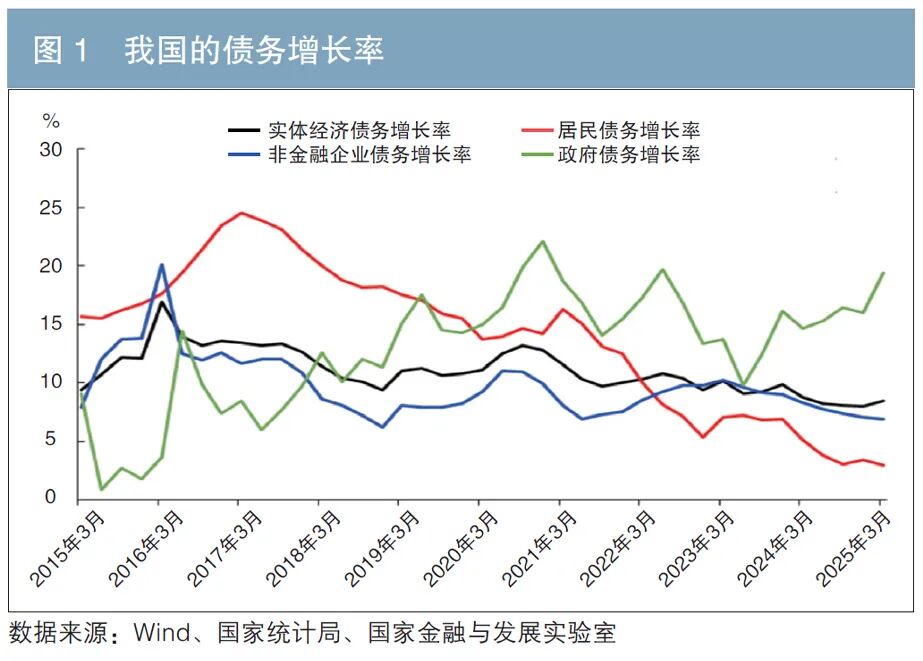
Core Insights - The article discusses the increasing attention on government debt in China as a key variable in macroeconomic operations, highlighting its scale, structure, function, and sustainability amidst a complex economic environment [1] Government Bond Types and Maturity Structure - The types of government bonds in China are primarily classified into deficit debt and self-repaying debt, with a predominance of medium-term bonds and a relative scarcity of short-term bonds [2] - Government bonds serve as a source of liquidity in the financial market and are an important component of wealth for non-financial sectors, but their role in wealth composition for residents remains underexplored [2] Debt Growth Rate Comparison - Since the 21st century, there has been a global focus on debt crises, with a notable increase in government debt in China, particularly local government debt, while the debt growth rate for non-financial sectors, including households and enterprises, has been declining [3] Bond Purchaser Structure - The identity of bond purchasers significantly influences the macroeconomic impact of bond issuance, with non-financial sector purchases involving only fund transfers and no monetary creation, while central bank purchases can create money [4] - In China, commercial banks are the primary holders of government bonds, which has implications for inflation effects [6] Debt Sustainability Analysis - Debt sustainability is a long-standing and contentious issue, with international standards suggesting a deficit rate not exceeding 3% and a debt-to-GDP ratio not exceeding 60% [11] - The sustainability of debt can be assessed through various metrics, including the ratio of debt to earnings before interest and taxes for enterprises and the ratio of debt to payable income streams at the macro level [11] Role of Central Banks in Debt Management - The role of central banks in managing government bonds and liquidity is crucial, with recent reports emphasizing the need for liquidity management to align with economic growth and price stability [12] - Central banks are increasingly focusing on asset price stability and have adapted their policies to enhance financial market stability, particularly in the context of government bond management [13]
金融市场波动放大,国债相对有利
Ge Lin Qi Huo· 2025-11-07 13:20
Report Summary 1. Report Industry Investment Rating - Not provided in the content 2. Core Viewpoints - China's export in October showed mixed performance, with overall export growth benefiting from diversification despite a decline in exports to the US. The bond market had a short - term rally last week and a slight pullback this week, and if international financial market volatility expands next week, it will be relatively favorable for the domestic bond market [10][14][27] 3. Summary by Related Content 3.1 Bond Market - This week, most of the major Treasury futures contracts showed a narrow sideways fluctuation in the first two trading days and a continuous decline in the last three days, with a slight weekly decline. The 30 - year Treasury fell 0.59%, the 10 - year fell 0.20%, the 5 - year fell 0.15%, and the 2 - year fell 0.07% [4] - As of November 7, the Treasury bond yield curve shifted slightly upward in parallel compared to October 31. The 2 - year yield rose 3 BP to 1.43%, the 5 - year rose 2 BP to 1.59%, the 10 - year rose 1 BP to 1.81%, and the 30 - year rose 2 BP to 2.16% [7] 3.2 Foreign Trade - In October, China's exports denominated in US dollars decreased by 1.1% year - on - year, while imports increased by 1.0% year - on - year. The trade surplus was 900.7 billion US dollars. From January to October, exports increased by 5.3% year - on - year, and imports decreased by 0.9% year - on - year [10] - In October, exports to ASEAN increased by 11%, to the EU by 0.9%, and decreased by 25.2% to the US. Exports to countries and regions outside the top five export destinations increased by 3.45% [12][14] 3.3 Real Estate - In the first quarter, the average daily trading area of commercial housing in 30 large - and medium - sized cities was 236,000 square meters, a year - on - year increase of 2.5%. In the second quarter, it was 265,000 square meters, a year - on - year decrease of 7.9%. In the third quarter, it was 220,000 square meters, a year - on - year decrease of 8%. In October, it was 240,000 square meters, a year - on - year decrease of 27%. From November 1 - 6, it was 170,000 square meters, a year - on - year decrease of 48%. The national commercial housing sales are still in the bottom - grinding process [16] 3.4 Prices - The 200 - index of agricultural product wholesale prices rose rapidly in October, which will promote the month - on - month increase of CPI in October and reduce the year - on - year decline. At the beginning of November, it showed a narrow sideways fluctuation [18] - In October, the average value of the Nanhua Industrial Products Index decreased by 7.7% year - on - year, and the index decreased by 0.5% month - on - month. At the beginning of November, industrial product prices remained at a low level [21] 3.5 Capital - This week, short - term capital interest rates remained at a low level. The weighted average of DR001 was 1.318%, and that of DR007 was 1.424%. The average issuance interest rate of one - year AAA inter - bank certificates of deposit was 1.637%, a slight decline from last week [24] 3.6 Market Logic and Trading Strategy - The reasons for the decline in China's exports in October include the slowdown of export growth in South Korea and Vietnam in October and the relatively high base in October last year. The central bank's plan to resume open - market Treasury bond trading operations drove the bond market rally last week. The 10 - year Treasury bond yield of 1.85% may be the upper limit in the future [27] - The trading strategy is for trading - type investors to conduct band operations [28]
建信期货国债日报-20251021
Jian Xin Qi Huo· 2025-10-21 01:36
1. Report Industry Investment Rating - No relevant content provided 2. Core Viewpoints of the Report - On October 21, 2025, the LPR quote remained flat, and the Q3 economic data met expectations with a marginal weakening trend. The bond market was mainly suppressed by the stock market's recovery, and most treasury bond futures closed lower. The yields of major inter - bank interest rate bonds across all maturities rose, with larger increases in the medium - to long - term. The funds were stable with a marginal convergence. The 10 - year bond market entered a window period after the negative factors were cleared, but lacked a trigger for a counter - attack due to the difficulty of short - term monetary easing and the disturbance of the stock - bond seesaw effect [8][9][10][11][12] 3. Summary by Relevant Catalogs 3.1 Market Review and Operation Suggestions - **Market Conditions**: The LPR quote remained flat, Q3 economic data met expectations and showed a marginal weakening trend. The bond market was mainly suppressed by the stock market's recovery, and most treasury bond futures closed lower [8] - **Interest Rate Bonds**: The yields of major inter - bank interest rate bonds across all maturities rose, with the medium - to long - term yields rising by about 2bp. By 16:30 pm, the yield of the 10 - year treasury bond active bond 250011 was reported at 1.7675%, up 2.25bp [9] - **Funding Market**: The funds were stable with a marginal convergence. There were 253.8 billion yuan of reverse repurchase maturities, and the central bank injected 189 billion yuan, resulting in a net withdrawal of 64.8 billion yuan. The inter - bank fund sentiment index was stable, short - term fund rates fluctuated within a narrow range, the 7 - day rate rose 2.47bp to 1.4332%, and the medium - to long - term funds were stable [10] - **Conclusion**: In October, the bond market entered a window period after the negative factors were cleared, but lacked a counter - attack trigger due to the difficulty of short - term monetary easing. Although the policy orientation of loose money and loose finance remained unchanged, the bond market lacked direct positive stimuli and was disturbed by the stock - bond seesaw effect, so investors needed to wait patiently for a counter - attack opportunity [11][12] 3.2 Industry News - On October 18, Chinese and US economic and trade leaders held a video call, agreeing to hold a new round of Sino - US economic and trade consultations as soon as possible. US President Trump continued to send conciliatory signals, and the Trump administration was quietly relaxing multiple tariff policies [13] - Multiple experts expected the LPR quotes for both tenors in October to remain flat. Analysts expected a downward adjustment space for subsequent policy rates and LPR quotes. Central Bank Governor Pan Gongsheng said that China would continue to implement a moderately loose monetary policy. The opening ceremony of the 2025 Financial Street Forum Annual Conference was scheduled for October 27, and relevant leaders would attend and make speeches [14] 3.3 Data Overview - **Treasury Bond Futures Market**: The report presented data on treasury bond futures trading on October 20, including contract information such as opening price, closing price, settlement price, price change, trading volume, open interest, and open interest change. It also mentioned the inter - maturity spread and inter - variety spread of the main treasury bond futures contracts, as well as the trend of the main contracts [6] - **Money Market**: The report showed the term structure change and trend of SHIBOR, as well as the change in the weighted inter - bank pledged repurchase rate and the inter - bank pledged repurchase rate [29][33] - **Derivatives Market**: The report presented the Shibor3M interest rate swap fixing curve (mean) and the FR007 interest rate swap fixing curve (mean) [35]
股指转向大盘,债市调整未尽
Chang Jiang Qi Huo· 2025-09-29 05:47
Report Summary 1. Report Industry Investment Rating No industry investment rating information is provided in the report. 2. Core Views - **Stock Index**: Maintain an optimistic view on A-shares in the long term, as market trading sentiment remains active, RMB appreciation drives loose internal and external liquidity, and there is support from credit impulse resilience and consumption policy expectations. However, in the short term, it is necessary to be vigilant against the risk of fluctuations caused by the passivation of positive factors due to four marginal changes, including structural overheating in market sentiment, potential capital flow disturbances after the Fed's preventive rate cut, weak fundamental data in most months, and the approaching National Day holiday [7]. - **Treasury Bonds**: Stock market fluctuations intensify the volatility of interest rate bonds. The follow - up trend of domestic interest rate bonds mainly depends on the central bank's rate - cut plan, and policy trends will dominate market sentiment repair and yield positioning. The Fed's rate cut has limited impact on domestic interest rate bonds [8]. 3. Summary by Directory **Stock Index Strategy Suggestions** - **Trend Review**: Last week, the market continued to fluctuate with significant style differentiation. The large - cap growth sector performed strongly, while the value sector was under pressure. Major indices showed mixed performance, with growth - style broad - based indices leading the gains [7]. - **Technical Analysis**: The main A - share indices showed a differentiated and volatile pattern last week. The Shanghai Composite Index was constrained by the 3100 - point pressure, while the ChiNext Index was strong, breaking through the 20 - week moving average, and the STAR 50 index was approaching its annual high but in the overbought area [7]. - **Strategy Outlook**: Remain rational and make cautious decisions [7]. **Treasury Bond Strategy Suggestions** - **Trend Review**: Bond yields first rose and then fell last week. The bond market was under pressure during the week and rebounded slightly at the end of the week. The treasury bond curve showed a slight bear - steepening, and the overall rebound momentum was limited [8]. - **Technical Analysis**: Treasury bond futures first fell and then rebounded. T2412 continued to decline since September 16th. The trading volume decreased, and the open interest mostly increased. The CTD net basis was differentiated, and the IRR was generally low [8]. - **Strategy Outlook**: Wait patiently for a clear trend before operating [8]. **Key Data Tracking** - **PMI**: In July, the manufacturing PMI fell to 49.3%, weaker than market expectations and seasonal changes. Supply and demand on both sides weakened, and the upstream non - ferrous and steel industries improved, while the downstream export chain was suppressed [12]. - **Inflation**: In September, the year - on - year CPI was flat, and the month - on - month CPI rose by 0.4%. The year - on - year PPI decreased by 3.6%, and the month - on - month PPI decreased by 0.2%. There were positive changes in prices, but the year - on - year CPI and PPI were still sluggish [15]. - **Industrial Added Value**: In September, the year - on - year growth rate of industrial added value dropped to 5.7%, and the growth rate of the service industry production index dropped to 5.8%. The decline in the industrial added value was mainly due to the export chain [18]. - **Fixed - Asset Investment**: In September, the estimated year - on - year growth rate of fixed - asset investment turned negative to - 5.2%. The reasons for the negative growth were complex, including short - term, medium - term, and long - term factors [21]. - **Social Retail Sales**: In September, the year - on - year growth rate of social retail sales dropped to 3.7%. The weakening was mainly reflected in low - level fluctuations in catering consumption, weakening sales of state - subsidized categories, and a decline in real - estate - related consumption [24]. - **Social Financing**: In September, new social financing was 1.2 trillion yuan, and new RMB loans were - 100 billion yuan. The growth rates of social financing, M1, and M2 improved. In the future, the social financing growth rate may peak and decline, and there are still windows for reserve requirement ratio and interest rate cuts this year [27]. - **Imports and Exports**: In September, exports were 321.78 billion US dollars, imports were 223.54 billion US dollars, and the trade surplus was 98.24 billion US dollars. The performance of imports and exports was significantly better than market expectations, mainly due to the "rush" characteristic under the threat of US tariffs [30]. **Key Points to Watch This Week** - Multiple economic indicators in the US, such as ADP employment, non - farm payrolls, ISM services PMI, refinery utilization rate, and initial jobless claims, need to be monitored [32].