市场周期

Search documents
第二层思维,要敢于去接下落的刀子
Xin Lang Cai Jing· 2025-12-08 12:25
Group 1 - The core concept of "second-level thinking" is to engage in contrarian thinking that differs from the prevailing market views [1][35] - The first level of thinking leads to similar conclusions among investors, while achieving superior results requires questioning the reasons for being ahead [36][35] - Investing is fundamentally about responding to the future, with the acknowledgment that risk is unavoidable [36][1] Group 2 - Two key rules are identified: most things are cyclical, and significant loss opportunities arise when others forget this cyclical nature [2][37] - The cyclical nature of markets is attributed to human participation, which introduces variability and emotional responses [3][38] - The extremes of cycles are primarily driven by human emotions and weaknesses, leading to irrational market behaviors [4][39] Group 3 - Investor emotions oscillate between extremes, affecting market pricing and risk attitudes [6][40] - The main risks in investing are categorized as the risk of loss and the risk of missing opportunities [7][42] - Bull and bear markets are described in three stages each, highlighting the psychological shifts among investors [8][44][46] Group 4 - The concept of market inefficiency is introduced, where mispricing creates opportunities for superior performance [14][41] - The psychological factors influencing investment decisions include greed, fear, and the tendency to follow the crowd [15][48] - Recognizing and resisting these psychological influences is crucial for successful investing [50][49] Group 5 - Exceptional investors possess the ability to identify undervalued qualities that are not reflected in prices [54][52] - The process of building a portfolio involves selling weaker investments to make room for stronger ones [55][56] - Identifying "cheap" investments requires a clear understanding of their intrinsic value and market perception [57][58] Group 6 - Patience in waiting for investment opportunities, rather than chasing them, is emphasized as a superior strategy [60][61] - The importance of understanding market cycles is highlighted, with a focus on recognizing the current stage of the cycle [68][67] - The recommendation is to act contrary to the crowd: be aggressive in downturns and cautious in upturns [69][70]
大摩:2/3大盘股回撤已近10%,美股调整“已近尾声”
美股IPO· 2025-11-25 07:10
Core Viewpoint - Morgan Stanley believes that while short-term risks related to the Federal Reserve's monetary policy may persist, the significant adjustment in the U.S. stock market is nearing its end, providing a good opportunity for investors to position themselves for 2026. Analysts maintain a bullish stance for the next 12 months, particularly recommending sectors such as consumer goods, healthcare, finance, industrials, and small-cap stocks [1][5][26]. Market Adjustment Insights - Despite a modest 5% pullback in the S&P 500 index, two-thirds of the top 1000 companies have experienced declines exceeding 10%, indicating a substantial internal market adjustment [2][6]. - The adjustment is attributed to two main factors: high momentum stocks are more sensitive to liquidity tightening, and high-quality indices like the S&P 500 and Nasdaq 100 reacted strongly to hawkish signals from the Federal Reserve [6][8]. Liquidity and Market Conditions - The report highlights that the recent volatility in the U.S. stock market, driven by the Federal Reserve's monetary policy and liquidity constraints, presents a buying opportunity for bullish investors [4][7]. - Morgan Stanley anticipates that liquidity conditions will improve as the U.S. government shutdown ends, leading to a significant decrease in the Treasury General Account (TGA) balance, which is expected to enhance liquidity in the short term [16][17]. 2026 Outlook - The firm expresses a contrarian view for 2026, suggesting that the market is in an "early cycle" phase, contrary to the prevailing consensus of being in a "late cycle" [18][19]. - Morgan Stanley projects a 17% earnings growth for Nasdaq-related companies in 2026, surpassing the consensus estimate of 14% [19]. - The firm has upgraded small-cap stocks and non-essential consumer goods to an overweight rating, citing factors such as pent-up demand and a shift in consumer spending from services to goods [20][21]. Earnings and Market Sentiment - Despite the recent market downturn, the underlying fundamentals of companies remain strong, indicating that the current adjustment is driven by policy and liquidity rather than a collapse in fundamentals [22][26]. - The breadth of earnings revisions for the Nasdaq 100 index has increased, with future net profit expectations for major indices continuing to rise, particularly for small-cap stocks [23][24].


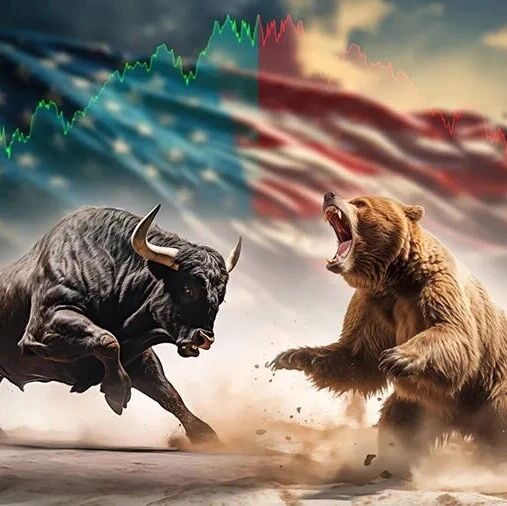
[11月21日]指数估值数据(全球资产大跌,A股回到4.4星;港股指数估值表更新;抽奖福利)
银行螺丝钉· 2025-11-21 12:56
Market Overview - The market has experienced a significant decline, returning to a rating of 4.4 stars [1] - The CSI All Share Index has reverted to its early September levels [2] - All market caps have seen declines, with small-cap stocks experiencing the largest drop [3] - Value style stocks have declined less than growth style stocks, which have shown greater volatility [4] - The ChiNext Index has dropped over 4% [5] - Hong Kong stocks have also shown volatility, with technology stocks down 3% [6][7] Global Market Dynamics - The Nasdaq opened up 2% but closed down 2%, with intraday adjustments of 4-5% [10][11] - The Nasdaq had reached overvalued levels recently, marking the first instance of overvaluation this year, followed by an 8% correction [12][13] - Global market fluctuations have been influenced by the volatility in US stocks, with South Korean stocks down over 3% and Japanese stocks down over 2% [14][15] - A-shares have shown relatively smaller fluctuations compared to global markets [16] Asset Class Performance - Recently, both gold and bonds have also seen declines, with gold down 7.5% from its recent peak [17][18] - The recent downturn in the stock market has not led to a typical safe-haven performance from bonds or gold, indicating a simultaneous decline across asset classes, a rare occurrence [20][21] - This situation is often associated with liquidity crises, similar to events in 2013 and early 2020 [22][23] Federal Reserve Outlook - The company anticipates further interest rate cuts from the Federal Reserve, as the current dollar interest rates remain high [25] - The total scale of US national debt has reached $38 trillion, with annual interest expenses exceeding $1 trillion [26] - The pressure from interest payments necessitates a reduction in rates and refinancing [27] - There may be several months to half a year between rate cuts [29] - If the Fed does not cut rates in December, there may be concerns about liquidity in the following months [32][34] Market Liquidity and Volatility - The current liquidity tightness is unusual, as typically one asset class would rise while others fall [35] - In times of liquidity crises, investors tend to sell long-term risk assets for short-term liquidity, increasing correlations among asset classes [39][40] - Small-cap stocks, growth stocks, and cryptocurrencies are particularly sensitive to liquidity conditions [41] - The ChiNext Index saw a significant rise of over 50% in Q3, followed by a correction of over 15% in Q4 [43][44] - The company has adjusted its portfolio to reduce volatility by taking profits from overvalued growth stocks [45] Future Market Expectations - Investors should not be overly concerned about the current liquidity tightness, as it typically lasts a few weeks to a couple of months [47] - As liquidity conditions improve, different asset classes are expected to rise again [48] - The ongoing rate-cutting cycle by the Federal Reserve suggests potential buying opportunities during market dips [49]

Alpha Metallurgical Resources(AMR) - 2025 Q3 - Earnings Call Transcript
2025-11-06 16:02
Financial Data and Key Metrics Changes - Adjusted EBITDA for Q3 2025 was $41.7 million, down from $46.1 million in Q2 2025 [6] - Cost of coal sales decreased to $97.27 per ton in Q3, down from $100.06 per ton in Q2 [7] - Cash provided by operating activities was $50.6 million in Q3, down from $53.2 million in Q2 [8] - Total liquidity increased to $568.5 million at the end of Q3, up from $556.9 million at the end of Q2 [8] Business Line Data and Key Metrics Changes - The company shipped 3.9 million tons in Q3, the same amount as in Q2 [6] - Metallurgical segment realizations decreased to an average of $114.94 per ton in Q3, down from $119.43 in Q2 [6] - Realizations in the incidental thermal portion of the metallurgical segment increased to $81.64 per ton in Q3, compared to $78.01 per ton in Q2 [7] Market Data and Key Metrics Changes - The Australian Premium Low-Vol Index increased by 9.6% during Q3, rising from $173.50 per metric ton to $190.20 per metric ton [13] - The US East Coast Low-Vol Index increased from $174 per metric ton at the beginning of the quarter to $177 per metric ton at quarter close [14] - The API-2 Index in the seaborne thermal market decreased from $107.95 per metric ton to $95.40 per metric ton during Q3, but has since increased to $100.70 as of November 4th [14] Company Strategy and Development Direction - The company is focused on maintaining cost discipline while navigating a challenging market cycle, with plans for 2026 already in progress [4] - Discussions with North American customers regarding domestic sales commitments for 2026 are ongoing, with guidance not yet issued [5][16] - The company is exploring opportunities in rare earth elements but does not expect significant economic impact from these efforts at this time [27] Management's Comments on Operating Environment and Future Outlook - Management noted that the current economic conditions affecting steel demand are vulnerable to uncertainty and lackluster growth expectations [4] - The company is preparing for potentially another challenging year in the coal industry in 2026 [4] - Management expressed confidence in their ability to manage costs and operate safely while navigating market fluctuations [10] Other Important Information - The company had $408.5 million in unrestricted cash and $49.4 million in short-term investments as of September 30, 2025 [8] - Capital expenditures for Q3 were $25.1 million, down from $34.6 million in Q2 [7] - The Kingston Wildcat mine is in development production, with expectations to ramp up to a full annual run rate of approximately 1 million tons in 2026 [11] Q&A Session Summary Question: Sustainability of Cost Cuts - Management acknowledged the volatility in costs and production but highlighted the operations team's success in reducing costs while maintaining safety [19][21] Question: Domestic Contracts and Volume Flexibility - Management indicated that domestic customers typically prefer fixed-price contracts, and while there may be fluctuations, significant changes in volume are not expected [23][24] Question: Rare Earth Opportunities - Management has explored rare earth opportunities but does not see them as a strategic focus at this time, preferring to concentrate on metallurgical coal [26][27] Question: CSX Train Derailment Impact - Management reported that the rail line affected by the derailment is expected to reopen soon, and they have sufficient inventory to meet customer contracts [31] Question: Market Conditions and Competition - Management expressed confidence in navigating market conditions and emphasized their position as a preferred supplier despite new competition [38] Question: CapEx Expectations for 2026 - Management indicated that they are not ready to provide detailed CapEx expectations for 2026 but noted ongoing projects like the Kingston Wildcat mine [44] Question: M&A Opportunities - Management is cautious about M&A in the current market but remains interested in opportunities that enhance control and cost reduction [50][51] Question: Safety Procedures Amid MSHA Shutdown - Management stated that safety performance is driven internally and has not been negatively impacted by the MSHA shutdown [52]

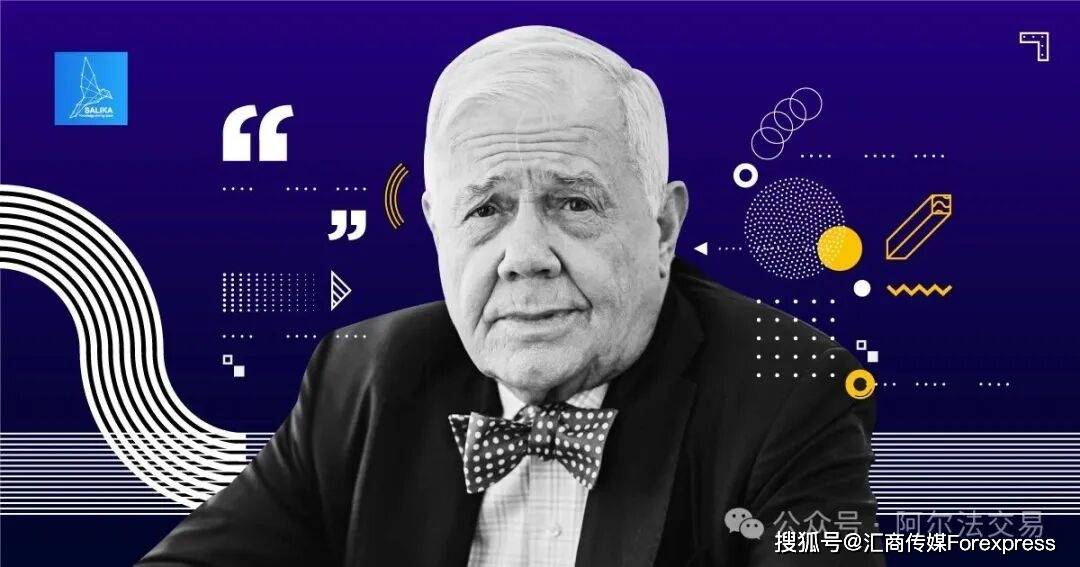
行业内不愿谈的真相?投资大师罗杰斯直言:我没见过一个靠技术分析发财的富人
Sou Hu Cai Jing· 2025-10-10 01:07
Core Insights - Jim Rogers, known as the "Commodity King," emphasizes the importance of buying value and selling during market hysteria [2][36] - He began trading in 1968 with a modest capital of $600 and co-founded the Quantum Fund with George Soros in 1973 [3][7] - Rogers advocates for patience and waiting for the right investment opportunities rather than acting out of boredom [9][37] Early Career and Investment Philosophy - Rogers initially worked on Wall Street and began trading while studying at Oxford [5] - He learned from early mistakes, emphasizing the need to understand investments thoroughly before acting [6] - His strategy involves waiting for favorable conditions, akin to "fishing in a barrel" [5][9] Collaboration with Soros - The Quantum Fund was innovative for its time, allowing for simultaneous trading across various markets [7] - Rogers and Soros had a complementary relationship, with Rogers focusing on analysis while Soros executed trades [7] Investment Strategies - Rogers stresses the importance of ensuring investments have high intrinsic value to minimize potential losses [9][36] - He believes in the necessity of a "catalyst" to trigger significant market movements [37] - The concept of market "hysteria" is crucial; he often looks for opportunities to act against prevailing market trends [10][12] Market Behavior and Cycles - Markets follow cyclical patterns, often driven by emotional responses rather than rational analysis [23][24] - Rogers notes that during market extremes, opportunities arise for those willing to act contrary to the crowd [12][13] Risk Management - He advises against buying options, citing a high failure rate for such investments [14][15] - Maintaining both long and short positions is a strategy to mitigate risk [17][19] Key Investment Principles - Rogers emphasizes the importance of common sense in investing, which is often overlooked by the majority [26][41] - Flexibility and readiness to act in any market condition are essential traits for successful investors [31][41] - Investors should be cautious of mainstream opinions and be prepared to think independently [42] Conclusion - The insights from Jim Rogers provide valuable lessons for investors, highlighting the significance of patience, value investing, and understanding market psychology [36][43]
重注亚马逊、比特币的人!比尔·米勒经典对谈:如何避免被偏见带偏
聪明投资者· 2025-10-09 07:03
Core Insights - Bill Miller is recognized as one of the most legendary investors of the era, having outperformed the S&P 500 for 15 consecutive years, a record that may be hard to replicate [2] - His investment journey has been marked by significant ups and downs, including a severe setback during the 2008 financial crisis, but he managed a remarkable comeback over the following decade [2][6] - Miller's investment philosophy is influenced by a blend of philosophy, investment strategies, and technology, making him a unique figure in the investment world [3][4] Investment Philosophy - Miller's insights often stem from a deep understanding of market psychology and a willingness to challenge conventional wisdom, as seen in his investments in Amazon and Bitcoin [4][6] - He emphasizes the importance of observing market prices closely, as they reflect emotional information, and he is known for using leverage in his investments [4] Current Market Perspective - In a conversation during a tumultuous market period in May 2022, Miller noted that such times often present the best investment opportunities [6][8] - He revealed that over 80% of his personal assets are concentrated in Amazon and Bitcoin, showcasing his strong belief in these assets despite widespread skepticism [6][8] Historical Context - Miller reflects on his career, stating that his greatest pride lies not in his record of outperforming the market but in his sustained recovery and performance in the years following the 2008 crisis [6][8] - He draws parallels between current market conditions and historical inflationary environments, suggesting that many younger investors have not experienced prolonged periods of rising interest rates and inflation [14][15]

宝城期货市场周期
Bao Cheng Qi Huo· 2025-09-24 02:10
Report Core View - Market trends are cyclical, with alternating periods of "integration" and "separation" similar to the rise and fall of the Three Kingdoms [2][3][4] - Traders should observe market changes, follow trends, and have patience and determination in holding positions during different market cycles [3][4][5] - Market cycles are not determined by fate but can be influenced by human strategies, and traders should choose trading cycles based on their own circumstances [4] Grouped by Historical Events and Market Analogies 1. Market "Integration" Phase - During the early stage of Cao Cao's rule, the market was in an "integration" state with orderly supply, stable demand, and price fluctuations within a narrow range [2] 2. Transition from "Integration" to "Separation" - The locust plague in the seventh year of Jian'an led to a supply - demand imbalance, similar to a market shift from "integration" to "separation" where prices soared [2] 3. Market Retracement and Consolidation - When Zhuge Liang governed Shu and launched six expeditions to the Qishan Mountains, the temporary setbacks were like market retracements during an upward trend, which are short - term "integration" within a "separation" phase [3] 4. Holding Position Strategy - Sima Yi's strategy of waiting patiently in the face of Zhuge Liang's attacks is analogous to the wisdom of holding positions in futures trading, emphasizing not being influenced by short - term fluctuations [3] 5. "Black Swan" Events in the Market - Deng Ai's surprise attack on Shu was like a "black swan" event in the financial market, which can change the market pattern unexpectedly [3] 6. Market "Separation" to "Integration" - The fall of the Three Kingdoms and the reunification under the Jin Dynasty represent the market's return to balance after a long - term "separation" phase, following the law of mean reversion [4]
为啥市场一定会在熊市牛市之间来回切换?|投资小知识
银行螺丝钉· 2025-09-18 14:06
Group 1 - The core viewpoint of the article suggests that while the profitability growth of listed companies is slow from 2022 to 2024, there will be a recovery in growth rates in 2025, leading to a dual boost of "valuation increase" and "profit growth acceleration" in certain sectors like technology, military, and healthcare in Hong Kong [2] - The funding cycle is influenced by the amount of money in the market, primarily affected by interest rate fluctuations. The first interest rate cut by the Federal Reserve in September 2024 led to significant increases in A-shares and Hong Kong stocks, with the index rising from 5.9 to 4.8 [2] - The sentiment cycle indicates that market sentiment tends to be overly optimistic during price increases and overly pessimistic during declines. This can lead to misjudgments about market trends, as opportunities often arise during downturns while risks emerge during uptrends [3] Group 2 - The article emphasizes that all three cycles—profitability, funding, and sentiment—are interconnected and can lead to market bull and bear phases when one or two cycles are at their peaks or troughs [4] - It highlights that savvy investors can effectively leverage these cycles to make informed investment decisions [5]

中京电子:上市公司股价受到宏观经济形势等诸多因素的影响
Zheng Quan Ri Bao Wang· 2025-08-29 12:11
Core Viewpoint - The company emphasizes that its stock price is influenced by various factors including macroeconomic conditions, market cycles, and investor sentiment [1] Group 1 - The company is committed to improving its quality as a foundation for compliance in market value management [1] - The company aims to continuously enhance its value and provide returns to its investors [1]

今年最值得收藏的投资指南:重温《投资中最重要的事》50条经典法则
雪球· 2025-08-24 13:30
Group 1 - The core idea emphasizes the importance of recognizing risks during market upswings rather than merely chasing opportunities [2][3] - Understanding market nature is crucial, as cycles are eternal and human behavior remains unchanged [4] - The second-level thinking principle suggests evaluating whether current market optimism is excessive and if prices reflect true value [5] Group 2 - Investment decisions should prioritize value over price, focusing on the relationship between asset quality and its intrinsic value [6][7] - The philosophy of buying undervalued assets is highlighted, advocating for purchases when prices are significantly below intrinsic value [9] - The principle of margin of safety is essential, requiring purchases at prices well below intrinsic value to cushion against errors and market fluctuations [10] Group 3 - The focus should be on avoiding catastrophic investments rather than solely seeking winning opportunities [11] - Defensive investment strategies are particularly important in bull markets, emphasizing error avoidance [12] - Setting realistic return expectations in line with current market conditions is vital, especially at market peaks [13] Group 4 - Recognizing potential losses is more critical than focusing on potential gains [14] - The risk of permanent capital loss is a significant concern, overshadowing short-term price volatility [15] - Avoiding attempts to time the market is advised, as consistent short-term predictions are nearly impossible [16] Group 5 - Mastering emotional control is essential for maintaining rationality in investment decisions [17] - Greed and fear are identified as emotional adversaries that can lead to poor investment timing [18] - The importance of resisting the fear of missing out during bull markets and the fear of further losses during bear markets is emphasized [20] Group 6 - Acknowledging one's ignorance is the first step toward wisdom in investing, highlighting the importance of understanding unknowns [24] - Creating a negative checklist of what not to invest in is as crucial as identifying potential investments [25] Group 7 - Risk-return asymmetry indicates that high risk does not guarantee high returns; only by correctly identifying and assuming unnoticed risks can investors achieve high returns [27] - Great investors prioritize risk management over profit generation, making risk control a core investment principle [28] Group 8 - The essence of value investing lies in focusing on tangible factors like assets and cash flow while seeking to buy at undervalued prices [33] - Investors should concentrate on known areas, focusing on the fundamentals of companies, industries, and securities [34] Group 9 - The practice of contrarian investing is encouraged when prices deviate significantly from value, requiring courage and patience [36] - The greatest investment opportunities often arise from widespread pessimism, while the most significant risks stem from collective optimism [38] Group 10 - Continuous learning and integrating various investment concepts are vital for successful investing [40] - Establishing a consistent investment philosophy and maintaining a long-term perspective is crucial for recognizing true value over time [42]