广场协议2.0

Search documents
极为罕见!美日联合干预,这对市场意味着什么?
华尔街见闻· 2026-01-26 03:35
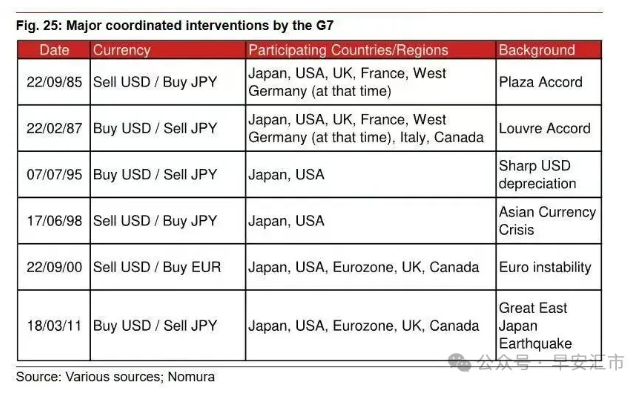
日本正深陷一场严峻的金融两难:在日元崩盘与国债市场解体之间,政策制定者似乎已无路可退。 随着日本债券收益率飙升且货币持续承压, 市场正密切注视着一个可能改变全球汇市格局的信号——美国是否正在准备"亲自下场"协助日本。 华尔街见闻此前提及,日本首相高市早苗周日发出严厉警告,承诺政府将采取"一切必要措施"应对市场的投机性和极度异常波动。 这一表态紧随上周五市场的剧烈震荡,当日美元兑日元汇率一度重挫约1.75%,日元创下五个月来最大单日涨幅。 市场普遍猜测,这一逆转的催化剂源自纽约联储极其罕见的"询价"(rate check)动作。 值得注意的是,此次行动极为罕见。 据纽约联储网站数据,自1996年以来,美国仅在三个不同场合干预过汇市,最近一次是在2011年日本地震后,与G7国家 联手卖出日元以稳定市场。 据早安汇市分析指出,由于时差问题,在东京的深夜时间,日本财务省干预汇率的工作是可以请求纽约联储"接棒"代理的,这时纽约联储干预动用的也是日本 财务省的外汇储备。 而本次纽约联储rate check代表美国财政部的意志,需要美国财长贝森特(甚至需要特朗普)签署确认,因而已经上升到跨国联合干预行动的层级。 据媒体援引 ...


日本外汇主管:正与美国密切联系,应对日元汇率波动
Hua Er Jie Jian Wen· 2026-01-26 02:31
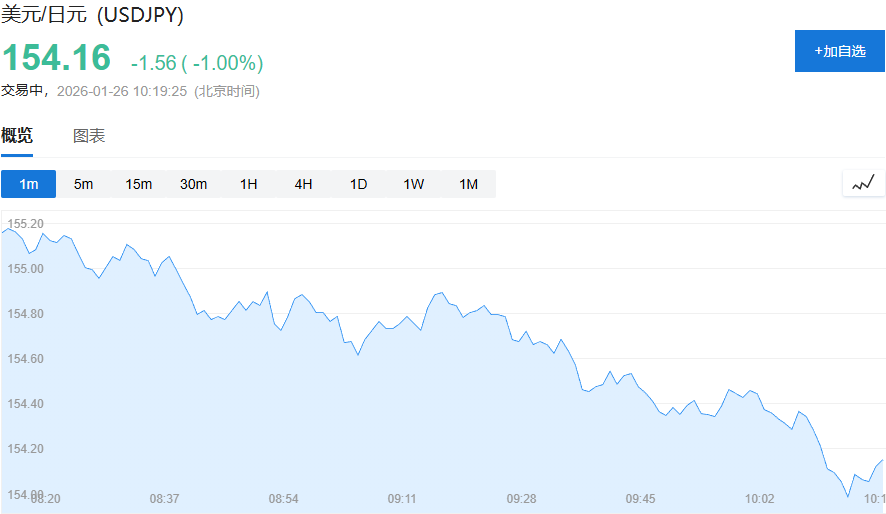
正值日元上周五突然走强、市场猜测日美当局可能联手干预汇市之际,日本财务省外汇主管Atsushi Mimura表态,日本当局将 根据需要与美国当局密切协调,对外汇市场波动做出适当应对。 据彭博社报道,Mimura在周一上午抵达财务省时对记者表示,日本将按照去年9月日美财长联合声明的精神,在必要时与美方 密切合作,继续对汇率波动做出适当应对。他拒绝回应市场关于当局上周五进行汇率检查的猜测。 日本首相高市早苗周日表态称,日本将"采取一切必要措施"应对投机性和高度异常的汇率波动。财务大臣片山皋月上周五也 表示,当局正以紧迫感监控汇率走势。这些表态强化了市场对日本可能干预汇市的预期。 周一日元延续涨势,交易员对日本可能入场干预保持高度警惕。日元一度上涨近1%至1美元兑154.16日元。 据彭博报道,知情人士透露,纽约联储在美国财政部指示下于上周五致电各大金融机构询问美元兑日元汇率报价。 这种所谓的"汇率检查"是央行向交易员询问货币兑美元报价的做法,虽然不是实际的日元交易,但有时是干预行动的前兆。市 场将此解读为美日当局已准备联手遏制日元跌势的信号,引发大规模日元空头回补。 日本去年四次干预耗资近千亿美元 日本当局在20 ...
极为罕见!美日联合干预,这对市场意味着什么?
Hua Er Jie Jian Wen· 2026-01-26 00:21
Core Viewpoint - Japan is facing a severe financial dilemma between a potential yen collapse and a bond market crisis, with policymakers seemingly having no way out. The market is closely watching for signals that the U.S. may intervene to assist Japan in stabilizing the yen [1][6]. Group 1: Market Reactions and Speculations - Prime Minister Fumio Kishida issued a stern warning, promising to take "all necessary measures" to address speculative and extreme market volatility, following a significant drop in the dollar-yen exchange rate [1][2]. - The New York Federal Reserve's rare "rate check" action is interpreted as a precursor to potential intervention, suggesting that U.S. and Japanese authorities are prepared to work together to curb the yen's decline [1][3]. - The expectation of a "coordinated intervention" is reshaping investor risk preferences, with analysts drawing parallels to the "Plaza Accord 2.0" scenario, indicating a potential joint effort to stabilize the yen [2][7]. Group 2: Historical Context and Implications - The New York Fed's "rate check" is a rare occurrence, with only three instances of U.S. intervention in the currency market since 1996, the last being in 2011 after the Japanese earthquake [3][4]. - The urgency from Japanese authorities stems from the yen's sharp decline over the past two weeks and the looming threat of a "Japanese bond crisis," which has raised concerns about Japan's fiscal financing capabilities [4][6]. - The current situation presents a dilemma for the Bank of Japan, which is caught between the need to stabilize the currency and the risk of exacerbating the bond market crisis through interest rate hikes [6]. Group 3: Future Scenarios and Market Strategies - Analysts suggest three potential paths for the dollar-yen exchange rate: a likely stabilization action by the Japanese Ministry of Finance, a zero-cost attempt to stabilize the exchange rate without follow-up intervention, or a macro agreement among the U.S., Japan, and South Korea to jointly address currency depreciation [12][13]. - The market is advised to remain vigilant, as the potential for significant yen short-covering exists if the anticipated intervention does not materialize [10][12]. - The involvement of the U.S. Treasury in the currency market indicates that the situation has escalated beyond typical foreign exchange concerns, marking a significant moment in international financial relations [7][8].
广场协议2.0!日本议员痛斥高市早苗卖国弃民:能给美国送80万亿日元投资,却无法拯救深处困境的国民!
Sou Hu Cai Jing· 2025-12-16 14:40
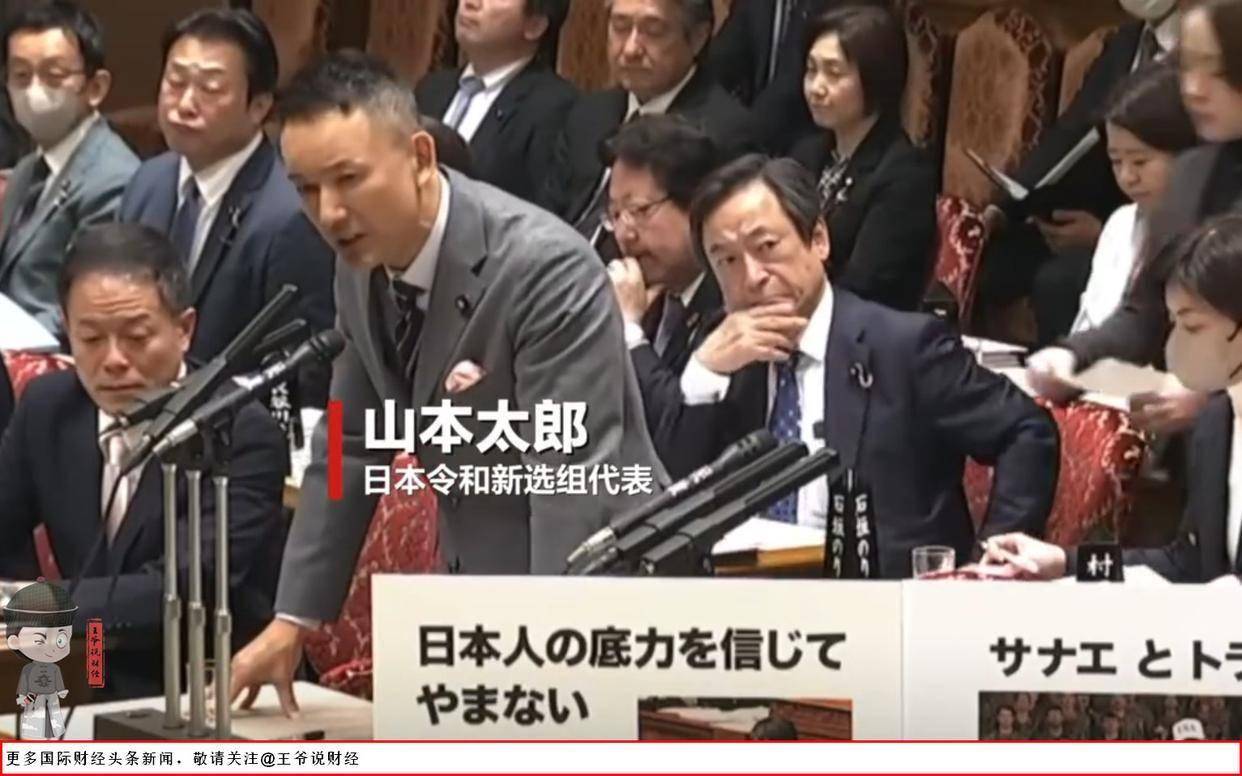
王爷说财经讯:投资美国80万亿日元,而且90%的利润还要留在美国! 看到日本政府的所作所为!日本议员怒了!直接公开炮轰日本首席高市早苗:卖国 弃民!那么日美贸易协议到底是如何规定投资的?80万亿日元的对美投 资,这对于日本经济又意味着什么?一起来看看! 当地时间12月15 日,日本参议员、 日本令和新选组代表——山本太郎在国会公开痛斥首相高市早苗"卖国弃民"。 如王爷说财经之前就报道过,美国此前对日本汽车加征25%关税(含10%基准关税+15%附加关税),协议后降至15%,但 日本需以5500亿美元(80万亿日 元)投资换取税率"优惠"。 而且投资管理由美国商务部主导,美国总统对项目有最终决定权,日本仅参与咨询委员会,无实质话语权。与此同时,日本需承担全部投资损失,利润分配 分两阶段:初始投资收回前美日各50%,之后美国占90%。 对此,美国商务部长卢特尼克多次公开宣称,日本对美5500亿美元投资中, 美国将获得90%的利润,日本仅保留10%。 除了投资美国5500亿美元之外,在最新的美日贸易协议中,日本还被迫开放农产品市场,承诺将美国大米采购量增加75%,引发农业协会强烈抗议,农户担 忧本土米价崩盘。 山本 ...
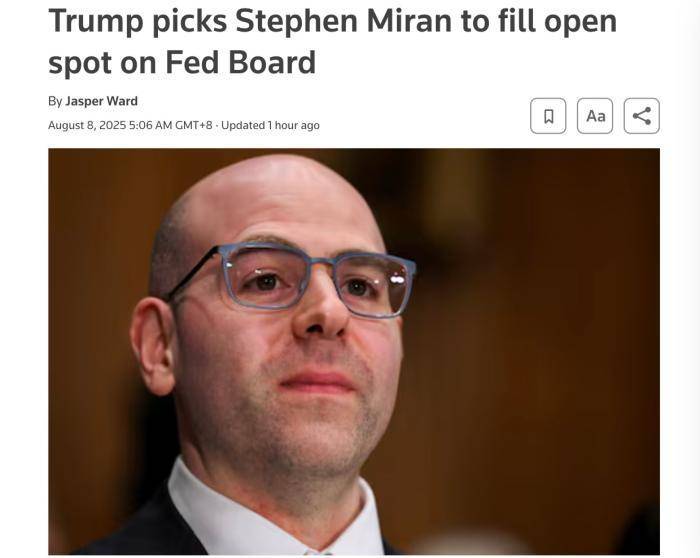
特朗普称将提名斯蒂芬·米兰担任美联储理事
Sou Hu Cai Jing· 2025-08-07 22:58
Core Points - President Trump has nominated Stephen Moore to fill the recently vacated position on the Federal Reserve Board, with a term ending on January 31, 2026 [1][4] - Trump is actively seeking long-term replacements for other Federal Reserve Board positions [4] Group 1: Nomination Details - Stephen Moore is currently the Chairman of the White House Council of Economic Advisers and holds a Ph.D. in economics from Harvard University [4] - Moore previously served as a senior economic policy advisor at the U.S. Treasury during Trump's first term [4] Group 2: Economic Policy Proposals - Moore has proposed multilateral coordinated interventions to manipulate the exchange rates of the dollar, yen, and euro to prevent the appreciation of the dollar, referred to as "Plaza Accord 2.0" or "Mar-a-Lago Accord" [4] - In a paper published in 2024, Moore suggested enhancing the control of the Federal Reserve Board Chair, including shortening the Chair's term [4] Group 3: Federal Reserve Board Changes - The resignation of Federal Reserve Governor Kugar on August 8 has been interpreted as a move that allows Trump to make new appointments to the Federal Reserve Board ahead of schedule [4] - Kugar's term was originally set to end in January 2026, but his early departure opens the door for new nominations [4]
对“广场协议2.0”警惕缓解,日元要贬?
3 6 Ke· 2025-08-04 03:28
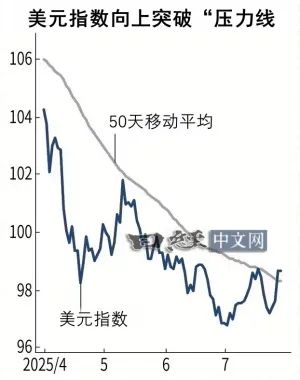
Group 1 - The market perception that Trump favored a weaker dollar has shifted, with discussions around coordinated interventions like the "Mar-a-Lago Agreement" and "Plaza Accord 2.0" becoming less prominent as the dollar index surged [1][6] - On July 28, the dollar strengthened significantly against major currencies, driven by a tariff negotiation agreement between the US and EU, leading to increased selling of euros and buying of dollars [1][6] - The dollar index rose from 97.4-97.6 to 98.5-98.9, breaking through the 50-day moving average resistance level [1] Group 2 - Trump's recent statements indicate a preference for a strong dollar, contrasting with his previous criticisms of currency devaluation by countries like Japan and China [3][8] - The market is now considering the potential for a stronger dollar due to the robust state of the US economy, with expectations that the dollar could rise to 150 yen per dollar if the "America First" sentiment continues [6][8] - Technical analysis signals, such as the "Ichimoku Kinko Hyo," indicate bullish trends for the dollar, with key indicators showing strong signals for dollar appreciation [7][9]
对“广场协议2.0”警惕缓解,日元要贬?
日经中文网· 2025-08-02 00:33
Core Viewpoint - The article discusses the recent strengthening of the US dollar against major currencies, driven by changing perceptions of President Trump's stance on currency valuation and the impact of US-EU tariff negotiations [2][4][8]. Group 1: Dollar Strengthening Factors - The "Dollar Index," which measures the dollar's strength against major currencies, surged from 97.4-97.6 to 98.5-98.9, breaking through the 50-day moving average resistance [4]. - The market reacted to concerns that tariffs would negatively impact the European economy, leading to a sell-off of the euro and increased demand for the dollar [4]. - Trump's recent comments indicate a shift towards favoring a strong dollar, stating, "I am a fan of a strong dollar," which contrasts with previous views that suggested a preference for a weaker dollar to boost exports [6][8]. Group 2: Market Reactions and Predictions - The Japanese yen weakened against the dollar, reaching an exchange rate of 1 USD to 148.70 JPY, as market participants anticipated further dollar strength [4]. - Analysts suggest that if the perception of a strong US economy continues, the yen could depreciate to 150 JPY per USD, indicating a potential shift in currency dynamics [9]. - Technical analysis signals, such as the "Ichimoku Kinko Hyo," indicate bullish trends for the dollar, with key levels being monitored for potential breakout points [11].
没有轴心的世界(1)保卫美元是危险的
3 6 Ke· 2025-05-28 05:19
Group 1 - The core idea of the articles revolves around the potential challenges the US faces in maintaining the dollar's status as the world's reserve currency, particularly in light of rising trade deficits and the proposed "Plaza Accord 2.0" to counteract dollar appreciation [1][2][3] - The "Plaza Accord 2.0" is a concept proposed by Stephen Miran, aiming for coordinated intervention among multiple countries to manage currency exchange rates and curb excessive dollar appreciation [2][3] - The US is experiencing a significant increase in its trade deficit, projected to reach $1.2 trillion by 2024, compared to $120 billion in 1985, indicating a worsening economic situation [3] Group 2 - The relationship between the dollar's status as a reserve currency and national security is emphasized, suggesting that the US's economic stability is intertwined with its defense capabilities [4][5] - The US's reliance on the dollar as a global currency has led to a situation where its economic policies, such as tariffs, may inadvertently undermine the dollar's value and the country's credibility [5][6] - Recent discussions among financial institutions indicate a growing concern over the risks associated with dollar depreciation, with some investors seeking to adjust their asset holdings in response [5]
没有轴心的世界(1)保卫美元是危险的
日经中文网· 2025-05-28 02:56
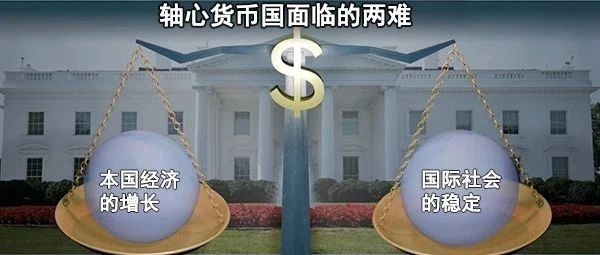
Core Viewpoint - The article discusses the potential risks and implications of the U.S. dollar losing its status as the world's reserve currency, particularly in the context of the proposed "Plaza Accord 2.0" aimed at curbing the dollar's excessive appreciation and its impact on U.S. trade deficits [1][2][3]. Group 1: Dollar's Status and Economic Implications - The U.S. dollar is widely used internationally, leading to increased demand and a higher exchange rate, which in turn reduces export competitiveness and often results in trade deficits [1][2]. - The concept of "Triffin's Dilemma" is highlighted, indicating that the U.S. must supply dollars abroad to maintain its reserve currency status, which creates a paradox of needing to run trade deficits while also facing pressure from a strong dollar [2][3]. - The scale of the U.S. trade deficit has significantly increased, from $120 billion in 1985 to an estimated $1.2 trillion in 2024, while the fiscal deficit has grown from $210 billion to $1.8 trillion, indicating a worsening of the dual deficit situation [3]. Group 2: Proposed Solutions and Market Reactions - The "Plaza Accord 2.0" is proposed as a collaborative effort among multiple countries to manage currency values and prevent the dollar from over-appreciating, reflecting a shift from free trade to protectionism under the current U.S. administration [2][3]. - A secret meeting involving major financial institutions and the White House's economic advisor Stephen Miran suggests a growing concern over the volatility of the U.S. financial markets and the potential for significant economic instability [2][3]. - The article notes that the U.S. is increasingly relying on tariffs and protectionist measures, which may ultimately undermine the dollar's value and the U.S.'s credibility as a stable economic leader [4][5]. Group 3: National Security and Economic Stability - The article emphasizes the inseparable link between the dollar's status as a reserve currency and U.S. national security, suggesting that a strong dollar can weaken U.S. manufacturing and export competitiveness, thereby posing risks to national defense [4]. - The notion that the U.S. may no longer have the capacity to protect its allies and maintain the dollar's value is raised, indicating a shift in global economic dynamics and potential challenges to U.S. hegemony [4][5]. - The recent downgrade of the U.S. credit rating by Moody's reflects growing concerns about the sustainability of U.S. fiscal policies and the potential for a loss of confidence in the dollar [4].
从美债市场动摇看“广场协议2.0”的不现实
日经中文网· 2025-05-23 03:17
Group 1 - The recent downgrade of the US government bond rating by Moody's has shaken trust in what was once considered a safe asset [2] - The passage of significant legislation, including the extension of Trump's tax cuts, is projected to increase US government debt by $3.1 trillion over the next decade [1] - The Federal Reserve Board member Waller expressed concerns about the unsustainable nature of the US fiscal deficit, indicating that the market will seek higher interest rates on US bonds until government spending is controlled [1][2] Group 2 - The US bond market is facing instability due to multiple factors, including the downgrade of the bond rating, reduced purchases by China, and weak demand for 20-year bonds [2] - The Trump administration's push for a weaker dollar to boost manufacturing may conflict with the need for a strong dollar to attract foreign investment [2][3] - The US Treasury Secretary emphasized that exchange rates should be determined by the market, indicating a preference for currency stability over inducing a weaker dollar [3]