
开源模式

Search documents
阿里主席蔡崇信最新演讲:放弃70万美元年薪,是因为我算清了一笔账
Sou Hu Cai Jing· 2025-12-06 06:43
Core Insights - The speech by Joe Tsai emphasizes the importance of making decisions based on acceptable lower limits while aiming for unlimited potential [5][8] - Tsai highlights that innovation should be driven by customer needs rather than arbitrary pursuits [10][11] - He discusses the competitive advantage of lower operational costs in AI development, particularly in the context of China versus the US [13][14] - The strategy of open-sourcing core capabilities while monetizing surrounding services is presented as a viable business model [15][16] - Effective management involves hiring smarter individuals and trusting their expertise [19][20] - Understanding both the world and human nature is crucial for personal and professional growth [21][22] Group 1: Decision-Making - Good opportunities are defined as those where one can accept the worst-case scenario while not seeing the upper limit [5] - The concept of asymmetric risk is introduced, where minimal, controllable costs can lead to significant future gains [8] Group 2: Innovation - Innovation should be a response to pressing customer needs rather than a goal in itself [10] - Historical examples from Alibaba illustrate that successful innovations stem from addressing specific market pain points [11] Group 3: Competition - The discussion on AI competition highlights that lower costs in China provide a structural advantage over the US [13] - The importance of widespread adoption of AI is linked to cost efficiency, which can dilute competitive disadvantages [14] Group 4: Business Model - The approach of open-sourcing AI models while generating revenue through cloud services is outlined as a strategic model [15] - This model allows for the creation of a dependency on the company's services, enhancing profitability [16] Group 5: Management - Effective management is characterized by recruiting individuals who are more knowledgeable and capable than oneself [19] - Trusting and compensating these individuals appropriately is essential for organizational success [20] Group 6: Personal Growth - The ability to quickly understand new knowledge and analyze problems is emphasized as a critical skill in a rapidly changing world [21] - Understanding human psychology is equally important for creating successful products and navigating business dynamics [22]



以变革应对变局 以转型谋求发展
Sou Hu Cai Jing· 2025-12-04 19:03
Core Insights - The "2025 Chengdu International Forum" concluded in Guangzhou, focusing on the theme of "World Economic Development Trends under Trade and Tariff Conflicts" [7] - Participants emphasized the importance of managing risks associated with the "technology gap" and integrating into the digital age, alongside addressing traditional economic risks [9] Group 1: Economic Risks and Trade Policies - Romano Prodi, former Prime Minister of Italy, noted that many trade policies are driven by internal political demands rather than economic logic, increasing unpredictability in global supply chains [8] - Kim Campbell, former Prime Minister of Canada, highlighted the negative impact of tariff policies on global supply chains and free trade, stressing the need for better information sharing among nations [8] - Several attendees agreed that the ability to manage risks is directly linked to the stability and sustainability of development [9] Group 2: Development Paradigm Shift - The forum discussed the need for a transformation in development paradigms, moving away from merely pursuing growth speed and scale towards sustainable development that emphasizes endogenous motivation and shared welfare [10] - María Fernanda Espinosa, former Foreign Minister of Ecuador, called for reforms in economic governance institutions to ensure fair resource distribution and amplify the voices of developing countries [10] - Michelle Bachelet, former President of Chile, emphasized the necessity of systemic approaches to address global risks like climate change and financial crises, advocating for cooperation over confrontation [10][11] Group 3: Technological Integration and Opportunities - Jorge Quiroga, former President of Bolivia, warned that developing countries risk marginalization in the new technology wave, particularly in AI and digital economy sectors [9] - Xue Lan, a senior professor at Tsinghua University, pointed out that China's open-source model could help smaller countries leverage AI advancements at lower costs [9] - The forum highlighted the potential for China to lead in global development trends by investing in long-term development and technology transfer to assist developing nations [9] Group 4: International Cooperation and Globalization - Prodi emphasized the importance of China-EU cooperation in stabilizing the global economy amidst rising political tensions and trade conflicts [12] - Li Cheng, a professor at the University of Hong Kong, discussed the rise of unilateralism and its implications for global trade, arguing that the U.S. approach to tariffs has backfired [14] - Espinosa noted that globalization is not over but is entering a "recalibration" phase, requiring nations to reassess their interdependence and governance strategies [16]
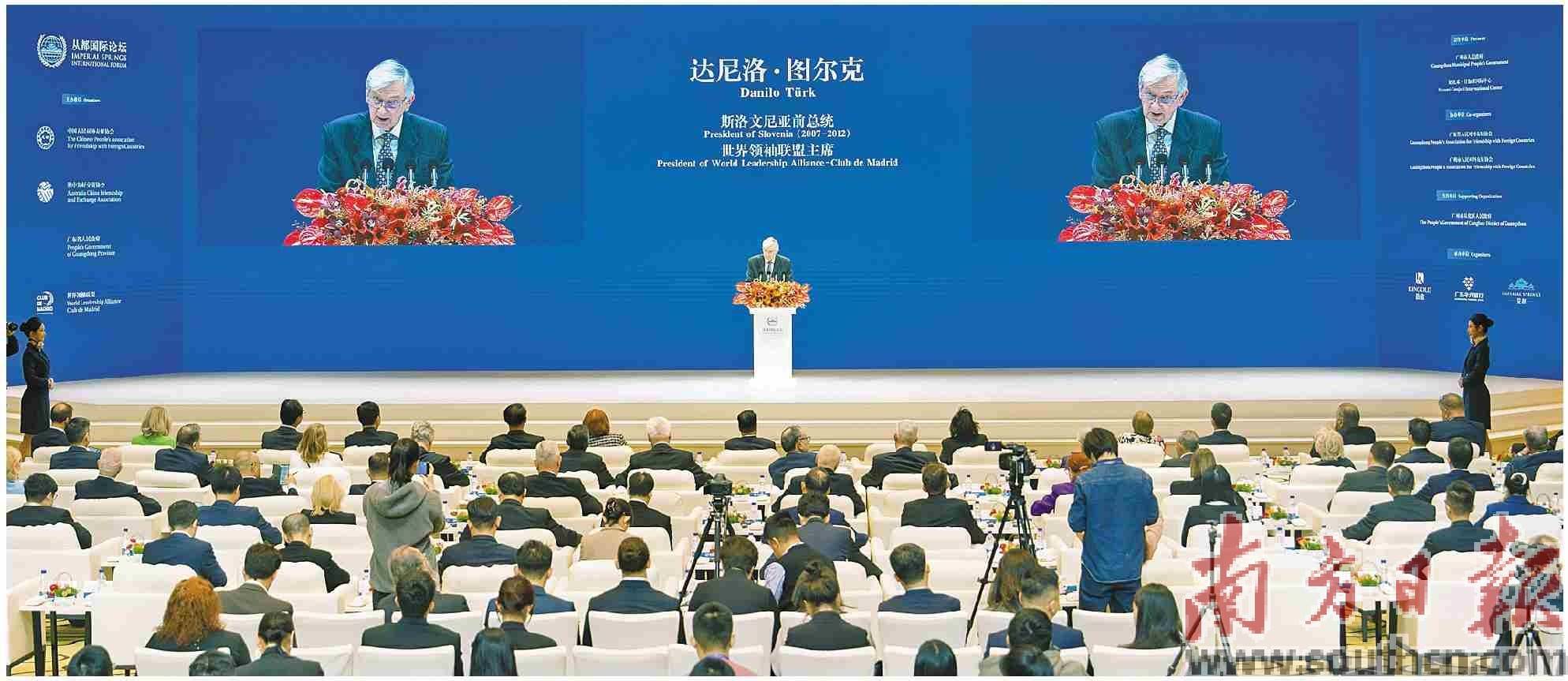
外媒聚焦阿里千问:一家企业如何确立全球AI版图中的核心地位
Huan Qiu Wang· 2025-11-26 10:11
Core Insights - Alibaba has positioned itself as a leader in AI through a dual strategy of "technology leadership" and "ecosystem implementation" [1][4] - The company is making a bold strategic bet by going "All in AI," marking a significant shift in its business focus [4] Technology Development - Alibaba's long-term investment in core technology development is highlighted, including the establishment of its first AI lab in 2016 and the creation of the world-class research institution, DAMO Academy [4] - The company has developed its foundational models and self-researched chips, laying a solid technical foundation for its emergence in the current large model wave [4] - Alibaba's Qianwen team has consistently released powerful models, such as Qianwen 2.5 and the more advanced Qianwen 3, maintaining a leading position in the rapidly evolving AI landscape [4] Ecosystem Implementation - Alibaba's strategy effectively transforms top-tier technology into real-world impact through open-source and cloud services, contrasting with the closed-source model prevalent in the U.S. [5] - The open-source approach has attracted 16 million global developers to Alibaba's "ModelScope" community, creating a large and active AI ecosystem [5] - Successful applications driven by Alibaba's AI technology include the Quark smart assistant, which has nearly 150 million monthly active users and has achieved over 10 million downloads within a week of its public testing [5] Commercial Value - Alibaba Cloud's AI-related projects have shown three-digit growth for eight consecutive quarters, indicating that its AI strategy is entering a harvest phase [5] Global Partnerships - Major global companies, such as BMW, are integrating Alibaba's Qianwen model into their next-generation smart vehicles, demonstrating trust in Alibaba as a comprehensive AI partner with strong technical foundations and extensive cloud infrastructure [6] - Potential collaborations with companies like Apple further validate Alibaba's dual-driven strategy in the global AI landscape [6] - Alibaba is playing a crucial role in China's ambitious plan to dominate the AI race by 2030, supported by its robust technology and ecosystem [6]
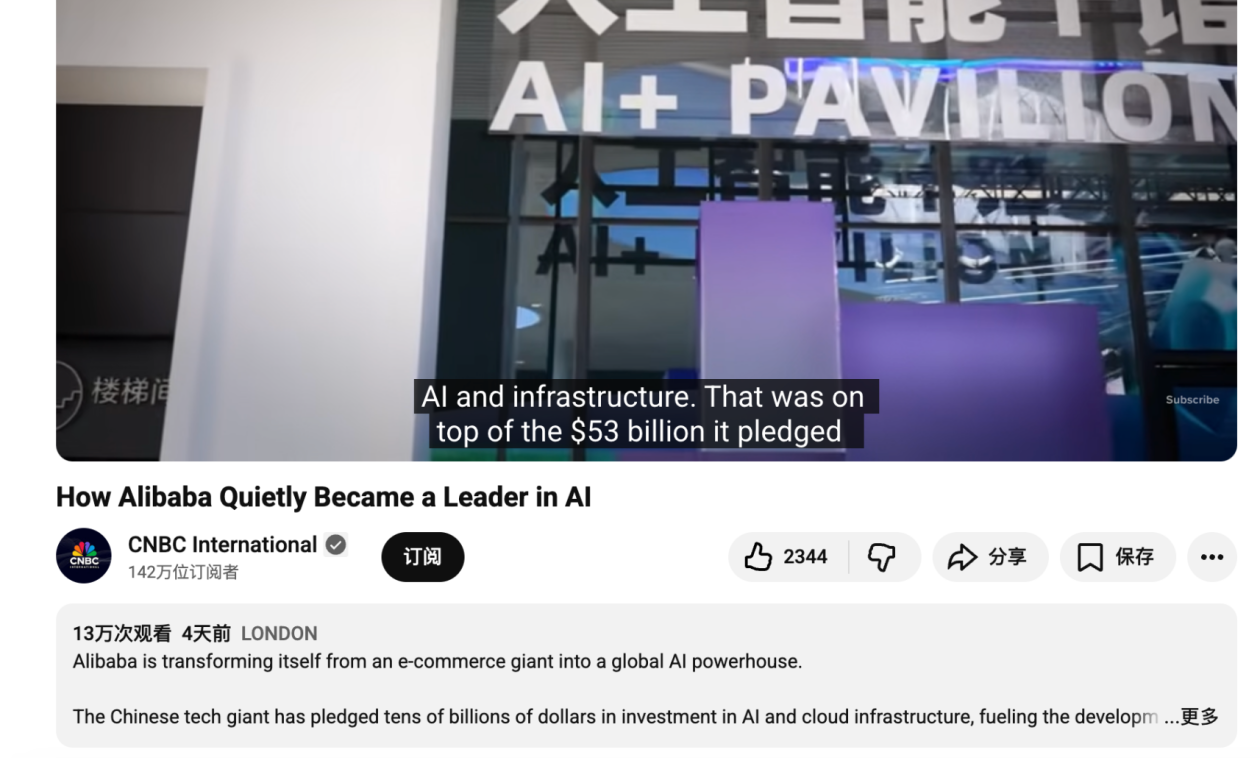
环球问策:撬开全球操作系统传统格局 中国“云+AI”路线会是一场豪赌吗?
Huan Qiu Wang Zi Xun· 2025-11-18 08:16
Core Insights - The cessation of CentOS support serves as a wake-up call and a turning point for the development of domestic operating systems in China, with a clear community vision to promote an ecosystem rather than engage in low-level competition [1] - The Longxin operating system has surpassed 10 million installations, capturing nearly 50% of the domestic server operating system market, indicating a strong willingness among enterprise users to migrate to this system [1] - The shift from being a "follower" to a "definer" in the operating system landscape is being debated, particularly in the context of cloud computing and AI reshaping technology [1] Group 1: Open Source and Community Structure - The understanding of open source in China has historically oscillated between viewing it as a free resource or a utopian solution, highlighting the need for a supportive ecosystem [2] - The Longxin community comprises 24 governing units and over 1,000 ecosystem partners, covering the entire industry chain from chips to cloud vendors, fostering a collaborative environment [2][4] - The community's governance model differs from foreign counterparts, focusing on efficiency and commercial interests, which has led to the successful incubation of 14 derivative versions and nearly 4,800 hardware compatibility certifications [5] Group 2: AI and Operating System Evolution - The role of operating systems is evolving from resource management to being a critical factor in the success of AI applications, necessitating a balance between different computing philosophies [6][7] - Longxin's strategy emphasizes a model-centric approach, where the operating system facilitates collaboration among various processing units, akin to a conductor in an orchestra [7] - The community aims to build an open AI engine ecosystem through initiatives like the "Longteng Plan 3.0," which seeks to integrate over 1,000 industry, academic, and research forces [7] Group 3: International Standards and Community Influence - Longxin community members are increasingly participating in international standard-setting bodies, marking a shift from being mere contributors to co-creators of standards [9][10] - The community's governance and technical direction must be driven by models, allowing for a redefinition of system interfaces and behaviors in the AI era [10][11] - The challenge remains to transition from being participants in defining standards to leading the definition process, which requires a robust ecosystem and user adoption [11][12]
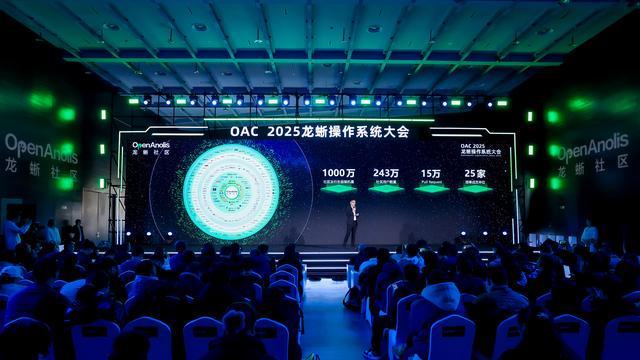
成立仅18个月!K-ScaleLabs宣布倒闭!现金流不到40万美元!战略误判押错生死局!
机器人大讲堂· 2025-11-15 10:18
Core Insights - K-Scale Labs, a humanoid robot startup based in Palo Alto, officially shut down in November 2025, having peaked at a valuation of over $50 million but now with cash reserves of less than $400,000 [1] - The departure of key personnel and the establishment of a new company, Gradient Robotics, by the product and engineering lead, indicated potential cash flow issues at K-Scale Labs [3] - The company faced significant challenges in securing funding and maintaining team cohesion, leading to a rapid decline in its workforce and ultimately its closure [27][29] Company Overview - K-Scale Labs was founded by Benjamin Bolte, who transitioned from a background in AI research at Meta and Tesla to focus on humanoid robotics due to a perceived gap in the market for accessible products [6][8] - The company adopted an open-source approach to robotics, which was integral to its culture and development process, allowing for rapid prototyping and iteration despite limited funding [12][14] Product Development - The initial focus on a large humanoid robot (Zbot) shifted to a smaller, more affordable model (Kbot) after recognizing the need for quicker market validation and cash flow [15][21] - Kbot was designed to be low-cost and easily produced, leveraging readily available components, which allowed it to gain traction and visibility in the market [19][21] Strategic Decisions - A pivotal moment for K-Scale Labs came when a venture capitalist suggested that securing 100 orders for Kbot would facilitate a $20 million Series A funding round, prompting a strategic pivot to prioritize Kbot over Zbot [23] - The company engaged in controversial marketing strategies to create competition and drive interest, but ultimately faced challenges in securing necessary funding [24][26] Financial Challenges - The failure to secure funding after the launch of Kbot led to a rapid decline in team morale and an exodus of key personnel, exacerbating the company's financial difficulties [27][29] - High operational costs, including rent and material procurement, further strained the company's limited cash reserves, leading to the decision to shut down [29][30] Industry Context - K-Scale Labs' closure reflects broader challenges in the humanoid robotics industry, where many companies struggle to transition from prototype development to commercial viability [32] - The market is expected to see an influx of low-cost, small humanoid robots, particularly from Chinese companies, which may outpace American firms focused on high-cost industrial solutions [34][36] Future Outlook - Despite the closure of K-Scale Labs, Benjamin Bolte remains optimistic about the future of humanoid robotics, predicting a shift towards modular, open-source designs that could democratize access to robotics technology [36][40] - The lessons learned from K-Scale's journey, including the importance of cash flow and market adaptability, will serve as valuable insights for future ventures in the robotics space [41][42]
业界乌镇话网络信息技术产业生态
Zhong Guo Xin Wen Wang· 2025-11-09 00:31
Core Insights - The World Internet Conference in Wuzhen emphasizes the importance of an open ecosystem for accelerating technological innovation and value release in the digital transformation era [1][2] - Open-source models are highlighted as crucial for fostering collaboration and breaking down development barriers in the network information technology industry [1] - The need for a foundational operating system that adapts to diverse devices is underscored, with "chip + operating system" being identified as the core of information technology [1][2] Group 1 - The theme of the forum is "Building Ecosystems Together, Sharing Development Opportunities," focusing on future directions and pathways for the network information industry [1] - Philipp Tomsich from the RISC-V International Foundation emphasizes the expansion of global open standards and ecosystems over the past decade, noting that open-source opportunities are increasing [1] - Wang Chenglu, CEO of Shenzhen Kaihong Digital Industry Development Co., Ltd., discusses the importance of an operating system that facilitates device collaboration in the era of the Internet of Things [2] Group 2 - AI technology is transforming industry shapes and development models, but fragmented deployment is limiting its value, presenting a significant challenge for creating an efficient and secure AI application ecosystem [2] - Prashanth Kalika from Cisco introduces the concept of an AI unified architecture, which aims to integrate data collection, training, reasoning, and automation seamlessly [2] - Wei Liang from the China Academy of Information and Communications Technology stresses the need for an effective evaluation system to ensure the reliability of terminal intelligent agents [2]
业界乌镇话网络信息技术产业生态:开放、互联、可靠
Zhong Guo Xin Wen Wang· 2025-11-08 13:42
Core Viewpoint - The 2025 World Internet Conference in Wuzhen emphasizes the importance of an open ecosystem for accelerating technological innovation and collaboration in the digital transformation era [1][3]. Group 1: Open Standards and Ecosystem - Open standards and architectures are essential for innovation, as highlighted by Philipp Tomsich from the RISC-V International Foundation, who noted the expansion of global open standards and ecosystems over the past decade [3]. - The open-source model is seen as a crucial factor for faster cross-border collaboration and enhancing competition within the chip technology sector [3]. Group 2: AI and Industry Transformation - AI technology is significantly altering industry structures and development models, but the fragmented deployment of AI applications poses challenges for realizing its full value [3]. - There is a need to build an efficient, collaborative, and secure AI application ecosystem to address these challenges [3]. Group 3: Unified AI Architecture - Cisco's global vice president, Prashanth Kalika, discussed the need for a unified AI architecture that integrates data collection, training, inference, and automation to resolve the traditional split between cloud and edge deployments [4]. - The goal is to achieve adaptive optimization through bidirectional data flow [4]. Group 4: Evaluation Systems for Intelligent Endpoints - The development of intelligent endpoints requires an effective evaluation system to ensure traceability and identify potential risks, as stated by Wei Liang from the China Academy of Information and Communications Technology [4]. - Establishing a precise assessment method is crucial for the reliable operation of intelligent endpoints [4].
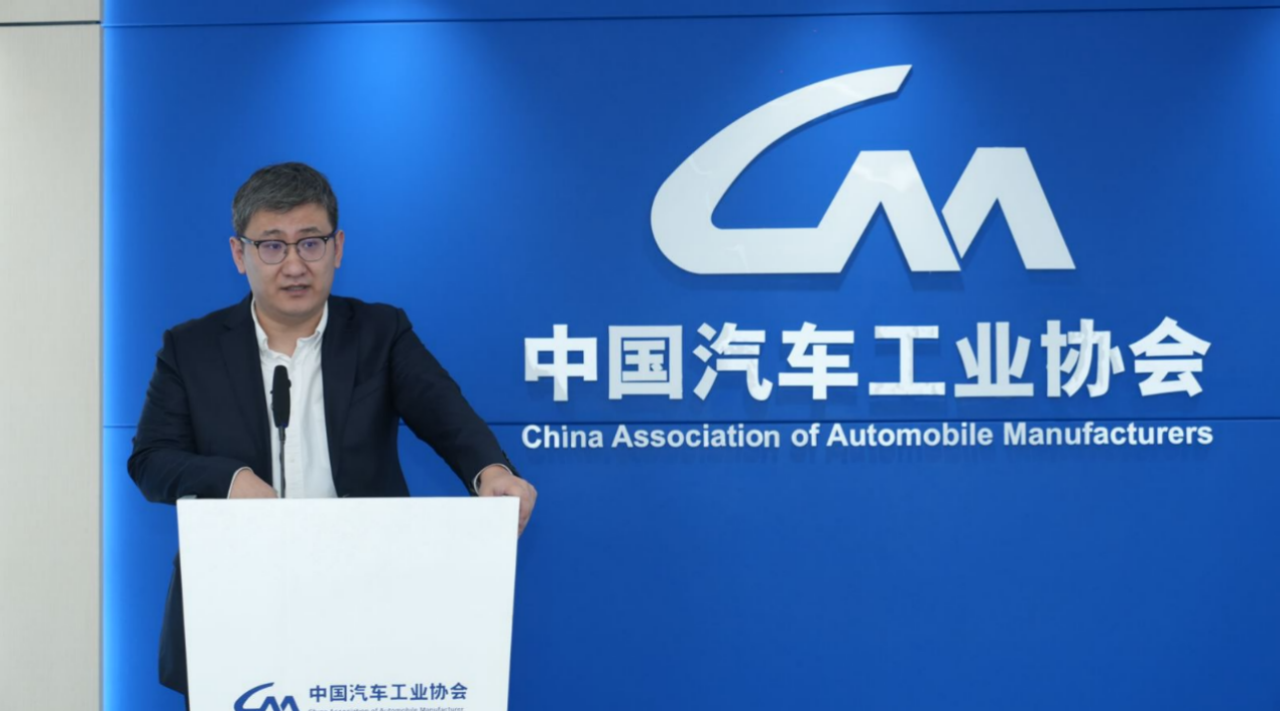
车辆操作系统亟待开源共建 中汽协杨中平:安全是不可逾越的底线
Mei Ri Jing Ji Xin Wen· 2025-10-27 04:17
Core Viewpoint - The automotive industry is transitioning towards "intelligent and connected" systems, necessitating the development of open-source, full-stack operating systems to enhance safety and transparency [1][4]. Group 1: Open Source Operating Systems - The release of the open-source intelligent driving operating system EasyAda V2.3 and the open-source safety vehicle control operating system EasyXMen V25.10 marks a significant advancement in the industry [1]. - Open-source models can quickly address software safety issues in vehicles, improving overall safety experience and capabilities [4]. Group 2: Industry Collaboration and Development - The development of operating systems is a complex endeavor requiring long-term investment in technology, funding, and ecosystem [4]. - The automotive industry requires an open and fair international market environment for technological advancement and sustainable development [4][8]. - Open-source collaboration is seen as a key pathway to enhance competitiveness and efficiency in the smart automotive industry [4][6]. Group 3: Challenges and Solutions - Current challenges in the open-source model include insufficient adaptation between vehicle operating systems and chips, as well as a lack of engineering service systems [4]. - The open-source approach aims to eliminate redundant development and reduce costs while enhancing innovation efficiency [5][6]. Group 4: Market Demand and Safety - The demand for smart connected new energy vehicles in China is strong, highlighting the importance of safety as a foundational aspect of the industry [8]. - The Chinese automotive industry association emphasizes the need for collaborative efforts in safety standards and technology development to ensure high-quality growth in the global automotive sector [8].
开源车用操作系统新版发布,筑牢智能汽车安全基座
Zhong Guo Qi Che Bao Wang· 2025-10-27 02:51
Core Insights - The release of the open-source microkernel EasyAda V2.3 and the safety vehicle control operating system EasyXMen V25.10 on October 24 is a significant response to the automotive industry's demand for intelligent transformation, focusing on safety technology breakthroughs and multi-core architecture upgrades [1][10] Group 1: Safety Enhancements - The main feature of EasyAda V2.3 is the application of formal verification technology, which significantly enhances safety by ensuring software correctness through mathematical modeling, covering all possible inputs and system states [3][4] - EasyAda V2.3 can meet high safety certification requirements, including ISO 26262 and ISO/IEC 15408, providing a reliable foundation for intelligent driving systems [4] Group 2: Multi-core and Partitioning Upgrades - EasyXMen V25.10 introduces major upgrades in multi-core and partitioning capabilities, supporting the deployment of core function stacks in trusted partitions, optimizing resource utilization and real-time performance [7][9] - Performance metrics show a 31.92% optimization in RAM space usage and a 29.10% efficiency improvement in multi-core communication [7][9] Group 3: Industry Collaboration and Open Source Ecosystem - The release marks a new phase in the open-source automotive operating system ecosystem in China, emphasizing the importance of open collaboration to drive technological innovation and establish a secure open-source ecosystem [10][12] - The open-source model is seen as a key pathway to overcoming bottlenecks in automotive software development, promoting shared resources and accelerating innovation [10][11] Group 4: Future Directions - The industry is encouraged to deepen open cooperation in electrification and intelligence, focusing on safety standards and collaborative development to achieve high-quality growth in the global automotive sector [12]

筑牢汽车智能化安全基座 开源车用操作系统新版本正式发布
Zheng Quan Ri Bao Wang· 2025-10-24 13:44
Core Insights - The release of the new versions of open-source intelligent driving operating systems, EasyAda V2.3 and EasyXMen V25.10, marks a significant advancement in the automotive industry's shift towards intelligent transformation and safety technology [1][2][3] Group 1: Product Releases - EasyAda V2.3, the world's first open-source intelligent driving microkernel, has enhanced safety through formal verification technology, addressing deep-seated errors that traditional testing cannot detect [2] - EasyXMen V25.10, the first large-scale, production-level safety vehicle control operating system, features a multi-core, multi-partition architecture to maximize the potential of multi-core hardware in automotive applications [3] Group 2: Industry Collaboration and Ecosystem - The open-source model is seen as a key pathway for the automotive software industry's development, promoting collaboration and innovation while avoiding redundant efforts [6] - The "Starry Sky Plan" by Puhua Basic Software aims to build a comprehensive ecosystem covering chip collaboration, engineering services, testing, certification, and talent cultivation [4] Group 3: Market Impact and Future Outlook - The open-source ecosystem for automotive operating systems is entering a new phase, with significant implications for safety and performance in intelligent driving systems [6] - The Chinese automotive industry is encouraged to deepen open cooperation and integration in electrification and intelligence, focusing on safety standards and technology development [6]