
手机直连卫星

Search documents
商业航天所有卡脖子技术均已攻克,这个行业就要爆发
Guan Cha Zhe Wang· 2026-01-26 00:18
Core Viewpoint - The commercial space industry has transitioned from a state-controlled domain to a rapidly evolving commercial sector, with China positioned as a significant player in this global trend [1][2]. Industry Development Stage - The commercial space industry has evolved significantly, with a notable shift from experimental systems to industrialization, exemplified by the launch of over 1,000 active satellites globally [5]. - By 2025, it is projected that over 4,000 satellites will be launched in a single year, indicating a robust industrial framework [5]. Key Opportunities and Trends - The establishment of the Commercial Space Administration in China and the mention of commercial space in government reports signal a major opportunity period for the industry [6]. - The integration of satellite communication with terrestrial networks is expected to reshape information systems, marking a significant advancement in the industry [6]. China's Position in Commercial Space - China is not merely a follower but is among the few countries defining the rules in the commercial space sector, particularly in remote sensing and communication [8][9]. - The successful launch of the "Hongtu-1" satellite, which utilizes all-electric propulsion, showcases China's innovative capabilities in the field [8]. Technological Breakthroughs - The industry has made significant strides in supply chain expansion and overcoming key technological challenges, such as electric propulsion and flexible solar panels [12][16]. - The development of laser communication technology and phased array antennas represents critical advancements that enhance satellite communication capabilities [18][19]. Future Outlook - By 2025, the total value of commercial contracts is expected to equal the total of the past five years, indicating a substantial growth trajectory [22]. - The commercial space sector in China is anticipated to enter a phase of scale economy, with rapid increases in satellite launches and a shift towards a more competitive landscape [22][23]. - The integration of computing power into satellite systems is expected to create a new paradigm in satellite communication, enabling direct connections between mobile devices and satellites [23].

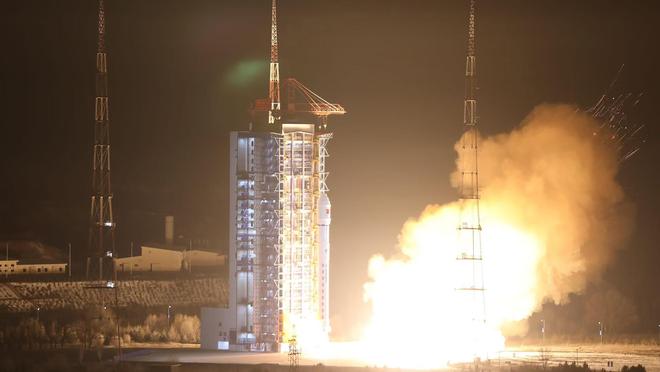
人气爆表!现场直击!北京商业航天展来了
中国基金报· 2026-01-25 14:52
Core Viewpoint - The article highlights the significant advancements and developments in China's commercial space industry, particularly focusing on the participation of leading private companies at the Beijing International Commercial Space Exhibition, showcasing their innovative technologies and upcoming IPOs [2][13]. Group 1: Company Developments - Blue Arrow Aerospace showcased the world's first continuously successful liquid oxygen-methane rocket, the Zhuque-2, and the Zhuque-3 model, which has completed China's first reusable rocket orbital launch verification [4]. - Galaxy Aerospace presented its flexible solar wing technology and the Lingxi-03 satellite model, aiming to enhance mobile direct connection capabilities with low-orbit broadband satellites [6]. - Zhongke Aerospace displayed its reusable spacecraft, the Lihong-2, which is designed for space tourism, indicating advancements in safe travel between Earth and space [8]. - Star River Power exhibited its "Zhishenxing" series of medium-sized reusable liquid launch vehicles and "Gushenxing" series of small solid launch vehicle models [8]. Group 2: Market Trends and IPOs - The article notes that two U.S. commercial space companies are already listed, with Rocket Lab's market value at $47.4 billion (approximately 330 billion RMB) and SpaceX expected to go public in 2026 [2][12]. - In China, Blue Arrow Aerospace's IPO is in the "inquiry" stage, while Zhongke Aerospace has completed IPO counseling, and other companies like Tianbing Technology and Star River Power are also in the IPO counseling phase [13][15]. - The article emphasizes that the development of reusable technology and future market potential are critical factors influencing the growth of China's commercial space sector [15].
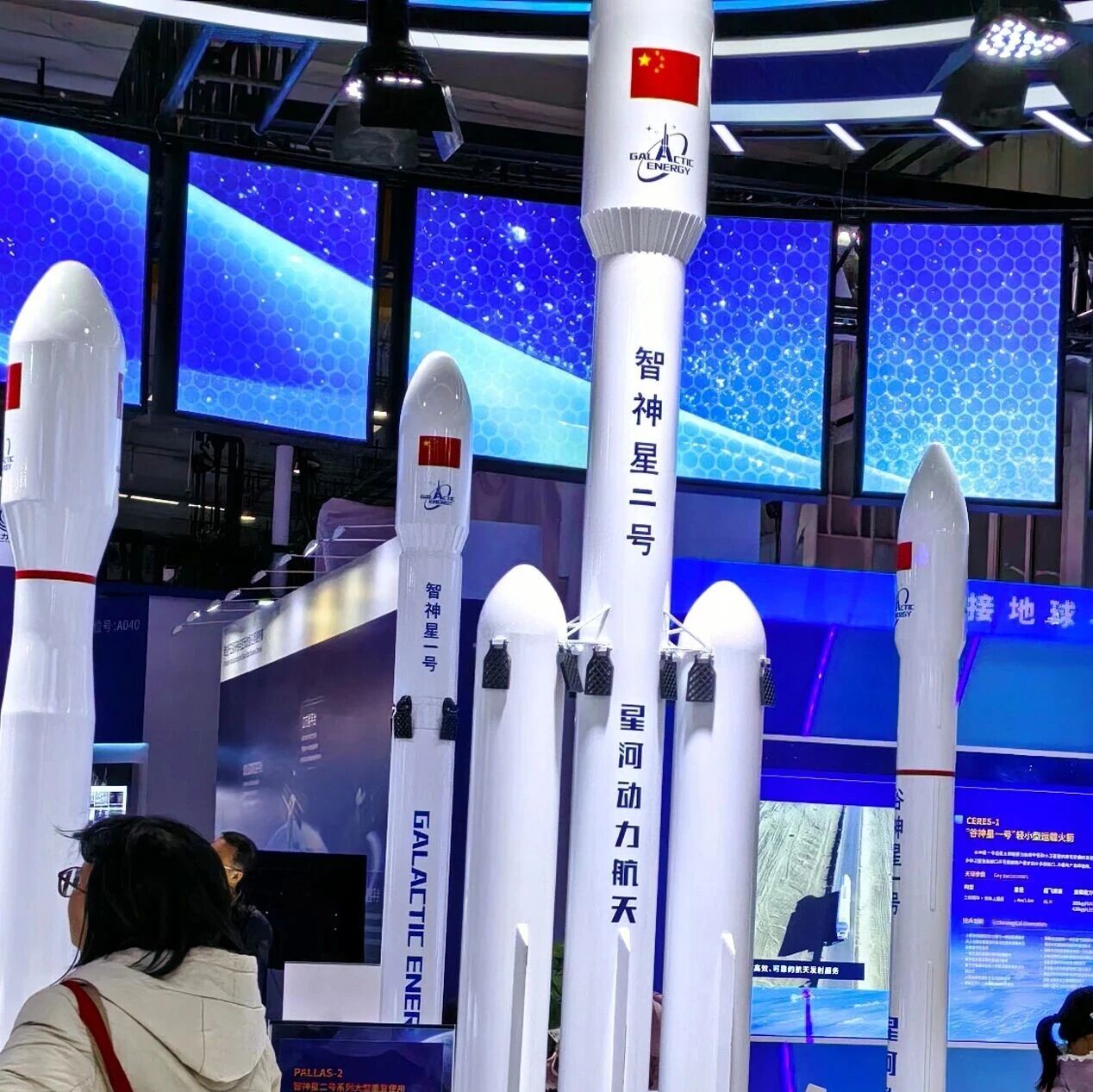
《环球时报》记者走进中国“太空新基建”工厂车间,感受低轨卫星互联网“加速度”
Huan Qiu Wang Zi Xun· 2026-01-20 23:14
Core Insights - The article discusses the emerging technologies in China's low Earth orbit (LEO) satellite internet sector and its applications in various fields, particularly in emergency response and disaster management. Group 1: Satellite Internet Technology - The integration of LEO satellite internet with drone technology has been successfully tested for emergency firefighting, allowing remote control and real-time data transmission over long distances [3][4]. - By 2025, China is expected to achieve a record 92 satellite launches, with nearly 20 dedicated to deploying internet satellites, indicating a significant push towards the commercialization of LEO satellite internet technology [4]. - The "15th Five-Year Plan" emphasizes the importance of LEO satellite internet as a core infrastructure for the sixth-generation mobile communication network, addressing coverage issues in remote areas [5]. Group 2: Applications and Innovations - The use of LEO satellite internet can enhance disaster response capabilities, particularly in areas where traditional ground-based communication is inadequate, such as mountainous regions prone to forest fires [4][5]. - The development of a "mobile direct satellite connection" is underway, which would allow smartphones to connect directly to satellites, enhancing global internet access [6][7]. - The current transmission speed of the LEO satellite network can reach 200 Mbps, facilitating high-demand applications like online gaming and streaming [6]. Group 3: Industry Growth and Collaboration - The satellite internet sector in China is projected to reach a market size of hundreds of billions to trillions of yuan by 2030, driven by both manufacturing and service sectors [10]. - Collaboration with traditional industries, such as automotive and photovoltaic sectors, is being leveraged to reduce costs and enhance innovation in satellite manufacturing [11]. - The integration of advanced technologies and partnerships with various industries is expected to propel the growth of China's satellite internet industry, which is on the verge of significant expansion [11].
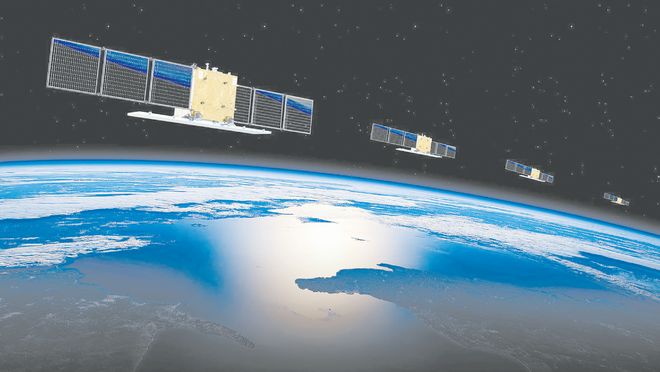
全球最大的4G覆盖提供商?星链与传统运营商直面竞争
3 6 Ke· 2026-01-12 10:46
Core Insights - Starlink has experienced explosive user growth in 2025, adding 4.6 million active users, which is equivalent to the total net increase over the past four years [1][6] - The company has expanded its service coverage to 155 countries and regions, with significant advancements in its Direct to Cell (DTC) business, deploying over 650 satellites [1][9] - Starlink's internet speed has improved significantly, with median download speeds exceeding 200 Mbps, outperforming global fixed broadband speeds [6][7] User Growth - As of December 2025, Starlink has reached 9 million active users, a remarkable increase from 8 million just 47 days prior [3][5] - The user base grew rapidly throughout 2025, surpassing 500,000 in February and reaching 900,000 by December [6] - The net increase of 4.6 million users in 2025 is a significant acceleration compared to previous years, indicating a "supercharged" growth phase [6] Service Expansion - Starlink has expanded its service to 155 countries, with over 1,400 commercial aircraft equipped with its system, providing internet speeds over 200 Mbps to passengers [1][3] - The DTC service has been launched on six continents, with partnerships established with various mobile operators globally, including T-Mobile and Airtel Africa [10][12] - The DTC satellite constellation is positioned at a low Earth orbit of 360 kilometers, allowing users to connect directly with their smartphones [9] Technological Advancements - In 2025, Starlink launched over 3,000 V2 Mini satellites, increasing its network capacity by over 270 Tbps [7] - The company has acquired valuable mobile communication spectrum resources, enabling it to provide DTC services independently of traditional operators [12][13] - Future plans include the development of a next-generation DTC satellite constellation, which aims to deliver complete 5G cellular network connectivity [15]

SpaceX凭什么值1.5万亿美元?
创业邦· 2025-12-15 10:10
Core Viewpoint - SpaceX is planning to go public with a valuation of $1.5 trillion, aiming to raise over $30 billion, primarily driven by the need for capital to fund its ambitious projects and employee compensation [6][12][19]. Group 1: Financial Needs and Valuation - SpaceX's revenue is projected to be $15.5 billion in 2025, but the company faces significant expenses, including a $17 billion acquisition of EchoStar's spectrum licenses and ongoing development costs for its Starship program [13][14]. - The company has a growing workforce, with 13,000 employees as of September 2023, and average salaries ranging from $185,000 to $230,000, leading to an estimated annual payroll of $2.6 billion [16][19]. - The valuation of $1.5 trillion would place SpaceX among the top five companies in the U.S. stock market, surpassing Meta [9][20]. Group 2: Business Segments and Growth Potential - A significant portion of SpaceX's valuation is based on its Starlink service, which has 7.65 million active subscribers and is expected to generate over $9.18 billion in revenue annually [23][24]. - Starlink's business model allows for high profit margins, with net profit margins projected to be between 30% and 40%, compared to traditional telecom companies [24]. - The company is also focusing on its launch services, with plans to conduct 150 launches in 2024 and potentially over 200 in 2025, capturing 90% of the global launch market [35][36]. Group 3: Future Prospects and Risks - SpaceX's future growth is tied to ambitious projects like the Starship, which aims to revolutionize transportation costs and enable new markets, including space tourism and manufacturing in microgravity [41]. - The company is also developing Starshield, a defense-related service for the U.S. military, which could significantly increase its market share in the defense sector [42]. - However, the company's valuation may be heavily influenced by Elon Musk's leadership, and any regulatory challenges or operational setbacks could impact its growth trajectory [50][52].

宣布12月发射下一代BlueBird 6卫星 AST SpaceMobile(ASTS.US)涨4.77%
Zhi Tong Cai Jing· 2025-11-21 14:34
Core Viewpoint - AST SpaceMobile's stock price increased by 4.77% to $53.12 ahead of the launch of its next-generation BlueBird6 satellite, scheduled for December 15 [1] Group 1: Satellite Launch and Technology - The BlueBird6 satellite will feature the world's largest commercial phased array antenna, measuring approximately 2400 square feet, which is 3.5 times larger than the previous model [1] - The data capacity of the BlueBird6 satellite is expected to be 10 times greater than that of its predecessor, marking significant progress towards the company's vision of "mobile direct satellite" connectivity [1] Group 2: Company Vision and Leadership - CEO Abel Avellan emphasized the achievement of seamless cellular broadband signals for ordinary smartphones from space, showcasing American leadership in space innovation and aiming to create a new era of global connectivity [1] Group 3: Production and Launch Plans - The company is accelerating its production pace, with plans to complete the manufacturing of miniaturized components equivalent to 40 satellites by early 2026 [1] - AST SpaceMobile aims to conduct five orbital launches by the end of the first quarter of 2026 and intends to deploy between 45 to 60 satellites by the end of 2026 to ensure continuous coverage in the U.S. and select markets [1]

美股异动 | 宣布12月发射下一代BlueBird 6卫星 AST SpaceMobile(ASTS.US)涨4.77%
智通财经网· 2025-11-21 14:32
Core Viewpoint - AST SpaceMobile's stock price increased by 4.77% to $53.12 ahead of the launch of its next-generation BlueBird 6 satellite, scheduled for December 15, which represents a significant advancement in the company's vision of "direct satellite connectivity for smartphones" [1] Group 1: Satellite Launch and Technology - The BlueBird 6 satellite will feature the world's largest commercial phased array antenna, measuring approximately 2400 square feet, which is 3.5 times larger than the previous model and offers a data capacity increase of 10 times [1] - The launch of BlueBird 6 marks an important step in achieving seamless cellular broadband signals for ordinary smartphones from space [1] Group 2: Production and Future Plans - The company is accelerating its production pace, with plans to complete the manufacturing of miniaturized components equivalent to 40 satellites by early 2026 [1] - AST SpaceMobile aims to complete five orbital launches by the end of the first quarter of 2026 and intends to deploy between 45 to 60 satellites by the end of 2026 to ensure continuous coverage in the U.S. and select markets [1]
国博电子(688375):关注民品功放芯片在手机端量产突破
HTSC· 2025-11-03 05:16
Investment Rating - The report maintains an "Accumulate" rating for Guobo Electronics [6] Core Views - Guobo Electronics reported Q3 revenue of 498 million RMB, a year-over-year decrease of 2.54% and a quarter-over-quarter decrease of 30.88%. The net profit attributable to the parent company was 45.75 million RMB, down 26.04% year-over-year and 68.19% quarter-over-quarter. For the first three quarters of 2025, the company achieved a revenue of 1.569 billion RMB, a year-over-year decline of 13.51%, and a net profit of 247 million RMB, down 19.35% year-over-year [1][4] Summary by Sections Business Segments - In the military segment, the active T/R component business experienced a short-term decline due to fluctuations in military demand. The company is actively expanding the application of T/R components in various platforms, including airborne and satellite systems, with several products already delivered in the low-orbit satellite and commercial aerospace sectors, which are expected to become a "second growth engine" for the company. In the civilian sector, the company has made significant breakthroughs in the mobile terminal field, achieving mass production of silicon-based gallium nitride power amplifier chips, which are expected to drive rapid growth in the RF chip business as satellite connectivity in mobile devices accelerates [2] Profitability and Expenses - For the first three quarters of 2025, the company's gross margin was 38.12%, an increase of 1.73 percentage points year-over-year, while the net profit margin was 15.75%, a decrease of 1.14 percentage points year-over-year. The Q3 gross margin and net profit margin saw year-over-year declines of 3.59 and 2.92 percentage points, respectively. The expense ratios for sales, management, finance, and R&D were 0.55%, 6.49%, -0.89%, and 12.67%, respectively, with sales and management expense ratios increasing year-over-year due to a decline in revenue scale. The R&D expense ratio decreased year-over-year but remained high at 12.67%, supporting the company's expansion in new technologies and products [3] Profit Forecast and Valuation - Considering the recovery pace of the military business, the forecast for net profit attributable to the parent company for 2025-2027 is 506 million, 650 million, and 821 million RMB, respectively. The average PE ratio for comparable companies in 2026 is estimated at 72x. Given the high growth of military T/R components and the rapid breakthroughs in civilian RF chips, a target PE of 75x for 2026 is assigned, corresponding to a target price of 81.85 RMB per share, up from a previous estimate of 69.24 RMB per share [4]

中信建投:商业航天产业链投资机遇
智通财经网· 2025-10-26 01:05
Group 1 - Global rocket launch frequency has reached new highs for three consecutive years since 2020, indicating unprecedented activity in the aerospace sector [1] - China's low Earth orbit (LEO) satellite construction is lagging behind high-throughput satellites, with the Tian Tong-1 satellite being a mature GEO satellite constellation widely used across various industries [1] - The deployment of two major satellite constellations (GW and G60) in China is set to begin in 2024, marking the start of a new era of regular launches by 2025 [1] Group 2 - SpaceX's acquisition of EchoStar's 50MHz spectrum for $17 billion signifies a strategic positioning in the global direct-to-cell satellite competition, allowing for independent satellite communication capabilities [2][3][4] - This acquisition enables SpaceX to enhance its service capabilities from text to voice and streaming data, aiming to cover remote areas and urban regions through a hybrid model [4][5] - China's policies supporting direct-to-cell satellite development are accelerating constellation networking and commercialization of private rockets, presenting significant opportunities in the commercial aerospace industry [2][6] Group 3 - The construction and operation of giant LEO satellite constellations are characterized by long cycles, high technical integration, and significant risks, with both state-owned and private enterprises in China actively participating [1][17] - The rapid increase in launch frequency for China's GW constellation indicates a shift towards high-density networking, with the interval between launches decreasing significantly [8][10] - The establishment of commercial launch sites in Hainan is expected to enhance the efficiency of commercial rocket launches, with multiple reusable rockets planned for launch [12][29] Group 4 - The commercial aerospace industry in China is projected to enter a rapid development phase, with significant investments and policy support driving the growth of satellite internet and related technologies [6][30] - The market for satellite internet is expected to expand significantly, with projections indicating a market size of approximately 2.8 trillion yuan by 2025 and nearing 10 trillion yuan by 2030 [26][30] - The integration of satellite and terrestrial communication systems is becoming clearer, with satellite internet expected to complement ground communication systems in various applications [26]

研报掘金丨浙商证券:维持中国移动“买入”评级,盈利能力持续提升
Ge Long Hui A P P· 2025-10-21 09:41
Group 1 - The core viewpoint of the report indicates that China Mobile's Q3 2025 revenue reached 794.7 billion yuan, showing a year-on-year growth of 0.4%, with a positive sequential growth compared to a -0.5% year-on-year decline in H1 2025 [1] - The company's profitability continues to improve, with an EBITDA margin of 33.4%, up by 0.2 percentage points year-on-year, and a net profit margin of 14.5%, up by 0.5 percentage points year-on-year [1] - Based on the latest closing prices, the expected dividend yield for China Mobile's Hong Kong stock in 2025 is 6.3%, while the expected yield for its A-shares is 4.6% [1] Group 2 - The optimistic scenario suggests that the introduction of direct satellite connectivity for mobile phones could increase the overall service revenue of the industry by 17% and net profit by 31% [1] - The company has announced an upgrade to its "AI+" action plan, aiming to double its overall investment in the AI sector by the end of 2028, establishing the largest intelligent computing infrastructure in the country, with a computing scale exceeding 100 EFLOPS, which is expected to significantly boost AI revenue [1] - The report maintains a "buy" rating for the company [1]
