
数字化贸易

Search documents
在白沟,这里有北方商埠的流量密码|十月行记
经济观察报· 2025-10-08 04:20
Core Viewpoint - The article highlights the transformation of Baigou from a traditional trading hub to a global e-commerce powerhouse, emphasizing its significant growth in the bag industry and the integration of digital commerce into its business model [31][32]. Group 1: Historical Context and Evolution - Baigou, located in the northern part of Xiong'an New Area, has a rich history as a significant trading port, dating back to the Song and Liao dynasties, which laid the foundation for its commercial culture [5][9]. - The local bag industry began in the 1980s with street vendors, evolving from small-scale operations to a modern industrial base, now producing nearly 50 billion yuan in annual output [12][13]. Group 2: Current Industry Landscape - Baigou is now one of China's largest bag production and sales bases, with over 40,000 e-commerce entities and nearly 80,000 employees, showcasing a complete industrial chain [13][7]. - The town handles an average of 1.2 million express deliveries daily, reflecting its transition from a traditional market to a digital trade hub [7]. Group 3: E-commerce and Digital Transformation - The rise of e-commerce has significantly impacted Baigou, with local businesses adapting to online sales through platforms like live streaming and social media, marking a shift from traditional sales methods [15][16]. - Baigou's e-commerce ecosystem has developed a complete closed loop, including associations for e-commerce and live streaming, fostering a collaborative environment for businesses [17]. Group 4: Cross-border E-commerce Growth - Cross-border e-commerce has emerged as a new growth point for Baigou, with exports reaching 199 countries and regions, supported by the establishment of a cross-border e-commerce industrial park [19][20]. - The local government is actively promoting e-commerce development through financial support and training programs, facilitating the transition of traditional merchants to digital platforms [21][22]. Group 5: Future Development and Infrastructure - Baigou is undergoing a transformation into a comprehensive consumption experience center, integrating various business functions and enhancing its appeal as a tourist destination [24][26]. - Infrastructure improvements, such as the upcoming R1 line rapid transit, will further integrate Baigou into the Beijing-Tianjin-Hebei economic region, enhancing its logistical capabilities [30].


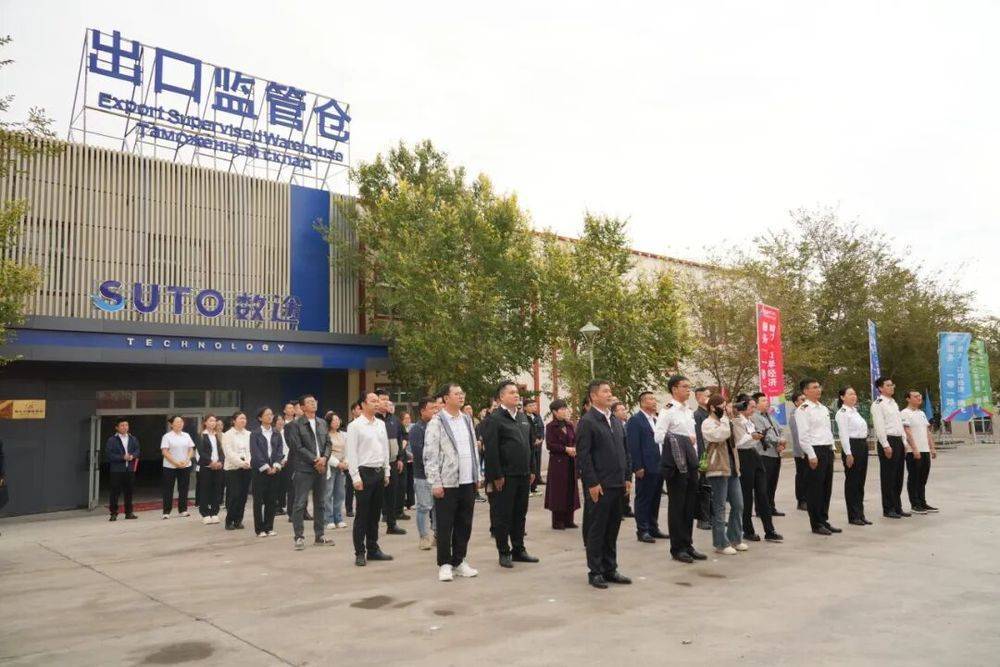
博乐边境经济合作区出口配送型监管仓揭牌
Sou Hu Cai Jing· 2025-09-20 01:15
Core Viewpoint - The inauguration of the export distribution regulatory warehouse in the Bole Border Economic Cooperation Zone marks the establishment of a one-stop service hub for export trade, enhancing the efficiency and convenience of cross-border logistics and trade facilitation [1][2]. Group 1: Regulatory Warehouse Overview - The regulatory warehouse began construction in September 2023 and received approval from the General Administration of Customs on April 27, 2023 [2]. - It serves as a one-stop service platform covering centralized warehousing, customs declaration, inspection and release, logistics scheduling, and data traceability, enabling real-time data sharing [2]. - The facility has achieved the capability to complete exports within 24 hours after goods arrive at the warehouse, with an average daily processing capacity of approximately 10 vehicles [2]. Group 2: Economic Impact - The launch of the regulatory warehouse is expected to activate the potential of border trade and processing industries, facilitating the transition from "channel economy" to "landed economy" [2]. - It aims to provide strong support for constructing a new pattern of "port-driven, hinterland-supported, and industry-trade integration" [2]. - The warehouse is a key point for enhancing the functionality of ports, streamlining cross-border logistics, and improving trade facilitation levels [2]. Group 3: Future Development - The Bole Border Economic Cooperation Zone is identified as an important engine for the "Bole-Alashankou Economic Integration" development, with the regulatory warehouse expected to accelerate the gathering of foreign trade elements and industrial clustering [4]. - The operational manager of the regulatory warehouse emphasized the creation of more development opportunities for Bole, leveraging its geographical and customs advantages to increase cargo volume and enhance distribution center efficiency [4]. - The establishment of the regulatory warehouse, along with Bole's designation as a cross-border e-commerce comprehensive pilot zone, is anticipated to deepen the application of digital trade platforms, providing data analysis and precise logistics services for foreign trade and e-commerce enterprises [4].
三四个人,一年千万出口:一个小商户的跨境逆袭
经济观察报· 2025-09-19 10:44
Core Viewpoint - The article highlights the success story of a small business owner, Chen Chen, who leveraged digital platforms to expand his export business, demonstrating that small players can thrive in the global market through digital transformation and support from local initiatives [1][40]. Group 1: Business Growth and Digital Transformation - Chen Chen's clothing business achieved over 10 million yuan in foreign trade exports in 2023, expanding its reach to 12 countries across Southeast Asia, the Middle East, and Africa [24]. - The introduction of the "City Procurement" platform played a crucial role in facilitating Chen's entry into foreign trade, providing necessary training and support [8][10]. - The use of digital management tools significantly improved operational efficiency, allowing for real-time tracking of orders and reducing errors in processing [25][26]. Group 2: Challenges and Resilience - Chen faced significant challenges, including a major order from a Vietnamese client that required quick adaptation to rising material costs, which he managed through transparent communication and maintaining customer trust [19][23]. - A crisis in early 2024 due to a 30% increase in raw material prices and shipping costs nearly halted his business, but support from the platform helped him pivot to higher-value customized products [30][32][34]. - Regulatory changes in tax compliance posed new challenges, but Chen's prior engagement with the platform ensured his business remained compliant and adaptable [35][37]. Group 3: Future Aspirations - Chen aims to achieve an annual sales target of 50 million yuan within three years and is focused on building his own brand while continuing to support fellow small business owners [39]. - The article emphasizes the importance of government policies and platform support in enabling small businesses to engage in global trade [41].

三四个人,一年千万出口:一个小商户的跨境逆袭
Jing Ji Guan Cha Wang· 2025-09-19 07:40
Core Insights - The article highlights the success story of a small clothing business in Jiangsu Changshu, which achieved over 10 million yuan in foreign trade exports through the "Shicaitong" platform, showcasing the potential for small merchants to engage in international trade [2][3][16]. Group 1: Business Growth and Challenges - The business started in 2008 with an initial investment of 50,000 yuan and faced significant challenges, including difficulty in paying rent and understanding foreign trade processes [4][5]. - A turning point occurred in 2021 when the business registered on the "Shicaitong" platform, leading to its first foreign order from a Malaysian client [5][6]. - The business faced a crisis in early 2024 due to a 30% increase in raw material prices and rising shipping costs, which turned previously profitable orders into losses [8][10]. Group 2: Support and Adaptation - The platform provided crucial support, including financial advice and assistance with trade processes, which helped the business navigate challenges and avoid potential risks [9][10]. - In 2023, the business experienced explosive growth, expanding its export reach to 12 countries and utilizing digital tools for better order management [9][13]. - The introduction of cross-border live streaming as a sales channel resulted in significant orders, demonstrating the effectiveness of digital marketing strategies [9][10]. Group 3: Future Aspirations - The business aims to achieve an annual sales target of 50 million yuan within three years and is actively exploring new markets, including the Middle East [15][16]. - The owner emphasizes the importance of sharing experiences with peers and acknowledges the supportive environment created by national policies and platform services [16][17].

智慧机器人“打工”,海外“朋友圈”扩容,来看稳外资稳外贸背后的硬实力!
Yang Zi Wan Bao Wang· 2025-09-15 23:15
Group 1: Company Overview - Jabil Electronics (Wuxi) Co., Ltd. is a wholly-owned subsidiary of Jabil Electronics located in the Wuxi High-tech Comprehensive Bonded Zone, recognized as an "invisible champion" in the electronics contract manufacturing sector and a "pioneering outpost" for innovation and research [2] - The company employs 3,500 staff who provide comprehensive lifecycle services for top global electronics firms, covering areas such as communications, storage, IoT, new energy, smart instruments, semiconductor equipment, automotive electronics, medical, and consumer electronics [2] - Jabil has over a hundred patents, showcasing its technological and innovative capabilities [2] Group 2: Industry and Economic Impact - The Wuxi High-tech Comprehensive Bonded Zone has attracted over 70 industry giants, including four Fortune Global 500 companies, and has established a highly efficient collaborative industrial network [2] - In 2024, the bonded zone achieved an impressive import and export total of 174.04 billion yuan, marking a year-on-year increase of 24.3%, ranking second in the province and seventh nationally [2] - The area, which occupies only 0.05% of Wuxi City, contributes 22.6% to the city's total import and export value, highlighting its significant economic impact [2] Group 3: Foreign Investment and Global Collaboration - The Wuxi High-tech Zone has attracted a cumulative foreign investment of 26.292 billion USD, with foreign trade import and export scale exceeding 50 billion USD for seven consecutive years [3] - The zone hosts 1,827 foreign enterprises, including 128 Fortune Global 500 companies, forming a robust industrial matrix [3] - The area has established overseas business innovation exchange centers in Japan, South Korea, Europe, and Singapore to enhance cross-border cooperation [4] Group 4: Innovation and Future Development - The successful implementation of over 100 billion USD foreign investment projects, such as SK Hynix and Huahong, has led to the establishment of three "lighthouse factories," making the region a leader among national high-tech zones [4] - The local economy is leveraging digitalization to empower traditional trade and enhance international competitiveness through high-value-added products [4] - The Wuxi High-tech Zone is focused on improving resource allocation capabilities and enhancing industrial resilience through international cooperation and innovation networks [4]

应变求新壮大外贸新动能
Jing Ji Ri Bao· 2025-07-30 22:16
Core Insights - China's foreign trade has shown remarkable resilience and growth in the first half of the year, achieving record high scales and optimizing its structure despite complex environments such as trade frictions [1] - The number of trading partners with a trade scale exceeding 50 billion and the number of foreign trade enterprises with export performance have both increased, reflecting a spirit of innovation and determination among businesses [1] Group 1: Market Diversification - China's foreign trade is expanding into emerging markets, with significant growth in exports to ASEAN, Central Asia, and Africa, effectively mitigating risks from traditional markets [2] - The Belt and Road Initiative, Regional Comprehensive Economic Partnership (RCEP) members, and BRICS countries are becoming key markets for foreign trade enterprises [2] - Local governments and departments are encouraged to support enterprises in international exhibitions and trade negotiations, while also reducing the costs of going global [2] Group 2: Quality and Innovation - Chinese products are gaining global recognition for their innovation, with a focus on high-quality supply and value-added offerings [3] - Foreign trade enterprises are urged to adapt to international market demands by launching differentiated and customized products with high added value [3] - Brand building is essential for enhancing recognition and pricing power, creating new competitive advantages [3] Group 3: New Business Models - The rise of cross-border e-commerce is facilitating the direct reach of Chinese goods to global consumers, especially in response to tariff impacts [3] - There is a need for supportive policies to develop specialized cross-border e-commerce industrial zones and provide comprehensive services [3] - The global trade landscape is shifting towards digitalization and sustainability, necessitating increased support for new business models such as offshore trade and green trade [3] Group 4: Future Outlook - The positive performance of foreign trade in the first half of the year provides confidence for China to navigate external uncertainties [4] - The focus will be on adapting to new global conditions, fostering new growth drivers, and maintaining steady development in foreign trade [4]
科技与本土化成利器,中国物流企业“卷”向海外
Di Yi Cai Jing· 2025-07-30 10:37
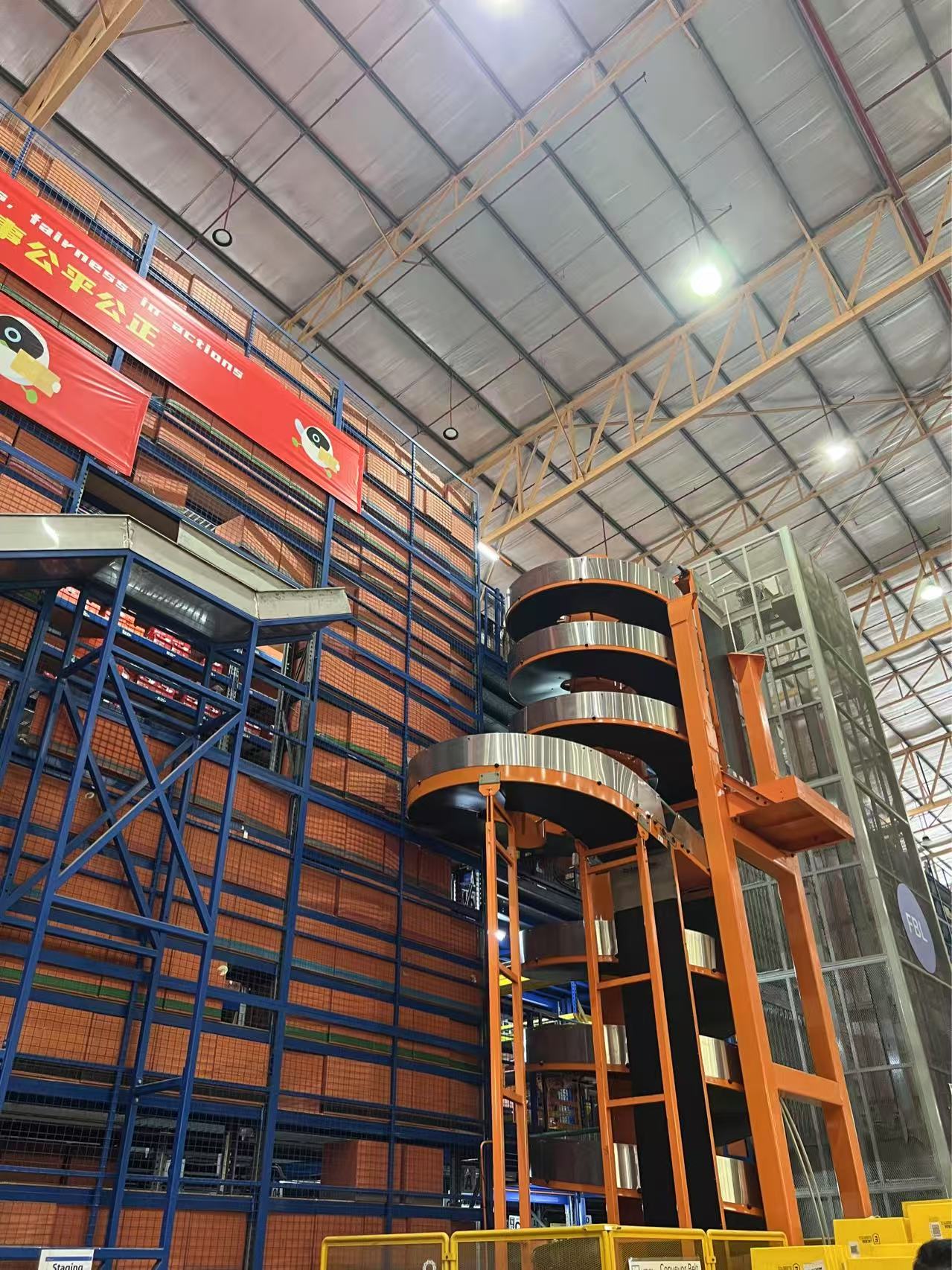
Core Viewpoint - Chinese logistics companies are rapidly expanding overseas, particularly in Southeast Asia, by combining localized staff with domestic-like facilities to enhance efficiency and market influence [1][5][10]. Group 1: Localization and Efficiency - The integration of local staff and facilities similar to those in China is a hallmark of Chinese logistics companies' overseas operations [1]. - In Malaysia, the presence of prayer rooms and culturally appropriate work practices for local Muslim employees exemplifies the company's commitment to localization [1]. - The use of advanced technologies such as smart warehousing and automated processes has significantly improved operational efficiency, reducing order fulfillment time from 2-3 days to same-day processing [5][12]. Group 2: Market Demand and Growth - There is a high demand for warehouse space, with Malaysian self-operated warehouses reaching full capacity this year, indicating robust growth in logistics needs [9][10]. - The Southeast Asian e-commerce market is experiencing rapid growth, with projections indicating a total GMV of $128.4 billion in 2024, driven by platforms like Shopee and TikTok Shop [10][11]. Group 3: Challenges in Overseas Expansion - Chinese logistics companies face challenges such as local regulations, labor management, and cultural differences when entering new markets [5][6][12]. - The logistics model in Malaysia differs from China, relying on third-party partners for last-mile delivery due to local preferences for self-pickup points [6]. - Selecting optimal warehouse locations is a significant challenge due to uneven resource distribution and varying warehouse classifications in Malaysia [6]. Group 4: Competitive Landscape - Chinese logistics firms are leveraging their large-scale operational experience and technological advantages to compete in Southeast Asia, where they face local and international competition [12]. - The logistics market in Southeast Asia is still developing, focusing on building infrastructure and enhancing digital capabilities to avoid past pitfalls seen in China [12].
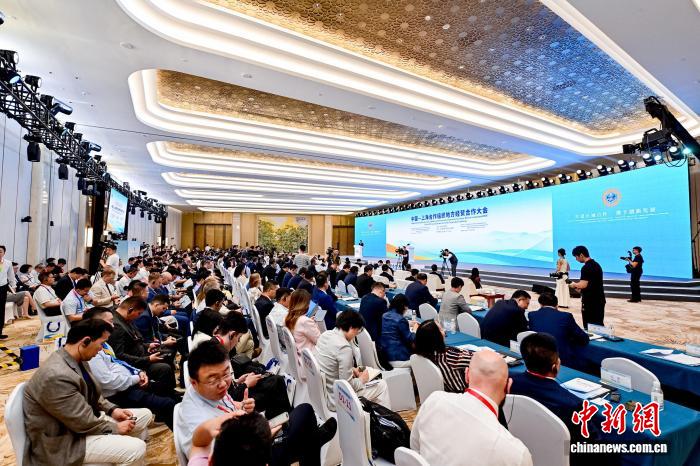
中国—上海合作组织地方经贸合作大会在山东青岛举行
Zhong Guo Xin Wen Wang· 2025-07-18 16:21
Core Points - The China-Shanghai Cooperation Organization (SCO) Local Economic and Trade Cooperation Conference was held in Qingdao, Shandong, with nearly 300 participants discussing opportunities within the SCO framework [1][2] - The SCO Demonstration Zone has been enhancing exchanges and cooperation with local governments and enterprises of SCO member states since 2019, establishing itself as a hub for international logistics, modern trade, and investment cooperation [1][2] Group 1 - The conference aimed to deepen cooperation in key areas such as trade, investment, mineral resources, new energy, logistics, equipment manufacturing, technological innovation, agricultural technology, e-commerce, financial services, and international contracting projects [2] - The event featured thematic promotion activities and dialogue salons focusing on topics like "Silk Road E-commerce and Modern Trade Development" and "Financial Empowerment for SCO Economic Development," providing innovative paths for digital trade and financial support systems [2] - Various meetings and forums were held during the conference, including the SCO Industrial Chain Supply Chain Qingdao Meeting and the Fourth SCO International Investment and Trade Expo, aimed at enhancing practical cooperation among local entities within the SCO framework [2]
1.9万户竞争900个商铺!外贸人“押注”义乌新市场
Di Yi Cai Jing· 2025-07-10 13:02
Core Insights - The high demand for shops in Yiwu's market reflects the city's inherent traffic and the resilience of China's foreign trade, particularly for small and medium-sized enterprises [1][2] Group 1: Market Demand and Competition - The Yiwu Global Digital Trade Center, set to open in October, has attracted over 19,000 applicants for more than 900 shops, indicating fierce competition with more than 20 applicants per shop [1][2] - The Yiwu market is viewed as a shopping paradise for global merchants, with continuous foot traffic, making it a preferred choice for foreign trade [2][3] Group 2: Business Growth and Strategies - Companies like Wokali have increased their investment in advertising to enhance brand awareness and are expecting a 10% to 30% growth in export revenue this year [2][3] - The macroeconomic environment has prompted businesses to innovate and adapt, with companies reporting a 10% increase in monthly revenue compared to the previous year [5][6] Group 3: Technological Adoption - The use of AI in design processes has significantly reduced costs and time, allowing for quicker product development and customization to meet client needs [5][6] - Companies are leveraging digital tools and social media to expand their reach, with one business reporting a growth in followers from 100 to over 6,000, primarily consisting of potential international clients [9] Group 4: Market Expansion and Trends - Yiwu's market is diversifying its customer base, with a notable increase in foreign visitors and a 12.52% year-on-year growth in transaction volume from January to May [7][9] - Companies are focusing on emerging markets in Southeast Asia, Central Asia, South America, and Africa, aligning with the Belt and Road Initiative and recognizing the growing consumer demand in these regions [10][11] Group 5: Investment and Infrastructure - Companies are investing significantly in expanding their manufacturing capabilities, with one firm planning to increase its factory size from 6,000 to 40,000 square meters [10][11] - The Yiwu market is seen as a hub for international trade, with plans to enhance its infrastructure to support a one-stop shopping experience for global clients [11]

600斤鳇鱼“跃动”哈洽会 网红扎堆打卡同江展区
Zhong Guo Xin Wen Wang· 2025-05-19 00:35
Group 1 - The 34th Harbin International Economic and Trade Fair (Harbin Fair) opened to the public, showcasing a variety of local products and attracting significant attention from visitors [1] - The exhibition featured a 3-meter long, 600-pound sturgeon specimen, which became a popular photo opportunity for attendees [1] - High-quality agricultural products from Songjiang, such as rice and soybeans, were prominently displayed, highlighting the region's geographical advantages and attracting buyers [1] Group 2 - The Hezhe ethnic group's fishing culture was showcased through creative cultural products that blend traditional and modern elements, enhancing visitor engagement [2] - All-terrain snowmobiles were featured, demonstrating Songjiang's industrial strength in winter sports equipment and contributing to the lively atmosphere of the fair [2] - The cross-border e-commerce section utilized live streaming to engage a global audience, showcasing the efficiency of digital trade [2]