数据

Search documents
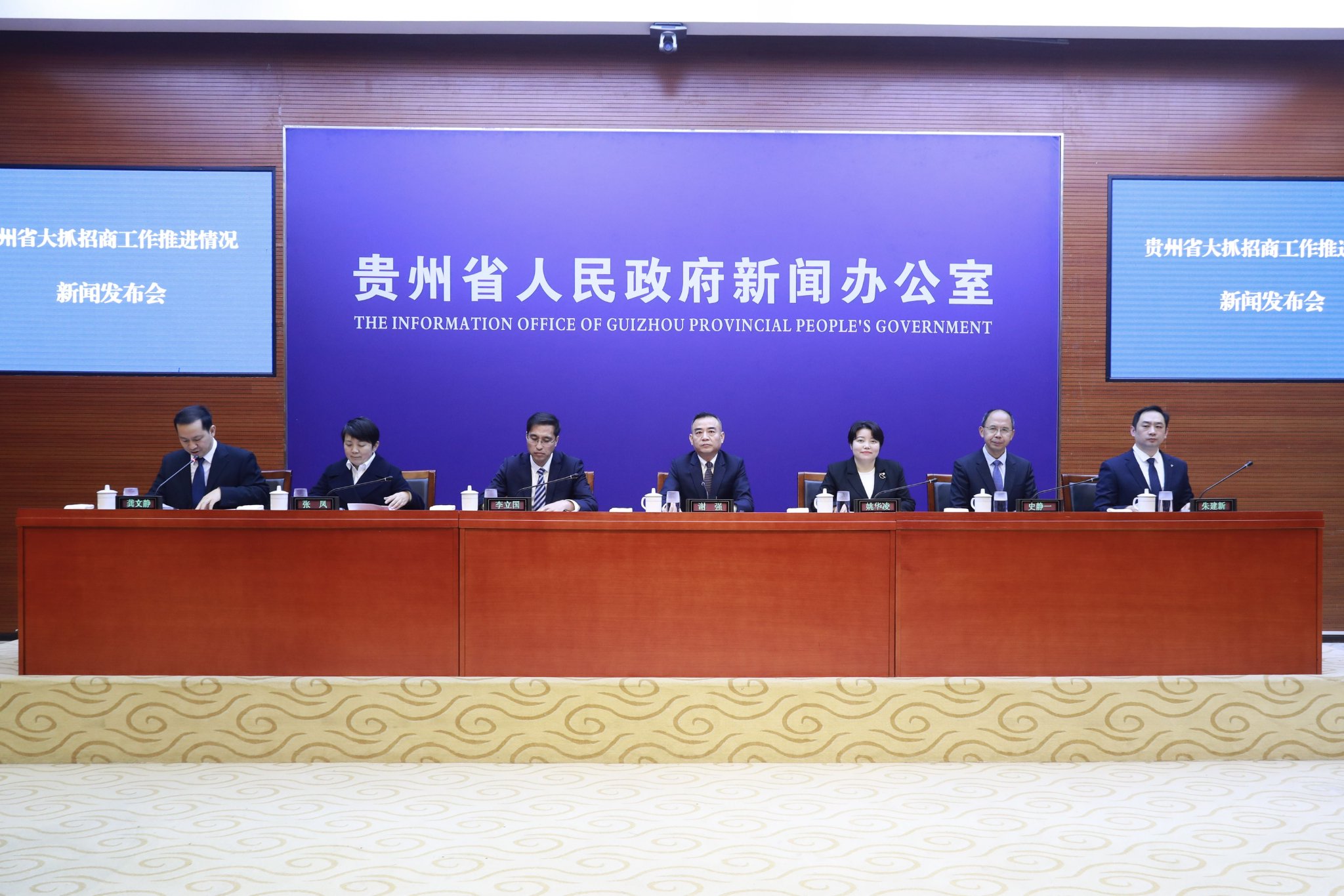
已签约652个项目!贵州招商工作取得阶段性成效
Xin Lang Cai Jing· 2025-12-24 08:29
Core Insights - Guizhou province has initiated significant investment projects, with 863 major projects planned and an expected investment of 548.693 billion yuan from January to November this year [1] - A total of 652 projects have been signed, with a contract amount of 337.124 billion yuan, and 444 projects have commenced construction, amounting to 179.919 billion yuan [1] Group 1: Investment Projects Overview - The province's government has outlined a detailed plan for industrial investment and optimizing the business environment, emphasizing early action and strategic planning [3] - Specific measures include the allocation of special funds to support local governments in project planning and the establishment of 22 key industrial parks focusing on main industries [3][4] Group 2: Local Government Initiatives - Local governments are actively taking responsibility for investment, with various cities focusing on specific industries such as electric vehicles, aluminum, and aviation [4] - For instance, Guiyang is attracting enterprises in the electric vehicle sector, while Anshun is focusing on the aviation industry [4] Group 3: Collaborative Efforts - The provincial departments are collaborating to enhance investment efforts, with initiatives targeting agriculture, manufacturing, and tourism [5] - A total of 90 specialized investment events have been organized, leading to the successful landing of several major projects [5] Group 4: Future Plans - Guizhou aims to strengthen its investment strategy by enhancing the responsibilities of local governments and focusing on attracting leading global companies [6] - The province plans to leverage existing enterprises for expansion and improve the business environment to support industrial growth [6]

赵何娟独家对话李飞飞:“我信仰的是人类,不是AI”
Xin Lang Cai Jing· 2025-12-22 05:27
Core Insights - The article discusses the advancements in AI, particularly in the realm of "world models" and spatial intelligence, led by Professor Fei-Fei Li and her company World Labs, which is expected to see significant application-level breakthroughs within two years [2][5]. Group 1: AI Developments - Professor Fei-Fei Li's World Labs has launched the first commercial "world model" called Marble, which allows for the generation of sustainable, navigable, and geometrically consistent 3D worlds from images or text prompts [4][5]. - The concept of "world models" is becoming a competitive frontier in the industry, with companies like Google DeepMind releasing models that emphasize interactive environments and spatial understanding [5][6]. - The transition from "language generation" to "world generation" is anticipated to accelerate, with spatial intelligence expected to experience an application-level explosion in the next two years [5][6]. Group 2: Historical Context and Impact - The article reflects on the historical significance of the ImageNet project, which was pivotal in demonstrating the importance of large datasets in AI development, and how it laid the groundwork for advancements in generative AI [2][3][29]. - Li's leadership in the ImageNet initiative has been recognized as a milestone in the evolution of AI, showcasing the critical role of data alongside algorithms in enhancing AI capabilities [3][29]. Group 3: Challenges and Future Directions - The development of spatial intelligence faces a "data bottleneck," which poses challenges for the advancement of world models, as the collection of spatial data is inherently more complex than that of visual or textual data [32][37]. - Li emphasizes the need for patience in the AI field, acknowledging that while expectations for rapid advancements are high, meaningful progress often takes time [6][20]. - The article suggests that the journey towards achieving Artificial General Intelligence (AGI) is incremental, with spatial intelligence being a crucial component in this ongoing quest [25][26].
这个 30 克的挂件,是 AI 的眼睛丨100 个 AI 创业者
晚点LatePost· 2025-12-10 07:37
Core Insights - The article discusses the launch of Looki, an AI hardware device designed to record daily experiences and provide insights, which is set to officially release in China on December 16, 2023 [4][10]. - The founder, Sun Yang, emphasizes the importance of data collection from the physical world for AI development, positioning Looki as a tool to gather "atomic data" that large companies have not yet captured [5][9]. - Looki aims to evolve from a simple recording device to a sophisticated AI assistant that understands user context and preferences, potentially transforming how users interact with digital services [15][16]. Product Overview - Looki is a wearable device that captures video and generates summaries in the form of comics, described as a "life review device" [4][10]. - The device's design is intentionally non-intrusive, resembling a large brooch, and it operates continuously to gather data without requiring high-resolution imagery [10][11]. - The first batch of Looki devices sold out quickly, indicating strong initial demand, including interest from high-profile users [10][11]. Market Positioning - Sun Yang believes that the future of AI hardware lies in the ability to connect physical experiences with digital services, allowing for more personalized recommendations and interactions [15][16]. - The company aims to leverage user data to create a network effect, enhancing the value of its services over time [15][16]. - Looki's business model is expected to evolve from hardware sales to information distribution and generative advertising, positioning it as a key player in the AI landscape [15][16]. Challenges and Opportunities - The company faces challenges related to privacy and user trust, particularly in the Chinese market, where data security is a significant concern [15][16]. - Competition is anticipated from larger tech companies, which may enter the market by 2027, but Looki currently benefits from a time advantage in establishing its user base [15][16]. - Sun Yang expresses a belief that 2025 could be a pivotal year for AI, suggesting that the current value of foundational AI technologies is underestimated [16].

群星闪耀时:黄仁勋、李飞飞、杨立昆、G.Hinton、Y.Bengio、B.Dally深度对话|Jinqiu Select
锦秋集· 2025-11-10 07:44
Core Insights - The article discusses the evolution of AI, emphasizing that the breakthroughs are not solely due to algorithms but rather the availability of vast amounts of data and significant computational power accumulated over decades [6][10]. - The focus is on how AI should enhance human capabilities rather than replace them, with a call for a shift in perspective regarding AI's role in society [11][60]. Group 1: Key Elements of AI Development - The first critical element for AI advancement is data, highlighted by Fei-Fei Li's creation of the ImageNet dataset, which contained 15 million images and was pivotal for deep learning [7][8]. - The second key element is computational power, as noted by Geoffrey Hinton, who pointed out that the lack of sufficient data and computational resources delayed AI's progress for 40 years [9][10]. - The article argues that the real breakthrough in AI comes from the strategic accumulation of data and the explosive growth of computational power, rather than from a singular genius algorithm [10]. Group 2: Perspectives on AI's Future - Bill Dally emphasizes that the goal of AI is not to surpass human intelligence but to augment human capabilities, allowing machines to handle tasks humans struggle with [12][13]. - The discussion reveals a consensus among AI pioneers that the pursuit of "superhuman" AI is a misunderstanding of AI's true purpose, which is to complement human intelligence [15][60]. - The article also addresses the current AI hype, with Jensen Huang asserting that the demand for GPUs is real and growing, distinguishing this phase from the dot-com bubble [16][50]. Group 3: Future Directions in AI - Yann LeCun points out that the next leap in AI will not come from larger language models but from robots that can interact with the physical world, highlighting the need for machines to develop spatial intelligence [20][22]. - The article suggests that while current AI models are impressive, they still lack the ability to understand and interact with the physical world as effectively as animals do [21][57]. - The future of AI is seen as a gradual evolution rather than a sudden breakthrough, with expectations for new paradigms to emerge in the coming years [58][62].


香港金管局余伟文:Ensemble项目沙盒试点即将进入下一阶段
Di Yi Cai Jing· 2025-11-03 07:23
Core Insights - The Hong Kong Monetary Authority (HKMA) is set to launch a Financial Technology 2030 strategy focusing on four strategic pillars: data, artificial intelligence, resilience, and tokenization [1][2][3] Group 1: Artificial Intelligence - Over 75% of banks have deployed or piloted AI solutions in areas such as risk management, credit assessment, and customer interaction [1] - The focus is on ensuring that AI transformation aligns with public interest, economic development, and is built on trust, transparency, and security [1] - Collaboration with innovators across financial sectors will be emphasized to advance impactful AI use cases and create shared financial AI infrastructure [1] Group 2: Tokenization - The Ensemble project sandbox is moving to the next pilot phase, allowing the use of digital assets and tokenized deposits for actual value transactions [2] - The initial focus will be on tokenizing money market funds, with collaboration among regulatory bodies to incubate mature real-value use cases [2] - The Ensemble project was launched in August 2022 to support tokenized asset interbank settlements using central bank digital currency (wCBDC) [2] Group 3: Resilience - Exploration of high-performance computing is underway to enhance financial modeling and real-time risk assessment capabilities [3] Group 4: Data - Plans to expand the availability of commercial data sets, including government gold source data, and to develop more data analytics capabilities in collaboration with the industry [3] - Efforts will be made to build a connected and trustworthy cross-border data ecosystem through initiatives like cross-border credit information sharing [3]
余伟文:金融科技2030策略聚焦四大战略支柱 旨在引领香港迈向金融科技3.0时代
智通财经网· 2025-11-03 03:47
Core Insights - The Hong Kong Monetary Authority (HKMA) is focusing on a financial technology strategy called DART, which stands for Data, Artificial Intelligence, Resilience, and Tokenization, aiming to lead Hong Kong into the era of FinTech 3.0 [1] Group 1: AI Implementation - Over three-quarters of banks have deployed or are trialing AI solutions, covering areas such as risk management, credit assessment, and customer interaction [1] - The authorities are advancing high-impact AI application scenarios through an upgraded generative AI sandbox [1] Group 2: Tokenization Initiatives - Tokenization remains a key priority for the authorities, with Project Ensemble exploring broader financial applications to connect local industries with global partners [1] - The next phase of the Ensemble pilot will allow for real-value transactions using tokenized deposits and digital assets [1] Group 3: Data Expansion - The HKMA plans to expand the availability of commercial data sets, including government gold source data, and collaborate with the industry to develop more data analytics capabilities and practical application scenarios [1] - Cross-border credit information sharing is being enhanced to build a connected and trustworthy cross-border data ecosystem [1] Group 4: Resilience of Financial Infrastructure - The authorities are strengthening the resilience of core financial market infrastructures, with platforms like Faster Payment System set to expand their coverage and capabilities [1]
推动人工智能全方位赋能千行百业(专题深思)
Ren Min Ri Bao· 2025-11-02 22:21
Core Insights - Artificial intelligence (AI) is recognized as a strategic technology driving a new wave of technological revolution and industrial transformation, reshaping human production and lifestyle [1] - The Chinese government emphasizes the integration of AI technology and industry to enhance economic and social development, aiming for high-quality growth and improved living standards [1][4] - The "AI+" initiative is a comprehensive action plan aimed at empowering various sectors through AI, reflecting the government's commitment to harnessing AI for broad societal benefits [1][4] Group 1: AI Development and Integration - AI is a general-purpose technology with wide-ranging applications, driven by the synergy of data, algorithms, and computing power [2] - Data, as a new production factor, exhibits non-competitive use and increasing returns to scale, enhancing model training effectiveness as user scale and data accumulation grow [2] - Breakthroughs in deep learning algorithms enable machines to learn and reason, discovering complex patterns in data and providing customized decision support across industries [2][3] Group 2: AI Applications and Impact - AI demonstrates core capabilities in addressing complex real-world problems, significantly enhancing productivity and resource allocation in economic development [3] - In scientific research, AI fosters interdisciplinary collaboration and aids in solving major scientific challenges, potentially leading to a new paradigm in research [3] - AI's integration into daily life improves efficiency and service delivery, contributing to enhanced quality of life and societal advancement [3][4] Group 3: Government Initiatives and Policies - The Chinese government has implemented a series of policies to elevate the overall capabilities of AI, promoting deep integration of AI technologies across various industries [4] - Successful applications of AI in sectors such as industrial inspection, healthcare, and urban management illustrate its potential to improve operational efficiency and service quality [4] - The future focus includes promoting a collaborative ecosystem that encourages innovation and supports the transformation of traditional industries while fostering new strategic sectors [6] Group 4: Challenges and Strategic Focus - Despite advancements, challenges remain in foundational theories and key technologies, as well as obstacles in the practical application of AI [5] - The government aims to strengthen core technology research, enhance computing infrastructure, and develop a collaborative innovation system involving government, industry, academia, and users [6] - Emphasis is placed on establishing a robust legal and regulatory framework to ensure the safe and ethical development of AI technologies [6]
“现阶段就差数据了”Figure 03登《时代》最佳发明榜封面,CEO放话了
3 6 Ke· 2025-10-11 10:18
Core Viewpoint - Figure CEO Brett Adcock emphasizes that data is crucial for the advancement of humanoid robots, stating that it can solve almost all current issues faced by the technology [6][7][10]. Group 1: Company Developments - Figure has recently launched its third-generation robot, Figure 03, which has garnered significant attention online [1]. - The company aims to create humanoid robots that can perform a wide range of tasks in everyday life, including household chores [8][11]. - Figure's robots are designed to operate safely in homes, with a focus on both physical and cybersecurity [9][10]. Group 2: Industry Insights - The debate surrounding the necessity of data for robot functionality has sparked discussions, with some agreeing that "data is the new oil" while others argue that the lack of proper architecture and computing power is the real issue [3][4]. - Adcock believes that the future demand for humanoid robots could reach nearly 10 billion units globally, as they are expected to assist in daily tasks [11][12]. - The company is positioned to revolutionize household automation, which has seen little significant progress over the past decades [8]. Group 3: Recognition and Funding - Figure 03 has been featured on the cover of TIME magazine's list of the best inventions of 2025, highlighting its innovative status [14]. - The company recently secured a billion-dollar funding round, with participation from Salesforce, indicating strong investor confidence [16].

“现阶段就差数据了”Figure 03登《时代》最佳发明榜封面,CEO放话了
量子位· 2025-10-11 04:09
Core Viewpoint - Figure's CEO Brett Adcock emphasizes that data is crucial for the advancement of humanoid robots, stating that it can solve almost all current issues faced by the technology [2][9][10]. Group 1: Company Developments - Figure recently launched its third-generation robot, Figure 03, which has garnered significant attention but is reported to have major issues that prevent it from being suitable for daily tasks [1]. - The company aims to design humanoid robots that can perform a wide range of tasks in everyday life, such as household chores [7][12]. - Figure is focusing on ensuring the safety of its robots, addressing both physical and cybersecurity concerns as it plans to introduce them into homes [13][14]. Group 2: Market Potential - Adcock believes that the demand for low-cost humanoid robots could reach nearly 10 billion units globally, as he envisions a future where humanoid robots outnumber humans in certain areas [15][16]. - The company has received significant investment, including a recent $1 billion funding round that involved Salesforce, indicating strong market interest and potential for growth [23]. Group 3: Technological Challenges - The current limitations of Figure's robots are attributed to a lack of data, which affects their performance in complex tasks [6][10]. - Adcock acknowledges that while robots have improved with more data input, they still occasionally make errors, but the error rate is decreasing significantly [10].