数据资产

Search documents
北京甲级写字楼市场延续回暖态势,空置率持续回落
2 1 Shi Ji Jing Ji Bao Dao· 2025-12-26 13:28
Group 1 - The 22nd Annual Conference of the China Office Industry Park Development Forum was held in Beijing, focusing on the theme "Involution and Evolution: Paradigm Shift in Commercial Office" [1] - The Deputy Director of Beijing Investment Promotion Service Center, Tang Yonghong, emphasized the importance of commercial real estate in the economic system and its role in shaping urban image and enhancing competitiveness [1] - As of the end of Q3, the average vacancy rate of Grade A office buildings in Beijing is around 19%, showing a quarter-on-quarter and year-on-year decrease of 0.6 and 0.1 percentage points respectively [1] Group 2 - Hu Feng, Managing Director of North China at Cushman & Wakefield, noted that the office market is influenced by both demand and supply, with Beijing's Grade A office stock at 13 million square meters and a vacancy rate of 16% [2] - Liu Kai, Executive Vice President of the Office Committee of the All-China Real Estate Chamber of Commerce, stated that the commercial real estate market is at a crossroads of "involution" and "evolution," requiring a process for stabilization and recovery [2] - Liu proposed six paradigm shifts needed in the office industry: from product-centered to user-centered, from incremental expansion to stock optimization, from space transformation to urban renewal, from public REITs to asset digitization, from "Internet+" to "AI+" era, and from "involution" competition to "co-opetition" [2] Group 3 - The total building area of industrial parks in China has exceeded 6 billion square meters, with an annual new supply of 14 million square meters, while actual demand growth is lagging behind supply expansion [3] - The average vacancy rate of provincial-level development zones in China exceeds 35%, with some newly built parks reaching 60% [3] - Wu Jing, Director of the Real Estate Research Center at Tsinghua University, highlighted three macro variables to focus on for the development of the office and industrial park sectors: market variables, institutional variables, and technological variables [3]
“地理标志产品数字赋能与品牌提升工程”启动
Zhong Guo Jing Ji Wang· 2025-12-24 14:28
Group 1 - The "Geographical Indication Products Digital Empowerment and Brand Enhancement Project" was launched in Beijing, aiming to transform traditional geographical indication products into data assets to support high-quality county economic development [1] - The initiative emphasizes the importance of data as a new production factor, leveraging technologies like blockchain and IoT to establish trustworthy digital identities and traceability systems for geographical indication products [1] - The project seeks to address challenges such as weak brand influence and low market added value faced by many geographical indication products, highlighting the need for digital transformation in the agricultural sector [1] Group 2 - Experts emphasize the necessity of developing a comprehensive data resource collection system for agriculture, integrating technologies like 5G and smart agricultural machinery to enhance data collection [2] - The focus is on enabling farmers to become contributors to data collection, creating new income channels through data assets [2] - Recommendations include optimizing the structure of the digital economy, enhancing policy guidance, and fostering collaboration between county enterprises and research institutions to promote digital innovation [2] Group 3 - The integration of digital economy and physical economy is a national strategy, with geographical indication products seen as vital for high-quality county economic development [3] - The upgrade of geographical indication industries is driven by three key factors: data rights and assetization, brand enhancement and value extraction, and ecological construction and sustainable operation [3] - The project aims to implement a collaborative development model focusing on digital empowerment, brand enhancement, and AI-driven initiatives to support the transformation of geographical indication industries [3]
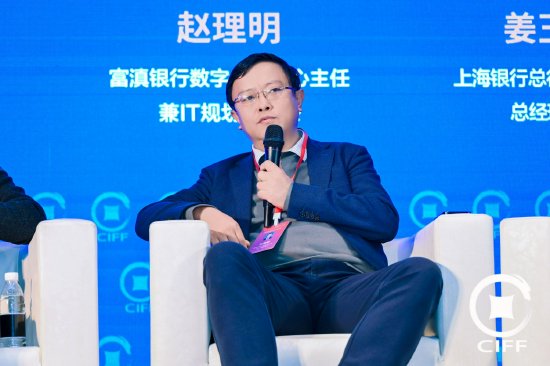
富滇银行赵理明:未来金融科技必将以AI和数据双核心驱动
Xin Lang Cai Jing· 2025-12-24 03:23
Core Insights - The 22nd China International Financial Forum was held in Shanghai on December 19-20, focusing on building an intelligent financial ecosystem in the digital economy era [1][5]. Group 1: Future Trends in Banking - The first trend highlighted is the evolution of AI and large models from "efficiency tools" to "value engines," indicating a shift from basic AI applications to more integrated and impactful uses in banking [3][7]. - The second trend emphasizes the increasing importance of data as an asset, with the potential for revolutionary service models emerging underpinned by AI and data integration [3][7]. - The third trend points to a shift in competition from "individual competition" to "ecosystem competition," suggesting that banks must adapt to new talent requirements and prioritize product and ecosystem development over traditional marketing strategies [3][7]. Group 2: Strategic Implications - The future of financial technology is expected to be driven by a dual core of AI and data, with an emphasis on open ecosystems aimed at supporting high-quality development of the real economy [4][8].

金融科技拐点:从“硬投入”到“软实力”,关注五大关键词
2 1 Shi Ji Jing Ji Bao Dao· 2025-12-19 13:27
Core Insights - The financial technology industry is expected to undergo significant changes in 2026, coinciding with the update of the "Financial Technology Development Plan" [1] - The digital economy has rapidly developed from 2019 to 2025, transitioning financial technology from foundational support to a more substantial role [1] - Financial institutions are shifting their focus from "hard investment" to "soft power" in technology, emphasizing efficiency over scale [3][4] Financial Technology Development - The previous development plan emphasized principles such as digital-driven, intelligent for the public, green and low-carbon, and equitable finance, with eight key tasks outlined [1] - Financial institutions have established top-level designs for digital transformation, with flexible organizational structures and improved cloud infrastructure [1] - The integration of AI, blockchain, and privacy computing technologies is accelerating, enhancing the accessibility of financial services [1] Investment Trends - There is a noticeable slowdown in the growth rate of technology investments by financial institutions, particularly among major banks [2] - From 2020 to 2024, technology investment by 16 state-owned and joint-stock banks increased from 140.4 billion to 187.4 billion yuan, but the growth rate has significantly decreased [2] - Some banks have begun to reduce their technology investment amounts starting in 2023, with only one bank achieving double-digit growth in 2024 [2] Organizational Changes - Financial institutions are adjusting their organizational structures to optimize technology governance and deepen reform [6] - Initiatives include the establishment of digital financial committees and AI action groups to enhance decision-making and risk management [6][7] - The focus is on breaking down departmental barriers and fostering collaboration across different levels of governance [7] Technology Application - Financial institutions are pursuing both "frontier exploration" and "practical efficiency" in technology applications, with a shift towards using technology as a production factor [4] - AI applications are increasingly penetrating core business areas, with banks implementing AI in various operational scenarios [9] - The integration of internal and external data is enhancing customer profiling, risk management, and marketing strategies [8] Future Outlook - The "14th Five-Year Plan" emphasizes the importance of building a strong financial nation, with a focus on AI governance, cross-border data flow mechanisms, and sustainable finance [10][11][14] - The development of digital RMB and the establishment of financial technology centers in key cities like Shanghai and Hong Kong are strategic priorities [12][15] - The financial industry is expected to continue innovating in green finance and integrating environmental and social responsibilities into core business processes [14]
论数据资产证券化:实践、风险与展望
Zheng Quan Shi Bao Wang· 2025-12-19 03:44
Core Insights - The rapid development of technology has made data a new production factor driving economic growth, playing a crucial role in optimizing decision-making, enhancing efficiency, and fostering new business models [1] - The exploration of data asset securitization is significant for unlocking the value of data elements, broadening corporate financing channels, and deepening the reform of the data element market [1] Group 1: Definition of Data Asset Securitization - Data assets are defined as data resources that organizations legally own or control, which can be measured and bring economic or social value [2] - Data asset securitization involves financing through the issuance of asset-backed securities, supported by the stable cash flows generated from data assets [3] Group 2: Development Foundations and Practices - There is a solid policy and market foundation for promoting data asset securitization, with a framework established for data ownership rights and various policies addressing data asset management and valuation [5] - The demand for data asset securitization is growing as data-driven companies face funding pressures, providing a solution for converting future revenues into immediate cash [5] - Infrastructure for data trading is developing, with a nationwide network of data trading venues and the application of technologies like privacy computing and blockchain enhancing security and trust [6] Group 3: Domestic Innovation Cases - Various models of data asset securitization are emerging, including indirect credit enhancement through data asset pledges and direct monetization of data [7][8] - These cases illustrate the evolution of data from a supportive role to a core component of financial applications, providing valuable insights for future practices [8] Group 4: Challenges and Risks - Data asset securitization faces challenges related to the improvement of foundational systems, including property rights and regulatory frameworks [9] - Technical bottlenecks exist in areas such as data ownership verification and dynamic valuation, which hinder the scalability of securitization [9] Group 5: Pathways for Steady Development - Continuous improvement of data foundational systems is essential, including accelerating the legislative process for data property rights and promoting unified market standards [10] - Encouraging orderly innovation in the market through coordinated efforts between financial regulators and data management authorities is crucial [10] - Strengthening the collaborative ecosystem among various stakeholders, including data asset evaluation and legal services, will enhance the standardization of professional services [10] Group 6: Conclusion and Outlook - Data asset securitization is a vital innovation connecting data elements with capital markets, with a promising outlook as foundational policies and market practices evolve [11] - The ongoing development of a unified data market will gradually standardize core processes such as ownership verification and valuation, unlocking the potential value of data resources [11]
具身智能的“南坡”突围——灵宇宙能否成就AI终端的“特斯拉时刻”?
3 6 Ke· 2025-12-19 02:11
Core Insights - The artificial intelligence sector is experiencing a structural divide, with digital intelligence, represented by large language models (LLMs), advancing rapidly, while embodied intelligence faces significant challenges due to the Moravec's paradox [1][3] - Ling Universe's flagship product, "Xiaofangji," signifies the successful commercialization of the "South Slope Route" for embodied intelligence in the Chinese market [1][2] Group 1: South Slope Route - Ling Universe is building a low-cost, high-frequency physical world data collection terminal through the sale of an AI children's toy, "Xiaofangji," which is priced at around 1,000 yuan (approximately $150) [2][22] - The strategy involves using consumer-grade hardware to gather critical Sim-to-Real data necessary for constructing a world model, effectively acting as a "distributed data collector" disguised as a consumer product [2][5] - The "South Slope Route" focuses on embedding multi-modal perception capabilities into affordable consumer hardware, allowing for the collection of valuable first-person perspective data from real-world interactions [5][10] Group 2: North Slope Route Challenges - The North Slope Route, represented by humanoid robotics companies like Boston Dynamics, faces a "cold start" dilemma due to high hardware costs and the difficulty of data collection in real-world scenarios [3][4] - General-purpose humanoid robots typically cost tens of thousands of dollars, limiting their application to laboratories or a few industrial settings, which in turn hampers the collection of diverse real-world data [4][6] - The reliance on simulation or synthetic data for algorithm training leads to limitations in performance when faced with the complexities of the physical world, creating a significant gap between simulation and reality [4][6] Group 3: Investment and Market Perception - Ling Universe has raised nearly 200 million yuan (approximately $28 million) in three funding rounds within six months, indicating a shift in market perception where such companies are viewed as infrastructure providers for embodied intelligence rather than mere toy manufacturers [9][20] - The investment logic has been restructured, with Ling Universe being compared to Tesla in the context of data accumulation and model training, emphasizing the importance of a self-sustaining cash flow and exclusive data streams [9][19] - The company’s approach mirrors Tesla's strategy of selling consumer-grade vehicles to gather real-world data for autonomous driving, thereby establishing a sustainable business model [9][19] Group 4: Data and Operating System - Ling Universe's core value lies in its ability to collect unique first-person perspective data, which is scarce and valuable compared to traditional text data used in large models [10][11] - The LingOS system is designed to operate without a screen, utilizing multi-modal perception to interpret user intent, marking a shift from traditional app-based interactions to a more integrated "World as Interface" approach [13][16] - As hardware commoditization progresses, the value of LingOS is expected to grow exponentially with the increase in connected devices, positioning it as a potential standard operating system for various embodied intelligence applications [16][24] Group 5: Future Outlook and Strategic Positioning - Ling Universe's current product, "Xiaofangji," may only be a transitional phase as the AI terminal evolves towards ambient intelligence, with the competitive landscape shifting towards OS-based ecosystems rather than standalone hardware sales [24][30] - The company must capitalize on its strategic window of opportunity, as traditional toy giants and tech companies have yet to fully enter the children's AI hardware market, presenting a unique chance for growth [24][30] - The future of embodied intelligence will favor those who accumulate real-world data through practical applications rather than those focused solely on creating perfect robots in laboratory settings [30]

投资者保护正从“防风险”向“促分享”升级
Zheng Quan Shi Bao· 2025-12-09 00:31
Core Viewpoint - The Chinese capital market is entering a new historical stage characterized by clear policy signals emphasizing stability and strength, with a focus on inclusivity, adaptability, and the coordination of financing and investment functions as key elements for high-quality development [1][5]. Group 1: Inclusivity - Market vitality is predicated on inclusivity, which manifests in both the financing and investment sides [1][7]. - The establishment of the Sci-Tech Innovation Board and the Beijing Stock Exchange, along with the promotion of the registration system reform, aims to enhance the inclusivity of the financing side, allowing more hard-tech and specialized enterprises to access capital [7]. - On the investment side, a diverse range of market participants, from venture capital to individual investors, is essential for maintaining market resilience, requiring a fair and transparent market environment [2][7]. Group 2: Adaptability - The adaptability of capital market systems is crucial in an era of rapid technological change and blurred industry boundaries, necessitating dynamic adjustments and iterative mechanisms [2][8]. - Traditional regulatory and valuation frameworks need updates to accommodate emerging fields such as data assets, artificial intelligence, and green energy [8]. - Recent enhancements in regulatory technology, information disclosure systems, and delisting regulations reflect efforts to improve adaptability [3][8]. Group 3: Coordination of Financing and Investment Functions - Effective operation of the capital market relies on a positive cycle between financing and investment functions, avoiding an overemphasis on either side [3][9]. - Sustainable market balance is achieved when investors trust that their investments can drive corporate growth and yield returns, ensuring continuous capital flow [9]. - The core of this coordination is investor protection, which serves as a lubricant and stabilizer for sustainable market functions [9]. Group 4: Investor Protection - The concept of investor protection is evolving from merely preventing risks to promoting value sharing, emphasizing the need for investors to participate in corporate growth and share in value creation [4][9]. - Measures to enhance investor protection include strengthening dividend constraints, improving governance transparency, and refining institutional investor behavior standards [4][9]. - The ongoing reform of the capital market is a long-term endeavor, with each optimization contributing to market maturity and supporting China's economic transition [5][10].
数据资产供应稳定的供应商
Sou Hu Cai Jing· 2025-12-06 20:22
Group 1 - The importance of stable data asset suppliers is emphasized, as data is crucial for timely and accurate decision-making across various business sectors [1] - In the financial sector, data inaccuracies can lead to investment mistakes, while in manufacturing, delays in production data can affect supply chain efficiency [1] Group 2 - Key criteria for selecting stable suppliers include technical strength, industry experience, and service range [2][4] - Companies like Shenyang Chuanglian Information Technology Co., Ltd. have strong technical teams from prestigious universities, showcasing their capability to ensure stable data supply [4] - Rich industry experience allows suppliers to better address diverse situations, with Chuanglian having deep expertise in blockchain technology and industrial internet [4] Group 3 - Evaluating suppliers can be done through reviewing past successful cases and customer feedback to gauge service quality and stability [5][8] - Successful case studies provide insights into a supplier's performance in similar projects, while customer evaluations offer indirect assessments of reliability [8] Group 4 - Choosing a supplier with stable data asset supply is critical for successful digital transformation, with companies like Shenyang Chuanglian Information Technology being strong candidates due to their technical strength, industry experience, and broad service range [9]

中基协:积极布局算力资产、绿色能源等领域,优化ABS市场结构
Sou Hu Cai Jing· 2025-12-06 11:24
Core Viewpoint - The meeting of the Asset Securitization (ABS) Business Committee of the China Securities Investment Fund Industry Association emphasized the importance of ABS and multi-level REITs markets in promoting high-quality development and supporting the real economy, aligning with the "14th Five-Year Plan" [1][2] Group 1: Meeting Highlights - The meeting discussed the implementation of the spirit of the 20th National Congress and the "14th Five-Year Plan," focusing on high-quality development of ABS and multi-level REITs markets [1] - It was noted that ABS and multi-level REITs have significantly contributed to revitalizing existing assets, stabilizing macro leverage ratios, optimizing asset-liability structures, and broadening financing channels [1] - The meeting recognized the ongoing efforts to enhance the quality and efficiency of services to the real economy through ABS and REITs [1] Group 2: Strategic Recommendations - The meeting recommended aligning the development of the ABS market with national strategies, enhancing services for the real economy, and improving wealth management for residents [2] - It suggested actively optimizing the ABS market structure by focusing on sectors such as computing assets, data assets, green energy, and pension infrastructure [2] - The meeting called for strengthening the capabilities of industry institutions, exploring paths for financial technology empowerment, and improving asset transparency and risk management [2] Group 3: Regulatory Insights - Officials from the Securities Regulatory Commission highlighted the positive impact of ABS and multi-level REITs in revitalizing existing assets and supporting the capital market's service to the real economy [2] - Future regulatory efforts will focus on enhancing the adaptability and inclusiveness of the system, optimizing mechanisms related to valuation and market-making, and encouraging financial technology integration [2]
上市公司数据资产数据(2007-2024年)
Sou Hu Cai Jing· 2025-12-02 09:41
Group 1 - The article discusses the evaluation of data assets of listed companies in China from 2007 to 2024, focusing on the methodologies used for assessment [2][3] - Three methods for calculating data assets are introduced: text analysis, value method, and actual method [4][5][6] - The text analysis method involves collecting annual reports of A-share listed companies and analyzing the "Management Discussion and Analysis" (MD&A) section using Python and pdfplumber tools [2][3] Group 2 - The value method quantifies data asset value by considering both current data resources and their future potential value, emphasizing the increasing market recognition of data assets [5] - The formula for measuring data asset value is provided: Data Assets (DA) = ln(Market Value - Fixed Assets - Intangible Assets - Financial Assets), highlighting the importance of market value in assessing data assets [5] - The actual method categorizes data resources into directly usable and those requiring further processing, detailing the accounting treatment for each type [6]