
新兴产业和未来产业

Search documents
多部门发声 2026年要做这些事
Yang Shi Xin Wen· 2025-12-29 21:36
Group 1: Fiscal Policy - In 2026, a more proactive fiscal policy will continue to be implemented, focusing on expanding fiscal expenditure and optimizing government bond tools [2] - The effectiveness of transfer payment funds will be enhanced to increase local financial autonomy [2] - The fiscal structure will be continuously optimized to strengthen support for key areas [2] Group 2: Employment and Income - The fiscal policy will promote resident employment and income growth by coordinating various funds to support enterprises in maintaining and expanding jobs [3] - Taxation, social security, and transfer payments will be utilized to increase residents' income through multiple channels [3] Group 3: Consumption - In 2026, the government will actively support consumption by implementing a special action plan and funding for the replacement of old consumer goods [4] - The policy for replacing consumer goods will be optimized to expand service consumption and eliminate unreasonable restrictions in the consumption sector [4] Group 4: Investment - Various measures will be taken to stabilize investment, including increasing the scale of central budget investments and utilizing government investment funds effectively [5] - The government will implement significant engineering projects and promote private investment [5] Group 5: Urban Development - High-quality urban renewal will be prioritized, focusing on implementing various livelihood, development, and safety projects [6] - The government will enhance the quality of urban environments through detailed renovations and community improvements [6] Group 6: Industry and Technology - The focus will be on enhancing industrial technological innovation capabilities and overcoming core technological challenges [8] - New emerging industries and future industries will be cultivated, including support for artificial intelligence and other high-tech sectors [10] Group 7: Transportation - In 2026, the construction of cross-regional and cross-basin transportation corridors will be advanced to improve national strategic service capabilities [11] Group 8: Energy - The proportion of renewable energy supply will be increased, with plans to add over 20 million kilowatts of wind and solar power generation capacity [12] - The government will promote the development of future energy industries, including hydrogen and nuclear energy [12] Group 9: Social Welfare - The coverage of maternity insurance will be expanded to include flexible employment workers and migrant workers, aiming for "no out-of-pocket" expenses for childbirth [13] - Direct disbursement of maternity allowances to insured individuals will be fully implemented [13] Group 10: Real Estate - Measures will be taken to stabilize the real estate market by utilizing existing housing stock for affordable housing and other purposes [14]
国家发展改革委谈创业投资引导基金:未来将推动在京津冀、长三角、粤港澳大湾区设立超600只子基金
Xin Hua Cai Jing· 2025-12-26 07:04
Core Viewpoint - The National Development and Reform Commission announced the establishment of three regional venture capital guiding funds, each with a total scale exceeding 50 billion yuan, aimed at promoting innovation and supporting emerging industries in China [1][2]. Group 1: Fund Structure and Management - The national venture capital guiding fund is structured in a "fund company - regional fund - sub-fund" three-tier architecture [1]. - The Beijing-Tianjin-Hebei venture capital guiding fund will be managed by China Investment Corporation's subsidiary, China International Capital Corporation [1]. - The Yangtze River Delta venture capital guiding fund will be managed by the National Investment Group's subsidiary, Guotou Chuanghe [1]. - The Guangdong-Hong Kong-Macau Greater Bay Area venture capital guiding fund will be managed by Shenzhen Capital Group [1]. Group 2: Regional Fund Objectives - The Beijing-Tianjin-Hebei fund aims to mobilize central financial enterprises and enhance the role of banks, insurance, and securities in supporting technological finance [1]. - The Yangtze River Delta fund is expected to act as a driving force for high-quality development, gathering various social capital to empower regional sci-tech enterprises [1]. - The Greater Bay Area fund will leverage Shenzhen's role as a reform and opening-up hub, encouraging diverse market participants to engage [1]. Group 3: Investment Plans - The first three regional funds are ready to commence operations, having signed investment intentions with 49 sub-funds and 27 direct investment projects [2]. - The guiding fund aims to establish over 600 sub-funds across the three regions to support the development of emerging and future industries [2].

北京昌平产城融合共成长
Jing Ji Ri Bao· 2025-12-25 22:00
Core Insights - Changping District is rapidly developing as an innovation hub, with a focus on integrating urban living and scientific research, attracting young talent and fostering a vibrant community [1][2] Group 1: Economic Growth and Demographics - Changping District's GDP grew by 7.1% year-on-year in the first three quarters of the year, despite a high baseline [1] - The district has a resident population of over 2.27 million, with more than 40% holding a university degree [1] - Changping is home to approximately one-third of the city's national key laboratories and has a significant number of academicians and research talents [1] Group 2: Industry Development - The district is establishing a clear industrial hierarchy centered around three main sectors: healthcare, advanced manufacturing, and advanced energy [2] - Emerging industries such as synthetic biology, robotics, and 6G are being rapidly developed, with notable projects like the world's first multi-band integrated 6G test network [2] - Changping is positioning itself as a future-oriented industrial base, attracting more researchers and engineers to start their careers there [2] Group 3: Business Environment - The business environment in Changping has improved significantly, with over 30,000 new business entities established annually for the past three years [3] - The transformation cycle from laboratory to company is shortening, making Changping an attractive location for startups [3] - Companies benefit from a supportive ecosystem that allows them to focus on research rather than operational logistics [3] Group 4: Urban Development and Living Conditions - Changping is implementing a "15-minute living circle" concept, integrating work, residence, and commerce to enhance urban living [4] - The district has seen a significant increase in housing projects, with 154 million square meters of commercial housing sold in the first 11 months of the year, ranking first in the city [4] - The focus on urban and industrial integration is fostering a positive cycle of development, attracting more residents and businesses [4]
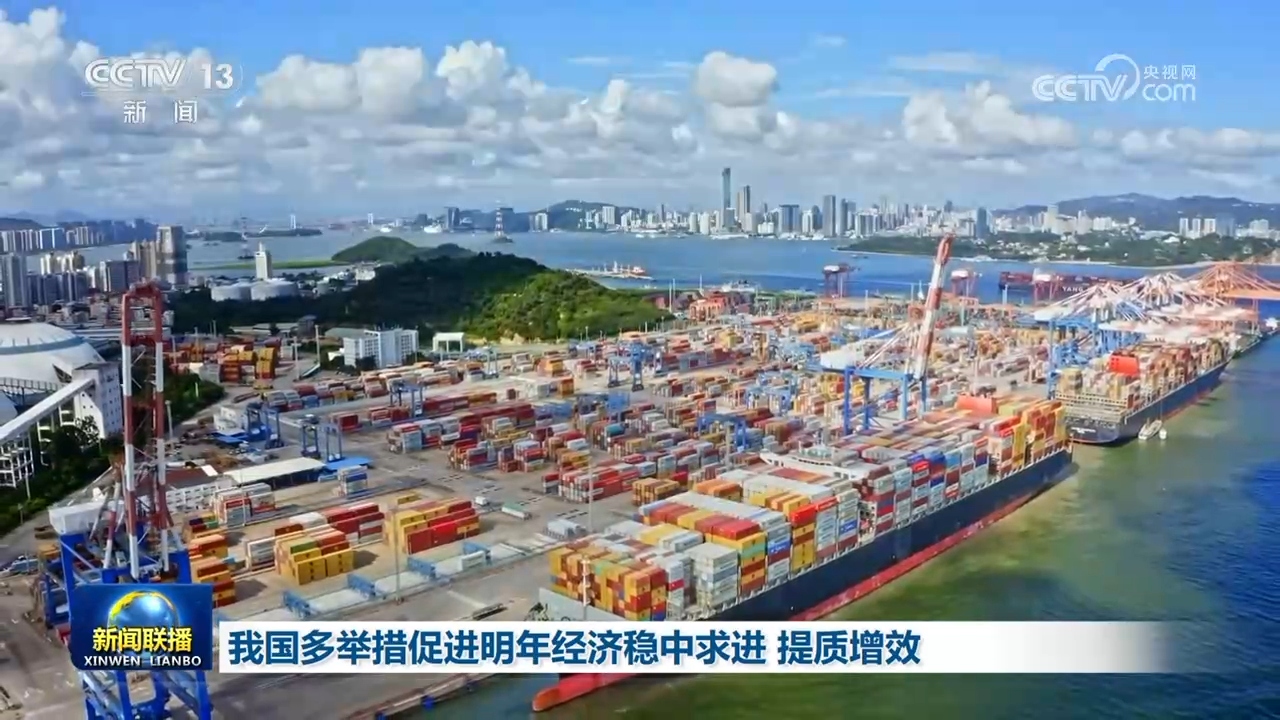
我国多举措促进明年经济稳中求进 提质增效
Yang Shi Wang· 2025-12-13 12:03
Group 1 - The core viewpoint of the articles emphasizes that macroeconomic regulation will be proactive in the coming year, focusing on expectation management and introducing a series of new measures to promote stable economic growth and improve quality and efficiency [1][3] Group 2 - In terms of consumption, there will be an optimization of the implementation of the "two new" policies, actively expanding service consumption, and enhancing the quality of life service supply in areas such as elderly care, childcare, and housekeeping [3] - Regarding investment, the government will leverage various investment funds, increase the scale of central budget investments, and implement measures to stimulate private investment, thereby effectively invigorating private sector investment [3] - For future development, there will be a strong emphasis on cultivating and expanding emerging and future industries, deepening the "Artificial Intelligence +" initiative, addressing shortcomings in the technology service sector, and improving the low-altitude economy industry ecosystem [3] Group 3 - Over the next five years, there is a focus on high-quality planning and implementation of the "14th Five-Year Plan," with the aim of launching a number of major engineering projects to ensure a good start for the plan [4]

专家共话因地制宜发展新质生产力
Xin Hua She· 2025-12-08 14:31
Core Viewpoint - The forum emphasizes the importance of developing new productive forces tailored to local conditions as a significant strategic issue for economic and social development in the long term [1] Group 1: Forum Overview - The "2025 National Affairs Forum" was held on December 8 in Beijing, organized by the State Council's Research Office [1] - The theme of the forum is "Developing New Productive Forces According to Local Conditions" [1] - The forum aims to gather wisdom and consolidate efforts from various sectors to formulate actionable policy recommendations [1] Group 2: Participants and Structure - Over 300 participants attended, including officials from relevant government departments, provincial and municipal leaders, experts, scholars, and representatives from the business community [1] - The forum included three specialized sessions focusing on "Creating an Innovative Ecosystem," "Cultivating and Expanding Emerging and Future Industries," and "Artificial Intelligence+" [1] Group 3: Strategic Importance - The development of new productive forces is seen as a crucial measure to implement the spirit of the Fourth Plenary Session of the 20th Central Committee of the Communist Party [1] - The forum is positioned as a platform to support the implementation of the Central Government's decision-making and deployment [1]
全国社会保障基金理事会原副理事长陈文辉: 培育壮大新兴产业和未来产业 是实现可持续发展的关键
Zhong Guo Zheng Quan Bao· 2025-11-26 20:27
Core Viewpoint - Cultivating and expanding emerging industries and future industries is key to achieving sustainable development [1] Group 1: Role of Equity Investment Funds - Equity investment funds are essential for promoting the development of new productive forces, encouraging innovation, allowing trial and error, and being tolerant of failure [2] - Government investment funds are a crucial part of China's venture capital market, representing a successful combination of an effective market and proactive government [2] - Corporate venture capital (CVC) plays a significant role in driving technological innovation and industrial development, with unique characteristics that align well with cutting-edge projects [2] Group 2: Suggestions for Sustainable Development - The equity investment fund industry should seize opportunities to contribute to sustainable development through innovative thinking and practical actions [3] - Four suggestions for promoting the sustainable development of the equity investment fund industry include improving the financial service system, cultivating patient capital, optimizing exit channels, and enhancing capabilities to empower sustainable development [3] - Developing pension funds and long-term life insurance as important sources of patient capital is recommended, alongside innovating the use of bank savings [3] Group 3: Empowering Invested Enterprises - Equity investment funds should comprehensively empower invested enterprises by deeply engaging in key areas such as talent, management, supply chain, and sales channels [4]
培育壮大新兴产业和未来产业是实现可持续发展的关键
Zhong Guo Zheng Quan Bao· 2025-11-26 20:20
Group 1 - The cultivation and expansion of emerging and future industries are key to achieving sustainable development [1] - Private equity funds play a crucial role in promoting innovation and allowing for trial and error in the development of new productive forces [1] - Government investment funds are an important part of China's venture capital market, combining effective markets with proactive government roles [1] Group 2 - Corporate venture capital (CVC) has significant importance in promoting technological innovation and industrial development, particularly in matching with cutting-edge projects [2] - CVC can leverage its inherent industry resources to empower startups comprehensively [2] - The private equity fund industry should seize opportunities for sustainable development through innovative thinking and practical actions [2] Group 3 - Suggestions for the sustainable development of the private equity fund industry include improving the financial service system and enhancing the capacity to empower sustainable development [2][3] - There is a need to cultivate patient capital, which aligns naturally with private equity funds, by optimizing investment duration, exit channels, and assessment mechanisms [2] - The banking sector should innovate financial tools and business models to convert a portion of its assets into long-term patient capital [3]
巩固壮大实体经济根基,构建以先进制造业为骨干的现代化产业体系
Jing Ji Ri Bao· 2025-11-03 05:02
Group 1 - The core viewpoint emphasizes the importance of the real economy as the foundation of national economic stability and high-quality development, highlighting its priority in strategic tasks [1] - The real economy is identified as the fundamental source of wealth creation, contributing significantly to economic growth and employment, absorbing over 400 million jobs, and serving as a stabilizer for people's livelihoods [1] - The real economy is crucial for international competition, with a complete industrial system enhancing economic resilience against external shocks [1] Group 2 - The real economy currently faces multiple pressures, including weak global economic recovery, rising trade protectionism, geopolitical risks, and increased costs for raw materials and logistics [2] - Internally, there is insufficient effective demand, rising labor and raw material costs, severe market competition, and low profitability among small and medium-sized enterprises [2] - The transition from old to new economic drivers is experiencing challenges, with insufficient private investment and financing difficulties for some enterprises [2] Group 3 - Strengthening the real economy requires building a modern industrial system centered on advanced manufacturing, which is the most innovative and high-value-added sector of the manufacturing industry [2] - The focus should be on integrating technological innovation with industrial innovation to enhance the effectiveness of industrial technological innovation [2] Group 4 - Key directions for development include intelligentization, greening, and integration, which can enhance efficiency, reduce costs, and promote sustainable development [3] - Intelligentization leverages digital technology across production processes, while greening addresses resource consumption and environmental pressures, creating new growth points in green industries [3] - Integration breaks down industry boundaries, promoting synergy between various sectors and creating new value [3] Group 5 - Consolidating and strengthening the real economy involves optimizing traditional industries while nurturing emerging and future industries [4] - Traditional industries account for about 80% of the added value in manufacturing and are essential for economic stability [4] - Upgrading traditional industries requires focusing on key sectors and enhancing competitiveness through technological improvements [4] - Emerging industries such as new energy, new materials, and aerospace should be developed, alongside future industries like quantum technology and hydrogen energy, to create new growth points [4]
锚定“十五五”,上市公司如何“智启未来”
Zhong Guo Zheng Quan Bao· 2025-10-29 23:52
Core Viewpoint - The forum emphasized the importance of high-quality development for listed companies in alignment with national strategies, focusing on innovation, practical implementation, and digital transformation [1][2]. Group 1: Industry Development - Nantong is positioning itself as a significant growth hub for high-quality development in Jiangsu Province, with six key industrial clusters generating over 1.2 trillion yuan in output [2]. - The advanced manufacturing clusters, including marine engineering and high-tech shipbuilding, have been recognized as national advanced manufacturing clusters, indicating a strong foundation for listed companies [2]. Group 2: Expert Insights - Experts highlighted the need for a focus on the real economy, domestic markets, and innovation as key drivers for economic development, advocating for the growth of advanced manufacturing and emerging industries [3]. - The competition in the chip industry is fundamentally about the competitiveness of industrial ecosystems, suggesting that companies should enhance their roles in innovation and R&D investment [3]. - Globalization is seen as a crucial pathway for listed companies to expand their development space and achieve high-quality growth, with an emphasis on leveraging digitalization and smart technologies [3]. Group 3: Technological Innovation - The importance of artificial intelligence and large model systems was discussed, with a focus on the model training phase requiring significant computational power and high-quality data [4]. - Companies are encouraged to adopt an open innovation system and focus on both technological and management innovations to overcome challenges in the new technological revolution [4]. - The resilience of China's manufacturing base and capital market is viewed as a buffer against changes, with a call for companies to enhance competitiveness through mergers and acquisitions and a focus on technological self-reliance [4].

四中全会公报:培育壮大新兴产业和未来产业
Xin Hua She· 2025-10-23 15:37
Core Viewpoint - The Fourth Plenary Session emphasizes the construction of a modern industrial system and the consolidation of the foundation of the real economy, focusing on intelligent, green, and integrated development [1] Group 1: Economic Development Focus - The focus of economic development will be on the real economy, with an emphasis on maintaining a reasonable proportion of manufacturing [1] - The session aims to accelerate the construction of a manufacturing powerhouse, quality powerhouse, aerospace powerhouse, transportation powerhouse, and cyber powerhouse [1] Group 2: Industry Optimization and Growth - There is a commitment to optimizing and upgrading traditional industries while nurturing and expanding emerging and future industries [1] - The development of high-quality and efficient services is also a priority, alongside the construction of a modern infrastructure system [1]