
新国标

Search documents
立马车业加强自主研发提升智能化水平——用户体验没有上限
Xin Lang Cai Jing· 2026-01-16 23:10
Core Viewpoint - The company, Hebei Limama Vehicle Technology Co., Ltd., is experiencing growth in electric bicycle production and sales, driven by technological advancements and automation in manufacturing processes [1][2]. Group 1: Company Overview - Hebei Limama is located in Langfang City, Hebei Province, and integrates research, manufacturing, and sales of electric bicycles [1]. - From January to November 2025, the company sold over 660,000 units, generating more than 600 million yuan in revenue, reflecting a year-on-year increase of 6.7% [1]. Group 2: Technological Advancements - The company invests over 10 million yuan annually in R&D for new product development and iterations of existing products, holding more than 60 national patents [1]. - The production process is fully automated, with an automation rate exceeding 92%, and includes 17 production lines such as assembly, welding, and storage [1][2]. Group 3: Product Safety and Compliance - Following the introduction of the new national standard for electric bicycles, the company has upgraded its testing capabilities with six new devices to enhance product safety and stability [2]. - The company has addressed safety concerns by upgrading materials, such as converting magnesium and aluminum components to sheet metal, which reduces costs and improves yield rates [2]. Group 4: Product Development and Market Strategy - The company focuses on stylish and youthful product designs, with smart upgrades that include features like traction control and intelligent positioning [3]. - In 2026, the company plans to invest 12 million yuan in developing 16 new models of electric bicycles, 7 electric lightweight motorcycles, and 14 electric leisure tricycles, with the first products expected to launch in March [3].
永安期货有色早报-20260113
Yong An Qi Huo· 2026-01-13 01:31
Group 1: Report Industry Investment Rating - No relevant content Group 2: Core Views of the Report - Copper prices have significantly increased recently, driven by the potential US refined copper tariff - expected inventory transfer to the US and investment fund inflows. Future copper price performance depends on terminal demand, US restocking, and Chinese demand recovery. It's expected to accumulate inventory steeply before the Spring Festival and de - stock quickly after [1]. - Aluminum's spot and futures prices are dominated by expectation trading with amplified fluctuations. Domestic apparent demand is weaker than previously judged, but strong expectations support the current high price [1][2]. - Zinc's domestic fundamentals are poor, but there is a temporary supply reduction at the end of the year, so the price may not fall deeply. It is recommended to wait and see for single - side trading, focus on reverse arbitrage opportunities for internal - external trading, and positive arbitrage opportunities for month - spread trading [5]. - Nickel's short - term real - world fundamentals are weak, and the game between short - term policies and fundamentals continues [6][7]. - Stainless steel's fundamentals are weak, and the price is mainly driven by nickel price in the short term [11]. - Lead prices are expected to oscillate next week. It is recommended to pay attention to the risk of low warehouse receipts [12]. - Tin has strong support in the short - term, and the upward drive is stronger before the macro - sentiment weakens. In the long - term, demand determines the upside space [13]. - Industrial silicon's supply and demand are close to balance in the short - term, and the price is expected to fluctuate with costs. In the long - term, it will oscillate at the cycle bottom [16]. - Lithium carbonate prices are rising due to resource - end disturbances, processing fee increases, and macro - sentiment. Downstream buyers are cautious [19]. Group 3: Summary by Metal Copper - **Price and Inventory Data**: From January 6 - 12, 2026, the spot price of Shanghai copper changed by 60, the waste - refined copper spread increased by 1290, and LME inventory decreased by 1750 [1]. - **Market Outlook**: The recent rise in copper prices is due to potential US tariffs and investment inflows. Future performance depends on demand and restocking [1]. Aluminum - **Price and Inventory Data**: From January 6 - 12, 2026, Shanghai aluminum ingot price increased by 310, and LME inventory decreased by 2000 [1][24]. - **Market Outlook**: Expected trading affects prices. Domestic apparent demand is weak, but strong expectations support high prices [1][2]. Zinc - **Price and Inventory Data**: From January 6 - 12, 2026, the spot premium decreased by 20, and LME inventory decreased by 650 [5]. - **Supply - Demand Analysis**: Supply is affected by TC decline and smelter maintenance. Demand is seasonally weak domestically and has different trends overseas. It is recommended to wait and see for single - side trading and focus on arbitrage opportunities [5]. Nickel - **Price and Inventory Data**: From January 6 - 12, 2026, the price of Shanghai nickel changed by 3800, and LME inventory decreased by 228 [6]. - **Market Outlook**: Short - term fundamentals are weak, and the policy - fundamentals game continues [6][7]. Stainless Steel - **Price and Inventory Data**: From January 6 - 12, 2026, the price of 304 cold - rolled coil increased by 100 [11]. - **Market Outlook**: Fundamentals are weak, and the price follows nickel price in the short term [11]. Lead - **Price and Inventory Data**: From January 6 - 12, 2026, the spot premium remained unchanged, and LME inventory decreased by 1275 [12]. - **Supply - Demand Analysis**: Supply is affected by production recovery and raw material tightness. Demand is expected to weaken. Prices are expected to oscillate, and attention should be paid to low warehouse receipt risk [12]. Tin - **Price and Inventory Data**: From January 6 - 12, 2026, the spot import gain changed by 2456.09, and LME inventory increased by 490 [12][13]. - **Market Outlook**: There are supply risks in major countries. In the short - term, the price has strong support and upward drive. In the long - term, demand determines the upside space [13]. Industrial Silicon - **Price and Inventory Data**: From January 6 - 12, 2026, the 421 Yunnan basis changed by - 40, and the number of warehouse receipts remained unchanged [16]. - **Market Outlook**: Supply and demand are close to balance in the short - term, and the price will fluctuate with costs. In the long - term, it will oscillate at the cycle bottom [16]. Lithium Carbonate - **Price and Inventory Data**: From January 6 - 12, 2026, the SMM electric carbon price increased by 12000, and the number of warehouse receipts increased by 610 [19]. - **Market Outlook**: Prices are rising due to resource - end disturbances and other factors. Downstream buyers are cautious [19].
新国标落地 中国自行车协会呼吁企业加快转型抢占先机
Zhong Guo Chan Ye Jing Ji Xin Xi Wang· 2026-01-12 01:10
Core Viewpoint - The electric bicycle industry is facing challenges due to the implementation of the new national standard (GB 17761-2024) and seasonal market fluctuations, but there are opportunities for growth through innovation and market expansion [1][2][3] Group 1: Market Demand and Consumer Behavior - Winter is traditionally a slow season for electric bicycle sales, leading to a decrease in market demand [1] - Consumer interest in new standard models is increasing, with new products being stocked in major sales outlets and attracting consumer inquiries [1] Group 2: Industry Challenges - The industry faces four main challenges: 1. Long and costly mold development cycles for magnesium-aluminum alloy die-casting parts, affecting production efficiency and cost control [2] 2. Rising material costs due to the new standard requiring some plastic parts to be replaced with metal, along with the addition of new components like BeiDou positioning systems [2] 3. Challenges in applying new composite materials, such as carbon fiber, which require careful balancing of plastic components for safety and practicality [2] 4. Seasonal market fluctuations, particularly during winter, which impact sales growth of new standard products [2] Group 3: Recommendations for Industry Improvement - Companies are encouraged to recognize the importance of stable production and supply under the new standards, increase the launch of new products, and ensure market supply [3] - To address mold development issues, companies should optimize design plans and improve the use ratio of magnesium-aluminum parts, sheet metal, and plastics [3] - There is a need for increased research and testing in new technologies and materials to overcome production difficulties related to the new standard [3] - The industry should seek policy support and enhance collaboration between upstream and downstream sectors to resolve supply chain bottlenecks [3] - The promotion of eco-friendly transportation and urbanization presents broader market opportunities for the electric bicycle industry [3]
多部门裁员50%?爱玛:与事实不符,是年底正常人员调整
Jing Ji Guan Cha Wang· 2026-01-11 11:12
至于爱玛集团本次人员结构优化共裁员多少人、占比多少,以及针对离职员工所说的补偿未到达N+1补偿标准,要求员工签字将劳动合同转至第三方外包 公司等问题是否属实。爱玛方面表示,具体员工总数及结构变化,以后续发布的年度报告为准,对于符合法定情形的员工,依据《劳动合同法》、员工在 职年限及劳动合同约定,经与员工协商一致后确定并支付补偿,如员工对补偿金额有异议,爱玛已建立畅通的沟通渠道。 近日有消息称,爱玛科技(603529.SH)多个部门近期大幅优化人员,其新孵化的高端品牌"零际"和国际业务部门人员缩减超过50%,售后、电商等部门也 被波及。据相关报道,零际品牌的业务从天津迁至重庆,工作地转移但不给员工补贴,爱玛要求员工签字将劳动合同转至第三方外包公司。另外,不少被 裁的员工只拿到一个月工资补偿,他们希望获得N+1标准赔偿。 对此,爱玛集团方面向经济观察报表示:"裁员50%与事实严重不符,存在夸大和误导嫌疑。爱玛每年到年底都会进行人员调整,属于正常的人力管理行 为,目前经营正常,高管团队也在稳定履职。"据爱玛科技2024年年报,期末共有员工8928人,较2023年减少了551人。 爱玛科技成立于1999年,总部位于天 ...


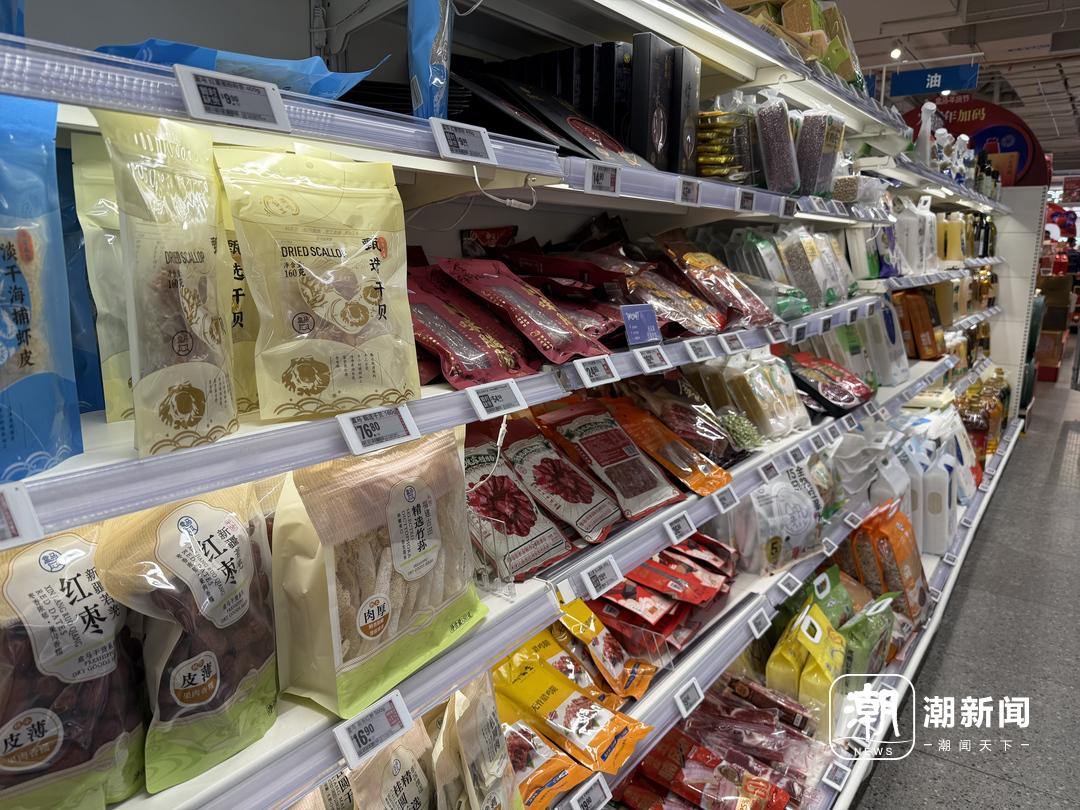
新国标要求 预包装食品需强制标示饱和脂肪和糖 有哪些重要意义
Xin Lang Cai Jing· 2026-01-05 00:10
Core Viewpoint - The new national standard for nutrition labeling on prepackaged foods will implement a mandatory "1+6" labeling system, adding saturated fat and sugar to the existing components, effective from March 16, 2027, to better guide public awareness of hidden health risks, particularly in chronic disease prevention [1][5]. Group 1: New Labeling Standards - The new standard expands the previous "1+4" system (energy + protein, fat, carbohydrates, sodium) to include saturated fat and sugar, forming a "1+6" mandatory labeling system [1]. - Companies are encouraged to adopt the new labeling system before the official implementation date [1]. - The change aims to enhance public understanding of health risks associated with food consumption, particularly for chronic disease management [1][5]. Group 2: Importance of Saturated Fat and Sugar - Saturated fat and sugar are now mandatory labeling items, which is a significant upgrade for chronic disease management [5]. - High intake of saturated fat is linked to increased cholesterol levels and cardiovascular disease risks, making it crucial for patients with heart conditions and obesity to monitor their intake [5][7]. - Sugar labeling is essential as it helps consumers understand the hidden sugar content in foods, which can lead to various health issues if consumed excessively [7][9]. Group 3: Consumer Awareness and Education - Consumers have expressed positive feedback regarding the new sugar labeling, indicating a desire for clearer information on sugar content in beverages [8]. - Many consumers are still unfamiliar with the Nutrient Reference Value (NRV) percentages, which indicate the proportion of daily recommended intake for each nutrient [8]. - The inclusion of saturated fat and sugar in core labeling will facilitate better food choices for consumers, promoting a balanced diet [9]. Group 4: Future Directions and Technology - The National Health Commission is advocating for the use of digital labels that allow consumers to access more detailed safety and nutritional information through QR codes [10]. - Digital labels can enhance readability and usability, particularly for older adults with visual impairments, by offering features like font scaling and voice recognition [10].
破解乱收费、算法困局、大数据杀熟——外卖平台责任走向“清单化”
Zhong Guo Qing Nian Bao· 2025-12-30 00:35
Core Viewpoint - The newly implemented national standard "Basic Requirements for Delivery Platform Service Management" aims to enhance operational management and service processes across major platforms like Meituan, Taobao Shanguo, and JD, while addressing key issues in the delivery industry [1][2]. Group 1: Platform Fee Structure - The new standard mandates that fees charged to merchants must be categorized into three basic items: technology service fees, delivery service fees, and promotional service fees, prohibiting any arbitrary charges [1]. - It specifies that costs associated with promotional activities initiated by the platform must be borne by the platform itself and cannot be passed on to merchants [1]. Group 2: Delivery Personnel Rights Protection - The standard requires platforms to reasonably limit the order acceptance duration for delivery personnel and establish mechanisms for fatigue alerts and mandatory rest periods [2]. - It emphasizes that platforms cannot force or indirectly compel delivery personnel to work overtime through algorithms or incentives [2]. - Responsibilities of labor cooperation enterprises must align with those of the platform, ensuring compliance with labor laws, social security, and fair compensation [2]. Group 3: Consumer Rights Protection - The standard calls for the establishment of a consumer rights protection system throughout the service process, ensuring timely responses and safeguarding consumer rights such as the right to know and choose [2]. - It prohibits unreasonable differential treatment of consumers and mandates clear notifications for automatic renewals or extensions [2]. Group 4: Implementation and Accountability - The platform is urged to fully implement its responsibilities, transforming the rights protection framework from mere guidelines into tangible safeguards [3]. - The industry is encouraged to transition from "wild growth" to high-quality development through stronger judicial rulings and regulatory constraints [3].
男子确诊肺炎呼吸衰竭,竟和每天穿的羽绒服有关
Xin Lang Cai Jing· 2025-12-27 04:16
Group 1 - A man in Fujian was diagnosed with allergic pneumonia after wearing a low-cost down jacket for over 12 hours daily for four weeks, leading to a blood oxygen saturation level of 85% and respiratory failure [1] - Experts warn that inhaling micro-protein particles from down can trigger immune responses even in non-allergic individuals, a condition referred to as "down lung" [1] - Recommendations for purchasing down jackets include checking for anti-leak technology in the fabric, airing out the jacket regularly, and ensuring good air circulation while wearing [1] Group 2 - When selecting down jackets, consumers should pay attention to labels, particularly those adhering to the new national standard GB/T 14272-2021, which indicates improved quality in down quality, anti-leak properties, and environmental performance compared to the 2011 standard [3] - The down content is crucial, with higher down content (95%, 90%, 80%) generally providing better warmth and softness, although the difference in warmth may diminish at higher fill weights [4] - Fill weight, measured in grams, significantly impacts the warmth of a down jacket, but more fill does not always equate to better insulation due to increased heat loss with higher density [4] Group 3 - Loftiness, which measures the ability of down to trap air, is essential for insulation; higher loftiness means better warmth retention [6] - Recommendations for fill weights vary by jacket type, with lightweight jackets suggested to have 40-90 grams, standard jackets around 130 grams, and those suitable for northern outdoor wear at least 180 grams [5] - The type of down, whether from geese or ducks, affects insulation quality, with high-quality duck down sometimes outperforming low-quality goose down [7] Group 4 - The outer fabric of down jackets should be dense and durable to prevent down leakage, and water-resistant treatments enhance performance by keeping the down dry [8]
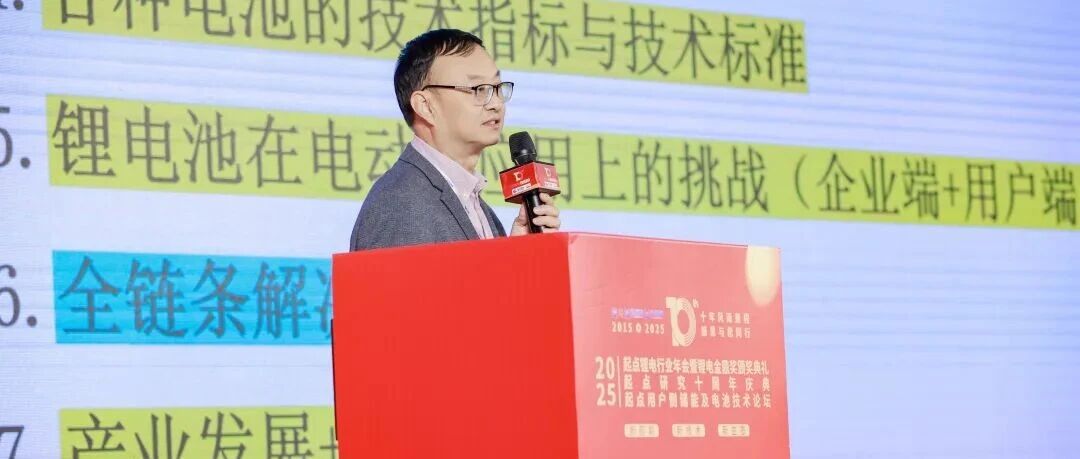
新日股份 副总经理/总工程师 雷宝荣:新国标执行后不同场景两轮车锂电池的应用与技术要求
起点锂电· 2025-12-18 07:31
Core Viewpoint - The article discusses the impact of the new national standards on the electric vehicle (EV) industry, particularly focusing on two-wheeled electric vehicles and the implications for battery technology and safety requirements [2][4][5]. Group 1: Industry Overview - The new national standards for electric vehicles were implemented on December 1, 2023, leading to significant changes in the industry [4]. - The electric vehicle market in China has grown to over 420 million units, with two-wheeled electric motorcycles alone exceeding 380 million [4][5]. - The standards aim to enhance safety and performance in the electric vehicle sector, addressing issues that have arisen from the rapid growth of the industry [6][10]. Group 2: Safety and Technical Requirements - Safety is the primary concern under the new standards, which include requirements for electrical and mechanical safety [10]. - The standards necessitate the use of lithium batteries, with a focus on safety features such as Battery Management Systems (BMS) and temperature performance [7][10]. - Key battery types include lithium iron phosphate batteries as the preferred choice, while ternary lithium batteries are gradually being phased out [7][10]. Group 3: Application Scenarios - The article outlines various application scenarios for electric vehicles, including commuting, logistics, and shared mobility, each with specific requirements for battery performance and safety [7][8]. - In logistics, the demands on battery performance are higher due to more rigorous usage conditions compared to personal use [8]. - The standards also emphasize the need for intelligent systems in electric vehicles, such as remote monitoring and safety alarms [10]. Group 4: Industry Challenges and Future Directions - The industry faces challenges such as cost pressures, temperature performance issues, and the need for integration and innovation in battery technology [12][13]. - Collaboration between battery manufacturers and vehicle producers is essential for addressing safety, reliability, and durability in various application scenarios [12][13]. - The future direction of the industry will focus on policy guidance, integration of supply chains, and the development of sustainable business models [13].

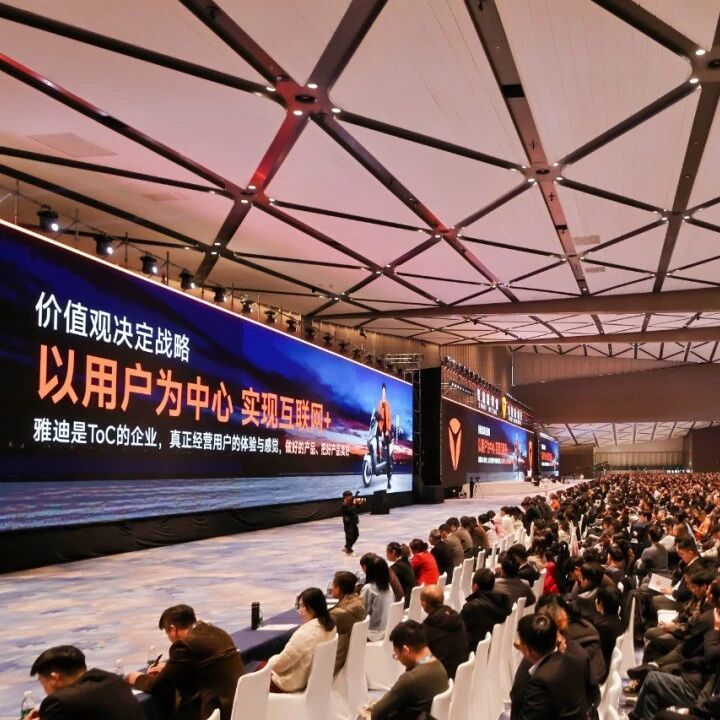
新国标+「新」新零售双轮驱动,雅迪的“后1亿台”增长密码与估值想象
财联社· 2025-12-16 12:07
Core Viewpoint - The implementation of the new national standard is driving a deep transformation in China's two-wheeled electric vehicle industry, reshaping the industry landscape and pushing for technological innovation and compliance replacement of outdated products [1][3]. Group 1: Industry Transformation - The new national standard is not just a regulatory requirement but a rigid constraint that sets safety baselines and accelerates industry reshuffling, with a significant number of vehicles needing compliant replacements as the market reaches a total of 400 million units [1]. - Yadea's recent global summit highlighted the transition to a new phase of competition characterized by "system capability confrontation," encompassing strategy, ecosystem, product, technology, and experience [1][3]. Group 2: Company Performance - Yadea has over 100 million cumulative users and more than 40,000 retail stores, leading the global two-wheeled electric vehicle market. In the first half of this year, Yadea's revenue reached 19.186 billion yuan, a year-on-year increase of 33.1%, with a significant profit increase of 59.5% [3]. - The gross margin improved from 18.0% to 19.6% year-on-year, indicating enhanced product structure and operational efficiency [3]. Group 3: Product Innovation - Yadea has launched several new models compliant with the new national standard, enhancing safety features and introducing a "three-in-one anti-tampering" system to ensure vehicle identity and electrical safety [4][6]. - The company’s successful product strategies, such as the "Cannon" and "Modern" series, have led to significant sales, with the Cannon series surpassing 20 million units sold [6][8]. Group 4: Retail and Consumer Experience - Yadea's "new" new retail system aims to transform retail spaces from mere vehicle sales points to experiential centers, enhancing consumer engagement and purchase conversion rates [10][11]. - The company is leveraging digital tools to create user communities and provide tailored services, moving beyond traditional advertising to become a content-driven hub [15]. Group 5: Market Position and Valuation - The new national standard is reshaping the valuation logic of the two-wheeled electric vehicle industry, accelerating market consolidation and increasing barriers to entry for smaller brands [16]. - Yadea's comprehensive product matrix and strong channel network position it to capture market share released by the exit of non-compliant products, enhancing its growth visibility and valuation potential [16][20].
两轮车系列专题:政策发力叠加格局优化,行业高景气拐点渐近
2025-12-16 03:26
Summary of Conference Call Notes Industry Overview - The motorcycle industry is experiencing a shift with policy support and market optimization, indicating a potential turning point in high prosperity for the sector in 2025 [1][2][5] - The electric two-wheeler market is driven by trade-in policies, but the effectiveness of these policies is diminishing, leading to a subdued sales performance post-implementation of new national standards [1][12] Key Insights on Motorcycle Market - In 2025, the domestic sales growth of large-displacement motorcycles is expected to stabilize, with a projected year-on-year growth of single digits from January to October, maintaining levels similar to the previous year [2][5] - The top companies in the large-displacement motorcycle segment, such as Chuanfeng Power, Longxin General, and Qianjiang Motorcycle, hold a market share of approximately 20%-30% and are likely to benefit from the expansion of the leisure consumer base [3][5] Export Performance - China’s motorcycle exports are robust, with 110cc and above motorcycle exports increasing by 24% year-on-year, and 250cc and above models seeing a 60% increase [6][9] - The overseas market, particularly in North America, South America, and Europe, presents significant growth potential, with the total global motorcycle sales exceeding 50 million units annually [6][9] Competitive Landscape - Chinese brands are narrowing the performance gap with Japanese brands through improved product features and supply chain advantages, achieving a market share of over 5% in Europe [7][8] - The Turkish market is experiencing short-term challenges due to currency fluctuations, impacting sales for companies heavily reliant on exports, but long-term growth prospects remain positive [9][10] Electric Two-Wheeler Market Insights - The electric two-wheeler market is expected to grow by approximately 10% in 2025, driven by trade-in policies, although the impact of these policies is expected to wane in 2026 [12][14] - Major players like Yadi and Aima are positioned to capture market share due to the challenges faced by smaller companies, especially in light of new national standards [12][13] Recommendations - The motorcycle sector is recommended for investment, particularly in companies like Chuanfeng Power and Longxin General, which are expected to outperform the industry average growth in 2026 [4][11][18] - For the electric two-wheeler segment, companies such as Yadi, Aima, and 9号 are highlighted as potential beneficiaries of market share opportunities in 2026, provided they can adapt to new market conditions [18] Additional Considerations - The electric golf cart market is primarily concentrated in North America, with significant growth expected, particularly in the outdoor segment where Chinese brands hold a substantial market share [15][16] - Chinese electric golf cart manufacturers are responding to anti-dumping measures by relocating production to Southeast Asia, which is expected to enhance their competitive position in the North American market [17]

