普惠包容的经济全球化

Search documents
学者:全球南方需塑造市场金融韧性
Sou Hu Cai Jing· 2025-12-10 14:15
Core Insights - The UN Conference on Trade and Development and China's Ministry of Commerce released the 2025 Trade and Development Report, highlighting a shift towards resilience building in the Global South and a restructuring of globalization [1] - The report indicates that the financial-dominated trade system exacerbates the "North-South divide," impacting developing economies, with a significant concentration of the financial system in developed countries [1] - The need for market financial resilience is emphasized, as developing countries are more susceptible to financial volatility and crises compared to developed economies [1] Group 1 - Resilience stems from collaborative efforts and a more balanced global framework, addressing the disparity between strong trade entities and weak financial positions in Southern countries [2] - China is focusing on enhancing economic and trade relations with developing countries, promoting financial openness, and exploring diversified cross-border payment systems to address development financing gaps [2] - The past globalization model centered on capital and efficiency is unsustainable; future efforts should prioritize equitable development, financing accessibility, and risk-sharing mechanisms [2] Group 2 - China, as a major trading nation, advocates for inclusive growth and offers development opportunities, aligning with the UNCTAD's perspective on globalization [2] - China aims to build a diverse and resilient global trade network through initiatives like the Belt and Road Initiative, high-level free trade agreements, and RCEP [2]
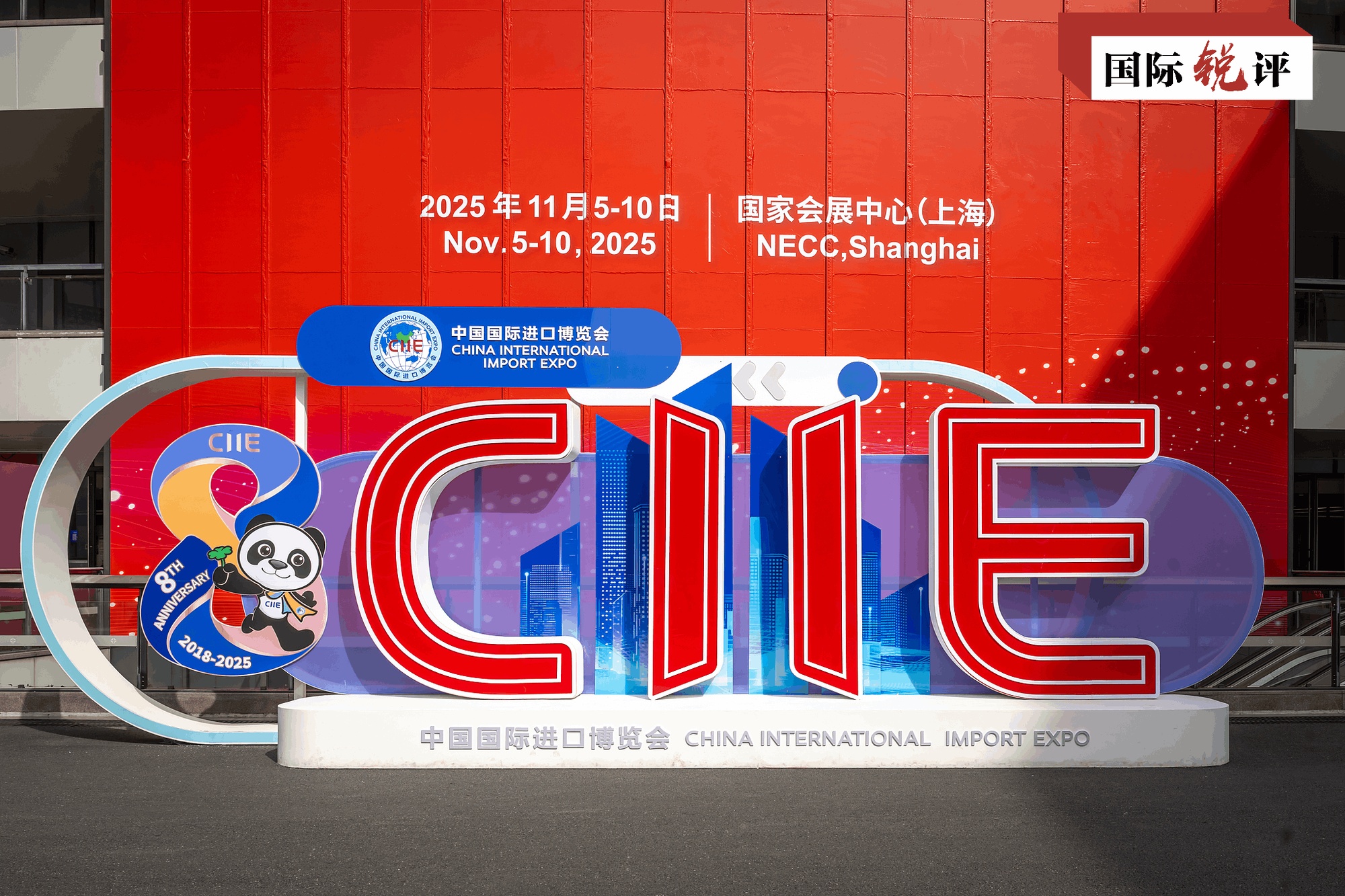
国际锐评丨“进博之约”第八年,世界感受中国如此“确定”
Yang Shi Xin Wen Ke Hu Duan· 2025-11-05 23:30
Core Viewpoint - The China International Import Expo (CIIE) serves as a significant platform for promoting global trade and cooperation, showcasing China's commitment to expanding its openness despite global economic challenges [1][3]. Group 1: Event Overview - The 8th CIIE is held in Shanghai from November 5 to 10, with participation from 155 countries and regions, and 290 Fortune 500 and industry-leading companies, marking record exhibition area and total number of enterprises [1]. - The event has become increasingly anticipated by foreign enterprises amidst rising unilateralism and protectionism in the global landscape [3]. Group 2: China's Openness - The CIIE is a key economic diplomatic event following the 20th National Congress of the Communist Party of China, emphasizing China's commitment to openness [4]. - According to the "World Openness Report 2025," China's openness index is projected to grow by 0.5% in 2024, contrasting with a global decline of 0.05% [4]. Group 3: Foreign Investment Insights - Foreign companies have experienced significant benefits from China's openness, with Medtronic's strategic upgrade from exhibitor to investor over the past seven years [5]. - Nestlé's engagement in the CIIE highlights the growth opportunities arising from trends such as the pet economy and health demand upgrades in China [5]. Group 4: Innovation and New Products - The current CIIE will showcase 461 new products, technologies, and services, establishing itself as a platform for global product launches and technological showcases [6]. - Companies like Zeiss and Boston Scientific view China's focus on modern industrial systems and technological self-reliance as providing broader opportunities for innovation [6]. Group 5: Inclusivity and Global Cooperation - The CIIE promotes inclusive economic globalization, with a new section for least developed countries and significant participation from African enterprises [8]. - The event's focus on enhancing the resilience of the Global South and sustainable agricultural development reflects China's commitment to supporting equitable global growth [8][9].

中国积极扩大进口务实行动 获国际人士点赞
Zheng Quan Shi Bao· 2025-11-05 18:31
Core Insights - The "Shared Big Market. Export to China" initiative has been officially launched, reflecting China's commitment to expanding its openness and has received widespread acclaim from international organizations and trade representatives [1][2] - China's role as a stabilizing anchor in global trade is increasingly recognized, showcasing its commitment to actionable openness rather than mere rhetoric [1][2] - The initiative aims to promote inclusive global economic development and maintain free trade and multilateral trade systems [2] Group 1 - The initiative is seen as a strong measure to advance high-level openness, signaling to the global business community that China is not only a large consumer market but also a platform for win-win cooperation through institutional innovation [1] - The initiative is expected to create opportunities for small and medium-sized enterprises (SMEs) from developing countries, allowing them to participate actively in global trade [2] - The ongoing process of China's openness is viewed as a significant driver for sustainable development in cooperating countries [1][2] Group 2 - China's rapid deployment of renewable energy infrastructure serves as a reference model for international markets, aiding other countries in achieving net-zero goals [3] - There are abundant mutually beneficial cooperation opportunities from both import and export perspectives, facilitating experience sharing and learning between China and other nations [3]
新华网国际看点|今年APEC会议有哪些成果?专家梳理出三大亮点
Xin Hua She· 2025-11-04 08:32
Core Viewpoint - The APEC meeting in South Korea emphasized the need for enhanced cooperation amid global economic challenges and protectionism, signaling a positive outlook for both APEC and the world economy [1] Group 1: APEC Meeting Outcomes - The meeting resulted in the adoption of the "Gyeongju Declaration," which sends a strong message for increased collaboration [1] - Chinese representatives highlighted the importance of inclusive economic globalization and proposed a clear path for the Asia-Pacific community through the "Five Common" initiatives [1] Group 2: China's Role and Future Outlook - China is set to take on the role of APEC host, coinciding with the start of its "14th Five-Year Plan," which is expected to inject greater vitality into the development of the Asia-Pacific region through high-quality growth and openness [1]

共建开放型亚太经济 推动中韩关系行稳致远
Ren Min Ri Bao· 2025-11-02 22:21
Group 1 - Xi Jinping's visit to South Korea and participation in the APEC meeting is seen as a significant step towards enhancing cooperation and mutual understanding between China and South Korea, promoting a stable strategic partnership [1][4] - The APEC meeting resulted in the adoption of the "Gyeongju Declaration," which emphasizes cooperation in artificial intelligence and addressing demographic changes, reflecting the collective aspirations of member economies [2][3] - Xi Jinping's advocacy for an inclusive and open Asia-Pacific economy is expected to drive economic growth and stability in the region, aligning with the expectations of various stakeholders [2][3] Group 2 - The upcoming APEC meeting in Shenzhen, China, in November 2026, aims to foster a community in the Asia-Pacific region, focusing on free trade, connectivity, and cooperation in digital economy and artificial intelligence [3] - The bilateral agreements signed during Xi Jinping's visit cover various sectors, including trade, finance, law enforcement, agriculture, technology, and media, indicating a rich and vibrant cooperation landscape between China and South Korea [4][5] - The emphasis on youth engagement and cultural exchanges is seen as a way to strengthen public sentiment and mutual understanding between the two nations, enhancing the foundation for future cooperation [5]
第1视点|推进普惠包容的经济全球化 构建亚太共同体
Xin Hua She· 2025-10-31 14:59
Core Points - The APEC (Asia-Pacific Economic Cooperation) informal leaders' meeting took place in Gyeongju, South Korea, on October 31, where President Xi Jinping delivered a significant speech emphasizing the importance of building an inclusive and open Asia-Pacific economy [2] - In the afternoon, President Xi also addressed the APEC Business Leaders' Summit with a written speech focusing on the role of the Asia-Pacific region in promoting global development and prosperity [2] Group 1 - The APEC leaders' meeting is the 32nd informal gathering, highlighting the ongoing commitment to regional cooperation [2] - President Xi's speech at the leaders' meeting stressed the need for a shared and inclusive economic framework in the Asia-Pacific region [2] - The written address at the Business Leaders' Summit aimed to reinforce the Asia-Pacific's leadership role in global economic growth [2]
风劲帆满启新程——国际社会瞩目中国绘制发展奋进新蓝图
Xin Hua Wang· 2025-10-20 06:33
Group 1: Economic Development and Achievements - The Fourth Plenary Session of the 20th Central Committee of the Communist Party of China is expected to outline a new blueprint for China's development over the next five years, following significant achievements in the past five years under strong leadership [1] - China has become a major contributor to global growth, with international observers noting the positive impact of China's development on the world [2][3] - During the 14th Five-Year Plan period, China maintained a steady development momentum despite various challenges, laying a foundation for its 2035 vision [2][3] Group 2: Innovation and Green Development - Innovation is highlighted as the primary driver of China's sustainable development, with China's global innovation index ranking rising from 34th in 2012 to 10th by 2025 [3] - China's energy transition index ranking improved by 66 places to 12th compared to 2020, indicating a commitment to green development [3] - The development of new infrastructure driven by high-tech innovations is seen as a preparation for long-term stability [2][3] Group 3: International Trade and Cooperation - China has expanded its high-level openness, exemplified by zero-tariff policies for least developed countries, which have created new development opportunities for African nations [5] - China's goods trade volume surpassed $6 trillion, maintaining its position as the world's largest trader, while service trade exceeded $1 trillion, ranking second globally [5] - The Belt and Road Initiative is viewed as a significant platform for international cooperation, with China continuing to promote high-quality development in this area [5][6] Group 4: Infrastructure and Connectivity - The China-Laos Railway has facilitated significant trade, with over 15 million tons of goods transported since its opening, showcasing the economic benefits of infrastructure projects [6] - The China-Europe Railway Express has contributed to industrial development and logistics upgrades in European cities, reflecting China's commitment to international cooperation [6] Group 5: Governance and Development Model - China's governance model, characterized by long-term planning through Five-Year Plans, is seen as a stable and predictable approach to national development [7][8] - International experts recognize the importance of China's people-centered governance philosophy, which aims to enhance the well-being of its citizens [7][8] - China's development experience is viewed as a valuable reference for other developing countries seeking their own modernization paths [8]
《求是》杂志发表习近平总书记重要文章 《推动落实全球发展倡议、全球安全倡议、全球文明倡议、全球治理倡议》
Shang Hai Zheng Quan Bao· 2025-10-15 18:35
Core Viewpoint - The article emphasizes the need to address the increasing deficits in peace, development, security, and governance in the world, advocating for initiatives that promote a shared future for humanity and enhance global cooperation [1][2][3] Group 1: Global Development Initiative - Development is highlighted as the key to achieving people's happiness, advocating for inclusive economic globalization and high-quality cooperation in the Belt and Road Initiative [1] - The goal is to ensure equitable growth opportunities and shared development outcomes for all nations, fostering a sense of community among countries [1] Group 2: Global Security Initiative - Security is presented as a prerequisite for development, with the notion that nations cannot pursue absolute security independently [2] - The global security initiative promotes cooperation to enhance both development and security, aiming for a balanced and sustainable security framework [2] Group 3: Global Civilization Initiative - The article underscores the importance of diverse civilizations coexisting and learning from each other, which is essential for modernizing human society and enriching global culture [2] - The global civilization initiative seeks to foster mutual understanding and respect among different cultures, promoting international cultural exchanges [2] Group 4: Global Governance Initiative - The article reflects on the 80th anniversary of the UN and the lessons learned from historical conflicts, emphasizing the need for a fair and just global governance system [3] - Key principles include respecting sovereignty, adhering to international law, practicing multilateralism, and focusing on human-centered approaches [3]
《求是》发表习近平总书记重要文章《推动落实全球发展倡议、全球安全倡议、全球文明倡议、全球治理倡议》
Xin Hua She· 2025-10-15 07:51
Core Points - The article emphasizes the increasing deficits in peace, development, security, and governance in today's world, advocating for initiatives to address these issues and promote a better world for all nations [1][2] - Development is highlighted as the key to achieving people's happiness, with a focus on inclusive economic globalization and shared growth opportunities [1] - The article stresses that security is a prerequisite for development, promoting a cooperative approach to global security [2] - The importance of cultural diversity and mutual respect among civilizations is underscored, aiming to foster understanding and cooperation among nations [2] - The article reflects on the 80th anniversary of the UN and the need for a fair global governance system, emphasizing principles such as sovereignty equality and multilateralism [3] Group 1 - The article discusses the need to construct a community with a shared future for humanity to address the deficits in peace, development, security, and governance [1] - It advocates for a people-centered approach to development, promoting inclusive growth and shared benefits among nations [1] - The article calls for a balanced and sustainable security framework, emphasizing cooperation over unilateral security measures [2] Group 2 - The article highlights the role of diverse civilizations in modernizing human society and promoting cultural exchange [2] - It reflects on historical lessons from the establishment of the UN, advocating for a renewed commitment to peace and cooperation in the face of contemporary challenges [3] - The article outlines key principles for global governance, including respect for sovereignty, adherence to international law, and a focus on human-centered policies [3]
申万宏观·周度研究成果(9.13-9.19)
赵伟宏观探索· 2025-09-21 03:14
Group 1: New Economic Dynamics - The high-tech manufacturing sector continues to show strong growth, indicating a new acceleration in economic dynamics [9][10] - Recent financial data shows a decline in credit balance and social financing, with M1 increasing slightly [17] - The impact of "anti-involution" is beginning to manifest in mid-to-lower production and investment sectors [21] Group 2: Gold Price Concerns - Recent trends indicate that gold price increases are primarily concentrated during U.S. trading hours, raising concerns about future price stability [12][11] - The differentiation in investment allocation among different regions may influence future gold price movements [12] Group 3: Fiscal Policy Insights - Broad fiscal spending is slowing down, prompting the need for potential countermeasures to address downward pressure on the economy [21][23] - The upcoming fiscal "second half" may focus on risk prevention, transformation promotion, and consumer protection [16] Group 4: Real Estate Market Trends - There is an improvement in new home transactions in first-tier cities, supported by industrial production recovery and high infrastructure investment [24] Group 5: International Cooperation - The BRICS summit emphasized the importance of multilateralism and international cooperation to address global challenges and promote economic development [29] Group 6: Monetary Policy Outlook - The recent FOMC meeting resulted in a 25 basis point rate cut, with increased expectations for further rate cuts in 2025 [30]