
智能网联

Search documents
一汽解放:公司尊重友商的优秀发展成果,也始终积极对标学习
Zheng Quan Ri Bao Wang· 2026-02-12 05:48
Core Viewpoint - The company emphasizes its commitment to continuous improvement and innovation in response to competitive pressures while focusing on key areas such as new energy, intelligent networking, and overseas markets [1] Group 1 - The company respects the achievements of its competitors and actively learns from their successful development [1] - The company aims to deepen its core business and accelerate transformation through management upgrades and product innovation [1] - The company is dedicated to enhancing its competitiveness to provide maximum returns to its investors [1]

智能网联行业再迎利好 助力上海打造世界级汽车产业中心
Zheng Quan Ri Bao Wang· 2026-02-12 04:28
Core Insights - Shanghai's intelligent connected vehicle industry is set to benefit from significant policy support as outlined in the "14th Five-Year Plan" [1][2] - The plan emphasizes the development of six emerging pillar industry clusters, focusing on the integration of software and hardware to accelerate the growth of intelligent connected new energy vehicles [1] Group 1: Policy and Development Plans - The "14th Five-Year Plan" aims to establish Shanghai as a world-class automotive industry center, with key areas including Jiading, Pudong, Lingang, and Jinshan [1] - The plan highlights the importance of core technologies such as intelligent driving, intelligent cockpits, intelligent chassis, and solid-state batteries to support the development of intelligent connected new energy vehicles [1][2] Group 2: Industry Growth and Infrastructure - By the end of 2025, Shanghai plans to open 3,173 roads totaling 5,238.82 kilometers for autonomous driving testing, covering about one-third of the city's area [1] - The city has issued 932 various testing and demonstration licenses to 41 companies, with total testing mileage exceeding 34.55 million kilometers [1] Group 3: Future Projections - The intelligent connected vehicle industry in Shanghai is expected to enter a new phase of "city-wide integration" during the "14th Five-Year" period, promoting cross-regional collaboration and a multi-level scenario layout [2] - From 2025 to 2027, the integration of vehicle-road-cloud infrastructure is anticipated to accelerate, potentially leading to an explosion in the smart transportation industry [2] - By 2030, Shanghai is projected to become a global innovation hub for intelligent connected vehicles, forming a trillion-yuan industry cluster and solidifying its position as a domestic leader and international player in the sector [2][3]
从“政策驱动”转向“产品驱动”地方两会擘画汽车产业新赛道
Xin Lang Cai Jing· 2026-02-11 20:52
Core Viewpoint - The year 2026 marks the beginning of the "14th Five-Year Plan" and presents significant opportunities for the development of the intelligent connected new energy vehicle industry, with a shift from policy-driven to product-driven growth in the automotive market [1] Policy Support - Consumption is a strong driver of economic growth, with the automotive industry being a strategic pillar for the national economy, crucial for stabilizing growth and expanding domestic demand [1] - The "trade-in" policy effectively supported the automotive market in 2025, with over 11.5 million vehicles traded in, of which nearly 60% were new energy vehicles, leading to a retail market share exceeding 50% for nine consecutive months [1] - Government reports from various regions frequently mention support for large consumer goods like automobiles and home appliances [2] Consumption Promotion Measures - Multiple provinces, including Hebei and Jilin, have proposed actions to stabilize and promote large consumer goods, particularly automobiles and home appliances [2] - The Ministry of Commerce plans to optimize the implementation of trade-in policies and conduct pilot reforms in automotive circulation to further unleash consumption potential [3] - Various local governments have introduced specific policies for trade-in subsidies, with Shanghai offering up to 20,000 yuan in subsidies for personal consumers [3] Technological Innovation - Continuous policy support for consumption provides stability for the automotive market, while technological innovation and systematic industrial layout are key to enhancing quality in the automotive industry [5] - The automotive market is shifting towards competition based on comprehensive capabilities, including scale, cost, technology, and business models [6] Industry Development Trends - The focus on intelligent, green, and integrated development is seen as a way to enhance the resilience and competitiveness of the automotive industry [7] - Various regions are accelerating the transition to new energy and intelligent connected vehicles, with expected production growth of around 15% for new energy vehicles in Jilin Province [7] Collaborative Development - The establishment of industrial clusters can drive synergy among upstream and downstream enterprises, enhancing the overall ecological advantages of the industry [8] - Regions like Guangdong and Anhui are emphasizing the development of new energy and intelligent connected vehicle industries, aiming to create significant industrial clusters [9] Urban Synergy - Internal collaboration within urban agglomerations contributes to the overall transformation and upgrading of the industry, with plans to strengthen the intelligent connected new energy vehicle sector in the Beijing-Tianjin-Hebei region [10] - The automotive industry is identified as a key area for developing new quality productivity, with expectations for accelerated progress in intelligentization and the rollout of L3-level autonomous driving policies [10]
合肥经开综保区仓储物流 全无人场景首发
Xin Lang Cai Jing· 2026-02-11 17:44
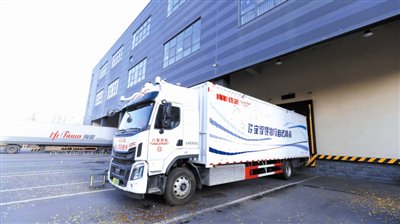
Group 1 - Hefei Economic and Technological Development Zone has launched a fully unmanned warehousing and logistics scenario in collaboration with partners, marking a significant shift from traditional logistics to an intelligent ecosystem [2] - The implementation features L4 level unmanned heavy trucks and automated forklifts working in perfect coordination, showcasing advanced capabilities such as green wave traffic, automatic lane changing, and blind spot detection [2] - The new logistics model transforms the traditional "people find goods, people wait for vehicles" approach into an intelligent system where "goods find people, data directs vehicles," leading to a new logistics transport system characterized by zero inventory and automated scheduling [2] Group 2 - Hefei Economic and Technological Development Zone focuses on high-end manufacturing and intelligent connected industries, aiming for deep integration of industrial and innovation chains [3] - The region's GDP is projected to grow by 14% by 2025, with imports and exports expected to exceed 200 billion yuan and industrial output nearing 500 billion yuan [3] - The integrated circuit and intelligent connected vehicle industries are both expected to surpass 100 billion yuan in output value, with five "lighthouse factories" established in the area [3]

市场监管总局批准发布智能网联汽车等重要国家标准
Cai Jing Wang· 2026-02-11 02:04
Group 1 - The National Standardization Administration has approved the release of several important national standards, particularly in the field of transportation logistics [1] - Two national standards related to intelligent connected vehicles have been introduced, focusing on performance testing for autonomous driving and automatic parking systems, which will enhance the performance and safety quality of intelligent connected vehicles [1] - Six national standards have been published concerning automotive door handles and adaptive cruise control systems, aimed at improving road traffic safety and promoting greener transportation [1] Group 2 - Four national standards related to green logistics indicators, accounting, and sustainable procurement have been released, supporting the green transformation of supply chains [1]
涉脑机接口、数字孪生等领域,一批重要国家标准发布
第一财经· 2026-02-10 01:28
Group 1: Emerging Technologies and Standards - The approval of national standards for emerging fields includes brain-computer interfaces and digital twins, which clarify reference frameworks and data formats to support high-quality development in cutting-edge technology [1] - A total of 47 national standards were released for new materials, including aluminum nitride single crystal polishing wafers and carbon fiber reinforced composites, aimed at fostering innovation in the new materials industry [1] Group 2: Transportation and Logistics - Two national standards for intelligent connected vehicles were published, focusing on performance testing for autonomous driving and parking systems, enhancing the performance and safety of intelligent connected vehicles [1] - Six national standards related to automotive components, such as door handles and adaptive cruise control systems, were introduced to improve road traffic safety and environmental sustainability [1] - Two mandatory national standards for the postal industry were released, addressing safety production operations and equipment configuration for postal and express delivery services, thereby enhancing safety governance in the postal sector [1] Group 3: Environmental Protection - Six national standards were established for ecological protection, including general requirements for natural protected area signage and drone inspection technology for forest and grassland fire prevention, providing standard support for national ecological security [2] - Two national standards for environmental due diligence assessments and environmental report verification were published, which are significant for promoting green development and improving environmental governance efficiency [2] - Two national standards related to greenhouse gas emission accounting and reporting requirements were released, aiding companies in accurately calculating and reporting their greenhouse gas emissions [2] Group 4: Safety Production - Sixteen mandatory national standards in the fire safety sector were updated, including outdoor fire hydrants and combustible gas detectors, providing technical guidelines to mitigate major fire safety risks [2] - Fourteen national standards for special equipment, such as gantry cranes and pressure vessels, were published to ensure the safe and stable operation of these devices [2] Group 5: Public Welfare and Healthcare - Four national standards for services for people with disabilities were released, including standards for single-arm walking aids and autism rehabilitation institutions, aimed at improving the quality of rehabilitation aids and services for vulnerable groups [2] - Eight national standards were established for medical laboratories and medical device sterilization processes, regulating practices in medical experiments and manufacturing [2] Group 6: Additional Standards - The market regulatory authority also published national standards related to transportation terminology, earth-moving machinery, and reciprocating internal combustion engines [3]

新能源后市场:以融合创新和生态重构驱动价值跃升
Zhong Guo Qi Che Bao Wang· 2026-02-09 03:59
Core Insights - The automotive market in China is transitioning from a growth phase to a saturation phase, with a projected vehicle ownership of 366 million by 2025, including 43.97 million new energy vehicles [1] - The rise of the automotive aftermarket is supported by this transition, as evidenced by discussions at the 2026 New Energy Aftermarket New Ecology Conference in Chongqing [1] Group 1: Market Dynamics - The shift in focus from manufacturing to the aftermarket services is evident as the automotive market matures, particularly in Chongqing, which is positioning itself as a hub for smart connected new energy vehicles [3] - Chongqing's government is actively developing a modern manufacturing system and integrating the automotive supply chain, including components, vehicles, and aftermarket services [3][4] - The city is enhancing its vehicle maintenance and service capabilities, encouraging the establishment of service networks and improving digital service offerings [4] Group 2: Industry Opportunities - The expected increase in new energy vehicle ownership to over 120 million by the end of the 14th Five-Year Plan presents significant market opportunities, with the service industry projected to grow from 1.9 trillion yuan in 2024 to 5 trillion yuan by 2030 [6] - The automotive aftermarket is evolving to emphasize diverse revenue models, including maintenance and ancillary services, driven by consumer demand for cost-effective and convenient solutions [7][9] Group 3: Technological Integration - AI technology is anticipated to play a crucial role in transforming the automotive aftermarket, enabling smarter service delivery and operational efficiencies [8] - The integration of AI will facilitate the development of algorithm-driven services, enhancing user experience and operational capabilities in the aftermarket [8] Group 4: Regulatory and Policy Framework - The automotive modification industry is gaining traction, supported by evolving policies that shift from restrictive to supportive frameworks, thus fostering high-quality development [9][11] - The industry is expected to undergo significant restructuring in terms of policies, technology, and ecosystem collaboration to adapt to new market demands and technological advancements [11]
标准化助力安全绿色便捷出行
Xin Lang Cai Jing· 2026-02-07 22:52
Core Viewpoint - The development of road traffic standards is crucial for ensuring safety, efficiency, and sustainability in transportation, especially with the rapid growth of the automotive industry in China, which is projected to have 366 million vehicles by 2025 and over 34 million annual vehicle production and sales [1] Group 1: Road Traffic Standards and Infrastructure - The National Market Regulation Administration has accelerated the development of road traffic standards, with a total of 970 national standards established, covering key areas such as vehicles, infrastructure, and traffic management [1] - The Ministry of Transport emphasizes the foundational and leading role of standardization in promoting high-quality industry development and modern infrastructure systems [2] Group 2: Smart and Connected Vehicles - The development of smart and connected vehicles relies on standardized regulations, with the Ministry of Public Security establishing national standards for information exchange and digital identity for these vehicles [3] - The Ministry of Industry and Information Technology has developed 88 mandatory national standards related to safety in key areas such as smart and connected vehicles and new energy vehicles, contributing to a leading global automotive standards system [3] Group 3: New Energy Vehicles and Safety Standards - New mandatory national standards for electric vehicles and battery safety have been enhanced, improving safety requirements from "5 minutes alarm" to "no fire, no explosion" [4] - The Ministry of Industry and Information Technology is committed to strengthening the implementation of standards through management of automotive enterprises and products, focusing on safety in new energy vehicles and automated driving systems [4] Group 4: Future Directions in Standardization - The National Market Regulation Administration plans to continue developing mandatory standards for advanced driving assistance systems and other critical areas to adapt to new technologies and demands [5]
内蒙古两会观察:潮起来的内蒙古
Xin Lang Cai Jing· 2026-02-07 13:35
Group 1: Economic Development and Cultural Exchange - The Inner Mongolia Autonomous Region's government work report emphasizes emerging industries and cultural tourism, indicating a shift from traditional coal dominance to a more diversified economy [1][4] - The resumption of the Hohhot to Hong Kong flight route is expected to enhance cultural exchanges, with increased frequency of events planned for 2026 [1][3] - Concerts featuring popular artists have significantly raised Hohhot's profile, attracting more visitors and changing perceptions about the city [4] Group 2: Growth in Computing Power - The Inner Mongolia region is focusing on developing a leading green computing and data industry cluster, with Hohhot aiming to transition from "China's Cloud Valley" to "World's Computing Valley" [5] - A special fund of 128 million yuan is allocated annually to promote high-quality development in the green computing and AI sectors, with a clear roadmap for industry growth [5] - By the end of 2026, Ulanqab City plans to support the construction of a large-scale computing center, aiming for a computing capacity exceeding 200,000 P and revenue surpassing 8 billion yuan [6] Group 3: Advancements in Autonomous Vehicles - The introduction of autonomous vehicles in the Ordos City area has been successful, with no reported traffic accidents and a growing number of passengers enjoying the technology [7][9] - Since 2025, the region has deployed 80 autonomous vehicles across various applications, accumulating over 385,000 kilometers in test mileage and serving more than 520,000 passengers [9] - The development of smart logistics and autonomous heavy trucks is underway, with plans for extensive testing and operational deployment in the region [9]

低空经济+智能网联概念联动2连板!兴民智通9:49再度涨停,背后逻辑揭晓
Sou Hu Cai Jing· 2026-02-05 02:07
Group 1 - The core viewpoint of the article highlights that Xingmin Zhitong has achieved a consecutive two-day limit-up in trading, indicating strong market interest and performance [1] - The stock reached a trading limit at 9:49 AM with a transaction volume of 589 million yuan and a turnover rate of 13.12% [1] - The company has recently formed strategic partnerships in the low-altitude economy and intelligent connected vehicle sectors, focusing on the development of cutting-edge technologies such as 5G/6G communication and domain control integration [1] Group 2 - Local policies are expanding the operational areas for autonomous public transportation, which is likely to enhance the testing and demonstration applications of intelligent connected vehicles [1] - The related concept sectors are gaining market attention due to these developments and strategic collaborations [1]
