机器人量产

Search documents
刚刚!重磅利好突袭!集体涨停!
天天基金网· 2025-12-25 05:26
Core Viewpoint - The recent surge in the robotics sector is primarily driven by UBTECH's acquisition of 43% of Fenglong shares, which is seen as a significant catalyst for the market [2][3]. Group 1: Market Performance - Robotics concept stocks collectively strengthened, with notable gains including Jilun Intelligent hitting the daily limit, and other companies like Tailor Shares and Fenglong Shares also experiencing significant increases [2]. - The robotics ETF saw a rise of nearly 2%, indicating strong investor interest in the sector [3]. Group 2: Acquisition Details - UBTECH announced the acquisition of 93.96 million shares of Fenglong, representing 43% of its total shares, at a price of 17.72 yuan per share, totaling approximately 1.665 billion yuan [2][3]. - Analysts believe that the collaboration between UBTECH, focused on humanoid robots, and Fenglong, a specialized high-tech enterprise, will enhance industry synergy and drive the commercialization of humanoid robot technology [3]. Group 3: Industry Outlook - UBTECH has secured nearly 1.4 billion yuan in orders for humanoid robots this year, with expectations to increase production capacity to 10,000 units by 2026 [4]. - The focus for the industry in 2026 will be on mass production, with significant advancements anticipated in motion control technology [6][7]. Group 4: Challenges and Innovations - The three main challenges for humanoid robot production include developing dexterous hands, an AI brain capable of understanding the real world, and achieving large-scale production [6]. - Tesla is actively working on improving AI capabilities and accelerating production timelines, with expectations to prepare prototype production by early 2026 [7].



北京市机器人产业协会即将成立,站上百亿规模的机器人ETF(159770)近10日“吸金”3.64亿元,科创综指ETF天弘(589860)跟踪指数强势三连涨!
Sou Hu Cai Jing· 2025-12-25 01:29
Core Insights - The Robot ETF (159770) has seen a turnover of 2.3% with a transaction volume of 230 million yuan, while the tracked CSI Robot Index (H30590) rose by 1.12% [1] - The latest scale of the Robot ETF reached 10.034 billion yuan, with a total of 10.144 billion shares, both hitting record highs since inception [1] - The net inflow of funds into the Robot ETF was 2.9539 million yuan, accumulating a total of 364 million yuan over the last 10 trading days [1] Product Highlights - The Robot ETF (159770) closely tracks the CSI Robot Index, providing investors with an efficient tool to invest in the entire robot industry chain [2] - The Tianhong Sci-Tech Index ETF (589860) closely follows the Sci-Tech Index, featuring leading technology companies with strong brand advantages and research capabilities [2] Related Products - The Robot ETF (159770) corresponds to the off-market linked funds (A: 014880; C: 014881) [3] - The Tianhong Sci-Tech Index ETF (589860) corresponds to the off-market linked funds (A: 023721; C: 023722) [4] Hot Events - The Beijing Robot Industry Association is set to be established on December 26, aiming to create a new platform for collaborative development in the industry [5] - The association will focus on policy research, industry data analysis, and organizing industry exchange activities to promote cooperation and market expansion [5] Institutional Views - Dongfang Securities anticipates rapid advancements in humanoid robots in motion control by 2025, with a shift in market focus towards actual production capabilities [7] - Tesla's CEO Elon Musk expects prototype production readiness around February-March 2026, indicating potential investment opportunities in robot mass production around mid-2026 [7]

下线5000台机器人,智元迈过量产临界点
Di Yi Cai Jing· 2025-12-08 13:26
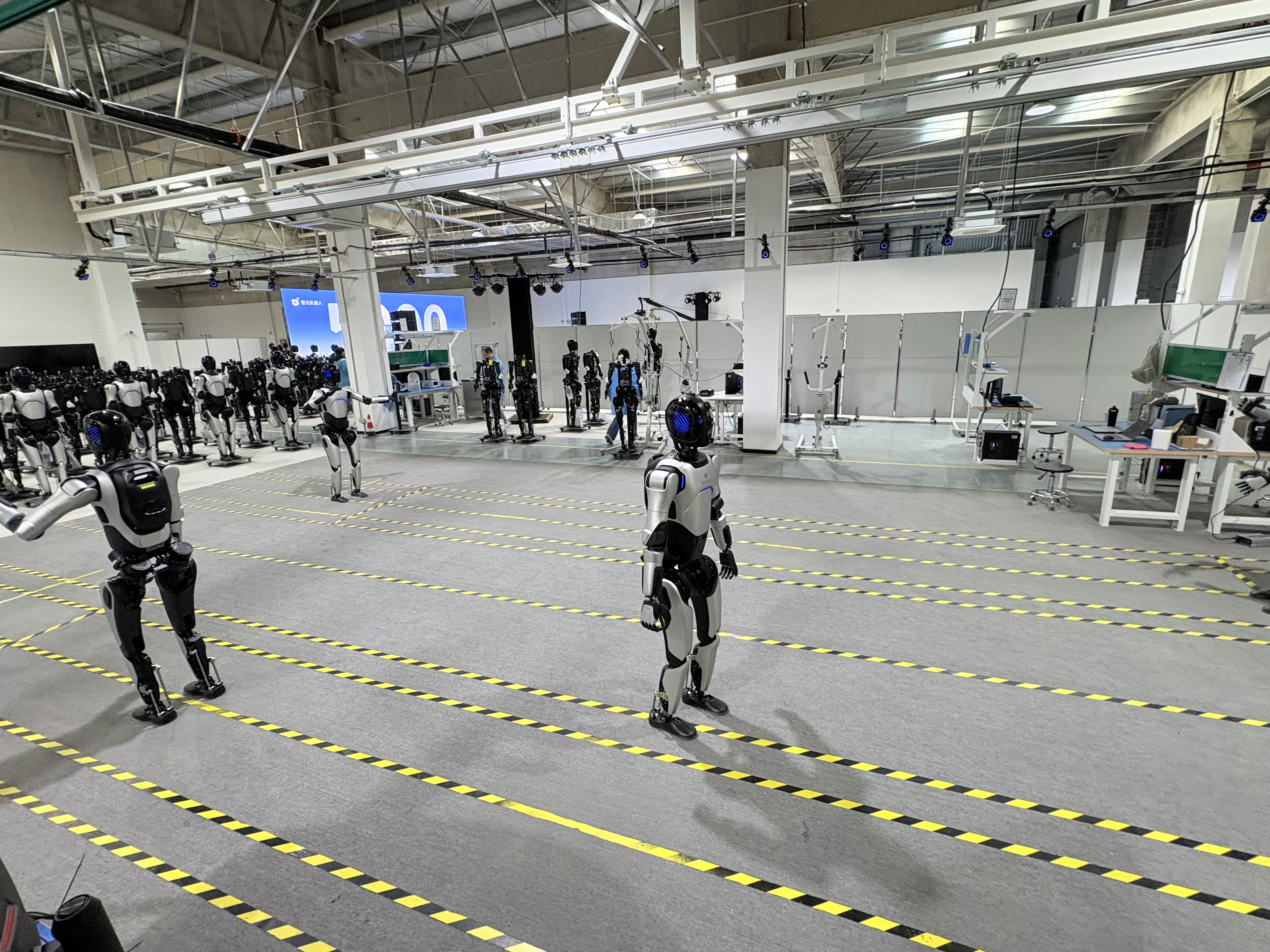
Core Insights - The core focus of the articles is on the production and application of Zhiyuan Robotics' humanoid robots, particularly the significance of reaching a production milestone of 5,000 units, which indicates a critical threshold in the industrialization process of robotics [1][3][4]. Production Milestones - The production of 5,000 units signifies a major achievement in the robotics industry, as most companies have reported shipments of only 500 to 1,000 units, with few exceeding that number [3][4]. - The transition from producing 200 units to 1,000 units is a crucial phase, marking the shift from prototype to mass production, which requires a stable supply chain and quality control [4]. - Achieving 1,000 units indicates a maturation of production processes, where the research and development team is no longer present, and production workers independently manage assembly and quality control [4][5]. Cost Reduction - The scale effect of mass production is becoming evident, with the cost of the A2 series robots reportedly decreasing by approximately 50% compared to earlier in the year [5] . Application Scenarios - Current applications of Zhiyuan Robotics' products are primarily in entertainment performances and guided tours, with significant orders from companies like China Mobile and Longqi Technology, amounting to several million to over a hundred million yuan [2][9]. - The process of refining application scenarios is critical, as the robots must be tested in real environments to determine their effectiveness in solving user problems [9][10]. Testing and Quality Assurance - The production process includes rigorous testing phases, such as walking tests and joint precision checks, to ensure the robots meet quality standards before delivery [10][14]. - A comprehensive testing protocol is necessary to validate the robots' capabilities and ensure consistency in mass production [14]. Future Challenges - The next phase of competition for Zhiyuan Robotics will focus on the ability to maintain operational scenarios and ensure that robots are integrated into real-world applications rather than just participating in one-time events [1][9].
中信证券:特斯拉机器人量产进程加速 关注产业链相关公司
Di Yi Cai Jing· 2025-12-03 00:14
Core Insights - Tesla's fourth chapter of its master plan emphasizes the humanoid robot, Optimus, which is projected to account for approximately 80% of the company's future value according to Elon Musk [1] - The production process for the robot has faced challenges since the beginning of the year, but with the largest incentive plan ever provided by the Tesla board to Musk, he is refocusing on the company's operations and increasing his efforts in the robot business [1] - The hardware design for the robot is nearing finalization, with Musk anticipating the release of Optimus V3.0 in Q1 2026 and mass production to commence by the end of 2026 [1] - The Chinese supply chain plays a crucial role in Tesla's robot production, and the acceleration of the production process is noteworthy, prompting recommendations to pay attention to companies within the Tesla robot industry chain [1]


宇树科技完成IPO辅导,机器人ETF(159770)连续22日累计“吸金”超17亿元!昨日再获净申购1500万份
2 1 Shi Ji Jing Ji Bao Dao· 2025-11-18 01:26
Group 1 - The A-share market continues to show weakness, while the CSI Robot Index has risen by 0.3% against the trend [1] - The Robot ETF (159770) has seen a net inflow of 150 million units on the previous day, with a total capital inflow exceeding 1.74 billion yuan over the past 22 trading days since October 16 [1] - The circulating share of the Robot ETF reached a new high of 9.804 billion units as of November 14 [1] Group 2 - Yushu Technology has completed its IPO counseling, with plans to apply for a domestic IPO, expected to submit listing application documents between October and December 2025 [2] - BYD has begun large-scale application of AMR intelligent logistics robots in its electronic business [2] - Industry confidence in robot mass production has slightly declined, with expectations for clearer mass production signals in the first half of 2026 [2]

人形机器人末端执行器,灵巧手产业化加速落地
2025-11-12 02:18
Summary of Key Points from the Conference Call Industry Overview - The focus is on the humanoid robot industry, specifically the development and commercialization of dexterous hands, which are crucial for performing diverse tasks in industrial, commercial, and household settings [1][2][4]. Core Insights and Arguments - **Importance of Dexterous Hands**: Dexterous hands significantly enhance the capabilities of humanoid robots, offering greater degrees of freedom and flexibility compared to traditional grippers, which typically have around 6 degrees of freedom [4][5]. - **Cost Structure**: For Tesla's Optimus, the dexterous hand accounts for approximately 17% of the total cost, with hollow cup motors and six-dimensional sensors being the primary cost components [1][6]. - **Technological Advancements**: The evolution of Tesla's Optimus series has seen the degrees of freedom increase from 11 to 22, with improvements in the drive system and the addition of tactile feedback systems for enhanced precision [1][8]. - **Market Potential**: The market for dexterous hands is projected to reach approximately 135.6 billion yuan by 2035, indicating significant growth opportunities as humanoid robots transition from demonstration to mass production [3][20]. Development Trends - **Human-like Design**: Future trends in dexterous hand design include increased gesture recognition capabilities and a shift towards more human-like structures, which will enhance their operational versatility [3][10][20]. - **Investment Opportunities**: The investment landscape is not limited to complete humanoid robot manufacturers but also includes suppliers of core components such as screws, reducers, motors, and sensors, which are expected to benefit from the industry's growth [3][21][22]. Additional Important Content - **Sensor Technology**: The dexterous hand's perception module, including six-dimensional force sensors and tactile sensors, is essential for improving operational accuracy and enabling complex tasks [3][15][16]. - **Comparative Analysis**: The dexterous hand's complexity and precision requirements are higher than traditional grippers, allowing for a broader range of applications, including the ability to handle small objects and perform intricate tasks [4][5]. - **Market Dynamics**: The transition from prototype to mass production is anticipated to occur in 2026, with 2025 being a year of small-scale production, emphasizing the need for product maturity [2][20]. This summary encapsulates the critical aspects of the humanoid robot industry and the specific advancements in dexterous hand technology, highlighting both the current state and future potential of the market.
2025Q3板块业绩分化,客车及零部件业绩亮眼:——汽车行业专题研究
Guohai Securities· 2025-11-11 12:33
Investment Rating - The report maintains a "Recommended" rating for the automotive sector [1] Core Views - The automotive industry has shown a mixed performance in Q3 2025, with significant growth in bus and parts sectors, while passenger vehicle profits continue to decline due to intensified competition [1][4] - The overall automotive wholesale sales reached 8.71 million units in Q3 2025, reflecting a year-on-year increase of 15.8% [4][28] - The report highlights the impact of policies such as vehicle trade-in and subsidies, which are expected to support passenger vehicle sales in 2024 and 2025 [4][41] Summary by Sections Recent Trends - The automotive sector outperformed the Shanghai and Shenzhen 300 index with a 23.8% increase from January to October 2025, while the index rose by 17.9% [10] - The parts sector has shown remarkable performance, with significant stock price increases among component companies [22] Revenue and Profit - In Q3 2025, the automotive industry generated revenue of CNY 1,058.55 billion, up 10.1% year-on-year, with a net profit of CNY 40.41 billion, reflecting a 9.1% increase [38][41] - The passenger vehicle segment reported revenue of CNY 544.06 billion, a 7.7% increase, but net profit fell by 18.6% [39][41] - The bus segment saw a revenue increase of 30.1% year-on-year, with net profit soaring by 95.4% [40][41] - The parts sector achieved revenue of CNY 395.66 billion, up 11.0%, with net profit increasing by 26.3% [41] Key Companies and Forecasts - The report identifies key companies benefiting from the current market dynamics, including Li Auto, BYD, and Great Wall Motors, among others [4][5] - It emphasizes the potential for high-end and intelligent vehicle segments to drive future growth, recommending investments in companies positioned for these trends [4][5] Market Dynamics - The report anticipates that the industry will continue to evolve around "new energy expansion and price competition," with further profit differentiation expected [42]
高盛调研发现A股机器人订单荒?产业链公司回应
Di Yi Cai Jing· 2025-11-11 09:17
Core Viewpoint - The human-shaped robot sector is experiencing a clash between optimistic expectations and the current reality, as highlighted by a Goldman Sachs report indicating that nine surveyed supply chain companies have not confirmed any significant mass production timelines or large orders [2][3]. Group 1: Survey Findings - Goldman Sachs conducted a survey from November 3 to 6, covering nine companies in the Chinese robot supply chain, including prominent firms like Sanhua Intelligent Control and Top Group [2][3]. - The surveyed companies are planning annual production capacities ranging from 100,000 to 1,000,000 robot equivalents, reflecting a positive outlook on industry growth despite the absence of confirmed large orders [3][4]. - Companies like Top Group and Sanhua Intelligent Control are actively establishing production lines in Thailand and Mexico, with Top Group's Thai factory projected to have an annual capacity of 1,000,000 units and an investment of approximately 7 to 8 billion yuan [4]. Group 2: Production Capacity and Market Response - Despite the ambitious production plans, none of the surveyed companies have confirmed receiving substantial orders, leading to concerns about potential overcapacity in the robot supply chain [3][6]. - Companies are preparing for future demand based on guidance from major clients, even though they currently lack confirmed orders [6][7]. - Analysts suggest that the current lack of orders should not be interpreted as a sign of overcapacity, as proactive capacity planning is typical in emerging industries [8]. Group 3: Industry Outlook - The optimism surrounding production capacity expansion is driven by the belief in the long-term potential of the human-shaped robot market, with companies like Minth Group projecting revenues of 5 billion yuan from related businesses by 2030 [5][8]. - The current phase of order scarcity is viewed as a natural part of the industry's early development, with significant uncertainties regarding future demand and technological evolution [8]. - Goldman Sachs maintains a positive long-term outlook on human-shaped robot technology, emphasizing the need to monitor key product performance and applications to assess potential technological breakthroughs [8].


小鹏机器人,什么档次?对比全球机器人后,我们得出答案
3 6 Ke· 2025-11-07 02:14
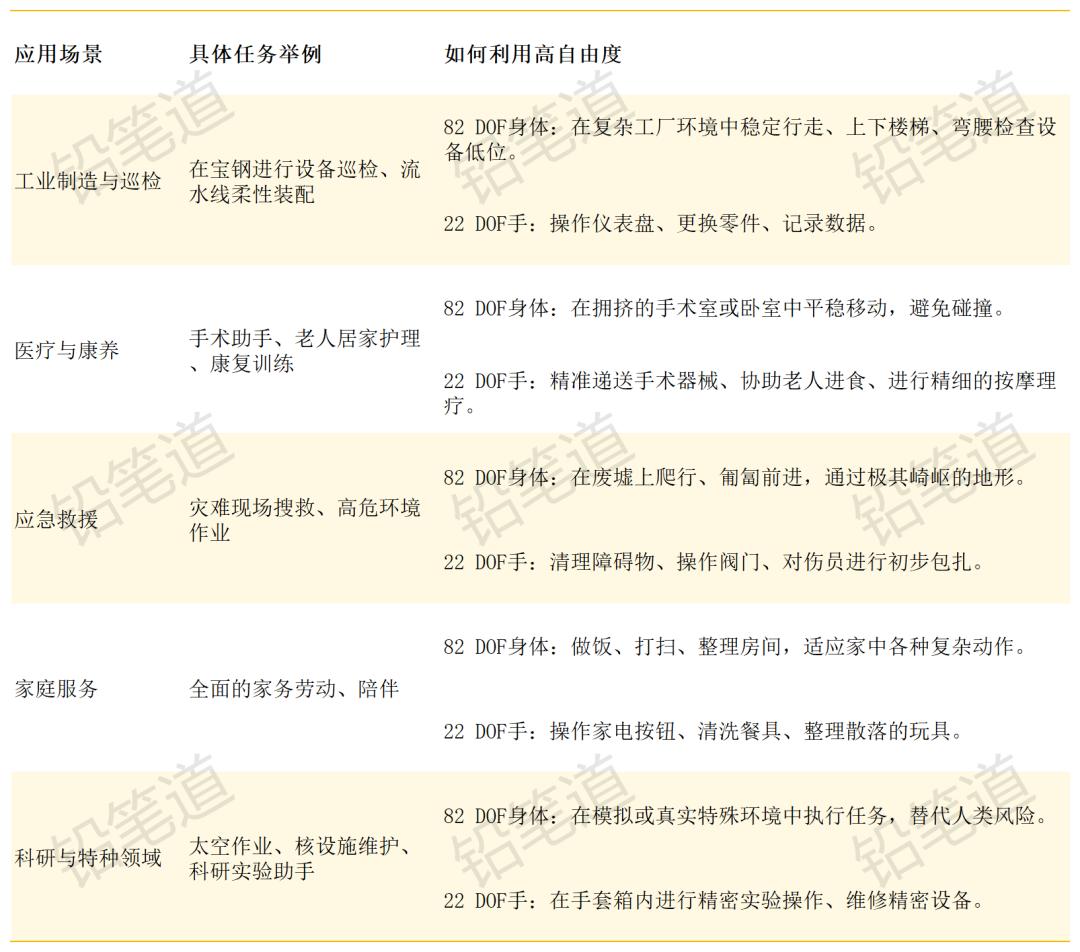
Core Insights - Xiaopeng Motors has launched its new generation robot, IRON, which has garnered significant attention for its human-like appearance and capabilities [1] - The robot features advanced hardware with 82 degrees of freedom (DOF) in its body and 22 DOF in its hands, surpassing many existing robots in the market [2][3] - The robot's flexibility and precision allow it to perform complex tasks across various industries, although its intelligence level remains a critical factor for practical applications [4][6] Group 1: Flexibility and Precision - The IRON robot's body has 82 DOF, enabling it to navigate complex environments and perform tasks that require human-like dexterity [2][4] - Compared to Tesla's Optimus, which has around 40 DOF, Xiaopeng's robot demonstrates superior flexibility [2] - The high degree of freedom in its hands allows for intricate operations such as grasping, writing, and assembly tasks [4] Group 2: Commercialization Progress - IRON has already been integrated into Xiaopeng's production line, where it can install 500 screws daily, saving over 300,000 yuan in labor costs annually [6][10] - The robot's application extends beyond screw installation to industrial inspections, indicating a leading position in commercialization compared to global counterparts [10] Group 3: Mass Production Plans - Xiaopeng aims to achieve mass production of the IRON robot by the end of 2026, with hundreds already deployed in its production line [11][16] - The company is positioned to enter the global first tier of humanoid robots if it successfully meets its production timeline [16] Group 4: Chip Development - The IRON robot is equipped with a self-developed Turing AI chip, boasting a computing power of 2250 TOPS, which is three times that of mainstream chips [17][18] - The self-reliance in chip development allows for greater flexibility in algorithm adaptation and reduces dependency on external suppliers [18]

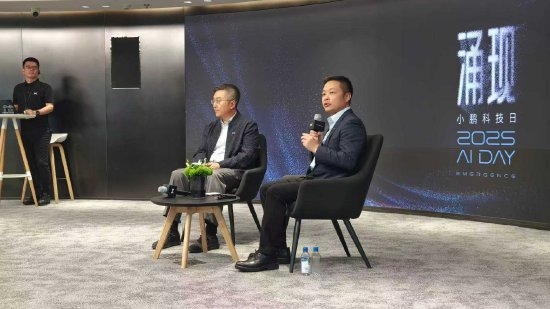
何小鹏谈机器人量产: 远比量产汽车要难,但我们已经选择了,就坚定把它做好
Xin Lang Ke Ji· 2025-11-05 09:25
Core Viewpoint - The CEO of XPeng Motors, He Xiaopeng, emphasized the company's commitment to developing humanoid robots, which will be distinct from industrial robots, and highlighted the challenges of mass-producing robots compared to cars [2][2][2] Group 1: Company Strategy - XPeng Motors is focusing on humanoid robots and plans to allow for secondary development of its robots [2][2] - The company acknowledges the complexity of creating robotic hands, indicating that different types of hands will be needed for various applications, such as home and industrial use [2][2] Group 2: Industry Challenges - He Xiaopeng stated that mass production of robots is significantly more challenging than that of automobiles, but the company is determined to succeed in this endeavor [2][2][2]