
林业碳汇

Search documents
中国太保产险捐赠林业碳汇助力“零碳进博”
Zhong Zheng Wang· 2025-11-09 02:36
Core Viewpoint - China Pacific Insurance (601601) is actively participating in the "Zero Carbon Expo" initiative by purchasing and donating forestry carbon credits, contributing to the ecological and economic benefits of carbon markets [1][2] Group 1: Carbon Market and Ecological Value - The carbon market is becoming a key mechanism for promoting emissions reduction and transforming ecological value into economic benefits [1] - Forestry carbon sinks play an essential role in achieving carbon storage functions due to their significant carbon sequestration capabilities and multiple ecological benefits [1] Group 2: Economic and Environmental Impact - The donation of carbon credits not only supports the "Zero Carbon Expo" but also empowers rural revitalization by converting ecological benefits into tangible economic resources [2] - By purchasing 3,300 tons of forestry carbon credits from Daxing'anling, the company aims to activate dormant forest assets as green capital for rural development [2]

岳阳林纸:是纸业巨头 更是低碳先锋
Zheng Quan Ri Bao· 2025-11-04 15:44
Core Viewpoint - The paper industry in China is facing challenges of "involution," yet Yueyang Forest and Paper (Yueyang Lin Paper) has reported impressive performance in its Q3 financials, highlighting its transformation into a low-carbon pioneer through technological innovation and carbon sink development [1][2]. Financial Performance - Yueyang Lin Paper achieved approximately 2.091 billion yuan in revenue for the first three quarters of 2025, a slight decrease of 2.95% year-on-year, while net profit attributable to shareholders, excluding non-recurring gains and losses, was about 132 million yuan, marking a turnaround from losses [1]. Technological Advancements - The company has established a comprehensive R&D system covering the entire "forest + pulp + paper" chain, investing over 1 billion yuan in technology upgrades and equipment modifications [3]. - A new cultural paper project with an annual capacity of 450,000 tons has been developed, featuring the world's fastest paper machine, which significantly reduces water and energy consumption [3]. Product Innovation - Yueyang Lin Paper is focusing on differentiated products, such as the "Yueyang Tower Soft Light Paper," which utilizes nanomaterials for glare reduction, filling a gap in the domestic market [4]. - The company is also adopting an "eco-friendly packaging" strategy by replacing plastic with paper, responding to national environmental initiatives [5]. Market Expansion - In 2024, the company plans to ship nearly 2,000 standard containers of finished paper globally, enhancing its international competitiveness [6]. - Yueyang Lin Paper is expanding its production capacity through the acquisition of a 100% stake in Hunan Juntai New Materials Technology Co., which will add 400,000 tons of pulping capacity [6]. Carbon Sink Development - As the first state-owned enterprise in the forestry carbon sink sector, Yueyang Lin Paper is developing a sustainable system centered on carbon sinks, leveraging its extensive self-owned forest resources [7]. - The company has won multiple contracts for carbon sink development projects across various regions, indicating its growing influence in the carbon market [8]. Strategic Outlook - The integration of artificial intelligence into the carbon sink development process is underway, aiming to optimize project management and enhance operational efficiency [9]. - Analysts suggest that the company's consolidation of resources and focus on carbon sink initiatives will provide greater flexibility for future growth, especially as the carbon trading market expands [9].

释放林业碳汇经济价值
Jing Ji Ri Bao· 2025-10-29 22:04
Core Insights - The approval of three national standards related to carbon accounting in terrestrial ecosystems marks a significant step in the establishment of a standardized system for forestry carbon sinks in China [1] - The development of forestry carbon sinks in China is transitioning from pilot projects to a more scaled and regulated phase, driven by the acceleration of the national carbon market [1] Group 1: National Standards and Market Development - The newly approved standards include the "Guidelines for Carbon Accounting in Terrestrial Ecosystems," "Technical Regulations for Forest Management to Increase Carbon Sinks," and "Technical Regulations for Afforestation to Increase Carbon Sinks," reflecting innovative achievements in the forestry carbon sink sector [1] - The Fujian province has established a unified carbon emission trading market and developed the Fujian Forestry Carbon Sink (FFCER) trading product, allowing major emitting enterprises to offset quotas through FFCER, with a cumulative transaction volume of 4.1818 million tons and a transaction value of 66.0733 million yuan as of May this year [1] - Heilongjiang province has developed the "Longjiang Green Carbon" management platform, integrating information on forest rights, carbon storage, and carbon sink status, leading the nation in digital management of forestry carbon sinks [1] Group 2: Challenges and Recommendations - The current status of forestry carbon sink resources is unclear, with insufficient data on quantity, quality, distribution, and future carbon sink rate changes, which hampers scientific planning and precise policy implementation [2] - There are significant professional barriers in the development and verification of forestry carbon sink projects, leading to long development cycles and high difficulty due to a lack of professional capacity [2] - Recommendations include clarifying resource baselines and improving policy standards, as well as enhancing technological support and talent development in key areas such as carbon measurement, monitoring, and assessment [2]
集体林权制度改革|福建:“三多”妙笔写活山林文章
Zhong Guo Zi Ran Zi Yuan Bao· 2025-10-17 02:46
Core Viewpoint - The collective forest rights system reform is a significant initiative personally planned and promoted by General Secretary Xi Jinping, aiming to enhance ecological product value realization and improve the livelihoods of rural residents through innovative forest rights systems [1][4]. Group 1: Reform Implementation - Fujian, Jiangxi, and Chongqing are leading regions in the collective forest rights system reform, focusing on the implementation of the "Deepening Collective Forest Rights System Reform Plan" [1]. - The reform aims to achieve a balance between ecological protection and economic development, with Fujian province showcasing successful experiences and outcomes [4][6]. Group 2: Economic Impact - In 2024, the total output value of the forestry industry in Fujian reached 812.1 billion, marking a 6.1% year-on-year increase, positioning it among the top in the country [8]. - The province has the largest bamboo forest area and annual bamboo shoot production in the nation, with over 180 million people engaged in the under-forest economy [8]. Group 3: Innovative Practices - The introduction of the "forest ticket" system in Sanming City allows residents to earn income without cutting down trees, effectively addressing financing and resource realization challenges in forestry [10][11]. - Fujian has initiated a "three-multiple" reform pilot program to enhance benefits, operations, and services in the collective forest rights system, resulting in significant reform achievements [13]. Group 4: Environmental and Social Benefits - Since 2002, Fujian has completed afforestation of over 42.7 million acres, increasing forest coverage by 4.6 percentage points to 65.12%, maintaining the highest rate in the country for 46 consecutive years [17]. - The income of farmers in Fujian reached an average of 28,500 yuan in 2024, with forestry-related income accounting for about one-fifth of total income for farmers in key forest areas [17].

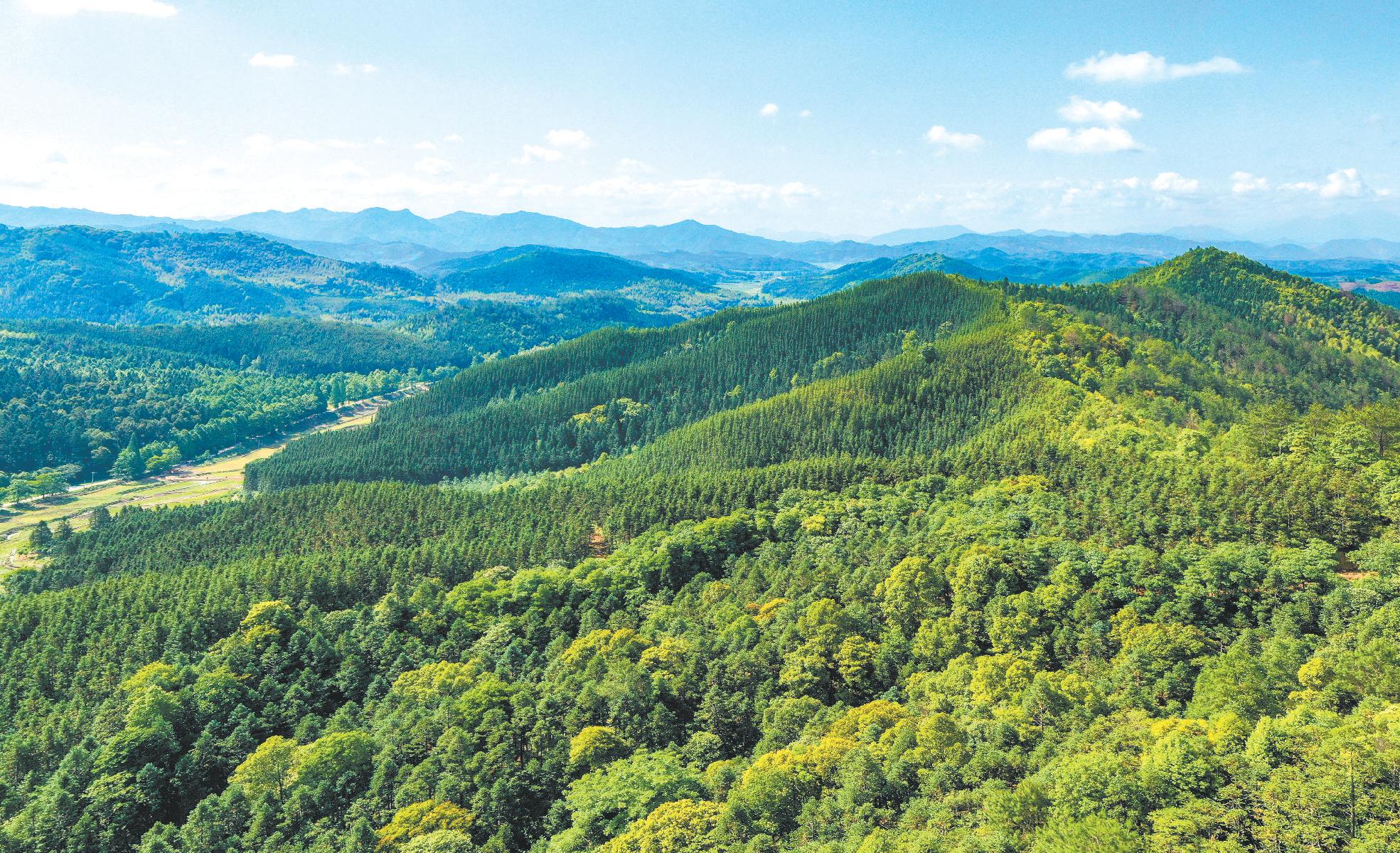
岳阳林纸:全资子公司中标林业碳汇资源合作开发项目
Zheng Quan Shi Bao Wang· 2025-10-13 09:24
Core Viewpoint - Yueyang Lin Paper (600963) announced that its wholly-owned subsidiary, Chengtong Carbon Sink Management (Hunan) Co., Ltd., has recently won the bid for the forestry carbon sink resource cooperation development project in Fuyuan County, Yunnan Province, which is expected to positively impact the company's operating performance and enhance its market influence in the carbon sink sector [1] Group 1 - The project involves forestry carbon sink projects that comply with national policies and can be included in China's voluntary emission reduction projects (CCER) or other international voluntary emission reduction mechanisms (VER, VCS, GS, etc.) [1] - The initial cooperation period for project revenue is set for 20 years [1] - Successful implementation of the project is anticipated to improve the company's brand image and market presence in the carbon sink market [1]
研报掘金丨国盛证券:首予东珠生态“买入”评级,跨界并购卫星通信龙头
Ge Long Hui A P P· 2025-10-11 03:49
Core Viewpoint - Dongzhu Ecological is a leading company in the domestic ecological restoration and municipal landscape engineering sector, facing performance pressure since 2022 due to industry demand contraction and impairment provisions, but is expected to see gradual alleviation of impairment pressure with the implementation of new PPP policies and government debt relief funds [1] Group 1 - The company has actively expanded into forestry carbon sinks and emerging markets, including winning a significant contract worth 3.5 billion yuan in Laos under the Belt and Road Initiative, which is anticipated to improve its main business operations marginally [1] - A major asset restructuring plan has been announced, involving the acquisition of 89.49% of Kairuixingtong through a combination of share issuance and cash payment, which will allow the company to enter the satellite communication sector and potentially create a second growth curve [1] - If the acquisition of Kairuixingtong proceeds smoothly, it is expected to drive a revaluation of the company's value, leading to an initial coverage rating of "Buy" [1]

东珠生态(603359):跨界并购卫星通信龙头,擘画成长新蓝图
GOLDEN SUN SECURITIES· 2025-10-10 15:19
Investment Rating - The report initiates coverage with a "Buy" rating for the company [4]. Core Views - The company, Dongzhu Ecological, is a leader in ecological restoration and municipal landscape engineering in China. It is undergoing a significant transformation by acquiring a leading satellite communication company, Kai Rui Xing Tong, to create a second growth curve amidst current operational pressures [1][35]. - The satellite communication industry is experiencing robust growth driven by supportive government policies and increasing demand for low-orbit satellite constellations, which is expected to enhance terminal equipment demand significantly [3][4]. Summary by Sections Company Overview - Dongzhu Ecological is a comprehensive service provider in ecological governance, focusing on ecological restoration and municipal landscape projects. The company has faced operational challenges since 2022 due to industry demand contraction and impairment provisions, but it is expected to improve as new government policies and debt relief funds are implemented [1][22][33]. - The company reported a significant revenue decline in 2024, with total revenue of 3.8 billion yuan, down 55% year-on-year, primarily due to reduced project initiation and longer payment cycles from local governments [22][28]. Acquisition of Kai Rui Xing Tong - The company plans to acquire 89.49% of Kai Rui Xing Tong through a combination of stock issuance and cash payment, aiming to enter the satellite communication sector and diversify its revenue streams [35][37]. - Kai Rui Xing Tong is recognized as a leading domestic satellite communication system provider, with a projected revenue of 260 million yuan and a net profit of 40 million yuan in 2024, reflecting a year-on-year growth of 72% and 364%, respectively [2][37]. Industry Demand Analysis - The satellite internet industry is supported by increasing government policies, with a focus on building a "commercial space" growth engine. The demand for terminal equipment is expected to grow as the number of operational satellites increases [3][4]. - Key sectors driving demand include government emergency communication, military satellite communication, and maritime communication, with the government sector alone having an annual budget exceeding 3 billion yuan for emergency communication infrastructure [4][46]. Financial Forecast and Valuation - The company forecasts a gradual recovery in net profit from a loss of 630 million yuan in 2024 to a profit of 12 million yuan by 2027, with corresponding EPS improving from -1.41 yuan to 0.03 yuan per share [4][5]. - The report highlights that if the acquisition of Kai Rui Xing Tong proceeds smoothly, it could lead to a revaluation of the company's worth [4].
破解林业发展风险难题 林业保险产品体系持续扩容
Jin Rong Shi Bao· 2025-09-17 09:03
Core Viewpoint - The recent notification from the People's Bank of China, the Financial Regulatory Administration, and the National Forestry and Grassland Administration aims to support the high-quality development of forestry through 15 financial measures, including the establishment of a comprehensive forest insurance product system [1][4]. Group 1: Forestry Economic Growth - The forestry economy is a crucial pillar of the national economy, contributing to ecological restoration and carbon sequestration while integrating various industries such as timber processing and forest tourism [2]. - The total output value of China's forestry industry reached 5.13 trillion yuan in the first three quarters of 2024, marking a year-on-year growth of 5.3%, with projections suggesting it could reach 1.5 trillion yuan by 2030 [2]. Group 2: Risks in Forestry Production - Forestry production is characterized by long cycles and high risks, with natural disasters like typhoons and droughts posing significant threats to forest resources [2][3]. - Recent typhoons caused over 40% reduction in some economic crops, highlighting the urgent need for a robust forestry risk protection system [2]. Group 3: Demand for Diverse Insurance Products - The growth of the forestry economy has led to increased asset value but also heightened demand for comprehensive risk coverage due to natural disasters and market fluctuations [3]. - The notification encourages the development of various insurance products, including index insurance, yield insurance, income insurance, and liability insurance, to address these risks [4]. Group 4: Innovations in Insurance Products - The notification promotes the optimization of forest insurance implementation plans and the innovation of insurance products, with a focus on creating a diverse insurance product system [4]. - For instance, Shanxi Province increased its policy forest insurance coverage from 1,000 yuan to 1,200 yuan per mu, which is expected to add 25 billion yuan in risk protection by 2025 [4]. Group 5: Enhancements in Insurance Services - The insurance industry is addressing challenges such as risk assessment difficulties and product adaptation issues, with a call for differentiated insurance product designs to meet diverse needs [6][7]. - Experts suggest that insurance pricing should be based on historical loss data and risk levels, with a dynamic adjustment mechanism to align premiums with actual risks [7]. Group 6: Technological Integration in Insurance - The integration of technology is seen as essential for improving the efficiency of forestry insurance claims and assessments, utilizing satellite remote sensing and drones for accurate damage evaluation [7]. - Establishing a comprehensive database for forestry information is also recommended to enhance the quality and efficiency of forestry insurance [7].
全国碳市场中长期发展时间表、路线图确定—— 碳市场2.0,中国这样布局
Ren Min Ri Bao Hai Wai Ban· 2025-09-16 06:37
Core Insights - The article discusses the development and significance of China's national carbon market, which has entered a new phase aimed at enhancing its vitality and international influence [4][5][9]. Group 1: Carbon Market Overview - The national carbon market consists of two components: a mandatory carbon market for key emission units and a voluntary carbon market to encourage self-reduction efforts [6][11]. - As of August 22, 2023, the mandatory carbon market has seen a cumulative trading volume of over 680 million tons of carbon emission allowances (CEA) with a transaction value of 47.41 billion yuan [7]. - The voluntary carbon market has registered 2.49 million tons of certified voluntary emission reductions (CCER) with a transaction value of 210 million yuan [7]. Group 2: Future Goals and Development - The government aims for the mandatory carbon market to cover major industrial sectors by 2027 and to establish a comprehensive quota control system by 2030 [9]. - The voluntary carbon market is expected to achieve full coverage of key areas by 2027 and to align with international standards by 2030 [9][10]. Group 3: Financial Mechanisms and Innovations - The article highlights the introduction of carbon pledge and repurchase policies to enhance financing channels for emission-reducing enterprises [13]. - Carbon emissions can now be used as collateral for loans, and insurance products related to forestry carbon sinks are being developed [14]. Group 4: Market Dynamics and Participation - The article emphasizes the need to expand the participant base in both carbon markets to improve liquidity and effectiveness [15][16]. - The current structure primarily involves high-emission enterprises, and expanding participation could lead to more continuous price signals in the market [16].
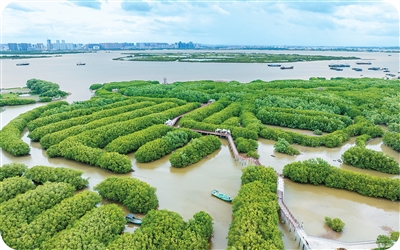
福建明确2030年非化石能源消费比重目标
Zhong Guo Dian Li Bao· 2025-09-16 04:27
Group 1 - The core viewpoint of the article is the release of an action plan by the Fujian Provincial Committee and the Fujian Provincial People's Government aimed at accelerating the green transformation of the economy and society, with a focus on future industries such as hydrogen energy and advanced new materials [1][2] - The action plan targets a scale of approximately 300 billion yuan for the energy-saving and environmental protection industry by 2030 [1] - It emphasizes the need for a three-pronged approach to improve existing coal power units through energy-saving, carbon reduction, and flexibility modifications, while continuing to phase out outdated coal power units [1] Group 2 - The plan includes the goal of achieving over 30% non-fossil energy consumption by 2030 [1] - It outlines the construction of zero-carbon parks and the promotion of the "near-zero carbon island" initiative on Meizhou Island [2] - The plan supports the development of marine economy demonstration zones in Fuzhou and Xiamen, and encourages ecological product value realization mechanisms and climate investment financing in various regions [2]