混动技术

Search documents
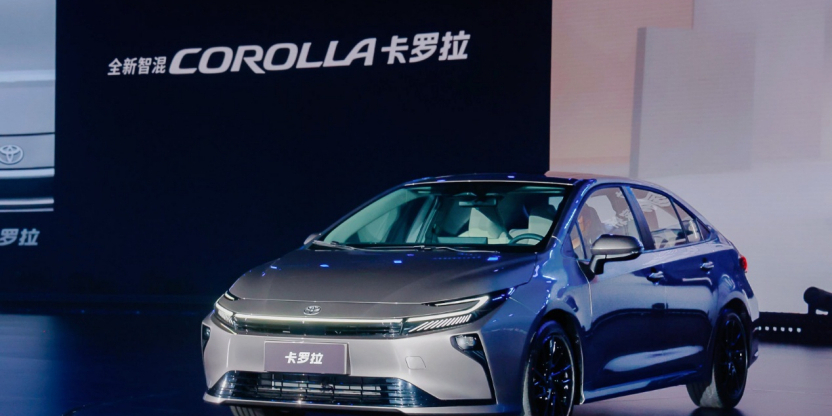
一汽丰田技术品牌再升级:补智能短板 固混动长板
Jing Ji Guan Cha Wang· 2025-11-21 01:35
Core Insights - FAW Toyota has launched its IT'S TiME 3.0 technology brand, focusing on rapid enhancement of intelligence in its vehicles, aiming to catch up in the smart driving and cockpit sectors [2][5] - The company has introduced three new models: the new intelligent hybrid Corolla, the new bZ3 smart family car, and the new RAV4, which cover fuel, hybrid, and pure electric powertrains [4] Group 1: Technology and Innovation - The IT'S TiME 3.0 technology upgrade emphasizes smart driving and cockpit enhancements, with the Toyota Pilot smart driving assistance system utilizing a dual approach of in-house development and open collaboration [2][5] - FAW Toyota's collaboration with Momenta aims to develop localized smart driving solutions tailored for complex Chinese road conditions, leveraging 33 high-precision perception hardware and 544 TOPS computing power [2][3] Group 2: Product Features and Performance - The new RAV4 offers three power options: 2.0L intelligent hybrid, 2.5L intelligent hybrid, and 2.0L gasoline version, with the intelligent hybrid model achieving a fuel consumption as low as 3.99 liters per 100 kilometers [3][4] - The new intelligent hybrid Corolla has been lengthened by 75 mm and has a wheelbase extended by 50 mm to enhance passenger space, with a fuel consumption of 4.13 liters per 100 kilometers for the 1.8L HEV version [4] Group 3: Market Strategy - FAW Toyota's strategy reflects a response to the competitive landscape, where joint ventures are no longer passive but actively pursuing technological advancements through partnerships and in-house development [5] - The introduction of the IT'S TiME 3.0 brand and the new models signifies a pragmatic approach to balancing traditional strengths with emerging market demands during the transition to electrification [4][5]

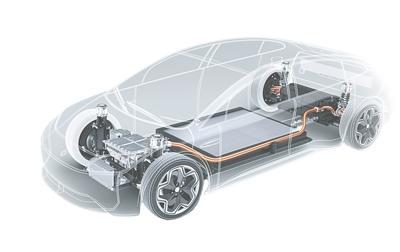
为汽车打造强劲“中国心”(汽车产业链上看创新)
Ren Min Ri Bao· 2025-11-20 20:01
Core Insights - The article discusses the advancements in China's automotive engine technology, highlighting the shift from reliance on foreign technology to achieving self-sufficiency and innovation in engine manufacturing [4][5][6][8]. Group 1: Engine Development - The performance of the engine, referred to as the "heart" of the automobile, directly influences a vehicle's power, energy consumption, and reliability [4]. - Great Wall Motors has made significant strides in developing advanced engines over the past 25 years, transitioning from imitation to innovation [5][6]. - The company has established a comprehensive engine platform covering various displacement ranges, including gasoline and diesel engines, which are used in both its own and other brands' vehicles [7]. Group 2: Technological Breakthroughs - Great Wall Motors has successfully developed several cutting-edge technologies, including the Miller cycle and high-pressure injection systems, which have allowed it to reduce dependency on foreign engine suppliers [6][7]. - The company is now focusing on overcoming the technical barriers associated with large displacement engines, with a recent launch of a 4.0T V8 engine that boasts over 90% of its components developed in-house [8]. Group 3: Market Trends and Future Directions - The market is shifting towards a combination of internal combustion engines and electric vehicles, as the automotive ecosystem evolves towards high-quality development [8]. - The article emphasizes the importance of understanding diverse global markets, as different regions have varying regulations and infrastructure that affect the adoption of electric vehicles [8]. Group 4: Hybrid Technology - Geely has developed a hybrid engine with a thermal efficiency of 46.5%, which is set to improve to 47.26% by 2025, showcasing the company's commitment to maintaining core technology in-house [10][12]. - The integration of AI in Geely's hybrid systems allows for optimized performance and efficiency, enhancing user experience by reducing fuel consumption [12]. Group 5: Electric Motor Development - Fangzheng Electric has transitioned from sewing machine motors to becoming a leading supplier of electric motors for new energy vehicles, emphasizing the higher technical requirements in this sector [14][15]. - The company has improved electric motor efficiency from 93% to 98%, significantly impacting cost savings for manufacturers and enhancing consumer confidence in electric vehicle range [15][16]. Group 6: Industry Challenges - The rapid pace of technological iteration in the automotive industry necessitates accelerated research and development to meet consumer expectations for quality and performance [16]. - The article highlights the importance of reliability and safety in automotive drive systems, which are critical for gaining market trust [16].
9系豪车战局
2 1 Shi Ji Jing Ji Bao Dao· 2025-11-17 23:18
Core Insights - The competition in China's luxury electric vehicle market, particularly the "9 series," is intensifying with various brands vying for dominance through innovative strategies and technology [1][10] - New entrants like Leapmotor D19, Lantu Taisan, and Zhiji LS9 are redefining the flagship segment by focusing on core technologies rather than merely enhancing specifications [1][10] Technical Pathways - Leapmotor adopts a "counter-consensus" approach by using a pure electric mindset for range extension, featuring an 80.3 kWh battery with a pure electric range of 500 km and a smaller fuel tank [2][3] - Zhiji LS9 emphasizes a "star super range" concept with a 66 kWh battery, claiming a comprehensive electric experience for 1500 km, while maintaining low energy consumption [3][4] - Lantu Taisan combines a 1.5T engine with dual motors in an 800V hybrid system, achieving a pure electric range of 370 km and a total range exceeding 1400 km [3][4] Cost Control and Pricing Strategies - Zhiji LS9 is priced between 322,800 to 352,800 yuan, strategically avoiding direct competition with other models while leveraging SAIC's supply chain advantages [6][9] - Leapmotor emphasizes "conscientious pricing" by focusing on high-quality suppliers for critical components while self-developing other parts to optimize costs [6][7] - Lantu aims for aggressive pricing through localized manufacturing, enhancing cost advantages and ensuring supply chain security [7][8] Brand System Competition - The competition among flagship models extends beyond product features to brand system capabilities, with Lantu achieving significant sales growth through user engagement and feedback mechanisms [9][10] - Zhiji focuses on long-term brand recognition through technological differentiation, while Leapmotor employs a "dimensional attack" strategy to penetrate the high-end market [9][10] - The entry of Leapmotor D19, Zhiji LS9, and Lantu Taisan signifies a more complex competitive landscape, where technology, pricing, and brand systems play crucial roles in determining market success [10]
9系豪车战局:技术分化与品牌突围的生死竞速
2 1 Shi Ji Jing Ji Bao Dao· 2025-11-17 13:05
Core Insights - The "9 series" in China's new energy vehicle market has evolved into a symbol of luxury flagship models, with intense competition among brands like Li Auto, AITO, Zeekr, Leap Motor, and Lantu [1] - New entrants are adopting disruptive strategies to challenge established players, focusing on core technologies rather than merely competing on specifications [1] Technical Pathways - Different brands are pursuing distinct technical solutions for hybrid systems, with Leap Motor opting for a "counter-consensus" approach by using a pure electric mindset for range extension, featuring an 80.3 kWh battery and a 500 km electric range [2][3] - AITO's LS9 emphasizes a "star super range" concept with a 66 kWh battery, aiming for a seamless electric driving experience even in low battery conditions, achieving a fuel consumption of 2.81 L/100 km [3] - Lantu's Taishan adopts a hybrid approach with an 800V intelligent super hybrid system, combining a 1.5T engine and dual motors, achieving a pure electric range of 370 km and a total range exceeding 1400 km [3] Differentiated Strategies - Leap Motor focuses on maximizing electric usage for user experience, while AITO emphasizes a balanced approach between technology compatibility and user experience [4] - AITO's LS9 features advanced technologies like a digital chassis for improved maneuverability, while Lantu collaborates with tech giants for enhanced product competitiveness [4] Cost Control and Pricing Strategies - Cost control is crucial for pricing flexibility in the luxury car market, with AITO LS9 priced between 322,800 to 352,800 yuan, strategically avoiding direct competition with other models [6] - Leap Motor emphasizes "conscientious pricing" and self-research for core components, aiming to keep costs low while ensuring safety and reliability [6][7] - Lantu aims for aggressive pricing strategies through local manufacturing and deep supply chain integration, enhancing cost advantages [7] Brand System Competition - The competition among flagship models extends beyond product features to brand system capabilities, with Lantu achieving significant sales growth attributed to technology self-research and user engagement [9] - AITO leverages its technological strengths to create a differentiated brand perception, while Leap Motor adopts a "downward attack" strategy to build brand recognition [9][10] - The entry of Leap Motor D19, AITO LS9, and Lantu Taishan signifies a more complex competitive landscape in the luxury vehicle segment, where technology, pricing, and brand systems play critical roles [10]
日产陷致命一击,丰田本田利润集体跳水
汽车商业评论· 2025-11-02 23:06
Core Viewpoint - Japanese automotive manufacturers are facing significant financial challenges, with Nissan predicting an operating loss of 275 billion yen (approximately 1.8 billion USD) for the fiscal year ending March 2026, marking its most severe financial crisis in over two decades [4][6]. Group 1: Nissan's Financial Outlook - Nissan has lowered its consolidated sales forecast for fiscal 2025 from 12.5 trillion yen to 11.7 trillion yen, leading to a 6.1% drop in its stock price on October 31, the largest single-day decline in nearly two months [5]. - The company is experiencing a crisis comparable to its near-bankruptcy situation in the past, exacerbated by ongoing leadership turmoil and declining profits [6]. Group 2: Toyota and Honda's Challenges - Toyota sold 5,267,216 vehicles in the past six months, achieving the highest sales record in two years, yet it faces a projected net profit decline of 44.2% to 2.66 trillion yen (approximately 170 million USD) for the current fiscal year [8][10]. - Honda's global sales fell nearly 6% in September, with a 13% decline in the Chinese market, and it anticipates a 70% drop in profits for the fiscal year ending March 2026 [11][23]. Group 3: External Pressures - The automotive industry is under pressure from tariffs, a strong yen, and supply chain disruptions, which are collectively squeezing profit margins [13]. - The U.S. tariffs on non-American manufactured vehicles and parts, initially set at 25%, have been reduced to 15%, but still pose a significant burden on Japanese manufacturers [17][20]. Group 4: Currency Impact - The appreciation of the yen is expected to reduce the annual profits of Japan's seven major automakers by approximately 1.5 trillion yen, with Toyota facing a potential loss of 745 billion yen due to currency fluctuations [30][31]. - The yen's strengthening has reversed the benefits previously gained from its depreciation, leading to a projected 31% decline in Toyota's operating profit [32]. Group 5: Supply Chain Issues - A semiconductor supply shortage, particularly related to Nexperia, is threatening production across the industry, with Nissan indicating that its chip inventory may only last until early November [36][38]. - Additionally, the reliance on rare earth materials from China has decreased significantly, impacting the production of electric vehicles [43][44]. Group 6: Strategic Responses - Japanese automakers are focusing on deepening their presence in the U.S. market and localizing supply chains to mitigate risks from tariffs and currency fluctuations [47]. - Nissan is increasing production capacity in its U.S. factories and exploring partnerships with Honda to utilize idle capacity for producing pickup trucks [48][51]. Group 7: Cost Optimization and Product Strategy - Nissan is aggressively restructuring, planning to cut 20,000 jobs and reduce its global manufacturing sites from 17 to 10 [54][56]. - Both Nissan and Honda are shifting focus towards hybrid vehicles, with Toyota reporting that hybrid models accounted for 42% of its U.S. sales in the first half of the year [61].



刚刚,新能源车数据出炉
Zhong Guo Ji Jin Bao· 2025-10-01 15:39
Core Viewpoint - In September, the sales of new energy vehicles (NEVs) in China saw a significant increase for many manufacturers, while BYD experienced a decline in monthly sales compared to the previous year, primarily due to a drop in plug-in hybrid vehicle sales [2][5][6]. Summary by Category BYD Performance - BYD's NEV sales in September were 396,270 units, a year-on-year decrease of 5.52% [5][6]. - The decline was mainly attributed to a 25.58% drop in plug-in hybrid vehicle sales, which totaled 188,000 units, while pure electric vehicle sales increased by 24.31% to 205,000 units [6][10]. - BYD's overseas sales have stagnated since reaching a peak in June, with September's figures only slightly above those of January and February [9][10]. Competitor Performance - Geely's NEV sales reached 165,201 units in September, marking an 81.27% increase year-on-year [5][12]. - Great Wall Motors achieved 45,961 units in NEV sales, a 52.55% increase year-on-year [5][11]. - New energy vehicle sales from emerging manufacturers like Leap Motor and Xiaomi also hit record highs, with Leap Motor delivering 66,670 units, a 97.40% increase [5][17]. Emerging Manufacturers - Leap Motor became the first among new car manufacturers to exceed 60,000 monthly deliveries, marking a significant milestone [15][17]. - Xiaopeng and Xiaomi both surpassed 40,000 units in September, indicating a rising threshold for new energy vehicle sales among emerging manufacturers [17][20]. - NIO's deliveries reached 34,700 units, a 64.06% increase year-on-year, while Li Auto's deliveries fell by 36.79% to 34,000 units [20][25]. Market Trends - The market is witnessing a shift towards pure electric vehicles, with NIO focusing on this technology route and expecting 2025 to be a pivotal year for the NEV market [24][25]. - Li Auto is transitioning to pure electric models, with new launches aimed at enhancing their market position [27].




魏建军称看不上车企营销靠宣传自己,长城高管在发布会过度夸张要受处分
Xin Lang Cai Jing· 2025-09-28 09:44
Group 1 - The chairman of Great Wall Motors, Wei Jianjun, criticized the exaggerated marketing tactics of car companies, stating that such behavior is not sustainable and often misleading [1] - Wei emphasized the importance of establishing a correct value system within the company to ensure steady and solid growth, indicating that executives would face consequences for over-exaggeration during public announcements [1] - A recent joint notice from six departments aims to combat false advertising in the automotive sector, focusing on misleading claims regarding vehicle and battery performance [1] Group 2 - Great Wall Motors, along with 17 other car manufacturers, has committed to the "Payment Norms for Automotive Whole Vehicle Enterprises" initiative, ensuring timely payments to suppliers [2] - The company plans to use bank transfers and bank acceptance bills exclusively for payments, eliminating electronic voucher payments, and aims to further optimize payment processes [2] - In the latest semi-annual report, Great Wall Motors reported a revenue of 92.335 billion yuan, a year-on-year increase of 0.99%, while net profit decreased by 10.21% to 6.337 billion yuan [2]
从起了大早到赶上大集,奇瑞汽车新能源战略全面加速
Di Yi Cai Jing· 2025-09-28 02:51
Core Insights - Chery is undergoing a comprehensive acceleration in its new energy strategy, significantly altering its competitive positioning in the automotive industry [1] - The company has launched ten new models in 2024, with nine being new energy vehicles, indicating a continuous increase in the proportion of new energy vehicles in its product matrix [1] - Chery's stock debuted on the Hong Kong Stock Exchange on September 25, 2025, with an opening increase of 11.22%, bringing its market capitalization close to HKD 200 billion [1] New Energy Business as a Growth Engine - Chery's journey in new energy development reflects a long-term commitment, having established a clean energy vehicle task force as early as 1999 [2] - In 2024, Chery is the only company among the top twenty global passenger car manufacturers to achieve over 25% growth in new energy vehicle sales, fuel vehicle sales, and both domestic and overseas market sales compared to 2023 [2] - New energy vehicle sales are projected to grow over 265% year-on-year in 2024, making it a crucial growth driver for the company [2] Revenue Growth - Chery's revenue surged from CNY 92.618 billion in 2022 to CNY 269.897 billion in 2024, with a compound annual growth rate (CAGR) of 70.7% [3] - Net profit increased from CNY 5.806 billion to CNY 14.334 billion during the same period, with a CAGR of 57.1% [3] - In Q1 2025, revenue rose by 24% year-on-year to CNY 68.2 billion, with new energy vehicle sales revenue contributing significantly to this growth [3] Hybrid Strategy and Technology Sharing - Chery has leveraged its deep expertise in internal combustion engine technology to achieve breakthroughs in hybrid power systems [4] - The company launched a hybrid technology open-source initiative, promoting collaborative innovation and enhancing industry standards [4] Multi-Brand Differentiation Strategy - Chery employs a multi-brand strategy to cater to diverse markets and consumer needs, with nine out of ten new models in 2024 being new energy vehicles [6] - The iCAR brand has emerged as a leader in the new energy box car segment, while the Zhijie brand, developed in partnership with Huawei, aims to create high-end new energy vehicles [7] Intelligent and New Energy Advancement - Chery plans to allocate 25% of its IPO funds for the development of next-generation vehicles and advanced technologies, with 10% specifically for electrification [8] - The company aims to achieve full brand coverage of intelligent driving systems by the end of 2025, enhancing its competitive edge in smart mobility [9] Globalization Strategy - Chery has established R&D centers and production bases in various countries, including Germany, Spain, Brazil, and Malaysia, to support its globalization strategy [11] - The company is positioned to leverage capital market support to accelerate its transition to new energy, aiming for significant breakthroughs in the sector [11]
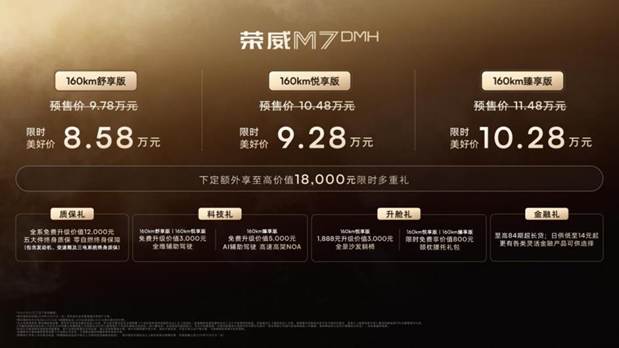
荣威M7 DMH山东东北区重磅上市,限时美好价8.58万元起
Qi Lu Wan Bao· 2025-09-26 03:51
Core Viewpoint - The launch of the Roewe M7 DMH marks a significant entry into the mid-to-large hybrid sedan market, offering advanced features and competitive pricing aimed at family users [1][16]. Pricing and Promotions - The Roewe M7 DMH is available in three versions with a price range of 97,800 to 114,800 yuan, with promotional prices from 85,800 to 102,800 yuan for orders placed by October 31 [1]. Product Features - The vehicle features a unique panoramic sofa chair and mCDC dynamic suspension system, enhancing comfort and user experience during travel [3][5]. - It incorporates advanced materials and technologies, such as Ultra Touch material and Surflex® anti-gravity foam, improving comfort and support [7]. Intelligent Technology - The Roewe M7 DMH is equipped with the world's first "Doubao Deep Thinking Model," enhancing human-vehicle interaction and achieving a 14-fold improvement in understanding complex commands [8]. - The AI-assisted driving system extends smart features to driving scenarios, providing a seamless experience for users [10]. Performance and Efficiency - The vehicle boasts a CLTC pure electric range of 160 km, exceeding the industry standard of 100-150 km, and a comprehensive range of 2050 km with low fuel consumption of 2L per 100 km [11]. - The cost per kilometer is less than 0.2 yuan, offering an economical travel experience [11]. Warranty and Assurance - The Roewe M7 DMH offers a lifetime warranty on key components, ensuring peace of mind for users regarding maintenance and repairs [13]. Design and Space - Designed by former Rolls-Royce chief designer Joseph Kaban, the M7 DMH combines Eastern aesthetics with modern practicality, featuring a spacious interior with a length of nearly 5 meters and a wheelbase of 2820 mm [14][16]. - The vehicle includes a 527L trunk and multiple storage spaces, emphasizing functionality and user convenience [16]. Market Potential - Positioned as a hybrid sedan under 100,000 yuan, the Roewe M7 DMH is expected to become a popular choice among family users, showcasing strong market potential [16].
广汽埃安“换将”:杨龙接棒 能否破局销量困境?
Xi Niu Cai Jing· 2025-09-22 08:04
Group 1 - GAC Aion has appointed Yang Long as the new Vice General Manager and Head of Aion Marketing, succeeding Xiao Yong [2] - Yang Long has extensive experience in market operations, having previously worked at GAC Honda and GAC Mitsubishi, where he led innovative marketing activities [2] - Xiao Yong was instrumental in establishing Aion's marketing system and implementing aggressive strategies that enhanced brand recognition and sales [2] Group 2 - GAC Aion's sales have faced significant declines, with August 2025 sales at 24,318 units, a year-on-year decrease of 23.46%, and cumulative sales for the first eight months down 17.31% [3][4] - The decline in sales is attributed to several factors, including a lack of blockbuster models and over-reliance on the B-end market, which has limited brand image and market penetration [4] - GAC Group is implementing measures such as organizational adjustments and the introduction of hybrid models to address these challenges, with a goal to increase C-end sales to 75% this year [4]