
现金流策略

Search documents
现金流ETF(159399)盘中飘红,布局板块现金流修复机会
Mei Ri Jing Ji Xin Wen· 2026-01-23 07:16
Core Viewpoint - The cash flow ETF (159399) has shown a mid-day increase of over 0.1%, indicating an opportunity for investment in sectors experiencing cash flow recovery [1] Group 1: Cash Flow Strategy vs. Dividend Strategy - The dividend strategy focuses on static dividend yields and has a high sample pool stability, but it may miss opportunities for cash flow recovery [1] - The cash flow strategy emphasizes changes in EBIT (earnings before interest and taxes), allowing for a more sensitive capture of cash flow recovery opportunities [1] Group 2: Sector Analysis - In the coal industry, cash flow is expected to deteriorate significantly after 2024, while dividend yields remain high. The dividend strategy maintains over 15% exposure to coal, which negatively impacts portfolio returns due to coal price drops. The cash flow strategy can quickly exclude coal from the sample, mitigating the negative impact on returns [1] - In the non-ferrous metals sector, cash flow is projected to improve significantly by 2025, while dividend yields remain relatively low. The dividend strategy continues to have low exposure to non-ferrous metals, missing out on significant market movements. The cash flow strategy can quickly identify improvements in EBIT for non-ferrous metals and include them in the sample, enhancing portfolio returns [1] Group 3: Investment Recommendations - Investors are encouraged to pay attention to the cash flow ETF (159399). The underlying index, the FTSE Cash Flow Index, has outperformed the CSI Dividend Index and the CSI 300 Index for nine consecutive years from 2016 to 2024 [1] - The cash flow ETF (159399) focuses on large and mid-cap stocks, with a higher proportion of central state-owned enterprises compared to similar cash flow indices. Monthly assessments of dividends are possible, making it a point of interest for investors [1]
现金流ETF(159399)飘红,现金流策略攻守兼备
Mei Ri Jing Ji Xin Wen· 2026-01-20 06:33
Group 1 - The core viewpoint is that during the Kondratiev depression, increased geopolitical uncertainty has led to a natural preference for gold and stable cash flow "safe assets" globally, which has resulted in a systematic reassessment of dividend strategies in the A-share market over the past few years [1] - In 2023, dividend strategies have underperformed, while the advantages of cash flow strategies have become more prominent, showing resilience in bear markets and the potential for excess returns in bull markets [1] - The period from 2022 to 2024 has seen "involution and cross-border capital outflow" negatively impact corporate free cash flow, causing cash flow strategies to lag behind dividends; however, the current trend of "anti-involution and cross-border capital inflow" is improving corporate free cash flow [1] Group 2 - The cash flow ETF (159399) is highlighted as a potential investment opportunity, with the underlying FTSE cash flow index outperforming the CSI dividend index and the CSI 300 index for nine consecutive years from 2016 to 2024 [1] - The cash flow ETF focuses on large and mid-cap stocks, with a higher proportion of central state-owned enterprises compared to similar cash flow indices, and allows for monthly dividend assessments [1] - Investors interested in cash flow strategies are encouraged to continue monitoring the cash flow ETF [1]
现金流ETF(159399)微幅回调,市场关注现金流策略配置价值
Mei Ri Jing Ji Xin Wen· 2026-01-16 06:23
Group 1 - The core viewpoint of the article highlights the increasing attention on cash flow strategies in the market, particularly in light of regulatory enhancements regarding cash dividends for listed companies [1] - The "National Nine Articles" policy is expected to strengthen the regulation of cash dividends, making high free cash flow companies attractive to conservative investors due to their stable cash flow returns [1] - In the current market environment, cash flow ETFs can serve as a crucial component of a "technology innovation + dividend asset" allocation strategy, complementing growth sectors like artificial intelligence [1] Group 2 - During the interest rate downcycle, high-quality assets with sustainable free cash flow generation capabilities are likely to see an increase in valuation, especially in traditional industries such as non-ferrous metals, machinery, and chemicals [1] - Some companies have achieved substantial improvements in cash flow through quality enhancement and efficiency gains [1] - Investors are encouraged to pay attention to the cash flow ETF (159399), which has outperformed the CSI Dividend Index and the CSI 300 Index for nine consecutive years from 2016 to 2024 [1]
现金流ETF(159399)回调近1%,市场关注现金流策略配置价值
Mei Ri Jing Ji Xin Wen· 2026-01-15 07:15
Core Viewpoint - The article emphasizes the importance of free cash flow as a reflection of a company's true profitability and shareholder return capability, highlighting the long-term stability of cash flow strategy ETFs [1] Group 1: Free Cash Flow and ETFs - Free cash flow is identified as a key indicator of a company's real earnings potential and ability to return value to shareholders [1] - Analysis of overseas ETF strategies indicates that cash flow strategy ETFs demonstrate robust long-term returns [1] - The free cash flow-related index excludes financial and real estate sectors, using free cash flow rate as a sorting criterion, primarily covering large-cap stocks, revealing long-term allocation value [1] Group 2: Investment Opportunities - Investors are encouraged to pay attention to the cash flow ETF (159399) [1] - The underlying index, FTSE Cash Flow Index, has outperformed the CSI Dividend Index and the CSI 300 Index for nine consecutive years from 2016 to 2024 [1] - The cash flow ETF (159399) focuses on large and mid-cap stocks, with a higher proportion of central state-owned enterprises compared to similar cash flow indices, allowing for monthly dividend assessments [1]
波动加剧现金流策略再受市场关注,自由现金流ETF基金(159233)涨近1%
Xin Lang Cai Jing· 2026-01-15 03:52
Core Viewpoint - The market is experiencing increased volatility, leading to renewed interest in cash flow strategies, with expectations for the Chinese stock market to challenge a ten-year high by 2026 due to economic transformation and capital market reforms [1] Group 1: Market Performance - As of January 15, 2026, the CSI All Share Free Cash Flow Index (932365) rose by 0.68%, with notable increases in constituent stocks such as Xinhua Department Store (up 10.03%), Debon Logistics (up 9.97%), and Zhuhai Smelter Group (up 6.23%) [1] - The Free Cash Flow ETF (159233) increased by 0.64%, with the latest price reported at 1.26 yuan [1] Group 2: Key Stocks and Index Composition - As of December 31, 2025, the top ten weighted stocks in the CSI All Share Free Cash Flow Index (932365) include China National Offshore Oil Corporation, SAIC Motor, Gree Electric Appliances, and others, collectively accounting for 53.78% of the index [2] - The Free Cash Flow ETF closely tracks the CSI All Share Free Cash Flow Index, which selects 100 listed companies with high free cash flow rates to reflect the overall performance of companies with strong cash flow generation capabilities [1]
红利风向标 | 港股红利、现金流策略展现“抗震韧性”
Xin Lang Cai Jing· 2026-01-14 01:36
Core Viewpoint - The report highlights the performance of various dividend-focused ETFs, showcasing their recent returns and dividend yields, indicating potential investment opportunities in the dividend space [1][5][6]. Group 1: ETF Performance - The Hwabao S&P A-Share Dividend ETF (562060) has a latest dividend yield of 4.76% and has shown a one-year return of 24.06% with an annualized volatility of 10.79% [1][5]. - The Hwabao Hong Kong Stock Connect Low Volatility Dividend ETF (159220) has a latest dividend yield of 5.6% and a one-year return of 28.35% with an annualized volatility of 11.77% [1][6]. - The A500 Low Volatility Dividend ETF (159296) has reported a one-year return of 7.46% and an annualized volatility of 8.40% [2][6]. - The 800 Low Volatility Dividend ETF (159355) has a one-year return of 8.30% and an annualized volatility of 8.30% [2][6]. Group 2: Comparative Analysis - The performance of the ETFs is compared against the Shanghai Composite Index, which has shown a one-year return of 30.94% and an annualized volatility of 10.63% [1][2][6]. - The ETFs have varying performance metrics over different time frames, with some showing positive returns in the short term while others have performed better over the longer term [1][5][6].


长期跑赢红利、聚焦大中市值、月月评估分红,现金流ETF(159399)优势解析
Mei Ri Jing Ji Xin Wen· 2025-12-05 04:24
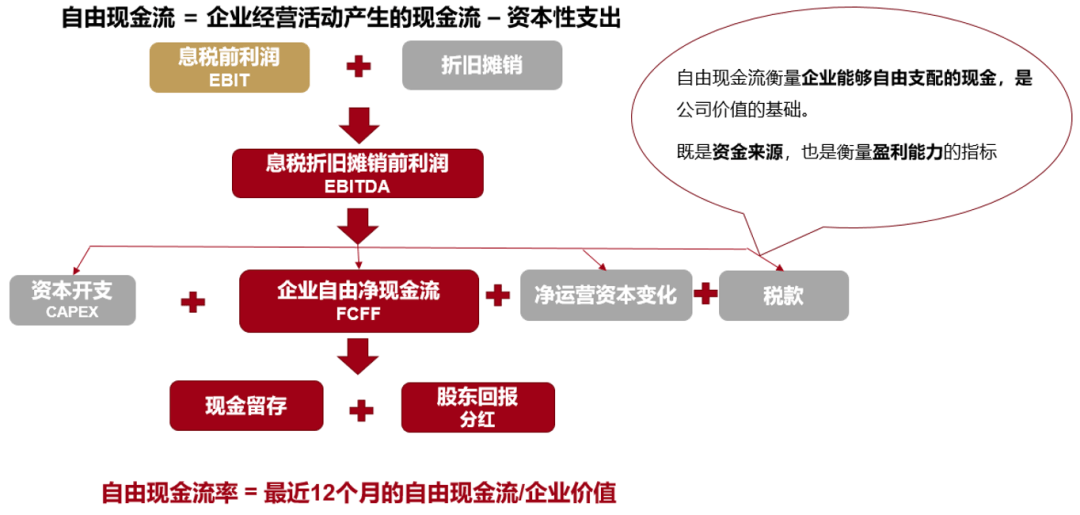
Group 1 - The current market focus is on cash flow strategies, particularly those based on free cash flow yield, which have gained traction in the A-share market this year despite initial skepticism [1][4] - Cash flow strategies and cash flow ETFs (159399) are categorized as value-oriented, and their related indices have outperformed dividend low-volatility indices and other dividend strategies this year [1][5] - In the second and third quarters of this year, cash flow strategies lagged behind growth style indices and some broad-based indices, but a more balanced market style is expected next year [1][4] Group 2 - The core of the cash flow strategy is the free cash flow rate, calculated as the free cash flow disclosed in the last four quarters divided by enterprise value, which serves as the main stock selection factor [1][3] - The dividend strategy, on the other hand, uses the dividend amount divided by total market capitalization, highlighting the differences in the numerator and denominator between the two strategies [3][4] - Free cash flow is a more transparent indicator of cash available for shareholder returns compared to net profit, and the enterprise value in the denominator provides a comprehensive assessment of a company's ability to return value to shareholders [3][4] Group 3 - Cash flow strategies can identify stocks with high dividend potential earlier than dividend strategies, as evidenced by the coal sector's performance post-supply-side reforms in 2016 and 2017 [4][5] - The cash flow strategy has recently increased its weight in consumer and non-ferrous sectors, reflecting improved free cash flow yields due to overall valuation declines [4][5] - The cash flow strategy's index has shown a long-term performance advantage over the CSI Dividend Index and other dividend indices since its inception [5][7] Group 4 - The FTSE China A-Share Free Cash Flow Focus Index has achieved a cumulative increase of 660.26% since its base date in 2014, outperforming the CSI Dividend Index, which has a cumulative increase of 314.32% [7][20] - The index has consistently delivered positive returns in most years, except for 2018, indicating its long-term stability in the A-share market [5][20] - The index's overall PE and PB ratios are lower than those of similar indices, and it has a higher dividend yield, with a significant proportion of state-owned enterprises, which may enhance shareholder returns [16][20] Group 5 - The FTSE cash flow index is distinct from other cash flow indices as it focuses on large and mid-cap stocks, applying a more comprehensive negative screening process to exclude low-quality earnings and high volatility companies [13][14] - The index's methodology includes assessing profitability quality and analyst expectations to avoid companies with poor growth prospects, ensuring a more robust selection process [12][14] - The index's characteristics align with international cash flow indices, emphasizing high free cash flow ratios among large and mid-cap stocks [14][16]
为什么要从成长到红利?4000点之后,我们该配置什么
Sou Hu Cai Jing· 2025-11-07 06:20
Core Viewpoint - The fourth quarter often sees increased market volatility and style shifts, prompting investors to consider defensive strategies to protect profits as the year ends [1][3]. Market Dynamics - The fourth quarter is a critical assessment period for institutional investors, leading to profit-taking and asset reallocation, which can cause significant market fluctuations [1][3]. - Policy meetings and international economic conditions also contribute to market sensitivity and potential overreactions [1][3]. Dividend Strategy Viability - Dividend strategies focus on companies with stable dividend payouts, which are less affected by market volatility and external shocks, making them suitable for the current uncertain environment [3][4]. - The low interest rate environment and ongoing asset scarcity support the attractiveness of dividend-paying stocks [3][4]. Performance of Dividend Assets - Historical data shows that the total return of the CSI Dividend Index significantly outperformed the CSI 300 Index, indicating the potential for stable long-term returns through dividend investments [4]. Types of Dividend Strategies - **Hong Kong Dividend Strategy**: Focuses on high dividend yields from state-owned enterprises, with a recent 12-month dividend yield of 5.72%, outperforming the CSI Dividend Index [6][7]. - **Low Volatility Dividend Strategy**: Combines dividend yield with low volatility, offering a 12-month yield of 4.23% and lower maximum drawdown compared to other dividend strategies, making it suitable for risk-sensitive investors [9]. - **Cash Flow Strategy**: Targets companies with positive free cash flow, emphasizing financial stability and the ability to pay dividends, with historical performance showing strong returns [10][14]. Market Outlook - The current low valuation and high dividend yield of dividend stocks present a favorable investment opportunity, especially as liquidity is expected to remain loose in the long term [14].

“老登”不行了,可能意味着一个时代的落幕
雪球· 2025-11-01 03:55
Core Viewpoint - The article discusses the decline of traditional industries in the A-share market, highlighting a shift in investment focus from established sectors like liquor and real estate to emerging technology stocks, indicating a broader change in market dynamics and investment strategies [5]. Group 1: Decline of Traditional Industries - The decline of traditional industries is fundamentally due to a systematic shrinkage of usage scenarios, with sectors like liquor and real estate facing structural challenges as consumer habits and market conditions evolve [8]. - The liquor industry is experiencing changes in drinking habits among younger consumers, while the real estate sector is hindered by a fundamental reversal in supply-demand dynamics [8]. - Although these industries still hold value, their profitability and growth potential have been reassessed, leading to a sentiment of inevitability regarding their decline [8]. Group 2: Challenges Faced by "Old Investors" - Investors, referred to as "Old Investors," face challenges by equating industry beliefs with investment truths, clinging to outdated notions such as the perpetual value of liquor and real estate without recognizing the shifts in consumer behavior and market trends [11]. - The real risk lies not in the obsolescence of industries but in the rigidity of thinking among investors [12]. Group 3: Effective Investment Strategies - Instead of fixating on the survival of specific industries, investors should return to the essence of investing by adhering to proven strategies, such as dividend strategies that focus on dynamically adjusting to capture high-yield stocks across various sectors [14]. - Cash flow strategies emphasize the importance of understanding a company's real cash-generating capabilities, particularly in traditional retail, where digital transformation can lead to improved cash flow [15]. - A diversified asset allocation strategy, incorporating stocks, bonds, and commodities, serves as a stabilizing force in navigating market changes while managing risk [15]. Group 4: Adapting to Change - The ultimate investment principle is to evolve with the times, as exemplified by Berkshire Hathaway's gradual investment in technology giants like Apple, reflecting respect for emerging trends rather than a betrayal of value investing [18]. - To avoid becoming "Old Investors," it is crucial to maintain an open mindset, understanding both the transformation opportunities in traditional industries and the underlying logic of emerging sectors [18]. - The transition from traditional industries to new sectors signifies not just the decline of a group but the inevitable evolution of an era, emphasizing the need to embrace change to seize investment opportunities [18].

2025雪球指数基金领袖峰会在上海举办
Zhong Zheng Wang· 2025-08-25 03:01
Core Insights - The summit focused on the theme "Leading Growth, Achieving Win-Win" and gathered key figures from major fund companies and popular users to discuss index investment opportunities in the context of global economic restructuring [1] Group 1: Global and Domestic Index Investment Trends - The global ETF market has surpassed $17 trillion as of June 2025, with consistent net inflows over the past 73 months, indicating a strong preference for passive investment strategies [1] - The domestic ETF market has expanded significantly from 550 billion yuan in 2018 to 5.7 trillion yuan, becoming a crucial tool for both institutional and individual investors [1] Group 2: Types of Indices to Invest In - Current index categories include broad-based indices like CSI 300 and sector-specific indices focusing on economic transformation areas such as AI and renewable energy [2] - Strategy-based products, particularly those emphasizing dividends and cash flow, have shown strong performance in recent years [2] Group 3: Future Directions in Index Investment - The index investment landscape is entering a new phase, with a notable increase in ETF trading volume and a growing acceptance among younger investors [2] - Five future focus areas were identified: comprehensive indices, differentiated strategy indices, cross-border connectivity, constant proportion multi-asset indices, and innovative strategy products incorporating derivatives [2] Group 4: Market Sentiment and Investment Strategies - The current market rally is supported by policy and funding, alongside a gradual recovery in market confidence [3] - The technology sector is viewed as having long-term growth potential, while dividend products offer defensive and stable returns in a low-interest-rate environment, balancing risk and reward [3]