
秸秆综合利用

Search documents
黑龙江省秋收全面告捷 较去年提前约3天
Huan Qiu Wang· 2025-10-28 03:06
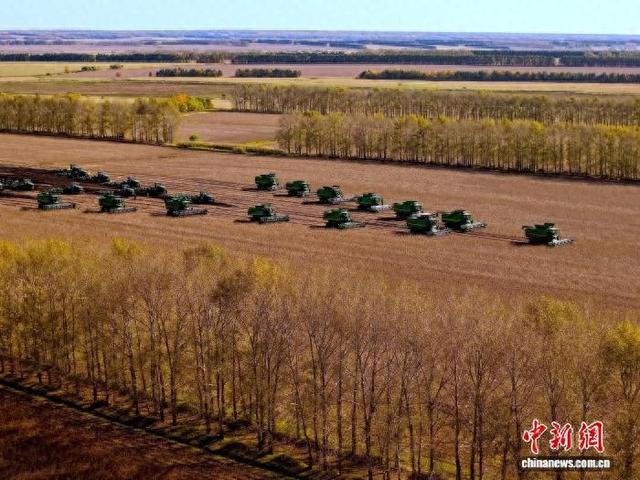
Core Insights - Heilongjiang Province has completed the harvest of various crops ahead of schedule, with soybean and rice harvests finishing 3 to 5 days earlier than last year, and corn harvest concluding 3 days earlier [1][3] Group 1: Harvest Progress - As of October 27, 2023, the total grain output in Heilongjiang Province is projected to reach 80.017 billion kilograms, maintaining its position as the top grain-producing region in China for 15 consecutive years [1] - The province has implemented effective field management techniques and benefited from favorable weather conditions, leading to an earlier maturity of major crops by 3 to 5 days compared to previous years [3] Group 2: Agricultural Machinery and Efficiency - During the autumn harvest, Heilongjiang Province promoted the use of advanced agricultural machinery, adding 5,995 tractors over 100 horsepower, 2,986 grain harvesters, and 3,262 corn harvesters [3] - A total of 442,000 large and medium tractors and over 200,000 large harvesting machines have been deployed across the province, significantly enhancing harvest efficiency and progress [3] Group 3: Coordination and Management - The province has established a daily scheduling, analysis, and reporting mechanism for the autumn harvest to ensure high standards and quality in the process [5] - Heilongjiang has integrated autumn harvesting, land preparation, and straw utilization, completing over 11.2 million acres of autumn land preparation, an increase of over 13 million acres compared to last year [5] - The Beidahuang Agricultural Reclamation Group has successfully completed its autumn harvest and achieved land preparation of 45.8253 million acres, effectively ensuring "black wintering" across the entire area [5]

马明龙调研秋收秋种和秸秆禁烧工作时强调 强化服务保障确保秋收秋种有序推进 加强秸秆综合利用实现生态经济效益双赢
Zhen Jiang Ri Bao· 2025-10-22 23:56
Core Insights - The article emphasizes the importance of ensuring food security and promoting green development through effective management of autumn harvest and sowing, as well as the comprehensive utilization of straw [1][2]. Group 1: Agricultural Practices - The local government is focusing on the timely collection and utilization of straw, which is being mixed with livestock manure to produce organic fertilizers, enhancing agricultural productivity [2]. - The rice harvest this year is reported to be better than last year, indicating positive agricultural performance [1]. Group 2: Equipment and Services - The Xuannong Agricultural Machinery Cooperative has 12 drying units with an annual drying capacity exceeding 3,500 tons, providing essential services to local rice farmers [1]. - The local government encourages the use of new drying equipment to improve service for surrounding farmers [1]. Group 3: Policy and Community Engagement - There is a strong emphasis on increasing public awareness of straw burning bans and promoting sustainable practices that benefit both the economy and the environment [2]. - The government is urged to enhance responsibility and urgency among departments to ensure effective support for the autumn harvest and sowing processes [2].
秋收进入冲刺阶段 各地多举措确保粮食“颗粒归仓”
Yang Shi Xin Wen Ke Hu Duan· 2025-10-22 07:40
Group 1: Harvest Progress - In Heilongjiang's Shuangyashan City, over 90% of the autumn grain harvest has been completed, entering the final stages [1] - The overall harvest progress is five days ahead of last year, with full completion expected by late October [2] Group 2: Agricultural Technology and Efficiency - New machinery is being utilized for the late rice harvest in Hunan, with over 19 million acres of late rice expected to be harvested by early November [3] - In Hunan's Yuanjiang City, upgraded harvesting machines have reduced grain loss rates by 2 percentage points compared to older models [4] - Automated grain purchasing systems have been implemented in Baoqing County, ensuring timely conversion of wet grain to dry grain [2] Group 3: Crop Quality and Yield - Xinjiang's Turpan City has 124,000 acres of cotton entering the harvest phase, with improvements in both quality and yield due to advanced agricultural techniques [5] - The entire cotton production process in Turpan City has been fully mechanized, with over 60% of the cotton already harvested [6]
苏北“点草成金”破解秸秆治理难题
Zhong Guo Huan Jing Bao· 2025-10-09 23:19
Core Viewpoint - The article emphasizes the importance of comprehensive straw utilization in Jiangsu's northern region to break the cycle of annual straw burning and achieve a win-win situation for ecological protection and agricultural development [1][2][3] Group 1: Current Situation and Challenges - Jiangsu's northern region, particularly cities like Xuzhou, Suqian, and Lianyungang, faces significant straw management challenges due to high straw production, accounting for nearly 60% of the province's total [1] - Traditional management relied heavily on administrative measures, involving extensive manpower and resources for monitoring and enforcement [1] - Farmers often resort to burning or improper disposal of straw, leading to resource waste and environmental hazards [1] Group 2: Innovative Solutions and Practices - Local governments have explored various pathways for straw utilization, transforming it into a resource for income generation [2] - Suqian has implemented a "five transformations" approach (fertilizer, feed, fuel, substrate, and raw material), enhancing soil fertility and reducing costs for local livestock farming [2] - Lianyungang has established a collection and transportation mechanism that significantly reduces farmers' costs, achieving over 70% straw collection rate and a 60% reduction in burning incidents [2] Group 3: Shift in Governance Approach - Xuzhou has shifted from a control mindset to a development-oriented approach, integrating straw utilization with industrial development [3] - The introduction of straw board production technology has created jobs and addressed local straw disposal issues, demonstrating the potential for economic benefits to drive compliance [3] - The article highlights the need for proactive participation from farmers, moving from passive compliance to active utilization [3] Group 4: Future Directions and Recommendations - Challenges remain, including immature utilization technologies, insufficient enterprise subsidies, and market access issues [3] - Recommendations include increasing policy support for straw processing enterprises, promoting technological innovation, and establishing platforms for better market connections between enterprises and farmers [3]
“秸”尽所能!河南发布行动方案让废秸秆变身“金宝贝”
合成生物学与绿色生物制造· 2025-09-21 07:34
Core Viewpoint - The article discusses the comprehensive utilization of crop straw in Henan Province, emphasizing the establishment of a robust network for straw collection, storage, transportation, and utilization, aiming for a stable comprehensive utilization rate of over 93% by 2027 [2][3]. Summary by Sections Action Plan Overview - The Henan Provincial Government has issued an action plan for the comprehensive utilization of crop straw from 2025 to 2027, focusing on enhancing the resource value of straw [2]. Key Tasks - **Task 1**: Establish high-standard farmland areas for straw return, focusing on improving soil fertility in major grain-producing regions [3]. - **Task 2**: Develop a straw feed utilization industry, particularly in major cattle-raising cities like Luoyang and Nanyang [3]. - **Task 3**: Build a comprehensive network for straw collection, storage, transportation, and utilization, ensuring land use for storage facilities [3]. Industry Alliance and Innovation - **Task 4**: Form a straw comprehensive utilization industry alliance, collaborating with universities and research institutions to create an information platform for straw utilization [4]. - **Task 5**: Explore new pathways for high-value transformation of straw, including the production of edible fungi substrates and green methanol, while enhancing agricultural machinery for straw utilization [4]. Policy Support - **Task 6**: Increase policy support for straw utilization projects, encouraging financial institutions to innovate credit products and reduce guarantee fees for small enterprises [4].

长沙召开秸秆综合利用暨禁烧工作推进会议
Chang Sha Wan Bao· 2025-09-02 03:19
Core Points - The city held a meeting to promote comprehensive utilization and burning prohibition of straw, emphasizing the importance of these initiatives [1][2] - The meeting discussed the preparation for the comprehensive utilization of straw during the mid and late rice harvesting period, with a focus on mobilization and deployment [2] Group 1 - The city’s deputy mayor highlighted the need for all districts to prioritize straw utilization and burning prohibition, especially with the upcoming rice harvest in mid to late September [2] - There is a call to accelerate the implementation of a three-year action plan for straw utilization, with tailored strategies for each township and village [2] - The importance of public awareness and support for the straw burning prohibition policy was stressed, aiming for comprehensive communication and understanding [2] Group 2 - The current air pollution prevention efforts are at a critical stage, requiring all relevant departments to recognize the serious situation and avoid complacency [2] - Strong measures are needed to combine both prevention and utilization strategies, enhancing precise control to prevent open burning of straw [2] - Responsibilities must be clearly defined, and measures detailed to ensure strict adherence to the burning prohibition, preventing pollution incidents [2]
我省粮食作物秸秆综合利用率超九成
Liao Ning Ri Bao· 2025-07-18 01:56
Core Insights - The article highlights the successful implementation of straw utilization methods in the province, achieving a comprehensive utilization rate of 93.16% by the end of last year, an increase of 13 percentage points since 2015, positioning the province among the top in the country [1][2] Group 1: Straw Utilization Methods - The province has adopted a "five transformations" approach (feed, fuel, fertilizer, substrate, and raw material) to enhance the comprehensive utilization of straw [1] - Key methods include returning straw to the fields, which is integrated with conservation tillage and black soil protection projects, covering 13.5 million acres of conservation tillage and 4 million acres of straw return [1] - The combination of organic fertilizers and straw return has been implemented on 2 million acres, significantly improving soil organic matter content and crop yields [1] Group 2: Livestock Feed and Clean Energy - The province has launched the "straw to meat" initiative, converting straw into high-value feed for over 11 million herbivorous livestock [2] - In terms of fuel utilization, the province has made strides in rural clean heating, replacing fossil fuels with straw, adding three large biogas companies and 20 straw direct combustion boilers, achieving a total capacity of 1,000 steam tons [2] - The effective utilization of straw has led to a significant reduction in open burning and improper disposal, contributing to improved air quality across 14 cities [2] Group 3: Technological Innovations and Standards - New technologies have emerged in straw utilization, with straw-based carbon fertilizer technology recognized as one of the top ten leading technologies by the Ministry of Agriculture and Rural Affairs [2] - The province has established 38 local standards related to straw utilization and black soil protection, covering various technical methods and machinery products [2] - Ongoing research is focused on improving the disposal of vegetable straw in facility agriculture, with promising techniques being tested in the western Liaoning region [2]
秸尽其用 有多少种可能
He Nan Ri Bao· 2025-06-18 23:31
Core Viewpoint - The article discusses the transformation of agricultural straw management in Henan Province, China, highlighting the shift from burning straw to utilizing it as a valuable resource, driven by policy changes, technological advancements, and changing attitudes among farmers [6][10][18]. Group 1: Current Situation and Statistics - Henan Province generates approximately 100 million tons of agricultural straw annually, ranking second in China [6]. - The comprehensive utilization rate of straw in Henan is stable at over 93%, surpassing the national average of 88.3% [14]. - In terms of utilization methods, fertilizer application through returning straw to the soil accounts for 74.4%, while feed utilization represents 21.3% [15]. Group 2: Historical Context and Policy Changes - Historically, straw was often burned due to low mechanization levels in agriculture, making collection and processing difficult [6]. - Since 2017, Henan has implemented the "Blue Sky Defender" monitoring system to reduce straw burning, resulting in a 90% decrease in burning incidents [7][8]. - The government has introduced various policies and funding initiatives to promote comprehensive straw utilization, including the "Five Utilization" approach (fertilizer, feed, fuel, substrate, and raw material) [10][18]. Group 3: Economic Benefits and Innovations - Farmers now find straw valuable, with options for selling processed straw to factories, leading to additional income [9]. - Innovative uses of straw include production of biomass pellets for clean energy, biogas generation, and cultivation substrates for mushrooms, showcasing the potential for high-value applications [12][16]. - The economic impact is significant, with one company reporting a total output value of 15 million yuan from straw products [11]. Group 4: Future Directions and Challenges - The article emphasizes the need for improved straw collection and transportation systems to enhance the efficiency of straw utilization [18]. - Future plans include establishing standardized straw collection centers and creating a comprehensive utilization network to further increase the utilization rate [18]. - The transition from burning to utilizing straw is seen as a critical step towards modernizing agriculture in Henan, with a focus on sustainable practices [18].
打造“五个一”秸秆利用新格局
He Nan Ri Bao· 2025-06-18 23:31
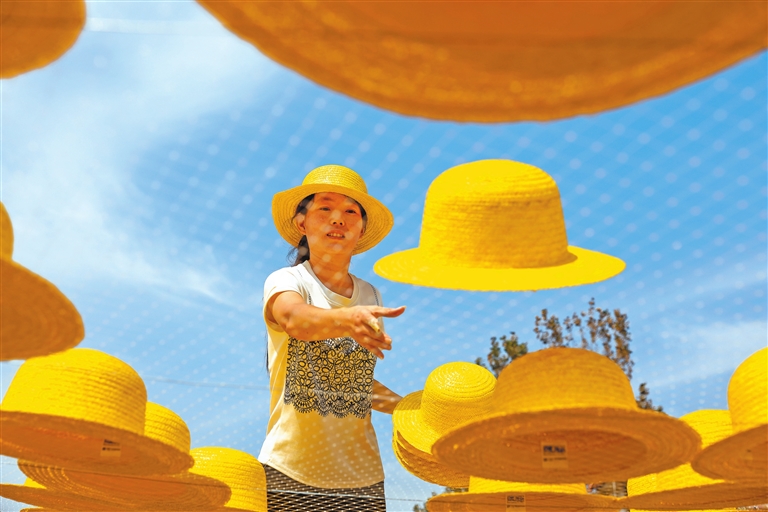
Core Viewpoint - Henan Province is focusing on the comprehensive utilization of straw resources, aiming to enhance agricultural sustainability and reduce carbon emissions through innovative practices and collaborative efforts among various sectors [1][2][3] Group 1: Straw Resource Utilization - Henan Province generates approximately 100 million tons of straw annually, ranking second in the country [1] - In 2024, the province's straw collection potential is estimated at 78.96 million tons, with wheat, corn, peanuts, and rice straw accounting for 96.48% of the total [1] - The total straw utilization in the province is projected to be 74.51 million tons, maintaining a comprehensive utilization rate above 93%, with fertilizer and feed utilization accounting for 74.4% and 21.3% respectively [1] Group 2: Development Strategies - The province is implementing a "one area, one belt, one network, one alliance, one road" strategy to enhance straw utilization [2][3] - "One area" refers to the establishment of high-standard farmland demonstration zones that integrate various agricultural practices and technologies [2] - "One belt" focuses on developing a straw-to-feed industry belt in key livestock regions, enhancing the straw feed storage system and supporting technology upgrades [2] - "One network" aims to create a standardized straw collection and storage network across the province, ensuring comprehensive coverage [2] - "One alliance" involves forming a straw utilization industry alliance to facilitate collaboration and information sharing among government, enterprises, and other stakeholders [2] - "One road" emphasizes the development of high-value straw utilization pathways, including edible fungi substrates and eco-friendly materials [3]
山东鄄城:秸秆综合利用带动农户减支增收
Zhong Guo Jing Ji Wang· 2025-06-10 17:12
Core Viewpoint - The integration of wheat harvesting and straw bundling has transformed agricultural waste into a profitable resource, enhancing both ecological and economic benefits for farmers [1][2]. Group 1: Agricultural Practices - The use of four large combine harvesters in Dongkou Town, Shandong, demonstrates efficient wheat harvesting and straw processing [1]. - The new model of "wheat harvesting + straw bundling" allows for comprehensive utilization of straw, turning it from a waste product into a valuable asset [1]. Group 2: Economic Impact - The cost of harvesting per mu (approximately 0.067 hectares) is now only 10 yuan, significantly lower than the conventional market price, leading to tangible savings for farmers [1]. - Livestock farms are now utilizing straw as high-quality feed, creating a new revenue stream for farmers [1]. Group 3: Environmental Benefits - Timely removal of straw reduces the risk of pest and disease outbreaks and prevents straw residue from affecting soil aeration, facilitating cleaner land for subsequent planting [2]. - The initiative to convert straw into biomass fuel, organic fertilizer, and quality feed contributes to environmental sustainability by curbing straw burning pollution [2]. Group 4: Policy and Development - Dongkou Town aims for high-quality agricultural development by balancing harvest quality and ecological preservation, promoting advanced agricultural machinery for grain security [2]. - The establishment of a "harvesting + bundling + recycling" service system reflects a strategic approach to rural revitalization and resource utilization [2].