
移动支付

Search documents
腾讯元宝开撒10亿红包,网友:一大早就被刷屏了
21世纪经济报道· 2026-02-01 02:41
Core Viewpoint - Tencent has launched a significant cash red envelope campaign through its Yuanbao app, aiming to drive user engagement and enhance its position in the AI sector, reminiscent of its earlier success with WeChat red envelopes during the Spring Festival [1][4][6]. Group 1: Tencent's Red Envelope Strategy - Tencent has initiated a 10 billion cash red envelope campaign via the Yuanbao app, featuring various forms of red envelopes, including cash rewards and shareable envelopes [1]. - The campaign is designed to link multiple Tencent products, including WeChat and QQ, and encourages users to share red envelopes with friends [4]. - This strategy marks a notable investment in user acquisition, reflecting Tencent's commitment to accelerating its presence in the AI market [6]. Group 2: Historical Context and Competitive Landscape - The Spring Festival red envelope battle began with WeChat in 2015, which significantly boosted mobile payment usage through a partnership with the Spring Festival Gala [6]. - Tencent's current investment of 10 billion in cash is seen as a strategic move to replicate past successes and compete effectively in the evolving AI landscape [7]. - Other competitors, such as Baidu, are also engaging in similar promotional activities, indicating a broader trend among tech giants to leverage festive occasions for user engagement [7].



马化腾10亿vs李彦宏5亿,今年春节红包打AI战
Sou Hu Cai Jing· 2026-01-30 12:18
Core Viewpoint - Tencent and Baidu are launching cash red envelope campaigns to attract users to their AI products, but the effectiveness of this strategy is questionable due to the current immaturity of AI applications and user fatigue with cash incentives [3][4][32]. Group 1: Tencent's Strategy - Tencent's chairman, Ma Huateng, announced a cash giveaway of 1 billion yuan for its AI application "Yuanbao" during the Spring Festival, aiming to replicate the success of WeChat's red envelope feature [3][4]. - The "Yuanbao" app saw a significant rise in downloads, ranking first in Huawei's app store and second in Apple's China app store shortly after the announcement [27]. - However, the app's ranking dropped shortly after the initial surge, indicating a lack of sustained user engagement beyond the cash incentive [27][32]. Group 2: Baidu's Approach - Baidu launched a cash red envelope campaign for its AI assistant "Wenxin," offering 500 million yuan in rewards to users engaging with the app [3][31]. - Despite initial success in attracting users, the app struggled to retain them post-campaign, highlighting a lack of strategic direction [15][31]. - Baidu's AI products have not established a strong presence in high-frequency application scenarios, limiting their effectiveness in retaining users [31][32]. Group 3: Market Dynamics and Comparisons - The current AI market is still in a "user education phase," unlike the mobile payment boom where user needs were already established [32]. - The success of WeChat's red envelope was due to its alignment with existing user habits and needs, which is not the case for current AI products [11][32]. - Companies like Douyin have successfully integrated cash incentives with their business models, focusing on user engagement and retention rather than just attracting new users [21][22]. Group 4: Challenges and Future Outlook - The fundamental challenge for both Tencent and Baidu lies in the unclear positioning of their AI products, which do not yet meet specific user needs [28][31]. - The industry must focus on developing unique product capabilities and understanding user requirements rather than relying on cash incentives to drive initial engagement [32]. - The current approach of using cash giveaways may lead to temporary spikes in user numbers but will not foster long-term loyalty or ecosystem growth [24][32].


腾讯“元宝”撒10亿春节红包 马化腾盼复刻微信红包经典时刻
Zheng Quan Shi Bao Wang· 2026-01-26 07:57
Core Viewpoint - Tencent is launching a Spring Festival activity on February 1, distributing a total of 1 billion cash red envelopes through the Yuanbao App, with individual red envelopes worth up to 10,000 yuan [1]. Group 1: Company Initiatives - Tencent aims to recreate the success of the 2015 Spring Festival when it distributed 500 million cash red envelopes via WeChat, marking a significant milestone for mobile payments [1]. - The initiative is part of Tencent's strategy to enhance user engagement and promote its payment services [1]. Group 2: Historical Context - The 2015 event is referred to as the "Normandy Landing" for WeChat Pay, as it opened the floodgates for mobile payment adoption in China [1].
从银联支付,看国人出境游新变化
远川研究所· 2026-01-25 10:07
Core Viewpoint - The article highlights the growing trend of outbound tourism among Chinese citizens, with expectations of over 1.23 billion trips in 2024 and a satisfaction score of 80.06. By 2025, the number of outbound trips is projected to reach 1.55 billion, indicating a significant shift in travel preferences and payment methods [2][3]. Group 1: Outbound Tourism Trends - Outbound tourism has become a daily choice for many Chinese citizens, with a notable increase in travel satisfaction and projected growth in travel numbers [2][3]. - The trend is shifting from concentrated popular destinations to more diverse and less-traveled locations, with Chinese tourists increasingly exploring places like Africa and Oceania [6][8]. - The rising value of the Chinese passport, allowing visa-free or visa-on-arrival access to over 90 countries, is lowering barriers for international travel [8]. Group 2: Payment Trends - UnionPay is becoming a key tool for Chinese tourists, facilitating their travel experiences and payments across more than 180 countries [9]. - The average transaction growth for cruise-related merchants is over 200% from 2022 to 2025, indicating a significant increase in cross-border payment usage [9]. - Mobile payment is becoming the preferred method for cross-border transactions, with UnionPay's comprehensive product matrix enhancing payment flexibility [10]. Group 3: Experience-Oriented Consumption - The focus of outbound tourism is shifting from mere sightseeing to immersive cultural experiences, with a significant increase in independent travel choices [18][21]. - Experience-based consumption is rapidly rising, with travelers seeking authentic local interactions rather than just ticking off landmarks [24][29]. - The structure of outbound tourism spending is diversifying into six core areas, emphasizing local experiences and cultural engagement [21]. Group 4: Payment Infrastructure and Security - UnionPay's extensive network and localized payment solutions are crucial for integrating into various consumer ecosystems globally [12][13]. - The company is enhancing its services to meet diverse market needs, ensuring that payment methods are not only functional but also secure and efficient [12][31]. - UnionPay's commitment to safety and risk management through advanced technology is providing consumers with a reliable payment experience while traveling [31].

长亮科技跌2.05%,成交额2.83亿元,主力资金净流出2198.08万元
Xin Lang Cai Jing· 2026-01-20 05:29
Group 1 - The core viewpoint of the news is that Changliang Technology's stock has experienced fluctuations, with a recent decline of 2.05% and a total market value of 12.43 billion yuan [1] - As of January 20, the stock price is reported at 15.29 yuan per share, with a trading volume of 283 million yuan and a turnover rate of 2.58% [1] - The company has seen a net outflow of main funds amounting to 21.98 million yuan, with significant selling pressure observed [1] Group 2 - Changliang Technology's main business includes providing IT system solutions and services for financial institutions, with revenue contributions from digital financial solutions (58.44%), big data application systems (33.99%), and other services [1] - As of September 30, the company reported a revenue of 1.089 billion yuan for the first nine months of 2025, reflecting a year-on-year growth of 5.19%, while the net profit attributable to shareholders was a loss of 11.39 million yuan, a decrease of 386.16% [2] - The company has distributed a total of 230 million yuan in dividends since its A-share listing, with 17.39 million yuan distributed over the past three years [3]

“碰一下”奇袭扫码支付
Xin Lang Cai Jing· 2026-01-19 03:55
Core Insights - The introduction of "Tap" payment based on NFC technology aims to streamline the payment process, reducing the time taken to complete a transaction to under 1 second [1][17] - Alipay's "Tap" payment has rapidly gained popularity, reaching over 100 million users in just 321 days, significantly faster than previous payment methods [2][18] - The competitive landscape in the payment industry is evolving, with other companies like Douyin and UnionPay beginning to explore similar NFC payment solutions [2][19] Group 1: Payment Innovations - "Tap" payment allows users to complete transactions with a simple touch, enhancing user experience and efficiency [1][17] - Alipay's aggressive marketing strategy, including a substantial initial budget of 300 billion yuan for promotion, has contributed to the rapid adoption of "Tap" [18] - The technology behind "Tap" leverages NFC, which has become more accessible as smartphone manufacturers increasingly support it [14][15] Group 2: Market Dynamics - The competitive rivalry between Alipay and WeChat Pay has intensified, with both companies adopting different strategies to capture market share [6][10] - WeChat Pay has chosen to focus on traditional payment methods, while Alipay is pushing forward with NFC technology [2][19] - The shift in user preferences and payment habits is evident, with Alipay seeking to regain lost market share in offline payments [12][18] Group 3: User Engagement and Feedback - Alipay's "Tap" payment has been integrated into various everyday scenarios, aiming to create a comprehensive ecosystem for users [19][21] - User feedback on the "Tap" payment system is mixed, with some appreciating the convenience while others express concerns about security and compliance [22][23] - The initiative has sparked discussions about the implications of aggressive marketing tactics and user consent in public spaces [23][24]
博实结跌2.00%,成交额4011.83万元,主力资金净流出228.51万元
Xin Lang Cai Jing· 2026-01-16 02:21
Core Viewpoint - The stock of Bosijie has experienced fluctuations, with a recent decline of 2.00%, while showing an overall increase of 8.13% year-to-date, indicating a volatile but upward trend in the stock price [1]. Company Overview - Bosijie Technology Co., Ltd. is located in Longhua District, Shenzhen, Guangdong Province, and was established on June 4, 2009. The company specializes in the research, design, production, and sales of IoT intelligent hardware products, including smart vehicle terminals, smart travel components, smart payment hardware, wireless communication modules, and other intelligent hardware [1]. - The revenue composition of Bosijie includes: smart vehicle terminals (38.80%), smart travel components (28.42%), other intelligent hardware (23.20%), smart payment hardware (4.94%), and wireless communication modules and others (4.62%) [1]. Financial Performance - For the period from January to September 2025, Bosijie achieved a revenue of 1.272 billion yuan, representing a year-on-year growth of 21.66%. The net profit attributable to the parent company was 180 million yuan, reflecting a year-on-year increase of 33.95% [2]. - Since its A-share listing, Bosijie has distributed a total of 131 million yuan in dividends [3]. Shareholder Information - As of January 9, 2025, Bosijie had 8,652 shareholders, a slight decrease of 0.12% from the previous period. The average circulating shares per person increased by 0.12% to 4,615 shares [2]. - The top ten circulating shareholders include new entrants such as Huashang Credit Enhanced Bond A and changes in holdings among existing shareholders, indicating a dynamic shareholder structure [3].
Visa宣布支持中国消费者Apple Pay绑卡,推动中外经贸和人文交流
Huan Qiu Wang Zi Xun· 2026-01-16 02:14
Core Insights - Visa has announced support for Chinese cardholders to link their cards with Apple Pay, enhancing payment options for overseas transactions [1] - The collaboration aims to provide a secure and convenient payment experience for users, leveraging Visa's tokenization technology [2] Group 1: Company Initiatives - Visa is committed to offering diverse payment options for Chinese cardholders, reflecting the growing demand for mobile payment solutions [1] - The initial participating banks include major institutions such as Industrial and Commercial Bank of China, Bank of China, and Agricultural Bank of China, with plans to expand to more banks [1] Group 2: Technology and Security - The core of Visa's service upgrade is the payment tokenization technology, which ensures that real card numbers are not stored on devices or servers, reducing the risk of data breaches and fraud [2] - This technology allows for a seamless payment experience, enabling contactless transactions and simplifying the payment process for users [2] Group 3: Market Commitment - Visa has been rooted in the Chinese market for nearly 40 years and is committed to increasing its investment in the region [2] - The company aims to leverage its unique advantages in consumer payments to support trade and cultural exchanges between China and the global market [2]

Visa宣布支持中国消费者 Apple Pay绑卡
Sou Hu Cai Jing· 2026-01-15 13:29
Core Insights - Visa announced support for Chinese cardholders to link their Visa cards to Apple Pay, enabling payments in various scenarios such as overseas merchants, mobile apps, and online websites. Currently, 79% of global offline transactions are made via contactless payments [1]. Group 1: Company Strategy - Visa's China President, Yin Xiaolong, emphasized the growing demand for mobile payment solutions and the company's commitment to providing diverse payment options for Chinese cardholders, ensuring a secure payment experience regardless of location [4]. - Visa is increasing investments in data and payment security, launching tokenization services for cross-border applications, and collaborating with Apple and financial institutions to enhance mobile payment experiences for Chinese consumers [4]. Group 2: Technical Details - Apple Pay allows consumers to make contactless payments by double-clicking the side button on their iPhone or Apple Watch, with security verification through Face ID, Touch ID, or device password, ensuring transaction security [5]. - When adding a Visa card, the actual card number is not stored on the device or Apple's servers. Instead, a unique device account number generated by Visa's tokenization technology is encrypted and securely stored in the device's secure element [5].

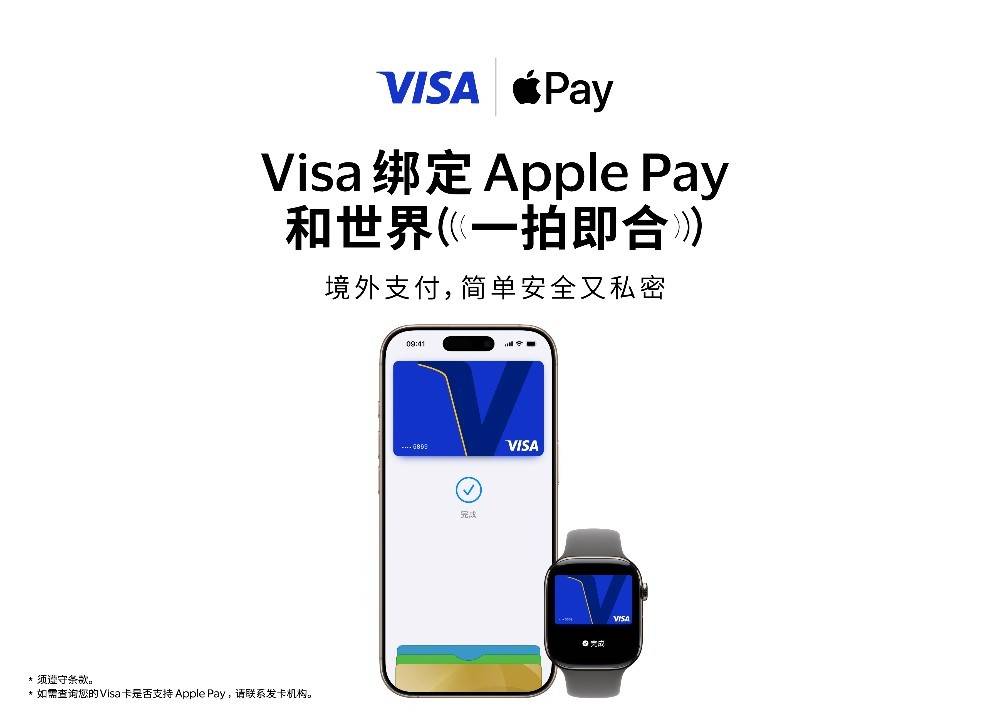
国内持卡人可绑定信用卡至苹果支付 首批 8 家银行率先上线
Jin Rong Jie· 2026-01-15 08:27
Core Insights - Visa has officially announced support for Chinese cardholders to link their Visa cards to Apple Pay, enabling convenient payments in various scenarios such as overseas merchants, mobile applications, and online websites [1] - The global trend shows that 79% of offline transactions are completed through contactless payment methods [1] Group 1: Company Strategy - Visa aims to provide diverse payment options for Chinese cardholders, enhancing their payment experience globally [1] - The collaboration with Apple is a significant step in Visa's long-term commitment to the Chinese market, focusing on data and payment security [1] Group 2: Partnerships and Implementation - Initial banks supporting this service include major institutions such as Industrial and Commercial Bank of China, Bank of China, Agricultural Bank of China, and others [1] - Visa and Apple are working with additional banks like Shanghai Pudong Development Bank and China Construction Bank to advance system integration, with features expected to roll out in phases [1]