
稳市场

Search documents
一揽子政策公布后,财政部重磅定调:2026年财政总体支出力度“只增不减”
Hua Xia Shi Bao· 2026-01-20 08:39
Core Viewpoint - The Chinese government is implementing a series of proactive fiscal policies aimed at promoting high-quality economic and social development, with a focus on increasing overall fiscal expenditure and optimizing its structure for better efficiency and stronger economic momentum [2][14]. Fiscal Policy and Expenditure - In 2026, the overall fiscal expenditure will continue to increase, ensuring that the fiscal deficit, total debt scale, and expenditure remain at necessary levels, with a commitment to "only increase, not decrease" [2][14]. - The fiscal deficit rate for 2025 is set at around 4%, an increase of one percentage point from the previous year, with new government debt reaching 11.86 trillion yuan, up by 2.9 trillion yuan from the previous year [3][4]. Debt Management - The government maintains a relatively low debt-to-GDP ratio compared to the average of G20 countries, despite increasing deficits and debt issuance [4]. - In 2025, measures will be taken to replace 2 trillion yuan of hidden debt and allocate 800 billion yuan in new special bonds to support local government finances, thereby reducing the average interest cost of local debts by over 2.5 percentage points [6][7]. Support for Consumption and Investment - A special long-term government bond issuance of 1.3 trillion yuan in 2025 will support consumption and promote the sale of green, low-carbon, and intelligent products, with an expected sales boost of approximately 2.6 trillion yuan [5]. - Policies will be introduced to stimulate consumption through personal consumption loans and support for new consumption models, as well as adjustments to tax refund policies for duty-free shops [5]. Support for SMEs and Innovation - A new loan interest subsidy policy for small and micro enterprises will focus on 14 key industrial chains, including new energy, automotive, and medical equipment [8][9]. - The government will provide risk-sharing funds to support bond issuance for private enterprises and private equity investment institutions, mitigating investor losses [10]. Pension and Social Security - In 2025, the central government will allocate approximately 1.2 trillion yuan for basic pension insurance subsidies, with a 2% increase in pension levels for retirees [11]. Tax System and Market Development - The government aims to improve the local tax system to support the construction of a unified national market, including clarifying fiscal responsibilities and enhancing tax regulations [12]. Technological Innovation and Investment - The government will support the National Venture Capital Guidance Fund to invest in early-stage, small, long-term, and hard technology projects, promoting innovation in key industries [19]. - Financial support will be provided for technology innovation loans, with the central bank offering re-loan support to facilitate the transformation of manufacturing and digitalization of SMEs [20][21]. Export Tax Policy Changes - The cancellation of export tax rebates for solar and electronic products starting April 1, 2026, is expected to promote efficient resource utilization and address "involution" in competition [17].
中央经济工作会议目标任务解读丨抓好“四稳”激活发展内生动力
Xin Lang Cai Jing· 2025-12-28 06:02
Core Viewpoint - The article emphasizes the importance of the "Four Stabilities" (stabilizing employment, enterprises, markets, and expectations) as essential measures to enhance China's economic resilience and growth amid complex internal and external challenges [1] Group 1: Economic Policies and Measures - Since the Central Political Bureau meeting on April 25, 2025, a series of policies aimed at stabilizing employment and the economy have been implemented to invigorate economic development [1] - The Central Economic Work Conference reiterated the necessity of the "Four Stabilities" as a fundamental requirement for achieving quality and reasonable economic growth [1] - Experts suggest that the "Four Stabilities" are interdependent and must support each other to lay a solid foundation for economic improvement [1] Group 2: Challenges Facing Enterprises - Small and medium-sized enterprises (SMEs) are facing multiple challenges, including rising costs and insufficient demand, which are exacerbated by structural contradictions in the economy [1] - The overall recovery and transformation of SMEs are critical, as they are currently navigating a phase of both recovery and upgrade [1] - The article notes a trend of increasing "one-person companies" across the country, indicating a shift in how individuals are responding to economic pressures [1] Group 3: Employment and Labor Market - In the first eleven months of the year, 12.1 million new urban jobs were created, with an average urban unemployment rate of 5.2%, indicating a positive employment trend [1] - Employment is described as a key driver of demand, linking enterprise development with market vitality [1] - The article highlights the need for a systematic approach to address employment challenges, including the establishment of a unified public employment service platform [1] Group 4: Policy Recommendations - The article suggests that improving the business environment for SMEs is essential for stabilizing employment and economic growth [1] - It advocates for the use of digital technology to enhance policy services, transforming the approach from reactive to proactive [1] - Industry associations are encouraged to act as important nodes for policy transmission and feedback, helping to implement the "Four Stabilities" at the enterprise level [2]
【中央经济工作会议目标任务解读】抓好“四稳”激活发展内生动力
Jing Ji Ri Bao· 2025-12-28 05:45
Group 1 - The "Four Stabilities" (employment, enterprises, market, and expectations) are essential for stabilizing the economy and are interdependent [1][2] - The current economic environment presents challenges for small and medium-sized enterprises (SMEs), including rising costs and insufficient demand, which impacts their recovery and transformation [2][3] - The increase in "one-person companies" indicates a trend where individuals are opting for entrepreneurship instead of seeking traditional employment, reflecting a shift in the job market [3] Group 2 - Employment stability is crucial for social expectations and economic growth, with significant job creation reported, including 12.1 million new urban jobs in the first 11 months of the year [3][4] - The Central Economic Work Conference emphasizes the importance of stabilizing employment for key groups, including college graduates and migrant workers, and encourages flexible employment [4] - Policies aimed at supporting SMEs, such as tax reductions and enhanced R&D deductions, are in place, but challenges in policy implementation remain [5][6] Group 3 - Industry associations are seen as vital in bridging communication between policies and enterprises, helping to implement the "Four Stabilities" at the entrepreneurial level [6]
主动作为 奋力攻坚全力以赴完成好全年目标任务
Xin Lang Cai Jing· 2025-12-25 22:30
Group 1 - The meeting emphasized the need to focus on key industries, enterprises, and projects to address shortcomings and tap into potential for economic recovery [2] - There is a strong push for industrial development, with increased efforts in attracting investment, project investment, and optimizing the business environment [2] - The real estate market is targeted for improvement through the creation of high-quality, diverse housing products and enhanced marketing efforts [2] Group 2 - The meeting called for unified action among all levels of government to meet the economic and social development goals set by the municipal committee [2] - Safety inspections and risk management are prioritized as the New Year and Spring Festival approach to ensure public safety and stability [2]
楼市即将全面放开限制?房价要开始上涨了?发改委明确表示
Sou Hu Cai Jing· 2025-12-22 19:00
近日,一则来自高层的政策信号,让沉闷许久的房地产市场再起波澜。先是广东在"十五五"规划中提 出"清理住房消费不合理限制性措施",接着国家发改委也明确发文,要"推动清理汽车、住房等消费不 合理限制性措施"。这被普遍解读为,针对北上深等城市楼市限购政策的"松绑"信号。 消息一出,最受触动的是无数普通家庭。一部分人心中燃起一丝希望,盼着市场回暖;但更多的人,心 中却是一沉,泛起深深的忧虑,一旦全面放开,压抑已久的房价会不会像脱缰野马,迎来一波报复性上 涨? 这种担忧,源于对过去房价飞涨的记忆,也源于对自身财富在不确定性中可能再次被"洗牌"的深 深不安。 信心和购买力的背后,是冰冷的市场数据。当前楼市正面临着巨大的库存压力。数据显示,2025年11 月,35个重点城市的库存出清周期已长达24.54个月,这意味着按目前的销售速度,卖完现有库存需要 超过两年时间,而且这个周期还在环比上升。 广东的市场数据更具代表性。作为经济大省,其楼市现状堪称缩影:2025年前十个月,广东全省新建商 品房销售额同比大幅下降16.7%,房地产开发投资也缩减了20.7%。在这样的市场基础上,政策的首要 目标是"去库存"、"稳市场",而非刺激 ...

全力推进“四稳”工作
Xin Lang Cai Jing· 2025-12-21 19:38
Group 1 - The core focus of Xining Economic and Technological Development Zone is on stabilizing employment, enterprises, markets, and expectations through precise and practical measures, resulting in over 11,400 new jobs created, 7.2 billion yuan in enterprise financing, and 29.5 billion yuan in industrial chain cooperation funds [1][2] Group 2 - Xining Development Zone prioritizes employment stability by establishing a comprehensive support system that includes policy empowerment, service protection, and integration of industry and education, with over 102,600 training sessions conducted [2] - The zone implements a "one-on-one" enterprise liaison system to dynamically assess employment needs, creating a precise employment ledger covering over 130 enterprises [2] - To support enterprises, the zone has classified assistance for 155 industrial enterprises, addressing 21 issues related to production factors and policy implementation [2] Group 3 - Xining Development Zone aims to enhance market vitality by optimizing the business environment and focusing on modern industrial systems, with a clear development path and key project oversight mechanisms in place [3] - The zone is accelerating the construction of 69 ongoing projects and 13 key projects with a total investment of 5.56 billion yuan [3] - A risk prevention mechanism has been established, monitoring 130 key enterprises to identify and mitigate potential risks, thereby enhancing confidence in enterprise development and regional economic resilience [3]
明年我国经济工作怎么干?关注这些重点工作
Sou Hu Cai Jing· 2025-12-09 01:36
Group 1 - The core economic policy for 2026 emphasizes a more proactive fiscal policy combined with moderately loose monetary policy, continuing the approach from the previous year [1] - The meeting highlighted the importance of leveraging existing policies while also introducing new measures to address emerging issues, aiming for a synergistic effect to stabilize short-term fluctuations and lay a foundation for long-term development [3] - The focus on "domestic demand as the main driver" indicates that insufficient effective demand remains a key challenge, necessitating deeper efforts to build a strong domestic market and dismantle local protectionism and regional barriers [5] Group 2 - The meeting underscored the need for better coordination between domestic economic work and international trade dynamics, advocating for both openness and the protection of national interests in response to uncertainties [7] - The potential for the Chinese economy is expected to be further unleashed in the new year, presenting new development opportunities for both enterprises and individuals across various sectors [7]
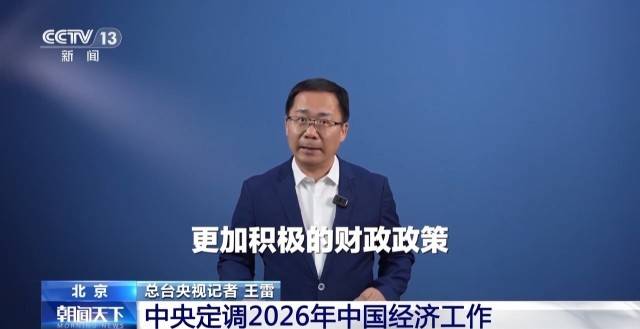
国家统计局:下阶段要全方位扩大国内需求,着力稳就业、稳企业、稳市场、稳预期
Zheng Quan Shi Bao Wang· 2025-11-14 02:12
Core Viewpoint - The overall operation of the national economy in October is stable, with solid progress in transformation and upgrading, and the new development momentum continues to grow [1] Economic Performance - The external environment remains unstable and uncertain, and there are significant pressures from domestic structural adjustments, posing challenges to the stable operation of the economy [1] Policy Recommendations - The next steps should focus on maintaining a stable yet progressive work guideline, expanding domestic demand comprehensively, and ensuring stability in employment, enterprises, markets, and expectations [1] - There is an emphasis on actively promoting the effective implementation of macro policies, deepening reforms and opening up, and further strengthening innovation-driven initiatives [1] Economic Goals - The aim is to promote a qualitative effective improvement and a reasonable quantitative growth of the economy [1]
财政部:积极培育新兴产业和未来产业 持续推动制造业转型升级
智通财经网· 2025-11-07 10:56
Core Viewpoint - The report emphasizes the acceleration of new growth momentum in China's economy through enhanced fiscal policies, support for innovation, and investment in key industries, while ensuring the stability of employment and market expectations [1][3]. Group 1: Fiscal Policy and Economic Growth - The fiscal policy is increasingly proactive, focusing on stabilizing employment, businesses, and market expectations, while promoting economic recovery [3][4]. - A total of 300 billion yuan in special bonds is allocated to support the replacement of consumer goods, which is expected to stimulate significant retail sales [4][15]. - The central government plans to increase its technology funding to 398.12 billion yuan in 2025, a 10% increase from the previous year, focusing on core technology and strategic industries [5][21]. Group 2: Investment and Consumption - The government aims to enhance domestic demand by boosting consumption and effective investment, with a focus on key sectors and weak links [13][16]. - The issuance of special bonds has accelerated, with 5.55 billion yuan issued in the first half of the year, completing 42.7% of the annual target [16]. - The manufacturing sector is expected to see a 10.3% increase in industrial investment, driven by government support for technological upgrades [17]. Group 3: Employment and Social Welfare - The central government allocated 667.4 billion yuan for employment support, with 6.95 million new urban jobs created in the first half of the year [27][28]. - Education spending increased by 5.9% to 2.15 trillion yuan, with a focus on improving quality and access to education [29][30]. - Basic public health service funding reached 804.35 billion yuan, enhancing health management and disease prevention efforts [32][33]. Group 4: Risk Management and Financial Stability - The government is implementing measures to mitigate financial risks, including the management of local government debt and the promotion of real estate market stability [7][9]. - A comprehensive approach to fiscal management is being adopted, including reforms in tax systems and budget execution to ensure effective use of resources [7][12]. Group 5: Innovation and Technology - The report highlights the importance of integrating technological innovation with industrial development, with a focus on enhancing research capabilities and supporting key technology projects [20][21]. - Funding for basic research is set to increase by 12.1%, emphasizing the need for original innovation and support for research institutions [21][22]. Group 6: Environmental and Social Development - The government is committed to ecological protection and sustainable development, with significant funding allocated for pollution control and ecosystem restoration [38][39]. - Social welfare programs are being expanded, with increased support for vulnerable populations and efforts to improve living standards [34][35].
张家港前三季度经济运行数据出炉
Su Zhou Ri Bao· 2025-10-31 05:23
Economic Performance - Zhangjiagang's GDP for the first three quarters reached 242.4 billion, with a year-on-year growth of 5.4%, surpassing the national average of 5.2% and ranking fifth in Suzhou [1] - The total GDP ranks third among all county-level cities in Suzhou, indicating strong economic strength and stable development [1] Investment Highlights - Industrial investment in Zhangjiagang amounted to 21.83 billion, with a growth rate of 14.6%, ranking second in Suzhou [1] - Infrastructure investment saw a remarkable growth rate of 48.7%, also placing second in Suzhou [1] Service Sector Growth - The revenue from the scale above designated size in the service industry reached 14.9 billion, growing by 11.6%, ranking fourth in Suzhou [1] Construction Sector - The total output value of the construction industry was 17.851 billion, with a growth rate of 14.2%, ranking second in Suzhou [1] - The sales area of commercial housing increased by 3.3%, leading Suzhou [1] Future Outlook - Zhangjiagang plans to implement more effective measures to stabilize employment, enterprises, markets, and expectations, aiming to achieve the annual economic and social development goals and successfully conclude the "14th Five-Year Plan" [1]