
站城融合

Search documents
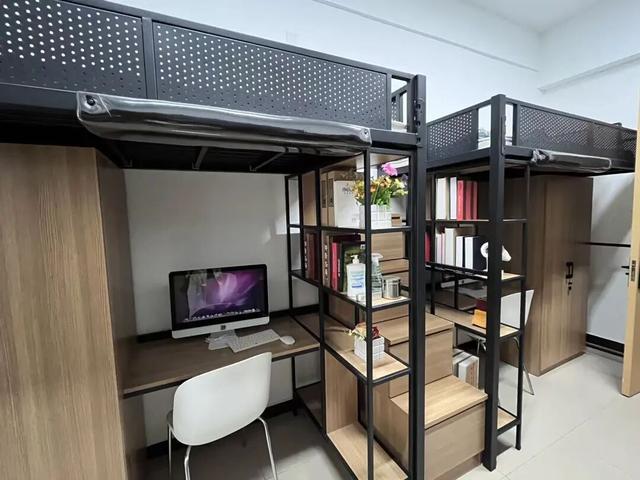
从 “一张床” 到 “一间房”,北京兜底式关怀让年轻人扎根更有底气
Bei Jing Qing Nian Bao· 2026-01-08 06:59
Core Insights - Beijing is enhancing housing security through increased supply of rental housing, including affordable rental apartments and dormitories, aimed at alleviating housing difficulties for new citizens and young people [1][5][16] - The city plans to supply 475 hectares of land for affordable housing by 2025, with a focus on transforming existing structures into rental units [2][3] - The construction of approximately 67,000 affordable housing units is expected during the 14th Five-Year Plan period, with a significant increase in the number of public rental housing units [5][11] Housing Supply and Policy - By 2025, Beijing aims to construct around 67,000 affordable housing units, with 43,000 already completed, ensuring that vulnerable families receive necessary support [5][11] - The city is focusing on various types of affordable housing, including public rental housing, market-oriented rental apartments, and shared ownership homes [2][3] - The rental housing supply is being diversified to include small units like "one bed" and "one room," which cater to the needs of young professionals and low-income workers [17] Talent Housing Support - A talent housing support system is being established, with over 100,000 public rental housing allocations made to young professionals and employees in key industries [7][11] - The city is implementing pilot projects for youth apartments and offering tiered rent reductions to make housing more accessible [7][10] - The focus is on providing affordable and suitable housing options for young talent, particularly in areas with high employment opportunities [7][10] Market Dynamics and Policy Adjustments - In December 2025, Beijing's housing policies were adjusted to facilitate home purchases, including reducing the required social security or tax payment duration for non-local families [10][9] - The new policies have led to an increase in housing transactions, with a notable rise in the number of signed contracts for both new and second-hand homes [9][10] - The city is prioritizing land supply in areas with strong market demand and adequate infrastructure, enhancing the living conditions for young residents [14] Quality and Community Development - The "Good Housing" initiative is gaining traction, emphasizing the quality of new housing developments and the integration of community facilities [13][14] - Projects are being designed to enhance living quality, with a focus on creating vibrant neighborhoods that support social interaction and community engagement [13][14] - The transformation of commercial and office spaces into affordable housing is part of a broader strategy to revitalize urban areas and meet the housing needs of new citizens [17]

地铁里的“城市活力微中心”
Xin Lang Cai Jing· 2025-12-28 16:22
Group 1 - The core idea of the article highlights the increasing convenience and variety of services available at Beijing subway stations, enhancing the commuting experience for city residents [4][5] - The introduction of breakfast carts, coffee shops, flower stands, convenience stores, and cultural shops at subway stations caters to the diverse needs of commuters [4] - Currently, there are over 20 flower stands and 130 convenience stores across 95 subway stations, serving more than 20,000 people daily [4] Group 2 - The Beijing subway has implemented over 3,000 convenience facilities across more than 340 stations, aligning with the "station-city integration" construction concept [5] - The transformation of transportation nodes into "urban vitality micro-centers" aims to enhance the overall satisfaction of citizens during their travels [5]

北京通州站将开通投运 轨道上的京津冀再添新节点
Xin Lang Cai Jing· 2025-12-26 08:47
Core Viewpoint - The Beijing Tongzhou Station, located within the Beijing Urban Sub-center Comprehensive Transportation Hub, is set to officially open on December 30, marking a significant milestone in the development of Beijing's transportation infrastructure and the integration of the Beijing-Tianjin-Hebei region [1][2]. Group 1: Infrastructure Development - The Tongzhou Station is a key station identified in Beijing's overall urban planning and serves as an important node in the "Railway on the Beijing-Tianjin-Hebei" initiative [1]. - The sub-center hub adopts an innovative all-underground design, integrating railway stations and transit systems underground to free up valuable surface space for urban development [2]. - The hub is designed as a "growing" urban complex, with phased openings to continuously enhance functional layouts, including the integration of subway lines and bus services [3]. Group 2: Transportation Connectivity - Initially, the Tongzhou Station will operate 12 pairs of trains, connecting to Tangshan, Qinhuangdao, and Beichen, significantly reducing travel times between cities in the Beijing-Tianjin-Hebei region [4]. - The station will facilitate a multi-modal transportation system, including connections to subway line 6, optimized bus routes, and airport shuttles to both Beijing Capital International Airport and Daxing International Airport [5][6]. - The hub will also feature a comprehensive parking system, including designated areas for taxis, ride-hailing services, and non-motorized vehicles, enhancing accessibility for travelers [6]. Group 3: Commercial and Community Integration - The B1 level of the station will include convenience retail points to provide travelers with food and shopping options, with further commercial facilities to be developed as the hub expands [7]. - The design emphasizes a comfortable waiting environment for passengers, with plans for additional seating and smart waiting displays to improve the overall travel experience [6].
最快90分钟到秦皇岛站 北京通州站将于12月30日正式开通
Bei Jing Shang Bao· 2025-12-26 03:13
Core Points - Beijing Tongzhou Station will officially open on December 30, providing diverse and convenient travel options for routes to Tianjin, Tangshan, Qinhuangdao, Xianghe, Dachang, and Yanjiao, significantly contributing to the "Railway on the Beijing-Tianjin-Hebei" initiative and promoting high-quality economic and social development [2] Group 1: Transportation Infrastructure - The initial operation of Beijing Tongzhou Station will include the full opening of the Jing-Tang Intercity Railway and the Jing-Bin Intercity Railway, with plans to operate 12 pairs of trains, reducing travel times to Tangshan, Baodi, Beichen, and Qinhuangdao to 55 minutes, 26 minutes, 56 minutes, and 90 minutes respectively [3] - The station will facilitate a transfer to Metro Line 6 (Beiyunhe East Station) with a transfer distance of approximately 600 meters, and adjustments to 8 bus routes, including 2 new customized bus lines [4] Group 2: Future Developments - The Tongzhou Station is the first core facility to be operational within the larger vice-center hub, which will be gradually opened in phases, aligning with the Beijing Urban Master Plan (2016-2035) and promoting coordinated development in the Beijing-Tianjin-Hebei region [5] - The hub will feature an innovative underground design that integrates railway stations and transit systems, freeing up valuable surface space for urban development, with the first phase including various facilities such as underground layers and parking areas [5]
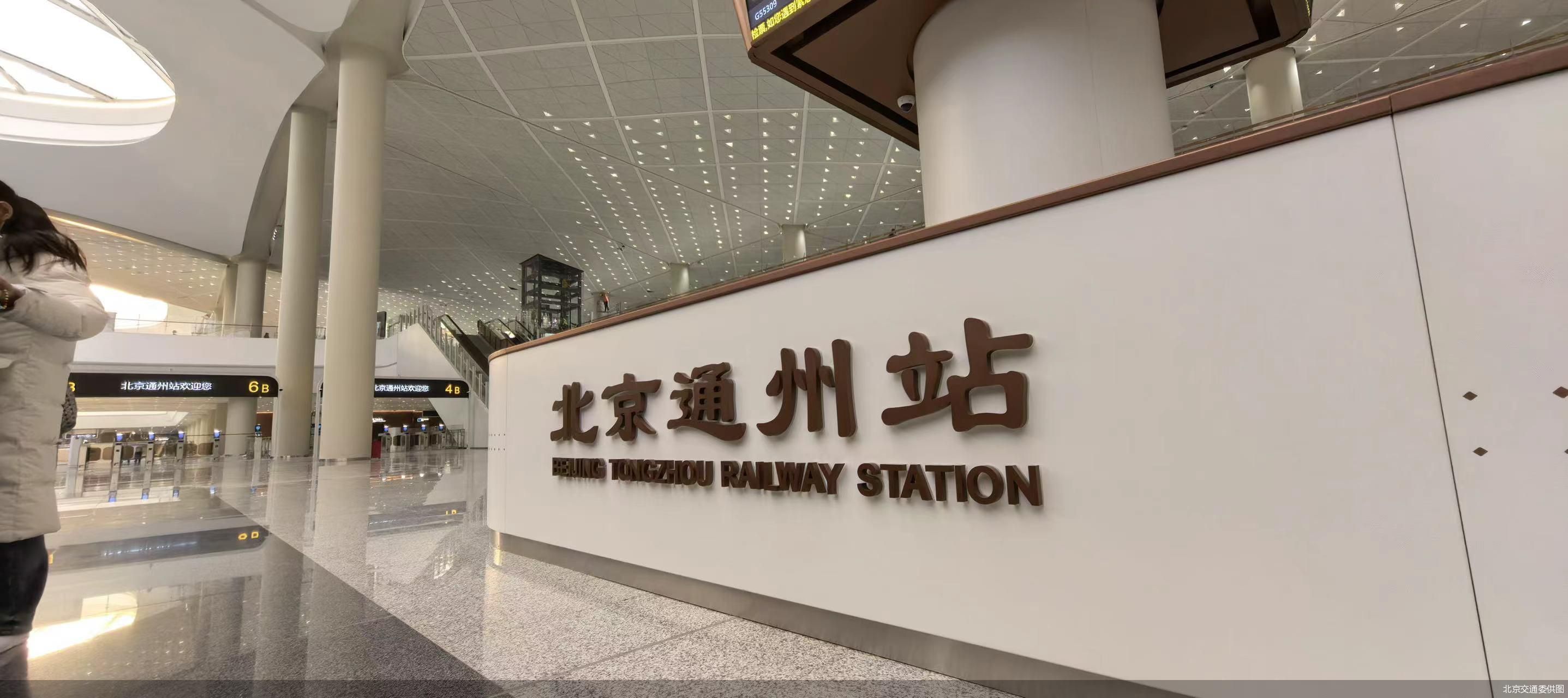
北京通州站将于12月30日开通投运
Yang Shi Xin Wen· 2025-12-26 00:08
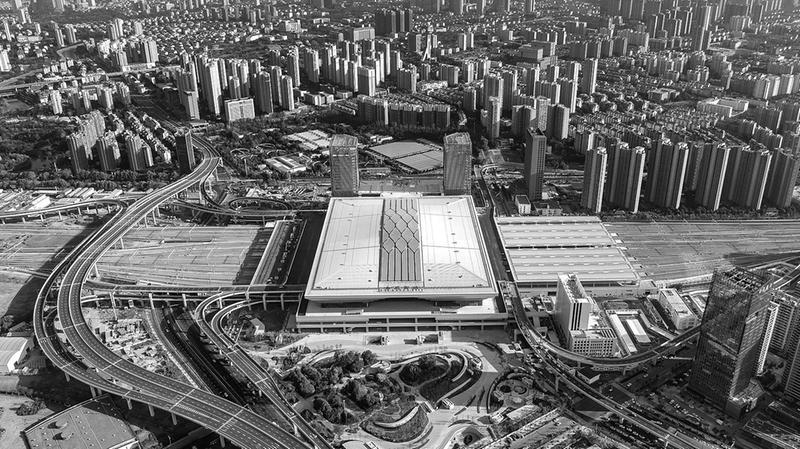
Core Insights - Beijing Tongzhou Station, located in the Beijing urban sub-center comprehensive transportation hub, is set to officially open on December 30 [1][3] - The station features a striking roof design called "Jingfan," resembling a ship's sail, symbolizing a hopeful journey ahead [1] - The roof utilizes a transparent ETFE membrane structure, providing ample natural light while preventing direct sunlight and offering insulation during winter [3] Infrastructure and Functionality - The station consists of three underground levels and two mezzanines, integrating intercity stations, rail transit, transfer stations, public services, and municipal facilities [3] - A key feature of the sub-center hub is the seamless integration of transportation modes, allowing for efficient transfers and enhanced urban living experiences [3] - The initial services will include the Jing-Tang and Jing-Bin intercity railways, connecting to various destinations such as Tangshan, Qinhuangdao, and Tianjin [3]
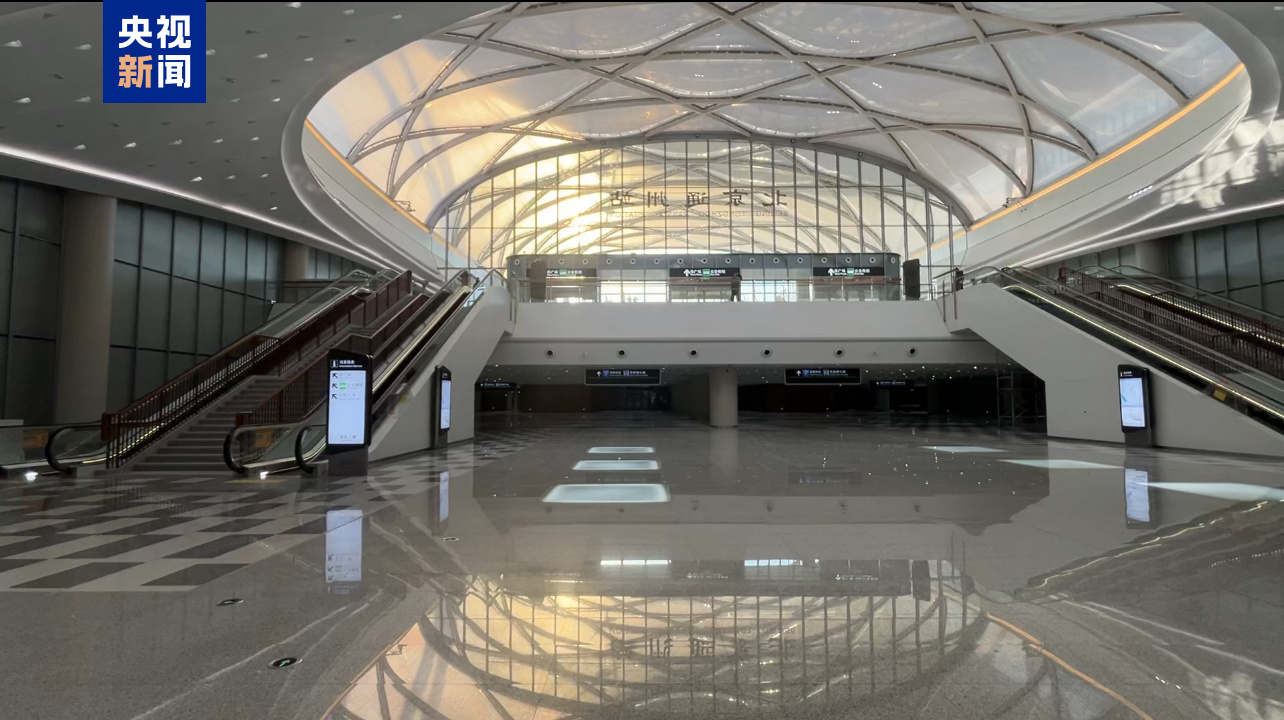
合肥西站开通在即 前往京港更便捷
Xin Lang Cai Jing· 2025-12-25 17:23
Core Viewpoint - Hefei West Station has passed safety assessments and is expected to officially open by the end of the year, enhancing the regional transportation network and connectivity in Hefei [2] Group 1: Infrastructure and Connectivity - Hefei West Station is a key component of the Beijing-Hong Kong high-speed rail corridor and will connect with 13 lines, including the Shougan-Hangzhou, Hefei-Anhui, and Hefei-Fuzhou lines, filling a significant gap in the Hefei West area [2] - The station features a building area of 80,000 square meters and a scale of 8 platforms and 18 tracks, designed to facilitate efficient transportation flow between the hub and the city [2][3] - The station will integrate with urban rail lines 3, 10, and S1, as well as existing freight rail lines, creating a multi-layered transportation system [3] Group 2: Design and Aesthetics - The station's exterior design incorporates parametric design elements inspired by the water features of Chaohu Lake, enhancing its dynamic visual appeal [4] - The interior design reflects themes of the lake and technology, featuring elements like water droplets and chips, which highlight the cultural and modern spirit of the region [4] - The station includes a large "water droplet skylight" of 10,400 square meters, designed for natural lighting and cultural representation, contributing to the city's skyline [4] Group 3: Economic Impact - Once operational, Hefei West Station will create high-speed rail corridors to northern, southern, and northeastern directions, improving accessibility to major economic regions such as Beijing-Tianjin-Hebei, Pearl River Delta, and Shandong Peninsula [4] - The station is expected to significantly enhance local transportation efficiency, making travel within the city and to surrounding economic zones more convenient [4]
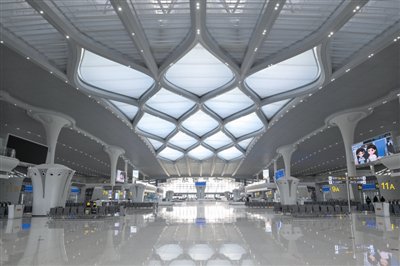
首座“第四代高铁站”是如何打造的?
Xin Lang Cai Jing· 2025-12-25 16:20
Group 1 - Hefei West Station is set to officially open at the end of this month, representing the first "fourth-generation high-speed railway station" in Anhui [3] - The design philosophy of Hefei West Station is centered around the city's spirit of innovation, encapsulated in the core design concept of "Great Lake Cloud Sail, Technology Ark" [4][5] - The station features a full-frame "bridge-building integration" structure, enhancing layout efficiency and reducing water leakage risks [5] Group 2 - The station will significantly improve travel efficiency towards major destinations such as Beijing and the Guangdong-Hong Kong-Macao Greater Bay Area, forming a clear triad with Hefei Station and Hefei South Station [5] - Hefei West Station incorporates sustainable design elements, including a 10,000 square meter "water droplet skylight" made of energy-efficient glass, and an innovative shading system to combat summer heat [6] - The design strategy has freed up approximately 100,000 square meters of urban land by converting the original roadbed into an elevated station, promoting urban development and the "station-city integration" concept [7]
广州至湛江高铁正式开通运营,粤西纳入大湾区90分钟生活圈
Bei Jing Ri Bao Ke Hu Duan· 2025-12-22 02:53
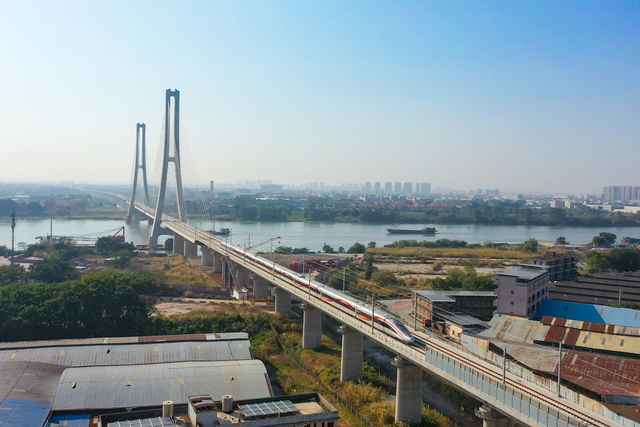
Core Viewpoint - The Guangzhou-Zhanjiang High-Speed Railway (广湛高铁) has officially opened, marking the entry of western Guangdong into the 350 km/h high-speed rail era, significantly improving travel convenience between Guangzhou and Zhanjiang [1][5]. Group 1: Project Overview - The Guangzhou-Zhanjiang High-Speed Railway spans 401 kilometers with a design speed of 350 km/h, connecting major cities including Guangzhou, Foshan, Zhaoqing, Yunfu, Yangjiang, Maoming, and Zhanjiang [1][5]. - It is the most complex, longest, and largest investment railway project in Guangdong Province, with a bridge-tunnel ratio of 76.8% [3]. Group 2: Engineering Challenges - The project faced significant construction challenges due to complex terrain and geological conditions, including key projects like the Zhanjiang Bay underwater tunnel and the Foshan Grand Bridge [3]. - The Zhanjiang Bay underwater tunnel, measuring 9,640 meters, is the longest underwater high-speed rail tunnel in China, utilizing advanced shield tunneling technology [3]. - The construction team implemented an intelligent management system for comprehensive control over progress, safety, and quality, achieving tunnel completion in 33 months with millimeter-level settlement control [3]. Group 3: Environmental Considerations - To minimize noise and vibration from high-speed trains, a 2.5-kilometer circular fully enclosed sound barrier was installed on the Foshan Grand Bridge, creating a "soundproof tunnel" [3]. - This soundproof tunnel is the first of its kind applied to a 350 km/h high-speed rail project in the Guangdong-Hong Kong-Macao Greater Bay Area, providing a new solution for noise reduction in densely populated urban areas [3]. Group 4: Station Design and Cultural Integration - The design of the Yangjiang North Station incorporates elements of the sea, with a focus on aesthetics and wind resistance, creating a unique urban reception area [5]. - Maoming South Station's design reflects local cultural characteristics, integrating themes of the South China Sea and local fishing culture into its architecture [5]. - The project utilized BIM technology for efficient collaboration across disciplines, overcoming challenges in constructing complex architectural shapes [5]. Group 5: Strategic Importance - The Guangzhou-Zhanjiang High-Speed Railway is a crucial part of the national "eight vertical and eight horizontal" high-speed rail network and serves as a key passenger transport corridor along the coast [5]. - The completion of this railway will significantly shorten travel times between western Guangdong and the Guangdong-Hong Kong-Macao Greater Bay Area, enhancing transportation development and improving travel conditions for local residents [5].

北京市3条新地铁年底通车 站内装修提前看
Xin Lang Cai Jing· 2025-12-21 18:36
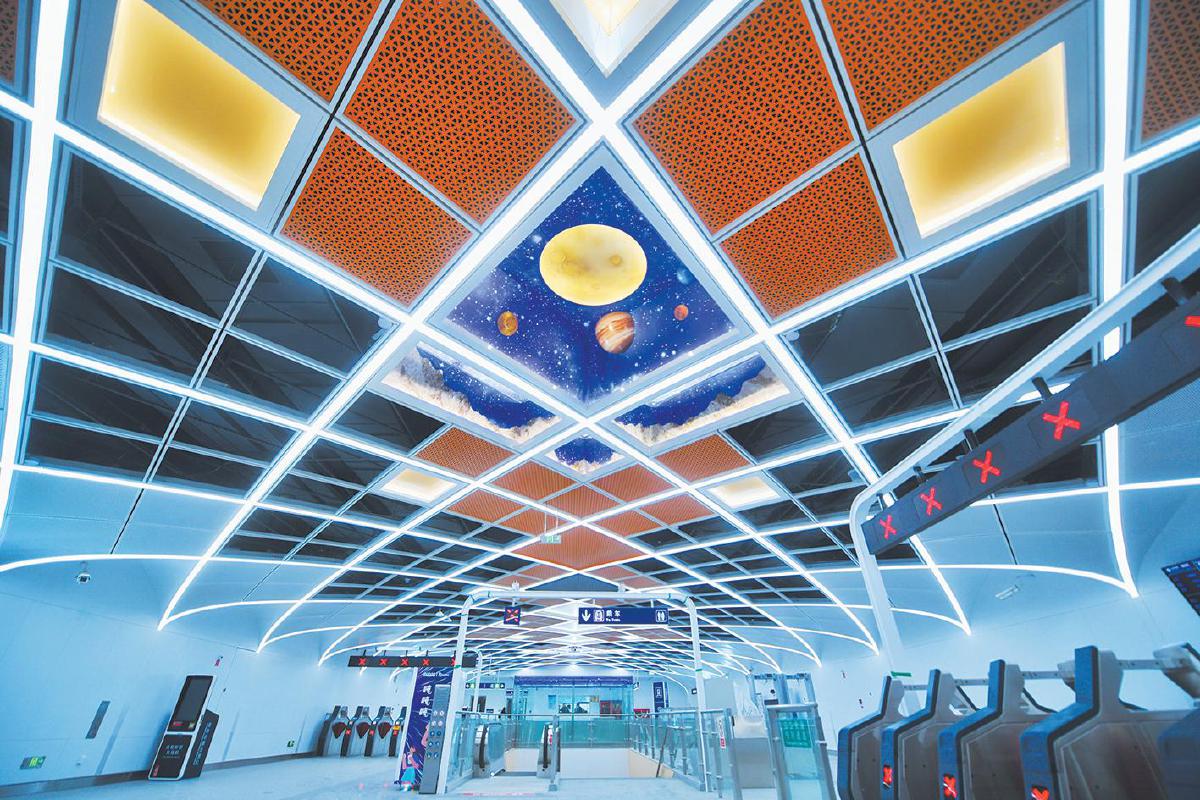
Core Insights - Beijing's planned opening of three new subway lines, including the middle section of Line 17, Line 18, and the southern extension of Line 6, has completed all construction tasks for the year and is ready for initial operation. By the end of the year, the total operational mileage of Beijing's subway system is expected to exceed 900 kilometers, reaching a historic high of 909 kilometers [1][10]. Group 1: Line 18 - Line 18, which spans approximately 19.8 kilometers and includes 11 stations, will enhance connectivity between the "Kaitian" area and the city center, significantly alleviating commuting pressure [5][6]. - The design of Line 18's stations features a "time tunnel" theme, with spacious, column-free areas that improve visibility and aesthetics. The first column-free station in Beijing, the station at Huilongguan West Street, has an 18-meter span [5][6]. - Line 18 employs innovative flexible direct current traction power supply technology, which can recover energy from train braking, achieving energy savings of 5% to 10% compared to traditional systems [6]. Group 2: Line 17 - The middle section of Line 17, approximately 8.2 kilometers long with four stations, will connect key areas such as Future Science City, CBD, and Yizhuang New City, facilitating a seamless travel experience across the city [7][8]. - The design of Line 17 incorporates local cultural elements, such as the antique culture at the Panjiayuan West Station, and aims to integrate urban functions with public spaces [8]. - The opening of the middle section will allow for a full line operation from Jiahuai Lake to Future Science City North in just 66 minutes, effectively redistributing passenger flow from other lines [7][8]. Group 3: Line 6 - The southern extension of Line 6, extending approximately 2.1 kilometers to Luyang Station, is a crucial part of the urban sub-center's transit network, featuring a unique "raw concrete" design that emphasizes space integration [9]. - The construction of Line 6's southern extension has adopted a design-build approach, enhancing efficiency and sustainability while maintaining high technical standards [9]. - The station's design prioritizes environmental performance and cost-effectiveness, showcasing a commitment to green construction practices [9].
北京地铁3号线一期东段工程启动建设
Xin Lang Cai Jing· 2025-12-21 17:39
Core Insights - The Beijing Subway Line 3 East Section has officially entered the construction phase, which is a crucial part of the line's eastward extension, aiming to enhance the east-west transit function and improve the northeastern urban rail network [1][2] Group 1: Project Overview - The East Section of Line 3 will span approximately 5.1 kilometers, connecting from Guanzhuang Road West Entrance Station to Caogezhuang North Station, with a total of five stations planned [1] - Key stations include Guanzhuang Road West Entrance Station, which will serve as an interchange with the planned R4 line, and Gaoxin Zhuang Station, which will have future connections to the M101 line [1][2] Group 2: Impact and Benefits - The completed East Section will alleviate traffic pressure in the Dongba area and strengthen the connection between the central city and the sub-center, enhancing network efficiency through connections with R4 and M101 lines [2] - It will directly serve key functional areas such as the Jinzhan International Cooperation Service Area, promoting international engagement and driving industrial upgrades along the line [2] - The project emphasizes station-city integration, optimizing urban spatial structure and regional economic collaboration, while also providing a rapid commuting option for residents and promoting sustainable travel [2] Group 3: Construction Challenges - The construction will traverse major urban roads and areas with dense underground pipelines, presenting significant challenges due to the complex working environment [2] - The implementation of this project is a key measure to fulfill Beijing's rail transit network planning and enhance the overall urban transportation system [2]