
竞合

Search documents
中欧电动车“竞合”深化 供应链“隐形冠军”迎风起
Zhong Guo Jin Rong Xin Xi Wang· 2025-08-08 09:23
Group 1 - The global trade landscape is undergoing significant adjustments, with China and Europe as key economic partners in the electric vehicle (EV) sector, shifting from a "market for technology" model to a "competitive cooperation" framework [1] - The competitive cooperation is characterized by three trends: acceleration of localization of Chinese EVs and supply chains in Europe, increased investment by European automakers in Chinese EV and component companies, and the establishment of joint ventures for collaborative R&D in both regions [1] - Chinese automakers are rapidly localizing in Europe, with companies like NIO opening centers and Xiaomi establishing a research center in Munich, while European automakers are increasingly reliant on Chinese components, creating opportunities for suppliers with technological advantages, such as Taizhong Co., Ltd. [1] Group 2 - The demand for lightweight components driven by the electrification transformation of European automakers aligns with Taizhong Co., Ltd.'s precision casting technology, which is essential for enhancing EV range [2] - Taizhong Co., Ltd., a specialized automotive parts manufacturer for 28 years, has become a global Tier A supplier for the Volkswagen Group, securing multiple projects for differential housings from brands like Volkswagen, Audi, and Skoda [2] - The trade advantages gained in the EV sector are also laying the groundwork for the global expansion of the robotics industry, as both sectors share common needs for lightweight, high-precision components and efficient power systems [2]

宋志平在光伏行业大会上“反内卷”讲话全文:商场不是战场,覆巢之下焉有完卵
经济观察报· 2025-07-25 11:50
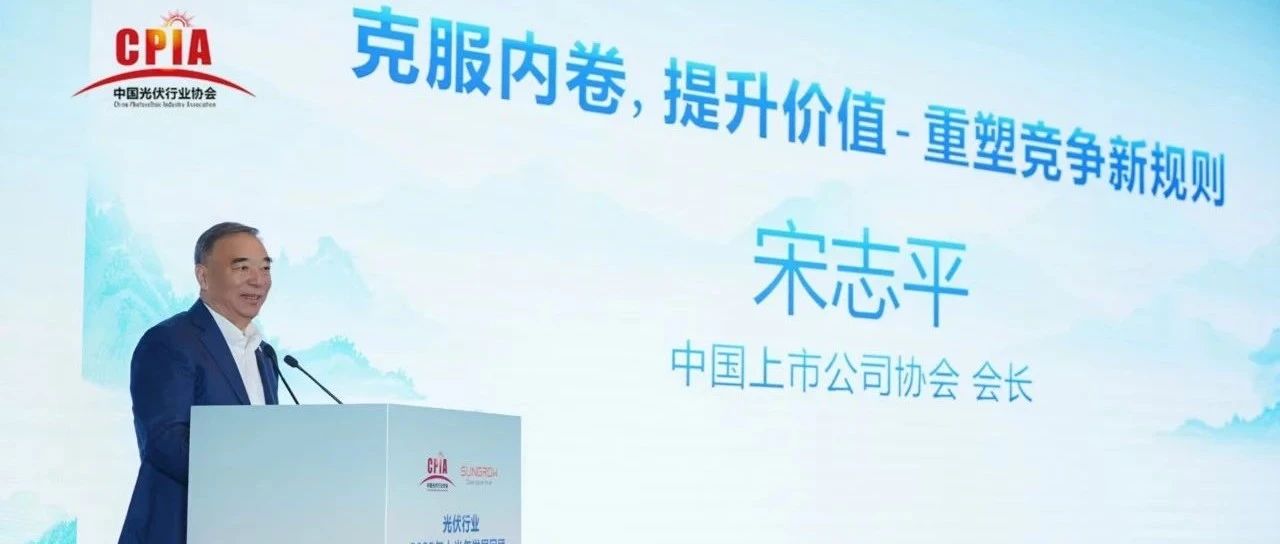
Core Viewpoint - The core viewpoint emphasizes the need for the photovoltaic industry to overcome "involution" and establish a healthy ecosystem through five key recommendations [2][4]. Group 1: Recommendations for the Photovoltaic Industry - The first recommendation is to shift from competition to cooperation, enhancing industry self-discipline. It is crucial to distinguish between "good competition" that creates value and "bad competition" that destroys it [5][6][11]. - The second recommendation is to move from fragmentation to consolidation, increasing industry concentration. The ability to integrate resources is more important than merely creating them [15][16][19]. - The third recommendation is to transition from reducing output to reducing capacity, addressing both symptoms and root causes. The current global photovoltaic module capacity is 1200 GW, while annual usage is only 600 GW, necessitating output reduction [22][23][30]. - The fourth recommendation is to shift from quantity-based profit to price-based profit, emphasizing the importance of pricing strategies over mere sales volume [31][32][40]. - The fifth recommendation is to move from a "red ocean" to a "blue ocean" through innovation, categorized into four aspects: differentiation, segmentation, high-end positioning, and branding [41][42][45]. Group 2: Industry Insights and Examples - The experience from the electrolytic aluminum industry, which successfully established a production ceiling of 45 million tons, serves as a valuable reference for the photovoltaic sector [12][13][14]. - The Japanese cement industry restructured from 23 companies to 3, maintaining stable prices despite stagnant sales, illustrating the benefits of consolidation [18][19]. - The implementation of peak-shaving production in the cement industry led to significant profit increases, demonstrating the effectiveness of capacity management [28][30].







宋志平在光伏行业大会上“反内卷”讲话全文:商场不是战场,覆巢之下焉有完卵
Jing Ji Guan Cha Wang· 2025-07-25 11:24
Core Viewpoint - The core viewpoint emphasizes the need to rethink competition concepts in the photovoltaic industry, advocating for a shift from "competition" to "co-opetition" to foster a healthier industry ecosystem [2][3]. Group 1: Industry Self-Regulation - The market's essence is competition, but it can be categorized into "good competition" that creates value and "bad competition" that destroys it. The industry must recognize the dangers of "involution" competition [3][4]. - Industry associations should prioritize self-regulation, focusing on policy formulation, technological innovation, and combating unfair competition [6][5]. Group 2: Industry Consolidation - The industry should move from fragmentation to consolidation to increase concentration and combat involution. Mergers and acquisitions can help create industry leaders and improve market structure [7][8]. - Historical examples, such as the restructuring of Japan's cement industry, illustrate the benefits of consolidation followed by proportional capacity reduction [9]. Group 3: Capacity Management - The photovoltaic industry currently has a capacity of 1200 GW, while global demand is only 600 GW. The first step is to reduce output to stabilize prices and profits, followed by limiting capacity [10][12]. - Implementing production limits has proven beneficial, as seen in the cement industry, where profits significantly increased after capacity management [12]. Group 4: Pricing Strategy - Companies should focus on price-based profit rather than solely on volume and cost. Understanding the relationship between price, volume, and profit is crucial for effective management [15][18]. - Successful companies prioritize quality and service over aggressive pricing strategies, which can lead to long-term profitability [18][21]. Group 5: Innovation and Value Creation - To transition from a "red ocean" to a "blue ocean," companies must innovate and enhance core competitiveness through differentiation, segmentation, high-end products, and branding [19][20]. - The emphasis on brand value and premium pricing is essential for sustainable growth, encouraging companies to avoid price wars and focus on high-quality offerings [21].


民营经济人士谈民营经济促进法:助力企业行稳致远
Zhong Guo Xin Wen Wang· 2025-07-01 04:09
Group 1 - The "Private Economy Promotion Law" provides a stable legal and policy environment for private enterprises, enhancing their confidence in innovation and development [1][2][3] - The law includes measures to support technological innovation, such as funding subsidies and tax incentives, which alleviate the financial burden on companies like Xiaopeng Motors [1] - Stronger intellectual property protection under the law allows companies to focus on R&D without fear of losing competitive advantages [1] Group 2 - The law creates a fair competitive environment for private enterprises, allowing them to compete on equal footing with state-owned enterprises [2] - Companies like Jintanglang have already experienced benefits from the law, such as improved project payment speeds [2] - The concept of "co-opetition" is emphasized, where companies should collaborate while competing to enhance the overall industry ecosystem [2] Group 3 - The law enhances certainty in the development of the private economy, encouraging entrepreneurs to focus on solving operational challenges [3] - Compliance with regulations is highlighted as essential for the sustainable development of companies, particularly in the context of new employment models [3] - The law aims to protect the rights and interests of laborers, ensuring that businesses operate within legal boundaries [3]
史上最长618,平台们变在哪了?
3 6 Ke· 2025-05-15 10:39
Core Insights - The core message of the article highlights the increasing scarcity of traffic in the e-commerce sector, prompting platforms to adopt various strategies to attract users and market share [2][10][12]. Group 1: Promotional Strategies - This year's "618" shopping festival started nearly a week earlier than last year, extending over a month, marking it as the longest "618" to date [2][3]. - Major platforms like Taobao have eliminated traditional discount methods, allowing consumers to receive discounts on single-item purchases, with discounts reaching up to 50% [2][4]. - Platforms are shifting from an "absolute low price" strategy to a "quality-price balance," focusing more on quality merchants and consumer experience [2][9]. Group 2: Market Dynamics - The competitive landscape has evolved, with platforms like Douyin and JD.com also enhancing their promotional tactics, including cash subsidies and direct discounts [6][10]. - Last year's "618" saw a decline in sales, with a total of 742.8 billion yuan, marking a nearly 7% drop, the first negative growth since the festival's inception [10][11]. - The shift in strategy reflects a broader understanding that merely competing on price is insufficient to meet diverse consumer needs [11][12]. Group 3: Collaboration and Ecosystem - E-commerce platforms are increasingly collaborating to expand their market reach, with Taobao and Xiaohongshu integrating their services to drive traffic [14][16]. - JD.com is also exploring partnerships, including a collaboration with a well-known supermarket to enhance its supply chain capabilities [16]. - The focus on collaboration rather than internal competition aims to create a more sustainable e-commerce ecosystem, allowing for shared growth and innovation [12][16].

张艺兴、产能、i茅台!贵州茅台回应热点问题
Zheng Quan Shi Bao Wang· 2025-05-12 12:39
Core Viewpoint - The company emphasizes the trend of "rational consumption" in the liquor industry, highlighting the need to adapt to this new consumer behavior and enhance product value and experience [1]. Financial Performance - In 2024, the company achieved total revenue of 174.14 billion yuan, a year-on-year increase of approximately 15.66%, and a net profit of about 86.23 billion yuan, up 15.38% [3]. - For the first quarter of 2025, total revenue reached 51.44 billion yuan, growing by 10.67%, with net profit at 26.85 billion yuan, an increase of 11.56% [3]. Production Capacity and Investment - The company plans to invest approximately 15.52 billion yuan in the "14th Five-Year" technical transformation project, which aims to add about 19,800 tons/year of actual production capacity and 84,700 tons of storage capacity [3]. - As of the end of 2024, the company has completed an investment of 1.76 billion yuan in this project, with one workshop already operational, adding a design capacity of about 1,800 tons [3]. Strategic Goals - The company has set a revenue growth target of 9% for 2025, focusing on consumer-centric strategies to address supply-demand mismatches and enhance internal efficiency [4]. - The company aims to strengthen its market presence and governance modernization to create greater value for shareholders [4]. Product Development and Marketing - The company introduced the "Moutai 1935" product, which has been well-received in the market, with a retail price of 1,188 yuan per bottle, aimed at filling the price gap in the market [6]. - The company plans to enhance the quality of Moutai 1935 and improve its market positioning through various marketing strategies [7]. Digital Marketing and Sales Channels - The "i Moutai" digital marketing platform generated sales revenue of 20.02 billion yuan in 2024, although it saw a decline of 10.51% year-on-year [4]. - The company is committed to optimizing its product distribution strategy on the i Moutai platform to better align with market demands [5]. Shareholder Engagement - The company invites shareholders to the annual meeting on May 19, 2024, to discuss the company's development and gather feedback [2][8].


茅台1935今年动销达到预期,暂无赴港上市计划!茅台业绩会回应多个热点
Xin Lang Cai Jing· 2025-05-12 12:30
Core Viewpoint - Guizhou Moutai is transitioning from high-speed growth to high-quality development, setting a revenue growth target of 9% for 2025, with a focus on consumer-centric strategies and market expansion [2][3] Financial Performance - In Q1 2024, Guizhou Moutai achieved revenue of 50.601 billion yuan, a year-on-year increase of 10.54%, and a net profit of 26.847 billion yuan, up 11.56% [3] - For the full year 2023, the company reported revenue of 174.144 billion yuan, a 15.66% increase, and a net profit of 86.228 billion yuan, growing 15.38% [3] - The company plans to invest 4.711 billion yuan in fixed assets for 2025 [3] Market Strategy - Guizhou Moutai is focusing on three major transformations: customer groups, consumption scenarios, and service adaptation, leveraging its "4+6" channel system to enhance market reach [2] - The company aims to expand its overseas market, which generated 5.19 billion yuan in revenue in 2024, accounting for about 3% of total liquor revenue [13] Product Development - Moutai 1935 has been positioned as a core brand within the sauce-flavored liquor segment, with plans to enhance its market presence through improved product quality and service [6][7] - The company is diversifying its product matrix to capture different price segments, aiming to boost performance amid industry challenges [7] Production Capacity - Moutai's production volume for 2024 was reported at 56,272 tons, a slight decrease of 1.63% year-on-year, while sales volume increased by 10.22% [8] - The company plans to invest approximately 15.516 billion yuan in capacity expansion projects, which will add about 19,800 tons of annual production capacity [10] Channel Structure - Direct sales revenue grew by 20.2% in Q1 2024, contributing significantly to overall revenue, while the iMoutai platform saw a revenue increase of 9.86% [11][12] - The direct sales channel accounted for approximately 45.89% of total revenue in Q1 2024, reflecting a strategic shift in channel management [11] Competitive Landscape - Guizhou Moutai acknowledges the competitive dynamics with other brands like Wuliangye, emphasizing a collaborative approach to foster a rational consumption ecosystem in the liquor industry [5][6]
从对手到盟友,美的、海信联手,家电行业竞合潮来了?
Di Yi Cai Jing· 2025-05-08 08:50
Core Viewpoint - Midea Group and Hisense Group, traditionally competitors in the home appliance sector, have entered a strategic partnership focusing on AI applications, global capacity planning, and smart logistics [1][3]. Group 1: Strategic Collaboration - The collaboration will involve Midea's logistics subsidiary, Ande Intelligent Logistics, which is preparing for a separate listing and aims to expand its client base beyond Midea [1]. - Hisense's stable growth in large home appliances positions it as a potential key client for Ande Intelligent Logistics [1]. - The partnership aims to reduce supply chain costs through a "direct-to-consumer" model, enhancing efficiency in logistics and warehousing [1]. Group 2: Market Position and Financials - Midea Group reported a revenue of 407.1 billion yuan in the previous year, with its smart home business contributing 269.5 billion yuan [2]. - Hisense Group's revenue reached 202.2 billion yuan, with Hisense Visual (black appliances) generating 58.53 billion yuan and Hisense Home Appliances (white appliances) contributing 92.746 billion yuan [2]. - Compared to competitors like Haier and Gree, Midea and Hisense have greater collaboration potential due to their respective market positions and product lines [2]. Group 3: Global Expansion and Production - Both companies are expanding their overseas manufacturing presence in regions such as South America, Southeast Asia, and Africa, indicating potential for collaborative production and order fulfillment [3]. - The partnership aligns with their strategic choice to explore broader global markets amid changing trade environments [3]. Group 4: AI and Technological Integration - The integration of AI technology in home appliances is becoming a trend, with Hisense leveraging AI in its television products, while Midea is advancing in smart home robotics [4]. - The collaboration could enhance the utilization of the Toshiba brand, as both companies have acquired different segments of Toshiba's appliance business [4]. - The partnership is seen as a move towards higher-level cooperation in the face of global market challenges, shifting from competition to collaboration [5].
