
厨电

Search documents
海尔智家(600690):经营阶段波动,股东回报力度大幅提升
Changjiang Securities· 2026-03-31 13:07
Investment Rating - The investment rating for the company is "Buy" and is maintained [8] Core Insights - The company achieved a revenue of 302.347 billion yuan in 2025, representing a year-on-year increase of 5.71%. The net profit attributable to shareholders was 19.553 billion yuan, up 4.39% year-on-year, and the net profit excluding non-recurring items was 18.604 billion yuan, an increase of 4.49% year-on-year. In Q4 2025, the company reported a revenue of 68.293 billion yuan, down 6.72% year-on-year, with a net profit of 2.180 billion yuan, a decrease of 39.15% year-on-year [2][5] - The company plans to distribute a cash dividend of 8.867 yuan per 10 shares (tax included) to all shareholders, which, combined with the mid-term dividend already implemented, accounts for 55.0% of the annual net profit attributable to shareholders. The company also announced a shareholder return plan for the next three years (2026-2028), expecting a cash dividend ratio of no less than 58% in 2026 and no less than 60% in 2027-2028 [5][2] Revenue and Profit Analysis - The company's revenue growth in 2025 was driven by various product categories, with air conditioning products increasing by 9.55%, refrigerators by 1.11%, kitchen appliances by 0.51%, water appliances by 10.94%, and washing machines by 3.10%. The revenue from equipment parts and channel services grew by 19.93%. Domestic revenue increased by 3.05%, while overseas revenue rose by 8.15% [5][11] - The gross profit margin for 2025 decreased by 1.16 percentage points to 26.66%. The decline in profit margins was attributed to various factors, including tariffs and competition. The company’s operating profit margin remained stable, with a slight increase of 0.38 percentage points [11][5] Future Projections - The company is expected to achieve net profits attributable to shareholders of 20.381 billion yuan, 21.491 billion yuan, and 23.386 billion yuan for the years 2026, 2027, and 2028, respectively. The corresponding price-to-earnings ratios are projected to be 9.93, 9.42, and 8.66 times [11][5]

海尔智家(600690):Q4盈利暂承压 股东回报提升显著
Xin Lang Cai Jing· 2026-03-31 04:30
Core Viewpoint - Haier Smart Home achieved a record revenue of over 300 billion yuan in 2025, with both revenue and net profit reaching new highs, despite facing temporary profit pressure in Q4 due to tariffs, competition, and factory adjustments [1][2]. Group 1: Financial Performance - In 2025, the company reported total revenue of 302.35 billion yuan, an increase of 5.71%, and a net profit attributable to shareholders of 19.55 billion yuan, up by 4.39% [2]. - The Q4 performance showed a revenue of 68.29 billion yuan, down by 6.72%, and a net profit of 2.18 billion yuan, a decrease of 39.22% [2]. - The operating cash flow for the year was 26.00 billion yuan, which is 1.33 times the operating profit, indicating strong cash generation capability [2]. Group 2: Revenue Structure - Domestic revenue reached 146.04 billion yuan, growing by 3.05%, driven by the "trade-in" policy, particularly in air conditioning and water appliances, with air conditioning revenue increasing over 9% [3]. - Overseas revenue was 154.55 billion yuan, up by 8.15%, accounting for over 51% of total revenue, with double-digit growth in the European HVAC market and over 24% growth in emerging markets [3]. Group 3: Profitability Analysis - The overall gross margin for 2025 was 26.7%, a decrease of 1.1 percentage points, with Q4 gross margin at 24.79% due to rising commodity prices and competitive pressures [3]. - The company faced short-term profitability challenges, but cost control and digital transformation efforts are expected to mitigate some of the pressures [4]. Group 4: Cost Management - The sales expense ratio was 11.2%, down by 0.6 percentage points, reflecting improvements from digital marketing and logistics optimization [4]. - The management expense ratio increased to 4.6%, up by 0.3 percentage points, impacted by one-time costs in overseas markets [4]. - Financial expenses showed a slight improvement, with a rate of -0.02%, down by 0.36 percentage points, due to increased foreign exchange gains from euro appreciation [4]. Group 5: Shareholder Returns - The dividend payout ratio was raised to 55% for 2025, up from 48% in 2024, with a clear plan to increase the payout ratio to 58%, 60%, and 60% in the following years [4]. - A share buyback plan of 3 to 6 billion yuan was announced, significantly higher than the previous year's plan, aimed at enhancing shareholder value [4]. Group 6: 2026 Outlook - The company aims to drive growth through high-end, global, digital, and intelligent transformations, with expectations for improved operational quality [5]. - Key product categories like air conditioning and kitchen appliances are projected to see increased market share and customer value [6]. - The company is embracing AI technology to enhance product intelligence and expand into new markets, with expectations for revenue growth in emerging markets continuing [6].
海尔智家(06690) - 海外监管公告 - 海尔智家股份有限公司2025年年度报告;海尔智家股份有...
2026-03-26 23:06
Haier Smart Home Co., Ltd.* 海爾智家股份有限公司 (於中華人民共和國註冊成立之股份有限公司) 股份代號:6690 海外監管公告 本公告乃根據《香港聯合交易所有限公司證券上市規則》第13.10B條由海爾智家股份 有限公司作出。 以下公告的中文版本已於上海證券交易所網站(www.sse.com.cn)刊登,僅供參閱。 特此公告。 香港交易及結算所有限公司及香港聯合交易所有限公司對本公告的內容概不負責, 對其準確性或完整性亦不發表任何聲明,並明確表示,概不對因本公告全部或任何 部分內容而產生或因依賴該等內容而引致的任何損失承擔任何責任。 承董事會命 海爾智家股份有限公司 董事長 李華剛 中國青島 2026年3月26日 於本公告日期,本公司執行董事為李華剛先生及Kevin Nolan先生;非執行董事為 宮偉先生、俞漢度先生、錢大群先生及李少華先生;獨立非執行董事為王克勤先 生、李世鵬先生、吳琪先生及汪華先生;及職工董事為孫丹鳳女士。 * 僅供識別 海尔智家股份有限公司2025 年年度报告 公司代码:600690 公司简称:海尔智家 海尔智家股份有限公司 2025 年年度报告 1 / 245 ...
海尔智家2025年营收3023.47亿元同比增5.72%,归母净利润195.53亿元同比增4.33%,毛利率下降1.14个百分点
Xin Lang Cai Jing· 2026-03-26 15:11
Core Insights - Haier Smart Home reported a revenue of 302.347 billion yuan for 2025, representing a year-on-year growth of 5.72% [1][4] - The net profit attributable to shareholders was 19.553 billion yuan, up 4.33% year-on-year, while the net profit excluding non-recurring items was 18.604 billion yuan, increasing by 4.49% [1][4] - Basic earnings per share stood at 2.12 yuan [1][4] Financial Performance - The gross profit margin for 2025 was 26.66%, a decrease of 1.14 percentage points year-on-year; the net profit margin was 6.67%, down 0.18 percentage points from the previous year [1][5] - In Q4 2025, the gross profit margin was 24.79%, a decline of 5.08 percentage points year-on-year and 3.09 percentage points quarter-on-quarter; the net profit margin was 3.40%, down 1.87 percentage points year-on-year and 3.51 percentage points quarter-on-quarter [5][6] Expense Analysis - Total operating expenses for 2025 were 57.685 billion yuan, an increase of 276 million yuan compared to the previous year; the expense ratio was 19.08%, down 1.00 percentage points year-on-year [2][6] - Sales expenses grew by 0.87% year-on-year, while management expenses increased by 13.64%; R&D expenses decreased by 6.00%, and financial expenses saw a significant reduction of 105.24% [2][6] Shareholder Information - As of the end of 2025, the total number of shareholders was 156,500, a decrease of 34,100 from the end of Q3, representing a decline of 17.90%; the average market value per shareholder increased by 25.38% from 1.247 million yuan to 1.5636 million yuan [2][6] Company Overview - Haier Smart Home, established on March 31, 1994, and listed on November 19, 1993, is located in Qingdao, Shandong Province [2][6] - The company's main business includes the research, production, and sales of smart home appliances such as refrigerators, washing machines, air conditioners, water heaters, kitchen appliances, and small home appliances [2][6] - The revenue composition includes: refrigerators (27.17%), air conditioners (20.94%), washing machines (20.22%), kitchen appliances (13.10%), equipment and channel services (11.97%), water appliances (6.11%), and others (0.48%) [2][6] Industry Classification - Haier Smart Home is classified under the household appliances sector, specifically in white goods and refrigeration [7] - The company is associated with various concept sectors including e-commerce, value growth, consumer selection, and capital management [7]
海尔智家去年营收首破3000亿元,家电行业在存量竞争中加速洗牌
Di Yi Cai Jing· 2026-03-26 14:54
Core Viewpoint - The home appliance industry is experiencing a divergence in performance among listed companies, with leading firms becoming stronger amid increasing uncertainties such as trade tariffs and rising costs [1] Company Performance - Haier Smart Home (600690.SH) reported its revenue for 2025 exceeded 300 billion yuan, reaching 302.347 billion yuan, a year-on-year increase of 5.715% [3] - The net profit attributable to shareholders was 19.553 billion yuan, reflecting a year-on-year growth of 4.39% [3] - The net cash flow from operating activities was 26.003 billion yuan, and the company proposed a dividend of 8.867 yuan per 10 shares, totaling 8.248 billion yuan [3] Market Trends - According to AVC, the retail sales of all home appliance categories (excluding 3C) in China for 2025 were 893.1 billion yuan, a year-on-year decline of 4.3%, with the second half of the year seeing a 16% drop [3] - The "silver economy" is creating new opportunities in the aging population segment for home appliances [3] - Euromonitor data indicates a stable global home appliance market with structural differentiation, where developed markets remain stable while emerging markets show strong growth [3] Product Performance - Haier's air conditioning and water appliance segments saw revenue growth of around 10%, while refrigerator, washing machine, and kitchen appliance segments experienced stable growth [3] - Domestic revenue for Haier was 146 billion yuan, up 3.05% year-on-year, while overseas revenue reached 154.5 billion yuan, growing 8.15% [3] Strategic Initiatives - Haier is developing three growth curves: traditional white goods, HVAC (heating, ventilation, and air conditioning), and the aging industry, while seizing opportunities in globalization and smart technology [4] - The company has established new production facilities for air conditioners in Thailand and water heaters in Russia, focusing on regional depth, multi-point layout, and self-control in its globalization strategy [5] - Haier is integrating home appliances with robotics, showcasing various robots at AWE, including companion, cleaning, and household robots, along with aging-friendly products [5] Competitive Landscape - In contrast to leading companies like Haier, smaller kitchen appliance firms faced performance challenges, with Joyoung Co., Ltd. (002242.SZ) reporting a revenue decline of 7.23% to 8.2 billion yuan and a net profit drop of 3.85% to 118 million yuan [5] - Joyoung is working to optimize its product structure amid intensified competition in the home appliance market, focusing on high-end products and expanding into new categories [5]

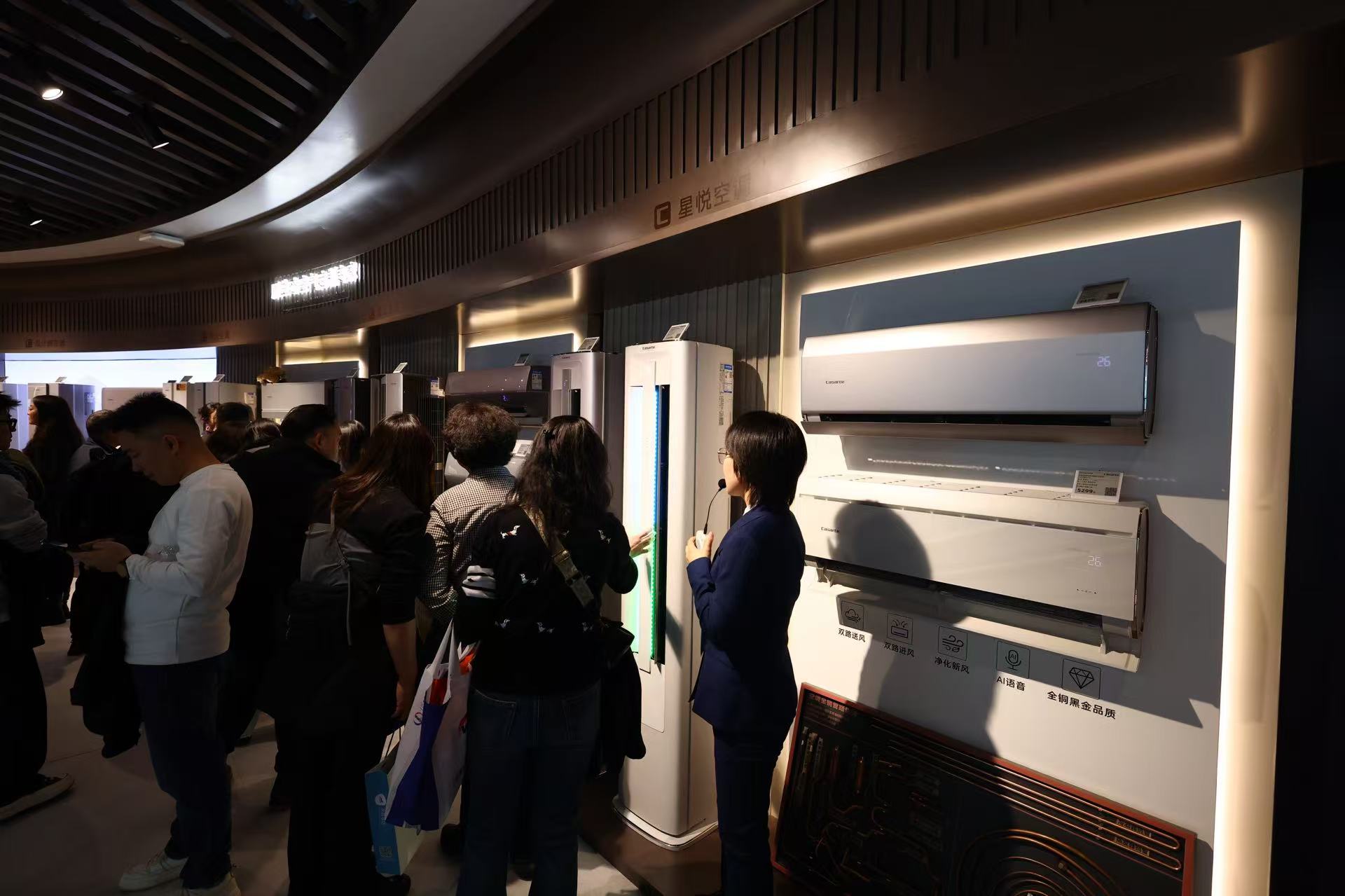
海尔智家跌0.63%,成交额7.81亿元,今日主力净流入-7287.38万
Xin Lang Cai Jing· 2026-03-13 07:10
Core Viewpoint - Haier Smart Home's stock experienced a slight decline of 0.63% on March 13, with a trading volume of 7.81 billion yuan and a market capitalization of 235.19 billion yuan [1]. Company Overview - Haier Group, founded in 1984, has expanded from producing refrigerators to a wide range of sectors including home appliances, IT, logistics, finance, real estate, and biopharmaceuticals, becoming a global leader in providing solutions for a better life [2]. - The company has maintained a global retail market share of 10.2% in 2014, ranking as the world's largest home appliance brand for six consecutive years [2]. Shareholder Structure - The top ten circulating shareholders include Central Huijin Asset Management Co., Ltd. and China Securities Finance Corporation [3]. - Haier Wireless, a subsidiary focused on wireless charging, has invested in Intel's wireless charging technology team and is involved in setting national industry standards for wireless energy transmission [3]. Business Operations - Haier Smart Home's main business includes the research, production, and sales of home appliances such as refrigerators, kitchen appliances, air conditioners, washing machines, and water appliances, along with providing comprehensive smart home solutions [3][7]. - The revenue composition of the company includes: refrigerators (27.17%), air conditioners (20.94%), washing machines (20.22%), kitchen appliances (13.10%), equipment and channel services (11.97%), water appliances (6.11%), and others (0.48%) [7]. Financial Performance - For the period from January to September 2025, Haier Smart Home achieved a revenue of 234.05 billion yuan, representing a year-on-year growth of 15.31%, and a net profit attributable to shareholders of 17.37 billion yuan, up 14.64% year-on-year [7]. - The company has distributed a total of 48.66 billion yuan in dividends since its A-share listing, with 24.27 billion yuan distributed in the last three years [8]. Institutional Holdings - As of September 30, 2025, the fifth largest circulating shareholder is Hong Kong Central Clearing Limited, holding 361 million shares, a decrease of 89.04 million shares from the previous period [9]. - China Securities Finance Corporation remains the sixth largest shareholder with 183 million shares, unchanged from the previous period [9].
海尔智家涨0.20%,成交额8.68亿元,今日主力净流入-526.15万
Xin Lang Cai Jing· 2026-03-12 10:17
Core Viewpoint - Haier Smart Home has shown a slight increase in stock price and has a significant market capitalization, indicating stable investor interest in the company [1] Group 1: Company Overview - Haier Group was established in 1984 and has expanded from producing refrigerators to a wide range of sectors including home appliances, IT, logistics, and biopharmaceuticals, becoming a global leader in providing solutions for a better life [2] - The company’s main business includes the research, production, and sales of home appliances such as refrigerators, air conditioners, washing machines, and smart home solutions [3][7] - As of September 30, Haier Smart Home reported a revenue of 2340.54 billion yuan, a year-on-year increase of 15.31%, and a net profit of 173.73 billion yuan, up 14.64% year-on-year [7] Group 2: Shareholder and Market Activity - The top ten circulating shareholders include significant entities such as Central Huijin Asset Management and China Securities Finance Corporation, indicating institutional interest [3][9] - The company has distributed a total of 486.62 billion yuan in dividends since its A-share listing, with 242.73 billion yuan distributed in the last three years [8] Group 3: Financial Metrics - The average trading cost of the stock is 25.81 yuan, with the current price approaching a support level of 25.00 yuan, suggesting potential volatility [6] - The main capital inflow for the day was negative, indicating a reduction in major shareholder positions over the past two days [4][5]
海尔智家涨1.93%,成交额10.01亿元,后市是否有机会?
Xin Lang Cai Jing· 2026-03-10 07:12
Core Viewpoint - Haier Smart Home has shown a positive market performance with a 1.93% increase in stock price, reaching a market capitalization of 233.22 billion yuan [1] Company Overview - Founded in 1984, Haier Group has expanded from producing refrigerators to a wide range of sectors including home appliances, IT, logistics, finance, real estate, and biopharmaceuticals, becoming a global leader in providing solutions for a better life [2] - The company is recognized as the world's largest home appliance brand, holding a global retail market share of 10.2% in 2014 and maintaining this position for six consecutive years [2] Shareholder Structure - The top ten circulating shareholders include Central Huijin Asset Management and China Securities Finance Corporation [3] - Haier Wireless, a subsidiary focused on wireless charging, has invested in Intel's wireless charging technology team and is involved in setting national industry standards for electromagnetic compatibility and radiation [3] Business Operations - Haier Smart Home's main business includes the research, production, and sales of home appliances such as refrigerators, kitchen appliances, air conditioners, washing machines, and smart home solutions [3][7] - The revenue composition is as follows: refrigerators 27.17%, air conditioners 20.94%, washing machines 20.22%, kitchen appliances 13.10%, equipment and channel services 11.97%, water appliances 6.11%, and others 0.48% [7] Financial Performance - For the period from January to September 2025, Haier Smart Home achieved a revenue of 234.05 billion yuan, representing a year-on-year growth of 15.31%, and a net profit attributable to shareholders of 17.37 billion yuan, up 14.64% year-on-year [7] - The company has distributed a total of 48.66 billion yuan in dividends since its A-share listing, with 24.27 billion yuan distributed over the past three years [8] Institutional Holdings - As of September 30, 2025, the largest circulating shareholder is Hong Kong Central Clearing Limited, holding 361 million shares, a decrease of 89.04 million shares from the previous period [9] - China Securities Finance Corporation remains stable with 183 million shares, while Huatai-PineBridge CSI 300 ETF has exited the top ten circulating shareholders [9]
海尔智家涨0.33%,成交额7.12亿元,近5日主力净流入-3.85亿
Xin Lang Cai Jing· 2026-03-05 16:23
Core Viewpoint - Haier Smart Home has shown a stable market performance with a slight increase in stock price and significant market capitalization, indicating its strong position in the home appliance industry [1]. Company Overview - Haier Group, founded in 1984, has expanded from producing refrigerators to a wide range of sectors including home appliances, IT, logistics, finance, and pharmaceuticals, becoming a global leader in providing solutions for a better life [2]. - The company’s main business includes the research, production, and sales of home appliances such as refrigerators, air conditioners, washing machines, and smart home solutions [3][7]. - As of September 30, 2025, Haier Smart Home reported a revenue of 2340.54 billion, a year-on-year increase of 15.31%, and a net profit of 173.73 billion, up 14.64% year-on-year [7]. Shareholder Structure - The top ten circulating shareholders include significant entities such as Central Huijin Asset Management and China Securities Finance Corporation, indicating institutional interest [3][9]. - As of September 30, 2025, the number of shareholders decreased to 190,600, a reduction of 8.15% compared to the previous period [7]. Financial Performance - The company has distributed a total of 486.62 billion in dividends since its A-share listing, with 242.73 billion distributed over the last three years [8]. - The average trading cost of the stock is 25.84, with the current price approaching a resistance level of 24.75, suggesting potential for upward movement if this level is surpassed [6]. Market Activity - The stock experienced a net outflow of 21.68 million today, with a lack of clear trends in major funds, indicating a mixed sentiment among investors [4][5].
海尔智家跌1.00%,成交额10.05亿元,后市是否有机会?
Xin Lang Cai Jing· 2026-02-27 10:25
Core Viewpoint - Haier Smart Home experienced a 1.00% decline in stock price, with a trading volume of 1.005 billion yuan and a market capitalization of 241.005 billion yuan [1] Company Overview - Haier Group, founded in 1984, has expanded from producing refrigerators to a wide range of sectors including home appliances, IT, logistics, finance, real estate, and biopharmaceuticals, becoming a global leader in providing solutions for a better life [2] - The company holds a 10.2% share of the global retail volume in 2014, maintaining its position as the world's largest home appliance brand for six consecutive years [2] Shareholder Structure - Among the top ten circulating shareholders, Central Huijin Asset Management and China Securities Finance Corporation are included [3] - The largest shareholder, Haier Group, has invested in wireless charging technology and has been involved in setting national industry standards for wireless energy transmission [3] Business Operations - Haier Smart Home's main business includes the research, production, and sales of home appliances such as refrigerators, kitchen appliances, air conditioners, washing machines, and water appliances, along with providing comprehensive smart home solutions [3][7] - The revenue composition includes: refrigerators (27.17%), air conditioners (20.94%), washing machines (20.22%), kitchen appliances (13.10%), equipment and channel services (11.97%), water appliances (6.11%), and others (0.48%) [7] Financial Performance - For the period from January to September 2025, Haier Smart Home achieved a revenue of 234.054 billion yuan, representing a year-on-year growth of 15.31%, and a net profit attributable to shareholders of 17.373 billion yuan, up 14.64% year-on-year [7] - The company has distributed a total of 48.662 billion yuan in dividends since its A-share listing, with 24.273 billion yuan distributed in the last three years [8] Institutional Holdings - As of September 30, 2025, the top ten circulating shareholders include Hong Kong Central Clearing Limited with 361 million shares, China Securities Finance Corporation with 183 million shares, and Huaxia SSE 50 ETF with 71.679 million shares [9]