
财政危机

Search documents
俄罗斯被迫出卖黄金储备,普京的钱袋子终于见底了?
Sou Hu Cai Jing· 2025-12-08 05:57
Group 1 - Russia is facing a fiscal crisis and has begun selling its gold reserves to fill the budget gap, indicating a shift from relying on oil revenues to using gold as a financial lifeline [1][11] - The reduction in gold reserves is significant, with a decrease from 405.7 tons to 173.1 tons, a drop of 57% since the onset of the war in 2022 [3] - The defense budget for 2025 is projected at 13.5 trillion rubles, accounting for 32.5% of total fiscal spending, but actual military expenditures, including industrial subsidies, could reach 16.5 trillion rubles [5][7] Group 2 - Daily military spending exceeds 453 billion rubles, driven by rising salaries, increased arms production and imports, and substantial compensation for casualties [7] - Oil and gas tax revenues have plummeted to 7.5 trillion rubles in 2025, covering only half of military expenses, exacerbated by Western sanctions and frozen overseas assets [9] - The fiscal deficit has surged to 3.7 trillion rubles in the first half of 2025, five times higher than the same period in 2024, highlighting the depth of Russia's financial crisis [11]

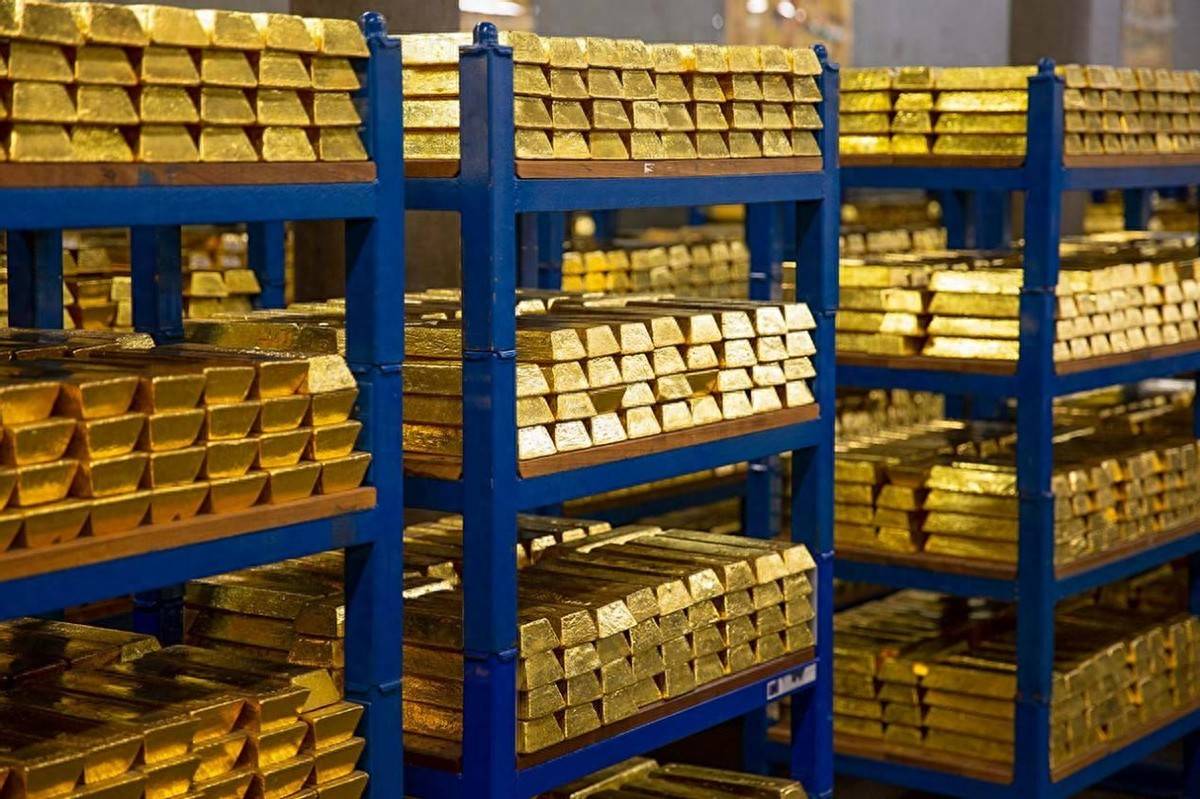
俄开启黄金大甩卖!普京掏空2300吨家底填战争窟窿,财政要崩盘?
Sou Hu Cai Jing· 2025-12-07 14:53
Core Viewpoint - The Russian Central Bank has begun selling its gold reserves to address a significant budget deficit, indicating a severe financial crisis exacerbated by ongoing military expenditures and Western sanctions [1][3]. Group 1: Financial Crisis - The Russian Central Bank confirmed the sale of gold to "fill the budget gap," highlighting the urgency of the situation as the country faces a budget deficit of 3.7 trillion rubles in 2025, several times higher than the previous year [3][5]. - Western sanctions have frozen approximately 300 billion euros of Russia's foreign exchange reserves, nearly half of its total reserves, forcing the country to liquidate its gold reserves [3][5]. Group 2: Military Expenditures - Russia's military spending is projected to reach 15.5 trillion rubles for the year, averaging 45.3 billion rubles per day, which translates to approximately 3.15 million rubles per minute [5][9]. - Local governments are experiencing financial collapse, with regions like Yakutia announcing budget exhaustion and drastically cutting recruitment bonuses by over 75% [5][9]. Group 3: Gold Reserves and Economic Impact - The National Wealth Fund's gold holdings have plummeted from 405.7 tons pre-war to 173.1 tons, with liquid assets halved to 51.6 billion USD, indicating a severe depletion of strategic reserves [7][9]. - The inability to sell gold internationally due to sanctions has led to a situation where domestic gold sales are insufficient to cover daily military expenses, with inflation rising to 8% and the central bank's interest rate reaching 16.5% [9][11]. Group 4: Long-term Consequences - The act of selling gold reserves is likened to a desperate measure, akin to selling organs for money, suggesting that while it may provide temporary relief, it signals a deeper systemic crisis with no clear winners in the ongoing conflict [11][12].
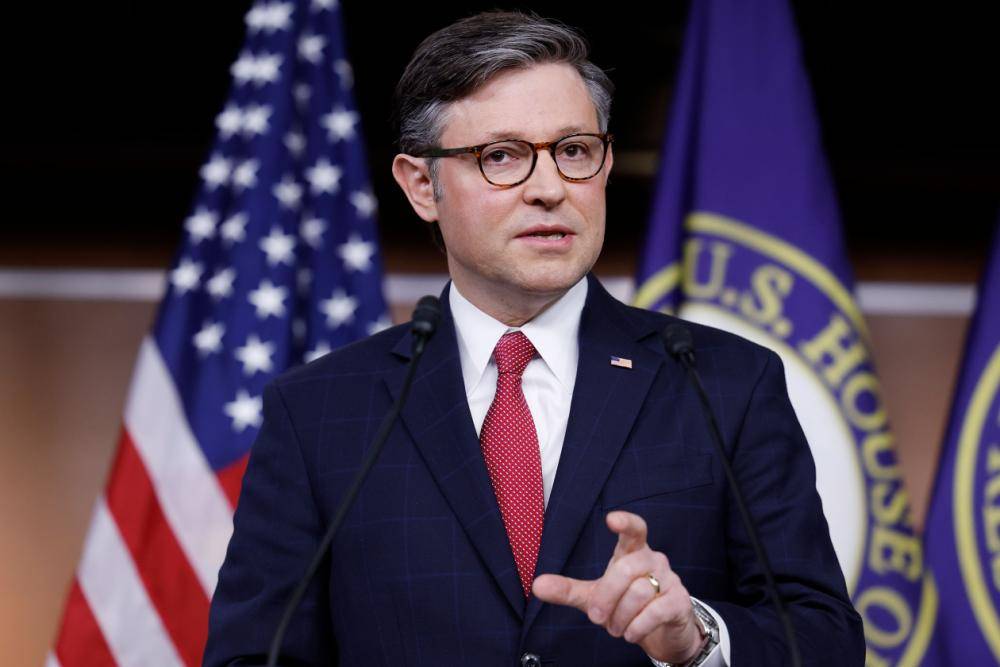
实锤!政府停摆真不是意外!特朗普的屠刀,正伸向全美的命根子?
Sou Hu Cai Jing· 2025-11-09 05:22
Core Viewpoint - The current U.S. government shutdown is not merely a budget dispute but a significant political crisis centered around the "Big and Beautiful Act," which reveals deep societal divisions in the U.S. [7][16] Group 1: Legislative Impact - The "Big and Beautiful Act" redefines the standard for "poor," reflecting a strong sentiment against welfare dependency, which has garnered support from certain voter demographics [9][11] - The act includes tax cuts for specific groups, such as restaurant workers and blue-collar employees, aiming to attract Republican voters while simultaneously cutting welfare benefits for Democratic supporters [11][12] Group 2: Social and Economic Consequences - The new regulations under the act will require non-disabled adults to work at least 80 hours a month to qualify for Medicaid, potentially removing up to 12 million people from the program [12] - The act is projected to cause a revenue loss of $5 trillion to $6 trillion over the next decade, exacerbating an already high deficit rate of 6.4%, which could rise to 7.3% [17] Group 3: Political Dynamics - The shutdown provides an opportunity for the Trump administration to conduct a political purge, with approximately 150,000 federal employees believed to lean Democratic already leaving the government [14][20] - The conflict over the act represents a deeper struggle over defining who constitutes "the American people," with implications for welfare distribution and fiscal policy [16][22]
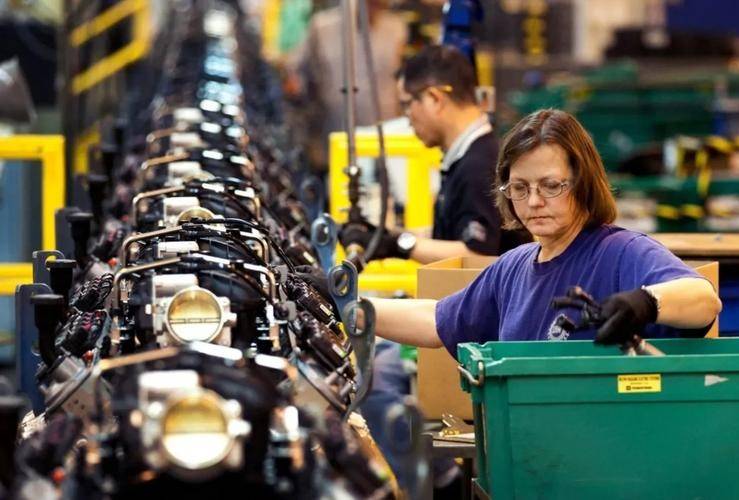
美欧等金融资本国家的财政危机是全球危机的一个根源,一个时期以来,美、英、法、德、日等国债务规模大幅度上升
Sou Hu Cai Jing· 2025-10-24 16:17
Core Insights - The article discusses the increasing debt levels across nations, corporations, and individuals, highlighting the paradox of rising money supply alongside stagnant wages and increasing costs [1][3]. Group 1: National Debt - The U.S. national debt is projected to exceed $34 trillion by 2024, equating to approximately $100,000 per American citizen [3]. - Other countries like the UK, France, and Germany have debt-to-GDP ratios above 90%, while Japan's ratio exceeds 250% [3]. Group 2: Taxation and Labor - The article notes that instead of taxing capital, governments are increasingly taxing labor, with the UK seeing a nearly 10 percentage point increase in tax rates for the working class over the past 20 years [3][5]. - The concept of "structural tax cuts" is critiqued, as it primarily benefits capital while labor bears the tax burden [5]. Group 3: Student Debt Crisis - The total student debt in the U.S. has reached $1.7 trillion, averaging $30,000 per borrower, contributing to a broader societal crisis where young people struggle to afford housing and start families [5][7]. Group 4: Monetary Policy and Inflation - The article highlights the excessive money printing by the Federal Reserve since the 2008 financial crisis, leading to significant inflation, with U.S. inflation peaking at 9.1% in 2022, the highest in 40 years [7]. - Japan's debt is reported at approximately 1.27 quadrillion yen, or 260% of GDP, with the central bank hesitant to raise interest rates due to fears of destabilizing the financial system [7][9]. Group 5: Global Debt Landscape - Global debt has surpassed three times the world's GDP, indicating a reliance on debt for economic stability, with capital profiting while ordinary citizens face tax burdens and inflation [9].

特朗普只要再输一次,中国将完胜中美关税战,后果对美国不堪设想
Sou Hu Cai Jing· 2025-10-08 07:11
Core Viewpoint - The ongoing trade war between the U.S. and China is significantly influenced by a legal battle within the U.S., where American companies, state governments, and trade associations are challenging the legality of the tariffs imposed by the Trump administration, which could lead to a potential refund of up to $1 trillion in tariffs if the Supreme Court rules against the government [1][20]. Group 1: Legal Framework and Implications - The legal basis for the tariffs stems from the International Emergency Economic Powers Act (IEEPA), which grants the U.S. President emergency powers to impose economic measures in response to significant threats [3]. - The Trump administration utilized the IEEPA to implement extensive tariffs, escalating from an initial 10% to as high as 100%, effectively bypassing Congress [5][6]. - A significant ruling from the Federal Circuit Court in August 2025 deemed most of the global tariff policies illegal, stating that the President lacked the authority to impose such broad taxation under the invoked law [8][10]. Group 2: Economic Consequences - As of August 2025, U.S. companies had already paid over $210 billion in what are considered illegal tariffs, with potential refunds reaching $750 billion to $1 trillion if the case extends into 2026 [13][15]. - The financial implications of a Supreme Court ruling against the Trump administration could lead to a catastrophic impact on the U.S. economy, equating to the annual defense budget [13][15]. - The tariffs have resulted in significant job losses in the U.S., with over 42,000 manufacturing jobs reportedly lost since the new tariffs were implemented, affecting sectors such as automotive, appliances, and electronics [18]. Group 3: Strategic Outcomes - The trade war, initially aimed at protecting American workers and manufacturing, has ironically led to job losses and economic burdens on U.S. consumers and small businesses, while China has managed to maintain its economic stability [17][20]. - The legal challenges against the Trump administration's tariffs highlight the checks and balances within the U.S. government, particularly the judiciary's role in curbing executive power [17]. - The upcoming Supreme Court hearings scheduled for November 5, 2025, will be pivotal in determining the future of these tariffs and the broader implications for U.S.-China trade relations [22].
中方连抛3096亿美债,美政府正式关门,专家坦言:中国王牌奏效
Sou Hu Cai Jing· 2025-10-04 02:45
Core Insights - Since 2022, China has cumulatively reduced its holdings of U.S. Treasury bonds by $309.6 billion, coinciding with a government shutdown crisis in the U.S. [1][7] - The U.S. government shutdown is a result of long-standing partisan divisions, leading to budgetary deadlocks that prevent funding [3][5] - The reduction in U.S. Treasury bond purchases by the Federal Reserve, due to inflationary pressures, has exacerbated the fiscal situation of the U.S. government [6][7] Group 1: U.S. Government Shutdown - The shutdown is not an isolated incident but a culmination of ongoing political polarization, making it difficult for parties to reach a compromise on fiscal policies [5][6] - The shutdown has significant implications, including the suspension of government services and unpaid leave for federal employees [3][5] Group 2: China's Reduction of U.S. Treasury Bonds - China's reduction of U.S. Treasury bonds is a strategic decision based on a thorough analysis of the current international economic landscape, reflecting concerns over U.S. fiscal sustainability and monetary policy uncertainty [8][10] - The cumulative reduction includes $173.2 billion in 2022, $50.8 billion in 2023, $57.3 billion in 2024, and $28.3 billion in early 2025, bringing China's remaining U.S. Treasury holdings to $730.7 billion, the lowest since 2009 [7][8] Group 3: Strategic Implications - The shift in China's investment strategy is influenced by the changing global economic landscape and increasing tensions in U.S.-China relations, prompting a reassessment of its previous reliance on U.S. Treasury bonds [10][12] - China's growing economic and international influence positions it as a significant player in global trade and finance, which is recognized by U.S. officials, including former President Trump, who called for negotiations with China during the shutdown [12][13]
达利欧唱多黄金:涨势未完,建议投资者配置10%资金
智通财经网· 2025-09-19 12:24
Core Viewpoint - Ray Dalio, founder of Bridgewater Associates, suggests that increasing global debt pressures will lead to currency devaluation, strengthening gold and alternative currencies [1] Group 1: Investment Recommendations - Dalio recommends investors allocate approximately 10% of their portfolios to gold for diversification [1] - He emphasizes the growing importance of alternative currencies in wealth and currency reserves [1] Group 2: Economic Concerns - Dalio warns that excessive government spending and rising debt in the U.S. have become "unsustainable," posing a significant risk to the country's monetary order [1] - He estimates that the U.S. government needs to sell an additional $12 trillion in bonds to cover a $2 trillion budget deficit, $1 trillion in interest payments, and $9 trillion in maturing debt [1] Group 3: Market Trends - Gold has experienced a strong upward trend, rising 40% this year, marking the most significant annual increase since 1979 [1] - The current rise in gold prices is attributed to loose monetary policies and a weakening dollar, making gold and silver preferred investment options [1]
中美刚打完电话,特朗普就逼30国对华加税,马斯克:美国病入膏肓
Sou Hu Cai Jing· 2025-09-14 06:36
Group 1 - The article discusses the recent escalation in U.S.-China relations, particularly focusing on Trump's push for tariffs against China and his attempts to rally support from other countries for punitive measures [1][3][5] - It highlights the ongoing high-level dialogues between Chinese and U.S. officials, indicating a willingness to communicate despite existing tensions [3][5] - The article notes that Trump's actions reflect a transactional approach to diplomacy, aiming to isolate China economically while strengthening U.S.-European alliances [5][8] Group 2 - Musk's critical remarks about the U.S. government's financial situation emphasize the severity of the national debt crisis, with interest payments exceeding $1 trillion [7][8] - The article contrasts Musk's concerns about domestic fiscal issues with Trump's aggressive foreign policy, suggesting that tariffs may not effectively address the underlying economic challenges [7][8] - It points out the internal divisions within the EU regarding Trump's proposed sanctions, with significant economic implications for European businesses [5][8]
重要的问题是欧洲,当然也有可能是美国
3 6 Ke· 2025-09-03 08:50
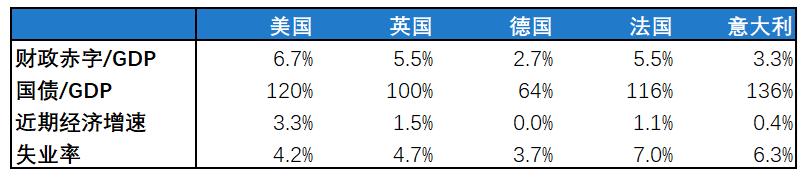
Core Viewpoint - The recent decline in global capital markets, particularly in the US, can be attributed to severe fiscal issues in the UK, which reflect broader fiscal challenges across Europe [1] Group 1: Fiscal Conditions in Europe - The fiscal deficit as a percentage of GDP for the UK and France has surged to over 5%, while the national debt for the UK, France, and Italy has exceeded 100% of GDP [2] - The UK’s 30-year government bond yield has risen to 5.7%, and the 10-year yield has reached 4.8%, indicating significant market concerns [1] - Germany is the only major European country maintaining strong fiscal discipline, which is crucial for the stability of the Eurozone economy [1][2] Group 2: Comparison with the US - The US has a fiscal deficit of 6.7% of GDP and a national debt of 120% of GDP, yet concerns about US fiscal stability are less pronounced compared to Europe [2][3] - The US economy has shown a recent growth rate of 3.3%, significantly outpacing European nations, which have struggled with low or zero growth [2][3] - The perception of the US dollar as a reserve currency and the belief in the Federal Reserve's ability to manage interest rates contribute to a more favorable view of US fiscal health [3] Group 3: Defense Spending and Economic Growth - European countries are under pressure to increase defense spending to meet NATO requirements, which could exacerbate their fiscal deficits [6][8] - The lack of long-term economic growth drivers in Europe, coupled with declining populations and insufficient technological advancement, poses a significant risk to their fiscal stability [8][9] - The US's military protection of Europe has allowed European nations to maintain lower defense spending, but this reliance may lead to fiscal crises if the US reduces its support [7][9] Group 4: Future Outlook - The current fiscal challenges in Europe may lead to increased scrutiny of US fiscal policies, especially if European issues worsen [4][10] - The belief that the US can sustain its fiscal situation despite rising debt levels is based on historical precedents of economic growth offsetting deficits [10] - The potential for a global crisis could impact the US, but the long-term consequences are expected to be less severe than those faced by European nations [10]
英国资产,全线闪崩
Zheng Quan Shi Bao· 2025-09-02 14:13
Group 1: UK Financial Market Turmoil - The UK bond yields surged, with the 30-year bond yield reaching 5.69%, the highest since 1998, and the 10-year yield at 4.791%, a three-month high, reflecting investor concerns about the government's fiscal situation and economic outlook [3][5] - The British pound fell sharply against the US dollar, dropping over 1.5% to 1.334, indicating market instability [3][5] - The FTSE 100 index declined by 0.85%, with intraday losses nearing 1%, showcasing the broader market impact of these financial concerns [3] Group 2: Government Restructuring and Economic Pressures - Prime Minister Starmer announced key personnel changes aimed at strengthening the government’s economic agenda, including appointments of Darren Jones as Chief Secretary and Shafik as Chief Economic Advisor [4] - Chancellor Rachel Reeves faces pressure to find savings or increase taxes to improve the UK's fiscal situation, with analysts suggesting that tax increases may be unavoidable but could be counterproductive [5] - The sale of long-term government bonds has been reduced to record lows, reflecting diminished demand from traditional buyers and concerns over rising structural inflation [5] Group 3: Eurozone Inflation and ECB Policy - Eurozone inflation rose slightly to 2.1% in August, above the European Central Bank's (ECB) target of 2%, with core inflation remaining stable at 2.3% [6][7] - Most economists expect the ECB to maintain interest rates at the upcoming meeting, as the slight increase in overall inflation is not anticipated to significantly impact policy decisions [7][8] - The decline in service sector inflation from 3.2% in July to 3.1% in August is seen as a positive sign for the ECB, indicating easing domestic price pressures [7]