
财政收支平衡

Search documents
赤字重现!日本经济刺激计划打破28年预算平衡愿景
智通财经网· 2026-01-22 11:27
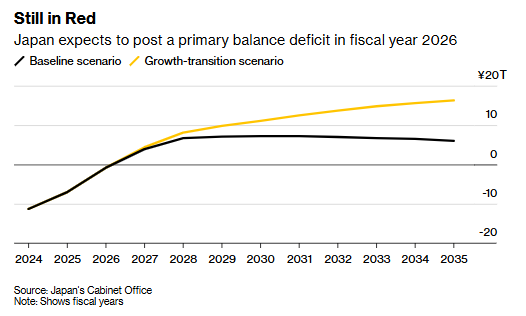
Core Viewpoint - Japan's recent economic stimulus plan has led to a deviation from the previously announced goal of achieving a fiscal surplus for the first time in 28 years, with the latest estimates indicating a deficit instead [1][2]. Group 1: Fiscal Outlook - The latest report from Japan's Cabinet Office forecasts a basic fiscal deficit of approximately 800 billion yen (about 5.1 billion USD) for the new fiscal year starting in April, which represents 0.1% of GDP [1]. - This deficit is the smallest since the fiscal target was established in 2001, contrasting sharply with the previous expectation of a surplus of 3.6 trillion yen [1]. - The broader accounting method used by the Cabinet Office includes additional expenditures beyond the initial budget, which was not the case in earlier assessments [1]. Group 2: Government Policy and Market Reaction - Prime Minister Fumio Kishida has shifted focus from achieving a fiscal surplus to reducing the debt-to-GDP ratio, which has raised concerns among investors regarding Japan's fiscal management [2]. - Recent spikes in long-term Japanese government bond yields, with the 40-year yield surpassing 4%, have been attributed to investor anxiety over the country's debt trajectory [2]. - Kishida's proposal to temporarily eliminate the food consumption tax ahead of the upcoming elections has further exacerbated market concerns about fiscal sustainability [2]. Group 3: Budget Projections - The narrow accounting method still allows for a projected surplus of 1.34 trillion yen for the fiscal year 2026, as stated by Kishida [4]. - The broader fiscal deficit is primarily driven by two factors: a new economic stimulus plan costing 5.2 trillion yen and increased local government spending of 1.2 trillion yen [5]. - The proposed tax cuts are expected to incur an annual fiscal cost of around 5 trillion yen, which has not yet been factored into the latest fiscal estimates [5].

中国财政部:2026年财政总体支出力度“只增不减”
Zhong Guo Xin Wen Wang· 2026-01-21 02:10
Group 1 - The Chinese government will continue to implement a more proactive fiscal policy in 2026, maintaining necessary levels of fiscal deficit, total debt, and expenditure, ensuring that overall expenditure increases and key areas are strongly supported [1] - The fiscal deficit rate for 2025 is set at around 4%, an increase of 1 percentage point from the previous year, with new government debt totaling 11.86 trillion yuan, an increase of 2.9 trillion yuan compared to the previous year [1] - Special government bonds worth 500 billion yuan will be issued to supplement the core tier one capital of large state-owned commercial banks, and another 500 billion yuan will be allocated for local government debt limits to enhance local government financial capacity and expand effective investment [1] Group 2 - In 2025, China will issue 1.3 trillion yuan in ultra-long-term special government bonds to support major national strategies and key area security capabilities, with 300 billion yuan specifically allocated for the replacement of consumer goods [2] - The fiscal revenue and expenditure balance target for 2025 is achievable, with fiscal revenue showing a "low in the front, high in the middle, and steady at the back" trend, driven mainly by tax revenue growth since April of the previous year [2] - Key expenditure guarantees are strong, with social security, employment, technology, education, and health spending exceeding 10 trillion yuan in the first 11 months of the previous year, accounting for over 40% of general public budget expenditures [2]
从2025年财政数据透视“国家账本” 重点领域支出保障“只强不弱”
Yang Shi Wang· 2026-01-20 10:21
Core Viewpoint - The Chinese government is implementing a more proactive fiscal policy for 2025 and 2026, focusing on increasing fiscal spending, optimizing expenditure structure, and enhancing the effectiveness of fund utilization to support high-quality economic development [3][5][7]. Group 1: Fiscal Policy for 2025 - The fiscal deficit rate for 2025 is set at around 4%, an increase of 1 percentage point from the previous year [3]. - New government debt issuance is projected at 11.86 trillion yuan, an increase of 2.9 trillion yuan compared to the previous year, significantly exceeding the average levels of recent years [3]. - Special government bonds worth 500 billion yuan will be issued to bolster the core tier-one capital of major state-owned commercial banks, enhancing the banking sector's ability to support the real economy [3]. - A total of 500 billion yuan will be allocated for local government debt limits to improve local government financial capacity and expand effective investment [3][4]. Group 2: Economic Support Measures - The issuance of ultra-long special bonds amounting to 1.3 trillion yuan aims to support key areas while improving the quality of life for citizens and promoting economic transformation [4]. - Continuous increases in fiscal investment in social welfare are expected to enhance consumer capacity and stimulate consumption [4]. - The fiscal policy for 2025 is designed to provide significant support for macroeconomic stability and progress [4]. Group 3: Fiscal Policy for 2026 - The fiscal policy for 2026 will continue to be proactive, focusing on increasing total fiscal expenditure while ensuring necessary spending levels [5][7]. - The emphasis will be on optimizing the expenditure structure to ensure funds are allocated to critical areas [7]. - The government aims to improve the effectiveness of fund utilization, ensuring that every yuan spent generates expected benefits [7]. - Continued issuance of ultra-long special bonds will support key construction projects and policy implementation [7]. Group 4: Revenue and Expenditure Trends - The overall fiscal revenue for 2025 is expected to show a "low in the beginning, high in the middle, and stable at the end" trend, with a projected decline of 1.1% in Q1, followed by growth in subsequent quarters [11]. - Tax revenue has been a major driver of fiscal income growth, maintaining year-on-year increases since April [11][12]. - Public budget expenditures are expected to remain strong, with significant allocations to social security, employment, technology, education, and health, totaling over 10 trillion yuan [12]. - The use of bond funds has accelerated, with expenditures of 5.15 trillion yuan in the first 11 months, a 45.5% increase from the previous year [12].
财政部:去年全国一般公共预算收入保持恢复性增长态势,预计全年可实现收支平衡
Sou Hu Cai Jing· 2026-01-20 09:55
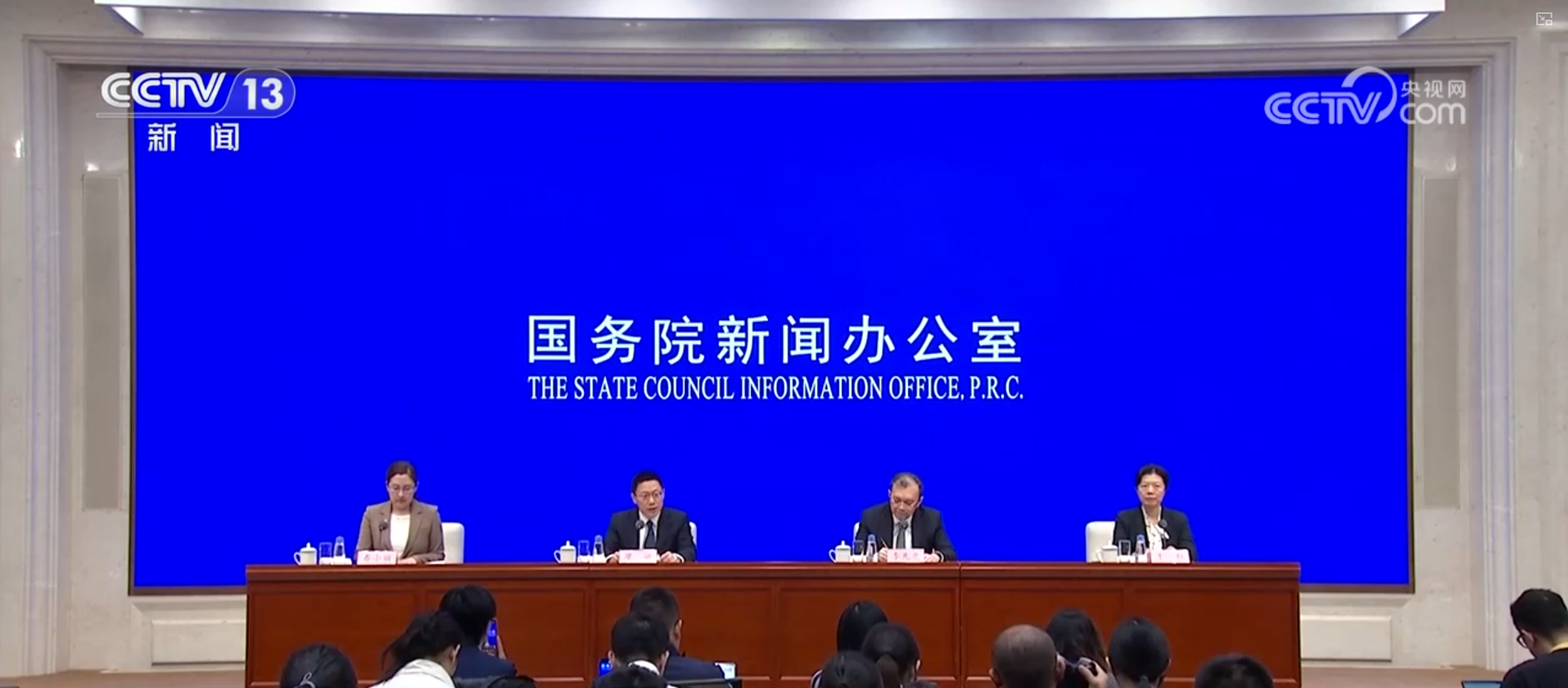
一是财政收入"前低中高后稳"。分季度看,全国一般公共预算收入一季度下降1.1%;二季度由降转升,增长0.6%;三季度增幅明显提高,增长2.5%。进入 四季度,10月份增长3.2%,11月份与2024年同期基本持平。其中,税收收入自4月份以来持续保持同比增长,成为拉动财政收入增长的主要引擎,这也反映 出我国经济运行延续了稳中有进的发展态势。 二是收支平衡目标可以实现。收入方面,全国一般公共预算收入保持恢复性增长态势,总体平稳。支出方面,全国一般公共预算支出靠前发力、保持强度, 为经济社会发展提供了必要的财力支撑。预计全年可以实现收支平衡。 三是重点支出保障有力。2025年,财政部门持续优化支出结构,社会保障和就业、科技、教育、卫生健康等重点领域支出得到了较好的保障。前11个月,上 述四项支出合计超过10万亿元,占一般公共预算支出的四成多。同时,持续加快债券资金使用,前11个月超长期特别国债、地方政府专项债券、中央金融机 构注资特别国债等资金共支出5.15万亿元,比去年同期增加1.61万亿元,增长45.5%,增强经济发展动能,推动经济持续回升向好。 红星新闻首席记者 吴阳 北京报道 1月20日,国务院新闻办举行新 ...
财政部:预计2025年可以实现收支平衡
Zhong Guo Jing Ji Wang· 2026-01-20 08:44
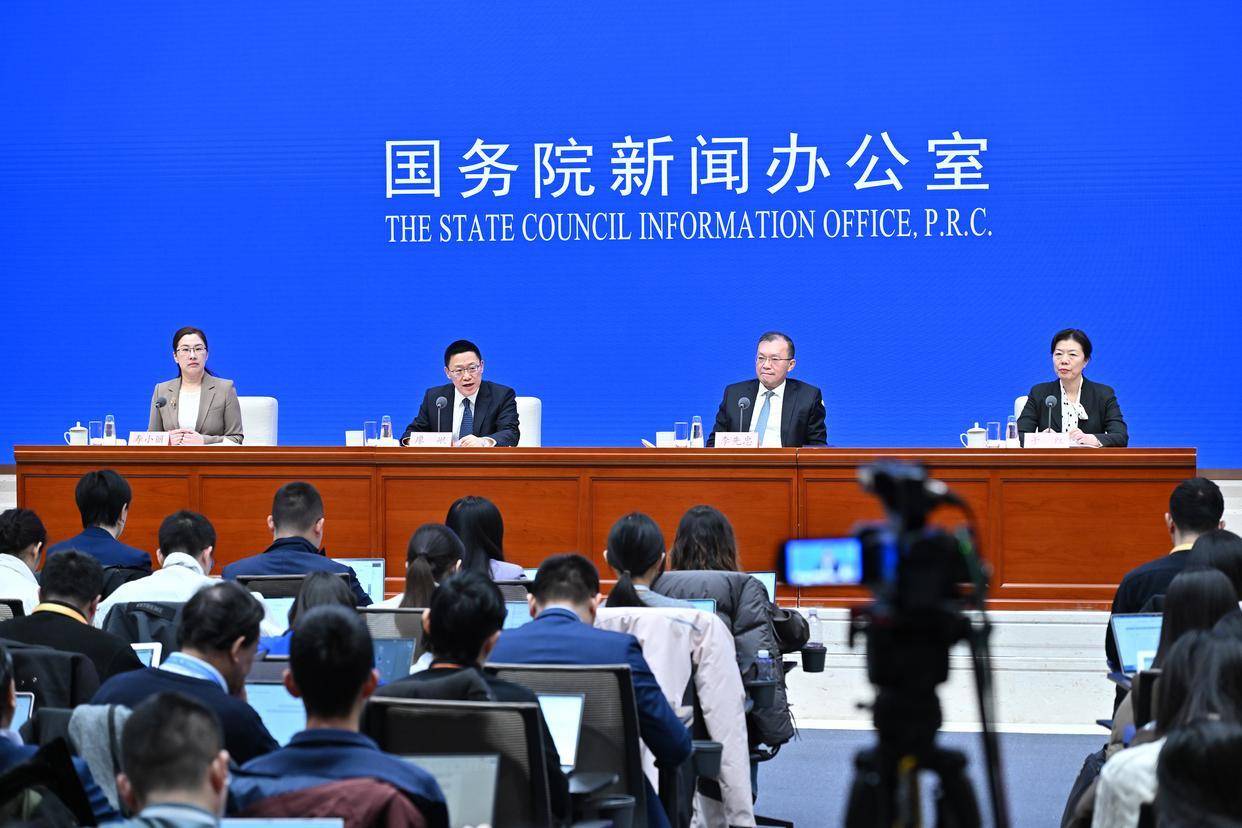
支出方面,2025年全国一般公共预算支出坚持靠前发力、保持支出强度。一方面,持续优化支出结构, 社会保障和就业、科技、教育、卫生健康等民生及发展重点领域支出得到有力保障。前11个月,上述四 项重点支出合计超10万亿元,占全国一般公共预算支出比重超四成。另一方面,持续加快各类债券资金 拨付使用进度,前11个月超长期特别国债、地方政府专项债券、中央金融机构注资特别国债等资金累计 支出5.15万亿元,较2024年同期增加1.61万亿元、增长45.5%,有效增强了经济发展动能,为推动经济 持续回升向好提供了坚实支撑。 李先忠介绍,从季度走势来看,全国一般公共预算收入一季度同比下降1.1%,二季度由降转升,同比 增长0.6%,三季度增幅进一步扩大,同比增长2.5%;进入四季度后保持平稳运行,10月份同比增长 3.2%,11月份与2024年同期基本持平。其中,税收收入自4月份起连续实现同比增长,成为拉动财政收 入增长的主要动力,这一态势也直观反映出我国经济运行持续保持稳中有进的良好发展势头。 中国经济网1月20日讯 国务院新闻办公室20日举行新闻发布会,介绍积极财政政策发挥作用、推动经济 社会高质量发展的相关情况。财政部 ...
明年财政赤字将如何安排?
Zheng Quan Shi Bao· 2025-12-16 18:11
Group 1 - Fiscal policy serves as a primary tool for macroeconomic regulation, utilizing budget, government bonds, and taxation to enhance both qualitative and quantitative economic growth [1] - The market anticipates that the fiscal deficit rate for next year will not be lower than 4%, maintaining the current fiscal expansion while avoiding rapid accumulation of debt risks [1][2] - The fiscal deficit is expected to increase to 4% in 2025, marking the highest level in recent years, as the government aims to maintain policy continuity and boost market confidence [1][2] Group 2 - The fiscal deficit is projected to rise to meet the demands of key areas such as livelihood protection, employment stabilization, and domestic demand expansion, while also addressing the pressure of government debt repayments [2] - The increase in fiscal deficit will primarily be compensated by issuing government bonds, which will help optimize government debt structure and alleviate local government debt risks [2] - The expansion of fiscal spending will focus on enhancing public services and supporting consumption and technological innovation, with a notable emphasis on social welfare sectors such as education and healthcare [3]
28省份发布前三季度财政收支
第一财经· 2025-11-17 13:34
Core Viewpoint - Local government fiscal revenues have shown slight growth in the first three quarters of the year, with expenditures also increasing, indicating a focus on stabilizing the economy and ensuring public welfare [3][4][6]. Fiscal Revenue Summary - Among 28 provinces, 24 reported growth in general public budget revenues, with Tibet and Jilin achieving double-digit growth rates of 14.2% and 11.4% respectively [8]. - Nationally, local general public budget revenue reached 93,039 billion yuan, a year-on-year increase of 1.8%, while expenditures totaled 177,056 billion yuan, up 2.4% [6]. - Provinces like Shanxi, Shaanxi, Inner Mongolia, and Qinghai experienced declines in revenue, attributed to falling prices of major commodities like coal [9]. Fiscal Expenditure Summary - Most provinces reported slight increases in fiscal expenditures, with Tibet showing the highest growth rate at 13% [14]. - Expenditures in key areas such as health, social security, and education have been prioritized, with Hunan province allocating over 70% of its budget to these sectors [14]. - The government is focusing on balancing fiscal resources and ensuring that expenditures support essential public services and economic stability [14][15]. Revenue Quality and Trends - The overall quality of fiscal revenue has improved slightly, with tax revenue growth outpacing non-tax revenue [12]. - In some regions, significant disparities in revenue growth rates were observed, with certain counties experiencing high growth due to specific industry developments [11]. - The low growth in fiscal revenues is influenced by broader economic conditions, including a sluggish real estate market and challenges faced by various industries [10].

拆解“提高财政收入占比”的三个关键问题
Sou Hu Cai Jing· 2025-09-13 04:20
Group 1: Fiscal Revenue and GDP Ratio - Recent discussions among experts suggest increasing the fiscal revenue as a percentage of GDP, with former Finance Minister Lou Jiwei advocating for this in his 2025 paper [2][3] - The fiscal revenue ratio reflects the government's ability to concentrate financial resources from the economy and its macro-control capacity [3] - Since the 1994 tax-sharing reform, the fiscal revenue ratio has shown a trend of initially increasing and then decreasing, with the ratio dropping from 21.4% during the 12th Five-Year Plan to an average of 16.7% in the first four years of the 14th Five-Year Plan [5][6] Group 2: Tax Burden and Comparison with Other Economies - In 2024, the macro tax burden is reported at 28.2%, indicating room for improvement compared to the generally accepted 30% threshold [3] - China's macro tax burden is lower than 20% when measured by tax revenue as a percentage of GDP, which is below levels seen in OECD countries [4] - The decline in fiscal revenue ratio is linked to large-scale tax cuts implemented since 2019, which reduced the ratio from 28%-29% in 2018 to 26% in 2023 [6][7] Group 3: Need for Fiscal Reform - The 2023 Central Economic Work Conference highlighted the need for a new round of fiscal reform due to the significant decline in fiscal revenue ratios [7][8] - The fiscal revenue ratio for 2023 is noted to be 26%, which is lower than the 30% average for similar income countries and significantly below the 35% average for developed countries [8] - Experts emphasize the importance of improving the efficiency of fiscal spending and optimizing the expenditure structure to ensure fiscal sustainability [4][9] Group 4: Alternative Revenue Sources - Experts suggest that besides increasing tax revenue, other methods to enhance fiscal revenue include expanding the state capital operating budget and reducing unfair tax incentives [14][15] - The state capital operating budget is seen as having significant potential for growth, especially as land finance diminishes [15][17] - The current state capital operating budget revenue is reported at 6783 billion yuan for 2024, with substantial profits from state-owned enterprises indicating room for increased contributions [15][16]

日本对劳工态度180°逆转!“欢迎”声中外籍工人涌入
Jin Tou Wang· 2025-08-12 06:15
Group 1 - The increase in foreign residents in Japan, which reached approximately 3.7 million by the end of last year, represents an 11% rise, the largest since records began in 2013, is expected to improve tax revenue and social insurance contributions, thereby enhancing the fiscal balance and living standards for Japanese citizens [1] - Japan's total population is projected to decline to 120.65 million in 2024, a decrease of about 908,000 from the previous year, marking a historical low, with the working-age population (ages 15-64) at approximately 71.24 million, accounting for about 59% of the total population [1] - The aging population and declining birth rates in Japan necessitate the acceleration of foreign labor recruitment, shifting initial concerns to a more relaxed immigration stance [1] Group 2 - A survey indicated that 76% of respondents support the increase of foreign workers, with 6% strongly agreeing and 70% agreeing, suggesting that foreign workers can alleviate shortages in goods and services and contribute new ideas to enhance productivity [2] - Empirical research shows that foreign workers and Japanese workers have a complementary relationship, with no negative impact on Japanese workers' wages or unemployment rates [2] - The majority of foreign residents are young and contribute more in taxes and insurance than they receive in benefits, positively affecting Japan's fiscal balance [2] - The current foreign-born population in Japan is only 3%, significantly lower than the OECD average of 11%, indicating potential challenges as this ratio increases over time [2] - Establishing long-term institutional arrangements and multicultural coexistence policies is deemed essential for sustainable integration of diverse backgrounds in society [2]
【环球财经】巴西政府上调2025年持续福利金支出预期
Xin Hua Cai Jing· 2025-07-23 22:42
Group 1 - The Brazilian federal government has revised its 2025 budget forecast, increasing the expected spending on the "Continuous Cash Benefit" (BPC) to 124.7 billion reais, up by 2.9 billion reais from previous estimates, indicating growing pressure on the fiscal budget due to rising social security expenditures [1] - The report highlights that the spending on the BPC has been on a continuous upward trend, becoming a significant component of the government's primary expenditures, despite previous proposals to curb the rapid growth of social security spending [1] - The government has also raised its forecast for primary revenue in 2025 to 2.924 trillion reais, an increase of 25.4 billion reais, primarily benefiting from higher tax revenues related to natural resource development, with an estimated increase of 18 billion reais in tax revenues [1] Group 2 - The total primary expenditure forecast has been adjusted upwards by 5 billion reais to 2.42 trillion reais, while the government has reduced the budget freeze amount from 31.3 billion reais to 10.7 billion reais, indicating a shift in fiscal management strategies [2] - Brazil's government aims to achieve a primary fiscal balance in 2025, allowing for a deviation of no more than 31 billion reais, which is 0.25% of GDP, although the upward trend in social security and rigid expenditures remains a concern for the economic team [2] - Analysts note that the expansion of social expenditures like the BPC has a social foundation but poses challenges to government fiscal discipline, highlighting the need for the Lula administration to balance social welfare expansion with fiscal stability [2]