金铜比

Search documents
国泰海通|策略:资产概览:资产分化显著,日股黄金新高
国泰海通证券研究· 2025-10-13 14:03
Core Insights - Global equity markets faced overall pressure, with significant performance divergence, particularly in Asia where Japanese and Korean markets excelled [1][2] - Precious metals, especially gold and silver, reached new highs, while oil prices declined [1][4] - The bond market showed a "bull steep" trend in China, while US bonds exhibited a "bull flat" trend, indicating differing yield curve behaviors [3] Group 1: Equity Market Performance - The MSCI global index fell by 1.3%, with developed markets underperforming compared to emerging markets, particularly in Asia [2] - The Nikkei 225 index surged by 7.0%, reaching a new high, driven by a weaker yen and optimistic policy expectations [2] - A-shares experienced a slight decline, with the Wande All A index down by 0.4%, while the KOSPI and KOSDAQ in South Korea rose by 5.4% and 2.1%, respectively [2] Group 2: Commodity and Currency Trends - The COMEX silver and gold prices increased significantly, with silver up over 60% and gold over 50% year-to-date [1][4] - The South China commodity index and CRB commodity index rose by 0.2% and 2.0%, respectively, with most major commodities showing gains except for WTI and Brent crude [4] - The US dollar index increased by 1%, while the Japanese yen depreciated by 2.2% against the dollar [4] Group 3: Bond Market Dynamics - In China, the yield curve showed a downward trend overall, with the long end (20-30 years) rising, indicating a "bull steep" characteristic [3] - The US bond market also saw a downward shift in the yield curve, with a narrowing 10Y-2Y spread, reflecting a "bull flat" trend [3] - As of October 12, the probability of a 25 basis point rate cut in October rose to 98.3%, with expectations for two rate cuts within the year [3]


谢治宇最新也发声了!
Sou Hu Cai Jing· 2025-09-23 08:08
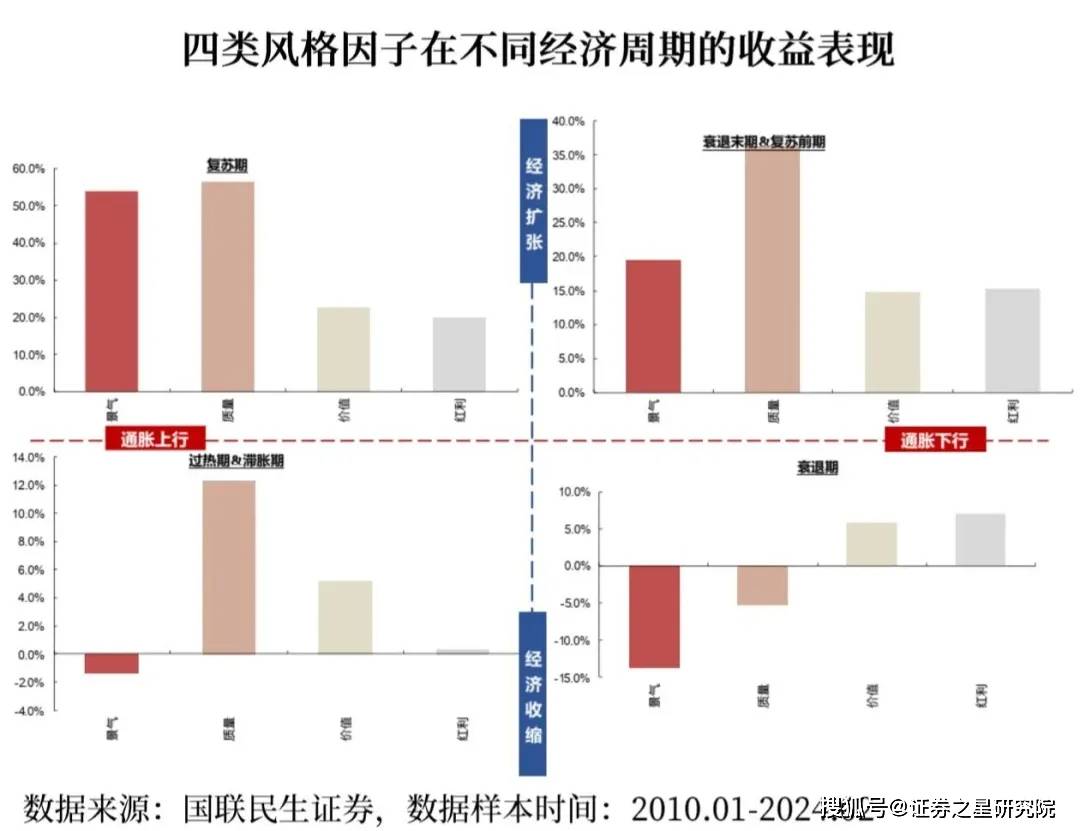
Group 1: Asset Allocation Insights - The first principle of asset allocation is that all returns are compensation for risk [4] - Investors' funding goals determine the types and levels of risk exposure needed [5] - The purpose of allocation is to optimize the risk-adjusted returns of individual asset classes, focusing on the correlation between different assets [5][6] Group 2: Stock Selection Strategies - Understanding macro variables and overall asset structure can help gauge stock volatility not driven by fundamentals [6] - The gold-to-copper ratio can indicate economic cycles, with a declining ratio suggesting stagflation and an increasing ratio indicating recession [7] - The Merrill Lynch Clock illustrates that different economic growth and inflation levels correspond to optimal asset performance in various stages [10] Group 3: Investment Strategies for Cyclical Stocks - Three strategies for investing in cyclical stocks include speculative trading based on futures prices, top-down allocation considering demand expansion, and value trading focusing on low valuations of high-quality companies [10][11] - Key indicators for assessing demand expansion include capital expenditure ratios, PE and PB ratios, and observing macroeconomic leading indicators [11] Group 4: Views on Major Asset Classes - Short-term prospects for the US dollar show potential for a rebound due to interest rate cuts and fiscal stimulus, while long-term attractiveness may be diminished by rising credit risks [12] - The Chinese yuan faces short-term appreciation pressure due to improving growth momentum and foreign capital inflows, with long-term appreciation trends expected [12] - US Treasury yields are influenced by Fed policies, with long-term rates affected by economic conditions and rising deficits [13] - Oil prices are expected to fluctuate within a certain range, while gold serves as a good tool for hedging portfolio risks due to its low correlation with the dollar [13][14] - Copper demand is positively influenced by sectors like renewable energy and AI, positioning it favorably among cyclical commodities [14]
金银新高之路:本轮突破后的持续性展望
2025-09-09 02:37
Summary of Key Points from Conference Call Industry Overview - The conference call primarily discusses the precious metals market, focusing on gold and silver, in the context of macroeconomic factors such as Federal Reserve interest rate policies and employment data trends [1][2][3][10]. Core Insights and Arguments 1. **Impact of Federal Reserve Policies**: - The expectation of interest rate cuts by the Federal Reserve, driven by deteriorating employment data, is pushing precious metal prices higher. The anticipated data revisions in 2026 are expected to clarify employment issues and increase rate cut expectations [1][2][10]. - The market is pricing in potential rate cuts, with discussions around 50 basis points or 25 basis points cuts, and possibly larger cuts in 2026 [2][10]. 2. **Currency Dynamics**: - The US dollar is expected to decline due to economic downturns and the initiation of rate cuts, although weak European markets may offset some of this impact. The Chinese yuan is projected to have favorable factors in the latter half of 2025 [1][4]. 3. **Gold and Silver Price Trends**: - Gold prices are expected to remain stable in the short term, with a healthy upward trend. The COMEX gold target price is around $3,685, while London gold is approximately $3,680 [1][7]. - Silver has recently broken previous highs but lacks significant overseas capital inflow, primarily driven by physical demand [1][3][21]. 4. **Market Structure and Investment Sentiment**: - The current market structure for gold is healthy, with no immediate risk of a rapid pullback. The liquidity release process is expected to support higher price levels [3][5][7]. - The World Gold Council plans to launch on-chain gold assets in 2026, which could enhance trading convenience and lower costs, potentially impacting the demand for US Treasuries and the dollar's credibility [1][8]. 5. **Technical Analysis**: - The technical structure of gold indicates a healthy upward trend, with a warning that rapid price increases could lead to quick pullbacks if volatility spikes [7][10]. 6. **Central Bank Gold Purchases**: - Central bank purchases of gold do not significantly dictate market direction, as daily trading volumes far exceed central bank buying. The focus should be on emerging market forces and investor behavior [22]. 7. **Silver's Dual Nature**: - Silver's pricing power is influenced by its industrial applications and financial attributes. Despite a potential decline in industrial demand, its financial characteristics maintain its investment value [20][23]. Other Important Insights - The introduction of digital gold assets could attract new demand from both legitimate and gray market funds, expanding investment options and market potential [19]. - The relationship between gold and silver prices, as indicated by the gold-silver ratio, is crucial for understanding market dynamics and investment opportunities [30]. - The volatility of silver prices is expected to increase, and monitoring this alongside the gold-silver ratio will be essential for predicting future price movements [26][27]. This summary encapsulates the key points discussed in the conference call, providing a comprehensive overview of the current state and future outlook of the precious metals market.
【宏观月报】7月全球投资十大主线-20250804
Huachuang Securities· 2025-08-04 15:10
Group 1: Macroeconomic Insights - Japan's government bond liquidity has deteriorated beyond the levels seen during the 2008 financial crisis, with the Bloomberg Japan government bond liquidity index surpassing the post-Lehman Brothers bankruptcy levels[2] - The relative performance of U.S. cyclical stocks versus defensive stocks is closely tied to forward swap rates linked to interest rates, indicating market optimism about sustained high rates despite expectations of Fed rate cuts[5] - The relative performance of MSCI Japan bank stocks is highly correlated with the 10-year Japanese government bond yield, benefiting from rising inflation expectations in Japan[5] Group 2: Investment Trends - Global fund managers have increased their allocation to technology stocks, reaching the highest level since March 2009, while reducing positions in cash and consumer staples[6] - Emerging market sovereign debt and U.S. Treasury yield spreads have narrowed to a 15-year low, reducing the attractiveness of emerging market debt strategies[6] - The relative performance of European consumer staples has diverged from the gold-to-copper ratio since 2024, indicating a weakening relationship with macroeconomic conditions[7] Group 3: Market Dynamics - The relative P/E ratios of U.S. and European stock indices are closely linked to the uncertainty of economic policies, with European valuations rising as U.S. policy uncertainty increases[9] - China's 5-year and 1-year interest rate swap spread turned positive in July 2025, reflecting increased investor confidence in inflation due to domestic policies and infrastructure projects[8] - The South African stock index has risen approximately 19% since 2025, driven by increasing gold and platinum prices, outperforming other emerging market indices[13] Group 4: Sentiment and Risk - The SPDR U.S. Dollar ETF's call option volume has been declining, suggesting limited upward momentum for the dollar index in the near future[13] - A significant portion of fund managers (38%) view global trade conflicts as the biggest tail risk, with "shorting the U.S. dollar" identified as the most crowded trade[6]
南华期货铜风险管理日报-20250721
Nan Hua Qi Huo· 2025-07-21 14:05
Report Summary 1. Investment Rating No investment rating for the industry is provided in the report. 2. Core View - The positive macro - expectations brought by anti - involution have pushed up short - term copper prices [3]. 3. Key Points by Category 3.1 Price and Volatility - The latest copper price is 79,700 yuan/ton, with a monthly price range forecast of 73,000 - 80,000 yuan/ton. The current volatility is 10.13%, and the historical percentile of the current volatility is 14.3% [2]. - In the copper futures market, the latest prices of沪铜主力,沪铜连一,沪铜连三, and伦铜3M are 79,700 yuan/ton, 79,770 yuan/ton, 79,750 yuan/ton, and 9,794.5 dollars/ton respectively, with daily increases of 1,290 yuan, 1,330 yuan, 1,390 yuan, and 116.5 dollars, and daily increase rates of 1.65%, 1.7%, 1.77%, and 1.2% respectively. The沪伦比is 8.15, with a daily decrease of 0.03 and a daily decrease rate of 0.37% [8]. 3.2 Risk Management Suggestions - For inventory management with high finished - product inventory and concerns about price drops, it is recommended to sell 75% of沪铜主力期货 contracts at around 82,000 yuan/ton and sell 25% of CU2509C82000 call options when volatility is relatively stable [2]. - For raw material management with low raw material inventory and concerns about price increases, it is recommended to buy 75% of沪铜主力期货 contracts at around 75,000 yuan/ton [2]. 3.3 Factors Affecting Prices - **Likely Positive Factors**: Sino - US tariff policy easing, reduction in LME inventory levels, the US dollar index hovering at a low level, and anti - involution benefiting the entire non - ferrous metal sector [4]. - **Likely Negative Factors**: Tariff policy fluctuations, reduced global demand due to tariff policies, and the Fed maintaining high interest rates [5]. 3.4 Market Outlook - Copper prices showed a downward - breaking trend before July 17th. However, the strong US retail data on July 17th and positive tariff expectations on July 18th boosted copper prices. The decline in the gold - copper ratio also indicated a change in investors' risk preferences. In the next week, copper prices may continue the strong trend of the last two trading days of last week, showing a slight upward trend. The US tariff policies with Indonesia and Japan are also beneficial to demand. The durable goods orders data on July 25th is worth attention [6]. 3.5 Spot Data - The latest prices of Shanghai Non - ferrous 1 copper, Shanghai Wumaom, Guangdong Nanchu, and Yangtze Non - ferrous are 78,660 yuan/ton, 78,635 yuan/ton, 78,540 yuan/ton, and 79,760 yuan/ton respectively, with daily increases of 640 yuan, 620 yuan, 550 yuan, and 1,050 yuan, and daily increase rates of 0.82%, 0.79%, 0.71%, and 1.33% respectively. The升贴水of Shanghai Non - ferrous, Shanghai Wumaom, Guangdong Nanchu, and Yangtze Non - ferrous are 220 yuan/ton, 115 yuan/ton, 60 yuan/ton, and 125 yuan/ton respectively, with daily increases of 45 yuan, 30 yuan, 5 yuan, and 20 yuan, and daily increase rates of 25.71%, 35.29%, 9.09%, and 19.05% respectively [11]. 3.6 Scrap - to - Refined Copper Spread - The current scrap - to - refined copper spread (tax - included) is 1,478.51 yuan/ton, with a daily increase of 513.08 yuan and a daily increase rate of 53.15%. The reasonable scrap - to - refined copper spread (tax - included) is 1,496.7 yuan/ton, with a daily increase of 10.45 yuan and a daily increase rate of 0.7%. The price advantage (tax - included) is - 18.19 yuan/ton, with a daily increase of 502.63 yuan and a daily decrease rate of 96.51%. Similar data is also provided for the non - tax - included situation [14]. 3.7 Warehouse Receipt and Inventory Data - **SHFE Warehouse Receipts**: The total沪铜仓单is 38,239 tons, with a daily decrease of 3,900 tons and a daily decrease rate of 9.26%. The total international copper warehouse receipt is 4,667 tons, with a daily decrease of 2,708 tons and a daily decrease rate of 36.72% [17]. - **LME Inventory**: The total LME copper inventory is 122,075 tons, with a daily decrease of 100 tons and a daily decrease rate of 0.08%. The registered LME copper warehouse receipt is 108,100 tons, with a daily decrease of 2,850 tons and a daily decrease rate of 2.57%. The cancelled LME copper warehouse receipt is 14,075 tons, with a daily increase of 2,875 tons and a daily increase rate of 25.67% [19]. - **COMEX Inventory**: The total COMEX copper inventory is 242,837 tons, with a weekly increase of 8,633 tons and a weekly increase rate of 3.69%. The registered COMEX copper warehouse receipt is 107,368 tons, with a weekly increase of 4,944 tons and a weekly increase rate of 0.76%. The cancelled COMEX copper warehouse receipt is 135,469 tons, with a weekly increase of 217 tons and a weekly increase rate of 0.16% [22][23]. 3.8 Import and Processing Data - The copper import profit and loss is - 127.28 yuan/ton, with a daily increase of 16.74 yuan and a daily decrease rate of 11.62%. The copper concentrate TC is - 43.17 dollars/ton, with no daily change [23].
研客专栏 | 贵金属上涨对有色板块价格中枢的影响
对冲研投· 2025-06-12 13:08
Group 1 - The metal market has shown significant divergence since the beginning of 2025, with gold rising due to a weaker dollar and increased risk aversion, while silver has recently shown signs of catching up. Prices of copper and aluminum remain resilient, whereas domestic-priced new energy products and the black metal sector have seen declines exceeding 10% [3][18]. - The gold-to-copper ratio is a crucial indicator of the relative value between gold and copper, reflecting changes in global economic cycles, inflation expectations, and risk appetite. Historically, this ratio surged during the 2008 financial crisis and the 2020 pandemic, indicating that gold acts as a safe-haven asset while copper represents risk assets [5][18]. - The gold-to-silver ratio, currently above 90, indicates that silver is still undervalued relative to gold. This ratio reflects market risk appetite, economic cycle positioning, and inflation expectations [6][7][19]. Group 2 - Since 2021, the annual average price of copper has continued to rise, maintaining above 77,000 yuan per ton in 2025. The relatively low inventory levels of copper and aluminum indicate a strong fundamental backdrop for non-ferrous metals, contributing to price resilience [9][19]. - The current supply-demand structure of non-ferrous products differs from that of 2018, with recent years showing lower inventory levels, which supports the overall strength of the non-ferrous sector [13].

研客专栏 | 贵金属上涨对有色板块价格中枢的影响
对冲研投· 2025-06-12 13:08
Group 1 - The metal market has shown significant divergence since the beginning of 2025, with gold rising due to a weaker dollar and risk aversion, while silver has recently shown a rebound, and copper and aluminum prices remain resilient. In contrast, domestically priced new energy products and the black metal sector have seen a decline of over 10% [5][19]. - The gold-to-copper ratio is a crucial indicator of the relative value between gold and copper, reflecting changes in global economic cycles, inflation expectations, and risk appetite. Gold is viewed as a safe-haven asset, while copper represents risk assets, serving as a barometer for global economic conditions [7][19]. - Historical trends show that during the 2008 financial crisis and the 2020 pandemic, the gold-to-copper ratio surged due to falling copper prices and stable gold prices. When inflation rises and market risk appetite increases, the ratio tends to decrease, as seen in 2021 during economic recovery [20][21]. Group 2 - Since 2021, the annual average price of copper has continued to rise, maintaining above 77,000 yuan per ton in 2025, indicating a strong fundamental backdrop for non-ferrous metals. The relatively low inventory levels of copper and aluminum reflect this strength, contributing to price resilience [22]. - The current gold-to-silver ratio exceeds 90, suggesting that silver remains undervalued relative to gold, indicating potential investment opportunities in silver [3][21].