高级驾驶辅助系统(ADAS)

Search documents
禾赛提前一季度达成2025年盈利目标
BambooWorks· 2025-11-12 03:58
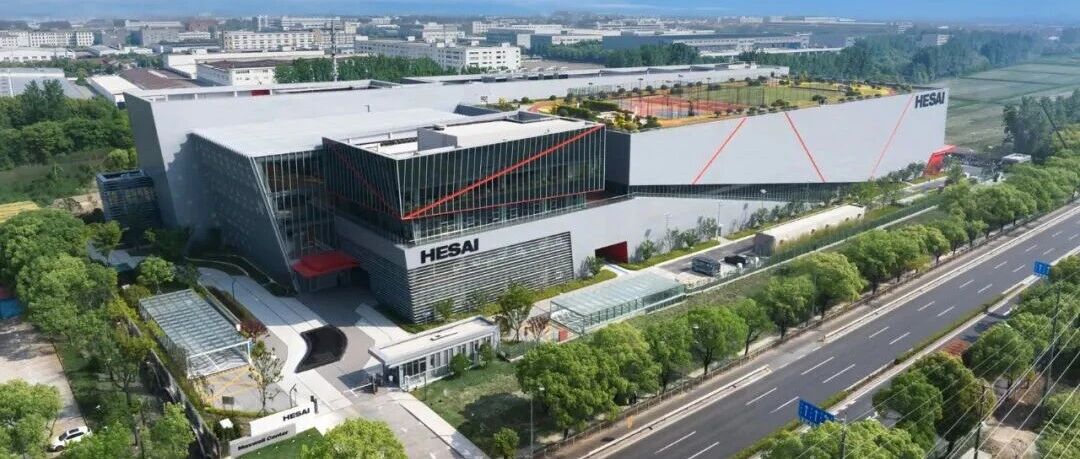
Core Viewpoint - Hesai Technology (HSAI.US; 2525.HK) reported record high earnings in Q3, achieving its 2025 full-year profit target a quarter early, driven by strong demand for its lidar technology in the ADAS and robotics sectors [1][3]. Financial Performance - The company achieved a net profit of 260 million yuan (approximately 36 million USD) in Q3, bringing the total profit for the first nine months of the year to 280 million yuan [1]. - Based on the strong performance, Hesai raised its full-year net profit guidance to a range of 350 million to 450 million yuan [1]. - Q3 revenue surged 47% year-on-year to 800 million yuan, primarily due to robust shipments and increased penetration of lidar in ADAS and robotics [1]. Market Position and Growth - Hesai has maintained a leading position in the long-range lidar market for seven consecutive months, with an August market share of 46%, significantly ahead of its closest competitors [3]. - The company secured partnerships with major ADAS clients for their 2026 model lineups, including collaborations with leading autonomous taxi and truck companies across North America, Asia, and Europe [3]. Product Delivery and Demand - In Q3, Hesai's total lidar shipments reached 441,398 units, a year-on-year increase of 228.9%, with ADAS deliveries growing threefold to 380,759 units and robotics deliveries surging fourteenfold to 60,639 units [4]. - The company’s gross margin for the quarter was 42%, while operating expenses decreased by 23% year-on-year [5]. Strategic Partnerships and Future Outlook - Hesai's high-end ETX lidar, which has the longest detection range globally, is set to be integrated with top three Chinese new energy vehicle manufacturers, with mass production planned to start by late 2026 or early 2027 [3]. - Each L3 vehicle is expected to use three to six lidar units, with a unit value of approximately 500 to 1,000 USD, expanding Hesai's potential market significantly [3].


赛力斯吓了市场一大跳
商业洞察· 2025-11-08 09:37
Core Viewpoint - The article discusses the recent IPO of Seres on the Hong Kong Stock Exchange, highlighting its market performance, reliance on Huawei, and future expansion plans [3][4][10]. Group 1: IPO Performance - Seres officially listed on the Hong Kong Stock Exchange on November 5, achieving a market capitalization of over HKD 220 billion, but faced initial stock price declines [3][4]. - The company raised a net amount of HKD 14.016 billion, marking it as the largest IPO for a Chinese car manufacturer to date [4]. - Despite a strong oversubscription of 133 times during the public offering, the stock price fell below the issue price shortly after listing, raising concerns among investors [4][10]. Group 2: Financial Performance - In the first three quarters of the year, Seres reported revenue of CNY 110.534 billion, a year-on-year increase of 3.67%, and a net profit of CNY 5.312 billion, up 31.56% [12][14]. - The company's net profit margin improved from 3.27% at the end of 2024 to 5.10% [12]. - However, Seres experienced a 7.79% decline in sales volume, contrasting with the overall growth in the Chinese automotive market [14][16]. Group 3: Dependency on Huawei - Seres' core technologies, including advanced driving assistance systems (ADAS), are heavily reliant on Huawei, which raises concerns about its long-term sustainability [7][10]. - The procurement amounts from Huawei have increased significantly, from CNY 5.8 billion in 2022 to CNY 20 billion in the first half of 2025 [10]. - The company acknowledges that any significant changes in its relationship with Huawei could adversely affect its business and financial performance [21]. Group 4: Future Expansion Plans - Seres plans to use USD 1.8 billion from its IPO proceeds to support global expansion and aims to enter new markets, including Europe and Southeast Asia [10][21]. - The company is also exploring opportunities in the robotics sector, collaborating with technology firms to develop intelligent robotic solutions [22]. - Seres is investing heavily in R&D, with expenditures projected to reach CNY 56 billion by mid-2025, aiming to reduce its dependency on Huawei's technology [24].

豪威集团推出全新图像传感器:为汽车外部摄像头设计,提升ADAS暗态性能
Huan Qiu Wang· 2025-10-17 03:20
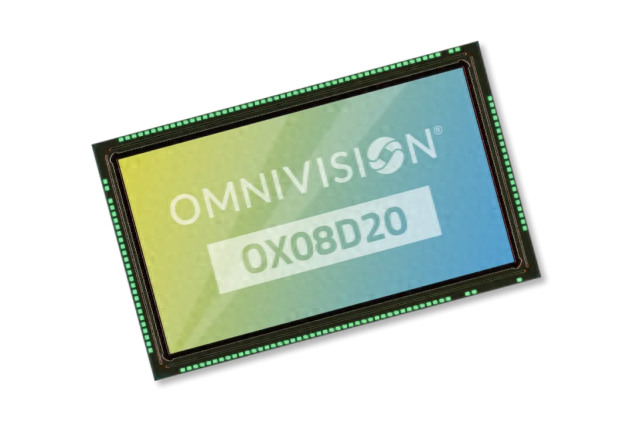
Core Insights - OmniVision Technologies has announced the launch of its next-generation automotive image sensor, the OX08D20, which utilizes TheiaCel® technology and features 8 million pixels. The sensor is expected to sample in November 2025 and enter mass production in Q4 2026 [1][3]. Group 1: Product Features - The OX08D20 is an upgraded version of the OX08D10 sensor, specifically designed for external cameras in Advanced Driver Assistance Systems (ADAS) and Autonomous Driving (AD) [3]. - New features of the OX08D20 include an innovative imaging solution developed in collaboration with Mobileye, which significantly reduces motion blur for nearby objects during driving and enhances low-light performance [3]. - The frame rate of the OX08D20 has been increased to 60 frames per second, supporting dual-use for cameras, and it has upgraded cybersecurity features that comply with the latest industry standard, MIPI CSE 2.0 [3]. - The sensor also boasts low power consumption and utilizes a-CSP™ packaging, reducing its size by 50% compared to similar external sensors [3]. Group 2: Market Positioning - OmniVision's automotive product marketing director, Wu Peng, stated that the OX08D10 sensor, launched in 2023 at the AutoSens Brussels exhibition, has become an ideal choice for automotive manufacturers due to its outstanding overall performance [3]. - The company aims to address customer challenges by designing new products around innovative features that meet customer needs, focusing on key functionalities such as leading low-light performance, LED flicker suppression, compact size, excellent image quality in high-temperature environments, and low power consumption [3].

从被“杀人鲸”做空到港股热捧 禾赛科技180天大逆袭
2 1 Shi Ji Jing Ji Bao Dao· 2025-09-16 12:54
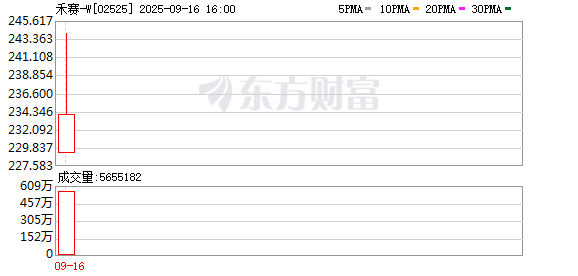
Core Viewpoint - Hesai Technology (禾赛科技) successfully listed on the Hong Kong Stock Exchange on September 16, 2023, becoming the first lidar company to achieve dual listing in both the US and Hong Kong markets [2][9] Company Overview - Hesai primarily provides 3D lidar solutions, including design, development, manufacturing, and sales of advanced lidar products, widely used in commercial and passenger vehicles, robotics, and other non-automotive sectors [3] Financial Performance - In Q2 2023, Hesai achieved revenue of 710 million RMB, a year-on-year increase of over 50%, and net profit of 44 million RMB, marking a return to profitability [4] Business Structure - The company's revenue is primarily derived from two core segments: Advanced Driver Assistance Systems (ADAS) accounting for 62.7% and robotics at 34.1%. Both segments experienced triple-digit growth due to the booming downstream industries [5] Market Trends - The lidar market penetration in the ADAS sector is accelerating, with a projected installation of over 1.5 million units in China by 2024, a year-on-year increase of 179.7% [5] - In Q2 2023, Hesai's ADAS lidar shipments reached 300,000 units, a year-on-year increase of 276%, with significant orders from nine major domestic automakers [5] Robotics Sector - In Q2 2023, Hesai's lidar shipments in the robotics sector reached 49,000 units, a staggering year-on-year increase of 743.6%, with total shipments for the first half of the year at 98,000 units, up 692.9% [6] - Hesai is expected to lead the Chinese robotics lidar market in the first half of 2025 [6] IPO Details - The IPO raised a total of 4.16 billion HKD (approximately 533 million USD), with 50% allocated for R&D, 35% for production capacity, and 10% for working capital [8] Market Sentiment - Following a short-sell report from Blue Orca Capital questioning Hesai's profitability, domestic institutions have expressed optimism about the company's growth potential, citing strong downstream demand and a solid market position [7][9] - Multiple domestic investment institutions have issued reports favoring Hesai's future growth, emphasizing the increasing demand for lidar in both ADAS and robotics applications [9][10]
尚界H5发布,成为鸿蒙智行首款低于20万元车型
Bei Ke Cai Jing· 2025-08-26 05:56
Core Insights - Huawei and SAIC have launched the Aito H5 SUV, with a starting price of 169,800 yuan, marking the first model under the Hongmeng Intelligent Driving platform priced below 200,000 yuan [1] - Huawei's executive Yu Chengdong highlighted the challenges of producing low-cost vehicles, stating that models priced below 300,000 yuan typically incur losses, with 290,000 yuan being the breakeven point [1] - The Aito H5 aims to address cost pressures while expanding the price coverage of the Hongmeng Intelligent Driving platform, which is crucial for increasing overall sales [2] Company and Industry Analysis - The Aito H5 is equipped with the HUAWEI ADS 4 advanced driver assistance system, targeting the 100,000-200,000 yuan price range, which is currently a key market segment for passenger vehicles [2] - Data from the Automotive Research Institute indicates that the installation of ADAS domain controllers in the 100,000-200,000 yuan segment is expected to exceed 525,000 units from January to April 2025, reflecting a year-on-year increase of over 2000% [2] - The competitive landscape among brands is intensifying, necessitating distinct pricing strategies to avoid internal competition and brand dilution [2] - According to a report from Founder Securities, the Aito series could achieve sales of 500,000 to 1,000,000 units, driven by the introduction of multiple models [2]

独家对话禾赛CFO樊鹏:L3没有激光雷达是“不合格”的,未来机器人比车载业务更具潜力
Mei Ri Jing Ji Xin Wen· 2025-08-21 09:16
Financial Performance - The company reported a revenue of 710 million RMB for Q2 2025, representing a year-on-year growth of over 50% and achieving a net profit of 44.1 million RMB, marking a significant improvement compared to Q1 [1][3] - The total delivery of LiDAR units reached 547,000 in the first half of 2025, a year-on-year increase of 276.2%, surpassing the total deliveries for the entire year of 2024 [3][6] - The gross margin decreased from 45.1% in the same period last year to 42.5% in Q2 2025, attributed to a return to normal revenue structure without high-margin service fees [3][4] Cost Management - Effective cost control contributed to profit growth, with total expenses decreasing compared to the same period last year, aligning with initial expectations [4] - The company aims to dilute fixed costs over a larger sales volume, thereby improving profit per LiDAR unit [4] Market Dynamics - The competitive landscape in the LiDAR industry is relatively friendly, with few manufacturers capable of large-scale production, contrasting with the intense competition among numerous automotive companies [3][6] - The company welcomes the 60-day payment term policy, anticipating its implementation by clients [3] Growth Potential - The robotics sector is emerging as a significant growth driver, with a delivery volume of 98,300 units in the first half of 2025, a staggering year-on-year increase of 692.9% [6] - The company believes that the robotics business has greater long-term potential compared to the automotive sector, focusing on commercial applications like lawn-mowing robots and logistics AGVs [6] Pricing Strategy - The price of the company's ATX LiDAR has decreased by 50% compared to the previous generation, now reaching around 200 USD, reflecting a broader trend of price reduction in the market [7][8] - The company emphasizes the need to balance pricing and scale, ensuring that increased sales can offset the impact of price reductions on revenue [8] Technology and Safety - The adoption of LiDAR technology is now prevalent across various vehicle price segments, with no significant technical differences in the LiDAR products offered [10] - The differentiation in technology routes within the intelligent driving industry is becoming more pronounced, with a consensus that more advanced LiDAR enhances safety and intelligence in autonomous driving [11]


Qualcomm (QCOM) FY Conference Transcript
2025-08-12 20:47
Summary of Qualcomm's Conference Call Company Overview - **Company**: Qualcomm - **Industry**: Semiconductor, Automotive, IoT, Cloud Key Points and Arguments Leadership and Experience - Nicole Dugal has been with Qualcomm since 1995, holding various leadership roles, particularly in automotive and IoT [4][5] - Qualcomm has transformed automotive architecture with software-defined vehicles and central compute systems [4][5] Automotive Market Insights - Qualcomm has engaged with every OEM and tier one supplier globally, establishing a strong understanding of the automotive market [5] - The company has coined the term "digital chassis" to describe its innovative approach to automotive technology, integrating various technologies into a cohesive platform [9][10] Competitive Landscape - Qualcomm acknowledges the competitive nature of the automotive semiconductor market, with players like MediaTek and Nvidia [11] - The company emphasizes the importance of trust and long-term relationships with customers, which are critical for success in the automotive sector [12][13] Advanced Driver Assistance Systems (ADAS) - ADAS represents a significant growth opportunity, with a $45 billion design win pipeline [15] - Qualcomm is focusing on building safety-grade silicon and plans to commercialize its first automotive driving stack with BMW [13][20] Technology Development - Qualcomm has developed a unique architecture for automotive compute SoCs, designed for safety and reliability [18][19] - The company has seen an increase in ADAS win rates due to its focus on a common platform that supports various workloads [19][20] Global Expansion and Market Strategy - Qualcomm plans to roll out its technology in 100 countries, including China, which is a significant automotive market [23][27] - The company is adapting its stack technology to meet local regulations and partnering with local companies in China [28] Industrial and Embedded IoT - Qualcomm is leveraging its automotive experience to expand into industrial and embedded IoT markets, focusing on reliability and quality [35][36] - The company has segmented its product offerings to address various customer needs and market verticals [38][39] Future Growth Targets - Qualcomm aims to achieve $4 billion in revenue from its industrial IoT business by fiscal 2029, with a total SAM of approximately $50 billion [46][48] - The company is focused on creating new product segments and use cases to capture market opportunities [49] Acquisition Strategy - Qualcomm has been active in acquiring companies to enhance its developer focus and expand its technology portfolio, including acquisitions in the camera and V2X safety applications [61][64] Additional Important Content - Qualcomm's approach to market entry involves building relationships with developers and creating a clear channel strategy to support its diverse product offerings [56][58] - The company is committed to addressing the long tail of developers to ensure widespread adoption of its products [57]

Arbe Robotics .(ARBE) - 2025 Q2 - Earnings Call Transcript
2025-08-07 13:30
Financial Data and Key Metrics Changes - Revenue for Q2 2025 totaled $300,000, down from $400,000 in Q2 2024, indicating a year-over-year decline [16] - Gross profit for Q2 2025 was negative $200,000 compared to a negative $40,000 in Q2 2024, reflecting the impact of fixed costs and revenue mix [16] - Operating loss for Q2 2025 was $11,500,000, slightly improved from a loss of $11,600,000 in Q2 2024 [17] - Net loss in Q2 2025 was $10,200,000 compared to a net loss of $11,700,000 in Q2 2024, showing a reduction in losses [18] - As of June 30, 2025, the company held $26,300,000 in cash and cash equivalents and $35,700,000 in long-term bank deposits [18] Business Line Data and Key Metrics Changes - The company received a strategic order for its chipset for large-scale data collection projects, indicating progress in partnerships with leading automotive manufacturers [7] - The collaboration with SensRUS is scaling up chip delivery, with SensRUS now delivering radars for defense applications, showcasing the technology's versatility beyond automotive markets [9] Market Data and Key Metrics Changes - The market is shifting towards high-end imaging radar solutions, with OEMs recognizing the need for advanced radar for safe, hands-free driving capabilities [7] - New regulations in China mandate advanced ADAS testing for new vehicle models, creating a significant market opportunity for the company's high-definition radar technology [13] Company Strategy and Development Direction - The company aims to secure four design wins with OEMs in the coming year, focusing on high-resolution radar technology as a key enabler for future vehicle platforms [11][19] - The company is well-positioned to capitalize on the transition to high-resolution radar, with expectations for revenue growth beginning in 2027 [14] Management's Comments on Operating Environment and Future Outlook - Management noted that while economic shifts have delayed automakers' rollout of advanced driver assistance systems, the company continues to engage closely with industry leaders [19] - The outlook for 2025 anticipates annual revenue to be between $2,000,000 and $5,000,000, with adjusted EBITDA losses expected to range from $29,000,000 to $35,000,000 [20] Other Important Information - The company has made significant progress in non-automotive applications, particularly in the defense sector, which is experiencing growing demand for cost-effective radar solutions [29][31] Q&A Session Summary Question: Inquiry about the four design wins expected in the coming year and competitive landscape - Management indicated that while the number of OEMs remains the same, the competitive environment has tightened, with a focus on high-end imaging radar solutions [24][25] Question: Can one OEM select multiple vendors for imaging radar? - Management clarified that it is unlikely for an OEM to select multiple vendors for the same application due to the need for extensive data collection and training of algorithms [26] Question: Expansion on potential non-automotive growth applications - Management highlighted the defense sector as a growing area, with demand for low-cost radar solutions, and mentioned other verticals showing traction that will be announced in the near future [30][31]

Mobileye上调全年营收预期至18.85亿美元
Jing Ji Guan Cha Bao· 2025-07-25 10:51
Group 1 - Mobileye raised its revenue forecast for fiscal year 2025 to between $1.777 billion and $1.89 billion, up from the previous estimate of $1.7 billion to $1.81 billion, driven by strong demand for autonomous driving chips [2] - In Q2, Mobileye reported revenue of $506 million, exceeding analyst expectations of $481 million, indicating a recovery in chip supply and demand since April 2025, particularly in the Advanced Driver Assistance Systems (ADAS) sector [2] - The company anticipates a more positive growth outlook for the second half of 2025 as automakers resume demand for autonomous driving chips following inventory adjustments, despite remaining cautious about macroeconomic risks [2] Group 2 - Mobileye expects 2027 to be a key growth period, with large-scale commercialization of its EyeQ chip architecture for autonomous driving technology, as multiple automakers plan to launch new models featuring Mobileye SuperVision and Chauffer platforms between 2026 and 2027 [3] - The recent U.S. government tariffs on automobiles and parts are expected to have a limited impact on Mobileye, as most of its chip products are imported directly from Israel by automakers, although potential cost increases could indirectly affect chip demand [3] - Overall, Mobileye's revenue growth outlook reflects a strong recovery in global demand for autonomous driving technology, with the company poised for significant growth in the coming years due to its technological advantages in the ADAS field [3]


艾睿铂:5年后中国车企在欧产能将达80万辆 市场份额翻番至10%
Jing Ji Guan Cha Wang· 2025-07-11 22:34
Core Insights - The article highlights the significant shift in the European electric vehicle market, driven by Chinese automakers' investment strategies and local production plans [2][3][4]. Group 1: Market Trends - Chinese automakers are expected to increase their annual production in Europe by 800,000 vehicles by 2030, while European manufacturers may close capacity equivalent to 400,000 vehicles [2][4]. - The market share of Chinese cars in Europe is projected to double from the current 4.5% to 10% by 2030 [4][5]. - The first quarter of this year saw a rise in Chinese car market share in Europe from 2.5% to 4.5%, with new energy vehicles reaching double-digit market share [4][5]. Group 2: Strategic Developments - Chinese car manufacturers are adopting a "new operating model" to enhance their competitiveness in Europe, which includes local production and partnerships [3][4]. - Companies like Chery and BYD are actively pursuing joint ventures and establishing local production facilities in Europe [4][5]. - The report indicates a potential for Chinese companies to acquire European automotive production capacity, as European manufacturers face declining utilization rates [5]. Group 3: Challenges and Adaptations - The article emphasizes the need for Chinese automakers to adapt their value chains and marketing strategies to local markets, particularly in regions like South America [7][8]. - The growth of advanced driver-assistance systems (ADAS) presents an opportunity for Chinese manufacturers, with the global market expected to reach $50 billion by 2030 [8]. - The integration of AI solutions is crucial for reducing development cycles and costs, with AI-enabled solutions projected to lower these by 20% [8].