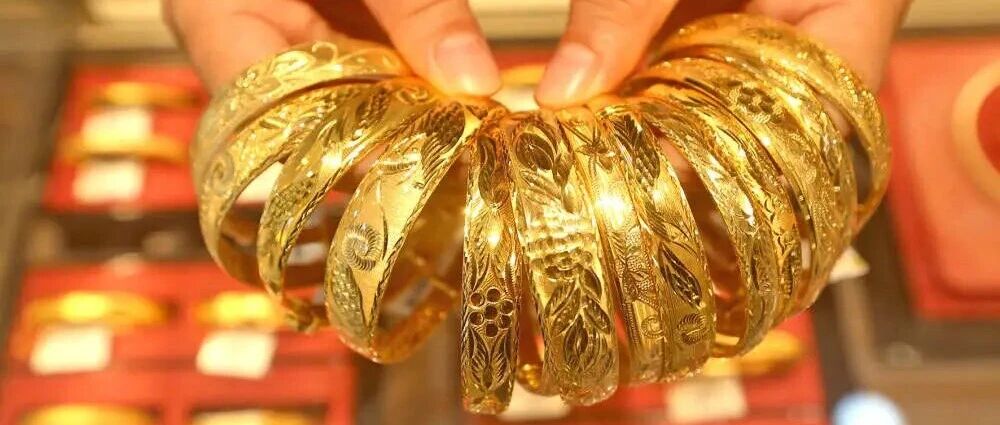
黄金保值

Search documents
100万买的金条涨到150万,为什么银行不愿回收,金店却只开价90万
Sou Hu Cai Jing· 2026-01-23 09:49
Group 1 - The core viewpoint of the article highlights the complexities and challenges in the gold market, particularly regarding the disparity between gold prices and the willingness of banks and gold shops to repurchase gold bars [1][10]. - Gold serves not only as a currency but also as a crucial asset for value preservation, especially during economic instability, making it a preferred choice for investors [3][5]. - The surge in gold prices following the outbreak of the Russia-Ukraine war is attributed to increased demand for gold's hedging capabilities against economic uncertainty [5][6]. Group 2 - Banks are reluctant to repurchase gold due to strict regulations and the need for proper documentation, as each bank has its own standards for gold bars, complicating the repurchase process [9][10]. - Gold shops often offer lower repurchase prices due to market volatility and the risk of holding inventory, which can lead to potential losses if gold prices decline [10][12]. - The operational model of gold shops, particularly chain stores, involves centralized purchasing to minimize costs, which influences their pricing strategies for repurchasing gold [14].

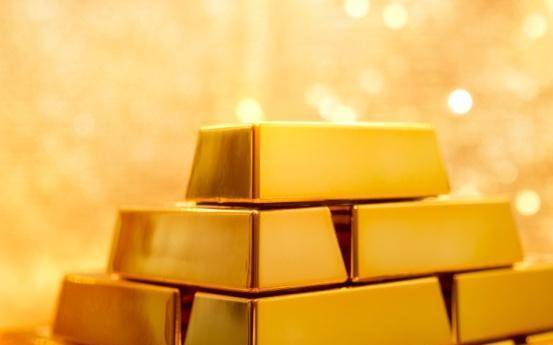
又双叒叕创新高了!现货黄金周一涨至4561美元,时隔两周再度创下历史新高
Sou Hu Cai Jing· 2026-01-12 00:39
Core Viewpoint - The price of spot gold reached a historical high of $4,561, influenced by tensions in U.S.-Iran relations, the situation in Iran, and U.S. economic data [1] Group 1: Market Influences - The Iranian government declared three days of national mourning for those who died in the struggle against the U.S. and Israel, amidst rising prices and currency devaluation leading to protests and unrest [3] - European leaders criticized the U.S. for its threatening remarks regarding Greenland, a Danish territory, which has heightened geopolitical tensions [3] Group 2: Gold Price Dynamics - Gold prices typically have an inverse relationship with the U.S. dollar; as the dollar depreciates, gold prices rise to maintain value balance [4] - The expectation of continued interest rate cuts by the Federal Reserve supports gold's investment appeal, especially as other financial assets yield lower returns [4] - Gold's intrinsic value as a hedge against inflation is emphasized due to significant fiscal imbalances in the U.S. and Europe, raising concerns about long-term inflation [4] - Ongoing international tensions, including the Russia-Ukraine conflict and U.S.-Iran relations, further drive demand for gold as a risk hedge [4]
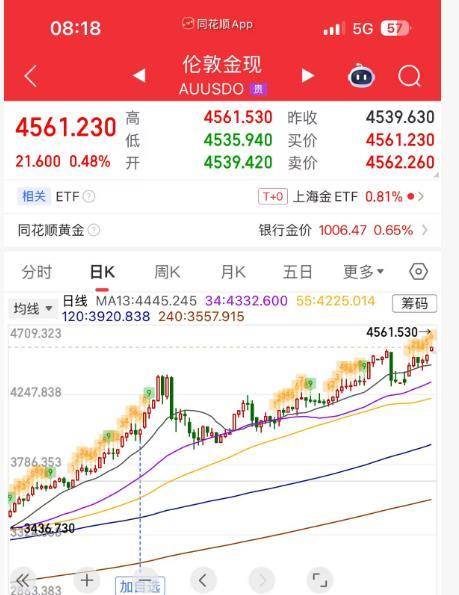
国内品牌金饰单日克重价大跌超50元
Di Yi Cai Jing Zi Xun· 2025-12-31 10:20
Core Viewpoint - The trust of end consumers in the narrative of "gold as a store of value" is being tested due to recent fluctuations in gold prices and the pricing strategies of jewelry brands [2][4]. Group 1: Price Fluctuations and Consumer Behavior - On December 30, international gold prices closed at $4,340.13 per ounce, while domestic gold jewelry prices saw significant declines, with brands like Chow Tai Fook and Lao Feng Xiang dropping over 40 yuan per gram [2]. - In mid-December, brands such as Chow Tai Fook announced price increases of around 15% for their products, indicating a trend of rising prices prior to the recent drop [2]. - The volatility in international gold prices is increasingly impacting the trading dynamics of the gold jewelry market, with sales personnel often not fully disclosing the risks associated with price fluctuations [4]. Group 2: Consumer Sentiment and Market Dynamics - Consumers exhibit irrational behavior characterized by "buying high and selling low," driven by narratives of inflation resistance and risk aversion during price surges, leading to increased purchasing intentions [4]. - When prices decline, consumer sentiment shifts to a wait-and-see approach, resulting in behaviors such as order cancellations and delays in product pickup [4]. - The pricing mechanism of gold jewelry brands typically involves "raw material cost + processing fee + brand premium," leading to rapid price increases during gold price surges, while adjustments during price declines are more cautious due to inventory costs and consumer expectations [5]. Group 3: Trust Issues and Market Positioning - The price stickiness in the market can lead to consumers feeling "stuck" after purchasing at high prices, which undermines their trust in the narrative of gold as a reliable store of value [5]. - If brands continue to market gold jewelry as a value-preserving asset, a decline in gold prices could trigger a demand shrinkage and a crisis of trust among consumers [5].





国内品牌金饰单日克重价大跌超50元
第一财经· 2025-12-31 09:38
Core Viewpoint - The trust of end consumers in the narrative of "gold as a store of value" is being tested due to recent fluctuations in gold prices and the pricing strategies of jewelry brands [5][7]. Price Fluctuations and Market Reactions - On December 30, international gold prices closed at $4,340.13 per ounce, while domestic gold jewelry prices saw significant declines, with brands like Chow Tai Fook and Lao Feng Xiang dropping over 40 yuan per gram [3]. - In mid-December, brands such as Chow Tai Fook announced price increases of around 15% for their products, indicating a trend of rising prices prior to the recent drop [3]. - The recent collective price drop in gold jewelry is noted as a rare occurrence in the market [3]. Consumer Behavior and Market Dynamics - The volatility of international gold prices is increasingly influencing the trading dynamics of the gold jewelry market, as observed in the sales personnel's communication with consumers [5]. - Sales staff often downplay the risks associated with gold price fluctuations, framing price increases as opportunities and downturns as temporary setbacks [5]. - Consumer behavior reflects a "buy high, sell low" mentality, driven by narratives of inflation resistance and risk aversion during price surges, while showing hesitation and a tendency to delay purchases during price declines [5][6]. Pricing Mechanisms and Brand Strategies - Gold jewelry brands typically use a pricing mechanism based on "raw material cost + processing fee + brand premium," leading to rapid price increases during gold price surges to secure profits [6]. - Conversely, during price declines, brands are more cautious in adjusting prices due to inventory costs and consumer expectations, resulting in price stickiness [6]. - This price stickiness can lead to consumer dissatisfaction and a loss of trust in the "gold as a store of value" narrative if prices fall after consumers have made purchases [7].
国际金价创新高后急跌,国内品牌金饰单日克重价大跌超50元
Di Yi Cai Jing· 2025-12-31 08:46
Core Insights - The volatility of international gold prices is increasingly impacting the trading dynamics of the gold jewelry market [1][5]. Group 1: Market Trends - On December 30, international gold prices rose to $4,340.13 per ounce, while domestic gold jewelry prices saw a collective drop of over 40 yuan per gram for several brands, with some like Chow Tai Fook and Chow Sang Sang dropping more than 50 yuan per gram [2]. - In mid-December, brands like Chow Tai Fook announced a price increase of approximately 15% for their priced products, indicating a trend of price adjustments primarily upward throughout the year [2]. - The recent collective price drop in gold jewelry is noted to be a rare occurrence in the domestic market [2]. Group 2: Consumer Behavior - The fluctuation in international gold prices has led to a more pronounced impact on consumer sentiment, with sales personnel often framing price increases as opportunities and downplaying risks associated with price drops [5]. - Consumers exhibit irrational behavior characterized by "buying high and selling low," driven by narratives of inflation resistance and risk aversion during price surges, while showing hesitation and a tendency to delay purchases during price declines [5][6]. - A consumer expressed a tendency to wait and observe the market after experiencing significant price fluctuations over the past two months, indicating a cautious approach to purchasing gold [5]. Group 3: Pricing Mechanism - Gold jewelry brands typically use a pricing mechanism based on "raw material cost + processing fee + brand premium," leading to rapid price increases during gold price surges to secure profits [6]. - During price declines, brands tend to be more cautious in adjusting prices due to inventory costs and consumer psychological expectations, resulting in price stickiness that can lead to consumer dissatisfaction if they purchase at high prices only to see declines [6]. - The ongoing framing of gold jewelry as a value-preserving asset may backfire if prices fall, potentially leading to a demand shrinkage and a crisis of trust among consumers [6].
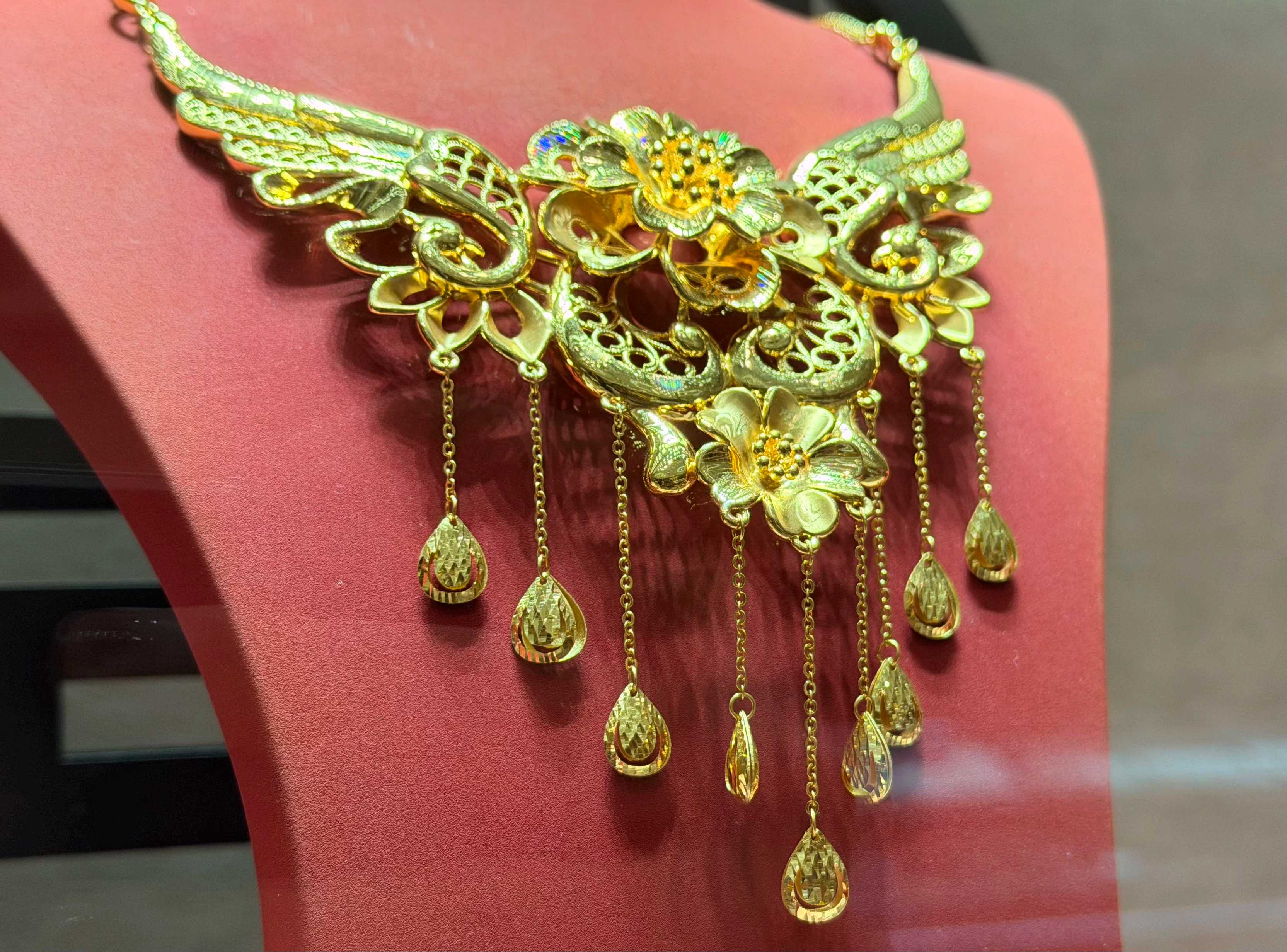
东北阿姨1984年花了两千多块买50克黄金,网友算账后表示:亏大了
Sou Hu Cai Jing· 2025-12-11 02:44
Core Insights - A customer brought a 50-gram gold piece purchased in 1984 to a jewelry store, highlighting the long-term value perception of gold [1][2] - The initial purchase price was 2,350 yuan at a rate of 47 yuan per gram, which contrasts sharply with current gold prices around 1,000 yuan per gram, suggesting a significant increase in nominal value [2][5] - Despite the nominal increase in gold prices, the real value of the investment has not kept pace with inflation and wage growth over the decades, leading to a perception of loss [5][6] Summary by Sections - **Historical Context**: The gold was bought in 1984 for 2,350 yuan, equivalent to a substantial portion of a monthly salary at that time [2][5] - **Current Valuation**: Current gold prices are approximately 1,000 yuan per gram, making the 50 grams worth around 50,000 yuan today, which is significantly higher than the original purchase price [5][6] - **Inflation and Wage Growth**: The purchasing power of the original investment has diminished, with 2,000 yuan in 1984 being roughly equivalent to 200,000 yuan today, indicating that the investment has not outperformed inflation and wage increases [5][6] - **Emotional and Cultural Value**: The gold piece represents more than just a financial investment; it carries sentimental value and reflects the family's history over the past 40 years, suggesting that the true worth may extend beyond mere monetary calculations [6]

恒定不灭的黄金:神秘的天外来客,俘虏了古今人类(之一)
Sou Hu Cai Jing· 2025-12-09 13:28
Group 1 - Gold symbolizes wealth, power, and eternity, while also being associated with darker themes such as greed and violence [1] - Gold is a stable metal with a high melting point of 1064°C and boiling point of 2836°C, making it resistant to chemical reactions at high temperatures [2] - Gold's high density allows for easy separation from other materials through water washing [10] Group 2 - Gold's unique properties include high malleability, allowing 1 gram to be drawn into 3000 meters of wire or pressed into 0.1-micron thick gold leaf [8] - Gold is considered the best store of value and is used in various forms such as jewelry, religious artifacts, and coins [9] - All gold on Earth originated from cosmic events, with approximately 1.8 million tons present, mostly in the Earth's core [10][11]

中国抛售603亿美债,最大“接盘侠”诞生,大幅增持超2000亿美元
Sou Hu Cai Jing· 2025-11-24 06:21
Core Viewpoint - The global capital market is experiencing a split regarding U.S. Treasury bonds, with China significantly reducing its holdings while Japan and the UK are increasing theirs, reflecting a re-evaluation of dollar asset risks and a restructuring of global foreign exchange reserves [1][3][22]. Group 1: China's Actions - China has sold off $60.3 billion in U.S. Treasuries in the first three quarters of the year, reducing its holdings to $700.5 billion, nearly halving its peak position from 2011 [4][6]. - Since the peak, China has sold off 46% of its U.S. Treasury holdings, indicating a strategic shift in response to U.S. economic fundamentals and geopolitical tensions [6][8]. - The reduction in U.S. Treasury holdings is part of a broader strategy to diversify foreign exchange reserves, with gold becoming a key asset, as China's gold reserves reached 2,304.4 tons, marking a continuous increase over 12 months [8][10][11]. Group 2: Japan and the UK's Position - Japan and the UK have collectively increased their U.S. Treasury holdings by over $200 billion, with Japan's holdings reaching $1.1893 trillion, making it the largest foreign holder of U.S. debt [3][14]. - Japan's increase in holdings is seen as a passive response to its geopolitical ties with the U.S., while the UK has actively increased its holdings by $124.8 billion in nine months, reflecting a strategic alignment with U.S. interests [14][16][17]. - Despite the increases from Japan and the UK, their combined holdings only account for 5.4% of the total U.S. Treasury market, highlighting the limited impact on the overall debt situation [19]. Group 3: U.S. Debt Situation - As of September, foreign investors hold $9.249 trillion in U.S. Treasuries, which is only 24.3% of the total, indicating a shift towards domestic consumption of U.S. debt [20]. - The Federal Reserve's policies, including potential future actions to expand its balance sheet, are critical factors influencing the U.S. Treasury market, with concerns about the sustainability of the "debt-for-debt" model [20][22]. - The rapid increase in U.S. debt from $36 trillion to $38 trillion in just nine months raises concerns among global investors about the long-term viability of U.S. Treasuries [22][24].
金饰价格跳涨,商家加税高达10%,部分攒金族热情退却
2 1 Shi Ji Jing Ji Bao Dao· 2025-11-07 14:27
Core Viewpoint - The introduction of the new gold tax policy has significantly impacted the gold market, causing fluctuations in gold prices and altering consumer purchasing behavior [1][2]. Market Reaction - Domestic gold prices initially broke through the 1000 yuan per gram mark but have since retreated to around 920 yuan per gram, remaining at a high level [2]. - The new tax policy has increased the cost of purchasing physical gold, as the pricing structure has changed to include a 7% tax on the gold price [2][14]. - Consumer sentiment has shifted, with many adopting a wait-and-see approach due to the uncertainty surrounding the new tax implications [14][15]. Consumer Behavior - Consumers with urgent needs, such as those purchasing gold for weddings, have acted quickly to secure their purchases before the tax policy took effect [3][6]. - Some consumers, like Chen, have slowed their investment pace, opting to observe market trends and price adjustments before making further purchases [10][15]. - There is a notable trend of consumers selling off idle gold jewelry to capitalize on current high prices, reflecting a shift in strategy in response to market changes [15][16]. Investment Sentiment - Despite the new tax policy, there remains a strong belief in gold's value as a long-term investment, with consumers planning to buy more when prices stabilize [15][16]. - The market is witnessing a diversification in investment strategies, with some consumers considering alternatives like gold funds or paper gold due to the increased costs associated with physical gold [15].

金饰价格跳涨,商家加税高达10%,部分攒金族热情退却
21世纪经济报道· 2025-11-07 13:22
Core Viewpoint - The introduction of the new gold tax policy has significantly impacted the gold market, leading to increased prices and altered consumer behavior, with many adjusting their purchasing strategies in response to the changes [1][11]. Group 1: Market Reactions - Domestic gold prices fluctuated, initially breaking the 1000 yuan per gram mark before retreating to around 920 yuan per gram, indicating a high price level despite recent volatility [1]. - The new tax policy has raised the cost of purchasing physical gold, as the pricing structure has changed to include a 7% tax on the gold price, directly affecting consumer purchasing decisions [1][10]. - Consumers are exhibiting varied responses, with some rushing to buy gold before the tax implementation, while others are adopting a wait-and-see approach due to the uncertainty surrounding future price movements [1][10][11]. Group 2: Consumer Behavior - Consumers with urgent needs, such as those purchasing gold for weddings, are still making purchases despite the tax, as seen with individuals like Huang and Gao, who successfully bought gold before the tax was enacted [3][11]. - Investment-minded consumers, like Chen, are reassessing their strategies, with some choosing to slow down their purchasing pace due to the new tax implications and market volatility [4][8][11]. - The tax policy has led to a noticeable decrease in foot traffic at gold shops, with many consumers opting to hold off on purchases until they feel more confident about the market [10][11]. Group 3: Long-term Perspectives - Despite the immediate impacts of the tax policy, consumers maintain a long-term view on gold as a valuable asset, with plans to invest when prices stabilize [11][12]. - The gold market is expected to continue evolving as consumers adapt to the new tax environment, with ongoing discussions about the balance between buying and selling gold [11][12].