财政货币化

Search documents
贵金属专题:节后金银为何再次狂飙?
Dong Wu Qi Huo· 2026-03-09 05:27
Report Summary 1. Industry Investment Rating No information provided regarding the report's industry investment rating. 2. Core Viewpoint After the Spring Festival, the precious metals market had a strong start with significant increases in gold and silver prices. As of February 25, the weekly increase of the Shanghai Gold main contract was 3.69%, and that of the Shanghai Silver main contract was 16.41%. The reasons include weak US economic data leading to increased expectations of a Fed rate cut, tense US - Iran relations, and fluctuating US tariff policies. Silver had a larger increase due to industrial demand and a smaller market size. The current volatility of gold and silver has significantly decreased compared to before the festival, and the right - side allocation cost - effectiveness is prominent, so it is recommended to buy on dips [3]. 3. Content Summary by Section 3.1 Economic Data Weak, Rate - Cut Expectations Still Exist During the Spring Festival holiday, overseas precious metals trended upward. In February, data showed that the US January CPI unexpectedly slowed, with the year - on - year CPI dropping to 2.4% (below the expected 2.5% and the previous value of 2.7%), and the core CPI dropping to 2.5%. The Q4 2025 GDP growth rate significantly slowed to 1.4%, lower than the previous quarter's 4.4% and the expected 2.8%. The February 2026 US manufacturing PMI and service PMI were both lower than expected and previous values. Weak economic data is conducive to the Fed's subsequent rate - cut operations and the rise of precious metals [4]. 3.2 Tense US - Iran Relations, Frequent Tariff Disturbances On the US - Iran front, on February 23, Iran warned that any attack on it would be considered aggression. The US is carrying out a large - scale military deployment in the Middle East, and the conflict probability has increased, raising market risk - aversion sentiment. However, the probability of a full - scale war is extremely low. On the tariff front, the US Supreme Court ruled that most of Trump's global tariffs were invalid, but Trump quickly announced a 10% tariff on global goods starting February 24 for 150 days and then planned to raise it to 15%. The erratic tariff policy provides strong hedging support for precious metals [7][8]. 3.3 Strong Central Bank Gold Purchases, Silver Inventory Depletion In 2025, global central banks' gold - purchasing demand remained strong. In Q4 2025, central banks' net gold purchases increased by 6% quarter - on - quarter to 230 tons, and the annual total was 863 tons. Poland's central bank was the largest official gold buyer in 2025, and China's central bank has been increasing its gold reserves for 15 consecutive months since November 2024. In 2025, global gold ETF holdings reached a record high of 4025 tons, with significant inflows from North America and Asia. For silver, as of February 24, 2026, COMEX registered silver inventory dropped to 88.19 million ounces, and total inventory decreased by 31% since October 2025. China's export controls and long - term supply shortages support the silver price [13][17][19]. 3.4 Future Outlook: Upward Trend Assured In the long term, factors such as the de - dollarization process, continuous central bank gold purchases, and non - convergent fiscal monetization support the long - term upward trend of precious metals. In the short term, geopolitical and tariff factors support the strong performance of gold and silver. Silver has a larger increase due to industrial demand. It is recommended to focus on the US - Iran situation and US employment and PPI data. Currently, the volatility of gold and silver has decreased, and it is recommended to buy on dips [26].
如何理解 Warsh(沃什)的货币政策框架?:美联储将迎来供给侧改?者
Yin He Zheng Quan· 2026-01-31 11:00
Group 1: Monetary Policy Framework - Kevin Warsh's monetary policy framework emphasizes "rate cuts + balance sheet reduction + deregulation + strong dollar" as a coherent strategy[10] - Warsh believes that controlling the Federal Reserve's balance sheet is essential for effective interest rate cuts, as an uncontrolled balance sheet could lead to high long-term risk-free rates due to liquidity concerns[23] - He argues that inflation is a choice and that reducing the balance sheet can stabilize inflation expectations, allowing for lower interest rates without immediate inflationary risks[17] Group 2: Relationship with Fiscal Policy - Warsh advocates for collaboration between the Treasury and the Federal Reserve to clearly communicate future balance sheet goals, which could help stabilize inflation expectations[16] - He supports a return to a "Federal Reserve-Treasury accord" to ensure smooth coordination between fiscal and monetary policies, avoiding excessive reliance on the Fed for financing government deficits[16] - Warsh's approach suggests that fiscal expansion should not lead to a permanent increase in the Fed's balance sheet, aiming instead for a more market-driven credit supply[5] Group 3: Regulatory Environment - Warsh aligns with Trump on deregulation, proposing adjustments to the Supplementary Leverage Ratio (SLR) to boost demand for U.S. Treasuries and reduce regulatory burdens on smaller banks[21] - He criticizes the Dodd-Frank Act and Basel III capital requirements for concentrating credit resources in large financial institutions, which hinders lending to small businesses[21] Group 4: Dollar Strength and Market Implications - Warsh supports a relatively strong dollar, believing that its strength is linked to real returns and overall economic performance, particularly in a stable inflation environment[22] - He anticipates that a stable inflation outlook, combined with advancements in AI, could support higher economic growth while maintaining a strong dollar[27] - The market may perceive Warsh as a hawkish candidate due to his focus on balance sheet reduction and interest rate cuts, despite his collaborative approach with fiscal authorities[11]
四大因素共同叠加,现货黄金史上首次突破5000美元/盎司,现货白银盘初再创新高
Sou Hu Cai Jing· 2026-01-26 01:00
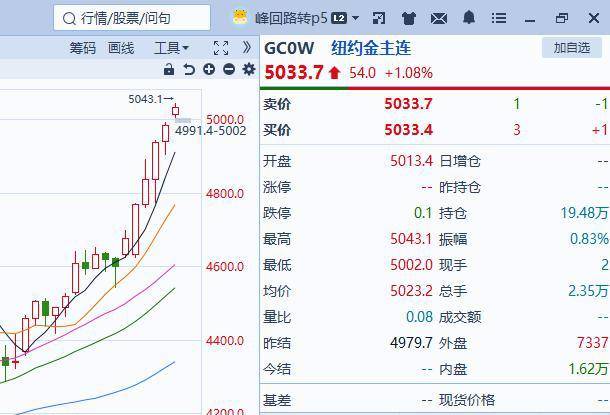
Core Viewpoint - Gold prices have surged, reaching an unprecedented high of $5043, marking the first time it has crossed the $5000 threshold, while silver has also seen significant gains [1]. Group 1: Market Performance - As of the latest report, spot gold hit $5043, reflecting a notable increase, while spot silver rose by over 1.12% [1]. - The opening price for gold was $5013.4, with a trading volume of 23,500 contracts [2]. Group 2: Factors Influencing Gold Prices - The relationship between gold and the US dollar is typically inverse; as the dollar depreciates, gold prices tend to rise due to its status as a benchmark currency in the international market [3]. - The ongoing expectation of interest rate cuts by the Federal Reserve supports gold's investment appeal, especially as other financial assets yield lower returns [3]. - Gold's intrinsic value as a hedge against inflation is increasingly relevant amid global fiscal imbalances, raising concerns about long-term inflation [3]. - Recent geopolitical tensions, particularly in the Middle East and ongoing conflicts like the Russia-Ukraine situation, have further fueled gold's appeal as a safe-haven asset [3][5]. Group 3: Geopolitical Context - The Israeli military is on high alert due to escalating tensions in the region, particularly concerning potential US military actions against Iran, which could have broader implications [4]. - The combination of geopolitical instability and expectations of monetary easing from the Federal Reserve is contributing to the bullish trend in gold and silver prices [5].

现货黄金历史性站上4600美元,黄金、白银再创历史新高
Sou Hu Cai Jing· 2026-01-12 03:13
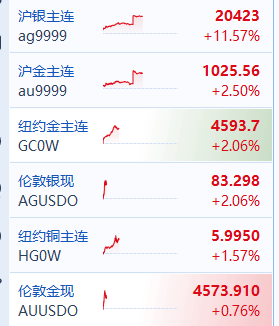
Core Viewpoint - The recent surge in gold and silver prices is attributed to geopolitical tensions, particularly between the U.S. and Iran, leading to historical highs in both commodities [1][3]. Group 1: Gold Market Analysis - Gold prices reached a new historical high of $4600.79, driven by geopolitical tensions and market dynamics [1]. - The relationship between gold and the U.S. dollar is typically inverse; as the dollar depreciates, gold prices tend to rise, especially during a period of expected interest rate cuts by the Federal Reserve [4]. - The ongoing adjustments in the U.S. stock market, particularly in tech stocks, have made gold a more attractive investment as other asset yields decline [4]. Group 2: Silver Market Analysis - Silver also hit a new historical high of $83.974, reflecting similar market conditions as gold [1]. - The increase in silver prices is part of a broader trend in precious metals, influenced by the same geopolitical factors affecting gold [1]. Group 3: Geopolitical Context - The Iranian government's announcement of a three-day national mourning highlights the ongoing unrest and its impact on global markets, particularly in commodities [3]. - The tensions between the U.S. and Iran, along with the ongoing Russia-Ukraine conflict, contribute to the heightened demand for gold as a safe-haven asset [4].
又双叒叕创新高了!现货黄金周一涨至4561美元,时隔两周再度创下历史新高
Sou Hu Cai Jing· 2026-01-12 00:39
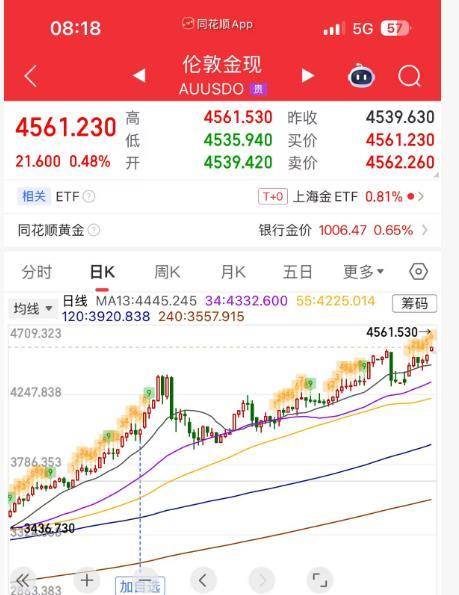
Core Viewpoint - The price of spot gold reached a historical high of $4,561, influenced by tensions in U.S.-Iran relations, the situation in Iran, and U.S. economic data [1] Group 1: Market Influences - The Iranian government declared three days of national mourning for those who died in the struggle against the U.S. and Israel, amidst rising prices and currency devaluation leading to protests and unrest [3] - European leaders criticized the U.S. for its threatening remarks regarding Greenland, a Danish territory, which has heightened geopolitical tensions [3] Group 2: Gold Price Dynamics - Gold prices typically have an inverse relationship with the U.S. dollar; as the dollar depreciates, gold prices rise to maintain value balance [4] - The expectation of continued interest rate cuts by the Federal Reserve supports gold's investment appeal, especially as other financial assets yield lower returns [4] - Gold's intrinsic value as a hedge against inflation is emphasized due to significant fiscal imbalances in the U.S. and Europe, raising concerns about long-term inflation [4] - Ongoing international tensions, including the Russia-Ukraine conflict and U.S.-Iran relations, further drive demand for gold as a risk hedge [4]
周观:如何看待2026年1月的流动性情况?(2025年第50期)
Soochow Securities· 2025-12-28 11:35
1. Report Industry Investment Rating No information provided in the content. 2. Core Views of the Report 2.1 Liquidity in January 2026 - The yield of the active 10 - year Treasury bond rose 0.05bp to 1.8355% from 1.835% last Friday. The yield fluctuated during the week due to various factors such as LPR expectations, government bond issuance concerns, and policy news [1][11]. - Five factors affect the super - reserve ratio. In January 2026, foreign exchange funds are expected to decrease by about 63 billion yuan; the central bank is expected to maintain reasonable and sufficient liquidity through various means and there is a possibility of a reserve requirement ratio cut; fiscal deposits are expected to increase by about 62 billion yuan; M0 is expected to increase by about 78 billion yuan; and required deposit reserves are expected to increase by about 50 billion yuan. The liquidity gap is about 190 billion yuan, which can be adjusted through open - market operations and reserve requirement ratio cuts [15][16][21]. - In the bond market, institutions may pay more attention to institutional behavior. It is expected that the allocation power of banks and insurance will strengthen at the beginning of next year, and interest rates may decline [21]. 2.2 US Economic Data and Fed Policy - Spot gold prices exceeded $4,500 per ounce, and it is expected to continue to play an important role in different asset portfolios. The RMB - US dollar exchange rate once exceeded 7. The long - term RMB value is systematically undervalued, but in the medium - term, the role of macro - policies in the transition from exogenous to endogenous growth needs to be considered [22][23]. - US economic data shows that inflation pressure is easing, economic expansion momentum is weakening, the labor market is stable, and the Fed is in a "data - dependent" mode. It is likely to keep interest rates unchanged in the short term, but if economic data weakens, it may resume gradual interest rate cuts from January to April [23][26]. 3. Summary by Relevant Catalogs 3.1 One - Week Views 3.1.1 Liquidity in January 2026 - **Weekly review**: The yield of the 10 - year Treasury bond fluctuated during the week. The reasons included LPR non - adjustment, concerns about government bond issuance, and policy news [12]. - **Weekly thinking**: Analyze the five factors affecting the super - reserve ratio and predict the liquidity situation in January 2026. The overall liquidity gap is about 190 billion yuan, and the central bank may use various means to maintain liquidity [15][16][21]. 3.1.2 US Economic Data and Fed Policy - **Gold and exchange rate**: Gold prices are expected to continue to rise. The RMB - US dollar exchange rate is affected by fiscal deficit and fiscal monetization [22][23]. - **US economic data**: The December PMI initial values were lower than expected, the November CPI and core CPI were lower than expected, the unemployment rate rose to 4.6%, and the labor participation rate was stable. The Fed's policy is focused on "liquidity guarantee and prudent policy balance" [23][24][26]. 3.2 Domestic and Overseas Data Summaries 3.2.1 Liquidity Tracking - **Open - market operations**: From December 22 - 26, 2025, the central bank's open - market operations had a net investment of 6.52 billion yuan [38]. - **Interest rates**: Various interest rates such as money market rates, bond yields, and futures prices are presented in figures and tables, showing their trends and changes [39][40][42] 3.2.2 Domestic and Overseas Macroeconomic Data Tracking - **Commodity prices**: Steel prices declined, and LME non - ferrous metal futures prices increased. The prices of other commodities such as coal, oil, and vegetables also had corresponding changes [59][61]. - **Financial market data**: Data on various financial market indicators such as stock indices, bond yields, and exchange rates in the US and other countries are presented [71][73][76] 3.3 Local Bond One - Week Review 3.3.1 Primary Market Issuance Overview - This week, 6 local bonds were issued with an amount of 2.037 billion yuan, a repayment of 5.211 billion yuan, and a net financing of - 3.174 billion yuan. The bonds were mainly issued by Shenzhen, Hunan, and Inner Mongolia [85][87]. - No local special refinancing bonds for replacing hidden debts were issued this week. Since January 1, 2025, a total of 2.199521 trillion yuan of such bonds have been issued [90]. 3.3.2 Secondary Market Overview - The local bond stock was 54.6 trillion yuan, the trading volume was 362.073 billion yuan, and the turnover rate was 0.66%. The top three active trading provinces were Guangdong, Xinjiang, and Jiangsu, and the top three active trading terms were 30Y, 10Y, and 15Y [101]. 3.3.3 This Month's Local Bond Issuance Plan The issuance plan of Beijing from December 29, 2025, to January 2, 2026, is presented in a figure [106]. 3.4 Credit Bond Market One - Week Review 3.4.1 Primary Market Issuance Overview - This week, 211 credit bonds were issued with a total issuance of 254.432 billion yuan, a total repayment of 213.649 billion yuan, and a net financing of 40.783 billion yuan, which decreased by 16.672 billion yuan compared with last week [108]. - Specifically, the net financing of urban investment bonds was - 261 million yuan, and that of industrial bonds was 4.1044 billion yuan. By bond type, short - term financing had a net financing of - 4.4152 billion yuan, medium - term notes had 8.0004 billion yuan, enterprise bonds had - 719 million yuan, corporate bonds had 1.5045 billion yuan, and private placement notes had - 292 million yuan [109][112]. 3.4.2 Issuance Interest Rates The actual issuance interest rates and their changes of various bond types such as short - term financing, medium - term notes, and corporate bonds are presented in a table [119]. 3.4.3 Secondary Market Transaction Overview The trading volume data of credit bonds in different ratings and types are presented in a table, with a total trading volume of 626.442 billion yuan [120]. 3.4.4 Yield to Maturity The yield to maturity and its changes of various bonds such as government - backed development bonds, short - term financing, medium - term notes, enterprise bonds, and urban investment bonds are presented in tables [120][121][122] 3.4.5 Credit Spreads The credit spreads of short - term financing, medium - term notes, enterprise bonds, and urban investment bonds showed a differentiated trend, and their changes are presented in tables and figures [124][125][128] 3.4.6 Rating Spreads The rating spreads of short - term financing, medium - term notes, enterprise bonds, and urban investment bonds generally widened, and their changes are presented in tables and figures [135][137][139] 3.4.7 Trading Activity The top five most actively traded bonds of each type are presented in a table, and the industrial sector had the largest weekly trading volume of bonds [143][144] 3.4.8 Issuer Rating Changes The issuer rating or outlook improvement information of two companies, Wenzhou Transportation Development Group Co., Ltd. and Guangxi Energy Group Co., Ltd., is presented in a table [146]
升破4500美元!国际金价又创新高,还能追吗
21世纪经济报道· 2025-12-23 14:48
Core Viewpoint - The article discusses the recent surge in gold prices, highlighting that gold has reached historical highs due to various macroeconomic factors and market sentiments [1][2]. Group 1: Factors Driving Gold Prices - The first driving factor is the weakening of the US dollar, which is currently in a rate-cutting cycle, leading to increased depreciation pressure on the dollar and consequently pushing gold prices higher [1]. - The second factor is the persistent expectation of further interest rate cuts by the Federal Reserve, which is anticipated to continue into the next year [1]. - The third factor is the renewed emphasis on gold's anti-inflation and value-preserving properties, as concerns about fiscal imbalances in both the US and Europe have emerged, leading investors to favor gold as a hedge against long-term inflation [1]. - The fourth factor is the heightened demand for gold as a safe-haven asset due to international geopolitical tensions, coupled with increased purchases of gold by global central banks, further driving up prices [2]. Group 2: Future Price Predictions - The World Gold Council predicts that if the global economy slows and interest rates decline, gold prices may see moderate increases; in the event of a "black swan" event, such as escalating geopolitical conflicts, gold prices could rise by 15%-30% by 2026, potentially exceeding $5,000 [2]. - Goldman Sachs has a more conservative outlook, raising its 2025 gold price target to $4,800, citing the expansion of the US fiscal deficit and declining dollar credibility [2]. - UBS presents the most aggressive forecast, predicting gold prices could reach between $5,000 and $5,500 by 2026, emphasizing gold as the only asset capable of hedging against "de-globalization" risks [2]. Group 3: Investment Strategies - For long-term strategic investors (holding for over 3 years), maintaining a certain allocation to gold is advisable, as it serves as a stabilizing asset in investment portfolios [2]. - For trend traders (holding for less than 3 months), it is suggested to consider selling in increments at high prices to lock in some profits [2]. - New investors are encouraged to adopt a dollar-cost averaging approach instead of making large bets, to avoid the pitfalls of chasing prices [2].

升破4500美元!国际金价又创新高,还能追吗?
2 1 Shi Ji Jing Ji Bao Dao· 2025-12-23 13:28
Core Viewpoint - The price of gold has surged dramatically, reaching historical highs, driven by multiple macroeconomic and geopolitical factors, with predictions for further increases in the coming years [1][2]. Group 1: Price Movement - On December 22, gold prices rose nearly 1.5%, surpassing $4,400 per ounce, and reached $4,500 per ounce on December 23, marking a year-to-date increase of over 67% [1]. - Other precious metals like silver and platinum have also seen significant gains, with some varieties exceeding 100% increase [1]. Group 2: Driving Factors - The weakening of the US dollar is a direct catalyst for gold's rise, as there is an inherent inverse relationship between gold and the dollar [2]. - Continuous expectations of interest rate cuts by the Federal Reserve contribute to the bullish outlook for gold [2]. - The renewed focus on gold's anti-inflation and value preservation properties is driven by significant fiscal imbalances in both the US and Europe, raising concerns about long-term inflation [2]. - Heightened geopolitical tensions have increased demand for gold as a safe-haven asset, further pushing prices up, alongside increased purchases by global central banks [2]. Group 3: Future Predictions - The World Gold Council predicts moderate price increases if global economic slowdown and interest rate declines occur, with potential for a 15%-30% rise by 2026 in the event of a "black swan" event [2]. - Goldman Sachs has raised its 2025 gold price target to $4,800, citing expanding US fiscal deficits and declining dollar credibility [2]. - UBS has the most aggressive forecast, predicting gold prices could reach between $5,000 and $5,500 by 2026, emphasizing gold's role in hedging against "de-globalization" risks [2]. Group 4: Investment Strategies - Long-term strategic investors (holding for over 3 years) are advised to maintain a certain allocation to gold as it serves as a stabilizing asset in investment portfolios [3]. - Trend traders (holding for under 3 months) may consider selling in increments at high points to lock in profits [3]. - New investors are recommended to adopt a dollar-cost averaging approach instead of making large bets, to avoid the pitfalls of chasing price movements [3].
全球疯抢!价格一浪高过一浪
Sou Hu Cai Jing· 2025-12-23 09:12
Core Viewpoint - The recent surge in gold prices, reaching a historical high of $4,490 per ounce, is attributed to a combination of geopolitical tensions, monetary easing expectations, and a structural shift in gold investment paradigms, indicating a significant revaluation of gold's worth over decades [1][3][24]. Geopolitical Tensions - The rise in gold prices is closely linked to escalating geopolitical tensions, particularly the conflict between Thailand and Cambodia, and the situation in Venezuela, where U.S. military actions have raised concerns about energy security and potential market disruptions [4][5][6]. - Ongoing conflicts, such as the Russia-Ukraine war, contribute to persistent geopolitical risks, increasing demand for gold as a safe-haven asset [7]. Monetary Easing - The macroeconomic environment is characterized by expectations of interest rate cuts and a weakening dollar, with U.S. inflation rates declining and unemployment rates remaining relatively high [8][9]. - The transition of U.S. monetary policy from tightening to easing is seen as a key driver of the current gold bull market, supported by falling inflation and rising concerns over the long-term purchasing power of fiat currencies [10][11]. Central Bank Gold Purchases - Central banks have significantly increased their gold purchases, with global central banks net buying gold for 14 consecutive quarters, reflecting a structural demand for gold as a strategic asset [12][13]. - The recent data shows that China's gold reserves have increased, and global gold ETF inflows have reached record levels, indicating strong institutional interest in gold [15][12]. New Investment Paradigm - The investment landscape for gold is shifting, with a growing recognition of its role as a hedge against extreme monetary and geopolitical risks, moving from a cyclical to a strategic asset [19][20][22]. - Major financial institutions have raised their long-term gold price forecasts, reflecting a broader market re-evaluation of gold's value in the context of global debt and currency dynamics [23]. Conclusion - The current gold market dynamics are driven by a confluence of factors including concerns over monetary credit, strategic central bank allocations, the onset of a rate-cutting cycle, and geopolitical conflicts, indicating profound changes in the global macroeconomic and financial landscape [24][25].
国际金银价格齐创历史新高!专家解读背后四大动因
Xin Lang Cai Jing· 2025-12-22 13:57
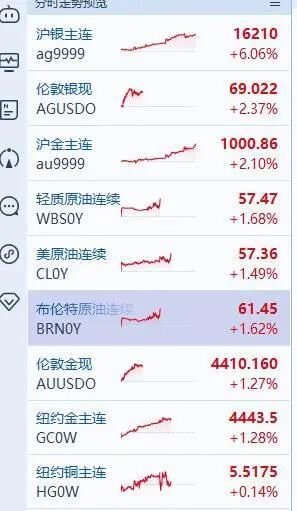
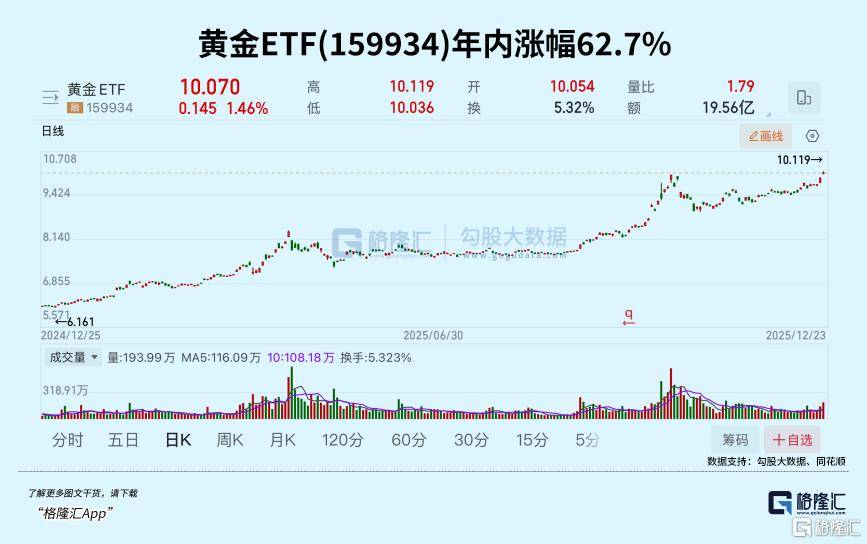
Core Viewpoint - International gold and silver prices have reached historical highs, with gold at $4,412.62 per ounce, marking a 68% increase for the year, while silver has risen over 139% [1] Group 1: Market Performance - Gold prices hit a daily high of $4,420.47 per ounce, reflecting a daily increase of 1.33% [1] - Silver prices reached 69.44 yuan per ounce, with a daily increase of 2.47% [1] - The domestic precious metals index in the A-share market has shown strong performance, with several companies experiencing significant stock price increases, including Baiyin Nonferrous and Hunan Mining, which both hit the daily limit [1] Group 2: Stock Performance - Notable stock performances include Xiaocheng Technology and Hunan Silver, both rising over 7%, and Guiyan Platinum Industry increasing over 6% [1] - Other companies such as Western Gold, Shengda Resources, and Shandong Gold also saw gains exceeding 5% [1] - In the Hong Kong market, WanGuo Gold Group rose by 10.96%, while China Gold International and China Silver Group increased by 7.59% and 5.80%, respectively [2][3] Group 3: Market Analysis - Analysts attribute the rise in gold prices to several factors, including the inverse relationship between gold and the US dollar, with the dollar currently in a depreciation cycle [4] - Expectations of continued interest rate cuts by the Federal Reserve contribute to gold's attractiveness as a non-yielding asset [5] - Concerns over inflation and fiscal imbalances globally enhance gold's role as a hedge against inflation [5] - Geopolitical tensions, such as the ongoing Russia-Ukraine conflict, further drive demand for gold as a risk hedge [5]