
黄金税改

Search documents
深圳水贝下架投资金,负责人回应原因
2 1 Shi Ji Jing Ji Bao Dao· 2025-12-23 12:04
Core Viewpoint - The recent changes in the pricing system of Shenzhen's Shui Bei market reflect the impact of the new gold tax policy, leading to the removal of "investment gold" pricing and a shift towards a unified pricing model for gold products [1][2][7]. Group 1: Market Changes - The Shui Bei market, known as China's largest gold and jewelry wholesale market, has stopped distinguishing between "investment gold" and "jewelry gold" in its pricing displays [1][2]. - Following the announcement of the new gold tax policy in November, the market has undergone multiple adjustments in its pricing strategy, with the latest change being the removal of "investment gold" from public displays to avoid consumer confusion [2][4]. - The price of gold in Shui Bei has risen significantly, with major brands like Chow Tai Fook and Chow Sang Sang seeing prices exceed 1400 RMB per gram, while Shui Bei's gold price has surpassed 1160 RMB per gram [2]. Group 2: Tax Policy Impact - The new tax policy categorizes gold into investment and non-investment types, encouraging investment gold to be traded on regulated exchanges, which has led to a decline in the profitability of non-member units in the Shui Bei market [7][8]. - The tax reform has resulted in a clear differentiation in profit margins between member and non-member units, with only about a dozen member units remaining active in the investment gold business [7][8]. - The changes in tax policy are expected to lead to a more concentrated market for investment gold, while increasing tax burdens on non-investment gold, potentially raising retail prices [8][9]. Group 3: Market Dynamics and Future Outlook - Shui Bei's business model, characterized as "front store, back factory," is facing challenges as many merchants are transitioning away from investment gold due to reduced profitability [5][6]. - The market is expected to adapt by focusing on consumer needs and enhancing supply chain support, with an emphasis on brand development, talent acquisition, and quality assurance in the gold jewelry industry [9]. - The Shui Bei market is projected to maintain a high customer flow, with estimates of over 120 million visitors by 2025, despite the ongoing adjustments in its operational model [5].
深圳水贝下架投资金,负责人回应原因
21世纪经济报道· 2025-12-23 11:55
Core Viewpoint - The article discusses the recent changes in the pricing system of gold in the Shenzhen Shui Bei market, particularly the removal of the distinction between "investment gold" and "jewelry gold" following the new gold tax policy implemented in November. This shift reflects the market's adaptation to regulatory changes and the evolving dynamics of gold trading in China [1][9]. Group 1: Market Changes - The Shenzhen Shui Bei market, known as the largest gold and jewelry wholesale market in China, has seen its pricing system adjust multiple times since the announcement of the new gold tax policy [1][6]. - As of December 22, 2023, the market no longer differentiates between "investment gold" and "jewelry gold," with the pricing screens only displaying gold, platinum, and silver prices [3][4]. - The price of gold in the Shui Bei market has surpassed 1160 yuan per gram, while major brands like Chow Tai Fook and Chow Sang Sang have seen their gold jewelry prices exceed 1400 yuan per gram, reflecting a daily increase of over 2.5% [1][3]. Group 2: Tax Policy Impact - The new tax policy categorizes gold into investment and non-investment types, encouraging investment gold to enter centralized trading platforms like the Shanghai Gold Exchange [1][9]. - The adjustment in pricing is attributed to the differentiation in profit margins between member and non-member units of the Shanghai Gold Exchange, leading to a reduced number of participants in the investment gold business [9][10]. - The tax reform has resulted in increased costs for non-investment gold, which may lead to higher retail prices for consumers [10]. Group 3: Market Dynamics and Future Outlook - The Shui Bei market is experiencing a transition period, with many merchants ceasing investment gold operations due to diminishing profitability [6][11]. - The market's traditional pricing advantage over external markets is being challenged as the cost of acquiring gold approaches that of jewelry gold [6][11]. - Industry experts suggest that the Shui Bei market should focus on enhancing supply chain support and adapting to consumer needs, as the gold jewelry industry requires significant capital investment and strategic development [11].


黄金税改“满月”,水贝现状如何?阵痛与新生?
Sou Hu Cai Jing· 2025-12-17 08:32
Core Viewpoint - The recent tax reform in China's gold industry, described as the "strictest in history," aims to clarify the boundaries between investment gold and jewelry gold, leading to a transformation in the market dynamics of the Shenzhen Shui Bei gold and jewelry trading market [2][4]. Group 1: Tax Reform Impact - The tax reform has redefined the investment and consumption attributes of gold, pushing the industry towards a more transparent and compliant development model [4]. - The new policy allows standard investment gold bars purchased through banks to enjoy VAT refunds, while the price gap for physical gold jewelry has widened due to tax adjustments, redirecting speculative investment back to formal financial channels [4]. - The reform is seen as an opportunity for the industry to eliminate gray market practices, with a focus on compliance and quality service, allowing businesses that adhere to regulations to thrive [4][11]. Group 2: Merchant Adaptation - Merchants in the Shui Bei market have begun to diversify their offerings, incorporating products like diamonds, silver, and jade to adapt to the new tax landscape and changing consumer preferences [7][10]. - The focus has shifted from low-cost volume sales to enhancing the design and cultural significance of gold products, with an emphasis on aesthetics and emotional value rather than just weight [10]. - Many merchants are actively improving their compliance credentials and management practices, moving away from price competition to focus on service quality and design [11]. Group 3: Market Recovery - The Shui Bei market is experiencing a gradual recovery in consumer interest, characterized by a rational return based on compliance and value enhancement rather than short-term consumption spikes [9]. - The overall market ecosystem is upgrading, with more merchants adopting compliant practices and the market management enhancing regulatory frameworks to support a secure consumer environment [11]. - The transformation in Shui Bei is viewed as a significant indicator for the future of the gold industry in China, emphasizing that sustainable growth relies on compliance, innovation, and quality service rather than merely policy advantages or price competition [11].
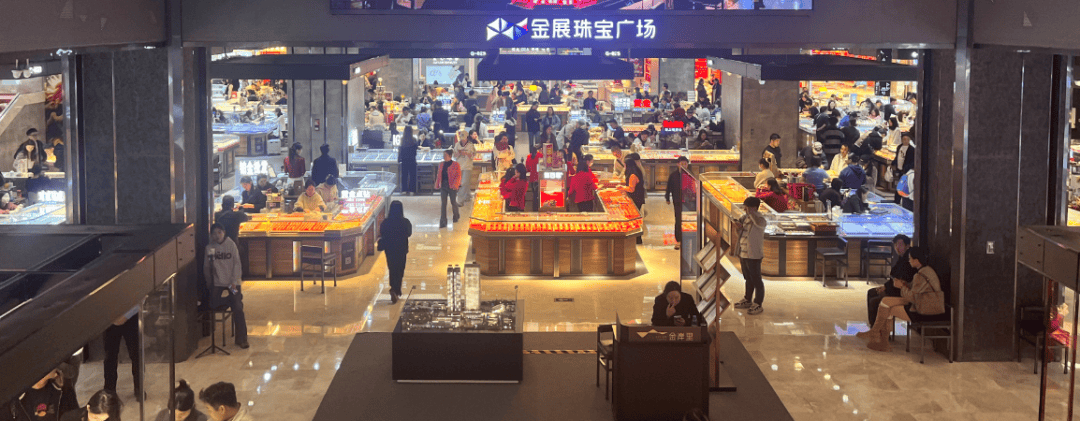
实探黄金税改“满月”的深圳水贝: 金价渐稳回归常态 有商家改卖银饰钻石
Zheng Quan Shi Bao Wang· 2025-12-01 23:10
Core Insights - The gold market in Shenzhen's Shui Bei is adapting to new tax policies, with businesses and consumers gradually adjusting to the changes [1][3][4] Group 1: Market Response to Tax Reform - The introduction of new tax policies on gold has led to initial confusion in pricing, causing fluctuations in gold jewelry prices, with daily price differences reaching nearly 50 yuan [1] - As of November 30, the price of gold jewelry in Shui Bei reached approximately 1105 yuan per gram, which is about 150 yuan higher than the international gold price [2] - The price gap between Shui Bei's gold jewelry and branded gold stores like Chow Tai Fook has narrowed, with branded jewelry priced around 1300 yuan per gram [2] Group 2: Business Adaptation Strategies - Some merchants in Shui Bei are exploring diversification by shifting from gold jewelry to selling silver, diamonds, and alloy products to cope with market fluctuations [3] - Retailers are considering strategies such as "exchange" programs, allowing customers to swap old gold jewelry for new pieces by paying only the labor cost [2] - Companies are increasing their investment in product innovation and design, with one firm reporting a doubling of R&D investment compared to the previous year [3]
黄金珠宝经销商专家交流
2025-12-01 16:03
Summary of the Conference Call on the Gold and Jewelry Market Industry Overview - The gold and jewelry market in Henan experienced a significant slowdown in growth, with an increase of only 3.6% in October 2025, compared to 30%-50% in previous months. This slowdown is attributed to a 50% rise in gold prices and uncertainty surrounding tax reforms, particularly affecting the capital city, Zhengzhou, due to low wedding demand [1][4]. Key Points and Arguments - **Impact of Tax Reform**: The tax reform primarily targets investment gold bars, with upstream factories currently invoicing at a 13% VAT, leading to an increase of 70 RMB per gram in upstream costs, resulting in retail prices exceeding 1,200 RMB per gram. Domestic brands like Lao Feng Xiang and Lao Miao allow the exchange of old materials, mitigating cost pressures compared to Hong Kong brands like Chow Tai Fook and Chao Hong Ji, which do not allow such exchanges [1][5]. - **Sales Performance**: In November, overall sales performance was poor due to the off-season, with a 6.3% increase in monetary sales but a 24.6% decline in inventory weight. Lao Feng Xiang showed the best performance with a 12.6% year-on-year growth, while Chow Tai Fook reported a sales figure of 2.27 billion RMB due to software issues [2]. - **Market Dynamics**: The investment gold bars account for about 3% of the market, with most sales still focused on jewelry. The proportion of fixed-price products has increased, with Chow Tai Fook at 35.7% in Henan, while other brands like Lao Feng Xiang and Lao Miao are lower at 10-12% [3][10]. - **Inventory and Supply Chain**: There was a 20% decline in inventory in November, influenced by gold price fluctuations, rumors of the end of the Russia-Ukraine war, and uncertainties from tax reforms. Many brands reduced their purchase volumes due to cash flow issues caused by rising gold prices [11]. - **Government Regulation**: The government may enhance regulations on the recovery and trading of old materials and require upstream factories to purchase raw materials from the Shanghai Gold Exchange to reduce tax evasion [7]. - **Consumer Sentiment**: Consumers are primarily feeling the impact of rising gold prices. However, with increased transparency regarding potential tax increases, their initial wait-and-see attitude has eased, and wedding demand remains a significant factor [9]. Additional Important Insights - **Brand Strategies**: Major brands are reducing pressure on franchisees and developing IP series and high-end products to increase margins. Approximately 70% of purchases from leading brands are now series or IP products, which helps differentiate them from lower-end brands [12][13]. - **Future Expectations**: The willingness of consumers to spend in 2026 will depend on the clarity of tax policies. If the government clarifies that only investment gold bars will be taxed, it could significantly lower costs for franchisees and boost confidence in purchasing [17]. - **Franchisee Challenges**: Franchisees are currently facing challenges due to high tax burdens and are reducing inventory in anticipation of price corrections and tax policy changes. Many are also experiencing cash flow issues due to high inventory costs [15][16]. - **Brand Goals for 2026**: Brands are discussing their targets for 2026 with franchisees, with many facing declining sales targets due to store closures and high tax burdens. For instance, Lao Miao has projected a nearly 20% decline in order volume for 2025 [18].



周大生(002867):金价上涨&收入结构变化驱动毛利率稳健向上 盈利能力改善
Xin Lang Cai Jing· 2025-11-19 08:36
Group 1 - The gold price has been rising, leading to a transformation in the gold jewelry industry, shifting from channel-driven growth to brand and product-driven growth, with a clear trend towards differentiation, lightweight, and high-end products [1] - In Q3 2025, China's gold jewelry demand was 84 tons, down 18% year-on-year and up 21% quarter-on-quarter, marking the weakest performance for the third quarter since 2007, indicating a shift from pure volume growth to brand and craftsmanship focus [1] - The company's revenue in Q3 2025 was 2.18 billion, down 16.7%, with self-operated offline revenue at 450 million, up 15.5%, and online revenue at 780 million, up 68.2%, while franchise revenue was 920 million, down 46.8% [1] Group 2 - The recent adjustment in the value-added tax policy for gold in China may create short-term demand resistance but is expected to accelerate the industry's transformation towards innovation in craftsmanship and design [2] - The company is projected to achieve a net profit of 1.08 billion and 1.22 billion in 2025 and 2026, respectively, with a current price-to-earnings ratio of approximately 13x and 12x for those years, indicating a low valuation with safety margins [2] - The company has effectively managed costs and maintained stable gross margins, achieving steady profit growth despite fluctuations in gold prices [2]
老铺黄金盘中涨超4% 黄金税改对毛利率影响有限 大行及管理层均对明年前景乐观
Zhi Tong Cai Jing· 2025-11-13 05:57
Core Viewpoint - The new VAT policy on gold jewelry, effective November 1, is expected to increase raw material costs by approximately 6%, impacting the gross margin of the company by 3-4 percentage points, although management believes the actual effect may be limited due to inventory reserves and pricing adjustments [1][1][1] Group 1: Financial Performance - The stock of the company rose over 4% during trading, with a current price of 673 HKD and a trading volume of 408 million HKD [1][1] - Management is optimistic about the company's prospects for 2026, citing a solid growth foundation driven by average selling price increases and new store expansions [1][1][1] Group 2: Sales and Growth Projections - Citigroup reports that management is confident in achieving high revenue growth in the second half of 2025, with 20-30% of the growth in 2026 expected to come from this year's price adjustments and approximately 20% from new store sales [1][1][1] - Management acknowledges that the gross margin in the second half of 2025 will be lower than in the first half, but anticipates a recovery to over 40% post-price adjustments, with significant growth expected to manifest in 2026 [1][1][1]
港股异动 | 老铺黄金(06181)盘中涨超4% 黄金税改对毛利率影响有限 大行及管理层均对明年前景乐观
智通财经网· 2025-11-13 05:57
Core Viewpoint - The new VAT policy on gold jewelry, effective November 1, is expected to increase raw material costs by approximately 6%, impacting the gross margin of the company by 3-4 percentage points, although management believes the actual effect may be limited due to inventory reserves and pricing adjustments [1][1][1] Group 1: Financial Performance - The stock of the company rose over 4% during trading, with a current price of 673 HKD and a trading volume of 408 million HKD [1][1] - Management is optimistic about the company's prospects for 2026, citing a solid growth foundation driven by an increase in average selling prices and new store expansions [1][1][1] Group 2: Sales and Growth Expectations - Citigroup reports that management is confident in achieving high revenue growth in the second half of 2025, with 20-30% of the growth in 2026 expected to come from this year's price adjustments and approximately 20% from new store sales [1][1][1] - Management acknowledges that the gross margin in the second half of 2025 will be lower than in the first half but anticipates a recovery to over 40% post-price adjustments, with significant growth expected to manifest in 2026 [1][1][1]
财经观察|金价飙到1300元/克!银行忙着调黄金积存规则,你还会入手吗
Sou Hu Cai Jing· 2025-11-12 06:11
Core Viewpoint - The recent fluctuations in gold prices have prompted several banks to adjust their gold accumulation services, reflecting a response to market conditions and consumer behavior [1][2]. Group 1: Bank Adjustments - Multiple banks, including China Construction Bank and CITIC Bank, have revised their gold accumulation business rules in response to rising gold prices [2][5]. - China Construction Bank has clarified that its gold accumulation business will be based on a balance of price and volume, allowing for adjustments in transaction quotes according to market conditions [2][3]. - CITIC Bank has increased the minimum investment amount for its gold accumulation plan from 1000 yuan to 1500 yuan, while maintaining the minimum weight for regular accumulation at 1 gram [5]. Group 2: Gold Jewelry Market Trends - The price of gold jewelry has surged, with some brands exceeding 1300 yuan per gram, leading to a decline in consumer interest in gold jewelry [6][7]. - Data from the China Gold Association indicates that gold consumption in the first three quarters of 2025 was 682.730 tons, a year-on-year decrease of 7.95%, with gold jewelry consumption dropping by 32.50% [7]. - Major jewelry brands, such as Lao Feng Xiang, reported significant declines in revenue and profit due to high gold prices, which have suppressed gold jewelry consumption [7][8]. Group 3: Market Demand and Supply Dynamics - The global demand for gold reached a record high of 1313 tons in the third quarter of 2025, driven by strong investment demand, including purchases by central banks [8]. - China's gold reserves increased by 30,000 ounces to 7,409,000 ounces by the end of October, marking the twelfth consecutive month of gold accumulation [8].


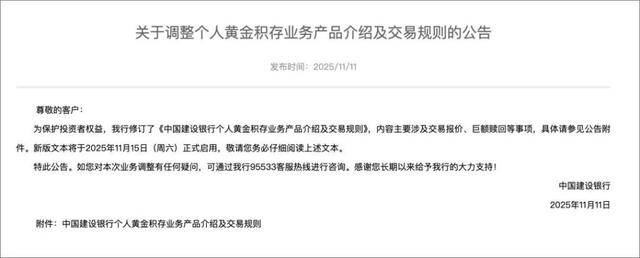
黄金税改冲击水贝:客流锐减 有头部平台停止黄金回收业务
Xin Lang Cai Jing· 2025-11-11 15:01
Core Viewpoint - The recent gold tax reform has significantly impacted the gold trading market in Shenzhen's Shui Bei, leading to a sharp decline in customer traffic and sales, with many merchants halting operations due to increased costs [1] Group 1: Market Activity - The market activity in Shui Bei, the largest gold distribution center in China, has noticeably decreased, almost entering a state of stagnation [1] - Merchants report a substantial drop in customer flow and sales, with some stating that many customers cannot accept the increased prices, leading to a halt in sales for compliant stores [1] Group 2: Supply Chain Impact - Many upstream gold suppliers have ceased operations, as they find it unfeasible to sell at current prices, resulting in a significant reduction in available gold supplies [1] - The term "unable to replenish supplies" reflects the situation where suppliers are not selling, and merchants are unable to restock their inventory [1] Group 3: Recycling Sector - The impact of the new tax policy has also reached the gold recycling sector, with a notable decrease in the number of upstream companies involved in gold recovery [1] - A major company in the industry has stopped its gold recovery business due to the tax implications, as selling gold incurs additional taxes that make it unprofitable [1]