
投资性金条

Search documents
梦金园H股全流通完成,股价近期上涨17.87%
Jing Ji Guan Cha Wang· 2026-02-13 08:50
Group 1 - The core point of the article is that Mengjinyuan has completed the conversion of 40 million non-listed shares into H-shares, which will be listed on the Hong Kong Stock Exchange on February 13, 2026, potentially enhancing stock liquidity and market attention [1] - The converted shares are valued at approximately 640 million HKD, representing 17.17% of the total share capital [1] - Shenzhen has introduced measures to regulate the gold market and combat illegal trading, which may impact the regulatory environment for the gold and jewelry industry [1] Group 2 - The stock price of Mengjinyuan has been active recently, with a cumulative increase of 17.87% over the past seven days, closing at 16.49 HKD on February 13, 2026, with a daily increase of 0.55% [2] - Technical indicators show that the MACD histogram has turned positive, and the KDJ is at a high level, indicating a strong short-term trend [2] - There was a net inflow of funds amounting to 375,500 HKD on that day, with main funds showing a net inflow of 806,900 HKD [2]
2026年黄金还能买吗?机构观点、投资方式与风险提示全解析
Sou Hu Cai Jing· 2026-02-05 13:37
Market Trends - The consensus among major institutions is that gold prices will exhibit "high-level fluctuations with structural upward trends" in 2026, with differing views on target prices and volatility [2] - The World Gold Council predicts that gold prices will remain strong, supported by stable economic conditions and potential Federal Reserve rate cuts, maintaining a ±5% fluctuation; in optimistic scenarios, prices could rise by 15%-30%, potentially exceeding $6000 per ounce [2] - UBS has raised its quarterly target price for 2026 to $6200 per ounce, citing unexpected investment demand, while Goldman Sachs projects a year-end target of $5400 per ounce, with extreme conditions possibly reaching $6000; JPMorgan forecasts a long-term price of $8000-$8500 but warns of short-term overbought risks [2] Core Drivers for Price Increase - Four main drivers are identified to support the upward movement of gold prices: 1. Central bank gold purchases have become normalized, with a net purchase of 863 tons in 2025 and an expected monthly average of 60-70 tons in 2026, driven by emerging markets' "de-dollarization" strategies [3] 2. The Federal Reserve's anticipated rate cuts, expected to total 50-75 basis points in 2026, will lower holding costs and weaken the dollar's credit, encouraging investment in gold [3] 3. Geopolitical risks, including the Russia-Ukraine conflict and Middle Eastern tensions, highlight gold's role as a safe-haven asset amid policy uncertainties from the U.S. elections [3] 4. An expanding supply-demand gap, with projected gold demand of 5270 tons against a supply of only 4950 tons, further strengthens support for prices [3] Investment Strategies for Different Investor Types - For novice investors, gold ETFs and gold dollar-cost averaging are recommended due to their low entry barriers and risks; gold ETFs can be traded through brokerage accounts and offer tax benefits, while gold dollar-cost averaging helps mitigate volatility [5] - Risk-averse investors should focus on investment-grade gold bars, which are exempt from VAT and have lower costs compared to jewelry; a recommended allocation is no more than 20% of total assets [6] - Experienced investors may consider gold futures, which involve higher risks and require strict stop-loss measures; trading platforms may offer cost advantages for spot gold transactions [7] Decision-Making Recommendations - Gold is positioned as a "hedging tool" rather than a short-term speculative asset; long-term investment is supported by ongoing central bank purchases, expected Fed rate cuts, and persistent geopolitical risks [8] - Ordinary investors should adhere to key operational principles, including cost control, diversified allocation, and avoiding emotional trading decisions; continuous monitoring of macroeconomic data and institutional insights is essential for dynamic portfolio adjustments [9]
金银迎史诗级大跌或一夜跨入“技术性熊市”,专家:持有首饰类实物黄金无须担忧
Sou Hu Cai Jing· 2026-01-31 06:13
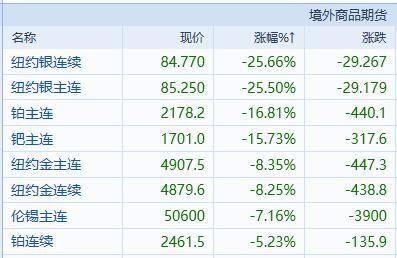
Group 1 - The core point of the article is the significant drop in international precious metal prices, with silver falling over 36% and gold dropping more than 12%, marking the largest single-day decline since 1980 [1] - The initial trigger for this decline was the announcement of Kevin Warsh's nomination as the next Federal Reserve Chairman, which alleviated market concerns about the Fed's independence and strengthened the dollar, negatively impacting gold and silver prices [1] - The precious metals market is currently experiencing a panic sell-off phase, characterized by irrational trading behavior, and the potential for further declines remains [5] Group 2 - The non-ferrous metals sector has seen a rise of over 30% since the beginning of the year, leading to significant profit-taking, with many stocks experiencing sharp declines on the news of falling precious metal prices [2] - On the day of the price drop, the non-ferrous sector in the A-share market fell by 7.89%, with 39 stocks hitting the daily limit down and 45 stocks declining by over 9% [2] - The volatility in precious metal prices is expected to have a cascading effect on the A-share market, particularly impacting the already declining non-ferrous sector [1][2] Group 3 - The recent surge in gold and silver prices was unprecedented, and the subsequent drop is seen as a natural correction, with silver already entering a technical bear market due to its significant price drop [4] - The impact of the price drop is most severe on leveraged products like paper gold and gold futures, while physical gold and silver jewelry are less affected due to their intrinsic value [4] - Investors are advised to wait for signs of stabilization and support levels before making any decisions, as the current market conditions are highly uncertain [5][6]

今日1月20日:金价冲到4600美元,2026年或重演15年规律,该买还是等?
Sou Hu Cai Jing· 2026-01-21 11:36
Core Viewpoint - The current surge in gold prices, reaching $4600 per ounce, is driven by central banks accumulating gold at an unprecedented rate, contrasting with the speculative behavior of retail investors seen in the past [1][3][5]. Group 1: Historical Context - In 2011, gold prices peaked at $1920 per ounce due to quantitative easing and economic uncertainty, leading to a rapid rise followed by a significant decline as the Federal Reserve raised interest rates [3][5]. - The current gold price increase is influenced by similar factors such as anticipated interest rate cuts and geopolitical tensions, but the driving force is now central banks rather than retail investors [5][6]. Group 2: Central Bank Activity - Central banks, including the People's Bank of China, have been consistently increasing their gold reserves, with China adding approximately 38 tons in December 2025, marking 14 consecutive months of accumulation [5][6]. - In the third quarter of 2025, global central banks purchased over 370 tons of gold, the highest recorded for that period, indicating a strategic long-term trend rather than a short-term reaction [5][6]. Group 3: Market Dynamics - The current market dynamics show a strong, sustained demand for gold driven by central banks, providing a "safety net" for gold prices, unlike the previous speculative-driven market [8]. - The relationship between gold prices and U.S. interest rates remains significant, with expectations of further rate cuts in 2026 potentially enhancing gold's attractiveness as a low-cost asset [8][9]. Group 4: Geopolitical and Economic Factors - Ongoing geopolitical conflicts, particularly in the Middle East, contribute to a persistent demand for gold as a safe-haven asset, appealing to both institutional and individual investors [9][11]. - Concerns about inflation and the volatility of commodity prices further solidify gold's position as a hedge against economic uncertainty [11]. Group 5: Investment Strategies - For individual investors, purchasing gold jewelry may not be the best investment strategy due to high premiums; instead, gold ETFs are recommended for their liquidity and lower costs [11][12]. - Investment in physical gold bars should focus on minimizing additional costs, avoiding high-priced collectible items, and ensuring proximity to market prices [12][13]. - Caution is advised against high-leverage gold futures and dubious online investment schemes, which pose significant risks [13][15]. Group 6: Long-term Perspective - Historical patterns indicate that many investors have lost money in gold due to poor timing and emotional trading; a more strategic, planned approach is essential for successful investment [16]. - Gold should be viewed as a stabilizing asset within a diversified portfolio, rather than a primary wealth-building tool, with recommended allocations not exceeding 30% of total assets [15][16].

黄金珠宝经销商专家交流
2025-12-01 16:03
Summary of the Conference Call on the Gold and Jewelry Market Industry Overview - The gold and jewelry market in Henan experienced a significant slowdown in growth, with an increase of only 3.6% in October 2025, compared to 30%-50% in previous months. This slowdown is attributed to a 50% rise in gold prices and uncertainty surrounding tax reforms, particularly affecting the capital city, Zhengzhou, due to low wedding demand [1][4]. Key Points and Arguments - **Impact of Tax Reform**: The tax reform primarily targets investment gold bars, with upstream factories currently invoicing at a 13% VAT, leading to an increase of 70 RMB per gram in upstream costs, resulting in retail prices exceeding 1,200 RMB per gram. Domestic brands like Lao Feng Xiang and Lao Miao allow the exchange of old materials, mitigating cost pressures compared to Hong Kong brands like Chow Tai Fook and Chao Hong Ji, which do not allow such exchanges [1][5]. - **Sales Performance**: In November, overall sales performance was poor due to the off-season, with a 6.3% increase in monetary sales but a 24.6% decline in inventory weight. Lao Feng Xiang showed the best performance with a 12.6% year-on-year growth, while Chow Tai Fook reported a sales figure of 2.27 billion RMB due to software issues [2]. - **Market Dynamics**: The investment gold bars account for about 3% of the market, with most sales still focused on jewelry. The proportion of fixed-price products has increased, with Chow Tai Fook at 35.7% in Henan, while other brands like Lao Feng Xiang and Lao Miao are lower at 10-12% [3][10]. - **Inventory and Supply Chain**: There was a 20% decline in inventory in November, influenced by gold price fluctuations, rumors of the end of the Russia-Ukraine war, and uncertainties from tax reforms. Many brands reduced their purchase volumes due to cash flow issues caused by rising gold prices [11]. - **Government Regulation**: The government may enhance regulations on the recovery and trading of old materials and require upstream factories to purchase raw materials from the Shanghai Gold Exchange to reduce tax evasion [7]. - **Consumer Sentiment**: Consumers are primarily feeling the impact of rising gold prices. However, with increased transparency regarding potential tax increases, their initial wait-and-see attitude has eased, and wedding demand remains a significant factor [9]. Additional Important Insights - **Brand Strategies**: Major brands are reducing pressure on franchisees and developing IP series and high-end products to increase margins. Approximately 70% of purchases from leading brands are now series or IP products, which helps differentiate them from lower-end brands [12][13]. - **Future Expectations**: The willingness of consumers to spend in 2026 will depend on the clarity of tax policies. If the government clarifies that only investment gold bars will be taxed, it could significantly lower costs for franchisees and boost confidence in purchasing [17]. - **Franchisee Challenges**: Franchisees are currently facing challenges due to high tax burdens and are reducing inventory in anticipation of price corrections and tax policy changes. Many are also experiencing cash flow issues due to high inventory costs [15][16]. - **Brand Goals for 2026**: Brands are discussing their targets for 2026 with franchisees, with many facing declining sales targets due to store closures and high tax burdens. For instance, Lao Miao has projected a nearly 20% decline in order volume for 2025 [18].



金价破4050美元,三四线金店却迎来关门潮
Sou Hu Cai Jing· 2025-11-13 00:21
Group 1 - International gold prices have reached a historical high of $4,050 per ounce, while domestic gold jewelry prices have surpassed 1,279 yuan per gram, leading to a significant decline in retail outlets for major brands like Chow Tai Fook and Chow Sang Sang [1][3] - In the first half of 2025, national gold jewelry consumption dropped by 26%, while gold bar and coin consumption surged by 46%, indicating a shift in consumer behavior towards investment rather than jewelry [3][8] - The new tax policy effective November 1, 2025, has increased costs for non-investment gold enterprises by approximately 60 yuan per gram, further widening the gap between retail prices and repurchase prices for gold jewelry [5][8] Group 2 - Young consumers aged 18-24 have changed their purchasing logic, with gold jewelry ownership rising from 37% to 62% over five years, favoring investment in gold bars over high-priced jewelry [7][8] - Major brands are adapting to the market by closing underperforming franchise stores and enhancing their e-commerce presence, with Chow Tai Fook planning to renovate 1,000 stores annually and increasing online sales by nearly 20% in Q3 2025 [10] - The influx of gold purchases by global central banks and ETFs, totaling 415 tons and 397 tons respectively in the first half of 2025, has supported gold prices, although volatility remains a concern due to speculative trading [8][10]
黄金还能不能买?
Sou Hu Cai Jing· 2025-11-09 21:54
Core Viewpoint - The gold market is currently experiencing a complex interplay of bullish and bearish factors, necessitating a comprehensive analysis of short-term policy impacts and long-term macroeconomic conditions [1] Short-term Policy Impact - The new tax policy aims to direct investment demand towards standardized on-market transactions [1] - The procurement cost for non-investment gold (such as jewelry) has increased by approximately 7%, which may be passed on to consumers [1] - The cost of investment gold bars (purchased through exchange member units) remains largely unchanged, leading to expectations of rising jewelry prices while the impact on investment gold bars is limited [1] Macroeconomic and Policy Factors - The Federal Reserve's hawkish stance is strengthening the dollar, which suppresses gold prices [1] - Uncertainty from the prolonged U.S. government shutdown is present, although there are still expectations for a Fed rate cut [1] - Short-term pressure is anticipated due to a strong dollar and high interest rates, while medium to long-term support is expected from rate cut expectations and fiscal risks [1] Market Supply and Demand Structure - Central bank gold purchases remain robust, with global central bank gold buying reaching 220 tons by Q3 2025 [1] - There has been a significant increase in gold ETF investment demand in Q3 [1] - Jewelry consumption may be suppressed due to rising prices, providing solid bottom support but limited short-term price-driving momentum [1] Investment Strategies for Gold - The core of the tax policy is to guide investment demand into standardized and regulated on-market channels [1] - It is advisable to prioritize purchasing investment gold bars through member units of the Shanghai Gold Exchange (such as major banks or reputable gold merchants) to benefit from tax incentives and lower costs [1] - Investors should consider focusing on gold ETFs and accumulation gold products, which offer convenience and liquidity, and are not directly affected by the new tax policy on physical gold, making them good tools to capitalize on long-term gold price appreciation potential [1] Consumer Insights - Jewelry consumers should be aware that gold jewelry prices are likely to remain high due to the new tax policy, with pricing reflecting high craftsmanship fees and brand premiums [1] - Caution is advised to avoid chasing high prices, as gold may experience short-term volatility; a wait-and-see approach is recommended to avoid short-term trading pitfalls [1] - For long-term investors, gradually building positions at the lower end of the price range during fluctuations is suggested [1]

税收监管新规下的黄金市场新格局
Qi Huo Ri Bao· 2025-11-07 01:17
Core Viewpoint - The recent tax policy adjustment in China's gold market aims to enhance tax regulation and management, addressing issues of tax evasion and arbitrage in the context of a sustained "gold buying frenzy" [1][8]. Tax Policy Mechanism - The new policy introduces a dual classification of gold usage: "investment purposes" and "non-investment purposes," with specific tax implications for each category [2]. - For investment gold, a "special invoice blocking mechanism" is established to prevent tax deductions from being passed down the supply chain, effectively closing loopholes for tax evasion [2]. - Non-investment gold will have a fixed deduction rate of 6%, ensuring a tax base while allowing reasonable deductions for industrial enterprises [3]. Market Impact - The new tax policy is expected to reshape investment flows and channel choices in the gold market, favoring transactions through exchanges due to lower tax burdens compared to non-exchange channels [4][5]. - Ordinary investors may increasingly prefer exchange channels for large investments, while also considering virtual trading options like gold ETFs and futures to balance convenience and tax advantages [5]. Compliance and Risk Management - The policy imposes stringent compliance requirements on exchange members, necessitating precise internal accounting and usage declarations for physical gold deliveries [6]. - A strict record-keeping system is mandated, requiring members to maintain detailed documentation of gold purchases and sales for tax verification [6][7]. - The policy includes severe penalties for non-compliance, emphasizing the importance of tax compliance for market participants [7]. Future Outlook - The new tax policy is seen as a significant step towards tax fairness, risk prevention, and market standardization, enhancing China's gold market's international competitiveness and pricing power [8].
金价走高、金店卖不动了?中国黄金前三季度业绩双降、第三季度净利润同降89% 盈利能力大幅下滑
Xin Lang Zheng Quan· 2025-11-06 09:23
Core Insights - The performance of China Gold has declined in both revenue and net profit during the third quarter, reflecting significant challenges faced by gold retail companies in the current market environment [1][2]. Financial Performance - In the first three quarters of 2025, China Gold achieved total revenue of 45.764 billion yuan, a year-on-year decrease of 1.74% [1]. - The net profit attributable to shareholders was 335 million yuan, down 55.08% year-on-year, with a staggering 88.86% decline in net profit for the third quarter [1][2]. Profitability Challenges - Despite revenue growth, the company's profitability has significantly weakened, indicating a disconnect between revenue and profit in a high gold price environment [2]. - Financial pressure from gold leasing operations has contributed to this situation, as the differing measurement methods for inventory and financial liabilities have adversely affected current profits [2]. - The cash flow from operating activities has also shown signs of pressure, with slower sales collection and increased inventory impacting cash circulation efficiency [2]. Industry Environment - The introduction of new tax policies has further intensified operational pressures on gold retail companies, with differential tax management increasing tax burdens [3]. - Changes in consumer behavior, driven by the new tax policies, have led to a preference for investment gold bars and financial products like gold ETFs, potentially reducing the market space for traditional gold jewelry retailers [3]. - Companies like China Gold are actively adjusting their business structures and enhancing product innovation and channel optimization to navigate the increasingly complex market environment [3].

金条热销VS金饰滞销 黄金市场'变天'了?
Jin Tou Wang· 2025-11-06 03:11
Core Viewpoint - The international gold market is experiencing fluctuations, with current prices around $3973.73 per ounce, reflecting a slight decline of 0.13% despite a significant year-to-date increase of over 51% in London gold spot prices [1][2]. Group 1: Market Trends - The high gold prices are challenging retail expansion and marketing efforts, leading to a dichotomy in the retail market where investment gold bars are selling well, while gold jewelry sales are declining due to increased processing costs [2]. - The demand for gold jewelry in China showed a quarter-on-quarter increase but remains lower year-on-year, indicating a weak market despite some recovery [2]. Group 2: Tax Policy Impact - The implementation of new gold tax policies is expected to have profound effects on the industry, potentially increasing costs for non-investment gold enterprises and further suppressing retail market demand [2]. - Experts predict that the new tax regulations may lead to a more severe "store closure wave," as the gap between retail prices and repurchase prices widens, diminishing the perceived value retention of gold jewelry [2]. Group 3: Technical Analysis - Current market conditions suggest a potential bullish trend for gold, with critical support around $3966, which could serve as a reference point for investors [4]. - If gold prices can break through the resistance level near $3980, the next target could be in the range of $3990 to $4005, while failure to do so may lead to a bearish outlook [4]. - The market remains uncertain, with potential downward movements towards $3955 or even $3940 if the current trend continues [4].