AI泡沫化

Search documents
AI泡沫论再起?!4月来最惨一周!英伟达大跌、微软大跌、特斯拉大跌!一句话炸掉8000亿美元市值!0penAl紧急否认政府兜底!
雪球· 2025-11-08 05:28
Core Viewpoint - The article discusses the impact of the ongoing U.S. government shutdown and macroeconomic data vacuum on the stock market, particularly focusing on the significant decline in technology stocks and the implications of Tesla's ambitious compensation plan for Elon Musk [3][5][16]. Group 1: Market Reactions - The U.S. government shutdown has entered its 37th day, leading to a second consecutive absence of non-farm payroll data, causing market panic [1][2]. - Following the announcement of a potential proposal from Senate Democrats to end the government shutdown, market sentiment improved, resulting in a V-shaped recovery for major indices [3][5]. - The Dow Jones Industrial Average closed up 0.16%, while the S&P 500 rose 0.13%, and the Nasdaq Composite fell 0.21% [7]. Group 2: Technology Sector Performance - The technology sector experienced its worst week since April, with the Nasdaq dropping over 3% and major tech stocks like Microsoft facing an eight-day losing streak, the longest since 2011 [3][19]. - The combined market value of eight leading AI companies, including Nvidia, has evaporated by approximately $800 billion, with the AI sector losing nearly $1 trillion in market value over the week [3][26]. - Nvidia alone saw a market value reduction of about $350 billion during this period [23]. Group 3: Tesla's Compensation Plan - Tesla's stock fell over 3%, resulting in a loss of $54.5 billion in market value, as the company approved a staggering $1.03 trillion compensation plan for Elon Musk, contingent on achieving ambitious growth targets [14][16]. - The plan requires Tesla's market value to increase from approximately $1 trillion to $8.5 trillion, alongside achieving several operational milestones [17][21]. Group 4: Broader Economic Concerns - The Michigan Consumer Sentiment Index fell to its lowest level in three years, reflecting growing consumer pessimism due to high prices and the government shutdown [5]. - European markets also reacted negatively, with major indices like Germany's DAX and France's CAC40 experiencing declines, influenced by the sell-off in U.S. tech stocks and weak retail data from the Eurozone [11].




招银国际每日投资策略-20251105
Zhao Yin Guo Ji· 2025-11-05 03:59
Market Overview - Global markets experienced a decline, with the Hang Seng Index falling by 0.79% and the S&P 500 down by 1.17% [1][3] - The A-share market is in a correction phase since October 2, with a potential drop of 15%-20% expected [3] - Defensive sectors are seeing capital inflows, while materials, healthcare, and consumer discretionary sectors are leading declines in Hong Kong stocks [3] Sector Performance - The Hang Seng Financial Index rose by 0.26%, while the Hang Seng Industrial and Commercial Index fell by 1.44% [2] - High-dividend sectors such as telecommunications and utilities are performing well amidst market volatility [3] Company Insights - Luxshare Precision (002475 CH) has its target price raised to 75.55 RMB, reflecting strong synergy from the Apple upgrade cycle and ODM integration [5] - The expected compound annual growth rate for Luxshare's earnings from FY25-27 is projected at 27%, driven by growth in consumer electronics, automotive, and communication sectors [5] Economic Indicators - The UK government is focusing on reducing inflation and managing national debt, hinting at potential tax increases in the upcoming budget [3] - The U.S. job vacancies have dropped to the lowest level since April 2021, indicating a tightening labor market [4]

万亿美元豪赌,Open AI创始人:泡沫化的故事很诱人
凤凰网财经· 2025-10-19 12:48
Group 1 - Oracle's revenue for Q1 FY2026 increased by 12% to $14.9 billion, with cloud computing revenue growing by 28% to $7.2 billion, while software revenue declined by 1% to $5.7 billion, indicating mixed performance [2] - Oracle signed four contracts worth several billion dollars with three clients in Q1, and expects to sign more contracts in the coming months, with remaining performance obligations (RPO) potentially exceeding $500 billion [2] - Following the earnings report, Oracle's stock surged by nearly 36%, marking the largest single-day increase in its history, adding $244 billion to its market capitalization [2] Group 2 - The market is betting on companies increasing AI investments and building data centers, with Nvidia and OpenAI leading the charge, the former valued at approximately $4.4 trillion and the latter exceeding $800 billion [3] - Concerns are rising among investors and entrepreneurs about a potential AI bubble, which could become a significant global economic risk [5] Group 3 - OpenAI's CEO Sam Altman acknowledged the presence of some bubble-like conditions in the AI sector but distinguished OpenAI's genuine advancements in technology and business development [6][7] - OpenAI is involved in complex partnerships with major tech companies, including Nvidia and AMD, which intertwine capital and computational resources, potentially inflating revenue expectations [8] Group 4 - Experts are wary of the potential distortion of true demand in the AI sector due to complex financing arrangements, with some transactions being labeled as "round-tripping" or "vendor financing" [9] - Despite rapid revenue growth, OpenAI has yet to achieve profitability, raising questions about the sustainability of its business model [10] Group 5 - TSMC reported better-than-expected earnings and raised its revenue growth forecast for 2025 to nearly 35%, signaling strong AI demand [10] - TSMC's chairman noted robust demand from AI clients, with a significant increase in token processing volumes, indicating high-frequency adoption of AI technologies [10] Group 6 - Historical parallels are drawn between the current AI investment surge and the late 1990s internet bubble, with concerns that excessive capital inflow may outpace actual demand [12] - The AI sector faces a dilemma of whether to expand production or adopt a wait-and-see approach, which tests the judgment of management and investors [13]


万亿美元豪赌,Open AI创始人:泡沫化的故事很诱人
21世纪经济报道· 2025-10-19 00:29
Group 1: Oracle's Financial Performance - Oracle's revenue grew by 12% to $14.9 billion in the first fiscal quarter of 2026, with cloud computing revenue increasing by 28% to $7.2 billion [1] - Cloud applications (SaaS) revenue reached $3.8 billion, growing by 11%, while software revenue declined by 1% to $5.7 billion, indicating mixed overall performance [1] - Oracle signed contracts worth billions with three clients in the first quarter, and expects to secure more multi-billion dollar contracts in the coming months, with remaining performance obligations (RPO) potentially exceeding $500 billion [1] Group 2: Market Sentiment and AI Investment - The market is betting on companies increasing AI investments and building data centers, with Nvidia and OpenAI leading the charge [2] - Nvidia's market capitalization is approximately $4.4 trillion, while OpenAI's valuation has risen to over $800 billion, reflecting strong investor confidence [2] - Concerns about a potential AI bubble are growing among investors and industry professionals, with fears that the current AI hype could lead to significant economic risks [4] Group 3: OpenAI's Position and Industry Dynamics - OpenAI's CEO, Sam Altman, acknowledged the presence of some bubble-like conditions in the AI sector but emphasized that OpenAI is experiencing genuine advancements in technology and business [5][6] - OpenAI's partnerships with major tech companies like Nvidia and AMD are creating complex interdependencies in the industry, with significant investments flowing into AI infrastructure [6][7] - Despite rapid revenue growth, OpenAI has yet to achieve profitability, raising questions about the sustainability of its business model [7] Group 4: Semiconductor Industry Insights - TSMC reported better-than-expected earnings and raised its revenue growth forecast for 2025 to nearly 35%, signaling strong AI demand [8] - TSMC's role as a key manufacturer for high-end AI chips positions it favorably in the growing AI market, with strong signals from clients regarding demand [8] Group 5: Historical Context and Future Outlook - The current AI investment surge is reminiscent of the late 1990s internet bubble, but experts suggest it may not pose a systemic risk [10] - Historical lessons from the internet bubble indicate that while AI valuations may correct, the foundational infrastructure being built could support future growth [10] - Companies in the AI sector face a dilemma between scaling operations and managing costs, with potential implications for their valuations and market positions [11]


洪灝:现在谈AI全面泡沫化为时过早
2 1 Shi Ji Jing Ji Bao Dao· 2025-09-28 01:43
Core Insights - The AI investment boom is creating significant interest in US AI companies, but concerns about potential bubble risks are emerging among overseas investors [2] - The current uncertainty in the market revolves around whether the unprecedented investment in AI will yield long-term returns or lead to a capital frenzy that ultimately collapses [2] Group 1: Market Sentiment - Investors are increasingly worried about the overall bubble in assets, not just in US AI tech companies but also in new industries emerging in China, with many struggling to understand their valuations due to new business models [2] - The Chief Investment Officer of Lianhua Asset Management, Hong Hao, suggests that while a bubble is likely, the investment returns and opportunities that arise from it are worth pursuing [2] Group 2: Financial Performance - Recent earnings reports indicate that US high-tech companies are experiencing accelerating profit growth, with some tech giants showing substantial cash flow [4] - The improvement in financial statements of tech companies suggests that current investments are effective, as such results would not be possible without valid underlying performance [4] Group 3: Valuation Trends - The discussion around AI bubbles primarily focuses on the valuations of tech companies, which have actually become cheaper from the beginning of the year rather than more expensive, as profit growth has outpaced stock price increases [4] - The phenomenon of declining valuations during the transition between old and new technologies is expected, making claims of a complete AI bubble premature [4] Group 4: Future Expectations - The anticipated shift in societal and productivity expectations due to new models will inevitably alter profit projections, with the concept of a bubble reflecting humanity's uncertainty in pricing the next model [5] - The transition period between old and new models is expected to bring about significant changes in how work and communication occur, as well as the role of AI in daily life [5]

洪灝:现在谈AI全面泡沫化为时过早
21世纪经济报道· 2025-09-28 00:10
Core Viewpoint - The article discusses the current AI investment boom, highlighting concerns about potential bubble formation in the AI sector, particularly among US tech companies, while also noting the opportunities that arise from this uncertainty [1][3]. Group 1: AI Investment Landscape - The AI sector is experiencing unprecedented investment, leading to significant interest in US AI companies [1]. - Recent fluctuations in the US AI sector have raised concerns among investors about the sustainability of these valuations [1]. - The core debate centers on whether the current AI investments will yield long-term returns or if they represent a speculative bubble [1]. Group 2: Financial Performance of Tech Companies - Recent earnings reports indicate that US high-tech companies are seeing accelerated profit growth [3]. - Major tech firms are generating substantial cash flow, suggesting that current investments are yielding effective results [3]. - The financial improvement of tech companies contradicts the notion of a bubble, as their earnings growth outpaces stock price increases, leading to lower valuations [3]. Group 3: Perspectives on AI Valuation - Concerns about AI bubble primarily focus on the valuations of tech companies, which have become cheaper rather than more expensive since the beginning of the year [3]. - The transition between old and new technologies often results in valuation adjustments, making it premature to declare a complete bubble in AI [3]. - The shift in societal expectations regarding productivity and technology, including AI's role in daily life, is seen as a natural part of this transition, influencing future profitability [3].

台积电2nm遭哄抢,1.4nm披露最新进展
半导体行业观察· 2025-07-19 03:21
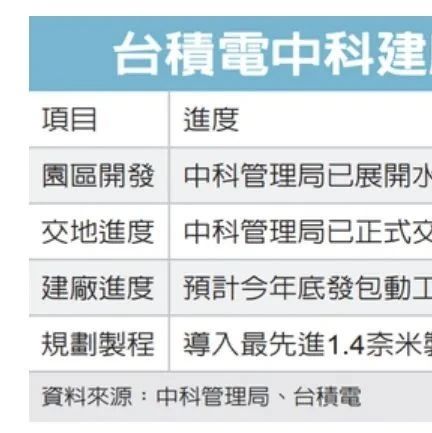
Core Viewpoint - TSMC's 2nm technology is experiencing unprecedented demand, with significant implications for the semiconductor industry and TSMC's revenue growth [2][3]. Group 1: TSMC's 2nm Technology - TSMC is set to mass-produce 2nm chips in H2 2024, which is expected to drive approximately NT$73 trillion in global product value over the next five years [2]. - The anticipated revenue for TSMC in 2024 is NT$2.8943 trillion, a 2.79 times increase from NT$762.8 billion in 2014, with a gross margin rising from 49.5% to 56.1% [3]. - Major clients such as AMD, MediaTek, Qualcomm, Microsoft, and Meta are actively pursuing 2nm technology for high-end products, indicating strong market interest [2][3]. Group 2: Future Developments - TSMC plans to build four 1.4nm wafer fabs in the Zhongke Phase II park, with the first expected to begin risk production by the end of 2027 and mass production in H2 2028 [4][5]. - The initial monthly production capacity for the 1.4nm process is projected to be around 50,000 wafers [6]. - The Zhongke Phase II expansion will also accommodate other semiconductor-related companies, enhancing the local supply chain ecosystem [8].