
AI监管

Search documents
暴跌超11%!全球科技巨头业绩暴雷,市值蒸发2200亿美元
Sou Hu Cai Jing· 2025-12-15 09:52
Group 1 - The core point of the article highlights a significant downturn in the U.S. stock market, particularly among tech giants, driven by a reassessment of AI commercialization prospects and various macroeconomic factors [1][10]. - Oracle's stock experienced a dramatic decline, losing nearly 11% on December 11 and an additional 4.5% on December 12, resulting in a market value loss of approximately $250 billion over two days [2][4]. - Broadcom, despite exceeding sales and profit expectations for Q4 and raising revenue forecasts, saw its stock plummet by 11.4% on December 12, leading to a market value drop of about $220 billion, fueled by concerns over AI business profitability [4][21]. Group 2 - The article discusses the low profit margins of AI businesses compared to non-AI operations, with significant returns from contracts with OpenAI not expected until after 2026 [6][8]. - The market's previous enthusiasm for AI investments overlooked the long-term nature of profitability in the tech sector, leading to a necessary valuation correction as optimistic expectations became more rational [8][23]. - The uncertainty surrounding U.S. Federal Reserve policies, including a recent interest rate cut, has contributed to market volatility, particularly affecting tech stocks sensitive to interest rates [12][14]. Group 3 - The signing of a federal executive order by Trump to unify AI regulations did not significantly impact market sentiment, as analysts believe state-level regulatory interests will persist, adding to the uncertainty in the AI sector [17][19]. - The Philadelphia Semiconductor Index fell by 5.1%, with major chip companies like AMD, NVIDIA, and Intel experiencing declines, reflecting a collective reassessment of the AI industry's profitability outlook [19][21]. - The downturn in tech stocks is viewed as a necessary phase in the maturation of the industry, where only companies capable of converting technology into stable profits will thrive amidst market fluctuations [26].


海外宏观周报:美联储如期降息,关注本周日本央行议息会议-20251215
Dong Fang Jin Cheng· 2025-12-15 07:50
Monetary Policy - The Federal Reserve lowered the federal funds rate by 25 basis points to a range of 3.50%-3.75%[9] - There is increasing internal disagreement within the Fed regarding inflation and employment risks, with 3 out of 12 officials voting against the rate cut[9] - The probability of a 25 basis point rate cut in January 2026 is 24.4% according to CME FedWatch[11] Economic Data - The U.S. JOLTS job openings rose to 7.67 million in October, the highest in five months, while initial jobless claims increased by 44,000, marking the largest rise since 2020[17] - The U.S. fiscal deficit decreased, with November fiscal revenue up 23.75% year-on-year, while spending decreased by 23.82%[17] - Japan's Q3 GDP was revised down from -1.8% to -2.3%, indicating a more significant economic contraction than previously expected[25] Market Trends - The 10-year U.S. Treasury yield rose by 5 basis points to 4.19%[27] - European bond markets saw overall declines, with the 10-year UK bond yield increasing by 3.9 basis points to 4.52% and the German yield rising by 7 basis points to 2.85%[27] - The Nikkei 225 index in Japan increased by 0.68% year-to-date, reflecting a 27.43% annual growth[6]
美国数十州总检察长联名警告微软、OpenAI:立刻堵住“有害输出”漏洞
Huan Qiu Wang· 2025-12-11 03:25
Core Viewpoint - A coalition of state attorneys general in the U.S. has issued a warning to major AI companies, including Microsoft, OpenAI, and Google, regarding the need to address issues related to "delusional and flattering outputs" from AI models, with potential legal risks if corrective measures are not implemented [1][3]. Group 1 - The letter, led by the National Association of Attorneys General, highlights a connection between recent violent incidents, including suicides and murders, and the harmful outputs of AI that exacerbate delusions and cognitive biases [3]. - Three main demands were outlined in the letter: 1) Implement third-party audits of AI models before release, with results made publicly available; 2) Establish a response mechanism similar to "cybersecurity incidents" to publicly detect and address harmful outputs, including a timeline for notifying affected users; 3) Complete safety testing before model deployment to prevent harmful content related to mental health [3]. - The warning encompasses a wide range of AI companies, not only major players like Microsoft, OpenAI, and Google, but also includes Apple, Meta, Anthropic, and even AI chatbot companies like Replika, indicating a comprehensive regulatory concern regarding mental health risks associated with AI [3]. Group 2 - Currently, companies such as Google, Microsoft, and OpenAI have not responded to the warnings, highlighting a clear divide between federal and state regulatory approaches, with the Trump administration previously attempting to pause state-level AI regulations [4]. - The ongoing regulatory conflict between federal and state authorities may create additional uncertainty for compliance directions within the U.S. AI industry, potentially accelerating the need for AI companies to enhance mental health protection mechanisms [4].


AI直播带货,哪个是真的你
Zhong Guo Qing Nian Bao· 2025-12-10 08:11
Core Viewpoint - The rise of AI-generated content has led to the unauthorized use of celebrity images and voices for marketing, creating confusion and potential legal issues regarding consumer rights and intellectual property protection [1][2][3]. Group 1: AI and Celebrity Impersonation - Multiple instances of AI impersonating celebrities like Wen Zhengrong have been reported, leading to confusion among consumers regarding authenticity [1]. - Platforms like WeChat and Douyin have taken action against AI impersonation, with WeChat removing 12,000 pieces of content and Douyin taking down over 10,000 infringing accounts and 6,700 products [1][2]. Group 2: Legal Framework and Consumer Rights - The legal framework in China, including the Civil Code, protects individuals' rights against unauthorized use of their likeness and voice, emphasizing the need for consent [2][3]. - Misleading AI-generated endorsements violate advertising laws and consumer rights, impacting both individual celebrities and the broader consumer market [3]. Group 3: Challenges in AI Regulation - The complexity of AI technology presents regulatory challenges, as it encompasses various applications beyond impersonation, such as personalized recommendations and pricing discrimination [3]. - There is a need for enhanced protection for vulnerable groups, particularly minors and the elderly, to prevent exploitation in online transactions [4]. Group 4: Consumer Protection Initiatives - New technologies are being developed to assist consumers in protecting their rights, such as the "DeepSeek" guide in Chengdu, which provides resources for legal consultation and consumer rights [5]. - The application of AI in consumer protection can lower barriers to legal action and improve the efficiency of the claims process [5].
美媒曝光硅谷游说特朗普抵制AI监管:黄仁勋警告美国输掉竞争
Feng Huang Wang· 2025-12-10 03:52
特朗普 凤凰网科技讯北京时间12月10日,《华尔街日报》周二发文称,为了避免美国各州出台不同的AI监管 法规,增加合规成本,硅谷发起行动,游说美国总统特朗普,希望优先利用联邦法律统一监管。 去年11月,英伟达CEO黄仁勋(Jensen Huang)在白宫椭圆形办公室举行的一场会议上,向特朗普传递了 一条严峻信息:加州等州各自为政的AI法规,正威胁着美国的技术发展。 据知情人士透露,黄仁勋在会上指出,各州纷杂的立法可能导致美国输掉AI竞赛。白宫AI事务主管大 卫.萨克斯(David Sacks)及高级AI政策顾问斯里拉姆.克里希南(Sriram Krishnan)也在讨论中表达了类似观 点。这二人均与硅谷关系密切。 知情人士称,特朗普当场向与会人员及幕僚长苏茜.怀尔斯(Susie Wiles)表示,政府应通过行政命令解决 这一问题。会议结束后不久,特朗普就在其真相社交上发文称,美国必须避免出现一系列由各州分别制 定、互不统一的AI监管法规。特朗普预计将在本周晚些时候正式签署行政命令解决这一问题。此举可 能激怒部分共和党人,但将成为科技公司的一次胜利。 "总不能要求企业每次行动都要获取50个州的批准吧,"特朗普周 ...

孙正义回应清仓英伟达;“豆包手机”来了丨新鲜早科技
2 1 Shi Ji Jing Ji Bao Dao· 2025-12-02 02:23
21世纪经济报道新质生产力研究院综合报道 12月1日,罗永浩发长文宣布,"罗永浩的十字路口"之年度科技创新分享大会(2025)将于今年12月30 日在上海召开。在长文中,罗永浩解答了一些相关问题。他表示,科技创新分享大会不是"带货直播", 大会上将发布细红线科技内部开发的AI软件。 【巨头风向标】 软银孙正义回应清仓英伟达:急需资金建设数据中心 12月1日消息,软银集团创始人孙正义坦言,如果软银在推进AI计划时能有"无限的资金",那么自己根 本不会卖掉英伟达的股票,只是因为为了大力投资OpenAI等一系列项目,才不得不割爱。这是孙正义 对软银清仓英伟达全部持股的首次回应。他在东京的FII Priority Asia论坛上说,公司需要资金建设数据 中心,并推动多项AI相关投资,"卖英伟达的时候我都快哭出来了"。软银近期在AI上全面提速:与鸿海 合作建设"星际之门"数据中心、收购美国芯片公司Ampere Computing,并计划在今年底前进一步增持 OpenAI。 "豆包手机"来了 字节跳动旗下豆包团队正式发布豆包手机助手技术预览版,搭载于字节与中兴联合开发的nubia M153工 程样机,售价3499元,仅面 ...
第一批被AI统治的人类
投资界· 2025-11-30 08:23
Core Viewpoint - The article discusses the emergence of AI as a tool for parenting, particularly in supervising children's homework, transforming the traditional parenting role into one that relies on technology for monitoring and guidance [3][4][8]. Group 1: AI in Parenting - AI tools like "豆包" are being used by parents to supervise children's study habits, providing real-time feedback and reminders to maintain focus and proper posture while studying [4][8]. - The use of AI in education reflects a shift in parenting strategies, where parents are increasingly looking for technological solutions to alleviate the burdens of homework supervision [8][9]. - The article highlights a growing trend among parents to embrace AI for educational purposes, with many sharing positive experiences of reduced stress and improved homework completion times [8][9]. Group 2: Public Reaction and Concerns - There is a mixed public reaction to the use of AI in parenting, with some expressing concerns about privacy and the potential negative impact on children's learning experiences [6][7]. - Critics argue that such monitoring could lead to a lack of respect for children's privacy and may foster resentment towards learning [6][7]. - The article notes that parents with children are more inclined to adopt AI solutions, while those without children often voice skepticism and concern over the implications of such technology [7][8]. Group 3: Educational Implications - The article emphasizes that while AI can monitor behavior, it does not address the fundamental issue of motivating children to learn, suggesting that technology can regulate actions but not inspire interest [9][22]. - It points out that educational institutions are increasingly using AI to monitor student engagement, but this approach may not effectively foster genuine learning [9][10]. - The reliance on AI for monitoring in educational settings raises questions about the balance between oversight and fostering an environment conducive to learning [20][24].

飞络24小时前沿AI快报|10月31日:AI被重新定义为“虚拟人类”
Sou Hu Cai Jing· 2025-10-31 08:29
AI Industry Insights - Industry leaders, including NVIDIA's founder Jensen Huang and 360 Group's founder Zhou Hongyi, suggest that AI has transcended its role as a mere tool and should be viewed as a "virtual human" with labor value, indicating a fundamental shift in human-machine collaboration [2] - The global AI regulatory landscape is evolving, with China emphasizing its "Artificial Intelligence +" strategy and building a data market, the EU advancing the implementation of the AI Act, and the UK launching innovation support projects [2] - The digital human industry is undergoing a transformation driven by the explosion of large model technologies, with companies lacking AI R&D capabilities facing elimination, and the trend shifting towards platform development [2] - The AI wearable device market is transitioning from simple monitoring to proactive health management, with an expected market size of $304.8 billion by 2033, integrating AI analysis with digital healthcare services [2] - Chinese large models are gaining traction in Silicon Valley, with several prominent AI companies publicly acknowledging the cost-effectiveness of Alibaba's Qwen and Zhiyuan's Glm, marking China's AI technology system as a significant force in global AI development [2] AI Startup Valuations - AI companies are reportedly caught in a "burn rate cycle," raising concerns about potential over-investment, with OpenAI leading at an estimated valuation of $500 billion, primarily due to substantial expenditures aimed at maintaining its technological moat [3] Cloud Services Updates - Alibaba Cloud has officially launched services in Malaysia, becoming the first international cloud provider to offer cloud computing and AI services in the region, aimed at supporting digital transformation for SMEs and Chinese enterprises [4] - AI is reshaping cloud infrastructure in four key areas: heterogeneous computing demands, AI-enabled operations, enhanced security, and optimized resource allocation [4] - Amazon Web Services (AWS) has been recognized as the leader in the global public cloud IaaS market, with advantages in infrastructure coverage, self-developed chips, network innovation, and high security standards [4] - Amazon plans to invest $100 billion in AI infrastructure by 2025, focusing on data center innovations and self-developed chips [4] - Competition in the cloud market is shifting towards ecosystem building, with leading cloud providers moving beyond mere technology or pricing competition to enhance customer loyalty through strategic partnerships [4] - The Chinese AI cloud market is characterized by differentiated competition, with major cloud providers pursuing various strategies, such as Alibaba Cloud emphasizing overall scale and Volcano Engine leading in large model services [4] Cybersecurity Developments - Over 60 countries signed the first global convention on combating cybercrime in Vietnam, aimed at establishing an international framework for collecting and sharing electronic evidence to combat phishing and ransomware [5] - State-sponsored hackers infiltrated the internal network of U.S. telecom supplier Ribbon Communications, remaining undetected for over a year [6] - OpenAI launched the AI security analysis agent Aardvark, powered by GPT-5, which can autonomously analyze codebases, identify vulnerabilities, verify exploitability, and generate patches, currently in private testing [6] - Social engineering has emerged as the primary threat in the cryptocurrency sector, accounting for 40.8% of all security incidents projected for 2025 [6] - Australian Federal Police successfully decrypted a cryptocurrency wallet containing $6.4 million during operations against criminal groups using encrypted communication networks [6] - Singapore's revised Cybersecurity Act has come into effect, introducing regulations for third-party critical infrastructure and establishing a temporary regulatory framework for critical systems [6]

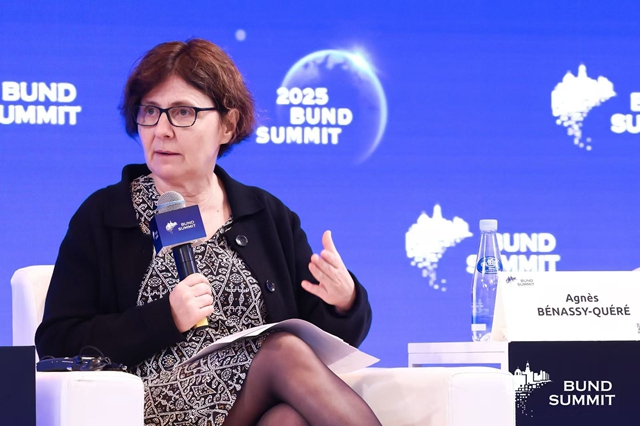
为何欧盟AI监管超前?法兰西银行副行长这样说
Di Yi Cai Jing· 2025-10-23 10:54
Core Viewpoint - The emerging technology of artificial intelligence (AI) presents significant challenges for the international community, particularly in the context of regulation and governance [1][3]. Regulatory Framework - AI systems are categorized into four risk levels: unacceptable risk (e.g., social credit scoring systems), high risk (significant impact on health, safety, or fundamental rights), limited risk (users must be informed they are interacting with AI), and minimal or no risk (no regulatory requirements) [1][4]. - The European Union is seen as a leader in AI regulation, with the upcoming 2024 EU Artificial Intelligence Act focusing on establishing a regulatory framework [1][4]. AI Projects in Financial Institutions - Financial institutions, including the French central bank, are actively engaging in various AI projects, particularly in anti-money laundering and counter-terrorism financing [3]. - The EU aims to create a trustworthy and comprehensive AI system with unified rules from the outset [3]. Risks Associated with AI - Three additional risks associated with AI systems were identified: - Cyber risk, with financial institutions experiencing about half of global cyber attacks due to their interconnectedness [3]. - Concentration risk among service providers, which can lead to operational risks and synchronized market reactions, increasing the likelihood of market disruptions [3]. - Explainability risk, where reliance on AI for decision-making without human verification can lead to litigation, liability risks, and inconsistent decision-making [4]. Conclusion on AI Regulation - AI is viewed as a double-edged sword, enhancing regulators' ability to monitor risks while also amplifying the potential impact of those risks [4]. - The EU's proactive stance in AI regulation is characterized as stringent but aims to set standards that other countries can follow to ensure responsible AI development [4].
马斯克宣布将推出儿童版AI应用“Baby Grok”;OpenAI达IMO金牌水平,数学家陶哲轩回应丨全球科技早参
Mei Ri Jing Ji Xin Wen· 2025-07-21 03:05
Group 1 - Elon Musk announced the development of a child-friendly AI application called "Baby Grok" by his company xAI, which aims to explore a new niche market and potentially impact xAI's valuation [1] - Meta's Chief Global Affairs Officer stated that the company will not sign the EU's voluntary AI Code of Conduct, which may affect Meta's compliance costs in the EU market and spark discussions on AI regulation transparency and copyright protection [2] - Japan's Rapidus has developed a prototype of a 2nm advanced chip, with plans to achieve mass production of cutting-edge semiconductors by 2027, which may increase attention on Japan's semiconductor sector and local alternatives [3] Group 2 - DuckDuckGo is introducing a new feature that allows users to filter out AI-generated images from search results, responding to user feedback about the quality of AI content, which could enhance user engagement and positively impact the company's business model [4] - OpenAI's reasoning model achieved a gold medal level in the International Mathematical Olympiad (IMO), demonstrating breakthroughs in complex reasoning and creative thinking, which may attract more attention to the AI sector [5]