
NewCo模式

Search documents
岸迈生物IPO进程提速:中国TCE先驱企业,BD实力打开成长天花板
IPO早知道· 2025-12-19 01:28
Core Viewpoint - The TCE bispecific antibody sector is entering a "golden era" with significant growth potential and innovation opportunities in cancer and autoimmune disease treatments [2][9]. Company Overview - A new generation of bispecific antibody pioneer, "Anmai Biotech," is advancing its listing process on the Hong Kong Stock Exchange, with a focus on T cell engagers (TCE) to address unmet medical needs in cancer and autoimmune diseases [3][4]. - Anmai Biotech has developed a robust pipeline of products, including three clinical-stage candidates: core product EMB-01, key product EMB-06, and EMB-07, along with four preclinical TCE candidates [4]. Commercialization Strategy - Anmai Biotech demonstrates industry-leading commercialization capabilities and is a model for domestic innovative drug companies expanding internationally through the NewCo model, having secured over $2.1 billion in global licensing deals, ranking second in the TCE field [6][8]. - The NewCo model allows for higher upfront payments and better resource integration, enabling partnerships with top global players to maximize the value of innovative assets [6]. Key Collaborations - A notable collaboration involves EMB-06, with a potential total transaction value of $635 million, showcasing the company's strategic partnerships and rapid clinical development efforts [7]. - Anmai Biotech has also engaged in multiple high-value business development transactions, including a global licensing agreement with Juri Biosciences worth up to $210 million [8]. Market Outlook - The global TCE market is projected to grow from $400 million in 2020 to $3 billion in 2024, with an expected CAGR of 43.4% from 2024 to 2034, indicating a significant market opportunity for Anmai Biotech [9].

创新药的逻辑,一篇给你讲明白
雪球· 2025-12-05 07:52
Core Viewpoint - The article emphasizes that investing in the innovative drug sector in Hong Kong is one of the most promising opportunities for 2025, with significant growth potential compared to other sectors, particularly in light of the recent performance of the Hang Seng Index and the healthcare indices [3][5]. Group 1: Market Performance - The Hang Seng Index has achieved a return of over 28% this year, ranking among the top global markets, but the innovative drug sector has outperformed with an 80% increase in indices related to innovative drugs [3][5]. - The innovative drug sector's performance is attributed to a combination of fundamental, emotional, valuation, and monetary factors, creating a synergistic effect that has driven growth [6]. Group 2: Financial Metrics - In the first half of 2025, the total revenue for 36 companies in the Hong Kong innovative drug sector is projected to be 28.5 billion RMB, reflecting a year-on-year growth of 15.8%, with a net profit of 1.8 billion RMB [6][7]. - Expanding the sample to 50 Hong Kong "18A companies," total revenue reached 44.9 billion RMB, with a year-on-year growth rate of 31.48% and a net profit of 2.727 billion RMB, showing a significant increase of 128.4% [7]. - For a broader sample of 149 Hong Kong pharmaceutical companies, total revenue was 896.12 billion RMB, with a modest growth of 1%, while net profit increased by 29.7% [7]. Group 3: Industry Trends - The innovative drug industry is seen as a natural fit for large countries like China, which can leverage its industrial chain advantages to reduce high R&D costs, making it more feasible to develop new drugs compared to markets like the U.S. [12]. - The article discusses the evolution of the innovative drug sector, highlighting the transition from generic drugs to innovative products, and the increasing clarity in the industry's development trajectory [10][12]. Group 4: Business Development Models - Business Development (BD) and NewCo models are crucial in the innovative drug sector, with BD involving licensing agreements that allow companies to recoup investments quickly while minimizing commercialization risks [14][15]. - The NewCo model allows companies to establish new entities for overseas operations, facilitating funding and development while retaining stakes in the original company [15][16]. - The BD model is not yet saturated, as many multinational corporations face patent cliffs and are actively seeking to replenish their pipelines through licensing agreements [16]. Group 5: Market Environment - The innovative drug sector is heavily influenced by monetary conditions, with low interest rates fostering a favorable financing environment, which is essential for companies that rely on external funding and M&A activities [17][18]. - The article notes that the healthcare sector in Hong Kong has raised a total of 61.5 billion HKD in funding as of August 31, 2025, indicating a robust fundraising environment that surpasses the total of the previous three years [18].

投资人大哥告诉我,他有“三不投”
投中网· 2025-11-09 07:03
Core Insights - The article discusses the significant achievements and ongoing questions surrounding China's innovative pharmaceuticals, highlighting a pivotal moment akin to the "Sputnik moment" for the U.S. in the 1950s, where China has surpassed the U.S. in overseas licensing deals for innovative drugs, reaching $51.9 billion in 2024 [3][4][7]. Group 1: Market Dynamics - In 2023, the total amount of outbound business development (BD) transactions for Chinese innovative drugs was $8.4 billion, which surged to $51.9 billion in 2024, marking a 65% year-on-year increase [7][10]. - The first half of 2025 has already seen licensing deals nearing $66 billion, indicating a robust growth trajectory in the sector [7][10]. - The current BD activity reflects a long-term accumulation of industry capabilities, showcasing the effectiveness of the ecosystem from research to clinical application [8][9]. Group 2: Investment Sentiment - Investors express optimism about the sustainability of the current BD boom, with many believing that the ongoing trends will continue to benefit the sector [9][10]. - The anticipated U.S. interest rate cuts and the "patent cliff" faced by major pharmaceutical companies are expected to create favorable conditions for Chinese biotech firms to provide valuable pipelines [10][11]. - The disparity in upfront payments for BD transactions between China and the U.S. remains significant, with Chinese deals being 5-6 times lower, raising questions about the perceived value of these transactions [10][11]. Group 3: Challenges and Opportunities - Despite the positive outlook, there are concerns regarding the sustainability of the current BD activity and whether it can maintain momentum in the face of market fluctuations [4][10]. - The article highlights the importance of clinical data in securing BD deals, with many companies struggling to balance funding needs with the demands of clinical development [15][18]. - The emergence of the "NewCo" model, where investment firms acquire undervalued pipelines to further develop and sell, is seen as a potential avenue for mitigating risks and enhancing cash flow for innovative drug companies [21][22]. Group 4: Future Prospects - The establishment of supportive ecosystems, such as the "Beijing Drug and Medical Device Innovation Service Station," aims to enhance registration and approval efficiencies for innovative drug companies [8][9]. - The article concludes that China's innovative pharmaceuticals are now positioned on a global competitive stage, with the potential for significant advancements in addressing patient needs [23].

康诺亚的“虚拟帝国”
3 6 Ke· 2025-11-05 01:53
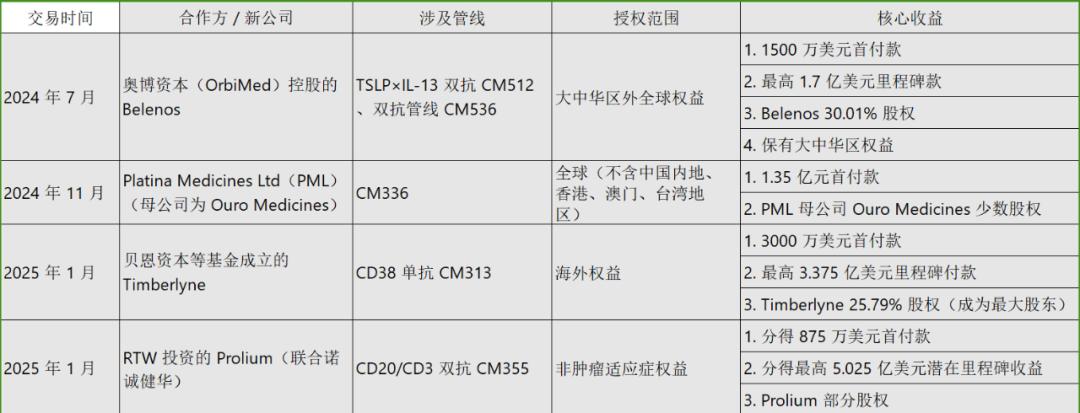
Core Insights - The article highlights the rise of 康诺亚 as a prominent player in the "BD为王" (BD is King) innovation drug market, having completed four NewCo transactions in the past year, establishing itself as a "NewCo factory" through asset splits and cross-border collaborations [1][3][4] - While the NewCo model is seen as a promising concept, it fundamentally relies on the potential of pipeline assets, creating uncertainty regarding the realization of expected outcomes [2][7] NewCo Empire - 康诺亚 has strategically executed four NewCo transactions, solidifying its position as a specialist in this model through precise asset selection and strong capital partnerships [3] - The transactions include: - July 2024: Partnership with OrbiMed's Belenos for TSLP×IL-13 dual antibody CM512, receiving $15 million upfront and potential milestone payments of up to $170 million [4][5] - November 2024: Exclusive licensing agreement with Platina Medicines Ltd for CM336, with an upfront payment of $135 million [4][5] - January 2025: Collaboration with Timberlyne for CD38 monoclonal antibody CM313, securing $30 million upfront and potential milestone payments of up to $337.5 million [6] - January 2025: Joint venture with Prolium for CD20/CD3 dual antibody CM355, receiving $8.75 million upfront and potential milestone payments of up to $502.5 million [6] - These transactions have created a "NewCo empire" for 康诺亚, allowing it to cover multiple therapeutic areas while enhancing cash flow through upfront and milestone payments [6][7] Clinical and Market Challenges - The pipeline assets involved in the NewCo model are primarily in early clinical stages, which introduces significant uncertainty regarding their future success [8][9] - The success rate for drugs from early clinical trials to market is less than 10%, with additional competition from established products in the same therapeutic areas [9][10] - The valuation of NewCo equity is based on future expectations rather than actual asset value, leading to potential discrepancies if market conditions worsen [10][11] Financial Performance and Market Dynamics - 康诺亚's cash reserves increased to approximately 2.796 billion yuan in the first half of 2025, up by 200 million yuan from the previous year, supported by NewCo transactions [6] - Despite strong expectations for its core product 康悦达, sales have not met projections, with only 1.69 billion yuan achieved in the first half of 2025, representing 33.8% of the annual target [13][14] - The competitive landscape for 康悦达 is challenging, with multiple candidates in clinical stages for similar indications, raising concerns about its market position [13][14] Conclusion on NewCo Model - The NewCo model provides short-term cash flow and pipeline expansion but carries inherent risks of over-leveraging future expectations, potentially leading to commercialization challenges [10][11][15] - The reliance on external investors for pipeline valuation and the loss of core control over potential blockbuster assets may weaken long-term competitiveness [11][15]
解码中国生物科技发展 毕马威第三届生物科创领航50企业报告正式发布
Zheng Quan Ri Bao Wang· 2025-10-15 10:18
Core Insights - The report by KPMG highlights the dynamic and growth-oriented nature of China's biotechnology sector, emphasizing the interplay of policy, technology, capital, and international collaboration in driving industry transformation [1][2] - The integration of artificial intelligence in the healthcare sector is creating unprecedented opportunities, enhancing research efficiency, product innovation, and supply chain optimization [1] - The report indicates that China's innovation-driven pharmaceutical sector is entering a golden development period, with a shift from cost competition to value creation in the CDMO space [1] Industry Trends - China's biotechnology industry is becoming increasingly significant in the global innovation landscape, focusing on emerging areas such as cell therapy, gene therapy, in vitro diagnostics, and AI-driven pharmaceuticals [2] - The globalization of Chinese biopharmaceuticals has transitioned from an optional strategy to a necessary one, with a notable increase in license-out transactions since 2020 [2] - The deep integration of scientific innovation and business models is identified as a key factor for success in the current biotechnology landscape [2]
再获6亿美元融资,恒瑞NewCo出海赢得赛点
Hua Er Jie Jian Wen· 2025-10-15 03:55
Core Insights - Kailera Therapeutics raised $600 million in a Series B funding round led by Bain Capital, marking one of the largest private biotech deals of the year amidst a challenging U.S. biopharmaceutical market in 2025 [1][2] - The success of this funding is primarily attributed to the positive results from the Phase 3 clinical trials of KAI-9531, a GLP-1/GIP dual receptor agonist developed in collaboration with Chinese pharmaceutical giant, HengRui Medicine [2][4] Funding and Clinical Data - KAI-9531 demonstrated impressive results in a 48-week Phase 3 trial in China, with an average weight loss of 17.7% across all tested doses, and 88% of participants losing at least 5% of their body weight, while 44.4% lost over 20% [2] - The certainty of clinical data, rather than just the mechanism similarity to Eli Lilly's Zepbound, was a key factor in attracting top-tier investors like Bain Capital [2] Strategic Moves - Following the Phase 3 data release, Kailera quickly secured approval from the FDA to initiate global Phase 3 clinical trials, indicating a swift progression in their development timeline [2] - The $600 million funding will enable Kailera to expand its operations globally, particularly in the U.S. market, which is crucial for the pharmaceutical industry [3] HengRui's Global Strategy - HengRui's "NewCo" model allowed it to transfer global development, production, and commercialization rights of three GLP-1 drugs to a newly established U.S. company, Hercules, which was backed by Bain Capital and other investors [4][7] - The total deal value could reach $6 billion, including various milestone payments, while HengRui retains approximately 19.9% equity in Kailera [4] Benefits of the NewCo Model - This model allows HengRui to avoid the high costs associated with conducting global Phase 3 trials independently, while still benefiting from the potential commercial success of its drug pipeline [8] - By leveraging Kailera's experienced management team and strong investor backing, HengRui can expedite its global expansion and clinical progress [8] Broader Implications - The successful funding and development of KAI-9531 signify a growing trend of Chinese companies with strong R&D capabilities becoming key players in the global innovative drug market [9] - This trend reflects the increasing recognition of "China innovation, global realization" as a viable strategy in the biopharmaceutical landscape [9]

诺诚健华放弃巨头背书,奥布替尼二次出海换2.8亿美元“首付+股权绑定”
Tai Mei Ti A P P· 2025-10-09 15:15
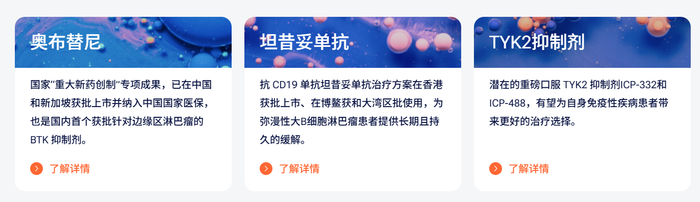
Core Viewpoint - The recent licensing agreement between Nuo Cheng Jian Hua and Zenas has led to a significant market reaction, with Nuo Cheng Jian Hua's stock dropping while Zenas's stock surged, indicating a divergence in market sentiment regarding the deal's value and potential [1][2]. Summary by Sections Licensing Agreement Details - Nuo Cheng Jian Hua has licensed its BTK inhibitor, Oubutini, for multiple sclerosis and other autoimmune diseases to Zenas, receiving an upfront payment of $100 million, milestone payments, and 7 million shares of Zenas stock, with a total potential deal value exceeding $2 billion [1][2]. - The upfront payment and stock value combined amount to $280 million, which is considered reasonable compared to industry standards, where the average upfront payment ratio is around 8% [3]. Market Reaction and Sentiment - The market's cautious sentiment towards the deal stems from two main concerns: the upfront payment not meeting expectations and the perceived lack of recognition of Zenas as a partner [2][5]. - Nuo Cheng Jian Hua's stock fell by 6.24% in A-shares and 11.64% in Hong Kong shares, while Zenas's stock rose by 24.22% following the announcement [1]. Strategic Considerations - Nuo Cheng Jian Hua had previously engaged with multinational corporations (MNCs) but ultimately chose Zenas due to smoother communication and Zenas's strong clinical development capabilities, particularly in the field of multiple sclerosis [5][10]. - Zenas, founded in 2019 and listed on NASDAQ in 2024, currently has no commercial products but has a promising pipeline, including a dual-function monoclonal antibody that complements Oubutini [7][8]. Industry Context - The collaboration reflects a shift in the global innovation drug landscape from one-time licensing deals to deeper collaborative models, where local pharmaceutical companies can retain equity in new ventures [12]. - Nuo Cheng Jian Hua's previous partnership with Biogen ended after about 18 months, highlighting the challenges in securing long-term collaborations in the industry [11]. Future Outlook - The partnership aims to advance the development of Oubutini in treating primary and secondary progressive multiple sclerosis, with significant market opportunities projected in the U.S. alone [8]. - The success of this collaboration will depend on Zenas's ability to progress its pipeline and the overall market performance of its shares [12].

活动预告 | 投中2½沙龙&投海DEMO DAY 闭门座谈:共话中国创新药的“斯普特尼克”时刻
投中网· 2025-09-17 02:52
Core Insights - The Chinese innovative pharmaceutical industry is at a historic juncture, with significant overseas licensing deals and challenges arising from potential U.S. regulatory scrutiny [2][3]. Group 1: Market Performance - In 2024, the Chinese innovative drug sector achieved 94 overseas licensing transactions totaling $51.9 billion [5]. - By mid-2025, the momentum continued with 72 transactions exceeding $60 billion, surpassing the previous year's total of $8.1 billion [6]. - The secondary market for biopharmaceuticals has shown signs of recovery, with companies like BeiGene reaching a market cap of over 500 billion yuan [7]. Group 2: Regulatory Challenges - The Trump administration is considering mandatory reviews by the Committee on Foreign Investment in the United States (CFIUS) for transactions involving U.S. pharmaceutical companies acquiring rights to Chinese drugs [8]. - If implemented, this could hinder the supply channels for Chinese experimental therapies to the U.S. market, impacting both U.S. and Chinese pharmaceutical companies [8]. Group 3: Financial Dynamics - Despite high transaction volumes, upfront payments for Chinese pharmaceutical deals remain significantly lower than those in the U.S., with only $2.9 billion in upfront payments out of $60.8 billion in total transactions [10]. - The disparity indicates a persistent reliance on "cost-performance" perceptions, leading to a notable valuation gap compared to international markets [10]. Group 4: Investment Trends - The domestic biopharmaceutical investment landscape is still in a downturn, with 371 financing events totaling approximately 20 billion yuan, reflecting a year-on-year decline of 31.2% [13]. - However, the industry is transitioning from a "burning cash" phase to demonstrating healthier self-sustaining capabilities, as evidenced by companies like BeiGene achieving profitability for the first time [16]. Group 5: Innovation and Collaboration - The integration of artificial intelligence in drug development is enhancing global competitiveness by reducing costs and shortening timelines [17]. - The NewCo model, which involves local investment institutions leading new company formations, is gaining traction, providing a flexible exit mechanism for early-stage innovations [21][20].
恒瑞二度Newco出海 总交易额10.88亿美元
Jing Ji Guan Cha Wang· 2025-09-05 07:05
Core Viewpoint - Heng Rui Medicine has announced a new collaboration with Braveheart Bio for the global development and commercialization of its heart disease drug HRS-1893, marking its second NewCo transaction aimed at expanding its international presence [1][3]. Group 1: Transaction Details - Heng Rui Medicine will receive a total of $65 million in upfront payments, consisting of $32.5 million in cash and $32.5 million in equity from Braveheart Bio [1]. - After the technology transfer, Heng Rui will receive an additional $10 million milestone payment, along with potential milestone payments and sales royalties that could total up to $1.013 billion, bringing the maximum potential revenue from this deal to $1.088 billion [1]. - A joint management committee will be established to coordinate the global development and commercialization of the licensed product, with equal representation from both companies [1]. Group 2: Product Development Status - HRS-1893 is currently undergoing a Phase III clinical trial in China for obstructive hypertrophic cardiomyopathy, which is a common hereditary heart disease and a leading cause of sudden cardiac death among adolescents and athletes [2]. Group 3: Previous Transactions and Company Background - This is Heng Rui Medicine's second NewCo model transaction; the first involved licensing three GLP-1 innovative drugs to a newly established U.S. company, Kailera, for an upfront payment of $100 million and a potential total deal value of $6 billion [3]. - Braveheart Bio was established in 2024 in Delaware, USA, with major investors including Forbion Capital and OrbiMed, and is led by CEO Travis Murdoch, who has a history of successful clinical project management [3][4]. - As of September 5, Heng Rui Medicine's A-shares rose by 3.35%, with a market capitalization of 470.9 billion yuan, while its Hong Kong shares increased by 3.07%, with a market capitalization of 555.9 billion HKD [4].
恒瑞医药心肌肌球蛋白抑制剂HRS-1893以NewCo模式授权海外,交易额最高达10.88亿美元
Cai Jing Wang· 2025-09-05 05:32
Core Insights - HengRui Pharma has entered into an exclusive licensing agreement with Braveheart Bio for its proprietary Myosin small molecule inhibitor HRS-1893, aimed at treating Hypertrophic Cardiomyopathy (HCM) [1][2] - The agreement grants Braveheart Bio exclusive rights to develop, manufacture, and commercialize HRS-1893 globally, excluding Greater China, with an upfront payment of $65 million and potential milestone payments totaling up to $1.013 billion [1][2] - HRS-1893 is a significant innovation in HengRui's cardiovascular portfolio, currently in Phase III clinical trials, with over 10 innovative products in clinical research stages targeting cardiovascular diseases [3] Financial Terms - Braveheart Bio will pay HengRui a total of $75 million, which includes $32.5 million in cash and $32.5 million in equity, along with a $10 million milestone payment upon successful technology transfer [1] - The potential milestone payments related to clinical development and sales could reach up to $1.013 billion, in addition to sales royalties [1] Market Potential - The CEO of Braveheart Bio expressed confidence in HRS-1893's potential as a best-in-class Myosin inhibitor, highlighting the significant unmet needs in the cardiovascular disease market [2] - HengRui's recent licensing of GLP-1 class innovative drugs to a newly established U.S. company could yield up to $6 billion in total payments, indicating a strong focus on expanding its innovative drug portfolio [2]