
RAG技术

Search documents
零代码落地!DeepSeek+ChatWiki,打造企业专属智能客服
Sou Hu Cai Jing· 2025-11-27 02:51
Core Insights - The article highlights the challenges faced by customer service teams, including high workload and inefficiencies in handling inquiries [2] - It introduces DeepSeek and ChatWiki as a solution for building an efficient AI customer service system without the need for complex development [2] Group 1: AI Customer Service Solution - DeepSeek's strong semantic understanding captures customer intent accurately, while ChatWiki builds a private knowledge base using RAG technology, ensuring responses are both warm and professional [2] - The entire process is zero-code, allowing deployment within one day, significantly lowering technical barriers and time costs for businesses [2] Group 2: Integration and Setup - ChatWiki is compatible with over 20 mainstream AI models, enabling easy integration for businesses without requiring specialized developers [3] - The knowledge base can be built by uploading various document formats, with ChatWiki handling text cleaning and conversion automatically [4] Group 3: AI Bot Creation - After setting up the knowledge base, businesses can create a personalized AI bot by configuring its name and welcome message, linking it to the knowledge base for immediate deployment [6] - DeepSeek extracts relevant information from the knowledge base to provide coherent responses, improving the quality of customer interactions [6] Group 4: Multi-Channel Support - The AI bot can be integrated across multiple platforms, including H5 links, company websites, and messaging apps, ensuring a consistent service experience for customers [8] - An education platform reported a 100% response rate for nighttime inquiries and doubled conversion rates after integration, demonstrating the commercial value of the solution [8] Group 5: Role Management - ChatWiki offers detailed permission management, allowing administrators to assign roles and control access to knowledge base editing and bot configuration, enhancing data security and team collaboration [10] - This feature supports complex organizational structures while ensuring the safety of core business data [10]


西部机场集团AI战略下的银川实践 “数智大脑”激活空港新动能
Zhong Guo Min Hang Wang· 2025-10-16 01:19
Core Insights - The Western Airport Group is advancing its smart airport construction strategy centered around a 4A framework, integrating AI technologies to enhance operational efficiency and decision-making capabilities [1][2] - The implementation of the "AI + Special Action" initiative, particularly through the enterprise-level AI assistant "Xiao Xi," is a significant step towards the digital transformation of the Northwest airport cluster [1][3] Group 1: AI Integration and Operational Efficiency - The weak current center at Yinchuan Airport has developed a platform combining "AI Intelligent Body + Local RAG Knowledge Base," which addresses inefficiencies in data retrieval and knowledge management [1] - Traditional document management has been inadequate for the fast-paced aviation industry, prompting the adoption of a "RAG + Local Large Model" approach to ensure data security and timely access to critical information [1][2] Group 2: Technical Achievements and Benefits - The local knowledge base built by the weak current center utilizes RagFlow and integrates DeepSeek large models, achieving a localized "retrieve-infer-generate" process that aligns with the group's principles of proprietary data and value exclusivity [2] - The AI assistant can generate visual reports with risk assessments and recommendations in seconds, significantly improving the efficiency of flight guarantee operations [2] Group 3: Broader Implementation and Future Prospects - The pilot results from the weak current center are being expanded across all departments, introducing tools for rapid regulatory compliance checks and proactive risk management [3] - The platform is designed for future integration with live data on flight dynamics, passenger services, and energy consumption, aiming to enhance predictive decision-making capabilities within the smart civil aviation system [3]
最新Agent框架,读这一篇就够了
自动驾驶之心· 2025-08-18 23:32
Core Viewpoint - The article discusses various mainstream AI Agent frameworks, highlighting their unique features and suitable application scenarios, emphasizing the growing importance of AI in automating complex tasks and enhancing collaboration among agents [1]. Group 1: Mainstream AI Agent Frameworks - Current mainstream AI Agent frameworks are diverse, each focusing on different aspects and applicable to various scenarios [1]. - The frameworks discussed include LangGraph, AutoGen, CrewAI, Smolagents, and RagFlow, each with distinct characteristics and use cases [1][2]. Group 2: CrewAI - CrewAI is an open-source multi-agent coordination framework that allows autonomous AI agents to collaborate as a cohesive team to complete tasks [3]. - Key features of CrewAI include: - Independent architecture, fully self-developed without reliance on existing frameworks [4]. - High-performance design focusing on speed and resource efficiency [4]. - Deep customizability, supporting both macro workflows and micro behaviors [4]. - Applicability across various scenarios, from simple tasks to complex enterprise automation needs [4][7]. Group 3: LangGraph - LangGraph, created by LangChain, is an open-source AI agent framework designed for building, deploying, and managing complex generative AI agent workflows [26]. - It utilizes a graph-based architecture to model and manage the complex relationships between components in AI workflows [28]. Group 4: AutoGen - AutoGen is an open-source framework from Microsoft for building agents that collaborate through dialogue to complete tasks [44]. - It simplifies AI development and research, supporting various large language models (LLMs) and advanced multi-agent design patterns [46]. - Core features include: - Support for agent-to-agent dialogue and human-machine collaboration [49]. - A unified interface for standardizing interactions [49][50]. Group 5: Smolagents - Smolagents is an open-source Python library from Hugging Face aimed at simplifying the development and execution of agents with minimal code [67]. - It supports various functionalities, including code execution and tool invocation, while being model-agnostic and easily extensible [70]. Group 6: RagFlow - RagFlow is an end-to-end RAG solution focused on deep document understanding, addressing challenges in data processing and answer generation [75]. - It supports various document formats and intelligently identifies document structures to ensure high-quality data input [77][78]. Group 7: Summary of Frameworks - Each AI Agent framework has unique characteristics and suitable application scenarios: - CrewAI is ideal for multi-agent collaboration and complex task automation [80]. - LangGraph is suited for state-driven multi-step task orchestration [81]. - AutoGen is designed for dynamic dialogue processes and research tasks [86]. - Smolagents is best for lightweight development and rapid prototyping [86]. - RagFlow excels in document parsing and multi-modal data processing [86].

大模型专题:2025年大模型智能体开发平台技术能力测试研究报告
Sou Hu Cai Jing· 2025-08-14 15:48
Core Insights - The report evaluates the technical capabilities of four major AI model development platforms: Alibaba Cloud's Bailian, Tencent Cloud's Intelligent Agent Development Platform, Kouzi, and Baidu Intelligent Cloud Qianfan, focusing on RAG capabilities, workflow capabilities, and agent capabilities [1][7][8]. RAG Capability Testing - RAG capability testing assesses knowledge enhancement mechanisms, including multi-modal knowledge processing, task complexity adaptation, and interaction mechanism completeness [7][8]. - In text question answering, all platforms demonstrated high accuracy, with over 80% accuracy in multi-document responses, although some platforms showed stability issues during API calls [20][21]. - Baidu Intelligent Cloud Qianfan exhibited stable performance in complex query scenarios for structured data, while Tencent Cloud achieved 100% refusal for out-of-knowledge-base questions [21][23]. - The platforms showed differences in handling refusal and clarification, with Tencent Cloud providing 100% refusals for non-knowledge-base questions [21][22]. Workflow Capability Testing - Workflow capability testing focuses on dynamic parameter extraction, exception rollback, intent recognition, and fault tolerance [35][36]. - The end-to-end accuracy for workflow processes ranged from 61.5% to 93.3%, with Tencent Cloud leading in intent recognition accuracy at 100% [36][37]. - The platforms demonstrated basic usability in workflow systems, but there is room for improvement in complex information processing [38][39]. Agent Capability Testing - Agent capability testing evaluates the ability to call tools, focusing on intent understanding, operational coordination, feedback effectiveness, and mechanism completeness [44][45]. - All platforms achieved high single-tool call completion rates (83%-92%), but multi-tool collaboration and prompt calling showed potential for improvement [48][50]. - Tencent Cloud's Intelligent Agent Development Platform excelled in tool call success rates due to its robust ecosystem and process optimization [49][50].



VLA:何时大规模落地
Zhong Guo Qi Che Bao Wang· 2025-08-13 01:33
Core Viewpoint - The discussion around VLA (Vision-Language-Action model) is intensifying, with contrasting opinions on its short-term feasibility and potential impact on the automotive industry [2][12]. Group 1: VLA Technology and Development - The Li Auto i8 is the first vehicle to feature the VLA driver model, positioning it as a key selling point [2]. - Bosch's president for intelligent driving in China, Wu Yongqiao, expressed skepticism about the short-term implementation of VLA, citing challenges in multi-modal data acquisition and training [2][12]. - VLA is seen as an "intelligent enhanced version" of end-to-end systems, aiming for a more human-like driving experience [2][5]. Group 2: Comparison of Driving Technologies - There are two main types of end-to-end technology: modular end-to-end and one-stage end-to-end, with the latter being more advanced and efficient [3][4]. - The one-stage end-to-end model simplifies the process by directly mapping sensor data to control commands, reducing information loss between modules [3][4]. - VLA is expected to outperform traditional end-to-end models by integrating multi-modal capabilities and enhancing decision-making in complex scenarios [5][6]. Group 3: Challenges and Requirements for VLA - The successful implementation of VLA relies on breakthroughs in three key areas: cross-modal feature alignment, world model construction, and dynamic knowledge base integration [7][8]. - Current automotive chips are not designed for AI large models, leading to performance limitations in real-time decision-making [9][11]. - The industry is experiencing a "chip power battle," with companies like Tesla and Li Auto developing their own high-performance AI chips to meet VLA's requirements [11][12]. Group 4: Future Outlook and Timeline - Some industry experts believe 2025 could be a pivotal year for VLA technology, while others suggest it may take 3-5 years for widespread adoption [12][13]. - Initial applications of VLA are expected to be in controlled environments, with broader capabilities emerging as chip technology advances [14]. - Long-term projections indicate that advancements in AI chip technology and multi-modal alignment could lead to significant breakthroughs in VLA deployment by 2030 [14][15].

一文了解 AI Agent:创业者必看,要把AI当回事
混沌学园· 2025-07-16 09:04
Core Viewpoint - The essence of AI Agents lies in reconstructing the "cognition-action" loop, iterating on human cognitive processes to enhance decision-making and execution capabilities [1][4][41]. Group 1: Breakthroughs in AI Agents - The breakthrough of large language models (LLMs) is fundamentally about decoding human language, enabling machines to possess near-human semantic reasoning abilities [2]. - AI Agents transform static "knowledge storage" into dynamic "cognitive processes," allowing for more effective problem-solving [4][7]. - The memory system in AI Agents plays a crucial role, with short-term memory handling real-time context and long-term memory encoding user preferences and business rules [10][12][13]. Group 2: Memory and Learning Capabilities - The dual memory mechanism allows AI Agents to accumulate experience, evolving from passive tools to active cognitive entities capable of learning from past tasks [14][15]. - For instance, in customer complaint handling, AI Agents can remember effective solutions for specific complaints, optimizing future responses [15]. Group 3: Tool Utilization - The ability to call tools is essential for AI Agents to expand their cognitive boundaries, enabling them to access real-time data and perform complex tasks [17][20]. - In finance, AI Agents can utilize APIs to gather market data and provide precise investment advice, overcoming the limitations of LLMs [21][22]. - The diversity of tools allows AI Agents to adapt to various tasks, enhancing their functionality and efficiency [26][27]. Group 4: Planning and Execution - The planning module of AI Agents addresses the "cognitive entropy" of complex tasks, enabling them to break down tasks into manageable components and monitor progress [28][30][32]. - After completing tasks, AI Agents can reflect on their planning and execution processes, continuously improving their efficiency and effectiveness [33][35]. Group 5: Impact on Business and Society - AI Agents are redefining the underlying logic of enterprise software, emphasizing collaboration between human intelligence and machine capabilities [36][37]. - The evolution from tools to cognitive entities signifies a major shift in how AI can enhance human productivity and decision-making [39][41]. - As AI technology advances, AI Agents are expected to play significant roles across various sectors, including healthcare and education, driving societal progress [44][45]. Group 6: Practical Applications and Community - The company has developed its own AI Agent and established an AI Innovation Institute to assist enterprises in effectively utilizing AI for cost reduction and efficiency improvement [46][48]. - The institute offers practical tools and methodologies derived from extensive real-world case studies, enabling businesses to integrate AI into their operations [51][58]. - Monthly collaborative learning sessions serve as a reflection mechanism, allowing participants to convert theoretical knowledge into actionable solutions [60][62].

没有RAG打底,一切都是PPT,RAG作者Douwe Kiela的10个关键教训
Hu Xiu· 2025-07-01 04:09
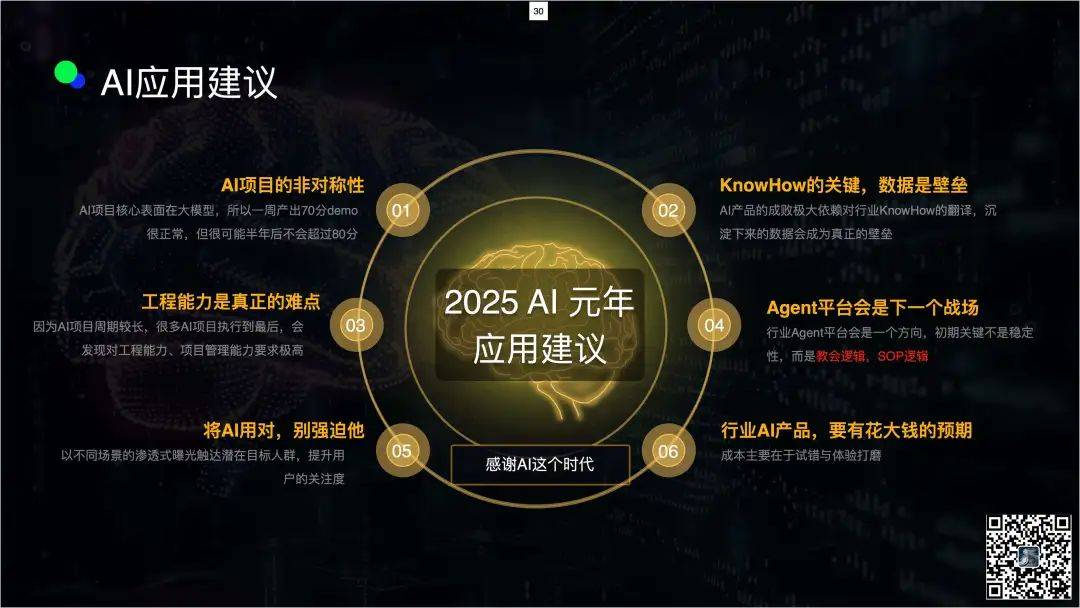
Core Insights - The article discusses the challenges faced by companies in implementing AI, particularly in achieving human-like conversation and high accuracy in AI systems. It highlights the need for effective engineering and project management in AI projects [1][15][18]. Group 1: AI Challenges - AI often struggles with human-like conversation, leading to stiff interactions even when using RAG or knowledge bases [1]. - The accuracy of AI systems is often insufficient, with a typical business requirement being 95% accuracy, while AI may only cover 80% of scenarios [1]. - The Context Paradox suggests that tasks perceived as easy for humans are often harder for AI, while complex tasks can be easier for AI to handle [3][12]. Group 2: Engineering and Project Management - Engineering capabilities are more critical than model complexity in AI projects, as many projects fail due to inadequate engineering and project management [15][18]. - A typical AI project may require extensive documentation, with one SOP potentially needing 5,000 to 10,000 words of prompts, leading to a total of 250,000 to 500,000 words for complex projects [17]. - The majority of challenges in AI projects stem from data engineering, which constitutes about 80% of the difficulty [19]. Group 3: Specialization and Data - Specialized AI solutions tailored to specific industries outperform general-purpose AI assistants, as they can better understand industry-specific language and needs [20][22]. - Data is becoming a crucial competitive advantage, as technical barriers diminish; companies must focus on leveraging unique data to create a moat [26][28]. - Companies should prioritize making AI capable of handling large volumes of noisy, real-world data rather than spending excessive time on data cleaning [26]. Group 4: Production Challenges - Transitioning from pilot projects to production environments is significantly more challenging, requiring careful design from the outset [29][31]. - Speed in deployment is more important than perfection; early user feedback is essential for iterative improvement [33][36]. - Companies must be cautious about the asymmetry in AI projects, where initial successes in demos may not translate to production success [30]. Group 5: Accuracy and Observability - Achieving 100% accuracy in AI is nearly impossible; companies should focus on managing inaccuracies and establishing robust monitoring systems [46][50]. - Observability and the ability to trace errors back to their sources are critical for continuous improvement in AI systems [47][50]. - Companies should develop a feedback loop to ensure that inaccuracies are addressed and corrected in future iterations [51][52].
估值72亿美元,红杉加持的这家AI搜索创企什么来头?
Zheng Quan Shi Bao Wang· 2025-06-14 11:08
Core Insights - Glean, an AI startup, has raised $150 million in funding, achieving a valuation of $7.2 billion, significantly up from $4.6 billion in September 2022 [2][3] - The funding round was led by Wellington Management, with participation from existing investors like Sequoia Capital, indicating strong confidence in Glean's growth trajectory [3] - Glean aims to use the new funds to accelerate product development, expand its partner ecosystem, and pursue international growth [3] Company Overview - Founded in 2019, Glean started with enterprise search and has since developed products like Glean Assistant and Glean Agents, leveraging RAG technology for AI-driven enterprise search [4][6] - Glean Search allows employees to find data across internal documents and the web, while Glean Assistant automates daily tasks and provides data analysis through natural language queries [6] - Glean Agents enables the creation of AI agents for tasks like debugging software code, supporting over 100 million agents annually [6] Market Position and Growth - Glean's business model reflects a broader shift in the enterprise AI sector, moving from pilot projects to widespread deployment of autonomous agents [7] - The company has seen rapid revenue growth, with annual recurring revenue (ARR) increasing from $55 million to $100 million [7] - Glean's client base includes Fortune 500 companies like Dell, showcasing its strong market presence [7] AI Implementation in Enterprises - Arvind Jain, Glean's CEO, emphasizes the importance of a robust data infrastructure for effective AI applications, including deep integration with enterprise systems and a solid security framework [8][9] - The challenges of enterprise AI deployment stem from the private and context-dependent nature of enterprise data, requiring an understanding of organizational structure and user roles [9] - Jain suggests that AI entrepreneurs should focus on solving specific business problems rather than starting with AI technology itself, building trust with enterprises through clear value propositions [10]
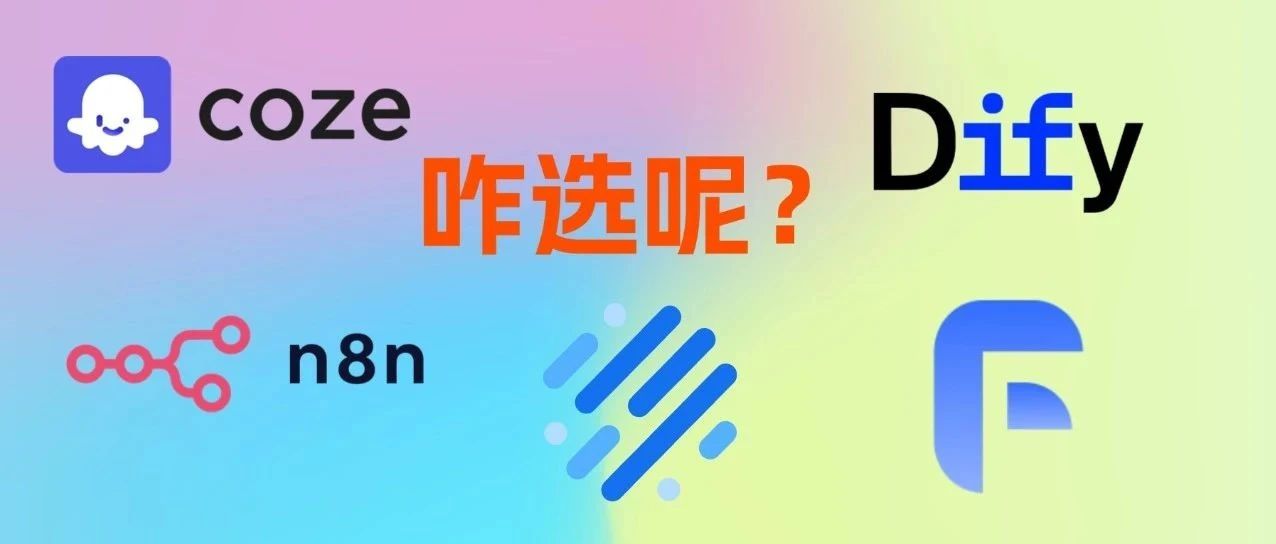
Dify、n8n、扣子、Fastgpt、Ragflow到底该怎么选?超详细指南来了。
数字生命卡兹克· 2025-05-27 00:56
Core Viewpoint - The article provides a comprehensive comparison of five mainstream LLM application platforms: Dify, Coze, n8n, FastGPT, and RAGFlow, emphasizing the importance of selecting the right platform based on individual needs and use cases [1][2]. Group 1: Overview of LLM Platforms - LLM application platforms significantly lower the development threshold for AI applications, accelerating the transition from concept to product [2]. - These platforms allow users to focus on business logic and user experience innovation rather than repetitive underlying technology construction [3]. Group 2: Platform Characteristics - **n8n**: Known for its powerful general workflow automation capabilities, it allows users to embed LLM nodes into complex automation processes [4]. - **Coze**: Launched by ByteDance, it emphasizes low-code/no-code AI agent development, enabling rapid construction and deployment of conversational AI applications [5]. - **FastGPT**: An open-source AI agent construction platform focused on knowledge base Q&A systems, offering data processing, model invocation, and visual workflow orchestration capabilities [6]. - **Dify**: An open-source LLM application development platform that integrates BaaS and LLMOps concepts, providing a one-stop solution for rapid AI application development and operation [7]. - **RAGFlow**: An open-source RAG engine focused on deep document understanding, specializing in knowledge extraction and high-quality Q&A from complex formatted documents [8][40]. Group 3: Detailed Platform Analysis - **Dify**: Described as a "Swiss Army Knife" of LLM platforms, it offers a comprehensive set of features including RAG pipelines, AI workflows, monitoring tools, and model management [8][10][12]. - **Coze**: Positioned as the "LEGO" of LLM platforms, it allows users to easily create and publish AI agents with a wide range of built-in tools and plugins [21][25]. - **FastGPT**: Recognized for its ability to quickly build high-quality knowledge bases, it supports various document formats and provides a user-friendly interface for creating AI Q&A assistants [33][35]. - **RAGFlow**: Distinguished by its deep document understanding capabilities, it supports extensive data preprocessing and knowledge graph functionalities [40][42]. - **n8n**: A low-code workflow automation tool that connects various applications and services, enhancing business process automation [46][49]. Group 4: User Suitability and Recommendations - For beginners in AI application development, Coze is recommended as the easiest platform to start with [61]. - For businesses requiring automation across multiple systems, n8n's robust workflow capabilities can save significant time [62]. - For building internal knowledge bases or Q&A systems, FastGPT and RAGFlow are suitable options, with FastGPT being lighter and RAGFlow offering higher performance [63]. - For teams with long-term plans to develop scalable enterprise-level AI applications, Dify's comprehensive ecosystem is advantageous [63]. Group 5: Key Considerations for Platform Selection - Budget considerations include the costs of self-hosting open-source platforms versus subscription fees for cloud services [68]. - Technical capabilities of the team should influence the choice of platform, with no-code options like Coze being suitable for those with limited technical skills [68]. - Deployment preferences, such as the need for local data privacy, should also be evaluated [69]. - Core functionality requirements must be clearly defined to select the platform that best meets specific needs [70]. - The sustainability of the platform, including update frequency and community support, is crucial for long-term viability [71]. - Data security and compliance are particularly important for enterprise users, with self-hosted solutions offering greater control over data [72].
医疗影像大模型,还需“闯三关”
3 6 Ke· 2025-05-18 23:14
Core Viewpoint - The integration of AI in medical imaging is advancing rapidly, with large models evolving from mere tools to core drivers of diagnostic ecosystems, enhancing the workflow of radiologists and addressing challenges in pathology diagnostics [1][2]. Group 1: Development of AI in Medical Imaging - Medical imaging AI models have achieved widespread application in the workflow of radiologists, transitioning from auxiliary diagnostic tools to essential components of the diagnostic ecosystem [1]. - The "Shukun Kun Multi-modal Medical Health Large Model" released by Shukun Technology in April signifies this evolution, enhancing the role of AI in diagnostics [1]. Group 2: Challenges and Solutions in Pathology - Pathology models are considered the "crown jewel" of medical models due to their complexity and diversity, with the first clinical-grade pathology model, "Insight," developed by Tuo Che Future, addressing accuracy and efficiency challenges [2]. - The pathology model addresses long-standing challenges in generalization across hospitals, cancer types, and pathology tasks, simplifying processes and improving diagnostic efficiency [3]. Group 3: Enhancing AI Generalization Performance - AI model generalization is crucial for reliability and stability, with key challenges including insufficient data diversity, model limitations, and the long-tail nature of medical data [4][6]. - Strategies to enhance generalization include expanding data sample diversity, optimizing model training, and iterating models in real clinical environments [6][7]. Group 4: Addressing the Hallucination Problem - The hallucination issue in large models is a significant barrier, with RAG (Retrieval-Augmented Generation) technology proposed as a solution to enhance accuracy by integrating external knowledge [8][9]. - A hybrid approach combining generative and discriminative AI is suggested to mitigate risks in critical decision-making scenarios, ensuring reliable outputs [9]. Group 5: Deployment Trends in Healthcare - Local deployment of AI models is becoming the preferred choice for hospitals due to data privacy and compliance advantages, with integrated solutions like one-box systems gaining traction [10][11]. - One-box systems combine the strengths of general and specialized models, addressing diverse medical needs while ensuring data control [10]. Group 6: Future Trends in Medical AI - The performance of medical large models is surpassing traditional small models, with applications expanding from thousands to over ten thousand hospitals [12]. - The future of medical AI is moving towards multi-modal integration and comprehensive diagnostics, akin to a digital "general practitioner" that synthesizes various patient data for holistic treatment recommendations [12][13].