AI客服系统

Search documents
破译“三重密码” 拓开出海中小企业客服智能化之路
Zhong Guo Zheng Quan Bao· 2026-02-24 20:28
Core Insights - The article discusses the challenges and opportunities faced by small and medium-sized enterprises (SMEs) in the financial technology sector as they navigate the integration of AI into their customer service systems. The focus is on balancing efficiency and customer experience while addressing the complexities of compliance and trust in cross-border operations. Group 1: AI Integration in Customer Service - The introduction of AI in customer service is not merely a transition from human to digital but aims to break down cognitive barriers and reduce the cost of building trust, transforming customer service from a cost center to a value-creating center [3][4] - The core objective of customer service, whether using AI or not, is to resolve issues and build trust, which is crucial for brand loyalty and preventing customer churn [3][4] Group 2: Market Dynamics and Challenges - Information asymmetry is a significant challenge for SMEs in overseas markets, exacerbated by geographical and regulatory barriers, leading to a lack of trust and underestimation of the true value of products and services [2][4] - Traditional customer service incurs high costs due to complex processes and inter-departmental handovers, which AI can help streamline [2][4] Group 3: Technology and Compliance - The deployment of AI must be accompanied by a robust governance framework that respects local regulations and enhances trust, as breaches in trust are difficult to repair [4][5] - A comprehensive evaluation of AI systems should include performance efficiency, accuracy, reliability, and resource utilization to ensure sustainable economic benefits [7][8] Group 4: Quantitative Metrics for AI Customer Service - Key performance indicators for AI customer service include First Contact Resolution (FCR) and the number of transfers required to resolve a customer issue, which reflect the system's efficiency and effectiveness [6][7] - The need for a balance between efficiency and customer experience is emphasized, as overly complex AI interactions can lead to customer dissatisfaction [7] Group 5: Governance and Risk Management - The establishment of a quantifiable governance structure is essential for managing AI compliance, focusing on conversation safety, real-time risk intervention, and the effectiveness of governance processes [8][9] - Continuous improvement in algorithm fairness and performance is necessary, leveraging industry tools for standardized assessments [9][10] Group 6: Strategic Integration of Market Value, Technology, and Compliance - The integration of market value, technological empowerment, and policy compliance forms a strategic framework that enhances trust and operational efficiency, allowing companies to proactively shape market standards rather than merely adapt to them [10]
爱彼迎计划2026年推出AI搜索功能并拓展新业务
Jing Ji Guan Cha Wang· 2026-02-11 17:33
Core Insights - The management of Airbnb (ABNB) outlined its development plans for 2026 and beyond during the Q3 2025 earnings call [1] Business and Technology Development - The company plans to launch an AI-driven multi-turn conversational search feature in 2026, supporting natural language interaction to enhance user experience and conversion rates [2] - The AI customer service system will expand to 50 languages, further optimizing service efficiency [2] Business Status - The company is gradually expanding its experience business (such as "Airbnb Originals") and hotel business pilot cities (including Los Angeles, New York City, and Madrid), aiming to make these businesses significant revenue sources within 3-5 years [3] Strategic Advancement - Airbnb continues to focus on emerging markets such as Japan, India, and Latin America, employing localization strategies to attract new users and drive long-term growth [4]

亚马逊“史上最大规模裁员潮”落地 AI又成背锅侠?
Zhong Guo Jing Ying Bao· 2026-01-30 14:43
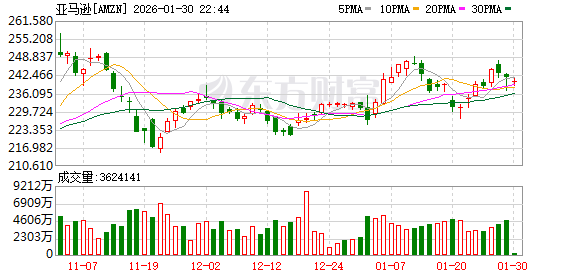
Core Insights - The wave of layoffs in the tech industry, driven by AI advancements, is reshaping organizational structures and strategies, with Amazon leading the charge by announcing a reduction of approximately 16,000 positions in its China offices, following a previous cut of 14,000 in October 2025, totaling 30,000 employees or nearly 10% of its global workforce, marking the largest layoffs in its 30-year history [2][5] Group 1: Layoff Trends - The latest round of layoffs at Amazon primarily targets corporate functions, with significant cuts in HR and AWS administrative roles, as AI can now automate tasks such as resume screening and performance tracking, reducing recruitment cycles by 60% [3][5] - The layoffs reflect a shift from traditional performance-based criteria to a more functional approach, with even high-performing employees being affected, indicating a fundamental change in how companies assess workforce needs [3][5] Group 2: AI Investment and Strategy - Amazon's investment in AI surpassed $150 billion in 2025, marking the first time it exceeded human labor costs, signifying a shift in corporate financial logic from "human-centric" to "AI-centric" [5][6] - The trend of AI-driven layoffs is not isolated to Amazon; major companies like IBM, Microsoft, and Meta have also implemented significant workforce reductions, with IBM cutting 8,000 jobs and Microsoft reducing document processing roles by 30% due to AI integration [5][6] Group 3: Broader Industry Implications - The ongoing layoffs are indicative of a structural transformation in the tech industry, with AI targeting roles in HR, administration, and repetitive technical jobs, leading to a shrinking job market for entry-level programmers and white-collar positions [6] - Despite the risks, new opportunities are emerging, such as AI trainers and management roles, with demand for professionals who can effectively leverage AI technologies increasing significantly [6]


凯淳股份20260121
2026-01-22 02:43
Summary of Key Points from the Conference Call of Kai Chun Co., Ltd. Company Overview - **Company**: Kai Chun Co., Ltd. (凯淳股份) - **Industry**: E-commerce and AI technology application in retail Core Insights and Arguments - **Acquisition and AI Integration**: Kai Chun has strengthened internal collaboration through the acquisition of Keheng and launched the "Smart Store Manager" system, "Zhi Ting," which operates 24/7 but still requires human intervention for complex issues [2][4] - **Employee Reduction**: The company plans to reduce its workforce to below 500 by 2025, primarily due to the application of AI technology in design and operations, with a more stable optimization expected in 2026 [2][5] - **Focus on AI Branding**: The business direction will shift towards embedding brands within AI, transitioning from being searched to being recommended, although this method is still in the exploratory phase [2][7] - **E-commerce Platform Dynamics**: Despite the internalization of advertising content by e-commerce platforms, brands still rely on Kai Chun for operations, and the company is exploring acquisitions of small TP companies to enhance competitiveness [2][8] - **Advertising Trends**: There is a year-on-year decrease in advertising spending by brands, particularly international luxury brands, indicating a decline in overall return expectations [2][13] - **Market Shifts**: Consumer preferences are shifting towards domestic products, leading to the closure of some offline stores [2][14] Additional Important Content - **Revenue Model Adjustments**: Kai Chun is adjusting its pricing model by adding AI service packages to maintain gross profit levels, with growth concentrated on Alibaba and Tencent platforms, while JD.com has seen a decline [3][24] - **AI Application Progress**: Significant advancements in AI applications have been made, including product listing automation and enhanced customer relationship management through partnerships with leading AI operators [4][21] - **Sales Performance**: The company experienced a decline in revenue due to the elimination of certain distribution projects to relieve inventory pressure, with current growth primarily on Alibaba and Tencent platforms [26] - **Product Category Performance**: Fragrance products have shown good growth, while home goods have declined on JD.com. Luxury goods have begun to recover since last year's Double Eleven, but overall volumes remain below 2021 and 2022 levels [27][28] - **Live Streaming and AI**: The impact of AI live streaming on sales is limited, as it lacks the personalized interaction that human hosts provide, which is crucial for effective sales conversion [31] Future Directions and Strategies - **Market Expansion**: The company is expanding into new brand channels beyond beauty and skincare, including 3C products like audio equipment [15] - **Focus on Pet Industry**: Kai Chun sees significant potential in the pet industry and plans to explore this market further, while being cautious about entering the competitive health supplement sector [32] - **Inventory Management**: The company adopts a conservative inventory strategy, avoiding excess stock, particularly in fast-moving consumer goods like cosmetics [35] - **Collaboration with Emerging Brands**: Kai Chun is interested in helping foreign pet brands enter the Chinese market through promotional activities, although this segment remains small [37] This summary encapsulates the key points discussed in the conference call, highlighting the strategic direction, market dynamics, and operational adjustments of Kai Chun Co., Ltd.

技术平权瓦解外贸壁垒 “三无老板”也能出海了
2 1 Shi Ji Jing Ji Bao Dao· 2026-01-21 12:22
Core Insights - AI has become a significant driving force for Chinese companies going global, addressing challenges such as time zone differences and communication barriers [1][6] - The application of AI tools is particularly beneficial for small and medium-sized enterprises (SMEs), lowering entry barriers and enhancing operational efficiency [1][6][7] Group 1: AI Applications in Business - AI tools are being widely adopted in content creation and operational optimization, with SMEs benefiting the most from these applications [1][6] - Companies like Suzhou Xilang Door Industry have integrated AI customer service systems, which can handle 90% of initial inquiries, significantly improving efficiency [3][5] - AI has enabled companies to overcome language barriers, allowing for more effective communication and understanding of customer needs [4][5] Group 2: Growth and Market Impact - The integration of AI has led to exponential growth for companies, with Xilang reporting a reduction in the sales cycle for new employees from 3-4 months to 1 month [5] - The global trade growth is projected to increase by nearly 40% by 2040 due to AI advancements, indicating a transformative impact on international trade [6][7] - Major e-commerce platforms are driving this AI revolution, providing comprehensive AI tools that enhance operational efficiency for sellers [7][8] Group 3: Organizational Changes - AI is reshaping the organizational structure of cross-border e-commerce, allowing for streamlined operations that can reduce team sizes significantly [8] - The reliance on AI tools is expected to mitigate challenges related to talent shortages, particularly for SMEs, by enhancing operational capabilities at lower costs [7][8] - As AI becomes more prevalent, companies must consider how to maintain competitive advantages and adapt to evolving market conditions [8]
技术平权瓦解外贸壁垒,“三无老板”也能出海了
2 1 Shi Ji Jing Ji Bao Dao· 2026-01-21 10:58
Core Insights - AI has become an essential driving force for Chinese companies going global, addressing challenges such as time zone differences and communication barriers [1][7] - The application of AI tools is particularly beneficial for small and medium-sized enterprises (SMEs), lowering the barriers to entry for entrepreneurship [1][7] - AI is significantly enhancing operational efficiency, with companies reporting productivity increases of 3-5 times across various dimensions [7][8] Group 1: AI Applications in Business - AI tools are being widely adopted in content creation and operational optimization, with significant benefits observed in customer service and communication [1][5] - Companies like Xilang Door Industry have implemented AI customer service systems that can handle 90% of initial inquiries, reducing the need for human intervention [5][6] - AI is also breaking down language barriers, enabling companies to engage with international clients more effectively [6] Group 2: Impact on Company Growth - Xilang Door Industry has experienced exponential growth since expanding into international markets, with foreign trade becoming a clear second growth curve for the company [4][8] - The integration of AI has allowed new employees to close deals in one month, compared to the previous 3-4 months, streamlining the onboarding process [6] - The use of AI has led to a significant increase in export revenue for companies, with one entrepreneur reporting growth from 3 million to 30 million yuan in just a year [6] Group 3: Industry Trends and Future Outlook - The World Trade Organization predicts that AI could drive global trade growth by nearly 40% by 2040, indicating a transformative impact on the industry [8] - Major e-commerce platforms are actively developing comprehensive AI tools to support sellers, enhancing their operational capabilities [8][9] - The shift towards AI is reshaping the organizational structure of cross-border e-commerce, allowing for more streamlined operations and potentially enabling "one-person companies" [9]

天猫代运营 淘宝代运营 2026年正规电商代运营公司
Sou Hu Cai Jing· 2026-01-12 09:53
Core Insights - The e-commerce industry is experiencing rapid growth, with platforms like Tmall and Taobao offering代运营 services as a crucial strategy for brands to enhance sales. By 2026, competition in the e-commerce代运营 sector is expected to intensify, with specialization and refined operations becoming key competitive advantages [1]. Company Summaries - **铸淘电商**: Focused on Tmall/Taobao代运营 for 11 years, covering categories like apparel, beauty, 3C, and food. Its core advantages include refined operations using AI for consumer behavior analysis and a dedicated design team for high-conversion content [4]. - **宝尊电商 (Baozun)**: The first listed代运营 company in China (NASDAQ: BZUN), serving international brands such as Nike and Microsoft. It plans to expand into Southeast Asia by 2025, highlighting its experience in omnichannel operations and cross-border brand incubation [6]. - **丽人丽妆**: Specializes in beauty and personal care, collaborating with brands like L'Oréal and Sulwhasoo. It excels in social media marketing and private traffic operations, with a notable case in 2025 where a domestic brand's live-streaming GMV exceeded 100 million [8]. - **若羽臣**: Known for its expertise in maternal and health products, offering integrated代运营 and brand consulting services. It launched a "green e-commerce" initiative in 2025 to support sustainable brand development [8]. - **青木科技**: A technology-driven service provider that developed the "青木云" ERP system for real-time store data monitoring and automated operations, suitable for medium to large brands [9]. - **壹网壹创**: Focused on fast-moving consumer goods, successfully managing brands like Pechoin and OLAY. It plans to enter the metaverse e-commerce space in 2025 with virtual product代运营 services [10]. - **凯诘电商**: Specializes in content-driven e-commerce, adept at leveraging platforms like Douyin and Xiaohongshu. In 2025, it incubated several food category hits with a stable ROI of over 1:5 [11]. - **碧橙数字**: Has strong government connections, assisting agricultural brands. Its "One County, One Product" initiative received recognition from the Ministry of Commerce in 2025 [12]. - **悠可集团**: A leader in the beauty sector, collaborating with over 50 international brands and providing value-added services like cross-border customs clearance and bonded warehousing [13]. - **兴长信达**: An established service provider focusing on home appliances and digital products. In 2025, it introduced an "AI customer service system" that reduced after-sales response time to under 30 seconds [14]. Industry Trends and Recommendations - **Technological Empowerment**: The application of technologies such as AI for product selection, intelligent customer service, and blockchain traceability is becoming widespread. Service providers need to possess digital capabilities [15]. - **Compliance**: Some companies have been removed from platforms due to violations like fake orders, making it essential to verify the official certification of Tmall service providers when selecting [15]. - **Customized Services**: Leading companies are beginning to offer differentiated solutions based on the brand's development stage (new store, mature store, decline phase). Businesses are advised to evaluate service providers based on category compatibility, success cases, and service transparency, rather than solely on price [15]. - The代运营 industry is expected to accelerate consolidation, with companies that have both technological and resource advantages likely to lead the market [15].
2025年企业AI客服系统建设费用全解析:中小企业如何控制预算?
Sou Hu Cai Jing· 2025-12-23 13:36
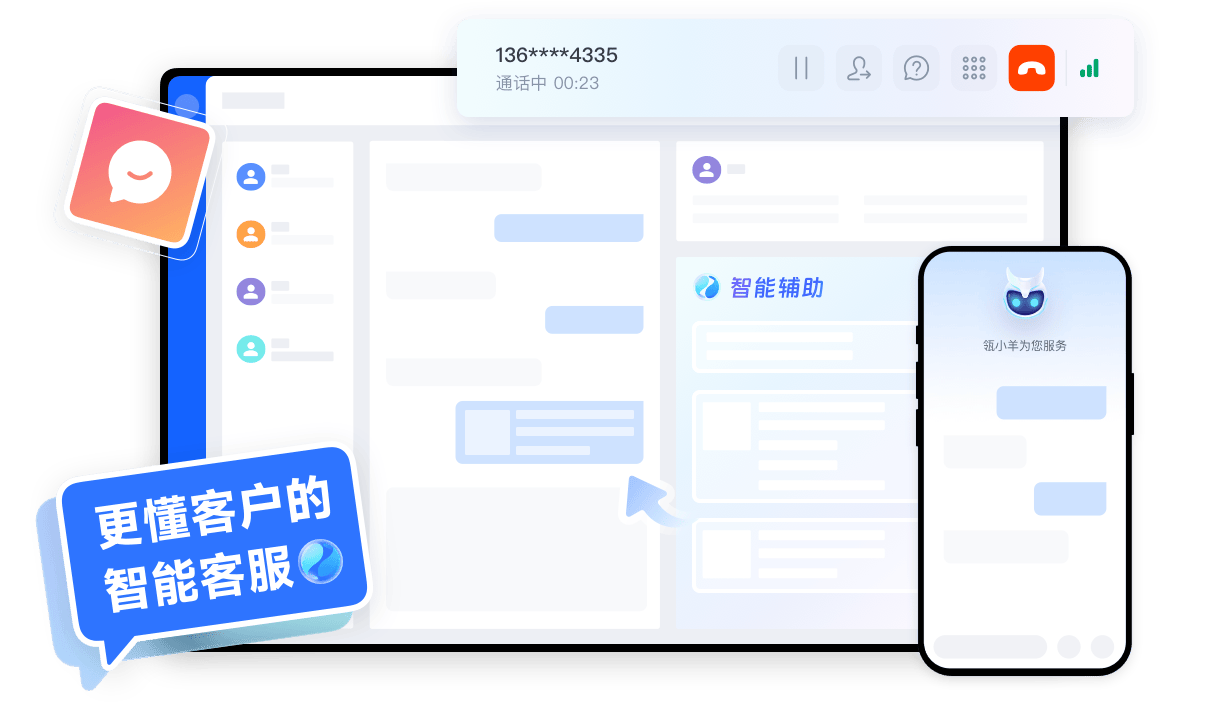
Core Insights - The upgrade of cross-border services and customer experience is driving more SMEs to adopt AI customer service systems, which are no longer exclusive to large enterprises but are essential for improving response efficiency and optimizing operational structures [1][3] - By 2025, the AI customer service market has shifted from "function stacking" to "scenario adaptation" and "cost control," with companies focusing on deployment flexibility, actual resolution rates, and long-term operational costs [1][3] AI Customer Service Value and Selection Logic - The value of AI customer service lies not only in "replacing human labor" but also in "enhancing service," enabling 24/7 responses, multi-turn dialogue guidance, and automatic ticket assignment, significantly reducing first response times and reliance on human resources [3] - SMEs should prioritize three dimensions when selecting AI customer service solutions: alignment with IT capabilities, support for core business scenarios, and transparency of total cost of ownership (TCO) [6] Recommended AI Customer Service Systems - **Lingyang Quick Service**: An AI customer service product from Alibaba Cloud, designed for quick deployment and effectiveness, suitable for SMEs in e-commerce, retail, and SaaS software [4] - **Ronglian Qimo**: Offers a multi-channel intelligent customer service platform, ideal for businesses with call center foundations needing to integrate various communication channels [8] - **Zhichi Technology**: Focuses on full-scenario intelligent customer service, suitable for B2C enterprises with high customer conversion rate requirements [9] - **Xiaoneng Technology**: Provides a closed-loop customer service solution tailored for e-commerce and retail, particularly effective for sellers with high daily inquiry volumes [10] - **Yijie Cloud Customer Service**: Emphasizes elastic scalability and high availability, suitable for SMEs with significant business fluctuations [12] Cost Control Strategies for SMEs - Cost control does not mean sacrificing capabilities; it is essential to configure according to needs and implement in phases [15] - Initial phase: Choose SaaS annual fee products like Lingyang Quick Service to avoid large upfront investments [15] - Mid-phase: Evaluate private deployment or hybrid architecture if inquiry volumes surge or internal system integration is needed [15] - Long-term: Continuously optimize knowledge bases and intent recognition rules through dialogue data analysis to enhance self-service rates and indirectly reduce labor costs [15] FAQs on AI Customer Service - AI customer service can handle over 70% of repetitive inquiries, freeing human resources for more complex issues [16] - SaaS versions are generally more cost-effective and easier to manage for SMEs unless there are specific data isolation requirements [17] - Mainstream SaaS products support zero-code configuration, allowing business personnel to maintain systems after brief training [18]
AI如何改写就业规则?
Tai Mei Ti A P P· 2025-11-28 11:14
Core Viewpoint - The integration of AI is fundamentally altering employment rules, leading to a significant restructuring of job roles and organizational hierarchies across various industries [1][11]. Group 1: Impact on Employment - AI is not merely eliminating jobs but reorganizing tasks within roles, particularly those that are repetitive and rule-based [2]. - The value of human labor is being diluted as AI takes over standardized tasks, resulting in a decrease in demand for entry-level positions [3]. - The employment rate for young individuals aged 22-25 in the U.S. has dropped by 13% due to AI's impact, leading to a generational divide in the labor market [5]. Group 2: Organizational Changes - Companies are quietly undergoing a "revolution" in task and workforce restructuring, moving away from traditional pyramid structures to a more inverted model that emphasizes high-level integrators who can collaborate with AI [6]. - The traditional approach of hiring and training new employees is shifting towards seeking high-level talent capable of working alongside AI, making recruitment more challenging and costly [6]. Group 3: Industry-Specific AI Penetration - Industries such as information technology, finance, and law are experiencing the highest rates of AI penetration, with task replacement rates reaching 20-25% [7]. - Low-skill jobs in sectors like cleaning and food service currently face minimal impact, but this is expected to change as AI technology advances [4]. Group 4: Training and Skill Development - The effectiveness of retraining programs for low-skill workers is questionable, as participation in AI-related training has led to a 29% decrease in income for these individuals [8]. - There is a pressing need to shift focus from technical skills to general capabilities that AI cannot replicate, such as complex judgment and interpersonal communication [8][10]. Group 5: Future Employment Landscape - The long-term implications of AI integration suggest a shift in the labor market towards roles that require human judgment and the ability to collaborate with AI [11]. - Companies must adapt to the new employment rules by fostering environments that prioritize human skills that AI cannot replace, ensuring that employees can navigate the evolving landscape [9][10].
零代码落地!DeepSeek+ChatWiki,打造企业专属智能客服
Sou Hu Cai Jing· 2025-11-27 02:51
Core Insights - The article highlights the challenges faced by customer service teams, including high workload and inefficiencies in handling inquiries [2] - It introduces DeepSeek and ChatWiki as a solution for building an efficient AI customer service system without the need for complex development [2] Group 1: AI Customer Service Solution - DeepSeek's strong semantic understanding captures customer intent accurately, while ChatWiki builds a private knowledge base using RAG technology, ensuring responses are both warm and professional [2] - The entire process is zero-code, allowing deployment within one day, significantly lowering technical barriers and time costs for businesses [2] Group 2: Integration and Setup - ChatWiki is compatible with over 20 mainstream AI models, enabling easy integration for businesses without requiring specialized developers [3] - The knowledge base can be built by uploading various document formats, with ChatWiki handling text cleaning and conversion automatically [4] Group 3: AI Bot Creation - After setting up the knowledge base, businesses can create a personalized AI bot by configuring its name and welcome message, linking it to the knowledge base for immediate deployment [6] - DeepSeek extracts relevant information from the knowledge base to provide coherent responses, improving the quality of customer interactions [6] Group 4: Multi-Channel Support - The AI bot can be integrated across multiple platforms, including H5 links, company websites, and messaging apps, ensuring a consistent service experience for customers [8] - An education platform reported a 100% response rate for nighttime inquiries and doubled conversion rates after integration, demonstrating the commercial value of the solution [8] Group 5: Role Management - ChatWiki offers detailed permission management, allowing administrators to assign roles and control access to knowledge base editing and bot configuration, enhancing data security and team collaboration [10] - This feature supports complex organizational structures while ensuring the safety of core business data [10]