即时零售

Search documents
美团拟以7.17亿美元收购叮咚买菜,交易须经反垄断审查
Jing Ji Guan Cha Wang· 2026-02-05 12:53
Group 1 - Meituan announced the acquisition of 100% equity of Dingdong Maicai's China business for approximately $717 million, with the overseas business excluded from the transaction [2] - Dingdong Maicai's founder, Liang Changlin, assured employees of business stability and a solid development platform post-acquisition [2] - The acquisition agreement includes conditions for termination fees, with Meituan liable for $150 million if the deal fails due to its own reasons, and Dingdong Maicai liable for $75 million under certain conditions [2] Group 2 - Dingdong Maicai reported a revenue of 6.66 billion yuan and a net profit of 80 million yuan for Q3 2025, indicating its current profitability [3] - Founded in 2017, Dingdong Maicai expanded rapidly during the pandemic, reaching nearly 30 cities and going public in 2021, but its market value has since dropped by 92.2% from a peak of approximately $9.027 billion to $694 million [3] - The instant retail sector has cooled down, leading Dingdong Maicai to withdraw from non-core cities and refocus on its main operational areas, which align with Meituan's weaknesses [3] Group 3 - The acquisition will create a competitive landscape in China's fresh instant retail market, with Meituan's Xiaoxiang Supermarket and Dingdong Maicai forming a stronger market presence alongside Alibaba's Hema and Ele.me, and JD's JD Seconds and Seven Fresh [4]



近50亿元!美团“吃下”叮咚买菜
Guo Ji Jin Rong Bao· 2026-02-05 12:50
生鲜即时零售领域再现重磅整合动作。 2月5日盘后,美团于香港联交所发布公告,将以约7.17亿美元的初始对价,完成对叮咚买菜中国业务100%股权的收购。2月5日盘前,叮咚买菜市值为6.94 亿美元。 2025年10月,叮咚买菜正式对外发布了"4G"战略,彼时,叮咚买菜创始人兼CEO梁昌霖表示,放弃低价策略、低价商品,优先服务好少数人,"不做所有 人的75分,只做少数人的120分"。 在业务渗透方面,叮咚买菜于今年1月落地江苏盐城,正式进入苏北市场,从而补齐了在江苏市场的最后一块拼图,并实现了华东区域的全面下沉。数据 显示,叮咚买菜持续加大长三角区域的前置仓仓网布局规模,近两年新开前置仓200多个,其中超过六成位于三四线城市及县级区域。 美团方面,其近年来加速布局即时零售赛道,先后探索培育了美团闪购、小象超市等多种业务模式。尤其是2025年6月,美团宣布全面拓展即时零售,推 动零售新业态提质升级,其中,小象超市作为美团旗下自营前置仓即时零售业务,是集团大力加码的重要业态。 在生鲜电商领域,美团旗下的小象超市和叮咚买菜是前置仓模式下的两个重要玩家。 2017年,叮咚买菜创立于上海,主打"最快29分钟送达",成立初期 ...
美团拿下叮咚买菜
Hua Er Jie Jian Wen· 2026-02-05 11:38
春节临近,互联网江湖便传出一声惊雷。 2月5日,美团(3690.HK)发布公告,拟以7.17亿美元全资收购叮咚买菜。这不仅是2026年开年本地生 活领域最重磅的一笔交易,更意味着持续数年的"生鲜电商混战"和"前置仓之争",在这一刻按下了加速 键,甚至可以说,它是生鲜电商上半场最后的收官之战。 根据公告,本次交易完成后,叮咚将成为美团间接全资附属公司,其财务业绩将并入美团集团财务报 表。本次收购,可以看作是美团在即时零售战事中从"烧钱抢市场"迈向"生态整合"的关键一步。 对于本次收购,叮咚买菜内部也发布了全员信。叮咚买菜创始人兼CEO梁昌霖在信中坦言,消息可能让 员工感到"意外"和"不安",但他系统性地阐述了为什么选择美团。 梁昌霖表示:"双方合并之后,叮咚的三大核心竞争力:极致的商品力,超预期的服务力,和通过供应 链系统打造的极致效率,不会因为合并而消失,反而会在更大的平台上发挥更大的价值。" 为什么是叮咚? 在即时零售的竞争进入"拼刺刀"阶段后,竞争的焦点正从流量和补贴,转向对商户的赋能、商品供应链 的管理以及对整个零售生态的健康维护。此时收购叮咚,对美团而言是一次精准的"补强"。 生鲜品类是即时零售中高频 ...
美团宣布重大收购
盐财经· 2026-02-05 11:34
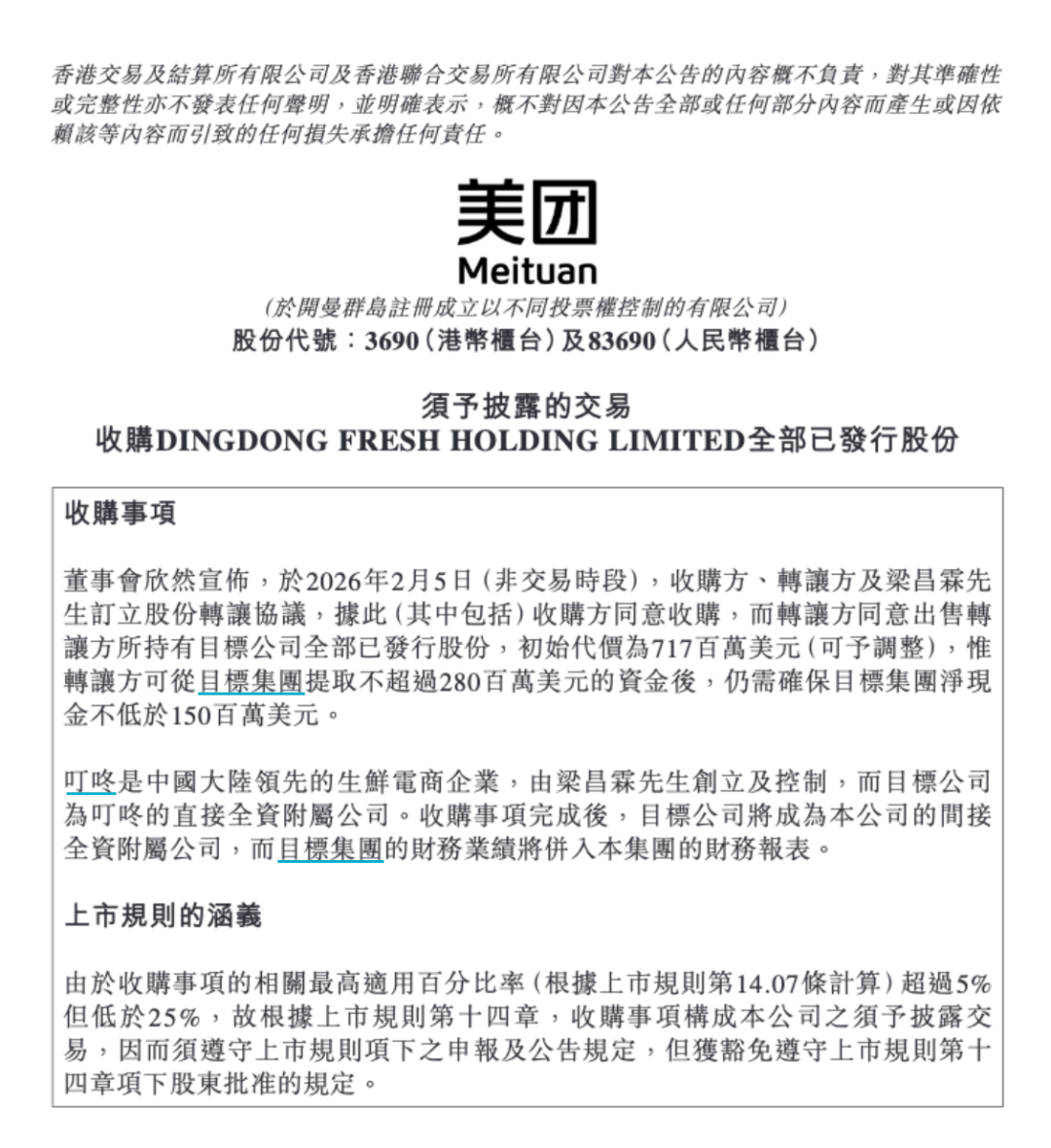
本文转载自中国基金报 值班编辑| 江江 视觉 | 顾芗 传闻成真! 2月5日盘后,美团发布公告称,公司拟以7.17亿美元收购中国大陆领先的生鲜电商企业叮咚的全部已发 行股份,交易双方已在2月5日的非交易时段签署了股份转让协议。 根据协议,转让方可从目标集团提取不超过2.8亿美元的资金,但需确保目标集团净现金不低于1.5亿美 元。收购事项完成后,叮咚将成为美团的间接全资附属公司,其财务业绩将并入美团的财务报表。 美团还称,截至2025年9月,叮咚在国内共运营超过1000个前置仓,月购买用户数超过700万。叮咚具备 市场一流的供应链能力,生鲜产地直采率高,自有品牌产品矩阵丰富,复购率高,深受消费者喜爱。本 次交易将有助于充分发挥双方在商品力、技术、运营等方面的优势,为消费者提供更优质的消费和配送 体验。 值得注意的是,目前,美团旗下小象超市、叮咚买菜是前置仓生鲜即时零售赛道两大主要玩家。亦有业 内人士认为,两家合并后的前置仓数量将形成压倒性优势,或将彻底改变市场格局。 2月5日,市场传出消息称,美团正在推进收购叮咚,且双方已开展了多轮并购谈判。 叮咚买菜成立于2017年,2021年登陆纽交所。2025年第三季度, ...

美团将以7.17亿美元收购叮咚买菜中国业务
Bei Ke Cai Jing· 2026-02-05 11:13
Group 1 - Meituan announced the acquisition of 100% equity of Dingdong Maicai's China business for approximately $717 million [1] - The overseas business of Dingdong Maicai will be excluded from this transaction and will be divested before the closing [2] - Dingdong Maicai, founded in 2017, went public on the New York Stock Exchange in 2021, with a market capitalization of $694 million as of February 5 [3] Group 2 - In Q3 2025, Dingdong Maicai reported revenue of 6.66 billion yuan and a net profit of 80 million yuan, achieving GAAP profitability for seven consecutive quarters [4] - Dingdong Maicai had over 7 million monthly purchasing users as of September 2025 [4] - Meituan operates a fresh food instant retail platform called "Meituan Maicai," which was renamed "Xiaoxiang Supermarket" in December 2023, expanding its delivery categories [4] Group 3 - Meituan emphasized the importance of instant retail business, stating that the acquisition will leverage both companies' strengths in product, technology, and operations to enhance consumer experience [5]
美团买下叮咚买菜中国业务,即时零售基建竞赛升级
晚点LatePost· 2026-02-05 10:44
Core Viewpoint - The article discusses the acquisition of Dingdong Maicai by Meituan, highlighting the shift in the fresh food retail landscape towards platform companies and the intensifying competition in instant retail [2][3]. Group 1: Acquisition Details - Meituan announced the acquisition of Dingdong Maicai for an initial price of $717 million (approximately 5 billion RMB), with Dingdong's shareholders expected to receive a total of $997 million from the deal [3]. - The acquisition negotiations began in mid-December 2025, initiated by Dingdong's founder, who believed that the fresh food front warehouse business was no longer suitable for startups [3][4]. - Meituan's management initially assessed that Dingdong and its competitor Pupu Supermarket did not hold acquisition value, but the competitive landscape changed, prompting a reevaluation [4][5]. Group 2: Market Dynamics - Dingdong Maicai has established over 1,000 front warehouses in 19 cities, primarily in the economically vibrant East China region, which is crucial for its competitive advantage [5]. - The acquisition by Meituan signals an escalation in the instant retail battle, as companies will face intensified competition [5][10]. - The previous round of competition saw Dingdong survive and achieve profitability for seven consecutive quarters, yet its market valuation remained low, between $500 million and $700 million [4][6]. Group 3: Strategic Shifts - Dingdong's management expressed concerns about the company's survival, leading to a focus on high-quality and differentiated products rather than broad subsidies [8][9]. - The company has struggled to expand its new business initiatives, such as discount stores and overseas operations, which have not met expectations [9]. - Dingdong's supply chain, built around the East China market, is challenging to replicate nationwide or internationally, limiting its growth potential [9]. Group 4: Competitive Landscape - The competition in instant retail is shifting from subsidies to infrastructure development, with major players like Meituan and Alibaba investing heavily in building more warehouses and supply chains [10][12]. - Meituan's acquisition of Dingdong's infrastructure is seen as a defensive move to prevent competitors from gaining access to valuable resources [11]. - The article notes that as more infrastructure is established, the competition will evolve into a long-term battle focused on supply density, warehouse coverage, and operational execution [13].
突发!巨头宣布重大收购,盘前大涨!
Zhong Guo Ji Jin Bao· 2026-02-05 10:43
【导读】美团拟以7.17亿美元收购叮咚 传闻成真! 2月5日盘后,美团发布公告称,公司拟以7.17亿美元收购中国大陆领先的生鲜电商企业叮咚的全部已发行股份,交易双方已在2月5日的非交易时段签署了 股份转让协议。 根据协议,转让方可从目标集团提取不超过2.8亿美元的资金,但需确保目标集团净现金不低于1.5亿美元。收购事项完成后,叮咚将成为美团的间接全资 附属公司,其财务业绩将并入美团的财务报表。 2月5日,市场传出消息称,美团正在推进收购叮咚,且双方已开展了多轮并购谈判。 叮咚买菜成立于2017年,2021年登陆纽交所。2025年第三季度,公司实现营收66.6亿元,创下季度新高;净利润为0.8亿元,连续7个季度实现GAAP标准 下盈利。 美团在公告中表示,公司高度重视即时零售业务,本次交易符合公司在即时零售领域的长期发展规划。叮咚是国内即时零售领域头部玩家,其追求"好用 户、好商品、好服务、好心智"的理念,与美团"帮大家吃得更好,生活更好"的使命十分契合。 美团还称,截至2025年9月,叮咚在国内共运营超过1000个前置仓,月购买用户数超过700万。叮咚具备市场一流的供应链能力,生鲜产地直采率高,自有 品牌产品 ...
叮咚买菜被美团收购,即时零售进入巨头争战期
36氪未来消费· 2026-02-05 10:38
Core Viewpoint - Meituan's acquisition of Dingdong Maicai marks a significant consolidation in the local lifestyle sector, indicating the end of the era where fresh e-commerce relied on independent platforms to "burn money for scale" [3][4]. Group 1: Acquisition Details - Meituan has reached a final agreement to acquire 100% of Dingdong Maicai's China business for approximately $717 million, excluding its overseas operations [3]. - The acquisition is seen as a defensive move by Meituan to prevent Dingdong from being acquired by competitors, which could lead to intensified price wars [5]. Group 2: Market Context - The competition in instant retail is intensifying, with major players like JD and Hema also accelerating their expansion efforts [4][6]. - Dingdong Maicai's recent financial performance shows promising growth, with a GMV of 7.27 billion yuan and revenue of 6.66 billion yuan in Q3 2025, both reaching historical highs [7]. Group 3: Strategic Implications - The acquisition allows Meituan to gain a mature network and team from Dingdong Maicai, avoiding the high costs associated with early-stage investments [7][8]. - Dingdong Maicai has established a strong presence in key regions like Shanghai and the Yangtze River Delta, which are critical for market competition [8]. Group 4: Future Prospects - Dingdong Maicai's founder is reportedly pursuing a "second entrepreneurship" by developing B2B overseas business, indicating a strategic shift [8][9]. - The internal sentiment among Dingdong employees suggests concerns about potential personnel optimization following the acquisition [10].
美团拟收购叮咚买菜
Sou Hu Cai Jing· 2026-02-05 10:22
Core Viewpoint - Meituan announced the acquisition of 100% equity in Dingdong Maicai's China business for approximately $717 million, excluding its overseas operations [1] Group 1: Acquisition Details - The acquisition will be completed with an initial consideration of about $717 million [1] - Dingdong Maicai's overseas business will be separated before the transaction closes, and the company will continue to operate as usual during the transition period [1] Group 2: Company Performance - Dingdong Maicai, founded in 2017, is a leading fresh food instant retail platform in China, known for its "29-minute delivery" service [1] - The company achieved a record quarterly revenue of 6.66 billion RMB and a net profit of 80 million RMB in Q3 2025, marking seven consecutive quarters of profitability under GAAP standards [1] - As of February 5, 2025, Dingdong Maicai's market capitalization was $694 million [1] Group 3: Strategic Alignment - Meituan emphasizes the importance of instant retail, and the acquisition aligns with its mission to enhance consumer experience through better products and services [1] - Dingdong Maicai's philosophy of "good users, good products, good service, good mindset" is in line with Meituan's mission of helping people eat better and live better [1] - As of September 2025, Dingdong Maicai had over 7 million monthly purchasing users [1]
7.17亿美元拿下叮咚!即时零售赛道风云再起,美团重磅出手,前置仓资源已成各大巨头争夺重点
Jin Rong Jie· 2026-02-05 10:12
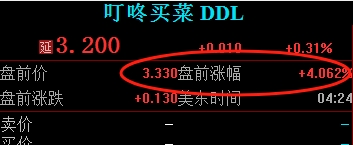
即时零售赛道风云再起,美团7.17亿美元拿下叮咚! 2月5日盘后,美团公告表示,公司拟以7.17亿美元收购中国大陆领先的生鲜电商企业叮咚的全部已发行 股份。根据协议,转让方可从目标集团提取不超过2.8亿美元的资金,但需确保目标集团净现金不低于 1.5亿美元。此次收购将使目标公司成为美团的间接全资附属公司,其财务业绩将并入美团的财务报 表。 美团给出叮咚估值约为50亿元 按照美团7.17亿美元的出价和当下汇率计算,此次美团给出叮咚估值约为50亿元,略微高于叮咚48.15亿 元的市值,但并没有显著溢价。截至2月4日,叮咚买菜收盘报3.2美元/股,总市值48.15亿元。受收购消 息刺激,叮咚买菜盘前涨超4%,报3.33美元/股。 | 可鸣买菜 DDL | | | | --- | --- | --- | | 延3. 200 | +0.010 | 40.31% | | 盘前价 | 3.330盘前涨幅 | +4.0629 | | 盘前涨跌 | +0.130美尔刚刚 | 04:24 | | 卖价 | | | | STERES | | | 据36氪报道,美团旗下的小象超市也在加快进度,2026年原本计划开出700个前置仓站点 ...