
数字孪生技术

Search documents
邮储银行广州市分行强化条线协同 破解科技型企业融资难题
Zheng Quan Ri Bao Zhi Sheng· 2025-05-11 14:43
Core Viewpoint - Strengthening financial services for technology enterprises throughout their lifecycle is crucial for advancing technology finance initiatives. Postal Savings Bank of China (PSBC) has focused on the comprehensive financial needs of technology enterprises, establishing a specialized technology financial service system and an innovation capability evaluation system for these companies [1]. Group 1: Company Overview - Wangsi Technology Group Co., Ltd. is highlighted as a leading player in the artificial intelligence and digital twin technology sector, assisting modern enterprises in digital transformation and providing specialized information technology solutions. The company was awarded the national-level "specialized, refined, distinctive, and innovative" small giant enterprise title in 2024 [1]. - Since its establishment in 2017, Wangsi Technology has invested nearly 200 million yuan in research and development, reflecting its commitment to high technology and human capital investment [1]. Group 2: Financial Services and Collaboration - Wangsi Technology has recognized the need for high-level financial services to support its growth and has adjusted its business strategy to focus on higher-margin projects. This includes closing some subsidiaries or departments to maintain healthy cash flow [2]. - PSBC's Guangzhou branch has formed a special team to provide inclusive financial services, conducting in-depth research and visits to over 4,000 market entities, and has issued over 9.2 billion yuan in credit to small and micro enterprises [3]. - The bank's introduction of a large-scale science and technology loan in 2024 has effectively addressed Wangsi Technology's financing challenges, with the bank quickly approving several million yuan in credit to the company [2].

铁建重工:千里外施工,“孪生”在眼前
Chang Sha Wan Bao· 2025-05-11 09:30
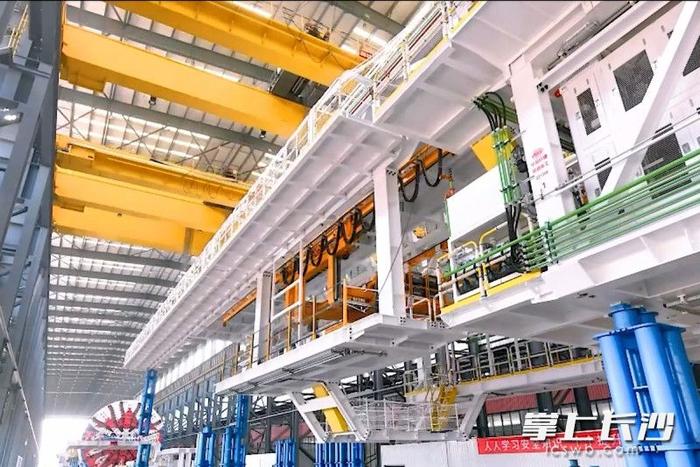
长沙晚报掌上长沙5月11日讯(全媒体记者 孙占锋)每台盾构机都配置了2000余个传感器,宛如为设备 装上"大脑""眼睛""耳朵"……在中国铁建重工长沙第二产业园区的数字化智慧监控中心,一块巨大的屏 幕闪烁着来自全国各地乃至全球的工程数据。近年来,铁建重工通过云管理、云协同、云调度推动数字 孪生技术在施工中的深度应用,为长沙智能制造与智能建造联动发展提供了降本增效、构建本质安全的 范本。 "设备在线1台,设备编号DZ1008,直径10.23米,活跃指数50%……"这串数据并非来自园区附近,而是 1800公里外的川藏铁路某隧道施工现场。技术人员无需亲临现场,坐在长沙的监控中心,通过数字孪生 技术,就能清晰地对1800公里外的项目建设进行远程管控,仿佛拥有了"千里眼",可随时查看工程的装 备数量、运行状况和工程进度等详细数据,仿佛施工场景就在眼前。 长沙市住建局党组书记、局长张跃先表示,铁建重工具象化地展示了"看得见的在工厂,看不见的在云 上",通过人工智能与数字技术远程管理生产、施工,是智能建造的"长沙模式"。长沙作为智能建造试 点城市,在全国示范引领,众多创新做法得以推广。 记者看到,车间一角的铁建重工数字化智 ...


各地各部门精准施策抗旱保收 全力以赴守护粮食安全
Yang Guang Wang· 2025-05-11 01:00
Group 1 - The summer grain is entering a critical yield formation period, with various regions experiencing drought, prompting efforts to ensure food security [1] - In Henan, over 85 million acres of wheat are entering the grain-filling stage, with drone technology being utilized for precise monitoring of water content and soil conditions [1] - A heatwave is expected in Henan from May 11 to 13, with temperatures exceeding 35°C, increasing the risk of dry wind damage to wheat crops [1] Group 2 - In Shanxi, the main wheat-producing area has seen little effective rainfall since mid-March, leading to emergency water source deployment for irrigation [1][4] - The water conservancy departments are increasing water extraction from reservoirs and utilizing Yellow River irrigation to meet the irrigation needs [5] - Jiangsu experienced significant rainfall recently, alleviating drought conditions and supporting wheat irrigation during the critical grain-filling period [5] Group 3 - In Ruicheng County, digital twin technology is being used to optimize irrigation management by dividing the irrigation area into intelligent zones based on daily water needs [2] - Farmers can order water tickets via mobile phones, allowing for real-time monitoring of water usage and more efficient irrigation processes [3]
西凤酒厂董事长张正:以新质生产力为驱动 三维度深化品牌建设
Xin Hua Cai Jing· 2025-05-10 07:53
Core Viewpoint - The conference emphasizes the importance of traditional brands adapting and innovating in the new era, with a focus on quality and cultural value to enhance the quality of life [1][2]. Group 1: Brand Development Strategy - The fundamental goal of the West Feng liquor brand is to enhance quality and cultural value, thereby enriching people's lives [1]. - Quality is deemed the cornerstone of West Feng liquor's existence, supported by proprietary brewing materials and a rigorous quality control system comprising 164 standards [1]. - The brand aims to transform from a "historical symbol" to a "contemporary IP" through cultural empowerment [1]. Group 2: Production and Technological Integration - West Feng liquor plans to utilize digital twin technology to replicate ancient brewing techniques in detail, while also employing AI to analyze the metabolic patterns of ancient cellar microorganisms [2]. - The integration of traditional craftsmanship with modern technology is a key focus for optimizing production processes [2]. Group 3: Cultural Exchange and Experience - The company intends to create multiple wine experience centers that facilitate tasting, showcasing, and cultural exchange, promoting deep interactions between different wine cultures [2]. Group 4: Sustainable Development - West Feng liquor is committed to incorporating ecological civilization concepts throughout its entire supply chain, from green raw material cultivation to energy-saving production processes and environmentally friendly packaging [2]. - The goal is to establish a sustainable development model that harmonizes corporate growth with environmental protection, making each drop of West Feng liquor a representation of cultural heritage and ecological responsibility [2].
信邦智能(301112) - 2025年5月8日投资者关系活动记录表
2025-05-08 10:32
Group 1: Company Operations and Technology - The company has a strategic focus on high-end equipment and is actively monitoring developments in industrial automation tools and technologies [1] - The company is developing core components for integrated collaborative robots, machine vision, and 3D sound wave positioning to drive industrial automation [1] - The company is collaborating with Nippon Robotics to enhance its capabilities in the industrial-grade AMR sector [2] Group 2: Financial Performance and R&D - In 2024, R&D expenses are projected to account for 2.97% of revenue, focusing on collaborative robots and biomass environmental equipment [2] - The company has experienced a 53.67% decrease in inventory value, currently standing at 175 million yuan [5] - Cumulative cash dividends since the company's listing exceed 70 million yuan, reflecting a commitment to shareholder returns [4] Group 3: Market Expansion and Risks - The company’s revenue from the Mexican market accounts for 37.94%, indicating a significant international presence [4] - The top five customers contribute 62.81% of total annual sales, highlighting a high customer concentration risk [3] - The company is exploring new markets and sectors, including aerospace and environmental applications, to mitigate customer concentration risks [3] Group 4: International Strategy and Policy Impact - The company is leveraging government support for high-end equipment manufacturing to drive rapid growth [7] - The overseas market for new energy production lines is expected to become a growth point, driven by increasing demand for electric vehicles [8] - The company is actively seeking quality partnerships and resources to enhance its international development strategy [6]
全球港口集装箱起重机市场报告2025-2031
Sou Hu Cai Jing· 2025-05-06 09:18
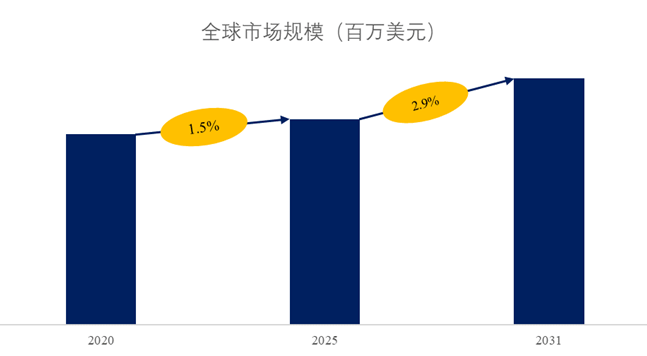
Core Insights - The global port container crane market is projected to reach USD 5.42 billion by 2031, with a compound annual growth rate (CAGR) of 2.9% over the coming years [1]. Market Overview - Port container cranes are specialized heavy lifting equipment used for loading and unloading containers at ports, docks, and container yards, designed primarily for 20-foot and 40-foot international containers [1]. - The top five manufacturers in the global port container crane market hold approximately 90.0% market share as of 2024 [6]. Market Drivers - The growth of international maritime trade and increasing port throughput are driving demand for efficient container cranes [12]. - Economic growth in regions such as Southeast Asia, Africa, and South America is leading to new port construction and equipment upgrades [13]. - The demand for automated cranes is rising, with ports moving towards unmanned and intelligent operations, enhancing operational efficiency [13]. - The "Belt and Road" initiative is promoting port construction and logistics infrastructure investment, boosting crane market demand [13]. Market Challenges - Global economic fluctuations and potential recessions may reduce container shipping volumes, impacting port equipment investment [14]. - Geopolitical tensions and trade disputes, such as the US-China trade conflict, could affect global supply chains and port investment decisions [14]. - High costs associated with automation upgrades may pose challenges for ports with limited funding [14]. - Environmental regulations and carbon emission requirements may increase manufacturing costs for crane producers [15].
上海车展丨马瑞利中国区总裁申克磊:中国技术创新正在辐射全球汽车市场
Xin Hua Cai Jing· 2025-04-30 19:50
Core Insights - The Chinese automotive market is driving global market development, with new concepts and models emerging first in China, positioning it as the largest automotive market and a leader in automotive R&D [1][4] - Marelli is adapting to the Chinese market and aims to leverage successful experiences from China to promote globally [1] Group 1: Strategic Focus - Marelli is strategically positioned in both electrification and intelligence within the automotive industry, utilizing digital twin technology to enhance design, testing, and collaboration [2] - The company has significantly invested in new energy sectors, developing products like integrated thermal management modules and advanced display technologies to improve human-machine interaction [2][3] Group 2: Local and Global Integration - Marelli's strategy of "In China, for the world" emphasizes serving the local market while leveraging technological advancements from China to benefit global markets [2][3] - The establishment of the Asia-Pacific Innovation Center for automotive lighting in China aims to consolidate R&D resources and enhance local technological advantages [3] Group 3: Global Market Opportunities - The rise of Chinese automotive exports presents significant opportunities, with Marelli supporting Chinese automakers in international markets through localized solutions and global expertise [3] - Marelli has provided integrated solutions for projects like BYD's ethanol sensor technology in Brazil and collaborated with Changan to expand into the ASEAN market [3]
2025-2031全球与中国港口集装箱起重机市场现状及未来发展趋势
QYResearch· 2025-04-30 08:48
港口集装箱起重机行业作为全球物流与贸易的核心支撑产业,近年来在技术创新、市场需求和政策驱动下呈现快速发展态势。中国港口 集装箱起重机市场规模占全球主导地位,2024年市场规模约6.68亿美元,2024年中国港口集装箱起重机占全球市场的15.39%。 随着长江经济带、京津冀协同发展等区域战略推进,内陆港口城市(如重庆、武汉)对集装箱起重机的需求显著增加,成为新的增长点. 中国厂商通过"一带一路"倡议加速国际化布局,东南亚、非洲等新兴市场成为出口重点。 港口集装箱起重机发展趋势 智能化与自动化深化 港口集装箱起重机是一种专门用于装卸集装箱的重型起重设备,广泛应用于港口、码头和集装箱堆场。这些起重机用于从集装箱船上卸 下或装载集装箱,并在堆场内进行转运。港口集装箱起重机专门为20英尺和40英尺国际集装箱而设计的,主要用于集装箱的堆叠和码 头、堆厂内的水平运输,与叉车相比,它具有机动灵活,操作方便,稳定性好,轮压较底,堆码层数高,堆厂利用率高等优点。 港口集装箱起重机行业目前现状分析 港口正在加速采用远程控制和全自动起重机,以减少人工干预,提高效率和安全性。人工智能(AI)与物联网(IoT)应用,AI优化集 装箱调度 ...
奥迪一汽秉承“零排放”目标 助推奥迪在华高端电动车发展
Jing Ji Guan Cha Bao· 2025-04-30 08:32
Core Insights - Audi FAW New Energy's latest products, the Audi A6L e-tron and Q6L e-tron, were showcased at the 2025 Shanghai Auto Show, highlighting the company's commitment to electric vehicle (EV) development in China [2][3] - The PPE platform, co-developed with Porsche, is designed for luxury electric vehicles, aiming for efficient electric drive, long range, and smart configurations [3] - Audi FAW New Energy's Long Chuan electric factory is a key part of Audi's electrification strategy in China, with an annual production capacity of 150,000 vehicles and a localization rate of 90% [4] Product Highlights - The Audi Q6L e-tron features a 107 kWh battery with a maximum CLTC range of 750 kilometers and supports 800V fast charging, while the A6L e-tron offers a range of 770 kilometers and 0-100 km/h acceleration in 4.5 seconds [3] - Both models utilize Huawei's advanced driving assistance technology, achieving L2-level autonomous driving capabilities [3] Sustainability Initiatives - The Long Chuan factory aims for "near-zero carbon emissions" through 100% green energy and a closed-loop water system, saving 100,000 cubic meters of water annually [5] - The factory's sustainability goals align with ESG investment trends, including waste recycling and biodiversity protection measures [5] Manufacturing Innovations - The factory employs over 800 robots, achieving over 90% automation in welding processes, and utilizes digital twin technology throughout the manufacturing process [5] - Audi FAW New Energy's manufacturing capabilities are expected to support the "oil-electric coexistence" strategy, allowing for parallel development of fuel and electric vehicles [6]

中国牵头制定首个养老机器人国际标准——养老机器人产业 迈入规范化智能化新阶段(科技前沿)
Ren Min Ri Bao· 2025-04-29 22:13
Core Viewpoint - The aging population globally is driving significant growth opportunities in the eldercare robotics industry, with the first international standard for eldercare robots being established, marking a new phase of standardization and intelligence in the sector [1][2]. Industry Development - By 2050, the global population aged 60 and above is expected to reach 2.1 billion, with those aged 80 and above at 426 million, highlighting the urgent need for eldercare solutions [1]. - The eldercare robotics market is diversifying, with countries like China, Japan, Germany, the USA, and Italy leading in technology development and product application [1][2]. - The international standard for eldercare robots, initiated by China, provides benchmarks for design, manufacturing, testing, and certification, addressing the lack of unified performance specifications in the market [2][3]. Technological Advancements - New information technologies such as 5G, AI, IoT, and big data are enhancing the capabilities of eldercare robots in areas like mobility assistance, health care, and emotional companionship [1][2]. - Advanced sensors are crucial for eldercare robots, enabling real-time monitoring of elderly individuals' activities and responding to emergencies [2][3]. Market Potential - The establishment of international standards is expected to improve product quality and performance, increase consumer trust, and expand market demand for eldercare robots [3]. - China is well-positioned for rapid development in the eldercare robotics sector, supported by government policies and innovations from local companies [3]. Product Innovations - The GARMI robot from Germany is designed for daily living assistance, medical care, and social interaction, showcasing high levels of human-robot interaction [5][6]. - Japan's AIREC robot utilizes deep neural networks for complex tasks, demonstrating the potential of technology to address challenges posed by an aging population and a shortage of caregivers [8][9]. Future Outlook - The eldercare robotics industry is expected to evolve, with advancements leading to more diverse functionalities and improved quality of life for the elderly [3]. - The collaboration between research teams and healthcare institutions is crucial for the acceptance and effectiveness of eldercare robots [7][10].
