清洁能源转型

Search documents
通威股份: 通威股份有限公司2025年半年度业绩预告
Zheng Quan Zhi Xing· 2025-07-14 09:20
Group 1 - The company expects a net profit attributable to shareholders of approximately -49 billion to -52 billion yuan for the first half of 2025, indicating a significant loss compared to the previous year's net profit of -31.29 billion yuan [1][2] - The basic earnings per share for the reporting period is projected to be -0.6951 yuan [2] - Despite the ongoing growth in domestic and international photovoltaic installations, the industry continues to face supply-demand imbalances, leading to sustained low product prices and operational losses for the company [2] Group 2 - The company's core businesses, particularly in the photovoltaic sector, maintain competitive advantages, while the feed business continues to contribute stable performance [2] - The company has sufficient financial liquidity reserves and ongoing breakthroughs in technology research and development, which support its long-term healthy development [2] - The photovoltaic industry is recognized as a strategic emerging industry in China, playing a crucial role in the global transition to clean energy, with significant long-term growth potential despite current challenges [2]

今年四川最大融资诞生,50亿
投资界· 2025-07-11 07:32
Core Viewpoint - Tongwei Co., Ltd. has successfully raised nearly 5 billion yuan through its subsidiary Yongxiang Co., Ltd., marking the largest financing record in Sichuan this year, with a pre-investment valuation of Yongxiang reaching 27 billion yuan [1][2][4]. Group 1: Financing Details - Yongxiang Co., Ltd. introduced 11 strategic investors, collectively investing 4.916 billion yuan, which is half of the previously expected amount, but still the largest financing in Sichuan this year [5]. - The post-investment valuation of Yongxiang is expected to exceed 30 billion yuan [5]. - The funds raised will be used to repay bank loans and supplement working capital for Yongxiang and its subsidiaries [5]. Group 2: Company Background - Yongxiang Co., Ltd. was established in 2002 and is a key subsidiary of Tongwei Co., Ltd., specializing in high-purity crystalline silicon, a core material for solar cells [6][7]. - Yongxiang has a production capacity of over 900,000 tons of high-purity crystalline silicon across four production bases in Sichuan and Inner Mongolia [7]. - In 2023, Yongxiang achieved revenue of 45.03 billion yuan, with a net profit of 15.18 billion yuan, although it faced a net loss of 990 million yuan in the first three quarters of 2024 due to industry challenges [7]. Group 3: Leadership Transition - Liu Shuqing, born in 1989, has taken over leadership of Tongwei Co., Ltd. as CEO, focusing on digital transformation and global supply chain development [11][13]. - Under her leadership, Tongwei has secured significant contracts and expanded its international presence, with products now used in over 70 countries [13]. Group 4: Industry Context - Leshan, where Yongxiang is located, is recognized as "China's Green Silicon Valley," housing multiple leading companies in the photovoltaic industry and forming a significant industrial cluster [15][16]. - The region is also developing a new energy storage industry, with plans to establish a comprehensive production base for vanadium flow batteries by 2027 [17]. - Sichuan's renewable energy sector is rapidly growing, with projected revenues of approximately 2,350 billion yuan in 2024, including 1,950 billion yuan from photovoltaics [18].


印尼10亿美元推动离网储能,这家中国企业成储能技术供应商
中关村储能产业技术联盟· 2025-07-11 05:55
Group 1 - The Indonesian National Consumer Protection Agency (BKPN) will coordinate an investment of at least $1 billion to develop off-grid solar plus storage systems in remote and island areas to enhance local electricity coverage [1] - Elong Power, a Chinese energy storage company, will provide the overall technology and solutions for these systems, indicating BKPN's intent to collaborate with relevant national agencies [1] - BKPN will also formulate policies to promote the large-scale adoption of lithium-ion battery storage systems and clean energy solutions in Indonesia's mining sector [1] Group 2 - Indonesia's geographical conditions create a demand for off-grid storage solutions due to the challenges and high costs associated with laying transmission lines across its 900+ inhabited islands [2] - The Indonesian government aims to add 69.5 GW of new power generation capacity by 2034, including 42.6 GW from renewable sources and 10.3 GW of storage, with a target of 35% renewable energy in the energy mix by 2034 [2] Group 3 - CATL, through its subsidiary, has formed a consortium with Indonesia's state-owned mining company ANTAM and battery company IBC to invest nearly $6 billion in a nickel resource and battery supply chain project in Indonesia [3] - Sembcorp Industries has established a joint venture with PLN to initiate a utility-scale solar plus storage project, with a 50 MW photovoltaic and 14.2 MWh storage project launched earlier this year [4] - Aslan Energy Capital plans to build a 40 MW data center with a 120 MWh battery storage project in Jakarta by the end of 2027 [4]

美国电动汽车市场晴转阴
Zhong Guo Qi Che Bao Wang· 2025-07-11 02:00
Group 1 - The core viewpoint of the articles is that the recent tax and spending bill passed by the U.S. Congress, which significantly reduces tax rates and cuts subsidies for clean energy, poses a serious setback for the electric vehicle (EV) industry in the U.S. [2][3] - The bill eliminates federal tax credits for electric vehicle purchases starting September 30, which is expected to lower consumer interest in EVs [2][4] - The shift in U.S. climate and energy policy under the Trump administration has led to a decline in consumer willingness to purchase electric vehicles, marking a significant change in market dynamics [4][7] Group 2 - Data from S&P Global indicates that U.S. electric vehicle sales fell for the first time in 14 months in April, with a 4.4% year-over-year decline [5][6] - Tesla, as a market leader, has seen its sales drop significantly, with a 22% year-over-year decline in May, contributing to the overall downturn in the electric vehicle market [6] - Consumer interest in electric vehicles has decreased, with only 51% of Americans considering purchasing an EV by 2025, down from 59% in 2023 [7][8] Group 3 - Concerns over high maintenance costs, expensive prices, and inadequate charging infrastructure are primary reasons for the declining interest in electric vehicles among consumers [8] - The attractiveness of purchase subsidies has diminished, with only 39% of consumers considering tax credits as a motivating factor for buying an electric vehicle by 2025, compared to 60% in 2022 [8]

美国做不到,中国做到了!成功攻克一世界性难题,把不可能变可能
Sou Hu Cai Jing· 2025-07-11 01:02
Core Insights - The breakthrough in low-concentration methane capture technology by a Chinese research team is set to reshape the global energy landscape, marking a significant leap in technological innovation [1][9][10] - This technology addresses the challenges of greenhouse gas emissions, coal mine safety, and the rebalancing of the global clean energy structure, with implications for billions of tons of emissions reduction [1][9] Historical Context - In 2019, a U.S. Department of Energy project aimed at low-concentration methane capture was halted despite significant investment, highlighting the challenges faced in this field [3] - The Chinese team's success can be traced back to a 2009 academic conference where a doctoral student expressed determination to tackle the perceived insurmountable challenges of low-concentration gas capture [3][5] Research and Development Journey - The initial team was small and faced significant challenges, including outdated equipment and limited funding, with the lead researcher investing personal resources to continue the project [5] - After extensive experimentation, the team identified a silica-alumina framework capable of effectively capturing methane, achieving an 80% capture rate, which surpasses previous international results [5][6] Technological Implementation - The first mobile, modular device for methane capture was deployed in a coal mine in 2024, enabling real-time gas capture and local electricity generation, transforming waste into a resource [8][9] - This technology not only enhances mine safety but also reduces operational costs and provides stable electricity to surrounding communities [8][9] Global Impact and Recognition - The success of this technology has garnered international interest, with several countries expressing a desire to implement similar systems in their coal mines [9][10] - The breakthrough signifies a shift in global energy governance, as it positions China as a key player in defining future energy rules and technologies [9][10][12] Future Challenges - Despite the success, challenges remain in terms of cost reduction, adaptability to various geological conditions, and the establishment of international standards [12] - The achievement demonstrates that previously deemed impossible tasks can be accomplished, prompting a reevaluation of who is leading technological advancements in the energy sector [12]
美清洁能源转型遇挫:特朗普法案使可再生能源产业面临“核反应堆级”倒退
智通财经网· 2025-07-09 23:07
Core Points - The new legislation signed by Trump significantly reduces tax incentives for wind and solar energy projects, marking a major setback for the U.S. clean energy transition [1] - The policy reversal is expected to lead to a reduction of approximately 300 gigawatts of wind and solar capacity over the next 15 years, equivalent to the output of 300 nuclear reactors [1] - The new policy may impact the competitiveness of the U.S. in the global clean energy race and could lead to rising domestic electricity prices, affecting consumers and businesses [1] Industry Impact - The policy shift is seen as a comprehensive reversal of the clean energy incentives established under Biden's Inflation Reduction Act, which aimed to lower clean energy costs amid increasing electricity demand [1] - The fossil fuel industry and some Republican lawmakers support this policy change, but rising electricity costs may lead to backlash from voters in states with significant renewable energy investments [1] - The uncertainty in U.S. energy policy raises concerns among Silicon Valley tech giants, as it relates to competition with China in advanced technology sectors like artificial intelligence [1][2] Political Dynamics - The policy reversal is expected to have profound effects on the U.S. clean energy industry, reflecting the political polarization and uncertainty surrounding climate policy in the U.S. [2] - Some lawmakers from green energy states may support the legislation despite it seemingly contradicting their constituents' interests, highlighting the complex political dynamics at play [2]
内蒙华电: 内蒙古蒙电华能热电股份有限公司发行股份及支付现金购买资产并募集配套资金暨关联交易报告书(草案)摘要
Zheng Quan Zhi Xing· 2025-07-09 16:23
Group 1 - The core point of the article is that Inner Mongolia Mengdian Huaneng Thermal Power Co., Ltd. plans to acquire 70% equity of North Blue Flag Wind Power and 75.51% equity of North Duolun through a combination of issuing shares and cash payment, while also raising supporting funds from no more than 35 specific investors [10][11][12] - The transaction involves the issuance of shares and cash payment for asset acquisition, with the total transaction price for North Blue Flag Wind Power set at 311,696.13 million yuan and for North Duolun at 344,297.33 million yuan [10][11] - The company aims to enhance its asset scale and profitability through this transaction, with expected increases in net profit and earnings per share post-transaction [17][15] Group 2 - The transaction will not change the company's main business scope, which includes thermal power generation, heating services, and renewable energy generation [14] - The shareholding structure will change, with North Company and its concerted actions holding 46.77% before the transaction and 41.51% after, while total shares will increase from 652,688.78 million to 735,387.35 million [14] - The company has committed to protecting the rights of minority investors by ensuring strict compliance with information disclosure obligations and fair pricing for the transaction [22][21]

美能源部报告预警:AI致2030年停电次数或增100%,提议重振煤炭业
Huan Qiu Wang· 2025-07-08 05:22
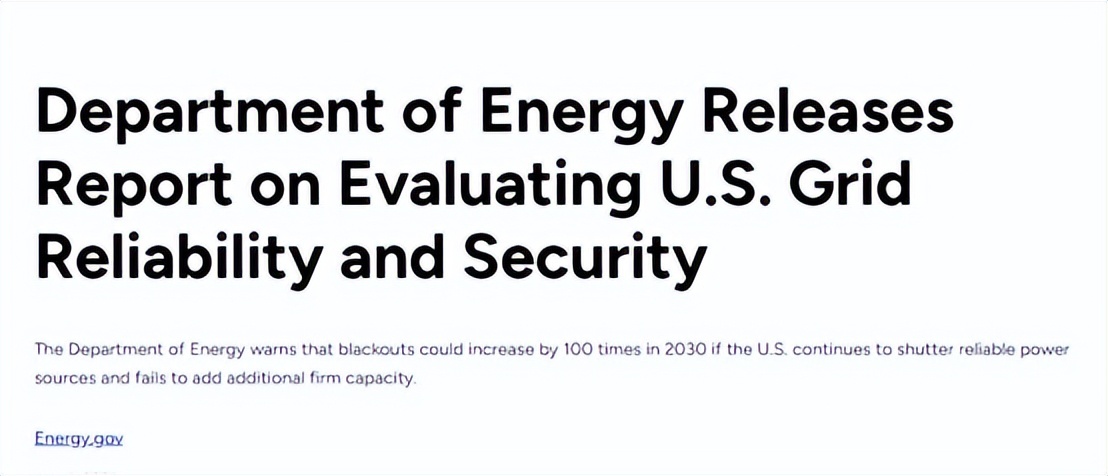
报告将预期能源短缺归咎于煤炭和天然气发电厂关闭以及对可再生能源过度依赖,是对白宫加强电网可靠性行政命令的回应,旨在确定易停电区域以实 施"联邦可靠性干预"。报告支持特朗普支持煤炭发电、反对可再生能源发电的观点,称风能和太阳能不可靠,是"过去激进绿色议程"产物。 能源部还利用紧急权力延长燃煤等电厂寿命,部长克里斯·赖特称,美国需释放能源以维持照明、赢得AI竞赛并防止电价飙升。该分析或为用《联邦电力 法》紧急权力命令煤、天然气电厂继续运营提供依据,政府已借此挽救两座计划退役电厂。 此前,特朗普"大而美"法案上线,计划逐步取消风力涡轮机和太阳能电池板税收抵免,阻碍美国清洁能源转型。而美国能源情报署曾预计可再生能源将成为 未来主要能源供应者,但能源部称到2030年约100个核反应堆等效电厂将退役,不利天气下或致严重停电。 【环球网财经综合报道】当地时间周一,美国能源部发布报告称,受人工智能(AI)推动电力需求激增影响,若按计划关闭电厂且无新电厂替代,到2030 年美国停电次数可能五年内增加100%。此报告被视为助力特朗普重振煤炭业更广泛干预措施的前兆。 报告引发诸多批判。自然资源保护委员会董事总经理Kit Kenne ...
半壁江山,拿下!全球太阳能发电量“霸权”易主
Sou Hu Cai Jing· 2025-07-05 15:02
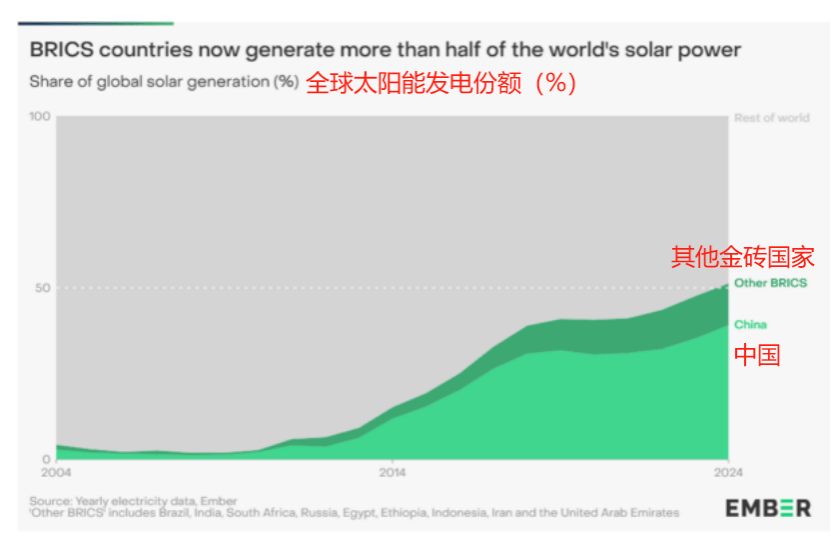
Group 1 - The core viewpoint of the articles highlights a significant shift in the global energy landscape, with BRICS nations projected to generate 51% of the world's solar power by 2024, up from 15% in 2015, indicating a rapid transition from energy followers to leaders [1] - China leads the BRICS nations in solar power generation, achieving an increase of 98 TWh in the first four months of 2025, a 42% year-on-year growth, with clean energy accounting for 82% of its power growth in 2024, and solar contributing 41% [3] - India has seen a fourfold increase in solar power generation since 2019, reaching 133 TWh in early 2025, with a 32% year-on-year growth [3] Group 2 - Brazil has surpassed Germany with 75 TWh of solar power generation, marking its entry into the global top five for photovoltaic capacity, and has achieved a 35% year-on-year growth in early 2025 [3] - The economic growth driven by clean energy in BRICS nations is breaking the link between energy costs and economic volatility, as evidenced by China's use of low-cost solar power to produce hydrogen, addressing the issue of wasted electricity [6] - The investment of Chinese photovoltaic companies in Brazil has generated approximately 18 million Brazilian Reais in local revenue and created over 2,000 jobs, demonstrating the positive economic impact of clean energy projects [6]

特朗普“大而美”法案卡住绿能咽喉 AI狂潮突遇“电力饥渴”
智通财经网· 2025-07-04 13:51
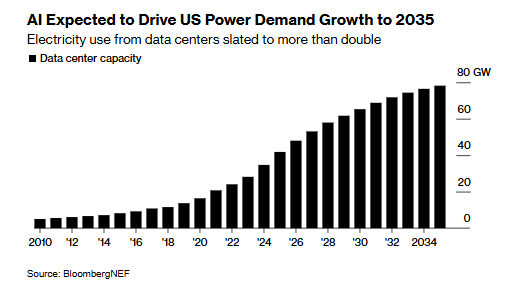
太阳能发展前景原本更为广阔:它不仅是美国最经济的电力来源,配套的储能电池技术也已成为主流解 决方案,其建设周期更远短于天然气电厂或核反应堆。 可再生能源本有望成为供电主力。据美国能源信息署数据,去年公用事业规模太阳能占全美新增发电能 力的61%,达30吉瓦。 智通财经APP获悉,当特朗普提出的3.4万亿美元财政方案在国会通过时,可再生能源行业曾因提案中 针对风电和太阳能项目的消费税被取消而稍感宽慰。然而,随着白宫准备举行法案签署仪式,毫无疑问 的是,这位美国总统的胜利标志着清洁能源转型遭遇重大挫折。新法案将逐步取消对风力发电机和太阳 能电池板的税收抵免政策,此举将威胁众多可再生能源项目。 气候政策智库"Energy Innovation"预测,在美国国会刚刚通过的"大而美"减税与支出法案将严重制约可 再生能源的扩张。本周发布的分析报告显示,到2035年,预计将有约200吉瓦的风电和150吉瓦的太阳能 项目无法按原计划建成。 这一时段恰逢美国电力需求将迎来持续十年的激增期,彻底扭转了过去三十年增长乏力的局面。以清洁 能源投资大州得克萨斯为例,到2030年,该州可能需要相当于30座核反应堆(即30吉瓦)的发电能力 ...