猪周期

Search documents
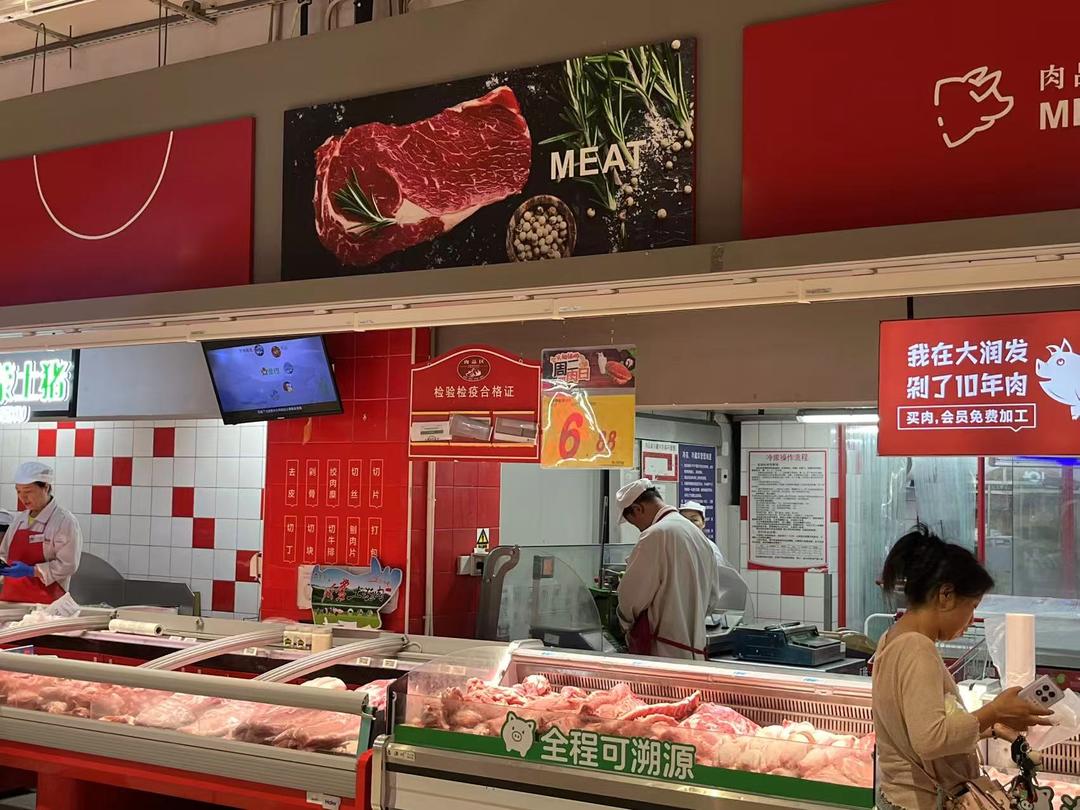
旺季遇上反常行情,超市猪肉跌破每斤10元
Qi Lu Wan Bao Wang· 2025-09-17 08:41
Core Viewpoint - The traditional peak season for pork consumption, "Golden September and Silver October," is experiencing an unusual downturn in prices, attributed to oversupply, weak demand, and misaligned market expectations [5]. Price Trends - As of September 16, the average price of live pigs in China dropped to 13.20 yuan per kilogram, a significant year-on-year decline of 31.61%, with some regions seeing prices fall below 6 yuan per pound [1]. - Prices for pork cuts in Jinan supermarkets showed a notable decrease, with front leg meat dropping from 12.5 yuan to 7.9 yuan per pound [3]. Supply Dynamics - The slaughter capacity has decreased by approximately 15% compared to last year, with current procurement prices for live pigs falling to between 6.5 and 6.8 yuan per pound, down from 7.5 yuan last year [4]. - The number of breeding sows in China reached 40.43 million, exceeding the normal holding capacity by 3.7%, leading to increased production efficiency and higher pig stocks [8]. Demand Factors - Demand for pork has weakened, with reduced purchasing from the catering industry and lower consumer spending during holidays compared to previous years [5]. - Competition from alternative meats such as chicken, beef, and seafood has intensified, further squeezing the pork market [5]. Policy and Market Response - The Ministry of Agriculture and Rural Affairs and the National Development and Reform Commission have initiated measures to reduce breeding sows by 1 million across 25 major enterprises by January 2026, aiming to address oversupply [9]. - Major pig farming companies are adjusting their strategies by optimizing breeding sow numbers and controlling piglet replenishment to reduce production capacity [9].

新和成20250916
2025-09-17 00:50
Summary of the Conference Call Company and Industry Overview - The conference call focuses on the vitamin industry, particularly the role of vitamins in animal nutrition and the performance of the company Xinhecheng in this sector [2][12][18]. Key Points and Arguments Vitamin Demand in Animal Nutrition - Industrialized farming relies heavily on vitamin additives, with feed demand accounting for approximately 60%, and certain vitamins like A and D3 reaching up to 80% [2][5]. - In 2022, pig and poultry feed constituted 86% of China's total feed demand, with pig feed around 45% and poultry feed at 41% [9]. - The profitability of farming significantly influences vitamin demand, with farmers reducing vitamin usage during low-profit periods [9][10]. Market Dynamics and Trends - The vitamin industry has evolved from monopolies by companies like Merck and Roche to increased competition from Japanese firms and Chinese companies like Xinhecheng and Zhejiang Medicine [2][12]. - The global vitamin market currently faces an oversupply, leading companies to halt production to maintain prices [2][13]. - Seasonal demand for animal nutrition supplements peaks in the fourth quarter due to pre-holiday fattening, while summer demand is relatively low [2][14]. Price Fluctuations and Influencing Factors - Vitamin prices are influenced by environmental policies, raw material supply constraints, and unforeseen events [14][15]. - Historical trends show that demand typically sets the price baseline, while supply determines the price ceiling [15]. Xinhecheng's Strategic Positioning - Xinhecheng is diversifying its portfolio beyond vitamins, focusing on amino acids, flavoring agents, and new materials, which have shown strong growth [4][18]. - The company has established a competitive edge in the flavoring market, achieving a gross margin exceeding 50% [19]. - Xinhecheng's new materials business has also seen rapid growth, with products like PPS and PPA reaching global leading levels [20]. Financial Performance and Future Outlook - In 2024, vitamin E prices were at historical highs, significantly contributing to the company's profits, but overall profit impact from vitamin price fluctuations is limited [21]. - The company is expected to continue providing good shareholder returns, including special dividends in profitable years [24]. Market Conditions for Methionine - The market for methionine is stable, with concerns about price impacts from new production capacity being mitigated by steady demand [22][23]. Additional Important Insights - The vitamin market's supply-demand relationship has historically influenced pricing, with significant fluctuations observed during periods of high profitability in the livestock sector [15][16]. - Xinhecheng's long-term growth potential and strong financial metrics make it an attractive option for long-term investors [24].

“金九银十”猪价反创年内新低,产能去化迫在眉睫
Di Yi Cai Jing· 2025-09-14 09:28
Core Viewpoint - Domestic pig prices have unexpectedly dropped to a new low during the traditional consumption peak season, reflecting severe overcapacity pressures in the industry [1][2] Group 1: Price Trends - As of September 14, domestic pig prices reached 13.32 yuan/kg, marking a year-low and below the cash breeding costs for some listed pig companies [1] - In September, pig prices fell to 13.23 yuan/kg, a year-on-year decrease of 31.2% and a month-on-month decrease of 3.62%, down 20.1% from the year's peak [2] - The current pig cycle is characterized by less pronounced price fluctuations, with prices not showing significant increases since hitting a low point [2] Group 2: Sales Performance - Major listed pig companies reported increased sales in August, with Muyuan Foods selling 7.001 million pigs (up 27.1% year-on-year) and Wens Foodstuffs selling 3.2457 million pigs (up 37.88% year-on-year) [3] - Smaller listed companies also saw significant sales growth, with Zhenghong Technology and Dongrui Co. reporting increases of 63.31% and 21% respectively [3] Group 3: Supply and Demand Dynamics - The supply-demand imbalance, with strong supply and weak demand, is a primary reason for the low pig prices [4] - The Ministry of Agriculture has implemented policies to reduce the breeding sow population, aiming to decrease it by approximately 1 million heads [4] - Despite a slight increase in the breeding sow population in August, the ongoing price decline indicates that adjustments may not be sufficient to change the supply-demand dynamics [4] Group 4: Industry Adjustments - Muyuan Foods has reduced its breeding sow population and plans to lower the average weight of pigs being sold, indicating a direct response to current supply pressures [5] - The reduction in breeding sow numbers will take about 10 months to significantly impact the market supply [5] - The industry is expected to see a gradual adjustment in production efficiency, which may not yield noticeable results until early 2026 [5] Group 5: Market Sentiment - Despite the ongoing price decline, the A-share market for pig farming stocks has shown resilience, reflecting market expectations of a price bottom [5] - The pig industry index rose by 5.89% in September, marking the highest monthly increase of the year, with most stocks performing well [6] - The current valuation of the pig farming sector is at a near 10-year low, which may attract investment as the market anticipates accelerated capacity reduction [6]


核心CPI涨幅连续4个月扩大 消费市场运行总体平稳
Jin Rong Shi Bao· 2025-09-11 04:09
Group 1 - The overall consumer market in August remained stable, with the Consumer Price Index (CPI) unchanged month-on-month and down 0.4% year-on-year, while the core CPI, excluding food and energy, rose by 0.9%, marking an expansion in growth for four consecutive months [1][3] - The year-on-year decline in CPI is attributed to a high comparison base from the previous year and lower-than-seasonal increases in food prices in August, particularly due to stable prices for vegetables, pork, and fruits [1][2] - Food prices saw a month-on-month increase of 0.5%, but this was below the seasonal level by approximately 1.1 percentage points, with year-on-year food prices declining by 4.3%, which is a significant increase in the decline compared to the previous month [2][3] Group 2 - The core CPI's year-on-year growth has expanded for four months, indicating the effectiveness of policies aimed at boosting domestic demand and consumption, contributing to a stable growth in the consumer market [3][4] - Industrial consumer goods prices, excluding energy, increased by 1.5% year-on-year, with gold and platinum jewelry prices rising significantly, impacting the CPI positively [3] - Looking ahead, the CPI may maintain a weak trend for the year, with potential recovery towards the end of the year influenced by low base effects and policies aimed at reducing excessive competition [3][4]
核心CPI涨幅连续4个月扩大
Jin Rong Shi Bao· 2025-09-11 02:19
Core Insights - The consumer price index (CPI) remained stable in August, with a month-on-month change of 0% and a year-on-year decrease of 0.4% [1] - The core CPI, excluding food and energy prices, increased by 0.9% year-on-year, marking the fourth consecutive month of growth [1][4] CPI Analysis - The year-on-year decline in CPI is attributed to a high comparison base from the previous year and lower-than-seasonal food price increases in August [1][2] - The tail effect from last year's price changes contributed approximately -0.9 percentage points to the year-on-year CPI in August, with a downward impact that expanded by 0.4 percentage points compared to the previous month [1] - Food prices saw a month-on-month increase of 0.5%, but this was 1.1 percentage points below seasonal levels, with significant year-on-year declines in pork, eggs, and fresh vegetables [4] Food Price Dynamics - Year-on-year food prices decreased by 4.3%, with the decline expanding by 2.7 percentage points compared to the previous month, contributing an additional 0.51 percentage points to the CPI's year-on-year decline [4] - Specific declines included pork prices down 16.1%, fresh vegetables down 15.2%, and eggs down 14.2%, all showing an increase in downward pressure on CPI compared to the previous month [4] Core CPI and Industrial Prices - The core CPI's year-on-year increase of 0.9% reflects ongoing consumer demand and the effectiveness of policies aimed at boosting consumption [4][5] - Industrial consumer goods prices, excluding energy, rose by 1.5% year-on-year, with gold and platinum jewelry prices increasing significantly [6] Future Outlook - Analysts suggest that the CPI may remain weak throughout the year, with potential recovery towards the end of the year due to low base effects and supportive policies [6] - The impact of consumption-boosting policies is expected to further support prices of major goods in September [6]

国泰海通:反内卷效果边际显现
Ge Long Hui· 2025-09-11 00:18
Group 1 - The effects of anti-involution policies are beginning to show in the PPI data, with commodity price increases leading to price recovery in downstream industries [1][3] - In August, the CPI year-on-year growth rate was -0.4%, while the PPI year-on-year growth rate was -2.9%, indicating a steady recovery in inflation [1][2] - The core CPI has shown resilience, with a significant year-on-year increase, despite food prices being a major drag due to the pig cycle [1][2] Group 2 - Food price declines are primarily driven by pork and egg prices, with the pig cycle in a bottoming phase and high inventory levels affecting egg prices [2] - The PPI data reflects a recovery in upstream mining prices, with coal mining and black metal industries showing month-on-month increases of 2.8% and 2.1% respectively [3] - The anti-involution policy focuses on addressing overcapacity caused by "herd investment" in downstream industries, aiming for more sustainable price recovery [3]

国泰海通|宏观:反内卷效果:边际显现——2025年8月物价数据点评
国泰海通证券研究· 2025-09-10 14:41
Group 1 - The core viewpoint of the article highlights the initial effects of anti-involution policies on PPI, with commodity price increases leading to price recovery in downstream industries, while the CPI is negatively impacted by the pork cycle but shows resilience in service prices [1][3]. - In August, the CPI year-on-year growth rate was -0.4%, and the PPI year-on-year growth rate was -2.9%, indicating a steady recovery in inflation [1][2]. - The food price decline, primarily driven by pork and egg prices, has negatively affected the CPI, while core service prices remain resilient, with core CPI showing a significant year-on-year increase [1][8]. Group 2 - The effects of anti-involution policies are beginning to show, focusing on eliminating excess capacity caused by "herd investment" in downstream industries, with an emphasis on guiding enterprises to standardize competition rather than relying solely on administrative interventions [3][8]. - The mining industry's price momentum has rebounded for three consecutive months, with significant increases in coal mining and black metal mining prices, indicating a recovery in upstream prices [1][8]. - The rise in commodity prices has positively impacted downstream manufacturing industries, with notable price recoveries in sectors such as computer and electronic equipment manufacturing, general equipment manufacturing, and textiles [1][8].

2025年8月物价数据点评:反内卷效果:边际显现
GUOTAI HAITONG SECURITIES· 2025-09-10 13:11
Group 1: Inflation Trends - August CPI year-on-year growth is -0.4%, with a month-on-month change of 0.0%[10] - August PPI year-on-year growth is -2.9%, with a month-on-month increase to 0.0%[10] - Core CPI year-on-year improved significantly to 0.9% compared to the same period in 2024[15] Group 2: Impact of Policies - The effects of the anti-involution policy are beginning to show in the August PPI data, with mining industrial prices recovering for three consecutive months[22] - Prices in the black chain have stabilized, with coal mining and washing industry increasing by 2.8% month-on-month[22] - The rise in bulk commodity prices has positively impacted downstream manufacturing industries, with factory prices showing a month-on-month recovery of -0.05%[22] Group 3: Food Price Dynamics - Food prices, particularly pork and eggs, are the main drag on CPI, contributing -0.81% to the index[13] - Pork prices contributed -0.29% to CPI, while other food items contributed -0.51%[13] - The demand for pork is expected to recover in September, potentially lifting prices from their current low[15] Group 4: Risks and Future Outlook - There are ongoing pressures in the real estate sector, and consumer recovery momentum may not meet expectations[30] - The sustainability of price increases in bulk commodities and their impact on downstream industries will be closely monitored[28]
天康生物8月生猪销量同比环比双增长,成本控制助力穿越周期,三年养殖成本下降逾30%
Zheng Quan Shi Bao Wang· 2025-09-10 12:39
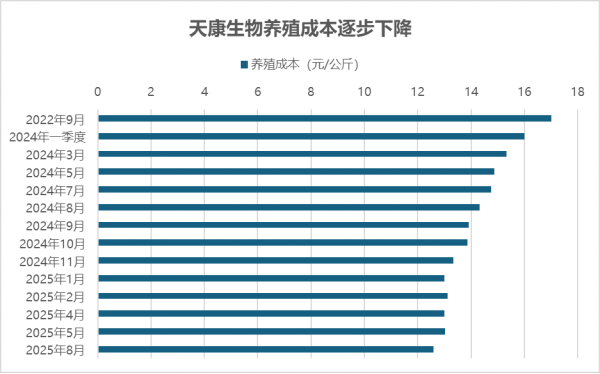
Core Viewpoint - TianKang Biological has shown significant growth in pig sales and revenue, while emphasizing cost control measures to enhance competitiveness in a challenging market environment [1][2][4] Company Performance - In August 2025, TianKang Biological sold 263,800 pigs, representing a month-on-month increase of 18.03% and a year-on-year increase of 10.15%, with sales revenue reaching 380 million yuan, up 13.43% from the previous month [1] - From January to August 2025, the company sold a total of 2.0155 million pigs, an increase of 8.24% compared to the same period last year [1] Cost Control Measures - The company has successfully reduced pig farming costs to 12.6 yuan/kg in August 2025, with self-bred and self-raised pig costs dropping to 11.8 yuan/kg [1][2] - The cost of pig farming has decreased significantly from approximately 17 yuan/kg in September 2022 to 12.6 yuan/kg in August 2025, reflecting a reduction of over 30% in three years [2] Market Environment - The average pig-to-grain price ratio in China fell below 6:1, indicating a downward trend in pig prices, which has led to the importance of cost control becoming more pronounced [1][4] - The pig farming industry is experiencing new characteristics, including shorter cycles and increased short-term volatility, which necessitates strong cost control capabilities for survival and growth [4] Competitive Strategy - TianKang Biological is enhancing its competitiveness and risk resistance through refined breeding management, improved production efficiency, and cost control measures, including the use of hedging tools to manage market price fluctuations [2][4] - The company anticipates further cost reduction potential as the prices of purchased piglets decline, indicating room for continued improvement in cost management [4]

全市场首只!农牧渔ETF今日正式开售!
Xin Lang Cai Jing· 2025-09-08 02:49
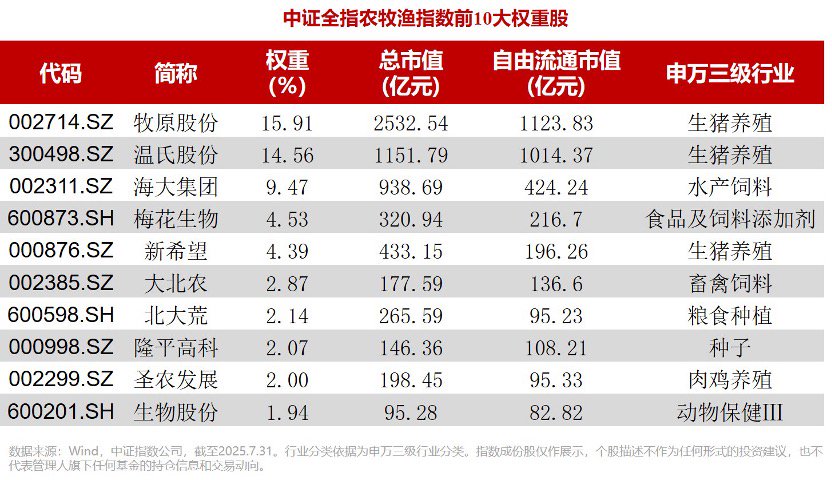
Core Viewpoint - The launch of the Agricultural, Animal Husbandry, and Fishery ETF (159275) by Huabao Fund is expected to capitalize on the recovery of the A-share market and the low valuation of the agricultural sector, particularly in the pig farming industry, which is poised for a price rebound [1][2][3]. Company Summary - Huabao Fund has served 64.12 million clients and generated a total profit of 83.2 billion yuan for fund holders, with cumulative dividends reaching 59.4 billion yuan as of June 2025 [1][8]. - The Agricultural, Animal Husbandry, and Fishery ETF (159275) is the first ETF in the market to track the CSI Agricultural, Animal Husbandry, and Fishery Index, which encompasses various segments of the agricultural industry [1][5]. - As of August 2025, Huabao Fund's equity ETF assets under management reached 117.4 billion yuan, solidifying its position as a leading institution in the public fund ETF business [8]. Industry Summary - The agricultural sector has experienced a significant downturn over the past three and a half years, but recent trends indicate a recovery, with the sector's valuation remaining low [3]. - The CSI Agricultural, Animal Husbandry, and Fishery Index has a price-to-book ratio of 2.65, which is lower than similar indices, indicating potential for growth [3]. - The pig farming industry is currently at a low price point, with limited downside risk, and is expected to see improved profitability due to a new normal of stable production and price increases over the next 1-3 years [3]. - The seed industry is receiving increased governmental focus, with advancements in biotechnology expected to enhance competitiveness among leading companies [4]. - The CSI Agricultural, Animal Husbandry, and Fishery Index has outperformed similar thematic indices and broad market indices since its inception, with a cumulative return of 85.73% from December 2013 to July 2025 [7].