
美国优先

Search documents
美国发布最新《国家安全战略》:放弃全球霸权 承认中美“近乎对等”
天天基金网· 2025-12-07 08:35
Core Viewpoint - The new National Security Strategy under the Trump administration marks a significant shift from pursuing global hegemony to prioritizing U.S. interests, particularly in Latin America, while criticizing European allies for their declining economic influence and potential demographic changes [2][6][11]. Summary by Sections U.S. Foreign Policy Shift - The document emphasizes "America First" as the guiding principle, abandoning the decades-long pursuit of global dominance, which is deemed destined to fail [6][7]. - It states that the era of the U.S. supporting the global order is over, and the focus will be on preventing other major powers from gaining dominance without extensive military engagement [6][7]. Focus on Latin America - The strategy aims to restore U.S. hegemony in the Western Hemisphere, addressing issues like immigration and drug trafficking, and reasserting the Monroe Doctrine [7][9]. - The U.S. will adjust its military presence globally, withdrawing from regions deemed less critical to national security, while increasing the Coast Guard and Navy's deployment in the Western Hemisphere [7][9]. Critique of Europe - The strategy presents an unprecedented confrontational stance towards Europe, highlighting a decline in Europe's share of global GDP from 25% in 1990 to 14% today, and warns of a potential "civilizational extinction" [11][12]. - It raises concerns about the demographic shifts in NATO countries and questions the future of U.S.-European alliances [11][12]. Response to Ukraine Conflict - The document states that the U.S. core interest is to quickly end hostilities in Ukraine and rebuild strategic stability with Russia, while criticizing European officials for obstructing U.S. efforts to resolve the conflict [12][12]. Military and Economic Strategy - The strategy calls for increased R&D investment to maintain U.S. superiority in advanced military technologies, focusing on areas like underwater, space, nuclear technology, artificial intelligence, and quantum computing [14][15]. - It indicates a shift in U.S.-China relations towards a more reciprocal economic relationship, while deemphasizing the Middle East in U.S. foreign policy priorities due to the U.S. becoming an energy net exporter [15][15]. Comparison with Previous Strategies - The new strategy represents a significant departure from the Biden administration's 2022 National Security Strategy, which focused on strategic competition with China and Russia, domestic industrial policy, and climate change as a national security challenge [17][17].

美国最新报告:不允许任何国家过于强大
证券时报· 2025-12-07 08:12
Core Viewpoint - The U.S. National Security Strategy report emphasizes prioritizing the Western Hemisphere, criticizing Europe, downplaying terrorism threats, and aiming for a balance between external commitments and internal capabilities [1][2]. Group 1: Monroe Doctrine and Intervention in Latin America - The report introduces the "Trump Doctrine" as a modern version of the Monroe Doctrine, asserting U.S. dominance in the Western Hemisphere [1]. - It outlines objectives such as preventing mass immigration, using lethal force against drug cartels, and ensuring U.S. access to strategic locations in Latin America [1][2]. - Analysts suggest this indicates a significant increase in U.S. resources allocated to intelligence, military, law enforcement, and economic strategies in Latin America [2]. Group 2: Global Military Presence Adjustment - The report calls for a "reallocation" of U.S. military resources, reducing presence in regions deemed less critical to national security [3]. - Experts interpret this as a decline in the importance of Europe, the Middle East, and Africa in U.S. foreign policy [3]. Group 3: Strategic Military and Economic Goals - The report aims to alleviate global security burdens by encouraging allies to take on more defense responsibilities and avoiding costly "forever wars" [4]. - It emphasizes the need to rebuild the U.S. defense industrial base and maintain dominance in key technological fields [5]. - The report also highlights the end of the era where the Middle East dominated U.S. foreign policy, although skepticism remains about the actual shift in focus [5]. Group 4: Anti-Immigration and Anti-Globalization Stance - The report reflects a vision of global order based on "America First," characterized by anti-immigration and anti-globalization sentiments [6]. - It attributes many global challenges to immigration, asserting that large-scale immigration undermines traditional powers' cultural and economic dominance [6]. - The report contains strong criticisms of Europe, warning of severe consequences due to immigration policies and economic stagnation [6]. Group 5: Power Dynamics and Global Influence - The report indicates a more inward-looking and narrow view of U.S. security, while simultaneously asserting that no country should become too powerful to threaten U.S. interests [7]. - It continues to advocate for a strong power logic in international relations, emphasizing that great powers have significant influence [7]. - The report has been described as an attempt to impose the President's worldview selectively on the global stage [7].

美国家安全战略报告提出“西半球优先”,美防长称门罗主义“比以往任何时候都更加强大”
Hua Er Jie Jian Wen· 2025-12-07 01:07
Core Viewpoint - The U.S. is shifting its national security focus to the Western Hemisphere, marking a significant strategic adjustment under the Trump administration, emphasizing "America First" diplomacy and core national interests [1] Group 1: Monroe Doctrine and Military Strategy - The U.S. Defense Secretary announced the revival of the Monroe Doctrine, asserting its effectiveness and strength, with a focus on protecting U.S. homeland and interests in the hemisphere [1][2] - The strategic report suggests potential increases in military presence, bases, and operations in the Western Hemisphere to address regional tensions [1] - The U.S. currently has the largest naval deployment in the Caribbean, with over 12 vessels and more than 14,000 soldiers, and has conducted 22 strikes against drug smuggling vessels, resulting in at least 87 deaths [1] Group 2: Regional Responsibilities and Controversies - The Defense Secretary emphasized the need for neighboring countries, particularly Mexico, to take more responsibility in regional security, while acknowledging some progress [2] - Controversy arose regarding the legitimacy of U.S. counter-narcotics operations, with the Defense Secretary defending these actions as necessary for deterring threats in the hemisphere [2] - The Secretary acknowledged threats in Europe and the Middle East but stated that these regions should not rely on U.S. defense support, indicating a shift in military priorities [3]
重磅!特朗普发布第二任期《国家安全战略》(全文&与以前有何不同&美国媒体评论)
美股IPO· 2025-12-06 23:00
Group 1 - The article emphasizes the need for a coherent and focused global engagement strategy for the United States to maintain its status as the world's strongest and most influential nation [3][4][5] - It critiques past U.S. strategies post-Cold War for failing to align with core national interests and for misjudging the American public's willingness to bear global burdens [4][5] - The article highlights the importance of prioritizing core national interests in U.S. foreign policy, focusing on security, economic stability, and the protection of American values [7][10] Group 2 - The article outlines the core objectives of U.S. strategy, including the protection of national sovereignty, economic interests, and the well-being of its citizens [7][8] - It stresses the need for a resilient national infrastructure capable of withstanding various threats, including military attacks and foreign influence [8] - The article advocates for a strong military presence and advanced defense systems to safeguard U.S. interests and deter potential adversaries [8][9] Group 3 - The article discusses the importance of maintaining a robust economy as the foundation of U.S. power, emphasizing the need for a strong industrial base and innovative energy sector [8][9] - It highlights the necessity of protecting intellectual property and fostering technological advancements to sustain economic leadership [9] - The article calls for a focus on re-industrialization and energy independence to bolster economic resilience and reduce reliance on foreign sources [12][18] Group 4 - The article outlines the U.S. approach to foreign relations, advocating for a pragmatic and principle-driven diplomacy that prioritizes American interests [11][13] - It emphasizes the need for burden-sharing among allies and partners, particularly in defense spending and regional security responsibilities [14][15] - The article critiques the past U.S. approach to China, calling for a rebalancing of economic relations to ensure fairness and protect American economic independence [25][26] Group 5 - The article identifies the strategic importance of the Western Hemisphere, advocating for a return to Monroe Doctrine principles to safeguard U.S. interests in the region [16][18] - It discusses the need for a proactive stance against foreign adversaries in the Western Hemisphere, emphasizing cooperation with regional allies to combat illegal immigration and drug trafficking [19][20] - The article highlights the importance of economic partnerships and investment opportunities in the region to strengthen U.S. influence and counter external threats [22][23]

纽约时报:特朗普的新国家安全战略侧重于盈利,而非传播民主
美股IPO· 2025-12-06 23:00
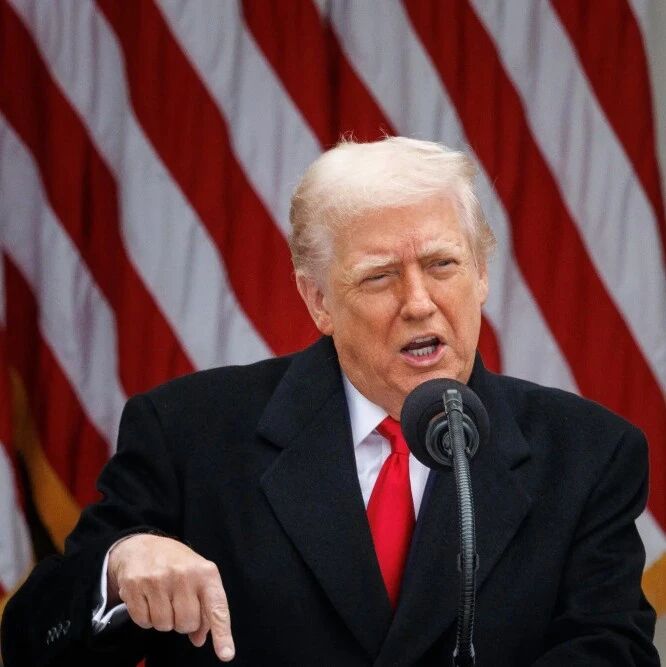
Trump's Security Strategy Focuses on Profit, Not Spreading Democracy 特朗普总统上个月在白宫发表讲话。他领导的政府发布的《国家安全战略》描绘了一个美国利益远比以往任何 一届政府——甚至包括他第一任期内——所描述的要狭隘得多的世界。 汤姆·布伦纳为《纽约时报》撰稿 2025年12月5日更新于美国东部时间晚上7:29 拉丁美洲国家必须向美国公司授予无需竞标的合同。华盛顿对富裕的海湾君主国的"颐指气使"必 须停止。 从白宫的角度来看,世界是美国可以利用其强大力量赚钱的地方。 特朗普总统今年以来一直表明,如果他连任,将会优先考虑向实力较弱的国家施压,以使美国企 业受益。但周四晚些时候,他的政府发布了期待已久的美国全球国家安全目标更新,将这种以利 润为导向的做法确立为官方外交政策的核心要素。 这份名为《国家安全战略》的文件描绘了一个美国利益远比以往历届政府——甚至包括特朗普第 一任期内——所描述的更为狭隘的世界。美国作为全球自由力量的形象已不复存在,取而代之的 是一个专注于减少移民、同时避免对独裁政权进行评判,而是将其视为经济来源的国家。 "我们寻求与 ...
《经济学人》:特朗普黯淡混乱的新国家安全战略
美股IPO· 2025-12-06 23:00
Core Viewpoint - The new National Security Strategy (NSS) reflects a significant shift towards "America First" ideology, moving away from traditional values that have historically underpinned U.S. foreign policy, and embracing a form of "flexible realism" that prioritizes U.S. interests above all else [2][3]. Summary by Sections General Overview - The NSS was released in the early hours of December 5 and is expected to be closely analyzed by military and diplomatic personnel globally. It sets the framework for upcoming military assessments and outlines the administration's priorities [2]. Ideological Shift - The document rejects the notion that shared values are the foundation of U.S. alliances, instead asserting that the strategy is not rooted in traditional political ideologies but is focused on what is beneficial for the U.S. [2][3]. Regional Focus - In Asia, the NSS expects countries to act as proactive allies, while in other regions, nations are expected to comply with U.S. economic and military demands. The document explicitly states a rejection of interventionist ideologies that promote democratic or social changes contrary to a country's traditions [4]. Western Hemisphere Strategy - The NSS emphasizes maintaining stability and good governance in the Western Hemisphere to prevent mass migration to the U.S. It calls for cooperation from Latin American governments to control migration and drug trafficking, warning against foreign investments that could undermine U.S. interests [5]. Critique of Europe - The NSS sharply criticizes Europe, suggesting that the continent is undergoing a crisis of national identity, which could lead to a "civilizational extinction." It raises concerns about the demographic changes in NATO countries and their implications for U.S. alliances [6]. Policy Recommendations for Europe - The document advocates for the celebration of European nations' unique characteristics and encourages the rise of nationalist movements, which could strain relations with centrist European governments that view these parties as threats [6]. Ukraine and Russia - The NSS presents a controversial stance on the Ukraine situation, suggesting that many Europeans prefer peace even at the cost of concessions to Russia. It warns against NATO's expansion and fails to address the actions of President Putin, potentially setting the stage for future conflicts [7]. Conclusion - The NSS opens with a letter from Trump asserting that the administration is committed to "America First," but this claim contrasts sharply with the reality of a government perceived as one of the least respected and trusted in recent history [7].

重大转向!美国发布最新《国家安全战略》:放弃全球霸权,将调整与中国经济关系,“以互惠平等为原则”,承认中美“近乎对等”!欧洲炸锅
Mei Ri Jing Ji Xin Wen· 2025-12-06 15:27
Group 1 - The core viewpoint of the new U.S. National Security Strategy is a shift from pursuing global hegemony to strengthening U.S. dominance in Latin America, marking a significant departure from the previous focus on Asia [1][5][6] - The document emphasizes that the era of the U.S. acting as the global order's Atlas is over, and it will not engage in costly efforts to curb the influence of all major and medium powers [5][6] - The strategy highlights the need to address immigration and drug trafficking as central national defense tasks, reflecting a change in perceived threats to the U.S. [8][12] Group 2 - The strategy criticizes European allies, warning of a "civilizational extinction" risk and suggesting that European nations must change their approach to remain reliable partners [10][12][13] - It notes a decline in Europe's share of global GDP from 25% in 1990 to 14% today, indicating a shift in geopolitical dynamics [12] - The document calls for increased U.S. intervention in European domestic affairs to counteract current trends, reflecting a more confrontational stance towards Europe [13][14] Group 3 - The strategy outlines a reallocation of military resources to the Western Hemisphere, emphasizing the restoration of U.S. hegemony in the region [6][8] - It states that the U.S. will adjust its economic relationship with China to one based on mutual benefit, indicating a shift towards a more balanced approach [17] - The Middle East is no longer a priority in U.S. foreign policy, as the U.S. has become an energy net exporter, marking a significant change in focus [17][18]
重大转向!美国发布最新《国家安全战略》:放弃全球霸权 将调整与中国经济关系 “以互惠平等为原则” 承认中美“近乎对等”!
Mei Ri Jing Ji Xin Wen· 2025-12-06 15:26
Core Viewpoint - The new National Security Strategy from the Trump administration marks a significant shift in U.S. foreign policy, prioritizing Latin America over previous focuses on Asia and criticizing European allies for their declining global influence and internal challenges [1][5][10]. Summary by Sections U.S. Foreign Policy Shift - The document emphasizes a departure from the pursuit of global hegemony, labeling it as a "failed" approach, and asserts that the era of the U.S. supporting the global order is over [5][6]. - The strategy outlines a pragmatic yet principled approach to foreign policy, focusing on U.S. interests without extensive military engagement [5][6]. Focus on Latin America - The strategy aims to restore U.S. dominance in the Western Hemisphere, addressing issues like immigration and drug trafficking, and reasserting the Monroe Doctrine [6][8]. - It includes plans to adjust military presence globally, enhancing the Coast Guard and Navy in the region to secure borders and combat crime [6][8]. Critique of Europe - The document presents a stark critique of Europe, warning of a potential "civilizational collapse" and highlighting the decline of Europe's share of global GDP from 25% in 1990 to 14% today [10][11]. - It suggests that some NATO countries may soon have non-European majorities, questioning their commitment to the U.S. alliance [10][11]. - The strategy criticizes European governments for their handling of the Ukraine conflict and calls for increased U.S. intervention in European domestic affairs to counteract perceived threats [11][12]. Relations with China and the Middle East - The strategy indicates a shift towards a more reciprocal economic relationship with China, moving away from the previous asymmetrical dynamics [14]. - It states that the Middle East is no longer a priority for U.S. foreign policy, as the U.S. has become an energy net exporter and is shifting focus to great power competition [14][15]. Comparison with Previous Administration - The new strategy represents a significant change from the Biden administration's focus on strategic competition with China and Russia, domestic industrial policy, and climate change as a national security issue [15].
“美国将调整与中国的经济关系”
Zhong Guo Ji Jin Bao· 2025-12-06 15:26
Group 1 - The new National Security Strategy marks a significant shift in the U.S. approach, moving away from the long-standing goal of being the sole superpower and rejecting the idea of a U.S.-led global hegemony [1][2] - The strategy emphasizes a need to adjust global military deployments to address imminent threats in the Western Hemisphere, while also asserting U.S. dominance in Latin America [2] - The report indicates that the U.S. will maintain a larger military presence in the Western Hemisphere to tackle issues such as immigration and drug problems, and to reaffirm the Monroe Doctrine [2] Group 2 - The U.S. plans to adjust its economic relationship with China based on mutual respect and aims to restore American economic autonomy [3][4] - The report highlights the evolution of U.S.-China relations from a disparity between a mature economy and a poor nation to a near-equal relationship [3] - The strategy places increased emphasis on Taiwan, noting its critical role in global semiconductor production and its strategic location in the Asia-Pacific region [5]
“美国将调整与中国的经济关系”
中国基金报· 2025-12-06 15:19
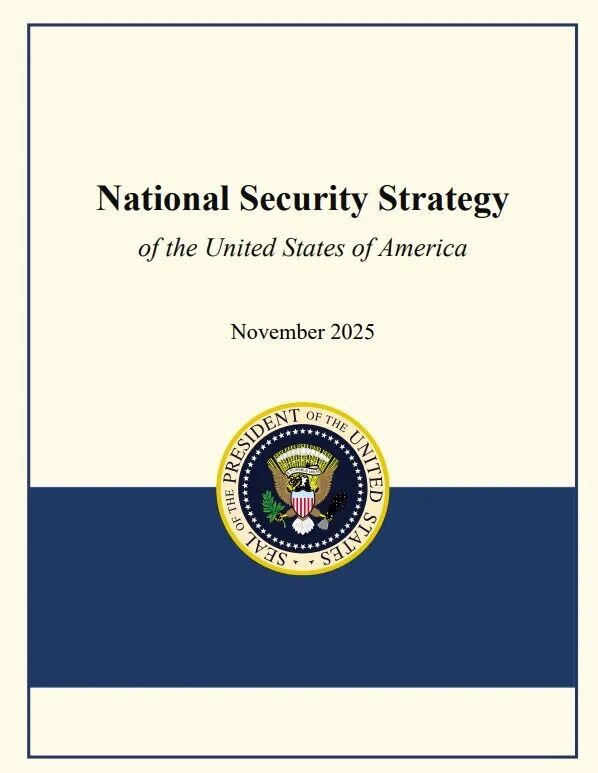
据参考消息援引法新社报道,这份旨在阐述特朗普打破常规的"美国优先"世界观的国家安全文件, 标志着美国长期倡导的"重返亚洲"战略出现重大转向 。 虽然该文件仍称,美国将阻止其他大国称霸,但补充道: "这不意味着要耗费血汗钱财来遏制全球所有 大国和中等强国的影响力。" 该战略要求"调整全球军事部署,以应对本半球迫在眉睫的威胁,并撤出近几十年来或近年对美国国家 安全重要性相对下降的战场",并以强硬的措辞 强调美国在拉丁美洲的主导地位 。 来源:CCTV国际时讯 参考消息 据@CCTV国际时讯、参考消息报道,美国白宫于当地时间12月4日晚发布特朗普政府的新版《国家 安全战略》。 这份文件共33页,阐述本届美国政府对其外交政策的调整。值得一提的是,该战略打破了美国数十 年来追求成为唯一超级大国的尝试,并称 "美国拒绝了以自身为主导的、注定失败的全球霸权理念" 。 报告中还对 中美关系以及未来的发展方向做出了新的阐释 ,此外 报告对台湾问题提及的次数明显增 多。 重大转向 另据环球时报援引台湾《经济日报》报道,报告中,亚洲章节以"赢得经济未来、防止军事对抗"为主 轴, 台湾议题则被纳入"威慑军事威胁"部分。 据统计,与2 ...
