自动驾驶技术

Search documents
滴滴支付7.4亿美元和解美IPO诉讼,计划赴港上市
Sou Hu Cai Jing· 2025-09-02 08:16
Core Viewpoint - Didi Global Inc. has agreed to pay $740 million to settle a shareholder class action lawsuit related to its 2021 IPO in the U.S., resulting in a significant financial loss for the company in Q2 2025 despite revenue growth [1][3][4]. Financial Performance - The settlement led to a net loss of 2.5 billion RMB (approximately $351 million) in Q2 2025, a stark decline from a profit of 854 million RMB in the same period last year [1]. - Revenue increased by 11% year-on-year, reaching 56.4 billion RMB, primarily driven by an increase in platform transaction volume [1]. Market Position and Growth - Didi achieved a record average daily transaction volume of 37.1 million in the Chinese market during Q2 2025, reflecting its continued dominance in the domestic ride-hailing market [4]. - Core platform transaction volume grew by 15%, with a 12% increase in the Chinese market and a 25% increase in overseas markets, resulting in a total gross transaction value (GTV) of 109.6 billion RMB, up 14% year-on-year [4]. Regulatory and Legal Challenges - Didi's IPO in June 2021 raised $4.4 billion at an initial price of $14 per share, but the company faced regulatory scrutiny and was fined 8 billion RMB (approximately $1.2 billion) in July 2022 for illegal data collection [3][5]. - The company has denied any wrongdoing in the shareholder lawsuit, stating that the settlement was to avoid further litigation costs and business disruptions [3]. Future Outlook - Didi plans to focus on improving service efficiency, expanding job opportunities, and enhancing driver rights protection while increasing investments in artificial intelligence and autonomous driving technology [5]. - The timeline for Didi's potential listing on the Hong Kong Stock Exchange remains uncertain, with analysts noting that stricter regulatory requirements and data compliance issues could pose challenges [5].


佑驾创新(02431.HK)中标鄂州花湖国际机场无人驾驶摆渡车项目
Ge Long Hui· 2025-09-01 14:09
Group 1 - The company has successfully won the bid for the autonomous shuttle project at Ezhou Huahu International Airport in Hubei Province, China, marking its first airport automation commercialization project [1] - The project will provide L4 level autonomous shuttle services, covering internal airport operations such as crew transfers, employee commuting, and border inspection coordination [1] - The autonomous shuttles utilize a multi-sensor fusion perception system, achieving 360° blind spot coverage and centimeter-level positioning, capable of accurately identifying vehicles, pedestrians, traffic lights, and various road signs [1] Group 2 - The company is actively expanding its self-developed L1–L4 full-stack intelligent driving capabilities, focusing on smart mobility, smart logistics, and smart city services [2] - The company adheres to a strategy of "customer first, focus on scenarios, iterate products, and expand boundaries," continuously increasing investment in L4 and related technology research and development [2] - The company aims to be a key player in driving the intelligent transformation of the industry [2]
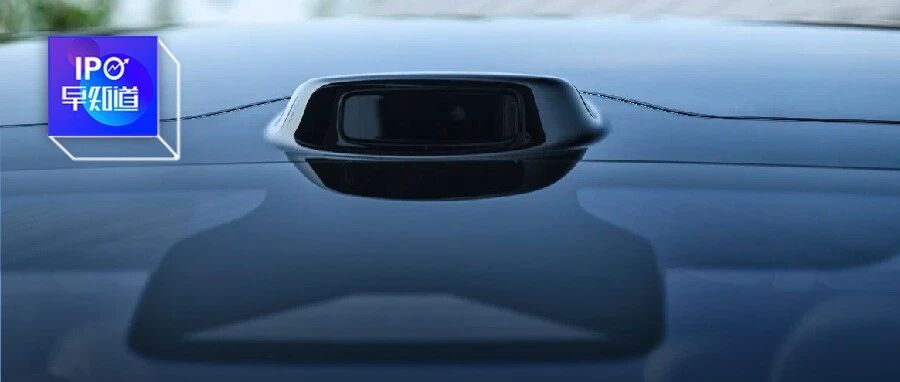
禾赛科技通过港交所聆讯:即将成为「全球激光雷达回港上市第一股」
IPO早知道· 2025-08-31 13:54
Core Viewpoint - HeSai Technology is positioned as a leading global developer and manufacturer of LiDAR products, showcasing strong technological capabilities and rapid revenue growth, with an upcoming dual listing in Hong Kong [2][4]. Group 1: Technological Strength and Product Development - HeSai Technology focuses on the design, development, manufacturing, and sales of advanced LiDAR products, which are widely used in various applications including autonomous vehicles and robotics [4]. - The company has established a dedicated chip R&D team since 2017, achieving the highest integration rate of self-developed chips in the industry starting from 2023, indicating its technological leadership [4][5]. - The fourth generation of self-developed chips optimizes LiDAR functionality and performance by integrating seven key components, making HeSai the only company in the industry to develop all these components independently [5]. - The company has successfully launched four generations of self-developed chips since October 2020, significantly enhancing product performance and reducing production costs [5][6]. Group 2: Product Line and Market Recognition - HeSai Technology has developed a strong product line, including the AT, ET, and JT series, which have gained market recognition and secured mass production orders shortly after their launch [7]. - The flagship product AT128, launched in July 2021, is the first vehicle-grade long-range LiDAR product utilizing self-developed chip technology [6]. Group 3: Operational Efficiency and Cost Management - The innovative platform architecture introduced by HeSai Technology has reduced operational costs and improved product development efficiency by allowing component sharing across different product series [10]. - The company has adopted a self-manufacturing model, enhancing cost efficiency, quality control, and supply chain resilience, which has become a significant competitive advantage [10]. Group 4: Revenue Growth and Market Position - HeSai Technology has experienced rapid growth in shipment volume and revenue, with confirmed shipments of approximately 80,400 units in 2022, 222,100 units in 2023, and projected 501,900 units in 2024 [11]. - The company's net revenue reached RMB 1,202.7 million in 2022, RMB 1,877.0 million in 2023, and RMB 2,077.2 million in 2024, with a 46.3% year-on-year increase in Q1 2025 [11]. - HeSai is recognized as the largest global LiDAR supplier by revenue for 2022, 2023, and 2024, and became the first company to exceed 100,000 units shipped in a single month by December 2024 [11]. Group 5: Industry Growth and Future Outlook - The global LiDAR industry is projected to grow from USD 300 million in 2020 to USD 1.6 billion in 2024, with a compound annual growth rate (CAGR) of 57.8%, and expected to reach USD 17.3 billion by 2029 [12]. - HeSai Technology is well-positioned to capitalize on the rapid growth of the LiDAR market, leveraging its technological and manufacturing expertise to strengthen its global market leadership and expand into the robotics sector [13].
滴滴二季度GTV破千亿大关 国际业务增速近28%创新高
Feng Huang Wang· 2025-08-28 10:27
Group 1 - The core viewpoint of the article highlights Didi's strong growth momentum, achieving a gross transaction value (GTV) of 109.6 billion yuan in Q2 2025, reflecting a year-on-year increase of 15.9% at constant exchange rates [1] - Didi's domestic ride-hailing business contributed 82.5 billion yuan to the GTV, showing a year-on-year growth of 12.2%, while international business saw a remarkable GTV of 27.1 billion yuan, with a year-on-year surge of 27.7% at constant exchange rates [1] - The total number of orders completed on Didi's core platform reached 4.464 billion in Q2, marking a year-on-year increase of 15.2%, with domestic orders at 3.376 billion and international orders at 1.088 billion [1] Group 2 - Didi is transitioning from a single ride-hailing service to a comprehensive lifestyle service platform, enhancing its membership system and establishing partnerships with well-known brands to cover various service areas [1] - The overseas market, particularly in Latin America, has become a new growth driver, with the 99 platform in Brazil surpassing 55 million users and rapidly expanding its food delivery service [2] - In Q2, Didi reported an adjusted net profit of 3.1 billion yuan, indicating a positive cycle of scale growth and operational efficiency [3]
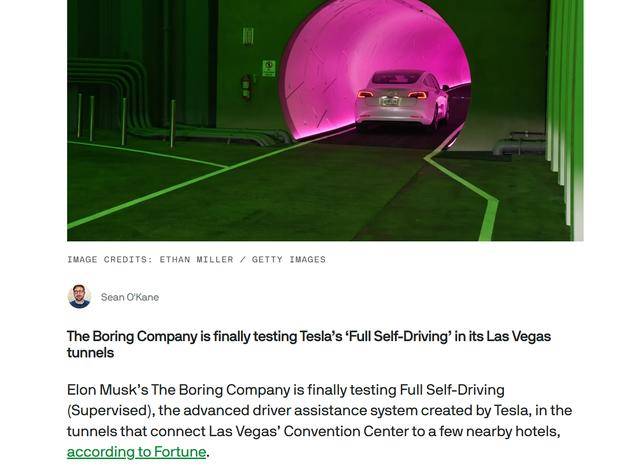
马斯克旗下公司在拉斯维加斯隧道测试特斯拉FSD
Sou Hu Cai Jing· 2025-08-28 02:41
Core Insights - The Boring Company, owned by Elon Musk, has begun testing Tesla's Full Self-Driving (FSD) software in tunnels connecting the Las Vegas Convention Center and nearby hotels, attracting industry attention [1][3] - The testing has been ongoing for several months, with safety drivers present in each vehicle to ensure safety during the trials, although the technology is still in an exploratory phase and has a long way to go before large-scale application [1][3] Company Developments - The tunnel used for testing has been operational for about four years, but the current network only serves a limited area around the convention center, despite previous plans for a city-wide expansion [3] - Tesla has recently launched small-scale, invitation-only autonomous taxi services in Austin, Texas, and a similar service in San Francisco, with Musk publicly praising the performance advantages of the related autonomous driving technology [3] Technical Challenges - During the Las Vegas tunnel tests, safety drivers occasionally had to take control of the vehicles, indicating that the system has not yet achieved full autonomy [3] - The unique environment of the tunnels, including colored lights and uneven rock walls, presents challenges for the FSD system, which struggles to recognize certain areas and must adapt to these complex factors [3] - A key challenge remains the precise pick-up and drop-off of passengers at multiple underground stations [3]

无人小巴开进罗湖,深圳开通首条L4级自动驾驶公交运营专线
Nan Fang Du Shi Bao· 2025-08-27 00:58
Core Insights - The launch of the B888 autonomous bus line in Shenzhen marks the city's first L4 level autonomous driving public transport service in a bustling urban area, indicating a significant step in integrating autonomous technology into daily life [2][4] - The B888 route connects key city landmarks and commercial districts, allowing citizens to book free rides through the "Shenba Travel" app, enhancing accessibility to public transport [4][6] - The operation of the B888 line is supported by advanced sensor technology, ensuring safety and efficiency in a complex urban traffic environment, which includes high-density vehicle flow and challenging intersections [6][7] Company and Industry Developments - The B888 line is part of Shenzhen's broader strategy to promote green and innovative transportation solutions, aligning with the "20+8" industrial cluster strategy and the "Implementation Plan for High-Quality Development of Intelligent Connected Vehicles" [7] - The operational model of the B888 has already been tested in nearly 30 cities worldwide, including major international cities, showcasing the global reach and adaptability of the autonomous bus technology [7] - Future plans include expanding the application of autonomous minibuses in various urban settings, transitioning from novelty experiences to regular services, thereby enhancing the presence of autonomous technology in everyday urban life [7]
元戎启行发布DeepRoute IO 2.0平台及VLA模型 突破传统端到端模型局限
Zheng Quan Shi Bao Wang· 2025-08-26 11:22
Core Insights - Yuanrong Qixing launched its next-generation driving assistance platform, DeepRoute IO2.0, featuring the self-developed VLA (Vision-Language-Action) model, which excels in complex road conditions compared to traditional end-to-end models [1] - The platform is designed with a "multi-modal + multi-chip + multi-vehicle" adaptability, supporting both LiDAR and pure vision versions, and has secured five fixed cooperation projects with mass production vehicles set to enter the market soon [1][2] - The VLA model integrates a vast knowledge base and enhances generalization capabilities, allowing it to better adapt to complex real-world driving environments [1] Technical Features - The standout feature is spatial semantic understanding, which can perceive potential risks in limited visibility environments and proactively make preventive judgments [2] - Other capabilities include the recognition of non-structured obstacles, understanding of textual road signs, and memory voice control for personalized driving experiences [2] - The company has established a solid foundation for mass commercialization, achieving partnerships with over 10 vehicle models and delivering nearly 100,000 mass-produced vehicles equipped with urban navigation assistance systems [2] Future Plans - The company aims to expand the application boundaries of the VLA model, accelerating mass production deployment in the passenger vehicle market while advancing Robotaxi business based on mass-produced vehicle platforms [3] - The VLA model is expected to extend its use to more mobile intelligent entities, gradually evolving from single-point functionality to a general intelligent system [3]
拒赔6000万和解金 特斯拉(TSLA.US)被判2.43亿美元天价罚单
Zhi Tong Cai Jing· 2025-08-26 09:15
Core Viewpoint - Tesla rejected a $60 million settlement in a lawsuit related to a fatal 2019 accident, resulting in a jury awarding $243 million in damages, highlighting increased legal risks and broader regulatory challenges for the autonomous driving industry [1] Group 1: Lawsuit Details - The lawsuit originated from a 2019 accident in Florida where a Tesla Model S equipped with an autonomous driving system collided with a person standing next to a parked Chevrolet Tahoe [1] - The plaintiff's attorneys revealed the rejected settlement offer while pursuing legal fees from Tesla, accusing the company of overstating the capabilities of its autonomous driving system, leading to driver misuse and lack of oversight [1] Group 2: Jury's Decision - The jury determined that Tesla is responsible for 33% of the $129 million compensatory damages, amounting to $42.6 million, and all of the $200 million punitive damages, totaling $243 million [1] - The jury also found that the driver involved in the accident is liable for 67% of the compensatory damages, although this driver is not a defendant in the case [1] Group 3: Tesla's Response - Tesla denied any wrongdoing and stated that the jury's decision would hinder advancements in automotive safety, jeopardizing efforts to develop life-saving technologies within the company and the industry as a whole [1] Group 4: Industry Implications - The rejection of the settlement significantly increases Tesla's legal risks and underscores the broader industry and regulatory challenges facing autonomous driving technology [1]
小马智行(PONY.US):中国自动驾驶技术领先全球,成本不是商业化障碍
智通财经网· 2025-08-26 08:48
Core Viewpoint - The impressive Q2 performance of Pony.ai, with total revenue reaching 154 million RMB (21.5 million USD), reflects a year-on-year growth of 75.9% and a quarter-on-quarter growth of 53.5%, driven by a significant increase in Robotaxi passenger fare revenue, which surged over threefold year-on-year [1] Group 1: Financial Performance - The company's Q2 Robotaxi business revenue reached 10.9 million RMB (1.5 million USD), marking a substantial year-on-year increase of 157.8%, with passenger fare revenue growing over 300% [2] - The growth is attributed to an expanded user base, increased demand in first-tier cities, and a significant rise in the scale of Robotaxi operational vehicles [2] Group 2: Market Position and Strategy - Pony.ai is currently the only company in China providing fully unmanned Robotaxi services in Beijing, Shanghai, Guangzhou, and Shenzhen, with an operational area exceeding 2,000 square kilometers in first-tier cities [2] - The company has optimized pricing and operational strategies for different customer segments, resulting in a year-on-year increase of 136% in registered Robotaxi users, alongside improved user engagement and operational efficiency [2] Group 3: Industry Insights - Pony.ai's executives have commented on the competitive landscape, noting that while Tesla has made advancements in specific models, Chinese players have reached a scale of "hundreds of vehicles" in practical deployment [3] - The company emphasizes the importance of balancing advanced driving technology with cost control, asserting that achieving high user experience while reducing costs is crucial for market competitiveness [3]
加州车主集体起诉特斯拉 称其自动驾驶涉及虚假宣传
Xi Niu Cai Jing· 2025-08-25 13:14
Core Points - Tesla faces a lawsuit from multiple car owners in California, accusing the company of misleading consumers about its autonomous driving technology capabilities over the past eight years [2][3] - The lawsuit claims that since 2016, Tesla has exaggerated its vehicles' "full self-driving hardware" capabilities through various channels, including its website and quarterly earnings calls, while the actual technology delivered does not match the promotional claims [2] - Tesla argues that there is no evidence that all consumers viewed the promotional content or that it influenced their purchasing decisions, but the judge believes that interested consumers likely searched for information on the website, undermining Tesla's defense [2] - The development and commercialization of autonomous driving technology, a significant application of artificial intelligence in transportation, face numerous challenges, and Tesla's over-promotion may lead to user misjudgment and safety risks [2] - Tesla has faced multiple accidents involving its autonomous driving system, with investigations indicating that driver over-reliance on the system is a primary cause of these incidents [2] - Recently, Tesla was ordered to pay $243 million due to a fatal accident involving its autonomous driving feature [2] Industry Implications - The lawsuit spans from May 2017 to July 2024, involving thousands of users who purchased Tesla's "full self-driving" (FSD) service, and the case is still under review with no final judgment yet [3] - Regardless of the outcome, this incident serves as a warning for the tech industry: companies must maintain transparency and accuracy in their information to avoid legal risks and potential damage to their brand image [3]