
资本市场

Search documents
许维鸿:未来产业的发展密码是什么
Huan Qiu Wang· 2025-10-30 22:54
Group 1 - The core viewpoint emphasizes the importance of building a modern industrial system as a key strategy for economic development in China, highlighting the focus on future industries such as quantum technology, biomanufacturing, hydrogen energy, and more [1] - The projected value of future industries in China is estimated to reach approximately 11.7 trillion yuan in 2024, with expectations of 13.4 trillion yuan in 2025 and 15.5 trillion yuan in 2026, indicating significant growth potential [1] - There is a notable issue of "heavy invention, light transformation" in China's technology innovation landscape, necessitating improvements in the efficiency of converting scientific achievements into marketable products [2] Group 2 - The financial services for technology innovation rely on a unique capital market in China, where high-tech companies often lack fixed assets for collateral, thus depending on various funds and IPOs for capital support [3] - The competition among urban clusters in China is intensifying, driven by the integration of technology, industry, and capital, which presents opportunities for investment in new industrial chains [4] - The development of future industries requires a deep understanding and continuous research tracking, posing both challenges and opportunities for investment platforms established by cities [5]
以色列央行原行长独家专访:控通胀如何铸就“创业国家”传奇
2 1 Shi Ji Jing Ji Bao Dao· 2025-10-30 11:44
Core Viewpoint - The independence of central banks is crucial for economic stability, especially in the current international context where political pressures can undermine effective monetary policy [1][14]. Group 1: Central Bank Independence - Central bank independence is essential for implementing necessary and sometimes difficult decisions, as political systems tend to focus on short-term goals [1][14]. - The independence of central banks allows for a long-term perspective in monetary policy, which is vital for sustainable economic outcomes [14][15]. Group 2: Israel's Economic Transformation - Israel's economic success in the 1990s was attributed to a comprehensive strategy that included stabilizing inflation, reducing budget deficits, developing capital markets, and enhancing exchange rate flexibility [2][12]. - The influx of highly skilled immigrants and improved geopolitical conditions contributed to Israel's transformation into a "startup nation," with high-tech exports accounting for over half of its total exports [2][12]. Group 3: Global Economic Governance - The shift from globalization to fragmentation is concerning, as countries are increasingly competing rather than cooperating, which can lead to unhealthy economic practices [6][8]. - China is recognized as a vital player in the global economy and should take on a larger role in global governance, responding to traditional systems' inadequacies [3][8]. Group 4: Emerging Markets Representation - Emerging markets have shown resilience and performed better than developed countries in recent years, but their representation in international institutions like the IMF does not reflect their economic weight [7][8]. - There is a growing recognition of the need to enhance the representation of emerging markets in global governance structures [7]. Group 5: Debt and Economic Stability - The accumulation of public debt is a long-term issue resulting from persistent budget and current account deficits, which can lead to systemic risks [9][10]. - Responsible government behavior and the development of robust capital markets are essential to manage high debt levels and maintain economic stability [10]. Group 6: Lessons from Israel - The experience of Israel in achieving price stability and economic openness can serve as a model for other emerging or middle-income economies [14][15]. - Effective public communication and building public support for monetary policy are critical for central banks to maintain their independence and achieve economic stability [15].

吴晓求:推动资本市场从融资市场变为财富管理功能的市场
和讯· 2025-10-30 09:20
Group 1 - The article emphasizes the elevated importance of capital markets in China's economic and financial development, as highlighted in the recent Central Financial Work Conference [2] - It discusses the role of innovation as a key driver of economic growth, referencing the Nobel Prize winners who studied the origins of technological progress [3] - The need for a culture of inclusivity and open communication is identified as essential for fostering innovation [4] Group 2 - The article outlines the importance of institutional frameworks that both constrain and incentivize innovation, emphasizing the role of capital markets as an incentive mechanism [5] - It highlights the significance of cultural openness and the absorption of advanced technologies and ideas from developed countries as a factor in China's economic transformation [6] - The necessity for original contributions to sustain economic growth is stressed, with a call for a robust foundation of scientific thought and innovation [7] Group 3 - The article proposes a restructured ecological chain for China's capital markets, moving from a traditional financing role to one that includes incentive mechanisms and wealth management functions [9] - It discusses the need to reform the asset side of the market to attract global investors by improving risk-return profiles [9][10] - The article emphasizes the importance of reforming the funding side to allow larger institutional funds to enter the market, addressing misconceptions about market risks [11][12] Group 4 - The need for a transparent regulatory framework is highlighted, with a focus on ensuring market transparency and appropriate penalties for violations [13] - The article sets ambitious future targets for the capital market's growth, suggesting that with proper reforms, the market could reach significant valuations by 2035 [14]


2025年前三季度资本市场报告和排行榜
Refinitiv路孚特· 2025-10-30 06:02
Group 1: Chinese Stock and Equity-Linked Market - In the first three quarters of 2025, Chinese companies raised a total of $92.62 billion in the global capital markets through stock and equity-linked transactions, marking a year-on-year increase of 120% and a quarter-on-quarter increase of 11% [3][8] - The number of issuances increased by 42% compared to the same period in 2024, totaling 404 transactions, with a quarter-on-quarter growth of 16% from Q2 2025 [3] - Initial Public Offerings (IPOs) reached $15.5 billion, up 83% year-on-year and 47% quarter-on-quarter, while follow-on offerings totaled $55.32 billion, reflecting a 250% year-on-year increase but a 6% decrease quarter-on-quarter [3] - The industrial sector led the market with a 23% share, raising $21.09 billion, a 98% increase from the previous year, followed by high technology, energy and power, healthcare, and telecommunications [5] Group 2: Underwriters and Legal Advisors - Morgan Stanley ranked first among underwriters in the Chinese stock and equity-linked market in 2025, with an issuance amount of $10.509 billion and a market share of 11.4% [7][8] - The top legal advisor for issuers in the Chinese stock and equity-linked market was Jingtian & Gongcheng Law Firm, with 28 transactions [9] - Jingtian & Gongcheng Law Firm also led the ranking for underwriting legal advisors, handling 27 transactions [10] Group 3: Chinese Bond Market Overview - The issuance of RMB bonds increased by 23% year-on-year, although there was a 4% decrease in Q3 compared to Q2 2025 [11][15] - Panda bond issuance decreased by 18% year-on-year, with a 6% quarter-on-quarter decline [12] - Government and institutional bond issuance reached approximately 12.1 trillion RMB, accounting for 52% of the market share, a 32% year-on-year increase and a 4% quarter-on-quarter increase [15] Group 4: Leading Underwriters in RMB Bonds - CITIC Securities led the RMB bond market with an issuance amount of 1.676 trillion RMB, holding a market share of 7.2% [17] - The top legal advisor for RMB bonds was King & Wood Mallesons, while JunHe Law Offices led the G3 currency bond market [18][20] Group 5: Syndicated Loans - The China Bank ranked first in the syndicated and club loan market across all currencies, with a loan amount of $22.065 billion, representing a market share of 43.3% [22] - There was a significant decline in loan amounts, with a 51% decrease year-on-year for all currencies [22][23]


证监会提出探索“人工智能+资本市场”金融科技创新专项试点
Huan Qiu Wang· 2025-10-30 01:08
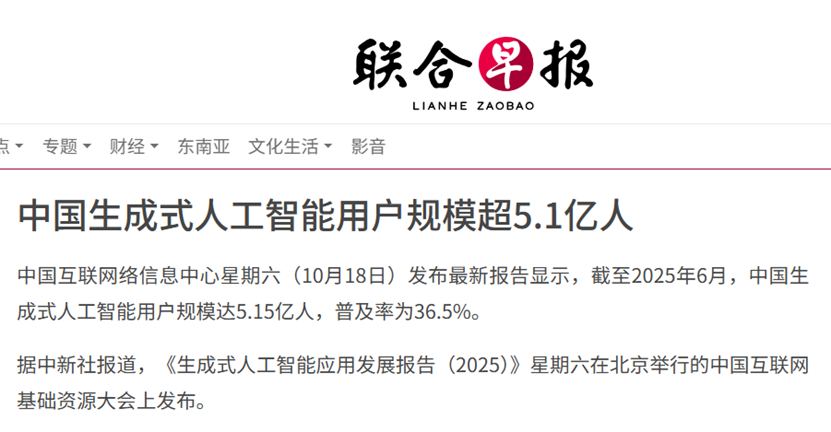
【环球网财经综合报道】证监会副主席李超日前表示,人工智能正在深刻改变资本市场的生态和运行模式,要规范应 用人工智能技术,规避可能带来的风险,要加强数据安全保障和业务风险防控,合规开展业务。探索开展"人工智能 +资本市场"金融科技创新专项试点。 《联合早报》近日发文称,中国互联网络信息中心发布的报告显示,截至2025年6月,生成式人工智能在中国的用户 规模达到5.15亿人,普及率为36.5%,半年内增长迅速。40岁以下中青年用户和高学历用户是其核心群体。国产大模型 备受欢迎,538款服务和263款应用已备案。生成式AI应用于智能搜索、内容创作等场景,还在农业、工业、科研等领 域发挥作用。 报道还提到,随着技术环境的不断优化,中国在全球人工智能技术领域的话语权持续增强。截至2025年4月,中国人 工智能专利申请量达157.6万件,占全球申请量的38.58%,居全球首位。 同期,央企战略性新兴产业发展专项基金启动,首期规模达510亿元。基金将重点支持人工智能、航空航天、高端装 备、量子科技等战略性新兴产业以及未来能源、未来信息、未来制造等未来产业重点领域。 ...
证监会:AI赋能深度融合助力资本市场高质量发展
Zheng Quan Shi Bao· 2025-10-29 18:39
Core Viewpoint - The China Securities Regulatory Commission (CSRC) emphasizes the integration of artificial intelligence (AI) with capital markets to promote high-quality digital transformation and development during the 14th Five-Year Plan period [1] Group 1: AI Integration and Development - The CSRC is committed to advancing the integration of AI and other new information technologies with capital market operations, focusing on high-quality development and risk prevention [1] - Recent initiatives include the "AI + Capital Market" and "Data Elements ×" special actions aimed at enhancing digital and intelligent regulatory methods [1][2] - AI applications in customer service, investment research, risk management, and operations management are showing positive growth in the capital market [1] Group 2: High-Value Application Scenarios - The focus is on high-value application scenarios to deepen the integration of business and technology, while ensuring risk control and tolerance [2] - There is an ongoing effort to scale innovative service models and document successful experiences in digital finance [2] Group 3: Infrastructure and Data Sharing - The industry is encouraged to strengthen foundational support by developing public intelligent computing infrastructure to reduce AI application costs [2] - Initiatives include creating a shared knowledge base and high-quality data sets to support large model applications [2] Group 4: Risk Prevention Measures - A comprehensive risk control system is to be established covering the entire model development and deployment process, with a focus on assessing safety risks [3] - Emphasis is placed on human oversight in critical decision-making processes to mitigate systemic risks associated with AI [3] - The establishment of differentiated regulatory mechanisms and a robust institutional framework for AI applications is also highlighted [3]
扎牢织密投资者保护“安全网”
Zheng Quan Ri Bao· 2025-10-29 17:20
Core Viewpoint - The China Securities Regulatory Commission (CSRC) has officially released the "Several Opinions on Strengthening the Protection of Small and Medium Investors in the Capital Market," outlining a comprehensive approach to enhance investor protection, particularly for small and medium investors, which is crucial for boosting investor confidence and promoting market stability and high-quality economic development [1] Pre-Investment Measures - The "Several Opinions" emphasize the importance of protecting small and medium investors during the issuance and listing process, proposing to optimize the new stock pricing mechanism and encourage long-term holding through improved allocation mechanisms for institutional investors [2] - This initiative aims to curb new stock pricing bubbles and prevent inflated issuance prices that could harm investors, while also fostering a "long money, long investment" ecosystem to support the market's long-term development [2] During-Investment Measures - The "Several Opinions" call for a fair trading environment for small and medium investors, highlighting the need for enhanced regulation of algorithmic trading, particularly high-frequency trading, which poses significant advantages to larger investors [5] - Strengthening the monitoring of algorithmic trading and ensuring fair opportunities for small and medium investors are essential for maintaining market fairness and stability [5] Post-Investment Measures - The "Several Opinions" propose improvements to the multi-channel dispute resolution mechanisms for securities and futures disputes, aiming to enhance the efficiency of investor rights protection and reduce the costs associated with seeking redress [6] - This includes advancing the quality of mediation services and ensuring that investors can conveniently obtain compensation when their rights are infringed [6]
证监会范中超阐释投资者保护新政 监管“组合拳”精准直达市场
2 1 Shi Ji Jing Ji Bao Dao· 2025-10-29 12:29
21世纪经济报道记者崔文静北京报道 "我们将研究提高锁定比例更高、锁定期更长的网下投资者的配售比例,推动网下投资者合理报价。"在2025金融街论坛"金融街发 布"成果专场活动上,中国证监会法治司一级巡视员范中超如此表示。 他在解读《关于资本市场中小投资者保护的若干意见》(以下简称《若干意见》)时,详细阐述了这一涵盖23项举措的综合性政策文 件。范中超介绍,该文件是证监会为贯彻党的二十届三中、四中全会精神,落实中央政治局会议要求而制定的投资者保护综合性政 策文件,旨在切实保护好中小投资者合法权益。 在发言中,范中超首先强调了在发行上市环节的保护措施。他提到,新规将优化新股发行定价机制,通过提高长期锁定投资者的配 售比例,促进报价合理性。 在信息披露方面,范中超表示将"指导发行人及中介机构形成招股说明书示范文本,提升招股说明书信息披露质量"。 同时,为增强投资者回报,他明确"倡导上市公司采用'注销式回购'等方式回报投资者,引导上市公司实施一年多次分红",这一举 措将显著提升投资者回报的可预期性和稳定性。 在谈及交易环境建设时,范中超强调要"进一步加强融资融券业务监管,完善融资融券规则,提高融资融券业务透明度和公平 ...
中金:“十五五”规划建议明晰资本市场中长期建设方向 重点关注数字科技、空间经济、高端制造等领域
智通财经网· 2025-10-29 00:29
Core Viewpoint - The "15th Five-Year Plan" outlines a strategic direction for China's economic and social development, emphasizing long-term stability and growth in the capital market, with a focus on digital technology, space economy, high-end manufacturing, domestic consumption, and biotechnology [1][25]. Macro Environment - The "15th Five-Year Plan" is positioned as a crucial phase in achieving socialist modernization by 2035, with a target of doubling GDP per capita compared to 2020 levels, necessitating an average annual GDP growth rate of approximately 4.4% from 2026 to 2035 [2][3]. Key Changes in Development Environment - Significant changes from the "14th Five-Year Plan" include advancements in technological innovation, adjustments in financial cycles, and increased geopolitical tensions, leading to a greater emphasis on domestic demand and a more confident approach to opening up [3][4]. Industrial and Technological Focus - The plan prioritizes the construction of a modern industrial system, enhancing efficiency and security in supply chains, and emphasizes the importance of traditional industries while fostering emerging sectors such as renewable energy and quantum technology [4][5][20]. Consumer and Demand-Side Policies - The plan aims to boost consumer spending through supply-side and demand-side measures, including improving the quality of consumer goods and services, enhancing employment and income distribution, and removing unreasonable consumption restrictions [7][9][10]. Open Economy Strategy - The "15th Five-Year Plan" emphasizes proactive and autonomous opening up, with a focus on expanding market access, promoting balanced trade development, and enhancing financial openness to improve China's position in the global financial system [11][12][13]. Green Transition and Carbon Goals - The plan identifies the "15th Five-Year Plan" period as critical for achieving carbon peak goals, with a focus on controlling coal and oil consumption, implementing dual control of carbon emissions, and promoting green consumption [15][16][20]. Fiscal and Tax Reforms - Fiscal reforms during the "15th Five-Year Plan" will focus on enhancing sustainability and the effectiveness of active fiscal policies, with an emphasis on improving the tax system and increasing public service spending to support consumption [17][18][22]. Capital Market Outlook - The capital market is expected to exhibit a "long-term" and "steady" trend during the "15th Five-Year Plan," supported by government emphasis on market development and favorable economic conditions [25][26]. Investment Opportunities - Key sectors for investment during the "15th Five-Year Plan" include digital technology, space economy, high-end manufacturing, domestic consumption, and biotechnology, with specific focus areas such as AI, 6G, and innovative healthcare solutions [26].
证监会:抓紧研究谋划“十五五”资本市场战略任务重大举措
Shang Hai Zheng Quan Bao· 2025-10-28 19:42
Group 1 - The core viewpoint is that the launch of the first batch of newly registered companies on the Sci-Tech Innovation Board marks a significant step in the capital market's support for technological innovation and the development of new productive forces [1] - Since the establishment of the Sci-Tech Innovation Board in November 2018, the China Securities Regulatory Commission (CSRC) has worked with market participants to develop the board from inception to a robust market, enhancing its operational stability and functionality [1] - The CSRC has introduced major policy measures such as the "Eight Articles for the Sci-Tech Innovation Board" and "Six Articles for Mergers and Acquisitions," with the "1+6" reform implemented in June progressing smoothly [1] Group 2 - The CSRC aims to implement the major deployments from the 20th Central Committee's Fourth Plenary Session, focusing on risk prevention, strong regulation, and promoting high-quality development [2] - The strategy includes deepening comprehensive reforms in the capital market to enhance its inclusiveness, adaptability, attractiveness, and competitiveness, thereby better serving the goals of the 14th Five-Year Plan and the construction of a strong financial nation [2]