
量化紧缩

Search documents
市场发生什么?股市下跌-回购市场和流动性
2025-11-05 01:29
Summary of Key Points from the Conference Call Industry Overview - The discussion revolves around the **repo market** and its current state, highlighting a potential funding crisis and the implications of the Federal Reserve's (Fed) policies. Core Insights and Arguments 1. **Funding Crisis Warning**: The repo market is experiencing significant turmoil, with the Fed's emergency liquidity facility seeing a dramatic increase, indicating a potential funding crisis [1][2] 2. **End of Quantitative Tightening (QT)**: The Fed has officially ended QT, but funding conditions have continued to deteriorate, contrary to expectations that liquidity would stabilize after month-end [4][5] 3. **Repo Market Metrics**: Key metrics such as SOFR (Secured Overnight Financing Rate) and General Collateral rates indicate ongoing stress in the funding markets, with SOFR surging 22 basis points to 4.22% [9][10] 4. **Government Shutdown Impact**: The ongoing government shutdown has exacerbated funding conditions, with the Treasury General Account cash balance exceeding $1 trillion for the first time in nearly five years, leading to a significant drop in Fed reserves [11][12] 5. **Liquidity Drain**: The government shutdown has effectively drained over $700 billion in liquidity from the market, acting as a de facto rate hike [15][16] 6. **Potential for Market Recovery**: If the government reopens, it could lead to a rapid influx of liquidity into the market, potentially driving up risk assets significantly [17][20] 7. **Long-term Concerns**: Despite potential short-term recovery, the underlying issues of massive budget deficits suggest that funding conditions will deteriorate again, necessitating further Fed intervention [21][22] Additional Important Points 1. **Repo Facility Usage**: The Standing Repo Facility saw $14.75 billion in accepted repos, indicating ongoing tightness in the repo market [8] 2. **Foreign Bank Reserves**: Cash assets held by foreign commercial banks have dropped significantly, contributing to the tightening of funding conditions [11] 3. **Market Volatility**: Despite expectations for normalization, rates remained volatile, indicating a precarious funding situation [10][12] 4. **Speculative Commentary**: Observations suggest that the Treasury's fiscal policy is currently dictating monetary policy, with implications for the Fed's future actions [12][14] This summary encapsulates the critical aspects of the current repo market situation, the implications of the Fed's policies, and the broader economic context influenced by the government shutdown.
38万亿债务风险爆发,美联储紧急降息,中国成最大受益者
Sou Hu Cai Jing· 2025-11-04 16:21
先把时间线摆明白,2025年10月1日,美国联邦政府进入停摆,连如果发工资都成问题,到了10月20日,国家核安全管理局通知大 量员工休假,10月15日前后美联储主席鲍威尔就已露头风声,市场回购利率抬升,流动性吃紧,到了10月29日美联储急转弯,这 些日期别忘记,它们串起来就是把戏的节拍。 再说债务数字,8月11日美国国债刚突破37万亿美元,两个多月就长了一万亿,等于每天多出150亿美元,等于每秒钟多出约20万 美元,这么快的速度吓人,10月29日那次操作其实像是被逼着踩刹车。 关于停摆那段,结果很现实,差不多80万联邦雇员被迫停薪休假,70万人继续上班却拿不到工资,超4200万人的补助项目快在10 月底耗尽,超市门口排队不是为了新机子而是为了基本生活用品,这些画面发生在世界上最富裕国家的心脏地带,让人直觉哪里 不对劲。 回购市场那边也不乐观,10月中旬市场回购利率走高,几家银行紧急融资需求回到新冠高点,美联储看到这些信号,怕重演2019 年缩表引发的流动性抽紧,所以选择提前按刹车,哪怕面子上丢一点也要保住系统底线。 再说量化紧缩这桩事,自2022年6月开始美联储已经从市场抽走超过2万亿美元资产,这波撤出让市场 ...


黄金单日大跌5%!不是因为俄乌冲突,流动性危机信号才是关键
Sou Hu Cai Jing· 2025-11-04 11:52
Core Viewpoint - The recent drop in gold prices, exceeding 5% in a single day, is attributed not to the easing of the Russia-Ukraine conflict but to underlying liquidity issues in the financial market, signaling a potential shift in market dynamics [3][22]. Group 1: Market Liquidity and Financial Signals - The spike in the secured overnight financing rate (SOFR) from 2.43% to over 9% indicates a sudden liquidity crunch in the market, reminiscent of past financial crises [7]. - The usage of the Standing Repo Facility (SRF) has surged, with operations exceeding $5 billion for three consecutive days, highlighting a significant liquidity shortage [8][9]. - The private credit market is showing signs of risk, with borrowing levels reaching $1.7 trillion, comparable to nearly 10% of the U.S. Treasury market, raising concerns about regulatory oversight [11]. Group 2: Household Debt and Economic Strain - U.S. household debt has reached a historic high of $18.4 trillion, echoing levels seen before the 2008 financial crisis [13]. - Increasing delinquency rates in credit cards and auto loans suggest that consumers are facing financial strain, leading to reduced disposable income [14]. Group 3: Gold as an Investment - Gold's price movements are more closely tied to liquidity conditions than to geopolitical tensions, making it a "hard currency" that is often sold off during liquidity crises [18][20]. - Historical patterns show that after liquidity crises, such as the 2008 financial collapse and the onset of the COVID-19 pandemic, gold prices tend to recover significantly once central banks inject liquidity into the market [22]. - The current downturn in gold prices is viewed as a temporary reaction to liquidity issues, with potential for recovery as central banks are expected to ease monetary policy [23][25]. Group 4: Investment Strategy and Risk Management - For long-term investors, the current dip in gold prices may present a buying opportunity, given the anticipated trend of global central bank easing and ongoing geopolitical uncertainties [25]. - Investors are advised to maintain liquidity and diversify their portfolios to mitigate risks associated with market volatility, as even traditionally safe assets like gold can experience significant fluctuations [27][29][32].

美股大牛市,突遭警告!
Sou Hu Cai Jing· 2025-11-04 10:43
Core Viewpoint - Ed Yardeni, a prominent Wall Street analyst, warns that extreme bullish sentiment in the U.S. stock market may signal a potential downturn, predicting a 5% decline in the S&P 500 index by the end of December [1][2]. Market Sentiment - The bullish-to-bearish ratio in the Investors Intelligence survey surged to 4.27 as of October 29, indicating overly optimistic market sentiment [2]. - The S&P 500 index has risen 37% since early April, marking one of the longest bullish streaks since 1950 [2]. - Retail investor bullish sentiment has exceeded the historical average of 37.5% for five consecutive weeks [2]. Technical Indicators - The S&P 500 index is currently trading 13% above its 200-day moving average, suggesting potential overextension in the rally [2]. - The Nasdaq 100 index is trading 17% above its 200-day moving average, nearing its largest gap since July 2024 [3]. Liquidity Concerns - The U.S. financial system is showing signs of liquidity stress, with the secured overnight financing rate (SOFR) rising 18 basis points to 4.22% on October 31, the largest single-day increase in a year [4][5]. - The usage of the Federal Reserve's standing repo facility (SRF) reached a historical high of $50.35 billion, indicating tightening liquidity conditions [4][5]. Government Shutdown Impact - The U.S. government shutdown has forced the Treasury to increase cash balances from $300 billion to $1 trillion over the past three months, draining market liquidity [5]. - The liquidity tightening effect of the government shutdown is comparable to multiple rounds of interest rate hikes, as it has withdrawn $700 billion from the market [5]. Future Outlook - Analysts suggest that if the government reopens, it could lead to a rapid normalization of the repo market and a rebound in risk assets [6]. - Goldman Sachs and Citigroup anticipate that the government shutdown may end within two weeks, potentially releasing significant cash flow into the market [6].
美股大牛市,突遭警告
Zheng Quan Shi Bao· 2025-11-04 08:52
Core Viewpoint - The recent bullish trend in the U.S. stock market is facing warnings from analysts, indicating potential risks of a market correction by the end of December, with the S&P 500 index possibly declining by 5% from its peak [1][3][4]. Market Sentiment and Indicators - Ed Yardeni, a prominent analyst, highlighted that the bullish sentiment among investors has reached extreme levels, with the ratio of bulls to bears rising to 4.27, surpassing the critical threshold of 4.00, which historically signals excessive optimism [4]. - The S&P 500 index has surged by 37% since early April, marking one of the longest bullish runs since 1950, with similar patterns occurring only five times in the past [4]. - The Nasdaq 100 index is trading 17% above its 200-day moving average, indicating a significant price gap that suggests the current rally may be overextended [5]. Liquidity Concerns - The U.S. financial system is showing signs of liquidity stress, with the Secured Overnight Financing Rate (SOFR) rising by 18 basis points to 4.22%, the largest single-day increase in a year [7][8]. - The usage of the Federal Reserve's Standing Repo Facility (SRF) reached a historical high of $50.35 billion, indicating increasing reliance on liquidity support tools [7][8]. - The liquidity crisis is exacerbated by the U.S. government shutdown, which has drained market liquidity significantly, with the Treasury's cash balance increasing from $300 billion to $1 trillion over three months [8]. Potential Market Reactions - Analysts suggest that if the government reopens, it could lead to a rapid normalization of the repo market and a rebound in risk assets, as the Treasury would inject billions back into the market [9]. - Major financial institutions like Goldman Sachs and Citigroup anticipate that the government shutdown may end within two weeks, potentially leading to a significant influx of cash into the market [9].
刚刚!美股大牛市,突遭警告!
券商中国· 2025-11-04 08:36
Core Viewpoint - The article highlights a warning from Ed Yardeni, a prominent Wall Street analyst, indicating that the extreme bullish sentiment in the U.S. stock market may signal a potential downturn, with the S&P 500 index expected to decline by 5% by the end of December [2][4]. Market Sentiment and Indicators - Ed Yardeni's warning comes as the S&P 500 index has risen 37% since early April, marking one of the longest bullish runs since 1950, with the current bullish-to-bearish ratio reaching 4.27, indicating excessive optimism [4][5]. - The Nasdaq 100 index is also trading 17% above its 200-day moving average, suggesting a potential overextension in the market [5]. - A significant number of stocks are declining even as the S&P 500 rises, indicating a weakening market breadth [6]. Liquidity Concerns - The U.S. financial system is showing signs of liquidity stress, with the secured overnight financing rate (SOFR) rising 18 basis points to 4.22%, the largest increase in a year [2][7]. - The usage of the Federal Reserve's standing repo facility (SRF) reached a historical high, indicating increasing liquidity pressures [7][8]. - The liquidity crisis is exacerbated by the U.S. government shutdown, which has drained approximately $700 billion from the market, creating a tightening effect similar to multiple rate hikes [8]. Potential Market Reactions - Analysts suggest that if the government reopens, it could lead to a significant influx of cash into the market, potentially resulting in a rebound for risk assets [8]. - The article notes that the fate of capital markets may hinge on political decisions regarding the government shutdown, with expectations that a resolution could lead to a rapid normalization of the repo market [8].

从抗通胀到护债务:美联储何以按下“缩表暂停键”
Sou Hu Cai Jing· 2025-11-04 04:52
Group 1 - The Federal Reserve will stop reducing its balance sheet starting December 1, signaling a shift towards a more accommodative monetary policy [2] - The federal funds rate has been lowered by 25 basis points, maintaining a range of 3.75% to 4.00% [2] - The balance sheet reduction, which began in June 2022, aimed to normalize the Fed's balance sheet after it expanded significantly during the pandemic [2] Group 2 - The U.S. federal government debt has surpassed $38 trillion, with net interest payments nearing defense spending levels, complicating monetary policy [3] - The Fed's policy decisions are increasingly influenced by fiscal sustainability, balancing inflation control against rising government financing costs [3] - The recent pause in balance sheet reduction reflects the Fed's struggle between fiscal pressures and its monetary policy objectives [3] Group 3 - Changes in U.S. monetary policy have significant global implications, affecting capital flows and currency valuations in emerging markets [5] - During the tightening phase, emerging markets faced capital outflows and currency depreciation, highlighting their vulnerability to U.S. policy shifts [5] - A potential shift to easing could lead to increased global liquidity, impacting commodity prices and asset valuations, raising concerns about financial bubbles [5] Group 4 - The U.S. monetary policy's challenges are symptomatic of long-term structural issues, including the hollowing out of domestic industries and reliance on debt [6] - The "America First" policy has accelerated a reevaluation of the dollar's role in the global economy, prompting some countries to explore alternative currencies [6] - The Fed's policy space is constrained by the need for low interest rates to manage debt, while excessive easing could undermine the dollar's credibility [6] Group 5 - The Fed's policy choices are increasingly focused on stabilizing the debt system rather than solely addressing employment and inflation [7] - The independence of monetary policy is being challenged as it becomes intertwined with government debt management [7] - Without addressing structural issues, the Fed may continue to face difficulties in balancing fiscal pressures with its policy goals, impacting its authority and effectiveness [7]
利率罕见暴涨,美国“钱荒”出现了?
财联社· 2025-11-04 04:48
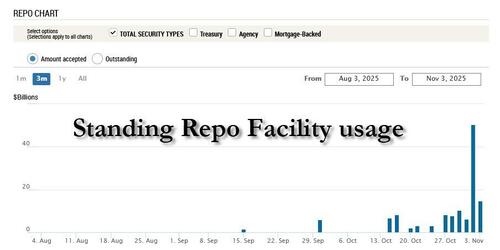
Core Insights - The U.S. financial system's liquidity is deteriorating despite the Federal Reserve's announcement to end quantitative tightening (QT) [1][18] - The use of the Standing Repo Facility (SRF) reached a record high of $50.35 billion, indicating ongoing liquidity issues [1][2] - The SOFR (Secured Overnight Financing Rate) surged by 18 basis points to 4.22%, the highest increase since the last rate hike in 2023 [5][7] Group 1: Federal Reserve Actions - The Federal Reserve decided to end QT but delayed the implementation until December 1, contrary to some market expectations [1] - The SRF was utilized significantly, with $22 billion lent to financial institutions, marking the second-highest usage since its inception [2] - The ongoing QT may continue to withdraw liquidity from an already strained system [18] Group 2: Market Indicators - The spread between SOFR and the effective federal funds rate widened to 35 basis points, the highest since 2020 [6][10] - The three-party general collateral rate (TGCR) also saw its spread with the overnight IORB increase to 25 basis points, indicating tightening conditions [10] - The overall liquidity in the repo market is tightening, with the reverse repo tool usage nearly exhausted [3] Group 3: Treasury and Cash Reserves - The U.S. Treasury's cash reserves exceeded $1 trillion, the highest level in nearly five years, impacting market liquidity [11] - Foreign banks' cash assets have sharply declined, contributing to the tightening of financing conditions [13] - The ongoing government shutdown has forced the Treasury to absorb available funds, leading to a significant drop in bank reserves to $2.85 trillion, the lowest since early 2021 [14] Group 4: Future Implications - The current liquidity crisis may worsen if the government shutdown continues, creating a negative feedback loop similar to past financial crises [18] - A resolution to the government shutdown could lead to a significant influx of liquidity into the market, potentially driving a rally in risk assets [19][21] - The fate of capital markets may hinge on political decisions regarding the government reopening, with implications for various liquidity-sensitive assets [21]

美国正走向“流动性危机”,“政府关门”相当于加息?下一步对市场至关重要
Hua Er Jie Jian Wen· 2025-11-04 02:22
Core Viewpoint - The United States is facing a severe liquidity crisis, exacerbated by the government shutdown, which is draining market liquidity and creating conditions similar to multiple interest rate hikes, but this situation may set the stage for a rebound in risk assets by year-end [1][12][13]. Group 1: Liquidity Crisis Indicators - Key financing indicators show that market pressure has reached a critical point, with the Federal Reserve's Standing Repo Facility (SRF) usage hitting $14.75 billion, the second-highest since its establishment, and a record high of $50.35 billion reached the previous week [1]. - The liquidity crunch is primarily driven by the government shutdown, which has forced the Treasury to increase its cash balance from $300 billion to $1 trillion over the past three months, significantly draining market liquidity [3][12]. - The overnight secured funding rate (SOFR) surged by 22 basis points to 4.22% on October 31, widening the spread to the Federal Reserve's excess reserve rate to 32 basis points, the highest since March 2020 [4]. Group 2: Market Reactions and Predictions - Despite the anticipated stabilization of liquidity post-month-end, key indicators remain at alarmingly high levels, indicating that the liquidity tightness is not solely driven by technical factors [9]. - Analysts suggest that the government shutdown has effectively acted as a series of interest rate hikes, with the Treasury's cash balance rising dramatically, leading to a significant liquidity drain [12][13]. - Goldman Sachs and Citigroup predict that the government shutdown may end within two weeks, potentially releasing thousands of billions of dollars back into the market, which could trigger a massive buying spree in risk assets [6][18]. Group 3: Future Outlook - The release of liquidity upon the government's reopening could lead to a significant rebound in risk-sensitive assets, similar to the scenario observed in early 2021 [14][15]. - The market is currently positioned for a potential surge in assets like Bitcoin and small-cap stocks, especially as the year-end approaches [15]. - Goldman Sachs estimates a 50% probability that the government will reopen by mid-November, with various pathways to resolution being considered [18].
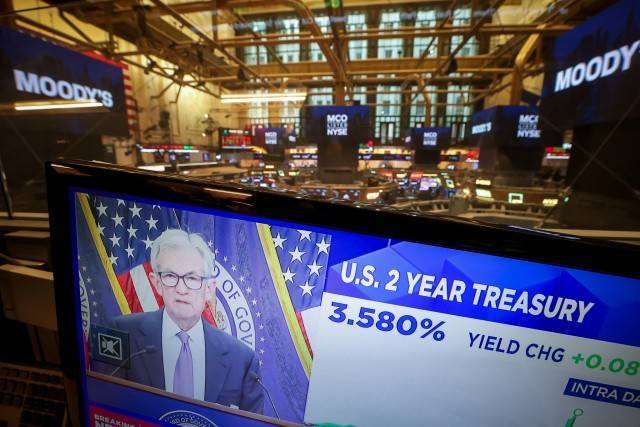
事关美债,整个华尔街都在看周三贝森特的策略
Hua Er Jie Jian Wen· 2025-11-04 01:41
Core Viewpoint - The U.S. Treasury Secretary, Yellen, is expected to increase the issuance of short-term bonds to lower long-term U.S. Treasury yields amid rising national debt, with a quarterly report due this Wednesday [1]. Group 1: Short-term Bond Issuance - Market participants anticipate that the Treasury will clarify its strategy to increase the proportion of short-term bonds in the $30 trillion national debt market [1]. - The proportion of short-term bonds has already exceeded 21% as of September this year, up from a long-term target of around 20% suggested by the Treasury Borrowing Advisory Committee [2]. - Citigroup estimates that if the Treasury does not increase the issuance of medium- to long-term bonds, the share of short-term bonds could rise to over 26% by the end of 2027 [2]. Group 2: Impact of Federal Reserve Policies - The Federal Reserve's decision to stop reducing its Treasury holdings and to use cash from maturing mortgage-backed securities (MBS) to purchase short-term bonds will support this strategy [1][4]. - JPMorgan estimates that the Fed's actions could create an additional demand of approximately $15 billion per month for Treasury bonds [4]. Group 3: Debt Refinancing and Cost Savings - The U.S. government may save up to $1 trillion due to lower refinancing costs from reduced benchmark interest rates and increased tariff revenues [3]. - The total expenditure on debt by the Treasury reached a record $1.22 trillion for the fiscal year ending September 30 [3]. Group 4: Upcoming Bond Issuances - Upcoming bond issuances include $58 billion in 3-year bonds on November 10, $42 billion in 10-year bonds on November 12, and $25 billion in 30-year bonds on November 13 [5].